
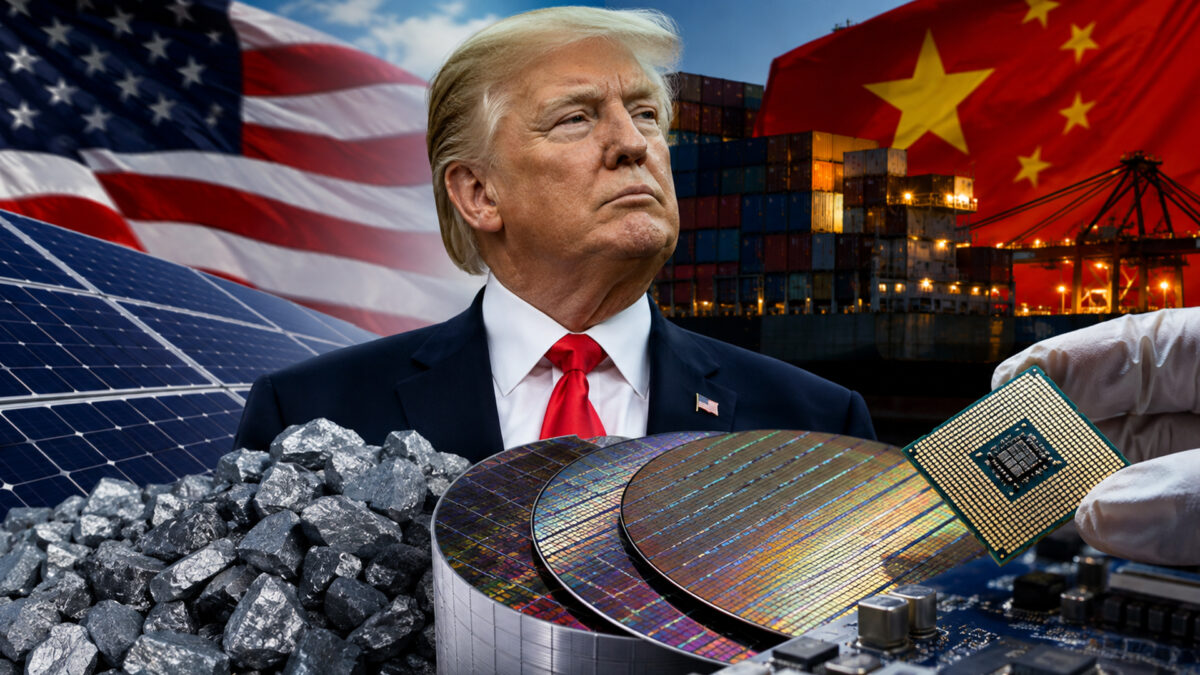
The US has imposed a 15 per cent tariff on imported polysilicon and related products, opening a new front in Washington’s effort to reshape critical supply chains for solar power and semiconductors.
The tariff, announced by President Donald Trump, will take effect on December 4 and is accompanied by minimum import prices for polysilicon, wafers, solar cells and modules. The measures are designed to support US manufacturers while reducing dependence on overseas suppliers.
For businesses across the solar industry, the move could have a direct impact on input costs, pricing strategies and investment decisions.
Polysilicon is one of the most important raw materials in the solar manufacturing chain. It is processed into ingots and wafers, which are then used to manufacture solar cells and, ultimately, solar panels. The material is also used in semiconductor production, making it strategically important to the US technology sector.
Under the new policy, imported raw polysilicon will face a minimum price of $21 per kilogram. The floor rises to $100 per kilogram for polysilicon ingots and wafers. Solar cells will have a minimum import price of $0.22 per watt, while solar modules will face a floor of $0.38 per watt.
For US manufacturers, the policy could provide greater protection from cheaper imports and improve the economics of domestic production. For import-dependent businesses, however, the higher costs could put pressure on margins.
The tariff is part of a wider US strategy to rebuild domestic manufacturing capacity. The Trump administration has argued that the country has become too dependent on foreign suppliers for materials critical to energy and technology.
The decline in US polysilicon production has been particularly sharp. The US accounted for roughly half of global polysilicon production capacity in 2005, but its share had dropped to less than 2 per cent by 2024.
Washington now wants companies to invest in domestic production and expand the American solar supply chain.
The policy could therefore create opportunities for US manufacturers and investors willing to build new production facilities. Companies planning to establish, refurbish or expand domestic facilities could qualify for tariff relief on certain imports needed for those projects.
That incentive could encourage fresh capital expenditure in polysilicon production, solar manufacturing and related infrastructure.
However, the business impact is unlikely to be limited to manufacturers. Solar developers and project operators could also feel the effects if equipment prices rise. Higher module prices can increase project costs and potentially affect the economics of new solar installations.
Companies may respond by changing suppliers, accelerating imports before the December deadline or seeking alternative sources of polysilicon and solar components.
The policy also reflects growing US concern over China’s dominance of the global solar manufacturing industry. Chinese companies and manufacturers operating across Asia control large portions of the polysilicon, wafer and solar-cell supply chain.
By introducing tariffs and price floors, the US is attempting to make domestic production more competitive while limiting the impact of low-cost imports.
For semiconductor companies, the issue is equally important. Polysilicon is used in the production of semiconductor wafers, linking the new trade policy to Washington‘s broader effort to strengthen domestic chip manufacturing.
The United States has already invested heavily in expanding semiconductor production and reducing its dependence on overseas supply chains. The new polysilicon measures extend that strategy further upstream, targeting a basic material used in advanced manufacturing.
The move could also alter global supply-chain economics. Producers may redirect shipments away from the US, while American buyers could look for suppliers from countries less affected by the tariff regime.
For companies with global operations, this could mean reassessing sourcing strategies, inventory levels and long-term procurement contracts.
The tariff comes after a Commerce Department investigation launched in July 2025 under Section 232 of the Trade Expansion Act, which allows the US government to restrict imports on national-security grounds.
The administration has increasingly used the provision to impose sector-specific trade measures, particularly in industries it considers strategically important.
The business community will now be watching how companies respond before the December 4 implementation date. Importers could bring forward shipments, while manufacturers may use the intervening period to renegotiate contracts or secure alternative supplies.
The longer-term outcome will depend on whether the policy succeeds in attracting investment without significantly increasing costs for downstream industries.
For the US, the objective is clear: build a stronger domestic polysilicon and solar manufacturing base while securing critical inputs for the semiconductor industry.
For businesses, however, the transition could bring both opportunities and challenges. Domestic manufacturers may gain pricing power and investment opportunities, while importers and solar developers could face higher costs.
The new tariff therefore represents more than another trade barrier. It is part of a broader restructuring of the US clean-energy and technology supply chains, with companies likely to be forced to reconsider where they source materials, where they manufacture products and how they manage costs in an increasingly protectionist global market.