Categories
Technology

Nvidia introduces Rubin Chip architecture

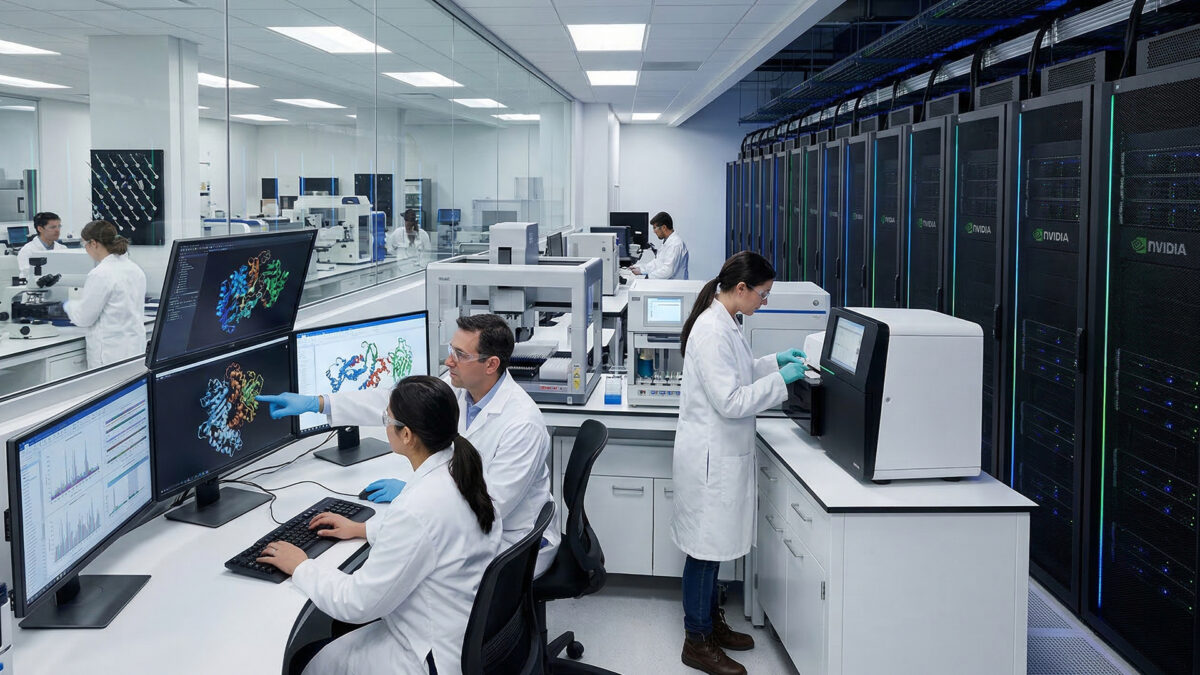
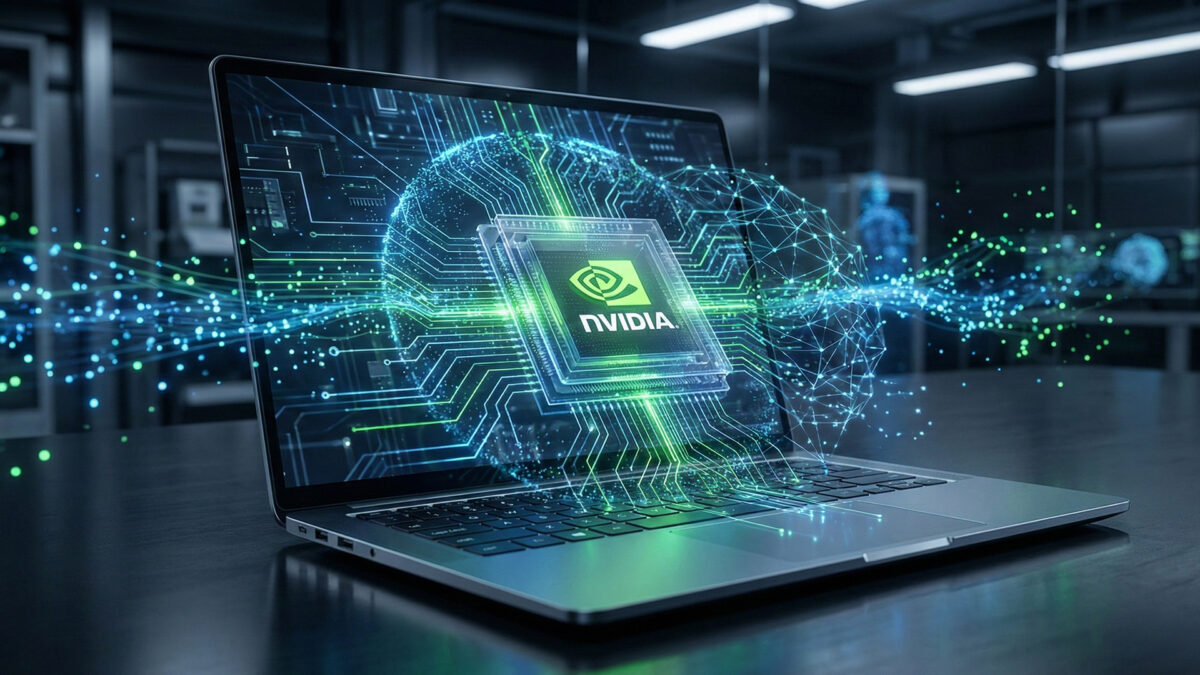
Nvidia has revealed its Rubin AI platform, a new chip architecture aimed at supporting the next generation of artificial intelligence systems. The announcement signals Nvidia’s continued push to stay ahead of rising AI computing demands, particularly as models become more complex and reasoning-driven.

Rubin is designed to succeed the Blackwell architecture and offers substantial gains in AI inference and training performance. Nvidia says the platform is optimised for workloads that require long-context understanding, faster response times, and more efficient processing, making it suitable for large-scale AI applications across industries.

The company said Rubin is already in production and will be deployed more widely in the second half of 2026. With strong interest from major cloud and technology firms, the Rubin platform is expected to become a key building block for future AI infrastructure.

Unlike conventional chip launches, Rubin is built as a complete computing platform. It combines GPUs, CPUs, memory, networking, and data processing technologies into a tightly integrated system. This approach reduces latency and improves data movement, which is critical for handling large and distributed AI workloads in modern data centres.

Energy efficiency and cost reduction are central to the Rubin design. Nvidia claims the new architecture can significantly lower the cost of running AI models compared with previous platforms, while also cutting power consumption. This could help cloud providers and enterprises scale AI operations without proportionate increases in infrastructure costs.

Rubin is also aligned with the industry’s shift toward reasoning-based AI, where systems are expected to analyse information, maintain long contexts, and make more complex decisions. Nvidia believes this capability will define the next phase of AI development, moving beyond simple pattern recognition.

Also Read: India’s GDP likely to grow 7.4% in FY26

Categories
Corporate

Nvidia launches Alpamayo AI to boost self-driving cars

US chipmaker Nvidia has unveiled Alpamayo, a new artificial intelligence system designed to improve the safety and performance of autonomous vehicles. The announcement was made at the Consumer Electronics Show (CES) 2026 in Las Vegas, where the company showcased its latest advances in automotive AI.

Alpamayo is a reasoning-based AI model that allows self-driving cars to better understand their surroundings and decide how to respond to real-world situations. Unlike traditional systems that mainly detect objects, Alpamayo is built to analyse complex traffic scenarios, predict risks and choose safer driving actions.

At the core of the system is Alpamayo-1, a large Vision-Language-Action model with 10 billion parameters. It processes data from vehicle cameras and sensors, interprets what it sees and determines the most appropriate response, such as slowing down, stopping or changing lanes. Nvidia says the model can also explain its reasoning, which is expected to help developers improve safety and transparency.

Nvidia CEO Jensen Huang described Alpamayo as a breakthrough for what he called “physical AI”, comparing it to how conversational AI transformed digital applications. He said the company’s goal is to make autonomous driving systems more reliable, especially in rare and unpredictable road situations, often referred to as edge cases.

The Alpamayo platform also includes AlpaSim, a simulation environment that allows developers to test self-driving software in virtual settings before deploying it on real roads. Nvidia has released the tools and models as open source, encouraging global researchers and automakers to use and improve them.

The company plans to begin deploying Alpamayo-powered systems in vehicles later this year, starting with select Mercedes-Benz models in the United States.

Reacting to the announcement, Tesla CEO Elon Musk commented that achieving most of autonomous driving is relatively easy, but solving the final, rare scenarios remains the biggest challenge. His remarks highlight the growing competition and debate among technology leaders racing to perfect self-driving technology.

Also Read: Rupee gains 18 paise to 90.12 as dollar eases

Categories
Corporate

Nvidia acquires SchedMD, launches open-source Nemotron 3 AI

Nvidia is making a strong push into open-source artificial intelligence by acquiring SchedMD, the company behind the widely used Slurm workload manager, and unveiling a new family of AI models called Nemotron 3. These moves aim to expand access to AI tools for developers, researchers, and enterprises.

SchedMD develops Slurm, an open-source system that manages computing tasks across clusters and supercomputers. Nvidia’s acquisition will integrate Slurm into its AI and high-performance computing systems, but the company has assured users that Slurm will remain open-source and hardware-neutral. This ensures that research institutions and businesses can continue using and customizing the software freely.

Alongside this, Nvidia introduced Nemotron 3, which includes three models: Nano, Super, and Ultra. Nano is designed for efficient execution of smaller tasks, Super supports applications with multiple AI agents, and Ultra handles complex workloads requiring high performance. Nvidia has also released datasets, frameworks, and tools to help developers train, test, and adapt these models.

A key feature of Nemotron 3 is transparency. Nvidia is providing not just the model weights but also training data and the development framework. This openness allows developers to customize the models for different applications and contribute to their improvement.

The Nemotron 3 models are designed to deliver higher accuracy and faster performance while being flexible enough for deployment on cloud platforms and integration with popular open-source environments.

By combining Slurm’s infrastructure with open-source AI models, Nvidia is strengthening its role in the AI ecosystem. The company aims to foster collaboration, innovation, and accessibility, supporting developers and enterprises in building AI applications more efficiently and transparently.

Also Read: Google launches Pixel upgrade program in India

Categories
1 Minute-Read

Nvidia may boost H200 chip output

Nvidia is considering increasing production of its H200 artificial intelligence chips amid strong demand from Chinese technology companies, including Alibaba and ByteDance, according to a media report.

Interest in the chips has picked up after the United States allowed their export to China under certain conditions and fees. The H200 chips are used for advanced AI computing and data centres.

However, Nvidia’s current output is limited as it focuses more on its next-generation chips. Any production increase would also depend on regulatory approvals and supply chain capacity, as Chinese firms look to secure more high-performance AI hardware.

Categories
1 Minute-Read

Trump approves Nvidia H200 AI chip sales to China

The US government, under former President Donald Trump, has cleared Nvidia to sell its powerful H200 AI chips to selected customers in China. These chips, designed for artificial intelligence and large-scale computing, were previously restricted from export due to security concerns.

As part of the approval, the US will receive 25% of the sales revenue. Nvidia welcomed the decision, saying it supports American manufacturing and jobs while maintaining safeguards. Investors responded positively, and experts note the move could accelerate Chinese AI development while benefiting the US economically.

Categories
Leaders

SoftBank’s Masayoshi Son regrets selling Nvidia shares

SoftBank Group recently sold its entire stake in Nvidia, valued at around $6 billion. The company’s CEO, Masayoshi Son, revealed that the decision was extremely emotional for him. Speaking at a forum in Tokyo, Son said he “cried” during the sale and admitted that he regrets letting go of every share. He added that if SoftBank had unlimited resources, he would never have sold a single share.

The sale was driven by SoftBank’s ambitious plans in artificial intelligence. The company is channeling the funds to support AI initiatives, including investments in OpenAI and other AI infrastructure projects. Son emphasized that AI is a critical area for future economic growth and that SoftBank is determined to be at the forefront of this transformation.

SoftBank’s decision highlights a broader trend in technology investment. Many leading firms are shifting focus from owning hardware, such as semiconductor companies, to investing directly in AI software, platforms, and infrastructure. For SoftBank, the Nvidia sale represents a strategic trade-off around giving up a prized asset to secure a larger stake in the rapidly growing AI sector.

The emotional tone of Son’s remarks also reflects that even major business decisions can carry a human cost. Despite the regrets, the company remains optimistic about its AI strategy and believes that the investments will deliver substantial long-term returns.

Investors and market watchers will closely follow how SoftBank’s AI bets perform and whether the company’s pivot from hardware to software and AI infrastructure will pay off. The sale of Nvidia shares marks a significant moment in the ongoing AI investment race, reflecting both the opportunities and tough choices involved in shaping the future of technology.

Also Read: Adani plans $15 billion airport expansion across India

Categories
Corporate

Microsoft, Nvidia invest $15 billion in Anthropic

Tech giants Microsoft and Nvidia are joining forces to invest up to $15 billion in the AI startup Anthropic, the company behind the chatbot Claude. This move marks one of the biggest bets yet on the rapidly growing artificial intelligence sector.

As part of the deal, Anthropic has also committed to spend $30 billion on Microsoft’s Azure cloud services. The startup will tap into cutting-edge Nvidia hardware, using up to one gigawatt of computing power to run and expand its AI models.

The partnership goes beyond money. Microsoft, Nvidia, and Anthropic will work closely to design AI systems and infrastructure that make Anthropic’s models faster and more efficient. Microsoft CEO Satya Nadella said, “We will use Anthropic models, they will use our infrastructure, and we will go to market together.”

Even with this new partnership, Microsoft stresses that its collaboration with OpenAI, the company behind ChatGPT,remains crucial. Experts see this deal as part of a larger trend where cloud providers, chipmakers, and AI startups are increasingly interconnected, highlighting both the promise and the high stakes in AI development.

Also Read: Volkswagen cuts India EV budget, seeks local partner