Categories
Corporate

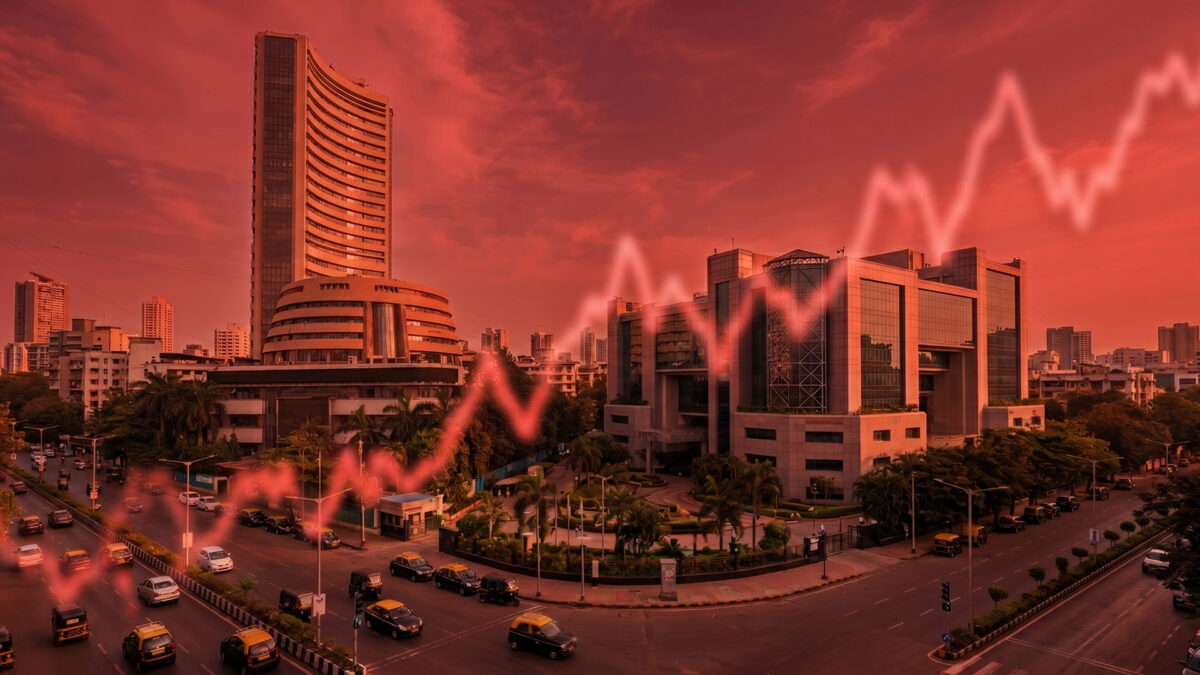
Sensex slides 600 points, Nifty breaches 22,650 mark

Indian stock markets remained under heavy selling pressure on Tuesday, September 29, as rising crude oil prices, a weaker rupee and continued foreign investor selling weighed on sentiment. The benchmark indices extended their recent decline, with the Sensex falling more than 600 points and the Nifty 50 slipping below the 22,600 level.

The sell-off was broad-based, with banking and financial stocks among the biggest drags on the market. Bajaj Finance, HDFC Bank, Kotak Mahindra Bank, Reliance Industries, Asian Paints and Infosys were among the key Sensex losers in early trade.

On the Nifty 50, Tata Motors Passenger Vehicles was the top loser, falling 3.05%. Bajaj Finance declined 1.59%, while Jio Financial Services dropped 1.43%. HDFC Bank was down 1.38% and Trent slipped 1.32%, adding to the pressure on the benchmark index.

Pharma and healthcare stocks offered some relief. Dr Reddy’s Laboratories emerged as the top Nifty gainer, rising 1.61%, followed by Cipla, which gained 0.87%. Apollo Hospitals advanced 0.34%, while Tech Mahindra and Coal India added 0.32% and 0.21%, respectively.

The sharp decline in equities came against a backdrop of rising crude oil prices. Brent crude was trading around $106.86 a barrel, extending its gains from the previous session. Investors remained cautious over the possibility of supply disruptions from the Middle East amid continuing tensions involving the US and Iran.

Crude oil is particularly important for the Indian economy because the country depends heavily on imports to meet its energy requirements. A sustained rise in oil prices can increase the country’s import bill and put pressure on the current account and inflation outlook. Higher crude prices can also weigh on corporate margins in sectors that are dependent on fuel and transportation costs.

The impact was visible in currency markets as well. The Indian rupee opened at 96.03 against the US dollar and weakened further to 96.13 during early trading. It had closed at 95.97 on Monday. The combination of expensive crude oil and foreign fund outflows has kept the rupee under pressure.

Foreign institutional investors have remained cautious towards Indian equities. FIIs sold shares worth ₹3,693.93 crore on Friday, adding to concerns about continued overseas selling. Persistent FII outflows can increase pressure on domestic benchmarks, particularly when global risk appetite is weak.

Global market cues also remained mixed. Asian equities largely traded lower, with Japan’s Nikkei 225, South Korea’s KOSPI and Hong Kong’s Hang Seng under pressure. The Shanghai Composite was marginally higher. Rising US Treasury yields have also added to concerns in global equity markets as investors assess the outlook for interest rates and economic growth.

The weakness was spread across several sectors on the domestic market. Banking, financial services and private bank stocks were among the major laggards. FMCG, oil and gas, consumer durables and cement stocks also faced selling pressure. The relative strength in pharmaceutical and healthcare stocks provided limited support as the broader market remained weak.

Despite the overall decline, several stocks attracted buying interest. Ellenbarrie Industrial Gases gained around 5% after receiving a ₹481-crore order from Bharat Heavy Electricals Limited (BHEL). The order-related development helped the stock outperform the broader market.

Varmora Granito also made a positive debut on Tuesday. The stock listed at ₹155 on the NSE, compared with its issue price of ₹148, marking a 4.73% premium. The listing came even as broader market sentiment remained weak.

PB Fintech was another stock in focus during the session. The company’s shares gained around 4% after Bernstein retained its Outperform rating with a target price of ₹2,310. The stock had faced sharp selling in the previous two sessions following concerns over proposed changes to insurance distribution regulations.

Investors are now closely watching developments in crude oil, the rupee, foreign fund flows and global bond yields for signs of how the market could move ahead. Geopolitical developments in the Middle East remain another important factor for global markets.

The recent weakness has also brought the focus back to valuation and earnings expectations. With the Sensex and Nifty already trading close to six-month lows, market participants are looking for stability after several sessions of selling.

The immediate market mood remains cautious. Elevated crude prices, a weaker rupee, FII selling and pressure on banking and financial stocks are keeping investors on edge, while select pharma, healthcare and company-specific stocks are continuing to attract buying interest.


 

Categories
Corporate

Sensex sheds over 900 points, Nifty drops below 22,900

Equity markets came under heavy selling pressure on Monday, with the Sensex plunging more than 900 points and the Nifty 50 slipping below 22,900 as rising crude oil prices, foreign fund outflows and geopolitical uncertainty weighed on investor sentiment.

The Sensex fell nearly 1,000 points during morning trade, while the Nifty dropped below the crucial 23,000 mark and moved towards 22,900. The sharp decline came after both benchmarks had already recorded their seventh consecutive weekly fall last week.

The selling was broad-based, with investors cutting exposure across several sectors. Banking and financial stocks were among the major drags, while technology, healthcare and other key sectors also faced pressure.

Crude oil remained one of the biggest concerns for investors. Brent crude moved above $106 a barrel amid uncertainty over developments involving the US and Iran and concerns around supplies through the Strait of Hormuz.

Higher oil prices are particularly important for India because the country depends heavily on crude imports. A sustained rise in prices can increase the import bill, put pressure on the rupee and add to inflation concerns. It can also squeeze corporate margins, particularly for companies with high fuel and transportation costs.

The Indian rupee also remained under pressure against the US dollar, adding to concerns about the broader economic impact of higher crude prices. A weaker rupee makes imports more expensive and can further complicate the inflation outlook.

Foreign selling weighs on Dalal Street

Continued foreign institutional investor selling has emerged as another major pressure point for the Indian stock market. Foreign investors sold equities worth around ₹3,694 crore on September 25, while domestic institutional investors bought shares worth about ₹2,838 crore.

Persistent foreign outflows, elevated US bond yields and uncertainty around global interest rates have kept investors cautious. Domestic buying has provided some support, but it has not been enough to completely offset overseas selling.

The sharp fall on Monday also erased much of the optimism created by Friday’s recovery. The Sensex had gained 315 points in the previous session, while the Nifty rose more than 77 points. However, the recovery failed to change the broader market trend.

Axis Bank, Asian Paints among gainers

Despite the broad sell-off, a few stocks managed to remain in positive territory. Axis Bank, Asian Paints, HCL Technologies and Mahindra & Mahindra were among the Nifty stocks showing relative strength in early trade.

Their gains stood out against the wider market decline, highlighting the stock-specific nature of trading even during a sharp correction.

On the other side, Infosys, Max Healthcare and Tata Motors Passenger Vehicles were among the notable Nifty losers. The selling reflected continued weakness in several heavyweight and large-cap counters.

The broader market was also under pressure, with mid-cap and small-cap stocks witnessing declines as investors turned cautious and reduced risk exposure.

Adani Power, SAIL in focus

Several stocks remained in focus because of company-specific developments.

Adani Power completed the merger of 10 wholly owned subsidiaries as part of its restructuring exercise. The merger became effective on September 25.

SAIL and Bharat Coking Coal Ltd entered into an agreement to jointly develop and operate two coal blocks in West Bengal. The blocks have a combined peak rated capacity of around 4 million tonnes a year.

Ola Electric also remained on investors’ radar after announcing that its board would meet to consider a proposal to raise funds through a rights issue.

These developments provided individual stock cues even as the broader market remained dominated by macroeconomic concerns.

Crude, rupee and global cues in focus

Investors will closely track crude oil prices, foreign fund flows, the rupee and global market trends for further direction. Developments surrounding the US-Iran situation and the Strait of Hormuz could remain particularly important for oil prices and emerging-market sentiment.

The Nifty’s fall below 23,000 has also put the spotlight on key support levels as traders assess whether the current correction could deepen. Market volatility is expected to remain elevated as investors balance domestic fundamentals with global risks.

With crude oil prices above $106 a barrel, continued FII selling and pressure on the rupee, Sensex today and Nifty today are likely to remain closely watched. Monday’s sell-off has once again underlined how quickly global developments can influence Indian equities and investor sentiment.


Categories
Corporate

Sensex opens 150 points higher, Nifty above 23,090

Indian benchmark indices opened higher on Friday, September 25, as investors returned to select beaten-down stocks following the sharp selloff in the previous session. The Sensex gained more than 150 points at the open, while the Nifty 50 moved above the 23,090 level.

The Sensex opened at 73,736.36, up 155.82 points, or 0.21%, from its previous close. The Nifty 50 opened at 23,095.70, gaining 32.60 points, or 0.14%.

The opening recovery followed a difficult session on Thursday, when both benchmarks recorded their steepest single-day fall in several weeks. The Sensex had plunged 1,247.71 points, or 1.67%, to 73,580.54, while the Nifty fell 383.70 points, or 1.64%, to 23,063.10.

Friday’s early gains reflected some value buying after the sharp correction. However, investors remained cautious as crude oil prices, global bond yields, foreign fund flows and geopolitical developments continued to influence market sentiment.

Financial stocks support recovery

Financial and auto stocks were among the early gainers on Friday. Bajaj Finserv, Shriram Finance, Power Grid, Bajaj Auto and Axis Bank were among the leading Nifty gainers.

Bajaj Finserv rose around 0.7%, while Shriram Finance gained about 0.6%. Power Grid, Bajaj Auto and Axis Bank also traded higher.

Other stocks providing support included ICICI Bank, Larsen & Toubro, Mahindra & Mahindra, State Bank of India, Bharti Airtel and Bajaj Finance.

The broader market also showed signs of recovery, with buying spread across several large- and mid-cap stocks. Domestic institutional investors have continued to provide support to Indian equities even as foreign investors remain net sellers.

IT stocks drag benchmarks

Information technology stocks remained under pressure during early trading. Infosys, TCS, Wipro, ONGC and Tech Mahindra were among the prominent Nifty losers.

Infosys fell more than 2% in early trade, while TCS declined close to 2%. Wipro and Tech Mahindra also traded lower.

The weakness in IT stocks offset some of the gains in banking, financial and auto shares. Technology companies remain sensitive to global economic conditions, US demand and currency movements, while elevated global bond yields have also affected investor sentiment towards growth-oriented stocks.

Crude oil remains key concern

Crude oil prices remained a major factor for Indian markets. Brent crude was trading above $105 a barrel, although prices eased from recent levels.

Investors are closely monitoring developments in the Middle East, particularly the US-Iran situation and risks to oil supplies. Higher crude prices are a concern for India because the country depends heavily on imports to meet its energy requirements.

Sustained high oil prices could increase pressure on inflation, the current account balance and the Indian rupee. A moderation in crude prices, on the other hand, could offer some relief to the domestic economy and corporate margins.

Rupee, FII flows in focus

The Indian rupee opened marginally stronger at around ₹95.90 against the US dollar, compared with its previous close of ₹95.96.

Currency movements remain closely linked to crude prices and foreign capital flows. A weaker rupee can raise the cost of imported commodities, particularly crude oil, while also increasing pressure on companies with significant foreign-currency exposure.

Foreign institutional investors continued to sell Indian equities. FIIs sold shares worth around ₹5,027 crore on Thursday, while domestic institutional investors bought equities worth approximately ₹4,301 crore.

The strong participation of domestic investors has helped cushion the impact of foreign outflows in recent sessions. However, sustained FII selling remains a concern for the near-term direction of the market.

Global cues remain mixed

Asian markets provided mixed signals on Friday as investors assessed interest-rate expectations, geopolitical developments and the outlook for global growth.

US Treasury yields remained elevated, keeping pressure on emerging-market assets. Higher US yields can make dollar-denominated assets more attractive and may encourage foreign investors to reduce exposure to riskier markets.

Investors are therefore watching developments in US interest rates alongside crude oil and geopolitical risks.

NSE shares remain in focus

The newly listed National Stock Exchange (NSE) also remained in focus after making its stock-market debut on Thursday.

NSE shares gained around 2% on the first day of trading and closed at ₹1,818 against the issue price of ₹1,785. The listing has added another closely watched stock to the Indian equity market.

For the broader market, Friday’s early recovery comes after a sharp correction and does not eliminate the concerns that triggered Thursday’s selloff. Crude oil prices, foreign fund flows, the rupee, global bond yields and developments in the Middle East are expected to remain key market drivers.

The immediate focus will be on whether the Nifty can sustain levels above 23,050-23,100 and whether buying interest broadens beyond financial and auto stocks. Continued weakness in IT majors could limit the recovery.

With global cues remaining uncertain, investors are likely to remain selective. The ability of domestic institutional buying to absorb foreign selling, along with movements in crude oil and the rupee, will be closely watched as trading progresses.


Categories
Corporate

Sensex sheds over 500 pts, Nifty drops below 23,250

A fresh wave of selling hit Indian equities on Thursday, with the Sensex opening 573.95 points lower at 74,254.30 and the Nifty falling 202.90 points to 23,243.90, as weak global cues and rising bond yields weighed on sentiment.

The sharp fall came a day after domestic equities had staged a recovery. On Wednesday, the Sensex gained 299.17 points, or 0.40%, to close at 74,828.25, while the Nifty 50 rose 117.80 points, or 0.50%, to finish at 23,446.80. Thursday’s opening decline erased a sizeable part of those gains as investors turned cautious.

Selling was broad-based at the opening bell. Around 1,591 stocks declined against 806 advances, pointing to weak sentiment across the wider market. The Nifty Midcap and Smallcap indices also faced pressure, although some individual stocks managed to hold on to gains.

Financial stocks under pressure

Financial stocks were among the biggest drags on the benchmark indices. HDFC Life, Bajaj Finance, Bajaj Finserv, Axis Bank and SBI Life Insurance featured among the major Nifty losers in early trade.

The selling in financial shares came after the sector had participated in the previous day’s recovery. Investors appeared cautious about interest-rate conditions and the impact of higher global bond yields on equity valuations.

The pressure was not uniform across sectors. Tech Mahindra, NTPC, TCS, Infosys and HCL Technologies were among the top gainers on the Nifty in early trade. The gains in these stocks offered some support to the index but were not enough to counter the broader market decline.

Rising US bond yields weigh

A major trigger for the sell-off was the sharp rise in US Treasury yields. The 10-year US Treasury yield climbed to around 5.11%, while the 30-year yield touched nearly 5.4%.

Higher bond yields can make fixed-income assets more attractive compared with equities. They can also increase the cost of capital for companies and put pressure on valuations, particularly in emerging markets such as India.

The rise in US yields followed stronger-than-expected US economic data, which raised concerns that inflation could remain persistent and interest rates may stay higher for longer. Investors are therefore closely watching signals from the US Federal Reserve on the future path of monetary policy.

The rise in global yields also supported the US dollar, adding another layer of pressure for emerging-market currencies and equities.

Crude oil adds to concerns

Crude oil prices are another major concern for Indian investors. Brent crude had moved above $102 a barrel after gaining nearly 4% in the previous session.

Oil prices have remained volatile amid geopolitical developments in West Asia, particularly uncertainty surrounding the US-Iran conflict and the movement of oil through the Strait of Hormuz.

Prices eased slightly on Thursday after Iran signalled that it remained open to diplomatic efforts. However, uncertainty around the conflict continues to keep oil markets sensitive to fresh developments.

For India, higher crude prices are particularly important because the country depends heavily on imports to meet its oil requirements. A sustained increase in crude can raise the import bill, widen the trade deficit and add to inflationary pressure.

Higher oil prices can also affect the rupee and corporate costs across several sectors, making crude movements an important factor for the Sensex and Nifty.

Rupee opens weaker

The Indian rupee also started the session on a weaker note. It opened at around ₹95.83 against the US dollar, compared with ₹95.74 in the previous session.

The combination of higher US yields, a stronger dollar and elevated crude prices has kept pressure on the domestic currency. A weaker rupee can make imported commodities such as crude oil more expensive and can affect companies with significant foreign-currency exposure.

Investors are therefore watching currency movements alongside global bond yields and oil prices to assess the direction of Indian equities.

FII flows provide some support

Foreign institutional investors had returned to buying in the previous session, offering some support to domestic markets. FIIs purchased Indian equities worth around ₹1,600 crore on September 23, ending a two-day selling streak.

Domestic institutional investors remained buyers as well, investing around ₹2,341 crore in Indian equities.

However, Thursday’s weak opening shows that domestic fund flows alone may not be enough to shield the market from strong global risk-off sentiment. Investors are balancing domestic liquidity against concerns over global interest rates, crude oil and geopolitical risks.

GIFT Nifty had already indicated a weak start before the market opened on Thursday, signalling that the pressure was likely to continue after Wednesday’s recovery.

What investors will watch

The focus now shifts to crude oil prices, US Treasury yields, the rupee, foreign fund flows and developments in West Asia. Global equity markets and expectations around US interest rates will also influence investor sentiment during the session.

The Nifty’s move below 23,250 is likely to remain an important point for traders after the index closed above 23,400 on Wednesday. Investors will watch whether buying emerges at lower levels or whether the selling pressure intensifies.

The sharp opening decline also highlights the fragile nature of the recent market recovery. While domestic institutional buying and selective stock gains are providing some support, global factors continue to play a major role in determining the near-term direction of the Indian stock market.


Categories
Corporate

Sensex surges 350 points, Nifty crosses 23,400

The stock markets bounced back on Wednesday, with the Sensex rising more than 350 points and the Nifty 50 moving above the 23,400 mark in early trade. Buying returned to financial, metal, FMCG and realty stocks after the benchmarks ended lower in the previous session.

The Sensex opened on a firm note and gained around 350 points during morning trade. The Nifty 50 also moved higher, crossing 23,400 as investors picked up shares across several sectors. The recovery came after the Sensex had fallen nearly 330 points and the Nifty had declined more than 85 points on Tuesday.

Market breadth was positive, with more stocks advancing than declining. The broader market also saw buying interest, suggesting that the recovery was not limited to a handful of heavyweight stocks.

Financial stocks were among the biggest contributors to the gains. Bajaj Finance emerged as one of the top Nifty 50 gainers, rising more than 2%, while Bajaj Finserv also gained over 2%. The two stocks benefited from renewed buying interest, with Bajaj Finance also getting a boost after UBS upgraded its view on the stock.

Metal stocks were another major source of strength. The Nifty Metal index gained more than 1%, with steel and mining companies attracting buyers. JSW Steel, Tata Steel and Hindalco were among the prominent gainers. SAIL also moved sharply higher, gaining more than 4% at one point during the session.

The broader market followed the positive trend. Motilal Oswal, 360 ONE WAM and Radico Khaitan were among the stronger performers in the Nifty Midcap 150 index.

Among the top gainers, Bajaj Finance, Bajaj Finserv, JSW Steel, Tata Steel and Hindalco stood out in the Nifty 50. In the midcap space, Motilal Oswal, 360 ONE WAM, Radico Khaitan and SAIL were among the stocks seeing strong buying.

However, not every stock participated in the rally. Suzlon Energy, Paytm, Persistent Systems, Sundaram Finance and Lupin were among the notable laggards in the Nifty Midcap 150. Suzlon Energy fell more than 2%, while Paytm also declined over 2%. Persistent Systems remained under pressure as investors booked profits in the technology stock.

The IT sector was one of the weaker pockets of the market, continuing the pressure seen in the previous session. Some banking stocks also traded lower even as the broader banking index gained. ICICI Bank and Federal Bank were among the stocks in the red during morning trade.

One of the key factors supporting sentiment was the movement in crude oil prices. Brent crude slipped below $100 a barrel, easing some concerns for oil-importing economies such as India. Hopes of possible talks between the US and Iran also helped reduce some of the recent pressure on crude prices.

Lower oil prices are important for Indian markets because India imports a large share of its crude requirement. A sustained fall in crude can help contain inflationary pressure and reduce the cost burden for several businesses. It can also ease concerns around the rupee and India’s import bill.

Global cues were mixed but offered some support. US technology stocks helped the Nasdaq end at a record high in the previous session, while the Dow closed lower. Asian markets were also mixed, leaving investors to balance positive technology cues with concerns over global growth, interest rates and geopolitical developments.

Investors were also watching foreign institutional investor activity. Continued selling by overseas funds has remained a concern for Indian equities, particularly when global markets turn volatile. Market participants are closely tracking foreign fund flows, crude prices, the rupee and developments in West Asia for signs of the market’s next direction.

The primary market also added to the day’s activity. SS Retail made a strong stock market debut, listing at a substantial premium to its issue price. The stock opened at ₹639.10 on the BSE against an issue price of ₹424.

Hero Motors, meanwhile, had a weaker start, opening below its issue price on the NSE before recovering during early trade. The stock later moved sharply higher, reflecting strong buying interest after its initial decline.

Investors were also keeping an eye on corporate developments involving Adani Group companies, oil marketing companies and Persistent Systems. Persistent Systems said it had secured 83.25% of Nagarro’s outstanding share capital, adding to the stock-specific activity in the technology space.


Categories
Corporate

Sensex drops 200 points, Nifty slips below 23,400

Indian benchmark indices lost their early gains on Tuesday as selling in IT stocks dragged the market lower. The Sensex fell more than 200 points, while the Nifty slipped below the 23,400 mark after opening on a positive note.

The Sensex opened around 88 points higher at 74,947, while the Nifty gained nearly 41 points to touch 23,455. The early optimism, however, faded as investors turned cautious and selling emerged in key heavyweight stocks.

Among the top Nifty gainers, Coal India, Adani Enterprises, Trent, IndiGo and Asian Paints were in focus. Coal India led the early advance after Morgan Stanley upgraded its view on the stock.

On the other side, Tech Mahindra, HCL Technologies and Infosys were among the biggest losers. The Nifty IT index remained under pressure, extending its decline for a third consecutive session.

The weakness in technology stocks came despite positive signals from global markets. US equities closed higher in the previous session, while several Asian markets also started Tuesday in positive territory. Technology stocks had supported the US market, but Indian IT shares failed to follow the trend.

Crude oil prices remained another key factor for investors. Oil prices have eased from recent highs, offering some relief to India, one of the world’s major oil importers. Lower crude prices can help reduce pressure on the country’s import bill and inflation.

However, Brent crude continued to trade above the $100-a-barrel mark, keeping energy prices firmly on investors’ radar. Any fresh escalation in West Asia could push oil prices higher and increase concerns for oil-importing economies.

Investors are also watching developments involving the US and Iran as leaders gather for the United Nations General Assembly. Any signs of progress on diplomatic efforts could influence crude prices and global risk sentiment.

Foreign investor activity remains another concern for Dalal Street. Foreign institutional investors sold Indian equities worth around ₹576 crore in the previous session. Domestic institutional investors provided some support, buying shares worth nearly ₹2,797 crore.

The previous session had offered some relief to investors after a prolonged period of weakness. The Sensex had gained more than 564 points, while the Nifty rose nearly 68 points. The rebound came after both indices had suffered six consecutive weekly declines.

Tuesday’s reversal shows that investors remain cautious despite the recent recovery. Market participants are balancing supportive factors such as softer crude prices and strong domestic institutional buying against foreign outflows, geopolitical uncertainty and weakness in IT stocks.

The broader market was relatively steady, with buying interest visible in several mid-cap and small-cap stocks. However, movements in heavyweight shares continued to determine the direction of the benchmark indices.

The 23,400 level on the Nifty will remain important during the session. Investors will also track crude oil prices, the rupee, US bond yields, global markets and FII-DII activity for further direction.

With volatility remaining high, the market could continue to react quickly to global developments and sector-specific moves. For now, IT stocks remain a key drag, while gains in select energy, consumer and other large-cap counters are providing some support.


Categories
Corporate

Sensex jumps 400 points, Nifty crosses 23,400 in early trade

Indian stock markets started Monday on a strong note, with the Sensex gaining more than 400 points and the Nifty crossing 23,400 in early trade. A drop in crude oil prices, fresh buying in key stocks and positive global cues lifted investor sentiment after weeks of market weakness.

The rally came after both benchmarks had faced pressure in recent sessions, with investors closely tracking geopolitical tensions, foreign fund flows and movements in oil prices.

Buying was visible across several sectors, although the gains were not uniform. UltraTech Cement, Asian Paints and Titan emerged among the leading gainers in the Sensex pack. UltraTech rose more than 3% in early trading, while Asian Paints and Titan also recorded strong gains.

On the other hand, Power Grid, Infosys and Bharti Airtel were among the notable losers. Weakness in some IT and utility stocks limited the broader market’s gains.

The broader market also remained positive, with buying seen in pharma, FMCG and realty stocks. Market breadth was favourable as a large number of stocks traded in the green during the opening hours.

A major support for Indian equities was the easing of crude oil prices. Brent crude slipped towards the $101-$102 a barrel range after rising sharply last week amid concerns over oil supplies from the Middle East.

Lower crude prices are positive for India because the country imports a large share of its oil requirements. A sustained decline could help ease pressure on inflation, the trade deficit and the Indian rupee.

However, oil prices remain above the $100 mark, keeping West Asia tensions and the US-Iran conflict firmly in focus. Any fresh disruption to supplies could push crude prices higher and put pressure on Indian markets.

Foreign institutional investors provided another positive signal after turning buyers at the end of last week. Foreign investors bought Indian equities worth around ₹599 crore on Friday, breaking a seven-session selling streak.

Domestic institutional investors also remained buyers, providing additional support to the market.

Despite the latest buying, foreign fund outflows remain a concern. Foreign portfolio investors have continued to reduce their exposure to Indian equities during September, adding to pressure on the benchmarks.

The Indian rupee opened at around ₹95.81 against the US dollar, compared with Friday’s close of ₹95.87.

The currency received some support from softer crude prices and improved market sentiment. However, the rupee remains under pressure because of elevated oil prices, overseas fund outflows and broader dollar strength.

Asian markets also provided a positive backdrop for Indian equities. Technology and semiconductor stocks gained in several Asian markets, helped by continued optimism around artificial intelligence-related demand.

US markets ended mostly higher in the previous session, with the Nasdaq and S&P 500 gaining, while the Dow closed slightly lower. The positive performance of technology stocks provided some support to Asian markets at the start of the new week.

The focus for investors remains on whether the early gains can hold through the session. Crude oil prices, US-Iran tensions, foreign institutional flows, the rupee and global market trends are likely to remain important triggers for the Sensex and Nifty.

Monday’s rebound comes after a prolonged period of weakness in Indian equities. The market will now look for sustained buying interest to determine whether the latest recovery can continue in the coming sessions.


Categories
Corporate

Sensex gains over 100 points, Nifty reclaims 23,300

The opened higher on Friday, September 18, with the Sensex rising more than 100 points and the Nifty moving above 23,300 as easing crude oil prices and gains in global markets lifted investor sentiment. The market remained cautious, however, with elevated oil prices, continued foreign selling and geopolitical uncertainty keeping gains in check.

The Sensex opened in positive territory and gained around 260 points in early trade, trading near 74,575. The Nifty 50 also moved higher and held above 23,300 after ending Thursday at 23,270.60.

The recovery comes after a mixed session on Thursday. The Sensex ended marginally lower at 74,314.59, falling 21.86 points, while the Nifty gained 53 points to close at 23,270.60. The Nifty has now posted gains in two consecutive sessions.

Investors are closely tracking movements in crude oil, global equity markets and foreign institutional flows as they assess the direction of the Indian stock market.

A decline in crude oil prices offered some relief to Indian equities. Brent crude fell around 1% to $103.77 a barrel, while West Texas Intermediate crude slipped to about $100.88.

Oil prices have declined for three consecutive sessions, although they remain above the psychologically important $100-a-barrel level. The movement is particularly important for India because the country relies heavily on imports to meet its crude oil requirements.

Lower crude prices can help reduce pressure on India’s import bill and inflation while supporting the margins of sectors that are sensitive to fuel costs. A sustained rise in oil prices, on the other hand, could increase concerns over inflation and the country’s trade deficit.

Geopolitical developments in the Middle East remain an important factor for the energy market. Any disruption to oil supplies could lead to another sharp rise in crude prices and add volatility to global markets.

Indian equities also received support from a strong performance on Wall Street. US markets ended sharply higher in the previous session, with the Nasdaq Composite gaining 1.69%. The S&P 500 rose 1.14%, while the Dow Jones Industrial Average advanced 0.62%.

Asian markets were also largely higher in early Friday trading. The positive global cues helped improve risk appetite and provided support to domestic equities at the start of the session.

However, investors remain watchful of monetary policy in the United States. Higher interest rates can influence global capital flows and make emerging-market assets less attractive to international investors.

Foreign institutional investors remained net sellers in Indian equities on Thursday. They sold shares worth around ₹3,209 crore in the cash market.

Domestic institutional investors partly offset the selling, purchasing equities worth about ₹3,618 crore. The contrasting flows show the continuing role of domestic investors in supporting the market when overseas funds reduce their exposure.

Foreign fund flows have remained an important market trigger as investors balance India’s growth prospects against global interest rates, currency movements and geopolitical risks.

Several large-cap stocks were active in the market, with financial, automobile, pharmaceutical and defence counters among those attracting investor attention.

HDFC Life was among the strongest performers, rising 5.05%. Tata Motors Passenger Vehicles gained 4.49%, while SBI Life Insurance advanced 4.06%. Dr Reddy’s Laboratories climbed 3.07% and Bharat Electronics rose 2.51%.

On the losing side, ONGC declined 1.85%. Titan Company fell 1.38%, while HDFC Bank dropped 1.18%. Hindustan Unilever and Coal India each declined around 1%.

The movement in individual stocks is also being driven by company-specific developments, including new orders, business announcements and sector-related developments.

The Nifty’s move above 23,300 has brought the index closer to an important technical zone. The 23,300-23,400 range is being closely watched by traders as a near-term resistance area.

A sustained move above this range could bring the 23,500-23,600 levels into focus. On the downside, the 23,100-23,070 region remains an important support area.

The Sensex is also attempting to recover after recent volatility. Investors are likely to monitor heavyweight stocks because movements in major index constituents can have a significant impact on the broader market.

Despite the positive opening, the market continues to face several uncertainties. Crude oil remains expensive, foreign investors are continuing to withdraw funds and geopolitical tensions are creating the possibility of sudden swings in global markets.

The rupee, bond yields and movements in US markets will also remain important for domestic investors. Any sharp change in global risk sentiment could quickly influence Indian equities.

The immediate focus is now on whether the Nifty can sustain its move above 23,300 and whether the Sensex can extend its early gains. Trading activity in heavyweight stocks, crude oil movements and institutional buying and selling are expected to shape market direction through the day.

The opening gains indicate improving sentiment, but investors remain cautious as several external factors continue to influence the Indian stock market. With the Nifty approaching the 23,400 resistance zone, Friday’s session could provide further clues about the market’s near-term direction.


Categories
Corporate

Sensex swings 350 points, Nifty hovers near 23,200

Indian equity markets remained volatile on Thursday, with the Sensex and Nifty swinging between gains and losses in early trade as investors weighed the impact of the US Federal Reserve’s latest rate decision, elevated crude oil prices and continued global uncertainty.

The BSE Sensex opened lower and moved in a narrow range, while the Nifty 50 stayed around the 23,200 level. Sensex was up about 0.16% at 74,452.88, while the Nifty had gained 0.26% at 23,279.45. The benchmarks were supported by selective buying after the recent sell-off, but gains remained limited.

The market is coming off a period of heavy pressure. The Sensex has fallen nearly 4% over the past five weeks, while the Nifty has also remained under pressure. The recent weakness has been linked to concerns over crude oil, foreign fund flows, geopolitical tensions and uncertainty over global interest rates.

Among the prominent gainers in early trade were Reliance Industries, Bajaj Finance, Bharat Electronics, Mahindra & Mahindra and Eternal. Auto and PSU bank stocks also attracted buying interest. Banks and financial stocks were among the sectors helping the broader market stay afloat.

On the losing side, HDFC Bank, Infosys, Tata Consultancy Services, ICICI Bank and Bharti Airtel came under pressure. IT stocks remained particularly weak after the US Federal Reserve raised interest rates, raising concerns that higher borrowing costs could affect technology spending by American companies, an important market for Indian IT firms.

The mixed movement meant that the headline indices did not show a clear direction even as several stocks recorded sharper moves. The Nifty traded between 23,193.65 and 23,267.70 in the early session, highlighting the cautious mood in the market.

A major trigger for Thursday’s trade was the US Federal Reserve’s decision to raise its benchmark interest rate by 25 basis points. The move took the US policy rate to a range of 3.75% to 4%. It was the Fed’s first rate increase in more than three years.

The Fed also indicated that further tightening could follow. Its latest projections showed that 16 of 18 policymakers expected at least one more 25-basis-point increase before the end of 2026. That outlook has kept global investors cautious because higher US interest rates can support the dollar and make emerging-market assets relatively less attractive.

Indian IT stocks felt the pressure from the Fed decision. The Nifty IT index was down around 0.7% in early trade, with investors concerned that higher US borrowing costs could weigh on corporate technology spending.

Oil prices remain another important factor for Indian markets. Brent crude was trading around $106 a barrel, although it eased slightly after reports that Saudi Arabia was offering additional oil cargoes through Oman. The moderation offered some relief, but crude remains high enough to remain a concern for an import-dependent economy such as India.

The rupee also remained under pressure. The Economic Times reported that the Indian currency weakened past ₹96 against the US dollar for the first time in more than a month during Thursday’s trading session. Persistent dollar demand from importers and oil companies has added pressure to the currency.

At the same time, investors are closely watching the primary market as the National Stock Exchange prepares for its much-awaited IPO. The exchange plans to raise up to ₹22,562 crore through an offer for sale by existing investors, adding another major event to an already active IPO calendar.

After several sessions of selling, some investors are returning to select stocks at lower prices. Banks, financial companies and broader market stocks have seen buying interest, suggesting that investors are picking individual opportunities rather than making broad-based bets.

Market sentiment, however, remains sensitive to global cues. High crude prices, the Fed’s tighter interest-rate stance, currency movements and geopolitical developments are likely to keep the Sensex and Nifty volatile through the session.

The immediate focus will remain on whether buying support can hold at lower levels and whether IT weakness continues to offset gains in banks, autos and other sectors.


Categories
Corporate

Sensex gains 300 points, Nifty holds above 23,200


Indian equity markets staged a recovery on Wednesday, September 16, after a sharp fall in the previous session. The Sensex gained around 300 points in morning trade, while the Nifty 50 climbed back above the 23,200 mark as investors looked for opportunities in stocks that had recently declined.

The recovery came a day after a heavy sell-off pushed the benchmark indices sharply lower. The Sensex had dropped nearly 778 points on Tuesday, while the Nifty lost close to 280 points. Concerns over rising crude oil prices, higher US bond yields and continued global uncertainty had triggered widespread selling.

Wednesday’s session started on a positive note, with the Sensex gaining about 250 points at the opening. The buying strengthened as the session progressed. At one point, the 30-share index was up more than 400 points, while the Nifty moved towards 23,250.

The rebound was largely driven by value buying. After the recent correction, investors returned to selected large-cap stocks, particularly in banking, automobiles, consumer goods and energy. However, the recovery remained uneven, with several stocks and sectors continuing to face selling pressure.

Mahindra & Mahindra, ITC, Reliance Industries, Hindustan Unilever, Bharat Electronics and Adani Ports were among the stocks supporting the market. Banking and consumer-facing companies also attracted buying interest.

On the other hand, Tata Steel, InterGlobe Aviation and TCS were among the prominent laggards. Several technology stocks remained under pressure, limiting the broader market recovery. Mid-cap and small-cap shares also struggled, indicating that Wednesday’s gains in the benchmark indices did not translate into a broad-based rally.

Market participants were also keeping a close watch on crude oil prices. Oil prices eased during the session after US crude inventories rose unexpectedly, although prices remained elevated because of continuing concerns over global supply disruptions.

Brent crude was trading around $108 a barrel, while US crude remained above $105. Supply concerns were heightened after Saudi Arabia suspended crude loadings at Yanbu port following an attack on the East-West pipeline.

The movement in crude oil remains particularly important for India because the country relies heavily on imports to meet its energy requirements. A sustained rise in oil prices could increase India’s import bill, put pressure on the rupee and add to inflationary concerns. It could also affect the profit margins of companies that are heavily dependent on fuel and other imported inputs.

Global interest rates were another major factor influencing investor sentiment. Markets were awaiting the US Federal Reserve’s policy decision, with investors focused not only on the rate decision but also on the central bank’s guidance for the coming months.

Higher US interest rates and bond yields can make dollar assets more attractive and influence foreign investment flows into emerging markets. Foreign institutional investors have remained net sellers of Indian equities, adding another layer of pressure on domestic markets.

Foreign investors sold Indian shares worth nearly ₹2,978 crore in the previous session, while domestic institutional investors bought shares worth around ₹2,686 crore. Strong domestic buying has provided some support to the market, but continued foreign selling remains a concern.

The rupee also remained under pressure and was trading near ₹95.91 against the US dollar. Elevated crude prices and uncertainty over global interest rates continue to influence the currency’s movement.

Several individual stocks were also in focus during Wednesday’s trading session. Paytm and Yes Bank gained after the government announced a 0.4% merchant discount rate for UPI transactions above ₹2,000. The new framework is scheduled to take effect from October 15.

Renewable energy company Saatvik Green Energy also attracted attention after receiving an order worth more than ₹1,000 crore from the Solar Energy Corporation of India. The announcement triggered strong buying interest in the stock.

The primary market remained active as well. New listings and initial public offerings continued to attract investor attention despite the volatility in the secondary market. Kanohar Electricals made a strong debut, while other newly listed stocks saw mixed movements.

The market’s recovery on Wednesday offered some relief after the previous day’s sharp decline. However, investors remained cautious as several risks continued to hang over the market.

The direction of crude oil prices, movements in US Treasury yields, foreign fund flows and the Federal Reserve’s policy signals are likely to remain key triggers for Indian equities. Investors will also watch whether the Nifty can sustain levels above 23,200 and whether buying interest expands beyond select large-cap stocks.

The latest rebound has therefore brought some stability after the recent sell-off, but market volatility remains high. Traders are likely to remain sensitive to global developments while domestic investors assess valuations and look for stocks that have corrected significantly.