
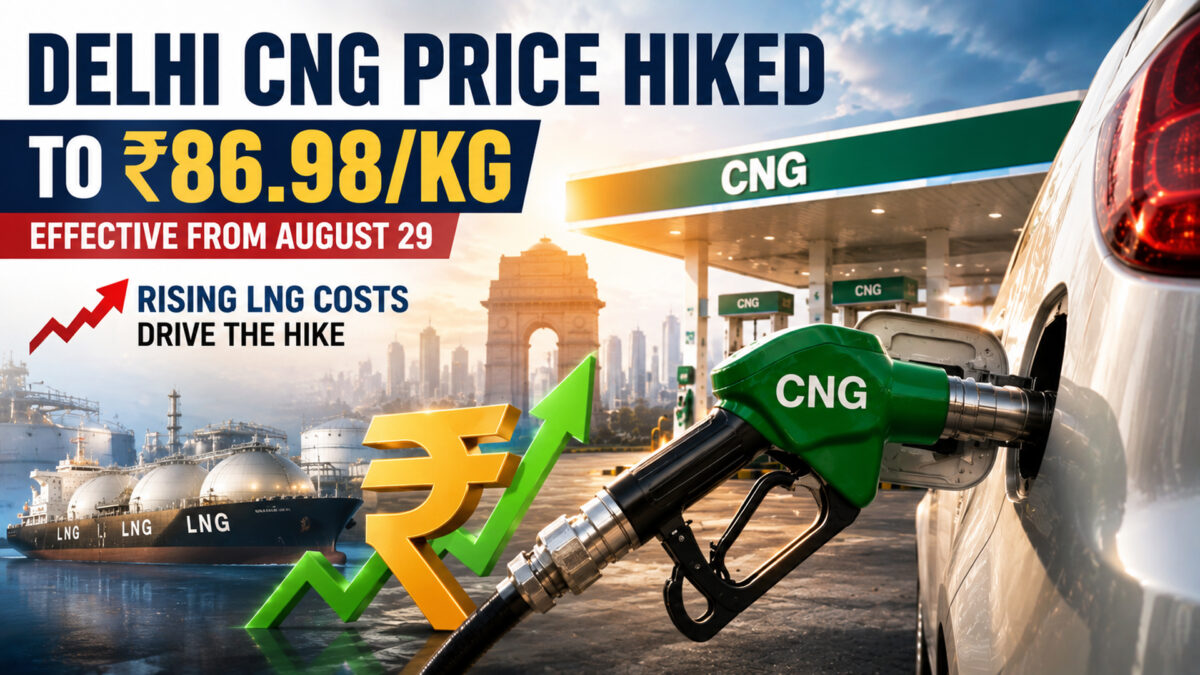
CNG users across Delhi-NCR will have to pay more from Saturday after Indraprastha Gas Limited (IGL) raised compressed natural gas prices by Rs 3.89 per kg, citing a sharp increase in the cost of imported liquefied natural gas (LNG).
The revised rates came into effect from 6 am on August 29. In Delhi, the price of CNG has increased from Rs 83.09 per kg to Rs 86.98 per kg. The increase comes at a time when international gas markets are facing renewed pressure from geopolitical tensions, supply disruptions and stronger demand for LNG.
The latest revision affects consumers across several geographical areas supplied by IGL. In Noida and Ghaziabad, CNG now costs Rs 95.59 per kg, while consumers in Gurugram will pay Rs 92.01 per kg. The revised rate is Rs 95.47 per kg in Meerut, Muzaffarnagar and Shamli. Rates in other IGL-operated markets have also been revised.
For Delhi residents, the increase means motorists will immediately feel the impact each time they refill their vehicles. The effect could be more significant for auto-rickshaw drivers, taxi operators, app-based cab drivers, delivery fleets and other commercial users who depend heavily on CNG.
IGL said the increase has been necessitated by the rising cost of input gas. A significant portion of the gas used to meet growing CNG demand is sourced through imported LNG, making domestic CNG prices increasingly sensitive to developments in international gas markets.
Global LNG prices have risen sharply since the escalation of the West Asia conflict. IGL pointed to elevated spot-market prices and disruptions affecting LNG cargo movements through the Strait of Hormuz. The waterway is a critical route for global energy supplies, and concerns over shipping disruptions have added to volatility in international gas prices.
The company has also highlighted stronger demand for natural gas in Europe, where utilities are building inventories ahead of the winter season. Higher demand, combined with concerns over supply availability, has put additional pressure on international LNG benchmarks.
According to IGL, the increase in international gas prices has been particularly significant in recent months. The company said the Asia-based JKM LNG benchmark had risen from around $10.99 per million British thermal units (MMBtu) to about $23.41 per MMBtu, representing an increase of roughly 113%. Europe’s TTF gas benchmark also climbed from approximately $11.36 to $23.35 per MMBtu, a rise of about 105%.
IGL said Delhi’s CNG prices had not moved in line with the full scale of the international increase. Between late February and August 27, the Delhi retail price rose from Rs 77.09 to Rs 83.09 per kg, an increase of about 7.8%. During the same period, international gas benchmarks recorded much sharper gains.
The company described the latest Rs 3.89 per kg increase as a calibrated adjustment intended to partially offset the higher cost of input gas while maintaining reliable supplies to consumers. It also said efforts would continue to optimise sourcing costs.
The latest hike is the fifth increase in Delhi-NCR CNG prices this year and the first since May. Earlier in May, IGL raised prices by a cumulative Rs 6 per kg through four separate revisions over 10 days. Those increases were also linked to higher global energy costs amid the West Asia conflict.
The repeated increases are likely to keep transportation costs under pressure across the National Capital Region. CNG is widely used by public transport operators and commercial vehicles, including autorickshaws, taxis, buses and goods carriers. Any sustained rise in fuel expenses could eventually put pressure on passenger fares and freight charges.
The immediate impact on private vehicle owners will depend on how frequently they use their cars and their average mileage. A Rs 3.89 increase per kg can add up over time for high-mileage users, particularly those who rely on their vehicles for daily commuting.
The price gap between different NCR cities will also remain significant because CNG retail prices are influenced by factors such as local taxes, transportation expenses and the cost of supplying gas to individual markets. Delhi’s revised price of Rs 86.98 per kg remains lower than rates in several neighbouring cities.
The latest CNG price hike also underlines India’s exposure to global energy-market movements despite the country’s growing efforts to diversify its energy sources. When imported LNG becomes more expensive, city gas distributors face higher procurement costs, which can eventually be reflected in retail prices.
The immediate concern raised by consumers is whether the increase will be temporary or become part of a longer period of elevated fuel prices. That will largely depend on international LNG prices, shipping conditions, geopolitical developments in West Asia and the availability of domestic and imported gas.
With the new rates now in force, Delhi-NCR motorists and commercial transport operators are likely to closely watch global energy prices for signs of relief. Any easing in LNG prices and supply disruptions could reduce pressure on domestic CNG costs, while continued volatility could keep fuel expenses elevated.