Categories
1 Minute-Read

Meta, Microsoft cut jobs in AI shift

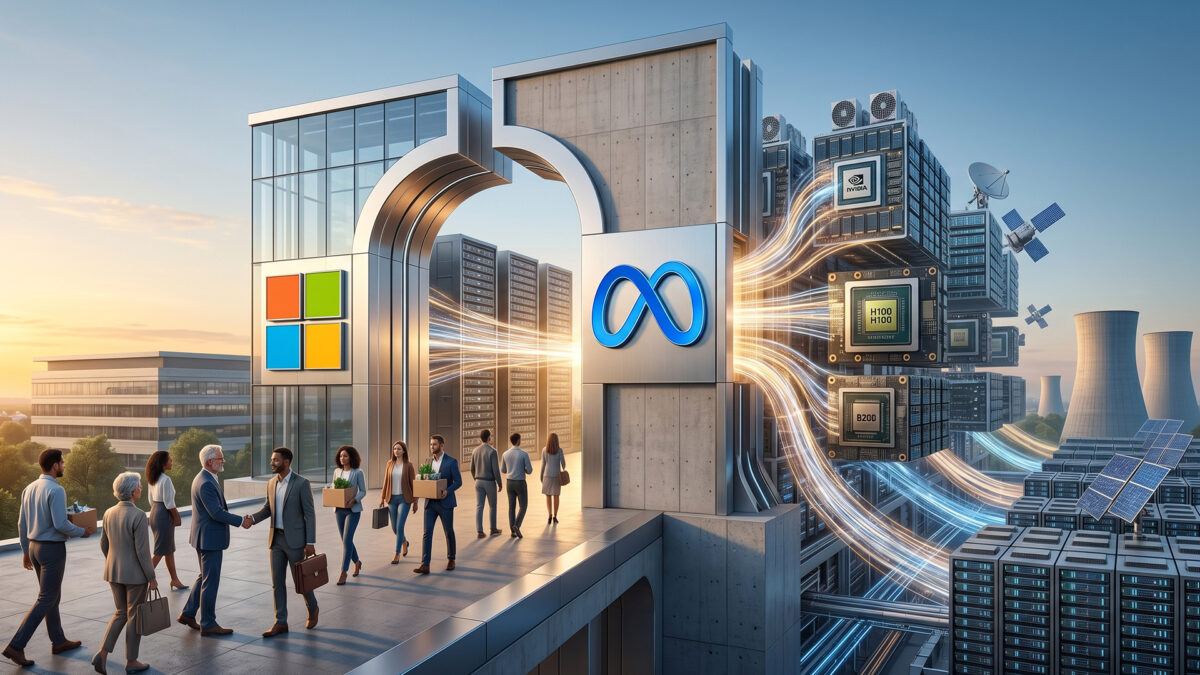
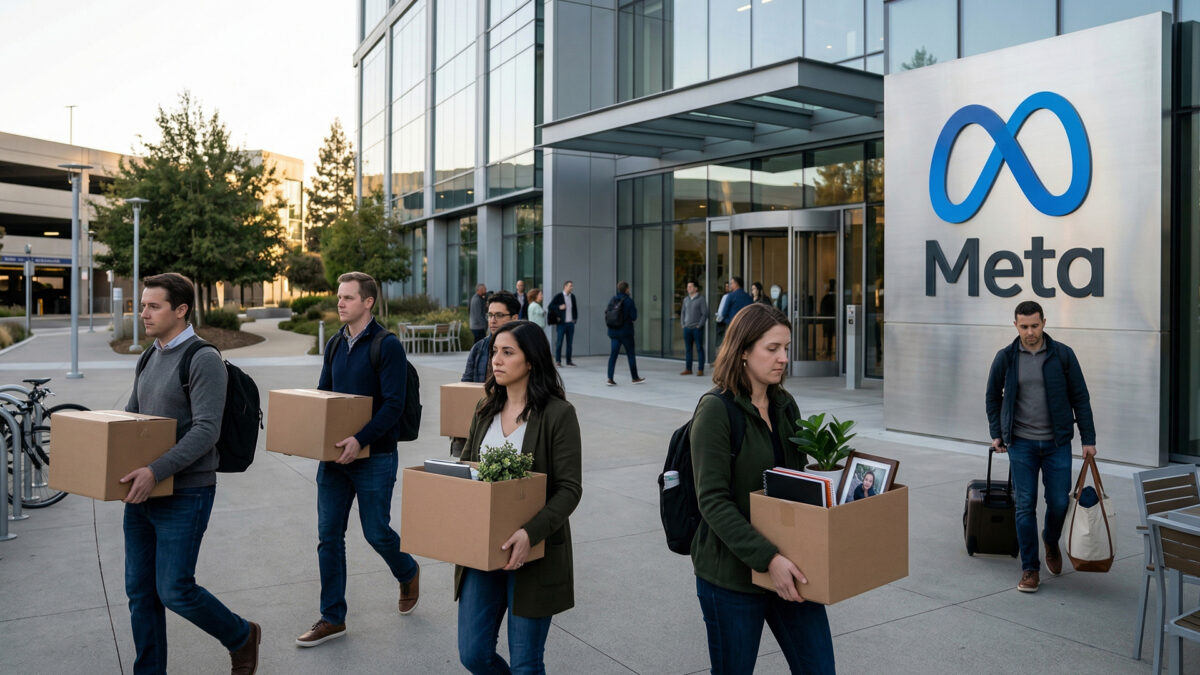
Meta and Microsoft have announced job cuts as they shift focus toward artificial intelligence and restructuring. Meta plans to reduce about 8,000 jobs, around 10% of its workforce, while also closing several unfilled roles to improve efficiency.

Microsoft is offering voluntary buyouts to nearly 7% of its US employees as part of internal restructuring, mainly targeting senior staff. Both companies are increasing spending on AI infrastructure, data centres and new technologies.

The decision reflects a wider trend in Big Tech, where firms are cutting costs while aggressively investing in AI development.

Categories
Technology

Meta to monitor employee activity for AI training

Meta has started using a new internal system that tracks employee computer activity, including clicks, mouse movements and typing patterns, to help train its artificial intelligence tools. The company says the goal is to teach AI systems how people use software and complete everyday office tasks.

Meta said the data will be collected only from work devices and will not be used to judge employee performance. It also said safeguards are in place to protect sensitive information.

Still, the move has raised concerns among some employees, who worry about privacy and increased workplace monitoring. Critics say it reflects the growing tension between fast AI development and employee trust.

Categories
Corporate

Meta cuts hundreds of jobs to focus on AI

Meta Platforms has laid off hundreds of employees as part of a plan to focus more on artificial intelligence (AI). The job cuts have affected several teams, including recruiting, sales, operations, and its Reality Labs division, which works on virtual reality and metaverse projects.

The company has not shared the exact number of employees affected, but the layoffs are said to be a small part of its total workforce. Meta had around 79,000 employees globally by the end of 2025.

These layoffs show a clear change in the company’s strategy. Meta is reducing its focus on the metaverse and putting more attention on AI, which it sees as a major area for future growth. The Reality Labs division, which leads metaverse efforts, has already faced cuts earlier as well.

Meta plans to spend heavily on AI in the coming years. This includes building data centres and improving technology needed for AI development. The company believes that investing in AI will help it grow faster and stay competitive in the tech industry.

The layoffs are also part of efforts to make the company more efficient. By cutting some roles, Meta is trying to reduce costs and redirect resources to more important areas like AI.

Earlier, there were reports that Meta could cut a much larger number of jobs, but no such decision has been confirmed. For now, the company has only carried out limited layoffs.

Also Read: Highness Microelectronics IPO subscribed over 8x on Day 2

Categories
Corporate

Meta brings in Dreamer team to build smarter AI agents

Meta Platforms is doubling down on its AI ambitions by hiring the team behind ‘Dreamer’, a startup focused on creating intelligent digital assistants. The move is part of Meta’s growing push into “AI agents”, systems that can act on their own to help users with tasks like managing schedules, sending emails, or organizing information.

The Dreamer team includes its founders and key developers, many of whom previously worked at leading tech companies. They are now joining Meta’s Superintelligence Labs, the company’s hub for cutting-edge AI research. This addition is expected to accelerate Meta’s work in creating autonomous, agent-driven AI solutions.

Dreamer, which launched earlier this year, specialised in tools that let people design personal AI helpers. Meta has licensed its technology to integrate into its projects while Dreamer continues as a separate entity. Financial details of the deal remain undisclosed.

This comes on the heels of Meta’s acquisition of ‘Moltbook’, a social network built for AI agents to interact with each other. Together, these moves show that Meta is aiming for more than simple chatbots; the company wants AI systems that can think, act, and collaborate independently.

Meta’s Superintelligence Labs, led by Chief AI Officer Alexandr Wang, is rapidly expanding. With experienced developers from companies like Google and Stripe, the lab is positioning itself as a hub for next-generation AI innovations.

By bringing in the Dreamer team and leveraging Moltbook, Meta is betting on autonomous AI as a key part of its future. The company aims to make digital assistants smarter, more capable, and better integrated into daily life.

The strategy reflects a broader tech trend: companies racing to build AI that doesn’t just respond but proactively assists users. Agentic AI could transform how people interact with technology, automating everyday tasks and acting as intelligent partners in work and life.

Also Read: OnePlus India CEO Robin Liu resigns as sales slide

Categories
Corporate

Meta to pull the plug on Horizon Worlds VR in June

Meta, the social media giant led by CEO Mark Zuckerberg, is shutting down the virtual reality (VR) version of its social metaverse platform, Horizon Worlds, marking a major retreat from one of its most ambitious technology bets.

Launched in 2021, Horizon Worlds allowed users with Meta Quest VR headsets to explore virtual 3D worlds, socialize, and create their own spaces. The platform was central to Meta’s metaverse vision and was heavily promoted as the “next frontier” for social interaction online. In 2021, Facebook’s rebranding to Meta underscored how critical this VR platform was to the company’s future strategy.

Despite these ambitions, the VR version of Horizon Worlds struggled to gain traction. User engagement remained low, reviews were mixed, and technical issues limited its appeal. Meta’s Reality Labs division, which developed the platform, has incurred massive losses over the years, with estimates suggesting more than $80 billion spent on metaverse development since 2020.

Under the new plan, the VR app will be removed from the Meta Quest Store by the end of March 2026, and the VR service will fully shut down on June 15, 2026. Existing users will have access until that date. Meta will continue the ‘Horizon Worlds’ experience as a mobile-only platform, where the company intends to concentrate its efforts.

Meta says this shift allows both mobile and VR experiences to evolve independently and reflects a broader strategic refocus toward artificial intelligence, mobile apps, and other emerging technologies.

The closure of Horizon Worlds VR comes amid industry-wide reconsideration of large-scale virtual worlds, following high-profile investments that failed to deliver expected user growth. Analysts say the move highlights the challenges of building fully immersive social VR platforms and signals a more cautious approach to Meta’s long-term metaverse ambitions.

Also Read: Wipro partners Harness for AI-led software delivery

Categories
Corporate

Meta to pay $1,000–$3,000 per month to creators on Facebook

Meta, the company behind Facebook, has launched a new programme to pay social media creators for posting short videos, aiming to attract influencers from platforms like TikTok and YouTube Shorts. The initiative, called Creator Fast Track, offers $1,000 per month for three months to creators with at least 100,000 followers, while those with over one million followers can earn up to $3,000 per month.

The programme is designed to help creators grow their audience and earnings on Facebook, even if they are already popular on other platforms. Participants can share existing content or produce new Reels, and Meta promises a reach boost, meaning their videos are likely to be seen by more users.

Meta’s move comes as short-form video content dominates social media. Platforms like TikTok and YouTube Shorts have drawn younger audiences and top creators away from Facebook. By offering guaranteed payments, Meta hopes to bring creators back to its platform and increase engagement.

In 2025, Meta reportedly spent nearly $3 billion on creator payments, a 35% increase from the previous year. The company has been investing heavily in the creator economy to secure content and maintain its competitive edge.

Industry experts say the new payments could help Facebook attract talented influencers quickly, but they warn that long-term retention depends on offering more than just money. Creators may need additional tools, monetization options, and audience growth opportunities to stay active on Facebook beyond the initial payment period.

The programme reflects Meta’s broader strategy to compete in the crowded social media landscape, where multiple platforms vie for the same creators and audiences. By financially incentivizing content creation, Meta hopes to ensure Facebook remains relevant in the era of short-form video while giving creators clear rewards for posting regularly.

Also Read: Rupee slips below ₹93 as oil prices soar

Categories
Corporate

NBIS jumps after $27bn Meta AI deal

Shares of Nebius Group (NASDAQ: NBIS) surged Monday after the company announced a huge deal with Meta Platforms to provide advanced AI computing infrastructure. The multi-year agreement could be worth as much as $27 billion, highlighting how tech giants are racing to secure the computing power needed for artificial intelligence.

The deal guarantees that Nebius will supply at least $12 billion in AI capacity starting in 2027, with options for Meta to buy even more as its AI projects grow. The infrastructure includes state-of-the-art GPU systems and clusters spread across Nebius data centers, designed to handle the heavy demands of next-generation AI models.

Investors reacted enthusiastically, sending Nebius shares up roughly 13–15 % in early trading. The stock jump reflects confidence in Nebius as a key player in the booming AI cloud market.

This isn’t the first time Meta and Nebius have teamed up. They previously worked on a smaller AI project, and Nebius also counts Microsoft among its major clients. Nvidia has also invested $2 billion in the company, strengthening its position as a leading provider of AI infrastructure.

While the capacity won’t be fully available until 2027, the partnership is a clear signal of Meta’s commitment to AI and its strategy to secure the resources necessary for its future projects. For Nebius, it’s a major win that positions the company at the heart of the AI revolution.

Also Read: Jensen Huang projects $1 trillion AI revenue by 2027

Categories
Technology

Moltbook joins Meta, AI Agents take lead

Meta Platforms has acquired Moltbook, a social network built solely for AI agents to post, comment, and interact without human involvement. The founders, Matt Schlicht and Ben Parr, will join Meta’s Superintelligence Labs, the company’s unit focused on advanced AI research. The price of the deal has not been disclosed.

Unlike Facebook, Instagram, or X, Moltbook is designed exclusively for machines. Its AI agents behave like social participants, sharing content, engaging with each other, and even creating trending posts. The platform gained attention because of its seemingly intelligent behavior, though some early viral content was influenced by humans.

Meta says the acquisition will allow AI agents to help people and businesses in new ways. Existing users can continue using Moltbook, but the company has not explained long-term plans or potential feature integration with other Meta products.

Analysts see Moltbook as part of a broader movement toward autonomous AI systems that can act independently online. Companies like Meta and OpenAI are racing to build networks and tools that allow these AI agents to perform tasks without constant human oversight.

The platform also faced early security concerns, including vulnerabilities that let humans manipulate bot accounts. These issues illustrate the challenges of operating open AI ecosystems safely while maintaining creativity and engagement.

This acquisition strengthens Meta’s position in AI research and practical applications. By bringing in Moltbook’s technology and team, the company gains experience in managing large-scale AI agent networks and understanding social dynamics among autonomous systems.

Also Read: Qualcomm, NEURA Robotics team up for smart humanoid robots


Categories
Corporate

Meta–AMD seal AI chip deal

Meta has signed a major long-term agreement with semiconductor firm AMD to supply advanced artificial intelligence (AI) chips for its growing data-centre operations, marking a significant shift in the social media giant’s hardware strategy. The deal is expected to reduce Meta’s heavy dependence on Nvidia, currently the dominant supplier of AI processors.

Under the partnership, AMD will provide its latest AI accelerators and supporting infrastructure, which will be used to train and run large-scale AI models across Meta’s platforms, including Facebook, Instagram and WhatsApp. The move comes as the company rapidly expands its AI capabilities for content recommendations, advertising, generative AI tools and its metaverse projects.

Meta has been investing billions of dollars in AI infrastructure, and chip costs have become one of its biggest expenses. By diversifying its suppliers, the company aims to improve efficiency and gain stronger bargaining power in a market where demand for high-performance AI hardware has surged.

For AMD, the agreement represents a major opportunity to challenge Nvidia’s dominance in the fast-growing AI chip sector. The company has been positioning its latest processors as a competitive alternative, focusing on performance, energy efficiency and open software ecosystems that allow customers greater flexibility.

The announcement comes at a time when investors are closely watching whether the massive spending on AI infrastructure will translate into long-term revenue growth.

The deal is expected to roll out over several years, with AMD’s chips gradually integrated into Meta’s global data-centre network. Both companies said the partnership would help accelerate innovation and support the next generation of AI-driven services.

Also Read: Paramount enters Warner Bros. deal race against Netflix

Categories
Technology

Mark Zuckerberg grilled in social media addiction trial

Meta CEO Mark Zuckerberg testified on February 18 in a Los Angeles courtroom in a landmark case alleging that social media platforms, including Instagram, are designed to be addictive and can harm children’s mental health. The lawsuit, filed by a California woman, claims that her early use of social media contributed to worsening depression and suicidal thoughts. The case has drawn attention nationwide, raising questions about the responsibility of tech companies for the mental health of young users.

During his testimony, Zuckerberg strongly denied that Meta intentionally designs its platforms to be addictive. He said the company prioritizes user safety and has introduced multiple measures, including age restrictions, parental controls, and safety tools to protect younger users. “We do not intentionally make platforms addictive,” he told the court, adding that engagement metrics are not designed to harm users.

Plaintiffs’ lawyers highlighted internal Meta documents discussing user engagement goals and features that encourage users to spend more time on the platform. They argue these features show a deliberate focus on keeping users hooked, despite known risks to mental health. Zuckerberg acknowledged that enforcing age restrictions can be challenging because users can provide false birth dates when signing up, but maintained that Meta actively works to reduce underage use.

The case also examines whether social media companies have a duty to warn users and parents about potential mental health risks. Experts note that the trial could have significant implications for the tech industry, potentially influencing how platforms manage safety features, transparency, and engagement practices in the future.

It is observed that the trial as a test case for social media regulation, as it could set a precedent for other lawsuits across the United States targeting tech giants over addiction and harm to minors. Zuckerberg’s testimony is seen as a key moment in the proceedings, with both sides presenting evidence about the effects of social media use on children and adolescents.

Also Read: Dixon Technologies down 38% with rising memory costs