
Categories
Beyond

Johnson & Johnson settles talc lawsuits for $5.5 bn

Johnson & Johnson has announced a $5.5 billion settlement to resolve tens of thousands of lawsuits claiming its talc-based baby powder and other talc products caused ovarian cancer. The agreement, one of the largest product liability settlements in US history, aims to end years of legal uncertainty while offering compensation to thousands of women and families who alleged they developed cancer after long-term use of the company’s products.

The proposed settlement covers approximately 76,000 ovarian cancer lawsuits filed against the healthcare giant across the United States. However, the agreement will become effective only if at least 95% of eligible claimants agree to its terms. If that threshold is reached, payments are expected to begin next year and continue over several years.

For many families, the announcement represents the possibility of finally closing a painful chapter. Numerous women claimed they had regularly used Johnson’s Baby Powder and other talc-based products for personal hygiene over several decades, believing them to be safe. After being diagnosed with ovarian cancer, many turned to the courts, alleging the products were responsible for their illness.

Johnson & Johnson has continued to reject those allegations. The company said it agreed to the settlement to avoid prolonged litigation rather than because of any admission of wrongdoing. It maintained that extensive scientific research and independent testing support the safety of its talc products and that they do not cause cancer.

The legal battle over talc products has stretched for more than a decade, becoming one of the most closely followed corporate lawsuits in recent years. Plaintiffs argued that some talc products contained asbestos, a substance known to cause cancer, and that long-term exposure increased the risk of ovarian cancer. Johnson & Johnson has consistently denied that its consumer talc products ever contained asbestos or posed a health risk.

The settlement follows several failed attempts by the company to resolve the lawsuits through bankruptcy proceedings. Those efforts were rejected by US courts, which ruled that the legal strategy could not be used to settle the claims. After those setbacks, the company entered direct negotiations with lawyers representing thousands of claimants, leading to the current agreement.

Although the settlement focuses on ovarian cancer cases, it does not resolve every lawsuit linked to talc products. Some claims involving mesothelioma and other asbestos-related illnesses have been handled separately, while a limited number of cases may continue through the courts.

Johnson & Johnson stopped selling its talc-based baby powder in the United States and Canada in 2020 after demand declined and legal scrutiny increased. In 2023, the company replaced the product worldwide with a cornstarch-based version, saying the change reflected evolving consumer preferences and market trends rather than safety concerns.

Legal experts say the settlement could mark a turning point in one of the largest mass tort cases involving consumer healthcare products. If approved by the required number of claimants, it would significantly reduce the company’s legal exposure and bring certainty to thousands of pending cases.

Law firms representing many of the plaintiffs welcomed the proposed deal, saying it could provide long-awaited financial support to women and families who have spent years pursuing legal action. Several lawyers described the agreement as an important step towards resolving litigation that has caused emotional and financial strain for thousands of people.

The settlement also carries significant business implications for Johnson & Johnson. The healthcare company has spent years dealing with mounting legal costs, courtroom battles and uncertainty surrounding the talc litigation. Resolving the majority of the claims would allow the company to focus more fully on its pharmaceutical and medical technology businesses, which continue to drive its global growth.

Industry analysts believe investors are likely to view the settlement positively because it reduces one of the biggest legal risks facing the company. However, they also note that the agreement still depends on overwhelming support from claimants before it can be implemented.

Consumer safety advocates say the case has had a lasting impact beyond the courtroom. The lawsuits prompted greater public awareness about product safety, ingredient transparency and corporate accountability. The litigation also encouraged manufacturers across the consumer healthcare industry to review product formulations and strengthen safety testing.

For the women and families involved, however, the case has always been about more than legal arguments or corporate finances. Many plaintiffs say they spent years seeking recognition of their experiences and accountability from one of the world’s largest healthcare companies.

If the settlement receives the necessary approval, it could finally bring closure to thousands of families while ending one of the most significant product liability disputes in modern corporate history. Even as Johnson & Johnson continues to deny that its talc-based products caused cancer, the proposed $5.5 billion talc settlement marks a landmark moment in the long-running Johnson & Johnson baby powder litigation, bringing the company closer to resolving a controversy that has shaped consumer product safety debates for years.
Categories
Corporate

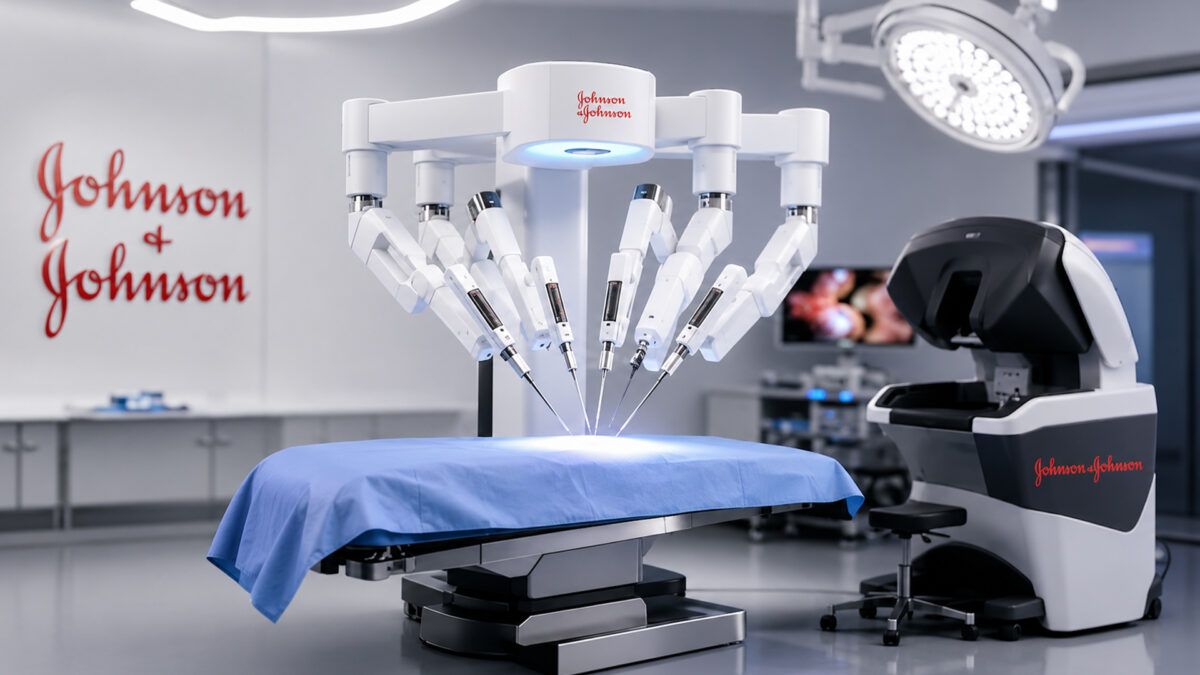
Johnson & Johnson enters robotic surgery with Ottava system

Johnson & Johnson has taken a major step into the rapidly growing robotic surgery market after its Ottava Robotic Surgical System received marketing authorisation from the US Food and Drug Administration (FDA). The approval opens the door for the healthcare giant to compete with established players in robot-assisted surgery, marking one of its biggest medical technology launches in recent years.

The company plans to introduce the system gradually across selected hospitals in the United States before expanding availability. This phased rollout will allow surgeons, nurses and healthcare teams to become familiar with the new technology while ensuring a smooth transition into routine clinical practice.

For patients, the arrival of another robotic surgery platform could eventually mean greater access to minimally invasive procedures. Robot-assisted surgery allows surgeons to perform complex operations with enhanced precision using robotic arms that are fully controlled by the surgeon. The technology often results in smaller incisions, less pain, reduced blood loss, fewer complications, shorter hospital stays and faster recovery compared to traditional open surgery.

The FDA has cleared the Ottava system for several upper abdominal general surgery procedures. These include gallbladder removal, appendix surgery, gastric bypass, sleeve gastrectomy, gastrectomy and hiatal hernia repair. Johnson & Johnson said it plans to expand the robot’s approved uses through additional clinical studies and future regulatory approvals.

A key feature that sets Ottava apart is its innovative design. Unlike conventional robotic surgery systems that require large robotic arms positioned around the patient, Ottava’s robotic arms are integrated into the operating table. This compact setup reduces the system’s footprint by around 30% to 50%, making it easier for hospitals with smaller operating rooms to adopt robotic-assisted surgery without major infrastructure changes.

The streamlined design also gives surgical teams more space to move around patients during procedures, improving workflow inside operating theatres. Hospitals that previously found robotic systems difficult to accommodate because of space limitations may now have a more practical option. The system has also been designed to allow easier positioning of patients and smoother movement of robotic arms during surgery, helping improve efficiency in the operating room.

Johnson & Johnson believes the robotic surgery market has enormous growth potential. Company executives estimate that only about 8% of surgeries worldwide are currently performed using robotic systems, leaving significant room for expansion as hospitals continue investing in advanced healthcare technologies.

The global medical robotics market has been expanding rapidly as healthcare providers seek technologies that improve surgical precision and patient outcomes. Increasing demand for minimally invasive surgery, rising healthcare investments and growing acceptance of digital healthcare solutions are expected to drive further adoption of robotic-assisted procedures over the coming years.

The company is also looking beyond the US market. It plans to seek regulatory approvals in regions including Japan and Western Europe, signalling its ambition to establish Ottava as a global robotic surgery platform. International expansion is expected to play a key role in the company’s long-term growth strategy.

Even with FDA approval, Johnson & Johnson faces strong competition. The robotic surgery market has long been dominated by Intuitive Surgical’s da Vinci system, while Medtronic has also strengthened its presence with its Hugo robotic-assisted surgery platform. Both companies already have a large installed base in hospitals, extensive surgeon training programmes and years of clinical experience.

However, Johnson & Johnson enters the market with decades of expertise in surgical devices, medical technology and hospital partnerships. Analysts believe the company’s strong global presence, broad product portfolio and established relationships with healthcare providers could help it gradually gain market share.

Industry experts also point out that hospitals increasingly prefer having multiple technology providers rather than relying on a single company. More competition in the robotic surgery space could encourage innovation, improve product features and eventually reduce costs, making advanced surgical technologies more accessible to hospitals and patients alike.

The company is already planning additional clinical trials, including studies for hernia repair and other procedures, to broaden Ottava’s surgical applications. More approved procedures would increase the robot’s versatility and make it a more attractive investment for hospitals looking to expand their robotic surgery programmes.

For surgeons, the new platform represents another option to perform complex operations with greater control and flexibility. For patients, it promises the possibility of safer surgeries, quicker recovery and improved overall surgical outcomes.

The FDA clearance represents a significant milestone for Johnson & Johnson as it enters one of healthcare’s fastest-growing segments. As demand for robotic surgery, minimally invasive surgery, medical robotics, advanced surgical technology and digital healthcare continues to rise, Ottava is expected to play an important role in shaping the future of modern surgery while intensifying competition in the global robotic surgery market.

Also Read: Caliber IPO allotment out, GMP signals 17% gains