
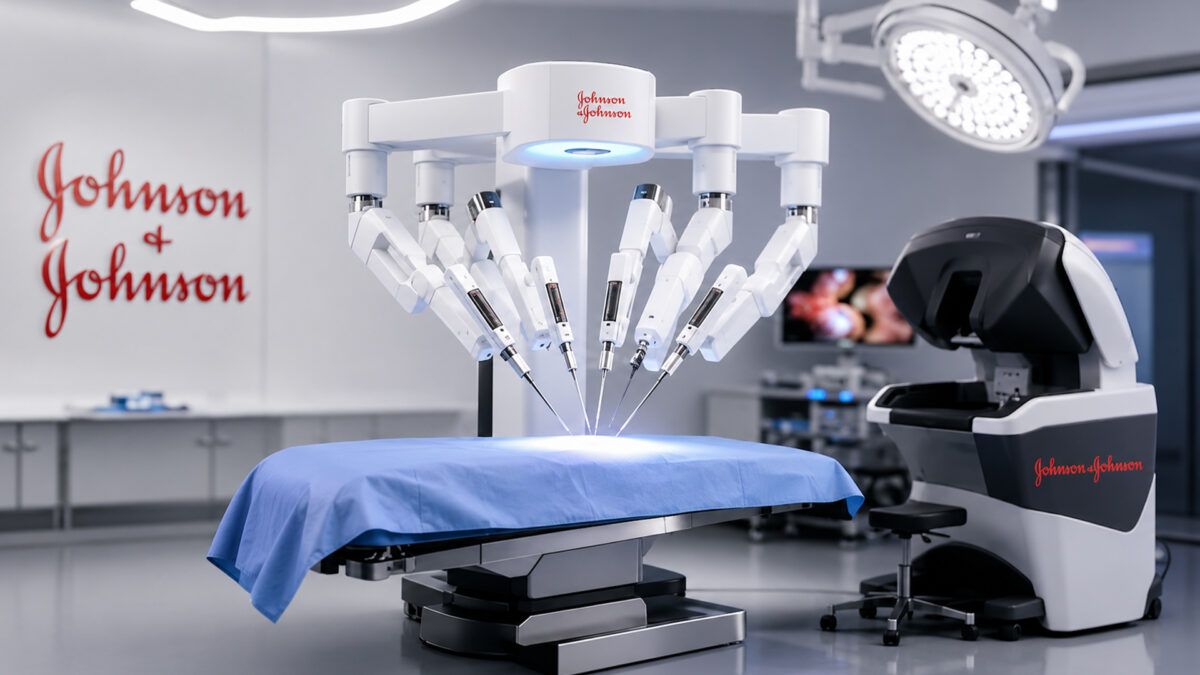
Johnson & Johnson has taken a major step into the rapidly growing robotic surgery market after its Ottava Robotic Surgical System received marketing authorisation from the US Food and Drug Administration (FDA). The approval opens the door for the healthcare giant to compete with established players in robot-assisted surgery, marking one of its biggest medical technology launches in recent years.
The company plans to introduce the system gradually across selected hospitals in the United States before expanding availability. This phased rollout will allow surgeons, nurses and healthcare teams to become familiar with the new technology while ensuring a smooth transition into routine clinical practice.
For patients, the arrival of another robotic surgery platform could eventually mean greater access to minimally invasive procedures. Robot-assisted surgery allows surgeons to perform complex operations with enhanced precision using robotic arms that are fully controlled by the surgeon. The technology often results in smaller incisions, less pain, reduced blood loss, fewer complications, shorter hospital stays and faster recovery compared to traditional open surgery.
The FDA has cleared the Ottava system for several upper abdominal general surgery procedures. These include gallbladder removal, appendix surgery, gastric bypass, sleeve gastrectomy, gastrectomy and hiatal hernia repair. Johnson & Johnson said it plans to expand the robot’s approved uses through additional clinical studies and future regulatory approvals.
A key feature that sets Ottava apart is its innovative design. Unlike conventional robotic surgery systems that require large robotic arms positioned around the patient, Ottava’s robotic arms are integrated into the operating table. This compact setup reduces the system’s footprint by around 30% to 50%, making it easier for hospitals with smaller operating rooms to adopt robotic-assisted surgery without major infrastructure changes.
The streamlined design also gives surgical teams more space to move around patients during procedures, improving workflow inside operating theatres. Hospitals that previously found robotic systems difficult to accommodate because of space limitations may now have a more practical option. The system has also been designed to allow easier positioning of patients and smoother movement of robotic arms during surgery, helping improve efficiency in the operating room.
Johnson & Johnson believes the robotic surgery market has enormous growth potential. Company executives estimate that only about 8% of surgeries worldwide are currently performed using robotic systems, leaving significant room for expansion as hospitals continue investing in advanced healthcare technologies.
The global medical robotics market has been expanding rapidly as healthcare providers seek technologies that improve surgical precision and patient outcomes. Increasing demand for minimally invasive surgery, rising healthcare investments and growing acceptance of digital healthcare solutions are expected to drive further adoption of robotic-assisted procedures over the coming years.
The company is also looking beyond the US market. It plans to seek regulatory approvals in regions including Japan and Western Europe, signalling its ambition to establish Ottava as a global robotic surgery platform. International expansion is expected to play a key role in the company’s long-term growth strategy.
Even with FDA approval, Johnson & Johnson faces strong competition. The robotic surgery market has long been dominated by Intuitive Surgical’s da Vinci system, while Medtronic has also strengthened its presence with its Hugo robotic-assisted surgery platform. Both companies already have a large installed base in hospitals, extensive surgeon training programmes and years of clinical experience.
However, Johnson & Johnson enters the market with decades of expertise in surgical devices, medical technology and hospital partnerships. Analysts believe the company’s strong global presence, broad product portfolio and established relationships with healthcare providers could help it gradually gain market share.
Industry experts also point out that hospitals increasingly prefer having multiple technology providers rather than relying on a single company. More competition in the robotic surgery space could encourage innovation, improve product features and eventually reduce costs, making advanced surgical technologies more accessible to hospitals and patients alike.
The company is already planning additional clinical trials, including studies for hernia repair and other procedures, to broaden Ottava’s surgical applications. More approved procedures would increase the robot’s versatility and make it a more attractive investment for hospitals looking to expand their robotic surgery programmes.
For surgeons, the new platform represents another option to perform complex operations with greater control and flexibility. For patients, it promises the possibility of safer surgeries, quicker recovery and improved overall surgical outcomes.
The FDA clearance represents a significant milestone for Johnson & Johnson as it enters one of healthcare’s fastest-growing segments. As demand for robotic surgery, minimally invasive surgery, medical robotics, advanced surgical technology and digital healthcare continues to rise, Ottava is expected to play an important role in shaping the future of modern surgery while intensifying competition in the global robotic surgery market.