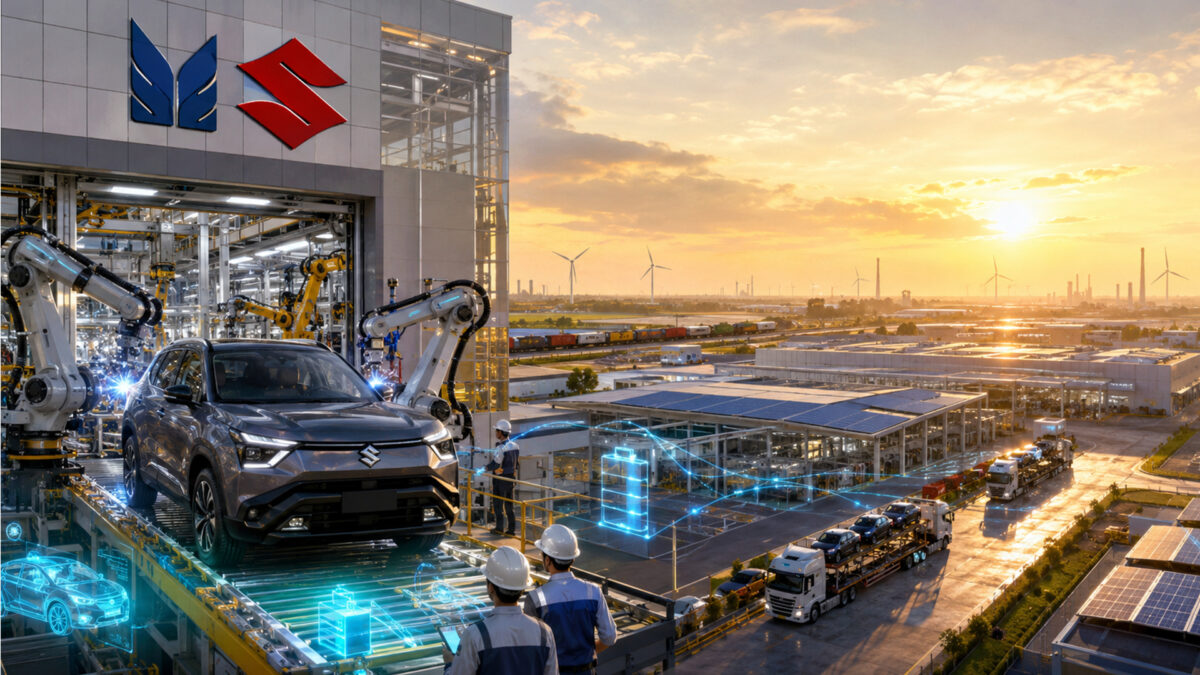
Maruti Suzuki India has expanded its manufacturing footprint in Gujarat with the start of commercial production at the fourth plant of its Hansalpur facility, taking the company’s total annual production capacity to 2.9 million vehicles.
The new plant, known as Plant D, adds 2.5 lakh units of annual production capacity. With its commissioning, the Hansalpur facility can now produce up to 10 lakh vehicles a year, up from 7.5 lakh units earlier. This makes it India’s largest passenger vehicle manufacturing facility at a single location and the first Suzuki manufacturing site globally to reach an annual capacity of one million vehicles.
For Maruti Suzuki, the expansion comes at a time when demand for passenger vehicles is evolving rapidly, particularly in the SUV and electric vehicle segments. The additional capacity gives the country’s largest carmaker more room to respond to demand in India while also strengthening its ability to use India as a manufacturing and export hub.
The new plant has been developed with an investment of around Rs 3,900 crore. The company’s cumulative investment at Hansalpur has now risen to about Rs 25,289 crore, highlighting the growing importance of Gujarat in Maruti Suzuki’s manufacturing strategy.
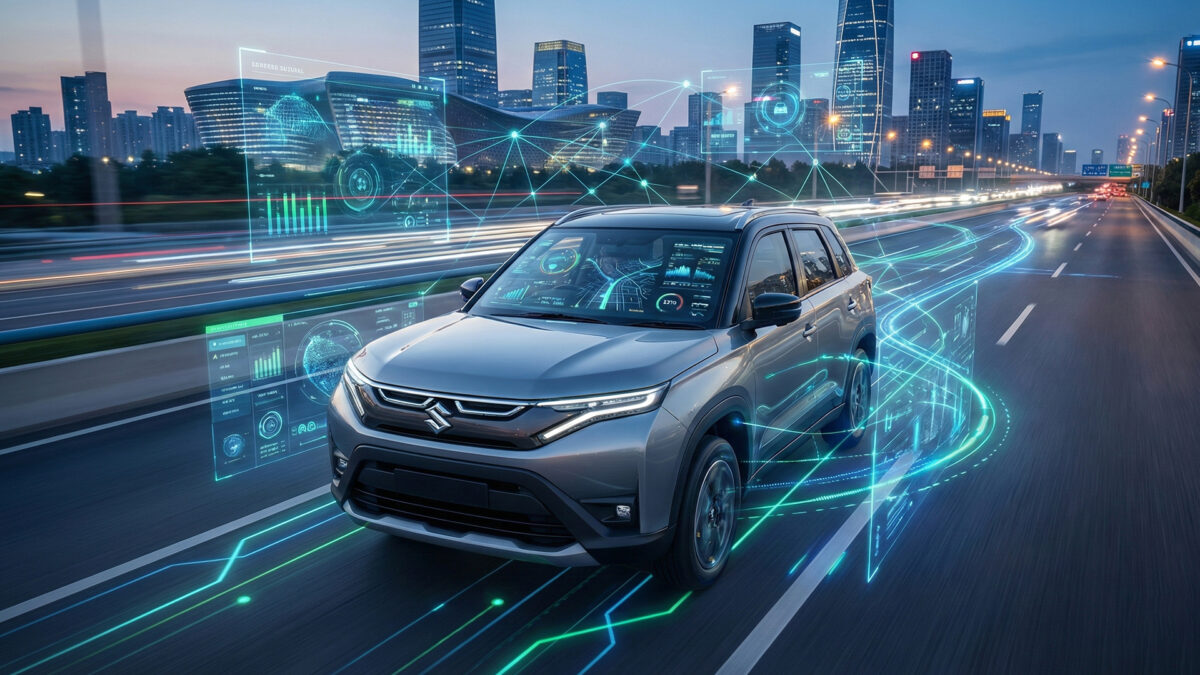
The facility will initially produce the Maruti Suzuki e VITARA, the company’s first battery electric vehicle. The e VITARA is being manufactured exclusively at the Gujarat facility and is positioned as a key product in Suzuki’s global electric vehicle strategy.
The move is also significant because the e VITARA is not being built only for Indian customers. Maruti Suzuki has been exporting the model to international markets, with the Hansalpur plant serving as its global production hub. The company exported more than 4.47 lakh vehicles in FY2025-26, its highest-ever annual export volume, marking growth of more than 34% from the previous financial year.
The expansion therefore goes beyond simply adding more cars to the production line. It strengthens Gujarat’s role in Maruti Suzuki’s larger plan to make India a global manufacturing base for both conventional and electric vehicles.
The company has been steadily increasing its manufacturing capacity across the country. Its facilities are now spread across Gurugram, Manesar and Kharkhoda in Haryana, along with Hansalpur in Gujarat. With the latest expansion, total installed capacity is expected to reach 2.9 million vehicles annually in FY2026-27.
The increase comes after another major capacity addition at Kharkhoda in Haryana. Maruti Suzuki recently began commercial production at the second plant there, adding another 2.5 lakh units and taking the Kharkhoda facility’s capacity to 5 lakh vehicles annually. The company plans to eventually increase the facility’s capacity to one million vehicles a year.
Maruti Suzuki has set its sights even higher for the years ahead. The company has indicated an ambition to take its overall production capacity to around four million vehicles annually. It is also developing another manufacturing facility at Khoraj Industrial Estate in Sanand, Gujarat, with a planned annual capacity of one million vehicles once fully operational.
This expansion reflects the changing nature of India’s automobile market. Maruti Suzuki continues to have a strong presence across hatchbacks, sedans, SUVs and other passenger vehicle categories, but the company is increasingly investing in technologies that can serve future demand.
Electric mobility is an important part of that transition. The e VITARA represents Maruti Suzuki’s entry into the battery electric vehicle market, while the company is also working on hybrid technology and local battery manufacturing. In 2025, Suzuki began production in India of lithium-ion battery cells and electrodes for strong-hybrid electric vehicles, alongside the launch of e VITARA production.
The Gujarat expansion also fits into Maruti Suzuki’s broader export strategy. The company has increasingly positioned India as a source of vehicles for overseas markets, helped by the scale of its manufacturing ecosystem and supplier base. Its record export performance last year shows that overseas demand is becoming an increasingly important part of the business.
At the same time, Maruti Suzuki is trying to make its manufacturing operations more sustainable. The company has been increasing the use of solar power and biogas at its plants. At Hansalpur, biogas has already replaced natural gas for around 10% of energy requirements, helping the facility manage energy supply while reducing its environmental footprint.
For consumers, the immediate impact of the new plant may not be visible overnight. But greater production capacity can give Maruti Suzuki more flexibility to manage demand, reduce pressure on existing facilities and support the launch and expansion of newer models.
For the Indian auto industry, however, the milestone is hard to miss. A single passenger vehicle manufacturing location capable of producing one million vehicles annually underlines the scale that India’s automobile manufacturing sector has reached.
With Hansalpur now operating at a one-million-unit capacity, Maruti Suzuki is effectively building a much larger production base around India’s growing domestic market and its ambitions overseas. The company’s next challenge will be to keep these factories running efficiently while navigating changing customer preferences, the shift towards SUVs and EVs, and intensifying competition in the passenger vehicle market.