Categories
1 Minute-Read

EV scheme funding slashed in budget 2026

The Union Budget 2026‑27 has significantly reduced funding for India’s electric mobility programs, with a total cut of over ₹3,700 crore compared to previous allocations.

Key schemes affected include the PM Electric Drive (PM E‑DRIVE) and the PM e‑Bus Sewa Scheme, aimed at boosting electric vehicle adoption and charging infrastructure.

Analysts say the cuts may slow the pace of EV adoption, even as the government continues to support manufacturing and long-term sustainable transport goals. This marks a notable shift in budgetary focus for the transport sector.

Categories
Corporate

Ford cancels $6.5 billion EV battery deal with LG

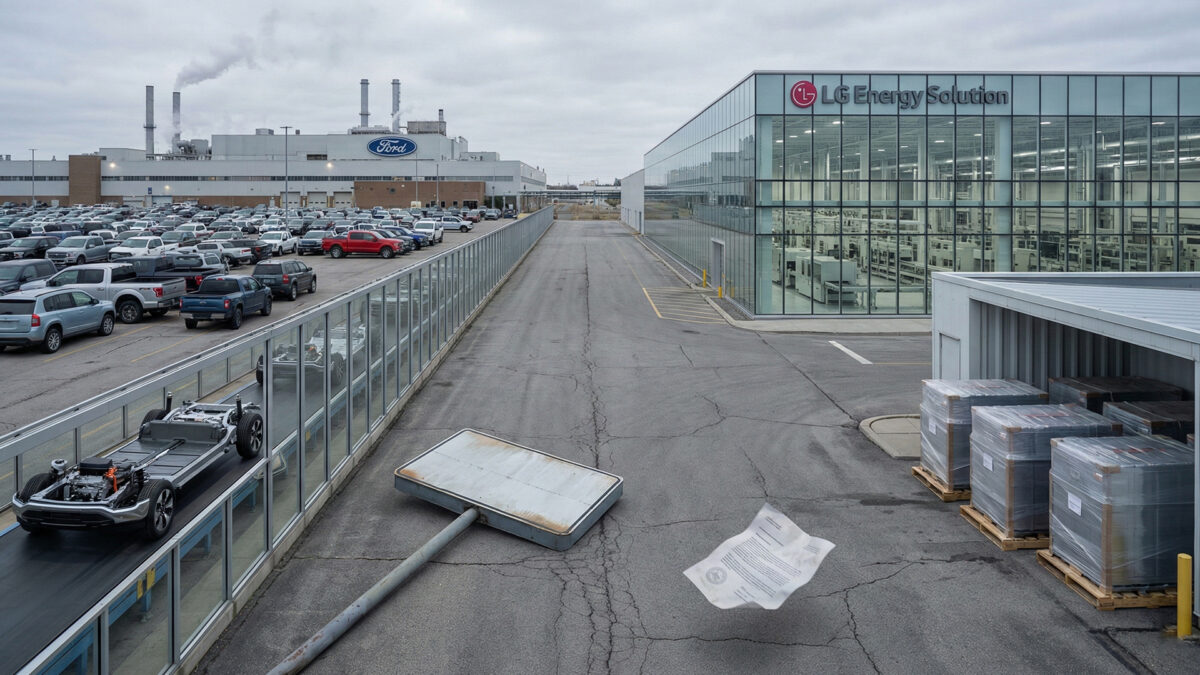
Ford Motor Company has cancelled a $6.5 billion electric vehicle battery contract with South Korea’s LG Energy Solution, just over a year after signing it in October 2024. The deal had covered battery supplies for Ford EVs from 2026 onward.

LG Energy Solution said the cancellation followed Ford’s decision to halt production of certain EV models. Ford cited shifts in government policies and lower-than-expected EV demand as reasons for ending the agreement.

The batteries were to be manufactured at LG’s plant in Poland for use in several Ford electric vehicles, including commercial vans.

Following the news, LG Energy Solution’s shares fell more than 7 percent on the Seoul stock market. Analysts warn that losing this contract may make it difficult for LG to fully utilize its European factory capacity when production was supposed to ramp up in 2027.

Industry observers note that the move reflects a broader reassessment by Ford of its EV strategy, including scaling back some fully electric models in response to slower sales and changing market conditions.

Also Read: Warner Bros rejects Paramount, pushes Netflix merger forward

Categories
Corporate

Volkswagen cuts India EV budget, seeks local partner

Volkswagen is reducing its planned investment in electric vehicles (EVs) in India and is seeking a local partner to share the cost. The company has lowered its EV development budget from around $1 billion to about $700 million.

The move comes as VW’s presence in India remains small, the combined market share of Volkswagen and Skoda is just about 2%. Earlier talks with Mahindra & Mahindra for a partnership reportedly fell through last year. VW is now exploring other options, including Indian contract manufacturers such as JSW.

VW plans to launch its EV in India around 2028, in line with tighter emission norms starting 2027. In the meantime, it may import EVs, especially if an EU‑India trade deal makes this easier.

Despite the cutback, VW is committed to India, with Skoda’s affordable SUV, the Kushaq, performing well in the local market.

Also Read: Rajiv Jain’s GQG buys ₹5,094 cr stake in five Adani firms

Categories
Corporate

India Plans ₹7,000 Cr Boost for Rare-Earth Magnets

India is set to triple incentives for rare-earth magnet manufacturing to nearly ₹7,000 crore ($788 million), aiming to reduce reliance on China and secure critical material supply for electric vehicles, wind energy, and defence.

The expanded PLI scheme, awaiting Cabinet approval, will support around five manufacturers through investment and production incentives. Rare-earth magnets, vital for EV motors and renewable technologies, are currently dominated by China, which controls about 90% of global refining.

To ensure a steady input supply, foreign miners such as Lynas Rare Earths (Australia), Rainbow Rare Earths (UK), and Iluka Resources have assured the government of rare-earth oxide availability under the plan.

This initiative aligns with India’s broader strategy to build supply-chain resilience and boost domestic capacity in clean-tech manufacturing.

Also Read: Sensex falls 100 pts, Nifty below 25,750