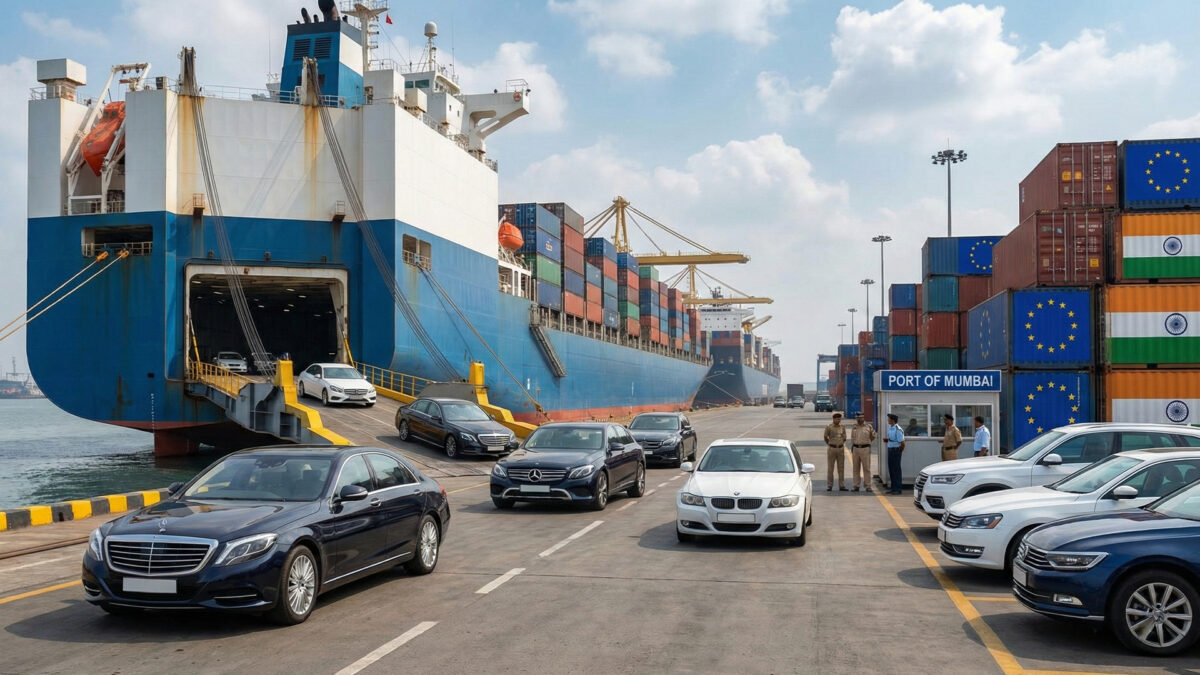
India is likely to sharply reduce import duties on cars coming from the European Union as part of a comprehensive free trade agreement that is close to being finalised, sources said. The proposed move would bring down tariffs from the current levels of up to 110 per cent to around 40 per cent, marking a significant shift in India’s long-standing protectionist policy for the automobile sector.
The tariff cut is expected to play a crucial role in concluding the India-EU free trade agreement, negotiations for which have been ongoing for nearly 20 years. Officials familiar with the discussions indicate that both sides are keen to seal the deal, with an announcement possible during an upcoming India-EU summit.
Initially, the lower tariffs are likely to apply to a limited number of imported cars, particularly higher-priced models. Over time, duties could be reduced further through a phased approach. European auto majors such as BMW, Mercedes-Benz and Volkswagen are expected to benefit, as high import taxes have so far restricted their sales volumes in the Indian market.
India’s government has traditionally used steep import duties to protect domestic carmakers and encourage manufacturing within the country. To balance domestic interests, the proposed agreement is expected to include safeguards, including delayed tariff cuts for electric vehicles, allowing Indian EV manufacturers time to strengthen their production base.
India is one of the world’s fastest-growing car markets, but imported vehicles make up only a small share due to high costs. A reduction in tariffs could make premium European cars more accessible to Indian consumers while increasing competition in the sector.
Also Read: Qure.ai wins $8 million grant from Gates foundation