Categories
Corporate

Tata Steel Q3 profit soars to ₹2,700 cr on Dutch boost

Tata Steel reported a huge increase in its net profit for the third quarter (October–December 2025), reaching around ₹2,690–₹2,730 crore, up more than nine times from roughly ₹300 crore a year ago.

The company’s revenue grew about 6% year-on-year, reaching nearly ₹57,000 crore, helped by strong sales in India and higher steel deliveries. Domestic deliveries crossed 6 million tonnes, marking a record for the company.

A major reason for the profit surge was the turnaround at Tata Steel’s Netherlands unit, which moved from a loss last year to a healthy profit. However, the UK business continued to face challenges due to weak demand.

Tata Steel’s EBITDA rose nearly 39%, reaching over ₹8,300 crore, thanks to cost-cutting measures and better efficiency. The company saved around ₹3,000 crore in the quarter and ₹8,600 crore in the first nine months of the year.

Despite tough global steel markets, including competition from China and trade uncertainties, Tata Steel maintained strong performance. The company also reduced its net debt to about ₹81,834 crore, strengthening its financial position.

In India, while steel prices were slightly lower, higher production and deliveries kept profits steady. Overall, the results reflect robust domestic demand, improved margins, and operational efficiency across key units.

Also Read: AI stethoscopes boost early health screening
Categories
Corporate

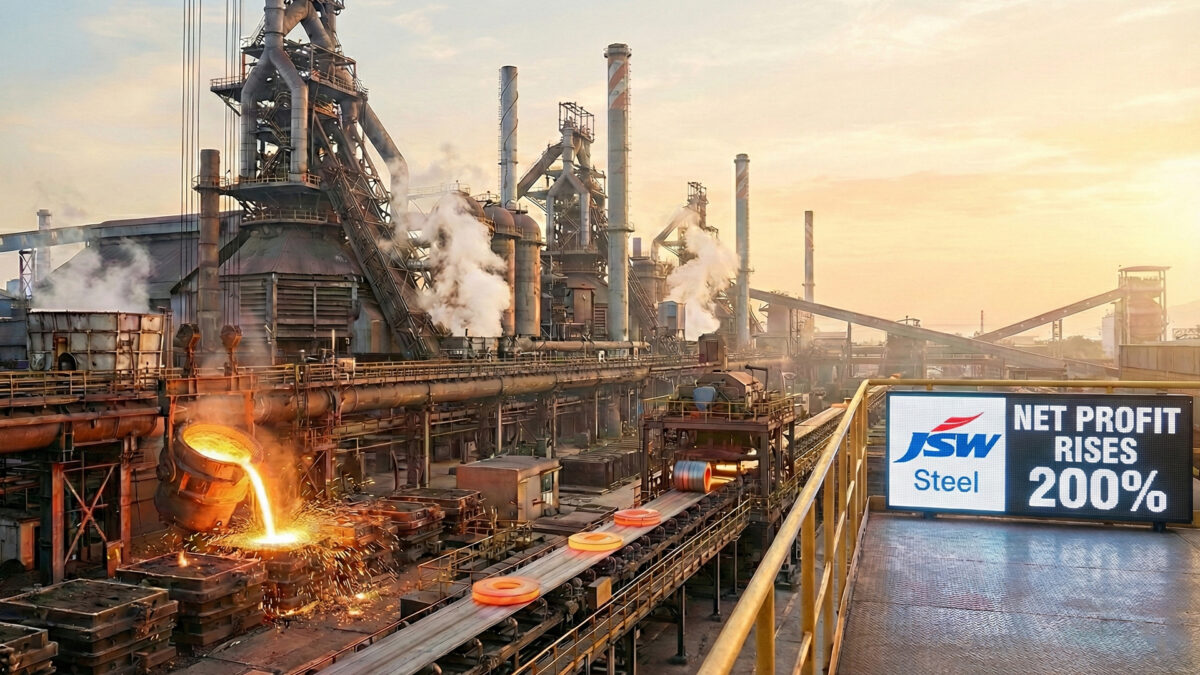
JSW Steel Q3 net profit rises 2.4x to Rs 2,410 cr

JSW Steel Ltd reported a strong increase in its consolidated net profit for the third quarter of the 2025–26 fiscal year, surpassing market expectations. The company posted a net profit of Rs 2,410 crore for the quarter ending December 31, 2025, more than double the Rs 719 crore recorded in the same period last year. The growth was driven by higher steel sales volumes and the recognition of one-time tax benefits.

Revenue from operations rose to approximately Rs 45,200–45,990 crore, up around 10–11 percent year‑on‑year. Saleable steel sales increased roughly 14 percent to 7.64 million tonnes, while crude steel production grew about 6–7 percent. Strong domestic demand from construction, automotive, and other sectors supported this growth.

The profit surge was further aided by the recognition of deferred tax assets of about Rs 1,439 crore, linked to unabsorbed depreciation in Bhushan Power and Steel Ltd. This accounting adjustment significantly boosted reported earnings for the quarter.

On the operational side, consolidated EBITDA rose about 20 percent year‑on‑year to Rs 6,496 crore. Despite the increase, margins narrowed slightly compared with the previous quarter, reflecting pressure on steel prices and rising input costs.

Looking ahead, JSW Steel plans continued investment in capacity expansion, including a major greenfield project in Odisha and potential growth at its Dolvi plant in Maharashtra.

Also Read: Adani Group fully acquires IANS

Categories
Corporate

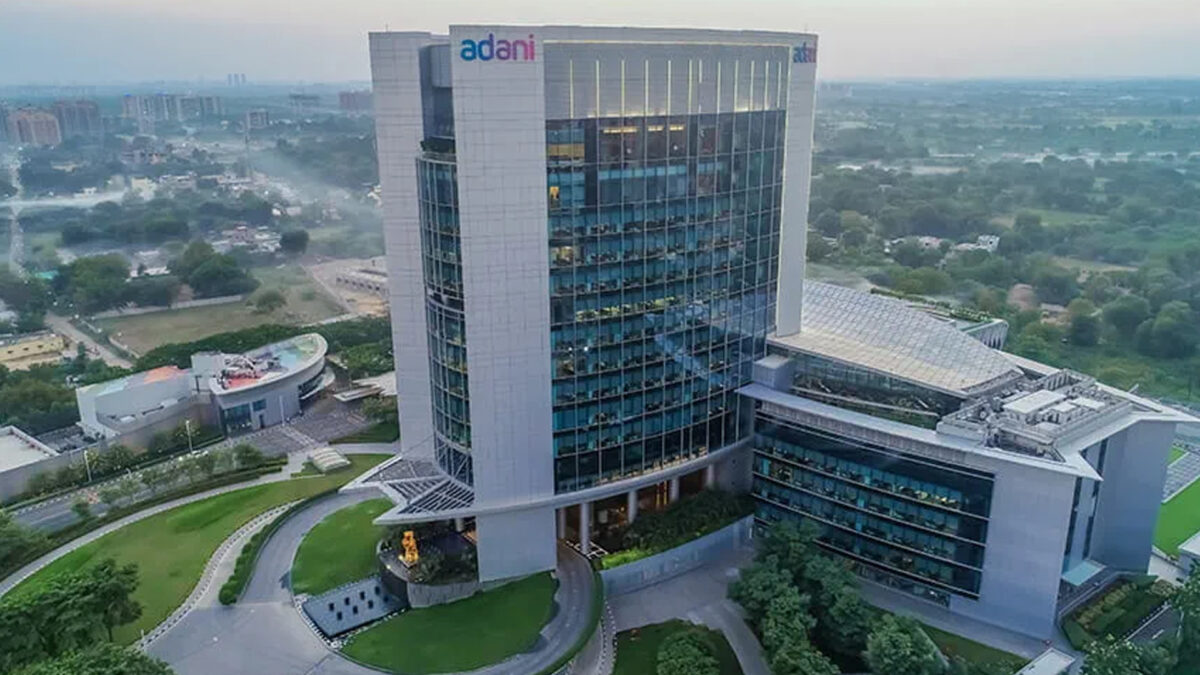
Adani’s H1 FY26 EBITDA hits ₹47,375 cr, capex surges

The Adani Group, India’s leading infrastructure and utilities conglomerate, reported strong financial performance for the first half of FY26, with record earnings and robust growth across its core businesses.

The portfolio’s half-year EBITDA reached an all-time high of ₹47,375 crore (USD 5.3 billion), pushing the trailing twelve months (TTM) EBITDA to ₹92,943 crore (USD 10.4 billion), up 11.2% year-on-year.

The Group’s infrastructure businesses, including utilities, ports, and incubated infrastructure projects under Adani Enterprises, accounted for 83% of H1 FY26 EBITDA, reflecting stable and long-term cash flows. Utilities like Adani Green Energy, Adani Power, Adani Total Gas, and Adani Energy Solutions, along with Adani Ports & SEZ, continued to perform strongly, demonstrating resilience amid a major capital expansion.

Adani’s H1 FY26 capex soared to ₹67,870 crore (USD 7.6 billion), bringing the total asset base to ₹6.77 lakh crore (USD 76 billion). The Group remains on track to achieve its FY26 capex target of ₹1.5 lakh crore, a figure equal to the portfolio’s total assets in FY19. Key expansions include the inauguration of the greenfield Navi Mumbai International Airport, new road projects in Bihar, and ropeway developments in Kedarnath.

The company maintained healthy financial discipline despite accelerated investments. Net debt-to-EBITDA stood at 3x, below the guided 3.5x–4.5x range, while cash reserves remained strong at ₹57,157 crore (USD 6.4 billion). Importantly, 52% of EBITDA now comes from AAA-rated domestic assets, highlighting the portfolio’s credit strength and investor appeal.

Operational highlights included a 49% year-on-year increase in Adani Green Energy’s capacity to 16.7 GW, a rise in port volumes at Adani Ports & SEZ to 244 MMT, and a 20% jump in Ambuja Cement’s sales to 35 MT. Adani Power added 4.5 GW of new power purchase agreements, targeting 42 GW capacity by 2032.

Commenting on the results, Group CFO Jugeshinder Singh said, “Our focus on disciplined execution, world-class operations, and strategic investments has delivered record performance. With rising AAA domestic ratings and strong cash generation, our infrastructure assets are increasingly attractive to global institutions.”

The Adani Group continues to emphasize sustainable growth, operational excellence, and long-term financial resilience, consolidating its position as a leader in India’s infrastructure landscape.

Also Read: TotalEnergies eyes ₹10,200 crore stake sale in Adani Green

Categories
Corporate

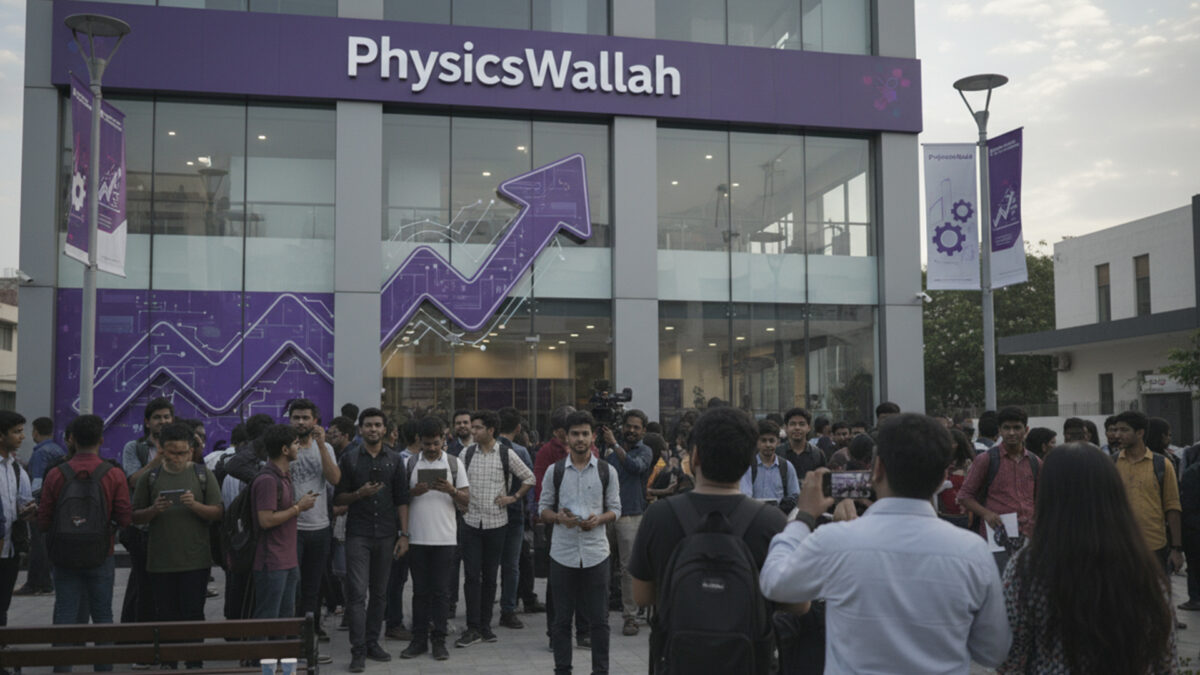
PhysicsWallah shares surge 33% on market listing day

Ed-tech firm PhysicsWallah made a strong debut on the Indian stock market on 18 November 2025, with shares listing at ₹145 on the NSE and ₹143 on the BSE, roughly 33 % above its ₹109 IPO price.

The IPO raised a total of around ₹3,480 crore, comprising a fresh issue of 28.45 crore shares worth ₹3,100.7 crore and an offer-for-sale (OFS) of 3.49 crore shares worth ₹380 crore. The price band was ₹103–₹109 per share, and the IPO was open from 11–13 November.

Institutional investors showed strong interest, with the Qualified Institutional Buyers (QIB) segment subscribed 2.7 times. Retail investors subscribed 1.06 times, while non-institutional investors saw weaker demand at 0.48 times.

PhysicsWallah plans to use the IPO proceeds to fund expansion of offline “Vidyapeeth” and hybrid “Pathshala” learning centres, enhance cloud and technology infrastructure, cover lease costs for existing centres, boost marketing (₹710 crore), and pursue acquisitions (₹941 crore).

The company’s financials show rapid revenue growth from FY 23 to FY 25 at a CAGR of 96.9 %, reaching ₹2,886.6 crore, while adjusted EBITDA grew 90.3 % to ₹432 crore. However, net losses widened to ₹243.3 crore in FY 25 from ₹84.1 crore in FY 23, and EBITDA margins slipped slightly to 15 %.

Analysts note that while the strong listing reflects investor confidence, challenges remain, including heavy competition in the ed-tech sector, high operating costs, and the need to sustain student enrolments to achieve profitability.

PhysicsWallah’s IPO listing has set the tone for other ed-tech firms considering public offerings, showing that investors are willing to back high-growth companies even if they are not yet profitable.

Also Read: Kotak Mahindra Bank up 1% before Nov 21 split meet

Categories
1 Minute-Read

LG Electronics India Q2 Profit Falls 27%

LG Electronics India reported a net profit of ₹389 crore for Q2 FY26, down 27% from ₹536 crore a year ago, as rising costs offset modest revenue growth.

Total revenue grew 1% to ₹6,174 crore, while expenses rose 3% to ₹5,729 crore, compressing margins. EBITDA stood at ₹547–548 crore, with a margin of 8.9%, down from 12.4% previously.

Segment-wise, Home Appliances & Air Solutions remained flat at ₹3,947 crore, and Home Entertainment rose 3% to ₹2,261 crore.

The company cited softer demand ahead of GST cuts but expects improvement in Q3 as festival-season sales and channel inventories stabilize.

Categories
Corporate

Adani Enterprises Q2 profit jumps 84% YoY to ₹3,199 crore

Adani Enterprises Ltd (AEL), the flagship of the Adani Group, reported consolidated EBITDA of ₹7,688 crore and profit before tax (PBT) of ₹2,281 crore for the first half of FY26, driven by strong growth in infrastructure and energy ventures.

The company’s Board also approved a ₹25,000 crore rights issue, marking one of the largest fundraises by the group in recent years. The capital infusion is expected to strengthen AEL’s balance sheet and support expansion in high-growth areas such as airports, data centers, green energy, and roads.

The first half of FY26 was marked by key milestones, including the inauguration of the greenfield Navi Mumbai International Airport and the completion of the company’s seventh road project. These achievements highlight its ability to execute complex, large-scale infrastructure projects on schedule, AEL said.

It added that the emerging core infrastructure portfolio spanning airports, data centers, and roads delivered an EBITDA of ₹5,470 crore during the half year, up 5% year-on-year. This segment now contributes 71% of the company’s consolidated EBITDA, underlining its growing importance within the overall portfolio.

“With disciplined execution and strategic diversification, Adani Enterprises continues to strengthen its position as India’s leading incubator of transformative infrastructure and energy businesses,” said Gautam Adani, Chairman of the Adani Group. “The inauguration of the Navi Mumbai International Airport marks a defining moment in India’s infrastructure story and reinforces AEL’s role as a national growth catalyst.”

AEL’s collaboration with Google on India’s largest AI data centre and its progress in green energy place the company at the forefront of the country’s tech-driven sustainability push. He added that AEL aims to build globally competitive businesses that deliver enduring value and strengthen India’s self-reliance.

Over the years, AEL has successfully incubated and scaled several businesses that are now independently listed entities, including Adani Ports & SEZ, Adani Energy Solutions, Adani Power, Adani Green Energy, Adani Total Gas, and Adani Wilmar. The company’s current portfolio of next-generation businesses, including the green hydrogen ecosystem, airports, data centers, roads, copper, and petrochemicals, is seen as the next phase of value creation for the group.

With a diversified portfolio and a proven record of project execution, AEL said it remains well-positioned to deliver sustainable growth while contributing to India’s infrastructure and energy transformation.

Also Read: Adani Ports Q2 Profit Up 29% as Logistics, Marine Shine

Categories
Corporate

Adani Ports Q2 Profit Up 29% as Logistics, Marine Shine

Adani Ports and Special Economic Zone Ltd (APSEZ) on Tuesday reported a 29% year-on-year jump in consolidated net profit to ₹3,120 crore for the July–September quarter of FY26, boosted by higher cargo volumes and strong growth in its logistics and marine segments.

Revenue rose 30% to ₹9,167 crore, while EBITDA increased 27% to ₹5,550 crore. For the first half of FY26, revenue stood at ₹18,294 crore, up 25% from a year ago, and profit after tax climbed 17% to ₹6,431 crore.

The company’s domestic ports business achieved a record EBITDA margin of 74.2%, with overall cargo volumes growing 12% year-on-year to 124 million metric tonnes. Market share rose to 28.1%, while container share expanded 150 basis points to 45.9%.

Logistics revenue nearly doubled to ₹2,224 crore in H1 FY26, driven by the ramp-up of trucking and international freight operations, while marine revenue surged 213% to ₹1,182 crore following new vessel acquisitions. International ports delivered a lifetime-high H1 revenue of ₹2,050 crore, reflecting strong performance at Haifa, Colombo, and Dar es Salaam.

Ashwani Gupta, Whole-time Director and CEO, said the results reflect “the success of APSEZ’s Integrated Transport Utility model,” adding that expanding port capacity, marine fleet, and logistics networks is creating a seamless supply chain from “port gate to customer gate.”

Credit ratings agencies turned more optimistic on the company’s outlook. Fitch revised APSEZ’s outlook to “Stable” from “Negative” and reaffirmed its “BBB–” rating, while S&P Global upgraded its outlook to “Positive.”

The company also reported progress in sustainability, ranking among the top 5% of global transportation firms in the S&P Global Corporate Sustainability Assessment and achieving Zero Waste to Landfill certification for 12 ports.

During the quarter, APSEZ announced plans to acquire Australia’s NQXT Port, expand capacity at Dhamra and Karaikal ports, and invest ₹600 crore in a new 70-acre logistics park in Kochi. It aims to handle one billion tonnes of cargo annually by 2030.

Also Read: Adani Power Invokes Arbitration Clause in Bangladesh Dispute

Categories
Corporate

Urban Company Shares Drop 6% as Q2 Loss Hits ₹59 Cr

Urban Company shares fell nearly 6% on Monday after the home-services marketplace reported a wider consolidated net loss of ₹59.33 crore for the second quarter ended September 2025 (Q2 FY26), compared to ₹1.82 crore a year earlier. The loss came despite robust revenue growth, as elevated spending on new verticals, partner onboarding, and marketing weighed on margins.

Revenue from operations rose 37% year-on-year to ₹380 crore, reflecting continued momentum across beauty, home repair, and cleaning segments. However, total expenses surged to ₹462 crore from ₹384 crore in the same quarter last year, leading to an adjusted EBITDA loss of ₹35 crore.

A major drag on profitability was the company’s newly launched Insta Help vertical, which reported an EBITDA loss of ₹44 crore in the quarter. Excluding Insta Help, Urban Company’s core business delivered an adjusted EBITDA profit of ₹10 crore, or 0.9% of net transaction value (NTV).

Within India’s consumer services segment, excluding Insta Help, NTV grew 19% to ₹762 crore, while revenue increased 24% to ₹262 crore. The segment reported an adjusted EBITDA of ₹18 crore, equivalent to 2.4% of NTV, compared with 3.1% a year ago.

The company’s Native product category, featuring appliances such as water purifiers and smart locks, continued to expand rapidly. NTV jumped 164% year-on-year to ₹97 crore, while revenue climbed 179% to ₹75 crore. Despite this, the segment posted a smaller loss of ₹9 crore, indicating improved efficiency.

Urban Company’s international business, operating in the UAE and Singapore, also showed encouraging progress, with NTV rising 73% and revenue up 66% year-on-year, achieving near breakeven levels.

The company, which debuted on the stock exchanges earlier this year, reiterated its focus on long-term value creation through technology, service quality, and category diversification. Management said near-term losses reflect ongoing investments in scaling operations and enhancing partner experience.

Also Read: Ambuja Cements Q2 Profit Rises 364% to ₹2,302 Crore