Categories
Beyond

India’s ethanol push crosses 800 cr litres

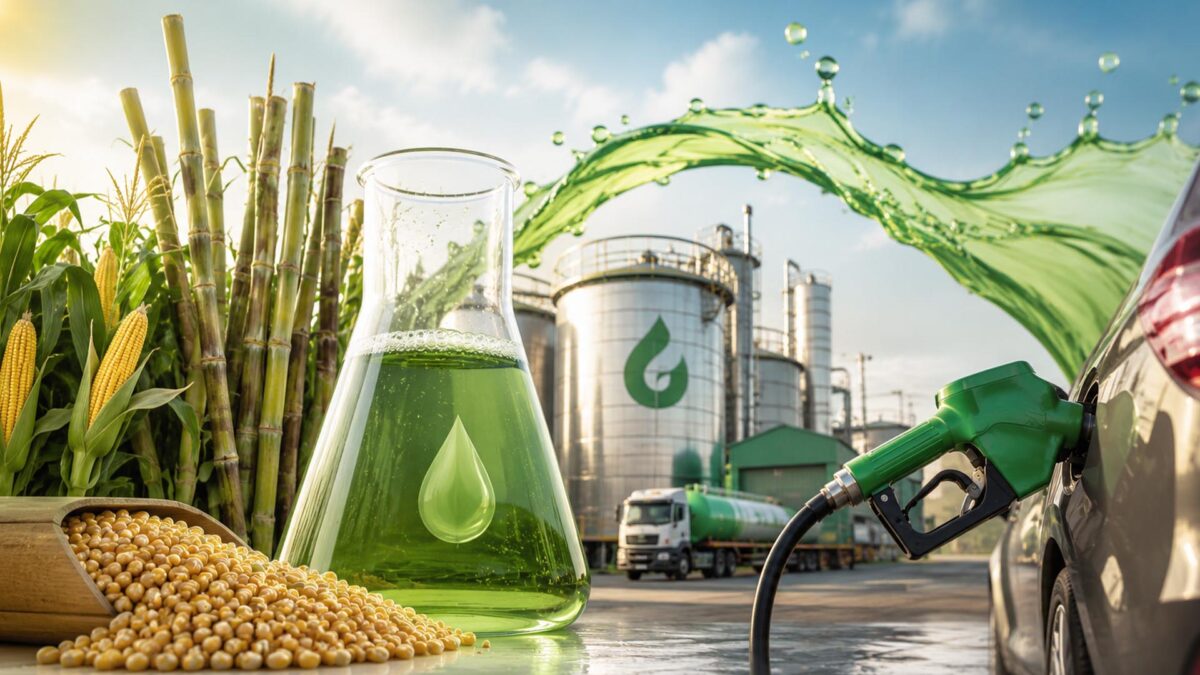
India’s ethanol programme has crossed a significant milestone, with cumulative supplies exceeding 800 crore litres during Ethanol Supply Year (ESY) 2025-26. The latest data from the All India Distillers’ Association (AIDA) also shows a clear change in the country’s ethanol supply mix, with grain-based feedstocks taking a much larger role than sugarcane.

The milestone comes as India pushes ahead with its ethanol blending programme, aimed at reducing dependence on imported crude oil, improving energy security and creating an additional market for agricultural produce. But the industry is now confronting a different problem: ensuring that the rapidly expanding ethanol supply is matched by sufficient demand.

According to AIDA data, ethanol supplies during July stood at 93 crore litres, taking cumulative supplies for ESY 2025-26 beyond the 800-crore-litre mark. Grain-based ethanol accounted for about 71 crore litres, or 76% of July supplies. The share was higher than the approximately 73% recorded in June, even though total monthly supplies were lower in July.

The shift is important because ethanol production in India has traditionally been closely linked to the sugar industry. Increasing use of grains means the country is building a more diversified feedstock base, reducing its dependence on sugarcane and giving distilleries greater flexibility in sourcing raw material.

Maize and surplus Food Corporation of India (FCI) grains have emerged as important contributors to this transition. Data reported from AIDA shows that maize and surplus FCI grains each contributed around 30 crore litres to July’s grain-based ethanol supplies.

This change also comes at a time when the economics of sugar and ethanol are shifting. India is dealing with concerns over sugar availability and prices after weaker rainfall in key producing states. The government is considering changes to the use of sugarcane for ethanol in the next supply year, potentially encouraging greater use of maize and rice-based feedstocks instead.

The development could make grain-based ethanol even more important for the country’s E20 blending target. India has already moved towards petrol containing up to 20% ethanol, creating a large and assured market for biofuel producers. The broader objective is to replace a portion of petrol consumption with domestically produced ethanol.

The expansion of grain-based ethanol also has implications for farmers. Maize has become an increasingly important feedstock, creating an additional source of demand beyond traditional uses such as animal feed and food processing. A diversified ethanol market can therefore provide farmers with another avenue to sell their produce.

However, higher production capacity by itself does not guarantee that the industry will remain profitable. The next challenge is demand. As ethanol availability rises, oil marketing companies and other potential users need to absorb the additional volumes. The Times of India report highlights this emerging gap between the industry’s ability to produce ethanol and the pace at which demand is developing.

That issue could become more important as India continues adding distillation capacity. If production grows faster than procurement and blending requirements, producers could face pressure on utilisation levels and margins. For the government, maintaining a predictable procurement framework will therefore be important to keep investment flowing into the sector.

The changing feedstock pattern also offers some protection against supply shocks. In June, grain-based ethanol accounted for roughly 75% of supplies, with 75 crore litres supplied from grains out of total monthly supplies of 103 crore litres. By July, grain-based supplies remained dominant at 71 crore litres out of 93 crore litres.

Earlier AIDA data had already shown the growing importance of grains. By June, cumulative ethanol supplies had reached 717 crore litres, against contracted volumes of 1,048 crore litres. Grain-based ethanol accounted for 480 crore litres, or nearly 67% of total supplies at that stage, while sugarcane-based sources contributed 238 crore litres.

The numbers indicate how quickly India’s ethanol supply chain has evolved. Maize has moved to the centre of the biofuel ecosystem, while surplus food grains and sugar-based feedstocks continue to provide additional sources.

For the government, the programme serves several objectives at once. Higher ethanol blending can help reduce petrol imports, strengthen energy security and support agricultural markets. For sugar mills and distilleries, ethanol offers an alternative revenue stream, while grain-based production creates demand for crops such as maize.

The 800-crore-litre milestone therefore represents more than a production figure. It shows that India has built significant capacity to supply ethanol at scale. The bigger test now is whether consumption, blending and procurement can keep pace with that capacity.
 

Categories
Beyond

Mercedes-Benz clarifies E20 fuel compatibility

Mercedes-Benz India has issued a clarification on the use of E20 fuel after popular YouTuber Sourav Joshi claimed that his luxury car’s mileage had dropped significantly following the switch to the ethanol-blended fuel. The company said it was happy to address the concerns and explained that E20 compatibility depends on the vehicle model and engine specifications.

The controversy began after Joshi shared a video in which he said his Mercedes-Benz had started delivering lower fuel efficiency after using E20 petrol. The video quickly gained attention on social media, with many car owners expressing similar concerns and questioning the impact of higher ethanol blends on vehicle performance.

Responding to the discussion, Mercedes-Benz India said all its petrol vehicles manufactured from April 2023 onwards are fully compatible with E20 fuel, in line with the Government of India’s fuel transition roadmap. However, the company advised owners of older models to check their vehicle manuals or contact authorised dealerships before regularly using E20 petrol.

The automaker clarified that fuel efficiency can vary due to several factors, including driving style, traffic conditions, road quality, weather and fuel composition. It noted that ethanol contains less energy than conventional petrol, which may lead to a slight reduction in mileage, but this does not necessarily indicate a mechanical issue with the vehicle.

Mercedes-Benz also reiterated that customers should use only the fuel grade recommended for their specific vehicle to ensure optimum performance and long-term reliability. The company said its service network is available to assist customers who have questions about fuel compatibility or notice changes in vehicle performance.

Automobile experts said the issue is not unique to Mercedes-Benz. Vehicles designed for E20 fuel generally operate without problems, but some owners may observe a marginal drop in fuel economy because ethanol has a lower energy content than pure petrol.

Also Read: HDFC Bank redeploys staff as technology boosts productivity

Categories
Beyond

ARAI report flags E20 risks for older vehicles

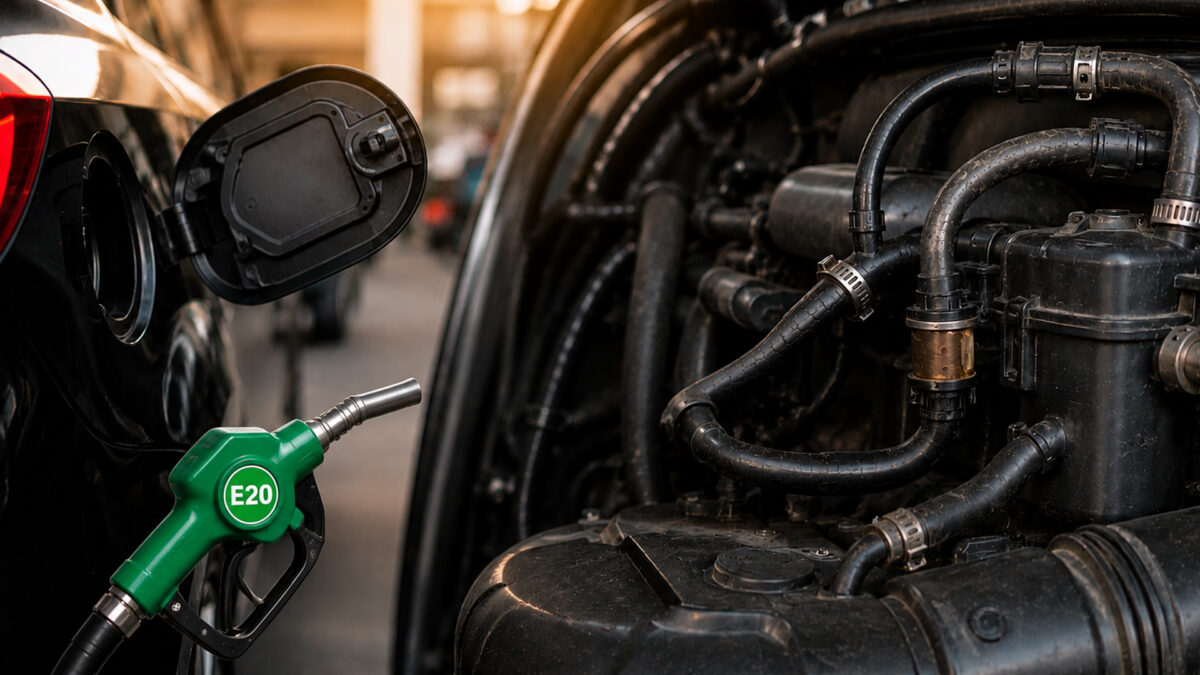
An unpublished study by the Automotive Research Association of India (ARAI) has raised concerns over the use of E20 petrol in older vehicles, warning that the higher ethanol blend could gradually damage certain rubber components in fuel systems designed for E10 fuel.

The report says prolonged use of E20 may affect rubber parts such as hoses, seals, gaskets and O-rings in older four-wheelers, potentially increasing maintenance requirements over time. However, it found no evidence of damage to metallic fuel-system components.

The study also examined engine durability in passenger vehicles. While one BS-IV engine completed testing without major issues, a BS-VI turbocharged engine developed problems after around 265 hours of operation. Another manufacturer reported no abnormalities after 400 hours, whereas a separate test recorded an exhaust valve failure after nearly 809 hours. The report noted that standard durability tests usually continue for about 2,000 hours, making it difficult to directly link the failure to E20 fuel alone.

Two-wheelers performed better during the evaluation. Tests conducted by three manufacturers found no significant durability or performance issues, suggesting existing motorcycles and scooters are less likely to face compatibility concerns with E20 petrol.

The report also estimates that vehicles running on E20 could experience a fuel efficiency drop of around 2% to 6% compared with E10, depending on the vehicle and engine type.

The findings have sparked fresh discussion as India accelerates the nationwide rollout of E20 petrol. Owners of older vehicles have expressed concerns over possible repair costs and reduced mileage, while the automobile industry has defended the transition.

Leading manufacturers, including Maruti Suzuki, Hyundai, Toyota Kirloskar Motor, Hero MotoCorp, TVS Motor and Bajaj Auto, have said extensive laboratory tests, field trials and real-world data have not shown widespread damage in vehicles currently on the road. They also maintain that newer E20-compatible models have undergone comprehensive validation before being introduced.

Also Read: Trent reports 19% revenue growth in first quarter

Categories
Beyond

E20 cuts mileage slightly, says Hardeep Singh Puri

Union Petroleum and Natural Gas Minister Hardeep Singh Puri has dismissed concerns over E20 petrol, saying the ethanol-blended fuel causes only a marginal reduction in vehicle mileage and remains a key part of India’s plan to improve energy security and reduce dependence on imported crude oil.

Responding to questions about the impact of E20 fuel on vehicles, Puri said the blend has undergone extensive testing and is safe for compatible engines. He added that ethanol-blended fuels are widely used across the world and even power high-performance racing vehicles, countering claims that E20 significantly affects engine performance or efficiency.

The minister acknowledged that motorists may notice a slight drop in mileage with E20 fuel, but stressed that the difference is minimal compared to the environmental and economic benefits of increasing ethanol use. India has been steadily raising ethanol blending levels to reduce crude oil imports, support sugarcane farmers and lower carbon emissions.

Puri also addressed growing public concern over petrol and diesel prices, which have remained unchanged despite a decline in international crude oil prices in recent weeks.

He explained that oil marketing companies are still refining crude purchased during the recent West Asia conflict, when global oil prices, freight charges and insurance costs were considerably higher. As a result, the benefit of lower international crude prices has not yet reached consumers at fuel stations.

According to the minister, state-run oil companies incurred significant losses during the April-June period as they continued supplying petrol, diesel and LPG while absorbing higher input costs. He indicated that any reduction in pump prices would depend on global crude remaining stable at lower levels for a sustained period.

India’s ethanol blending programme has accelerated in recent years, with the government promoting cleaner fuels and encouraging the adoption of flex-fuel vehicles. Officials believe the initiative will not only reduce the country’s import bill but also strengthen energy security in the long run.

Also Read: HCLTech secures $1.14 bn AI transformation deal