
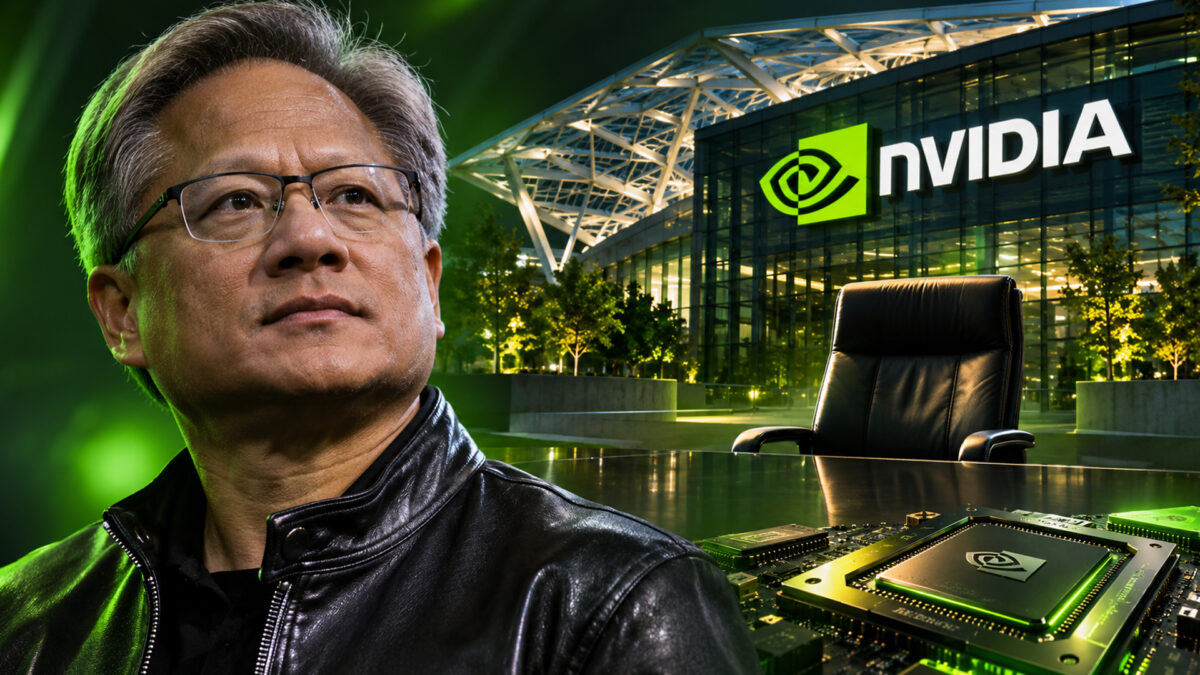
Nvidia co-founder and long-serving chief executive Jensen Huang has resigned with immediate effect, bringing an unexpected end to his 33-year leadership of one of the world’s most influential technology companies. His departure follows mounting controversy surrounding reports of multiple alleged extramarital relationships, including one involving a Chinese businesswoman suspected by US intelligence agencies of having links to Beijing.
The resignation, announced by Nvidia on November 12, marks a major turning point for the company, which has emerged as the biggest beneficiary of the global artificial intelligence boom. The controversy has raised questions about corporate leadership, national security and the future direction of the world’s leading AI chipmaker.
Nvidia confirmed that its board had accepted Huang’s resignation as president, chief executive officer and board member. The company appointed its chief financial officer, Colette Kress, as interim CEO while it searches for a permanent replacement. Kress will continue handling her finance responsibilities alongside the additional leadership role.
The board has also appointed Harvey C. Jones as its first-ever chairman. Jones, a long-time Nvidia director, has more than three decades of experience in technology leadership, entrepreneurship and venture investment. He previously served as chief executive and executive chairman of Synopsys.
The leadership transition follows days of intense scrutiny over Huang’s personal relationships and the possible national security implications. Reports had suggested that Nvidia’s board was considering his future even before the company formally announced his departure.
The controversy initially gathered attention after reports linked Huang to Alice Huang, a Chinese businesswoman and former executive associated with Singapore-based Megaspeed, a company connected to Nvidia’s cloud computing business. US intelligence officials reportedly suspected that she could have links to Chinese intelligence operations.
The allegations became particularly sensitive because Nvidia’s advanced graphics processing units (GPUs) are central to the global artificial intelligence industry. These chips are used to develop and operate sophisticated AI models, making them strategically important in the technology competition between the United States and China.
Questions were also raised about whether Huang’s relationship could have exposed sensitive corporate information or created potential security risks. However, the allegations have not been conclusively established. The US Justice Department has indicated that it has not reached a final conclusion regarding the espionage claims, while Beijing has rejected the accusations.
Nvidia’s board had already initiated an independent investigation on November 8 after reports suggested that Huang might have been targeted by a foreign intelligence operation. The investigation was to be supervised by independent directors with assistance from external legal advisers.
Huang acknowledged being unfaithful to his wife, Lori Huang, in a message to Nvidia employees on November 8. He apologised to his family, colleagues and shareholders, accepting responsibility for his personal decisions. He also expressed support for the board’s investigation and promised to cooperate fully.
The situation became more complicated following further reports about an alleged relationship with another Nvidia employee, identified in media reports as Kimberly Powell, the company’s vice president of healthcare. These reports added to the pressure surrounding the chief executive. Huang did not publicly confirm the second allegation.
The developments also attracted attention in Washington, where lawmakers have been increasingly concerned about China’s access to advanced semiconductor technology. US officials have called for closer scrutiny of technology exports, particularly high-performance AI chips that could strengthen China’s computing and military capabilities.
The controversy has also brought renewed attention to Huang’s position on semiconductor exports. He had previously argued that maintaining access to the Chinese market was important for American technology companies. His departure could influence discussions around US chip export restrictions and the broader competition between Washington and Beijing.
Meanwhile, Nvidia shares faced fresh pressure following the leadership announcement. The stock closed 4.3% lower on November 12, reflecting investor concerns about the sudden departure of a leader closely associated with the company’s growth. The uncertainty also affected Huang’s personal fortune, which is largely linked to his substantial Nvidia shareholding.
According to Forbes, Huang’s estimated wealth dropped sharply during the market turmoil, although it recovered partially as trading progressed. He remains a major shareholder with a stake of approximately 3.6% in the company. His resignation from the board does not automatically mean that he will sell his shares.
For Nvidia, finding a successor will be one of the most important challenges in the coming months. Huang was not simply the company’s public face but also a central figure in its technology strategy, product development and relationships with major customers.
Colette Kress brings considerable financial and corporate experience to the interim position. She joined Nvidia in September 2013 and previously held senior finance positions at companies including Cisco and Microsoft. Her familiarity with Nvidia’s operations and financial position could help provide stability during the transition.
However, questions remain about whether she will eventually become the permanent chief executive or whether the board will appoint an external candidate. The search is expected to consider both internal and external leadership options.
Huang co-founded Nvidia in 1993, initially building the company around graphics processing technology for computers and video games. Over the years, he transformed it into a global semiconductor powerhouse by recognising the potential of GPUs in artificial intelligence, high-performance computing and data centres.
The company’s chips have become essential to major technology firms investing billions of dollars in AI infrastructure. Its growth has made Nvidia one of the most valuable companies in the world and placed Huang among the richest individuals globally.
The immediate priority for Nvidia will be to reassure investors, customers and business partners that its operations and technology roadmap remain unaffected. The company has said its leadership team will continue implementing existing plans and serving customers without interruption.