
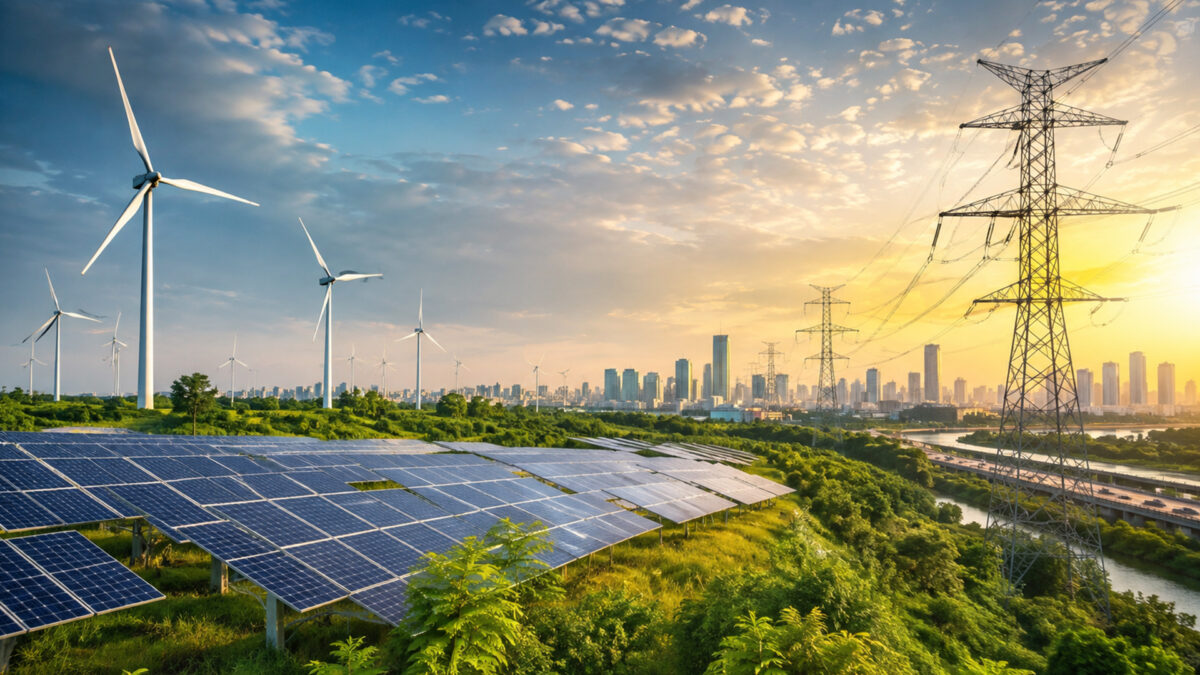
India has crossed the 300 GW mark in installed non-fossil fuel-based electricity generation capacity, marking a significant step in its clean energy transition. The country’s total non-fossil capacity reached 300.50 GW as of July 31, 2026, putting India beyond 60 per cent of its target of having 500 GW of non-fossil power capacity by 2030.
The milestone highlights the rapid expansion of renewable energy in India, particularly solar power and wind energy. Solar has emerged as the main engine of the country’s clean energy growth, supported by rising investments, large-scale projects and government policies aimed at expanding renewable generation.
According to the latest capacity figures, solar power accounts for 164.59 GW of India’s installed non-fossil capacity. Wind power contributes 58.14 GW, while large and small hydro projects together account for 57.24 GW. Bio-power contributes another 11.75 GW, while nuclear power accounts for 8.78 GW. Together, these sources have taken total non-fossil installed capacity to 300.50 GW.
The achievement is particularly notable because India‘s clean energy capacity has expanded rapidly over the past decade. Solar capacity, for example, has grown from only about 2.8 GW in 2014 to nearly 165 GW now. Wind power capacity has also increased substantially, reaching more than 58 GW from around 21 GW in 2014.
The pace of additions has accelerated in recent years. During 2025-26, India added a record 55.29 GW of non-fossil fuel-based electricity capacity. Solar power accounted for about 44.6 GW of those additions, while wind contributed around 6 GW. The figures underline how strongly solar energy is driving India’s renewable energy expansion.
The 300 GW milestone also brings India closer to its broader 2030 energy ambitions. The government has set a target of 500 GW of non-fossil fuel-based installed electricity capacity by 2030. With 300.50 GW already installed, the country has completed more than three-fifths of that target.
This means India now needs to add roughly 200 GW of additional non-fossil capacity over the next few years to reach the 500 GW goal. The scale of the remaining requirement is substantial, but the recent pace of capacity additions provides some indication of the momentum behind the clean energy push.
The expansion is not limited to solar and wind. Hydropower continues to form an important part of India’s non-fossil electricity mix because it can provide relatively flexible generation and support grid stability. Nuclear power, although smaller in installed capacity, is also expected to play a role in the country’s longer-term low-carbon electricity strategy.
India’s clean energy transition is being driven by several objectives at the same time. Increasing renewable energy capacity can help reduce dependence on fossil fuels, improve energy security and support efforts to lower carbon emissions. For a country with rapidly growing electricity demand, expanding domestic sources such as solar, wind and hydropower is also important for meeting future power requirements.
The shift is taking place as India’s electricity demand continues to rise alongside economic growth, industrial expansion and greater electrification. The challenge for policymakers is therefore not simply to add renewable capacity, but also to ensure that the electricity grid can absorb and distribute growing volumes of variable renewable power.
Solar and wind generation can fluctuate depending on weather conditions and the time of day. This makes transmission infrastructure, battery storage, pumped hydro storage and other grid-balancing solutions increasingly important as India’s renewable energy share rises.
The Central Electricity Authority’s longer-term planning also points to a much larger role for non-fossil sources. Its National Generation Adequacy Plan projects that India’s installed power capacity could reach about 1,121 GW by 2035-36, with non-fossil sources accounting for around 70 per cent of the total. The plan includes substantial growth in solar, wind, large hydro, nuclear and energy storage.
Solar manufacturing is another important part of the clean energy story. India’s rapidly expanding solar installations have increased demand for photovoltaic modules, cells and other components. The government is also looking to strengthen domestic manufacturing, including efforts to develop polysilicon capacity and reduce vulnerabilities in the solar supply chain.
For the renewable energy industry, the crossing of the 300 GW mark is therefore more than a numerical milestone. It reflects a broader transformation in India’s power sector, where renewable sources are becoming increasingly central to future capacity planning.
At the same time, reaching 500 GW by 2030 will require sustained investment and faster project execution. Land availability, transmission connectivity, financing, equipment supply and integration of renewable power into the grid will remain important issues.
The next phase of India’s energy transition is likely to focus increasingly on combining renewable generation with storage and stronger transmission networks. This will help ensure that the country’s growing solar and wind capacity can translate into reliable electricity supply throughout the day.
India’s crossing of 300 GW of non-fossil capacity marks a significant point in that journey. With solar power leading the expansion and wind, hydro and nuclear providing additional support, the country has now moved beyond 60 per cent of its 2030 non-fossil capacity goal. The challenge ahead will be to maintain this momentum while building the infrastructure needed for a more renewable-heavy power system.