Categories
Beyond

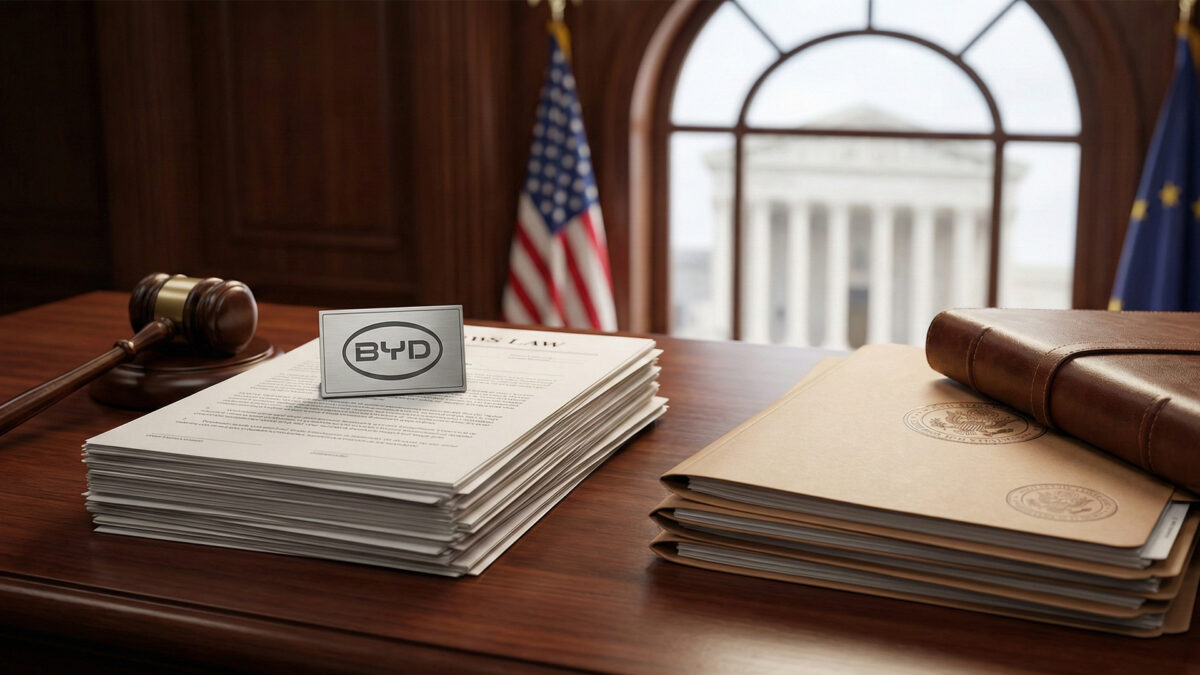
China’s BYD challenges Trump’s tariffs at US court

Chinese electric vehicle and clean-energy major BYD has taken a significant legal step in the United States, filing a lawsuit against the federal government to challenge tariffs imposed by President Donald Trump.

The case, filed in the US Court of International Trade in New York, seeks refunds for import duties paid since April and questions the legal basis used to impose the levies. BYD’s US subsidiaries argue that the tariffs were introduced under the International Emergency Economic Powers Act (IEEPA), a law meant for national security emergencies, not for imposing broad trade barriers.

The emergency law does not explicitly allow the government to levy import tariffs. BYD is asking the court to order the repayment of duties already paid and to safeguard its right to future refunds if the tariffs are ruled invalid.

While BYD does not sell passenger cars in the US, it has a growing footprint in the country through its electric buses, trucks, batteries, energy storage systems and solar products. Its manufacturing facility in Lancaster, California, employs around 750 workers, making the company an active contributor to local jobs and clean-energy infrastructure.

The legal move places BYD among a rising number of global companies challenging Trump’s trade policies. The dispute also comes as the US Supreme Court considers a separate case that could ultimately decide whether emergency powers can be used to justify such tariffs.

For Washington, the case revives a sensitive debate around trade protectionism and executive authority. For BYD, it is both a financial and strategic decision, aimed at recovering costs while seeking clarity on the rules governing global trade.

Also Read: Balaji Krishnamurthy named Uber CFO
Categories
Corporate

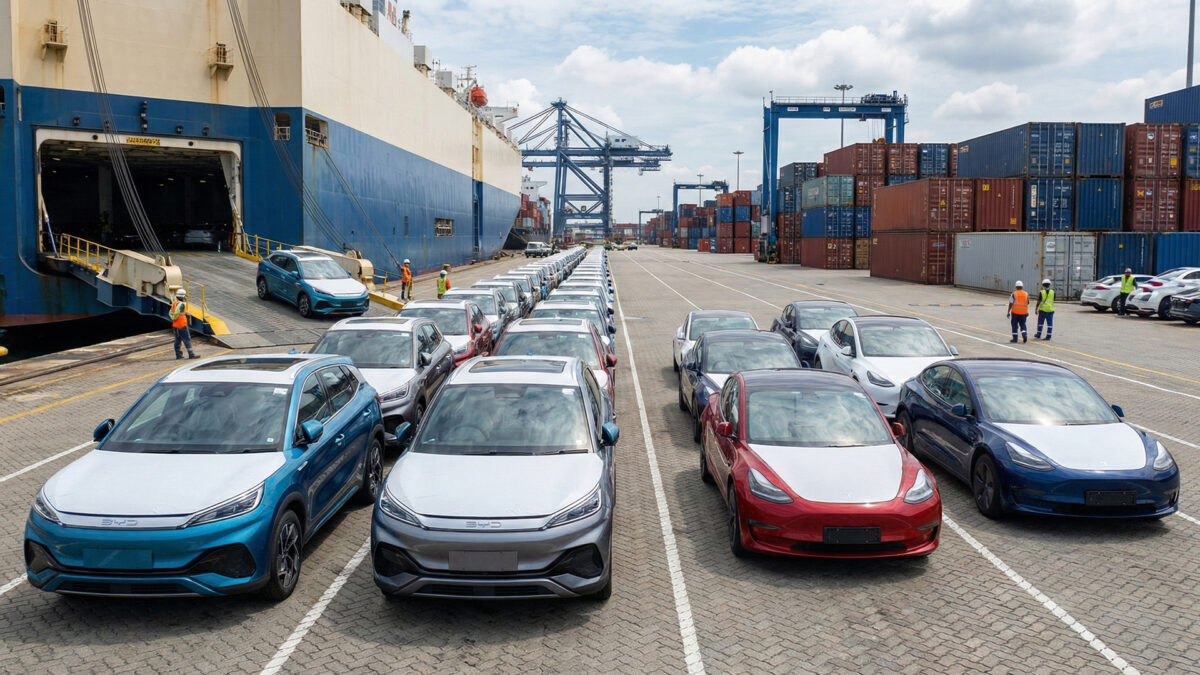
BYD surpasses Tesla as global EV leader in 2025

China’s BYD has overtaken Tesla to become the world’s largest electric vehicle (EV) seller in 2025, delivering 2.26 million battery electric cars compared with Tesla’s 1.63 million. BYD’s sales rose 28% year-on-year, while Tesla’s dropped 9%, marking the company’s second consecutive annual decline.

Industry analysts attribute Tesla’s slowdown to reduced US EV subsidies under President Donald Trump and mixed consumer sentiment over Elon Musk’s political positions. Meanwhile, BYD has expanded both domestically and internationally, leveraging competitive pricing, a diverse vehicle lineup, and advanced technology, including its “God’s Eye” autonomous driving system.

Founded in 1995 as a battery company by Wang Chuanfu, BYD has successfully scaled production to compete globally. Analysts note that the global EV market continues to expand, though pricing pressures and policy changes create challenges and opportunities for manufacturers. BYD’s milestone reflects both the rapid growth of Chinese EV makers and the shifting balance of power in the international automotive industry.

BYD’s rise signals the growing dominance of Chinese automakers, including SAIC and Chery, in the global EV market. The shift highlights China’s growing influence in electric mobility, challenging traditional leaders and reshaping the industry’s competitive landscape.

Despite falling sales, Tesla remains the world’s most valuable carmaker with a market capitalization of $1.4 trillion, supported by investor confidence in Musk’s technological innovations, including autonomous vehicles and AI-driven projects like robotaxis.

Also Read: 72 hour deadline for X to tackle AI abuse