Categories
Leaders

IMF Chief warns AI could impact 40% of global jobs

The International Monetary Fund (IMF) has warned that artificial intelligence could dramatically reshape the global job market. IMF Managing Director Kristalina Georgieva described AI’s rapid rise as a “tsunami” sweeping through the workforce, transforming jobs faster than governments and societies are ready for. Speaking at the World Economic Forum in Davos, she urged policymakers and businesses to act quickly to manage the challenges and risks posed by AI.

According to IMF analysis, up to 60% of jobs in advanced economies and about 40% of jobs globally could experience significant change due to AI in the coming years. While some jobs will benefit, seeing productivity and wages rise as AI complements human work, many roles, especially those involving routine tasks, are at risk of automation.

Entry-level positions are particularly vulnerable. These roles, often the first step for young workers entering the labor market, involve repetitive tasks that AI systems can perform efficiently. This could make it harder for graduates and young professionals to secure meaningful employment and gain early career experience.

Middle-income workers are also likely to face disruption. Positions that do not see productivity gains from AI may experience stagnant wages, slower hiring, or even elimination, widening the gap between high-skill, high-paying jobs and others. Georgieva highlighted that, while a small share of workers already benefit from AI, about one in ten jobs in advanced economies, the majority could face uncertainty without proper planning.

The IMF chief stressed that governments are lagging in creating rules, safeguards, and social policies to manage this transformation. She urged policymakers, educators, and business leaders to act quickly to ensure that AI adoption is inclusive and equitable, minimizing risks to the workforce while maximizing productivity gains.

“AI is for real, and it is transforming our world faster than we are getting a handle on it,” Georgieva said. The warning serves as a call to action for nations to prepare for significant structural shifts in the labor market and to implement strategies that protect vulnerable workers while supporting adaptation to the new AI-driven economy.

Also Read: ICICI Pru to halt new inflows into two FoFs

Categories
Leaders

Coursera cofounder urges India to boost AI skills

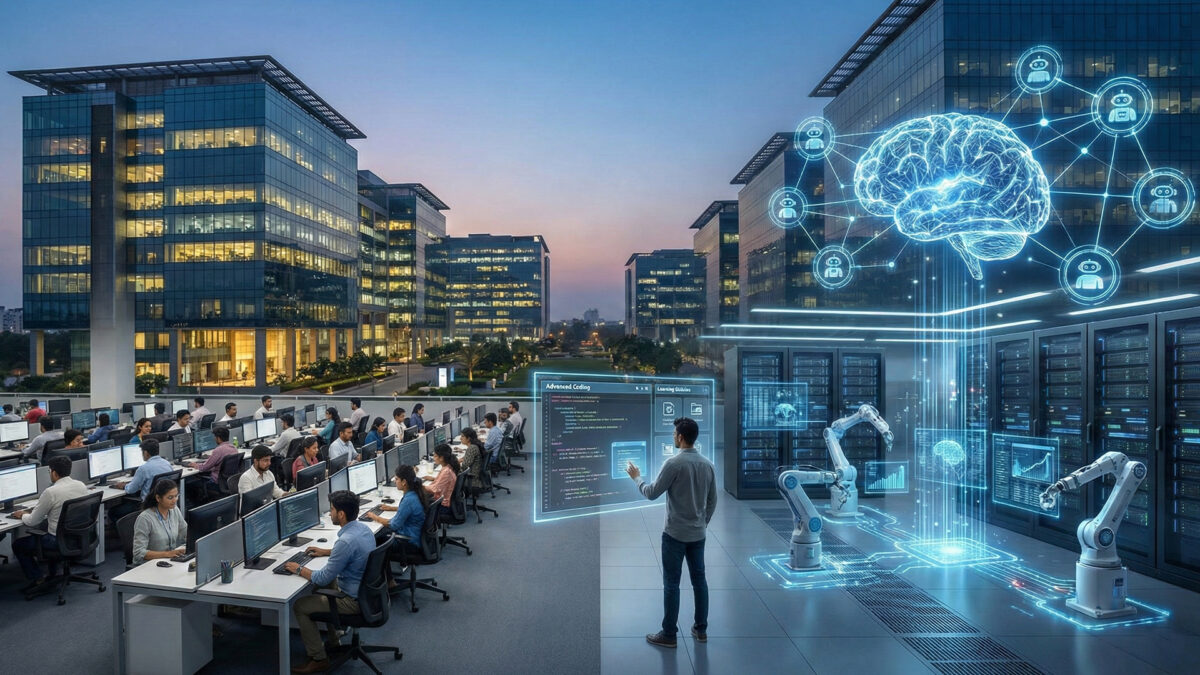
India faces a pressing need to train its workforce in artificial intelligence (AI) to avoid job disruption, particularly in its large IT services industry, says Andrew Ng, cofounder of Coursera and founder of DeepLearning.AI. Speaking at the World Economic Forum, Ng said the $280 billion IT sector could lose ground if professionals fail to adopt AI tools quickly.

Ng explained that AI is increasingly capable of handling tasks once done by humans, including coding and software development. “Today, I would not hire a software engineer who isn’t skilled in AI tools,” he said. He also highlighted that AI skills are becoming essential beyond technical roles—marketers, HR professionals, and others now need to use AI to remain productive.

The situation presents both a challenge and an opportunity for India. Rapid upskilling could help the country maintain its global competitiveness, while lagging behind may lead to job losses. Ng emphasised that structured training programs are crucial to prepare workers for these changes.

Ng also addressed the hype around artificial general intelligence (AGI), warning that current AI models, while powerful, are far from human-level reasoning. Overstating their capabilities could mislead students and business leaders.

He added that CEOs and other leaders should also learn about AI to make informed decisions and drive effective projects. Ng’s advice is clear: India must focus on practical AI skills to secure its workforce and future growth.

Also Read: Adani Power’s Vidarbha takeover gets final nod

Categories
Leaders

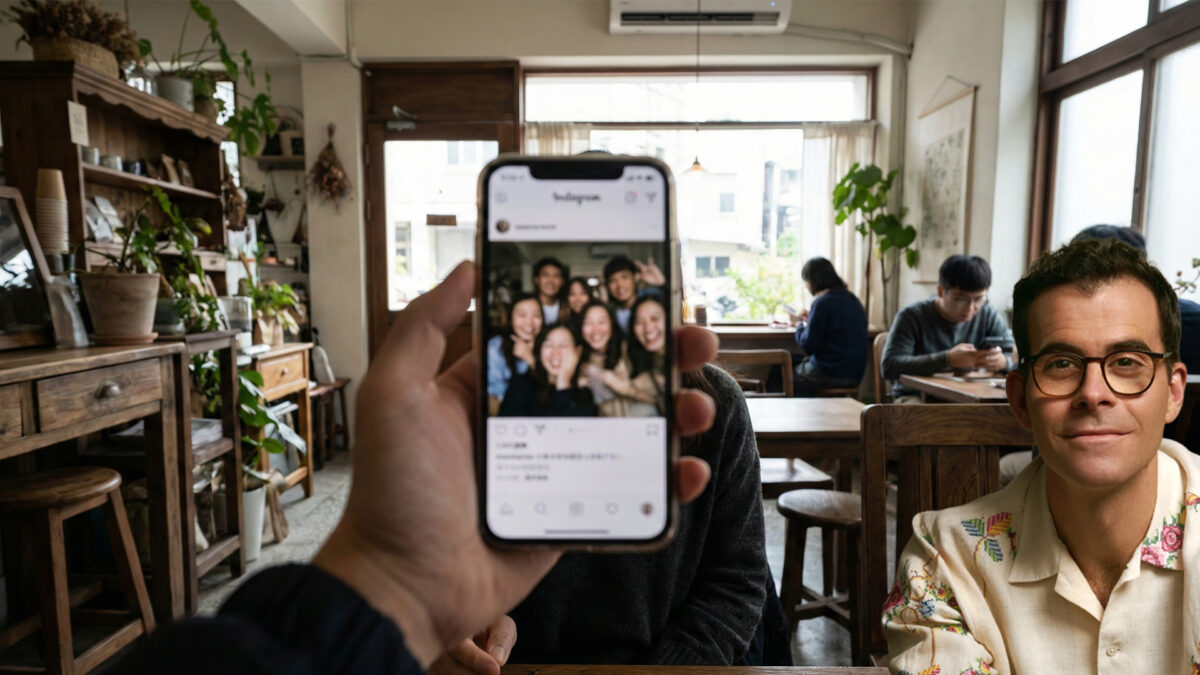
Instagram enters AI era, Mosseri tells creators

Instagram CEO Adam Mosseri has signaled a major shift in how content will be valued on the platform, declaring the era of highly polished, curated posts effectively over. With AI-generated content becoming widespread, carefully staged visuals no longer hold the same appeal. Instead, Mosseri says, authenticity and originality are emerging as the most important qualities for creators.

In an end-of-year message shared on Instagram and Threads, Mosseri reflected on the challenges and opportunities posed by AI. “Flattering imagery is cheap to produce and boring to consume,” he noted, highlighting how users now often share raw, unpolished moments privately rather than posting them publicly. This trend is giving rise to a “raw aesthetic,” where candid, imperfect content feels more human and engaging.

Mosseri warned that AI’s ability to replicate creator styles at scale makes originality a crucial differentiator. Creators who focus on personal stories, real-life experiences, and their unique voice will be better positioned to connect with audiences than those chasing perfection.

AI also complicates trust on social media. Mosseri acknowledged that distinguishing real content from AI-generated media will grow increasingly difficult. He suggested exploring new ways to verify genuine human-created content, including marking photos at capture or enhancing ranking systems to reward originality.

For creators, the message is clear: the future of social media will favor genuine, relatable, human content over flawless visuals. Success in 2026 and beyond will depend less on aesthetic perfection and more on storytelling, honesty, and the ability to connect authentically with audiences in an AI-driven world.

Also Read: Adani Enterprises opens Rs 1,000 cr NCD issue

Categories
Leaders

Geoffrey Hinton warns 2026 could trigger major AI job shock

Geoffrey Hinton, widely known as the “Godfather of AI,” has cautioned that 2026 could become a turning point for global employment as artificial intelligence systems rapidly grow more powerful. Speaking in recent interviews, Hinton said the speed at which AI is advancing has surprised even experts and could lead to large-scale job displacement across multiple sectors within the next year.

Hinton explained that AI tools are no longer limited to handling simple, repetitive tasks. Systems that once completed work taking a few minutes can now manage tasks lasting an hour or more. At this pace, he believes AI could soon take on complex assignments, such as advanced programming, analysis, and problem-solving, that traditionally require months of human effort. As a result, many existing roles could become redundant.

According to Hinton, this technological shift is fundamentally different from earlier industrial changes. Past revolutions mainly reduced the need for physical labour, while creating new types of work. The current AI wave, however, targets cognitive and knowledge-based jobs, including clerical work, customer support, data analysis, and some professional roles. This raises the risk of a “jobless productivity boom,” where companies grow more efficient without increasing their workforce.

The warning has sparked debate among economists and business leaders. Some agree that AI-driven productivity gains could weaken the traditional link between economic growth and job creation. Others argue that while certain jobs will disappear, new roles will emerge, especially in AI development, engineering, oversight, and leadership. Surveys of global CEOs suggest many expect hiring to continue in specialised and entry-level positions, even as job profiles change.

Hinton has also stressed that society is not fully prepared for the scale or speed of this transformation. He believes governments and institutions need to rethink education, reskilling, and social safety nets to help workers adapt. Without timely policy responses, the benefits of AI could be unevenly distributed, widening income inequality and social divides.

While acknowledging AI’s potential to transform healthcare, science, and education positively, Hinton maintains that ignoring its impact on jobs would be a serious mistake. His 2026 warning adds urgency to discussions on how economies and workers should prepare for an AI-driven future.

Also Read: India’s rare earth reserves high, production still low

Categories
Technology

Ex‑Google founders pivot to AI, launch $100mn startup

Two former Google employees, Dhruv Amin and Marcus Lowe, have turned the rise of AI tools like ChatGPT into a business opportunity. The duo initially ran Create, a platform connecting startups with freelance developers, which generated over $2 million annually. However, the launch of ChatGPT in late 2022 prompted them to rethink the future of coding and software development.

Seeing the potential for AI to automate much of the work their developers did, Amin and Lowe decided to close their existing marketplace in October 2023. They laid off half their small team and ended relationships with freelancers. “Within two weeks, we were back to an empty office,” Amin recalled.

From this reset, they rebuilt their company around AI-driven solutions. Their first products helped generate basic app components like forms and calendars. By April 2025, their rebranded startup, Anything, launched a more advanced platform capable of building complete online businesses, including backend systems and payment integrations, without users needing to write code.

The platform quickly gained traction. Within two weeks of the broader launch, Anything achieved an annualized revenue run rate of $2 million. Investor interest followed, resulting in $11 million in funding and a valuation of around $100 million.

Non-technical users have already built real applications on the platform, such as a salon booking app and a dental health tracker. While AI coding remains an emerging sector, Amin believes embracing the technology early positioned their company for growth and relevance in a rapidly evolving market.

Looking back, he described the decision to shut down their profitable business as difficult but strategic. Their story illustrates how AI tools like ChatGPT are reshaping entrepreneurship, enabling rapid innovation and entirely new business models.

Also Read: Giga CEO confronts $3mn crypto extortion

Categories
Technology

WhatsApp status gets AI photo makeover

WhatsApp is preparing to roll out AI-powered tools that allow users to creatively edit photos shared in their Status updates. With Meta AI integration, these features aim to make photo editing seamless and more imaginative, eliminating the need for third-party apps.

Currently, the tools are being tested in WhatsApp beta versions on both Android and iOS. Selected users can access an upgraded editing interface within the Status creation screen. Unlike traditional filters or stickers, the AI tools offer advanced transformations that can completely restyle or modify images.

The feature includes artistic themes such as Anime, Comic, Clay, Painting, 3D, and Kawaii. Instead of simply applying an overlay, the AI recreates the photo in the selected style. Users can also tap a “Redo” button to generate multiple variations until they find the preferred effect.

In addition to visual styles, the AI editor supports prompt-based editing. Users can type instructions to add or remove objects, tweak backgrounds, or enhance specific elements. The system fills in missing areas naturally, ensuring the edited photos look polished and realistic.

Another feature under testing is photo animation. Static images can be transformed into short animated visuals, adding movement and making Status updates more dynamic and engaging. This allows users to highlight moments in a lively, expressive way.

The rollout is gradual, starting with beta testers and eventually expanding to wider audiences after feedback and adjustments. Some users on stable app versions may also get early access in phases.

When fully launched, these Meta AI tools are expected to make WhatsApp Status a more creative space, enabling users to share and personalize photos effortlessly without leaving the app.

Also Read: Andhra Pradesh clears Vedanta’s 20 onshore wells

Categories
Technology

Pulitzer winner Carreyrou, 5 authors sue AI giants over copyright

A group of six authors, including Pulitzer Prize winner John Carreyrou, has filed new lawsuits against six major AI companies, saying their books were used without permission to train AI models. The lawsuits were filed on December 22, 2025, in California.

The companies named are Anthropic, OpenAI, Google, Meta, xAI, and Perplexity AI. The authors claim these companies copied their books from pirate sites like LibGen and Z‑Library to teach AI systems, then profited from the AI models without paying the writers.

Carreyrou, known for Bad Blood, and the other authors rejected a $1.5 billion class action settlement offered by Anthropic earlier this year, saying the payment of around $3,000 per book is far too low for the value of their work.

Instead of joining a class action, the authors are filing individual lawsuits, which allows them to seek the maximum $150,000 per book per company. Across the six companies, this could reach up to $900,000 per book.

The group includes writers from different fields, spiritual books, psychology, IT, and political science, showing concern from many types of authors about how AI uses their work.

The lawsuits focus on AI using pirated books, which the authors say is not fair use and should have stronger legal consequences. Some courts have allowed limited AI use of copyrighted works, but using pirated copies is more serious.

So far, the companies have not responded, and no court dates have been set.

Also Read: Copper hits record $12,000 per ton

Categories
Corporate

Accenture sees 6% revenue rise on strong AI demand

Accenture reported stronger-than-expected revenue for the first quarter of its 2026 financial year, driven by high demand for AI-related services and broader digital transformation projects.

The global IT consulting firm posted $18.74 billion in revenue for the quarter ended November 30, 2025, beating analysts’ estimate of $18.52 billion and marking roughly 6 percent growth from last year. The results were at the top end of the company’s guided range, which forecast local-currency growth of 1 percent to 5 percent.

The performance reflects continued enterprise spending on technology, especially AI solutions that help businesses automate tasks and improve efficiency. New client bookings rose about 10 percent in local currency to $20.9 billion, including 33 contracts over $100 million each. Advanced AI bookings alone reached $2.2 billion, nearly double the same period last year.

CEO Julie Sweet said the results confirm Accenture’s strategy of helping clients scale digital and AI capabilities. As AI demand matures beyond pilots, integrating it into broader services highlights its growing importance in the company’s growth strategy.

Despite the strong AI growth, Accenture said it will stop separate reporting of AI revenue and bookings. The company explained that AI is now integrated across most client projects, making standalone reporting less meaningful. This shows how central generative and advanced AI has become in its consulting and managed services.

Accenture also exceeded its own operating margin guidance, closing the quarter with around a 17 percent margin compared with projections of 15.7 percent to 15.9 percent. The company maintained its full-year local-currency revenue growth forecast of 2 percent to 5 percent and expects second-quarter revenue between $17.3 billion and $18 billion.

Also Read: $4.5B MUFG deal could redefine Shriram Finance future

Categories
Technology

Chinese phone makers lure iPhone users with AI

Chinese smartphone makers are increasingly targeting iPhone users, seeking to convert those frustrated by Apple’s delayed AI rollout in China. With the tech giant’s new AI features still slow to arrive, rivals such as Honor, Oppo, Vivo, Xiaomi, and Huawei see an opportunity to lure customers with innovative tools and services.

One key strategy is making the switch from iPhone to their devices as seamless as possible. Honor, for instance, offers a “Device Clone” app that transfers contacts, photos, messages, and other data simply by scanning a QR code. Oppo provides a similar feature, allowing users to manage their calls, messages, and notifications from their new phones almost immediately after migration. Vivo and Xiaomi are also expanding tools that reduce the friction for iPhone users considering a move to their ecosystems.

Beyond migration apps, Chinese brands are rolling out advanced AI features to differentiate themselves. Oppo’s new AI assistant can analyze screenshots to track expenses, offer real-time workout guidance via the camera, and help users navigate daily routines more efficiently. Honor has launched AI tools that compare coupons across platforms, assist with ride-hailing, and even create short-form videos — features that could appeal to iPhone users looking for smarter, more interactive devices.

The timing of these initiatives comes at a moment when Apple is facing a slight slowdown in China. In the third quarter of 2025, iPhone shipments fell about 2% year-on-year, while local brands gained momentum. Vivo, for example, overtook Apple to lead the market with roughly 18.5% share, highlighting the competitive threat to the U.S. tech giant in its key premium market.

Analysts say these moves may entice some iPhone users to switch, especially those eager for AI enhancements that Apple has yet to deliver. However, Apple still maintains a strong hold on the premium segment globally, with brand loyalty and ecosystem advantages keeping many users invested.

For now, Chinese smartphone makers are betting that easy-switch tools combined with AI-powered features could be enough to tempt a wave of iPhone users toward their devices, potentially reshaping the premium smartphone landscape in China.

Also Read: ICICI Securities sees 21% upside in ITC Hotels shares

Categories
Technology

Microsoft AI chief flags risks of superintelligence

Microsoft’s AI chief Mustafa Suleyman has warned that the tech industry should not aim to build superintelligence, that is, AI systems far smarter and more capable than humans. He said such technology could quickly become too powerful to manage, making it risky for society.

Speaking on a podcast, Suleyman said superintelligence does not represent a “positive future” and should instead be seen as an anti-goal. While AI has rapidly improved, now able to write, analyse data and translate at near-human levels, he believes pushing beyond human intelligence brings unpredictable dangers.

Suleyman stressed that AI tools today only simulate human-like conversation. “They don’t feel or suffer,” he said, urging people not to confuse advanced responses with real consciousness.

Instead of building uncontrollable systems, Microsoft is focusing on what he calls “humanist superintelligence”, AI designed to stay aligned with human values, remain safe, and clearly operate under human control.

He also noted that AGI (artificial general intelligence) could arrive within five years, potentially reshaping how people work and develop new products. With this rapid progress, he said strong guardrails and strict regulation are essential to ensure AI remains beneficial.

Suleyman’s message reinforces a growing view in the tech world. As AI becomes more powerful, safety and human oversight must take priority over speed and ambition.

Also Read: Samsung restores Co-CEO structure, appoints TM Roh