Categories
Corporate

Government didn’t guide LIC’s Adani investments, says FM

Finance Minister Nirmala Sitharaman said the government did not issue any directions or advice to the Life Insurance Corporation of India (LIC) regarding its investments in the Adani Group. Responding to a question in the Lok Sabha, she emphasised that LIC’s decisions were made independently and in line with its standard operating procedures (SOPs).

Sitharaman said LIC has always made investment decisions based on company fundamentals, strict due diligence and regulatory norms. Over the years, the insurer has invested in several Adani Group companies after these checks. LIC currently holds shares worth ₹38,658.85 crore and debt worth ₹9,625.77 crore in various Adani firms.

She clarified that the Finance Ministry “does not issue any advisory or direction to LIC” on how it should invest its funds. Investment decisions, she said, are taken solely by LIC, governed by the Insurance Act, IRDAI rules, and regulations issued by SEBI and the RBI.

Her statement comes after a Washington Post report alleged that finance ministry officials pushed LIC to invest in the Adani Group earlier this year when the conglomerate was under global scrutiny. The report highlighted LIC’s ₹5,000-crore investment in secured non-convertible debentures of Adani Ports & SEZ in May 2025.

Sitharaman said the investment followed LIC’s due diligence process and board-approved policies. She added that LIC routinely invests in India’s largest companies. As of September 30, 2025, its investments in Nifty 50 firms amounted to ₹4.3 lakh crore, nearly 46% of its total equity portfolio.

The minister also detailed LIC’s internal oversight structure. Its investment operations are reviewed by concurrent auditors, statutory auditors, system auditors, internal vigilance teams, and are periodically inspected by IRDAI. “There is no direct oversight by the government on LIC’s investments,” she said.

Among private companies, LIC’s largest equity exposure is in Reliance Industries (₹40,901 crore), followed by Infosys, TCS, HDFC Bank, and Hindustan Unilever. Its biggest debt exposure is also with HDFC Bank (₹49,149 crore).

Within the Adani Group, LIC’s highest exposure is in Adani Total Gas (₹8,646 crore), ranking 25th among all its investments. Holdings in other Adani firms, including Adani Enterprises, Ambuja Cements, Adani Ports, Adani Energy Solutions, Adani Green Energy, and ACC fall further down the list.

Sitharaman also noted that LIC’s shareholdings of 1% or more in any listed company are already publicly available, as required under SEBI rules.

LIC, India’s largest institutional investor with assets of over ₹41 lakh crore, has repeatedly said its investments in the Adani Group were made independently, without any pressure from the Finance Ministry.

In an earlier statement, LIC said its decisions follow strict due diligence and comply fully with regulatory guidelines, adding that the Department of Financial Services “has no role” in its investment choices.

Also Read: Rupee slips to all-time low of 89.76 against dollar

Categories
Corporate

Adani drops long legal fight against Australian activist

Adani Group has ended its years-long legal battle against Australian activist Ben Pennings, who campaigned against the company’s Carmichael coal mine. The lawsuit, which at one point claimed damages of up to US$ 600 million, has now been formally dropped.

Under the court’s order, Pennings is barred from seeking or using Adani’s confidential business information or encouraging others to do so. However, he is still free to continue lawful protests and environmental activism.

Adani said the legal action was meant to protect its employees and contractors from harassment, not to seek financial gain. Pennings called the outcome a “massive victory,” describing the lawsuit as a tactic to intimidate critics.

The case highlights tensions between large corporations and environmental activists, raising questions about how legal actions are used to manage public dissent. The resolution may encourage other activists while reminding companies to carefully balance legal and public engagement.

Also Read: Zoho co-founder receives AI apology over secret leak

Categories
Corporate

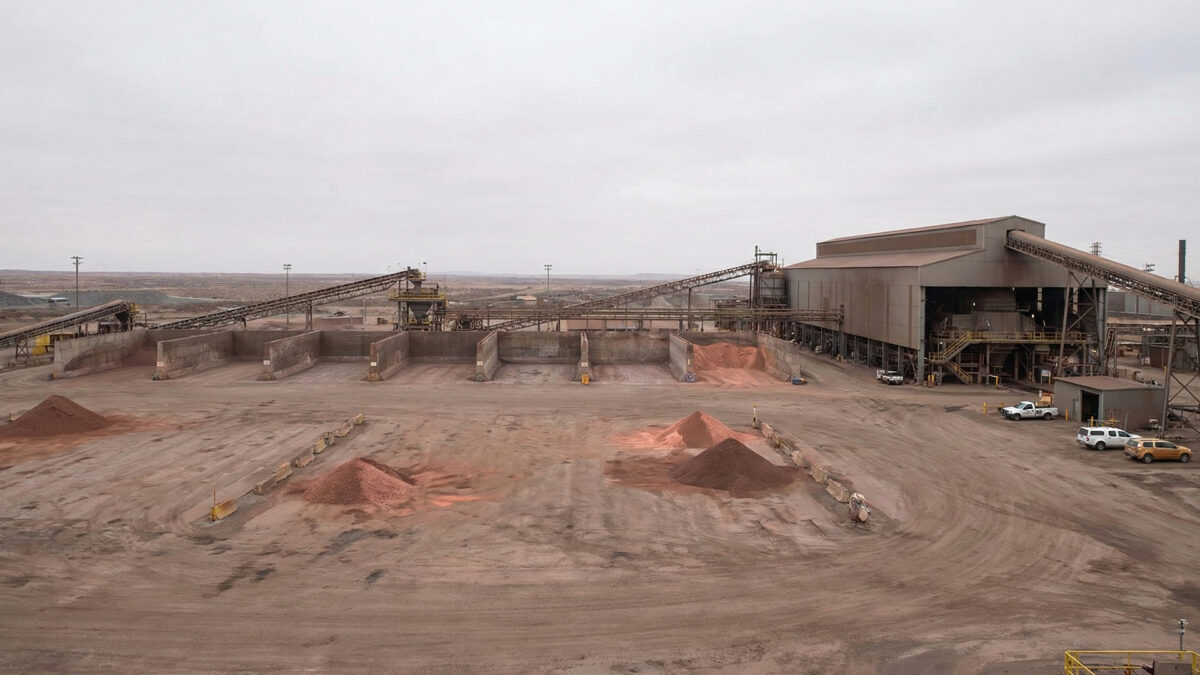
Adani’s $1.2 billion copper plant hit by ore shortage

Adani’s new copper smelter in Gujarat is unable to run at full strength because there isn’t enough copper ore available in the global market.

The Kutch Copper plant can produce 500,000 tonnes of copper a year, but to do that, it needs about 1.6 million tonnes of copper concentrate. Since starting operations, the smelter has received only around 147,000 tonnes, much less than required. As a result, the plant is running at a very low capacity.

This problem isn’t unique to Adani. The world is facing a shortage of copper concentrate due to production cuts and disruptions at major mines. At the same time, smelting capacity has increased in countries like China, creating more competition for limited ore.

Because of the shortage, the fees that smelters charge miners  which is the treatment and refining charges, have dropped to record lows, making operations less profitable.

Some suppliers like BHP, Glencore, and Hudbay have sent ore to the Kutch plant, but the volumes are still too small to support full production.

India’s demand for copper is rising quickly for construction, power, and renewable energy. But since the country has limited copper ore reserves, local smelters depend heavily on imports, making them vulnerable to global shortages like this one.

For now, Adani’s smelter will take longer to ramp up, and may operate at a loss until global ore supply improves.

Also Read: Google and Accel partner to boost India’s AI startups

Categories
Corporate

Adani’s H1 FY26 EBITDA hits ₹47,375 cr, capex surges

The Adani Group, India’s leading infrastructure and utilities conglomerate, reported strong financial performance for the first half of FY26, with record earnings and robust growth across its core businesses.

The portfolio’s half-year EBITDA reached an all-time high of ₹47,375 crore (USD 5.3 billion), pushing the trailing twelve months (TTM) EBITDA to ₹92,943 crore (USD 10.4 billion), up 11.2% year-on-year.

The Group’s infrastructure businesses, including utilities, ports, and incubated infrastructure projects under Adani Enterprises, accounted for 83% of H1 FY26 EBITDA, reflecting stable and long-term cash flows. Utilities like Adani Green Energy, Adani Power, Adani Total Gas, and Adani Energy Solutions, along with Adani Ports & SEZ, continued to perform strongly, demonstrating resilience amid a major capital expansion.

Adani’s H1 FY26 capex soared to ₹67,870 crore (USD 7.6 billion), bringing the total asset base to ₹6.77 lakh crore (USD 76 billion). The Group remains on track to achieve its FY26 capex target of ₹1.5 lakh crore, a figure equal to the portfolio’s total assets in FY19. Key expansions include the inauguration of the greenfield Navi Mumbai International Airport, new road projects in Bihar, and ropeway developments in Kedarnath.

The company maintained healthy financial discipline despite accelerated investments. Net debt-to-EBITDA stood at 3x, below the guided 3.5x–4.5x range, while cash reserves remained strong at ₹57,157 crore (USD 6.4 billion). Importantly, 52% of EBITDA now comes from AAA-rated domestic assets, highlighting the portfolio’s credit strength and investor appeal.

Operational highlights included a 49% year-on-year increase in Adani Green Energy’s capacity to 16.7 GW, a rise in port volumes at Adani Ports & SEZ to 244 MMT, and a 20% jump in Ambuja Cement’s sales to 35 MT. Adani Power added 4.5 GW of new power purchase agreements, targeting 42 GW capacity by 2032.

Commenting on the results, Group CFO Jugeshinder Singh said, “Our focus on disciplined execution, world-class operations, and strategic investments has delivered record performance. With rising AAA domestic ratings and strong cash generation, our infrastructure assets are increasingly attractive to global institutions.”

The Adani Group continues to emphasize sustainable growth, operational excellence, and long-term financial resilience, consolidating its position as a leader in India’s infrastructure landscape.

Also Read: TotalEnergies eyes ₹10,200 crore stake sale in Adani Green

Categories
Corporate

Adani Group backs indology with ₹100 crore funding

Gautam Adani, Chairman of the Adani Group, announced a ₹100 crore contribution to support a new initiative aimed at preserving and promoting India’s ancient knowledge systems. The announcement was made at the inaugural Adani Global Indology Conclave, a three-day event held at the Adani Corporate House in Ahmedabad.

Organised in collaboration with the Ministry of Education’s Indian Knowledge Systems (IKS) division, the conclave focuses on reviving Indology—the academic study of India’s civilisation, languages, philosophies, sciences, and cultural heritage. The funding will be used to develop the Bharat Knowledge Graph, a first-of-its-kind digital framework designed to structure, preserve, and future-proof India’s knowledge in the era of Artificial Intelligence.

“This is the repayment of a civilisational debt,” Mr Adani said, highlighting that the initiative will also support scholars and technologists working on the project. He added that without proactive efforts to protect cultural frameworks, human behaviour risks being shaped by “the cold logic of machine algorithms.”

As part of the initiative, the Adani Group and IKS will run a five-year programme supporting 14 PhD scholars across leading institutions. Research will cover disciplines such as linguistics, computational linguistics, ancient astronomy, heritage studies, traditional sciences, indigenous healthcare, traditional engineering, sustainability, political thought, and classical literature. Scholars were selected through a rigorous national consultation involving IITs, IIMs, IKS-focused universities, and senior academics. The programme aims to integrate classical knowledge with modern tools such as data science, systems thinking, and multimodal archiving.

Swami Avimukteshwaranand Saraswati, Jagadguru Shankaracharya of Jyotir Math, who was the guest of honour, praised the initiative for supporting India’s vision of becoming a Vishwaguru (global teacher).

Aligned with the National Education Policy (NEP) 2020, the initiative seeks to bring ancient Indian wisdom into contemporary education and research, making traditional knowledge relevant in modern academic and technological contexts. Rooted in the ethos of Vasudhaiva Kutumbakam treating “the world as one family”, the project reflects the Adani Group’s commitment to nation-building, soft power, and civilisational leadership.

Also Read: Adani Enterprises wins Golden Peacock ESG Award

Categories
Corporate

Adani secures ₹63,000 cr worth power projects in Assam

Adani Power and its affiliate Adani Green Energy Ltd have won two major contracts from Assam Power Distribution Company Limited, aiming to strengthen the state’s power infrastructure with a combined investment of around ₹63,000 crore.

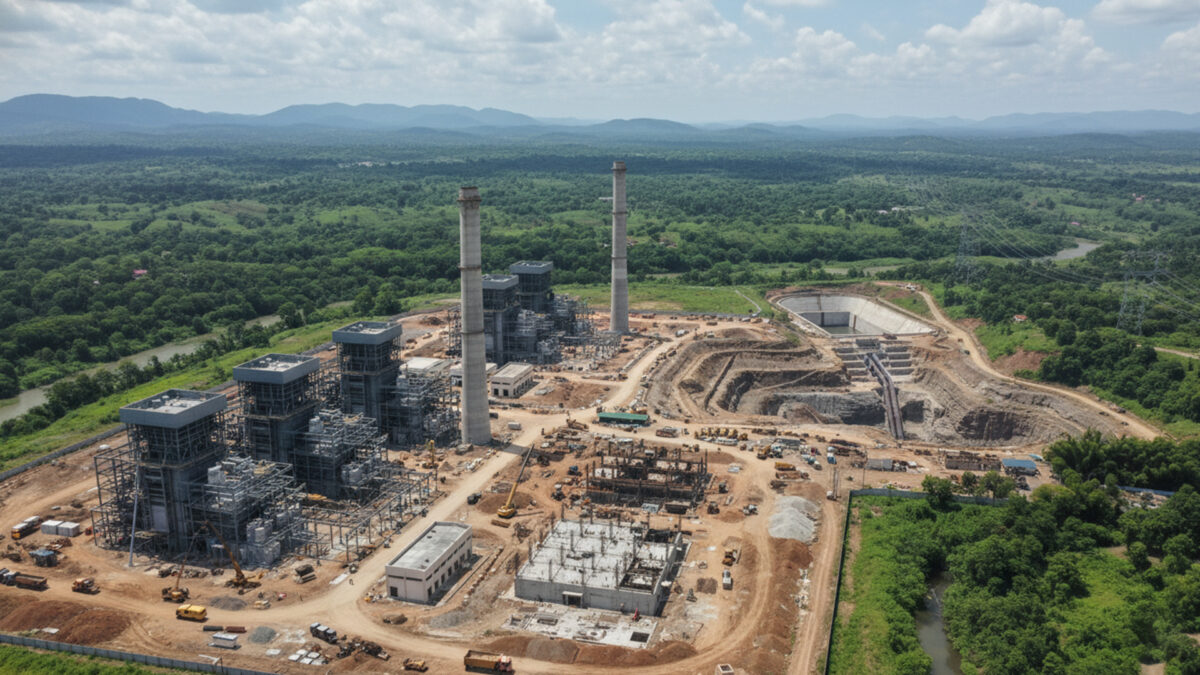
Under the first project, Adani Power will build a 3,200 MW ultra-supercritical thermal power plant. The plant will have four units of 800 MW each and is expected to start operations in phases from December 2030, with full commissioning by December 2032. The project will be developed under a design-build-finance-own-operate model, supplying electricity to Assam under a long-term agreement. Coal for the plant will be procured following government guidelines to ensure steady fuel availability. The estimated investment for this project is around ₹48,000 crore.

The second project involves a 500 MW pumped hydro energy storage facility to be developed by Adani Green’s subsidiary. This is part of a wider plan to set up two pumped storage plants in Assam with a combined capacity of 2,700 MW and an investment of roughly ₹15,000 crore. Pumped storage allows electricity to be stored and released when needed, improving grid stability and supporting reliable power supply. The project will operate under a fixed tariff for 40 years from the start of commercial operations.

These projects come as the Adani Group expands into both traditional thermal power and large-scale storage solutions, reflecting Assam’s push to increase electricity generation and strengthen the grid. The initiatives are expected to boost regional infrastructure, create local employment opportunities, and enhance supply chain engagement, though the projects have long-term timelines.

Overall, these twin contracts mark a major expansion for the Adani Group in northeast India and align with national priorities to enhance generation capacity, introduce storage solutions, and build a stronger, more resilient power grid for the future.

Also Read: Adani Cement’s big green leap with TNFD adoption, a first in India

Categories
Corporate

Adani Group enters battery storage with India’s largest project

The Adani Group has announced its entry into the Battery Energy Storage Systems (BESS) sector with a major project at Khavda, Gujarat. The new system will have a capacity of 1,126 MW and can store 3,530 MWh of power, making it India’s largest battery energy storage project and one of the biggest in the world. It is expected to be ready by March 2026.

The project will use more than 700 large battery containers to store solar energy, which can then be supplied when demand is high or sunlight is low. This will help keep the power supply steady, reduce pressure on the grid, and make better use of renewable energy.

Located at the world’s largest renewable energy park in Khavda, the system will use advanced lithium-ion batteries and smart energy management technology to improve efficiency and reliability.

Gautam Adani, Chairman of the Adani Group, said, “Energy storage is the cornerstone of a renewable-powered future. With this project, we aim to make clean, reliable, and affordable energy available at scale while supporting India’s goal of energy independence.”

After this project, the Group plans to add 15 GWh of battery storage by 2027 and reach 50 GWh within five years, a step toward building a strong and sustainable energy future for India.

Also Read: Goldman Sachs turns bullish on India