Categories
Corporate

Adani Group unveils $100 bn plan for AI data centres

The Adani Group announced a $100 billion investment to build AI-ready data centres across India by 2035, a move aimed at creating a sovereign AI and computing infrastructure powered entirely by renewable energy. Following the announcement, shares of Adani Enterprises jumped over 2%, reflecting strong investor confidence in the group’s long-term technology vision.

The plan will expand Adani’s existing 2-gigawatt (GW) data centre capacity to 5 GW, positioning it among the world’s largest integrated AI and cloud computing networks. These centres will handle high-density workloads including artificial intelligence, large language models, and cloud services, giving India a strategic advantage in next-generation technology.

Adani’s strategy combines renewable energy generation, storage systems, transmission networks, and high-performance computing hardware into a single ecosystem. The project complements the group’s ongoing 30 GW solar and wind initiative at Khavda, Gujarat.

The rollout will include global tech partnerships, with Google setting up a major AI campus in Visakhapatnam, Microsoft establishing facilities in Hyderabad and Pune, and talks underway with other international firms to expand AI campuses nationwide.

According to the Adani Group, nations that control both energy and compute resources will lead the next wave of innovation, and this investment positions India as a creator and exporter of AI technology, strengthening economic growth and job creation.

Also Read: India team to visit US to finalise trade pact

Categories
Corporate

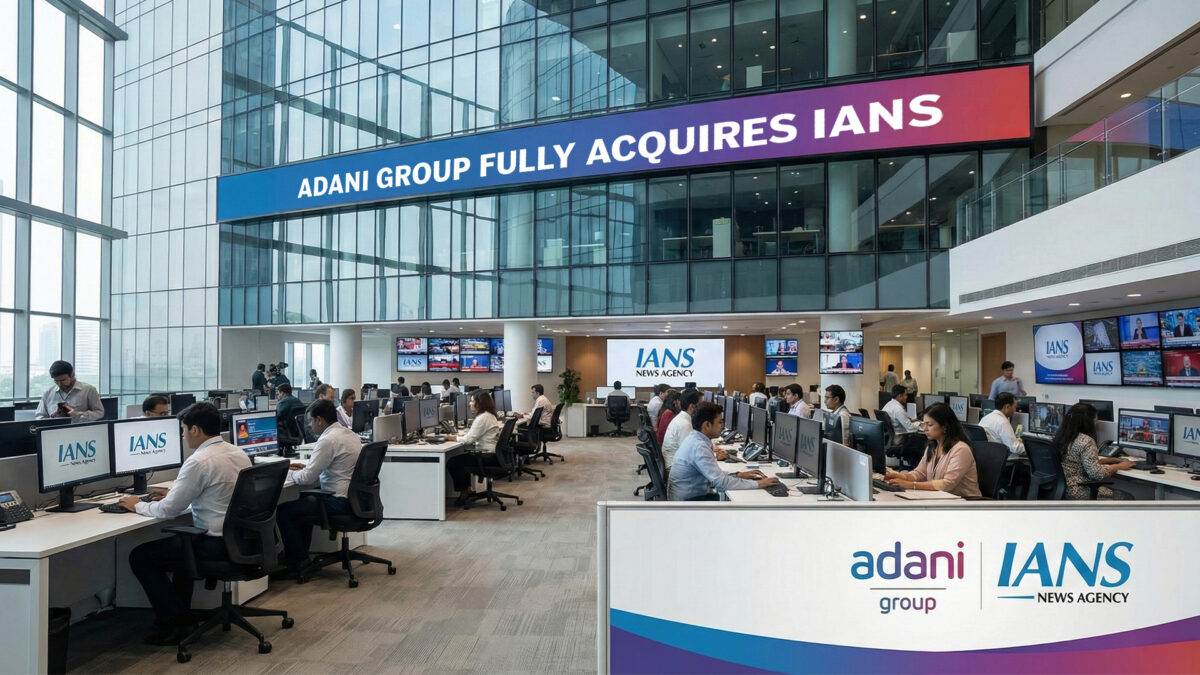
Adani Group fully acquires IANS

The Adani Group has completed the full acquisition of Indo-Asian News Service (IANS) after purchasing the remaining 24 per cent stake, making the news agency a wholly owned subsidiary of the conglomerate’s media arm.

The transaction was carried out through AMG Media Networks Ltd (AMNL), a subsidiary of Adani Enterprises Ltd, on January 21, 2026. While the group confirmed the completion of the takeover through regulatory disclosures, the financial details of the deal were not made public. With this move, IANS India Private Limited has become a step-down subsidiary of Adani Enterprises.

Adani’s association with IANS began in December 2023, when AMG Media Networks acquired a 50.50 per cent controlling stake, marking the group’s entry into the news agency space. In January 2024, AMNL further increased its holding to 76 per cent of voting shares, along with an overwhelming majority of non-voting shares. The latest acquisition involved the purchase of the entire remaining shareholding, completing the full takeover.

Founded in 1986, IANS is among India’s well-established news agencies, providing content to print, television and digital media platforms across the country. It offers news and features in multiple languages and serves a broad client base that includes newspapers, television channels, websites and mobile platforms.

The full acquisition of IANS fits into the Adani Group’s larger strategy to expand its presence in the media and information sector, a diversification drive that began in 2022. AMG Media Networks was set up as the group’s dedicated media investment arm to build a strong footprint across news, digital publishing and broadcasting.

Over the past few years, the Adani Group has steadily expanded its media portfolio. It acquired a controlling stake in NDTV, invested in Quintillion Business Media, which operates the business news platform BQ Prime, and strengthened its digital and broadcast capabilities. The complete ownership of IANS adds a traditional newswire to this portfolio, giving the group access to a key source of syndicated news content.

Industry observers say that owning a news agency such as IANS allows the group to strengthen its position across the content creation and distribution ecosystem, complementing its existing media assets while reinforcing its long-term diversification plans.

Also Read: TikTok strikes US deal to stay online

Categories
Corporate

Adani Group unveils $66 billion Maharashtra plan at WEF

The Adani Group has announced a USD 66 billion investment pipeline for Maharashtra, underscoring its long-term bet on India’s infrastructure-led growth and energy transition. The plan was presented at the 56th World Economic Forum (WEF) annual meeting in Davos, positioning the conglomerate as a strategic partner in the state’s next phase of economic expansion.

The proposed investments, to be deployed over the next seven to ten years, span aviation, urban infrastructure, clean energy, digital platforms and advanced manufacturing. The Group said the portfolio reflects a shift from standalone asset creation to building integrated, future-ready ecosystems aligned with national priorities such as manufacturing self-reliance, sustainability and ease of doing business.

Urban transformation projects form a significant part of the plan. A flagship initiative is the redevelopment of Dharavi, one of India’s most complex urban renewal exercises. The project aims to convert Asia’s largest informal settlement into a planned, economically productive urban district, with modern housing, infrastructure and commercial activity.

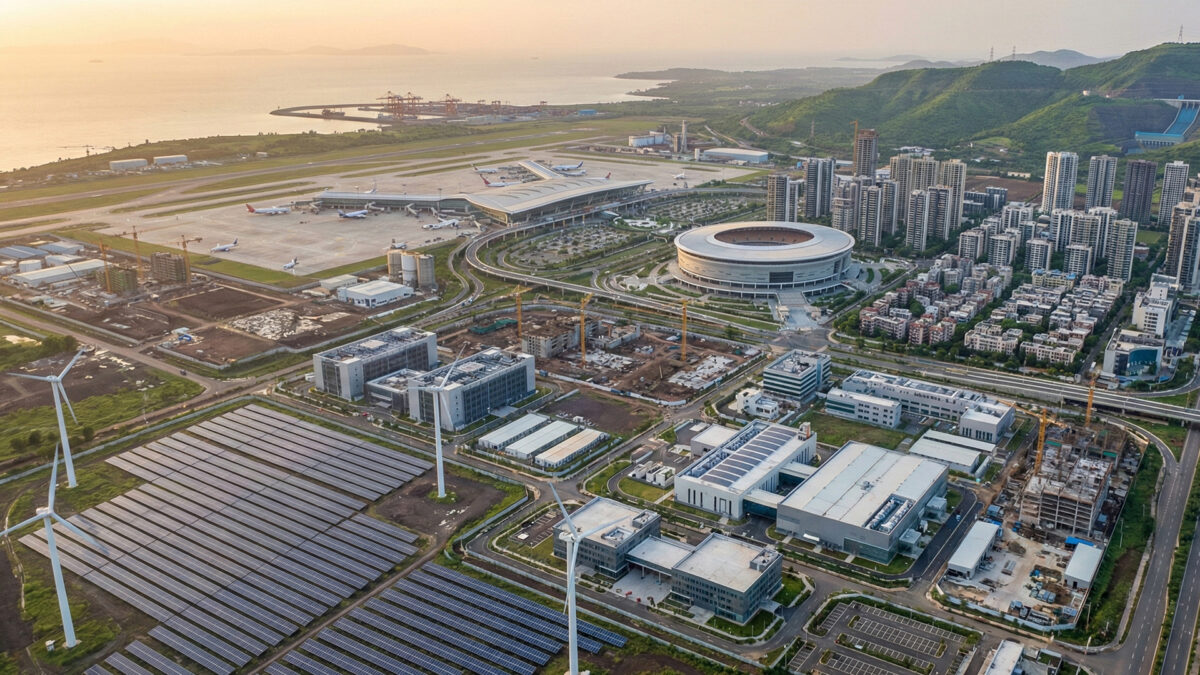
Another key growth driver is Navi Mumbai, anchored by the Navi Mumbai International Airport (NMIA). One of India’s largest greenfield airport projects, NMIA commenced operations on December 25 and is expected to significantly expand aviation capacity in the Mumbai metropolitan region. The airport is also seen as a catalyst for allied sectors such as logistics, hospitality, real estate and commercial development.

Beyond transport and urban infrastructure, the investment roadmap includes green, integrated data centre parks with a combined capacity of 3,000 MW, an integrated arena district near the airport, coal gasification facilities, and pumped-storage hydropower projects totalling 8,700 MW. The Group has also proposed semiconductor and display fabrication units, in line with the government’s evolving framework to attract private investment into high-tech manufacturing.

Maharashtra Chief Minister Devendra Fadnavis said the state welcomes all investors who contribute to job creation and economic growth. Pranav Adani, Director of Adani Enterprises, highlighted the scale and sectoral diversity of the planned investments, noting the Group’s increasing focus on scale, integration and sustainability.

Also Read: Amazon launches new Echo Show 11, Echo Show 8

Categories
Corporate

Adani bags ₹80,000 cr in deals since 2023

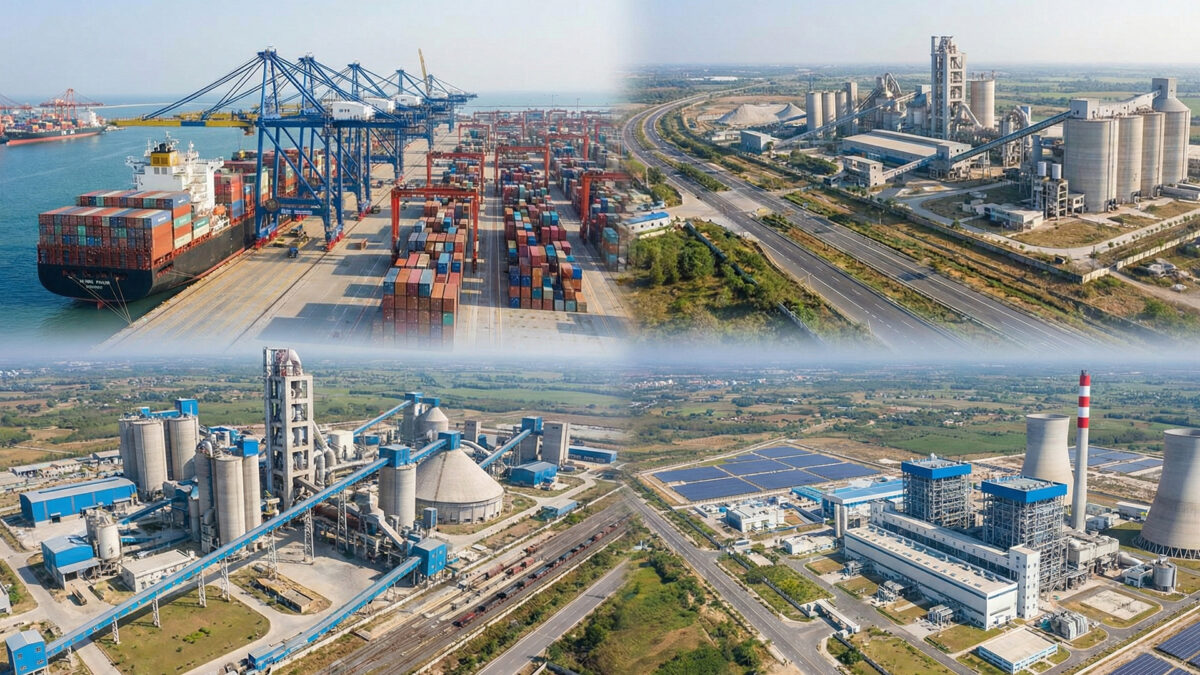
Since the start of 2023, the Adani Group has quietly orchestrated a series of strategic acquisitions, completing 33 deals worth nearly ₹80,000 crore ($9.6 billion) across ports, cement, power, transmission, and emerging sectors.

These moves mark a deliberate effort to rebuild investor confidence after the turmoil caused by US short-seller Hindenburg Research, which had raised allegations of accounting irregularities and stock manipulation earlier in the year. Adani has consistently denied these claims, and the latest transactions signal a steady return to business momentum.

Ports led the acquisition spree, accounting for about ₹28,145 crore in deals, followed closely by cement at ₹24,710 crore and power at ₹12,251 crore. Emerging businesses, including incubating ventures, contributed around ₹3,927 crore, while transmission and distribution added ₹2,544 crore. These figures do not yet include the planned ₹13,500 crore acquisition of the debt-laden Japyee Group, which is still under bankruptcy proceedings. Several other transactions are reportedly in the pipeline, reflecting the group’s ongoing expansion strategy.

Analysts attribute this resurgence to improved financial transparency, steady execution of projects, and sustained engagement with lenders, which have collectively helped stabilize funding and maintain operational momentum. The group’s comeback strategy emphasizes balance-sheet repair, selective expansion, and tighter capital allocation while continuing acquisitions in core sectors to protect cash flows and maintain scale advantages.

Notably, the largest single deal in recent times was the acquisition of Australia’s North Queensland Export Terminal, valued at ₹21,700 crore, highlighting Adani’s ambition to strengthen its global footprint.

Overall, these strategic moves reflect more than just deal-making—they signal a concerted effort to restore credibility, reduce leverage, and regain market confidence. By combining acquisitions with balance-sheet strengthening and operational discipline, the conglomerate appears to be gradually navigating past the Hindenburg crisis and setting the stage for sustained growth in both domestic and international markets.

Also Read: Zepto plans Rs 11,000 cr IPO, files confidential papers

Categories
Corporate

Adani Airports to invest $11 billion, eye 11 new airports

Adani Group is set to expand its airports business with an investment of $11 billion (around ₹1 lakh crore) over the next five years. The money will be used to improve existing airports, build new terminals, runways, and provide better services for passengers.

Adani Airports already runs seven airports in India, including Mumbai and Ahmedabad, and is preparing to start operations at Navi Mumbai International Airport soon.

The group plans to bid for 11 airports that the government will lease to private operators in the next round of privatisation. The aim is to grow its presence in India’s fast-growing air travel market.

On the financial side, Adani Airports is considering bringing in a partner before its initial public offering (IPO), likely around 2028. The company is already making profits from operations but needs more investment to continue expanding.

The group confirmed it does not plan to start an airline, focusing instead on airport infrastructure, maintenance, and passenger services.

With this expansion, Adani Airports aims to strengthen its position as one of India’s largest airport operators, ready to meet the growing demand for air travel.

Also Read: Vodafone Idea shares up 4% on Rs 3,300 cr fundraise

Categories
Corporate

IIT Dhanbad hosts Adani’s USD 75 billion clean energy vision

At the 100th anniversary of IIT (ISM) Dhanbad on December 9, Gautam Adani, chairman of the Adani Group, laid out a bold vision for India’s clean-energy future. He announced that his group plans to invest over USD 75 billion in the next five years to accelerate the country’s energy transition, making India a global leader in renewable power.

Adani revealed that the first 10 gigawatts of renewable energy under this programme have already been commissioned. He outlined plans to build the world’s largest renewable energy park at Khavda, Gujarat, covering 520 square kilometres. Once fully operational by 2030, the park is expected to generate 30 GW of green energy, enough to power over 60 million Indian homes annually.

He described this as a push for “the world’s lowest-cost green electron,” aiming to set a global benchmark in energy transition. Adani urged students and young engineers to recognize the historic opportunity: as industries worldwide move toward decarbonisation, sectors like steel, hydrogen, manufacturing, and digital infrastructure will increasingly rely on clean energy.

Beyond energy, Adani announced two major initiatives for IIT Dhanbad students. The Adani Annual Internship Programme will provide 50 paid internships every year to third-year students, with at least 25% likely to receive pre-placement offers. This gives students a direct pathway into one of India’s largest business groups.

In addition, the Adani 3S Mining Excellence Centre, in collaboration with TEXMiN, will offer a hi-tech ecosystem for research and training in responsible mining. Students will gain hands-on experience with drones, seismic sensing, metaverse labs, and precision blasting technologies, bridging classroom learning with real-world applications.

Adani concluded by urging students to understand the “language of the earth,” use natural resources wisely, and contribute to India’s rise through innovation and sustainable energy. With these initiatives, IIT Dhanbad students will be at the forefront of India’s green revolution while gaining valuable industry experience.

Also Read: Starlink India launches ₹8,600/month residential plan

Categories
Corporate

Adani plans $15 billion airport expansion across India

Adani Group is set to invest $15 billion over the next five years to expand its airports across India, marking one of the largest airport infrastructure pushes in the country. The move aims to significantly increase passenger-handling capacity, aligning with India’s rapidly growing aviation sector.

The expansion plan covers six key airports located in Navi Mumbai, Ahmedabad, Jaipur, Thiruvananthapuram, Lucknow, and Guwahati respectively. Among these, Navi Mumbai International Airport, which is expected to open on December 25, 2025, will receive major upgrades including a new runway and additional terminals, raising its annual capacity by 30 million passengers. Ahmedabad airport is set to increase capacity by 16 million, Jaipur by 14 million, Thiruvananthapuram by 8 million, and Lucknow by 6 million.

These developments will include the construction of new terminals, taxiways, and supporting infrastructure to handle the projected surge in air traffic efficiently. Adani’s plan reflects the group’s focus on modernising airport facilities and preparing for future demand, as India’s total annual air passenger numbers are expected to reach 300 million by 2030.

To fund the expansion, the group intends to raise around 70% of the investment through loans, with the remaining portion coming from its own funds. This funding strategy ensures the group can accelerate construction while managing financial risk effectively.

The investment not only aims to improve passenger experience and operational efficiency but also strengthens Adani’s position as a major player in India’s aviation sector. Experts say the expansion could support a potential initial public offering (IPO) for Adani Airports in the future, while also catering to the country’s fast-growing air travel demand.

With this expansion, Adani expects its airports to collectively handle 200 million passengers annually by 2030, roughly two-thirds of India’s projected air traffic. The move is a strategic step to meet increasing travel demand, modernise airport infrastructure, and enhance India’s global aviation competitiveness.

Also Read: Yes Bank, Union bank to join Nifty Bank as index expands

Categories
Corporate

Government didn’t guide LIC’s Adani investments, says FM

Finance Minister Nirmala Sitharaman said the government did not issue any directions or advice to the Life Insurance Corporation of India (LIC) regarding its investments in the Adani Group. Responding to a question in the Lok Sabha, she emphasised that LIC’s decisions were made independently and in line with its standard operating procedures (SOPs).

Sitharaman said LIC has always made investment decisions based on company fundamentals, strict due diligence and regulatory norms. Over the years, the insurer has invested in several Adani Group companies after these checks. LIC currently holds shares worth ₹38,658.85 crore and debt worth ₹9,625.77 crore in various Adani firms.

She clarified that the Finance Ministry “does not issue any advisory or direction to LIC” on how it should invest its funds. Investment decisions, she said, are taken solely by LIC, governed by the Insurance Act, IRDAI rules, and regulations issued by SEBI and the RBI.

Her statement comes after a Washington Post report alleged that finance ministry officials pushed LIC to invest in the Adani Group earlier this year when the conglomerate was under global scrutiny. The report highlighted LIC’s ₹5,000-crore investment in secured non-convertible debentures of Adani Ports & SEZ in May 2025.

Sitharaman said the investment followed LIC’s due diligence process and board-approved policies. She added that LIC routinely invests in India’s largest companies. As of September 30, 2025, its investments in Nifty 50 firms amounted to ₹4.3 lakh crore, nearly 46% of its total equity portfolio.

The minister also detailed LIC’s internal oversight structure. Its investment operations are reviewed by concurrent auditors, statutory auditors, system auditors, internal vigilance teams, and are periodically inspected by IRDAI. “There is no direct oversight by the government on LIC’s investments,” she said.

Among private companies, LIC’s largest equity exposure is in Reliance Industries (₹40,901 crore), followed by Infosys, TCS, HDFC Bank, and Hindustan Unilever. Its biggest debt exposure is also with HDFC Bank (₹49,149 crore).

Within the Adani Group, LIC’s highest exposure is in Adani Total Gas (₹8,646 crore), ranking 25th among all its investments. Holdings in other Adani firms, including Adani Enterprises, Ambuja Cements, Adani Ports, Adani Energy Solutions, Adani Green Energy, and ACC fall further down the list.

Sitharaman also noted that LIC’s shareholdings of 1% or more in any listed company are already publicly available, as required under SEBI rules.

LIC, India’s largest institutional investor with assets of over ₹41 lakh crore, has repeatedly said its investments in the Adani Group were made independently, without any pressure from the Finance Ministry.

In an earlier statement, LIC said its decisions follow strict due diligence and comply fully with regulatory guidelines, adding that the Department of Financial Services “has no role” in its investment choices.

Also Read: Rupee slips to all-time low of 89.76 against dollar

Categories
Corporate

Adani drops long legal fight against Australian activist

Adani Group has ended its years-long legal battle against Australian activist Ben Pennings, who campaigned against the company’s Carmichael coal mine. The lawsuit, which at one point claimed damages of up to US$ 600 million, has now been formally dropped.

Under the court’s order, Pennings is barred from seeking or using Adani’s confidential business information or encouraging others to do so. However, he is still free to continue lawful protests and environmental activism.

Adani said the legal action was meant to protect its employees and contractors from harassment, not to seek financial gain. Pennings called the outcome a “massive victory,” describing the lawsuit as a tactic to intimidate critics.

The case highlights tensions between large corporations and environmental activists, raising questions about how legal actions are used to manage public dissent. The resolution may encourage other activists while reminding companies to carefully balance legal and public engagement.

Also Read: Zoho co-founder receives AI apology over secret leak

Categories
Corporate

Adani’s $1.2 billion copper plant hit by ore shortage

Adani’s new copper smelter in Gujarat is unable to run at full strength because there isn’t enough copper ore available in the global market.

The Kutch Copper plant can produce 500,000 tonnes of copper a year, but to do that, it needs about 1.6 million tonnes of copper concentrate. Since starting operations, the smelter has received only around 147,000 tonnes, much less than required. As a result, the plant is running at a very low capacity.

This problem isn’t unique to Adani. The world is facing a shortage of copper concentrate due to production cuts and disruptions at major mines. At the same time, smelting capacity has increased in countries like China, creating more competition for limited ore.

Because of the shortage, the fees that smelters charge miners  which is the treatment and refining charges, have dropped to record lows, making operations less profitable.

Some suppliers like BHP, Glencore, and Hudbay have sent ore to the Kutch plant, but the volumes are still too small to support full production.

India’s demand for copper is rising quickly for construction, power, and renewable energy. But since the country has limited copper ore reserves, local smelters depend heavily on imports, making them vulnerable to global shortages like this one.

For now, Adani’s smelter will take longer to ramp up, and may operate at a loss until global ore supply improves.

Also Read: Google and Accel partner to boost India’s AI startups