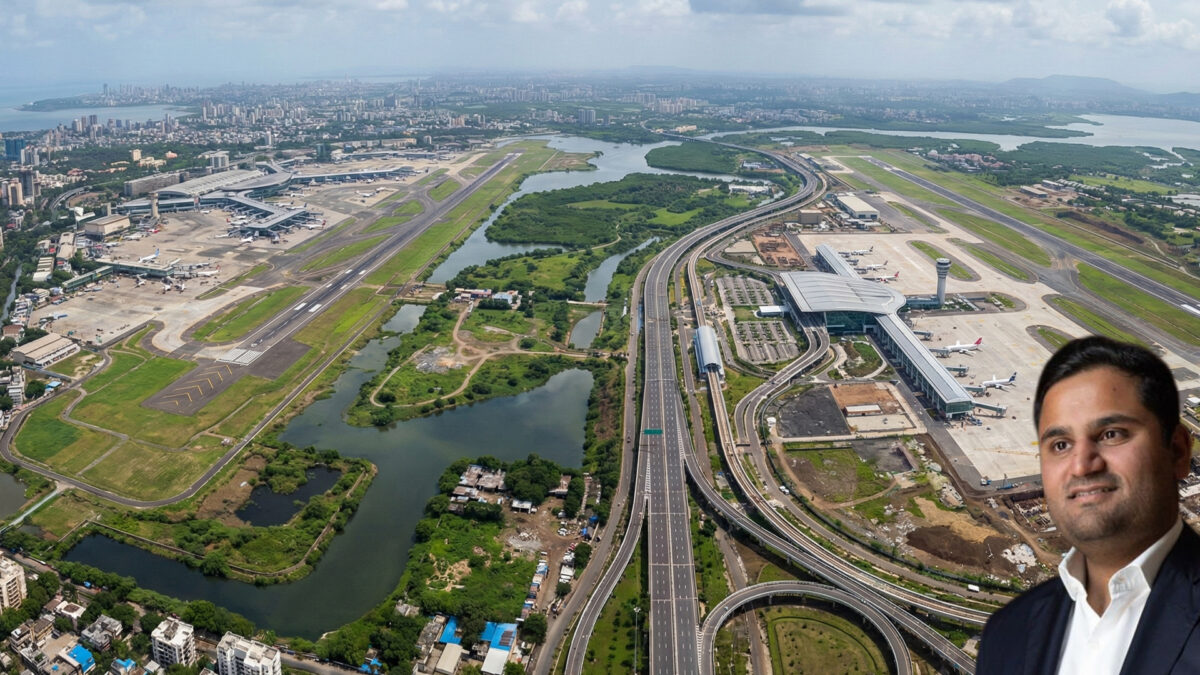
The government has stepped in to delay Adani Airport Holdings’ plan to shift a large chunk of international flights from Mumbai’s Chhatrapati Shivaji Maharaj International Airport to the newly opened Navi Mumbai International Airport, giving airlines more time to work out a transition plan.
The Ministry of Civil Aviation asked Mumbai International Airport Ltd (MIAL), controlled by Adani Airport Holdings, to defer its proposed transition by a few weeks after airlines raised concerns about the timing, operational challenges and commercial impact of the move.
The immediate issue centres on 265 international departure slots that MIAL had proposed moving from Mumbai airport’s Terminal 2 to Navi Mumbai from October 25. The proposed shift represents roughly 33% of the 770 international departures currently scheduled every week from Mumbai’s Terminal 2.
The plan was linked to the redevelopment of Mumbai airport’s Terminal 1. The terminal, which currently handles domestic flights, is expected to undergo major reconstruction from January 2027. Once the work begins, around five million domestic passengers currently using Terminal 1 will need to be accommodated elsewhere, putting additional pressure on Terminal 2.
MIAL had therefore proposed moving international operations to Navi Mumbai to create additional capacity at the existing Mumbai airport. Airlines, however, questioned the speed at which the change was being pushed through.
Several carriers had already finalised their winter schedules and raised concerns that shifting international services between two airports at short notice could create operational and commercial difficulties. Airlines also questioned the basis for selecting 265 flights and asked the airport operator to provide detailed capacity assessments and data supporting the proposed reduction.
The Airline Operators Committee sought information on how the 33% figure had been calculated and asked for records of consultations relating to the Terminal 1 redevelopment. Airlines also wanted greater clarity on airport capacity, timelines and the operational impact of moving international passengers to Navi Mumbai.
The government’s intervention effectively puts the October 25 transition plan on hold. Rather than proceeding with the proposed flight shift, Adani Airports has been asked to return to the negotiating table with airlines and prepare a plan that has wider stakeholder agreement.
A meeting with airlines and other stakeholders is scheduled for October 13, followed by another meeting on October 20 to discuss the final transition plan. The agreed proposal will then have to go through the necessary regulatory approvals.
The issue has become particularly important because both Mumbai airport and Navi Mumbai International Airport are operated by Adani Airport Holdings. That gives the airport operator the ability to redistribute traffic between the two facilities, but airlines ultimately have to manage the impact on aircraft deployment, crew, schedules and passengers.
Navi Mumbai International Airport is being positioned as an important second aviation hub for the Mumbai metropolitan region. Its gradual expansion is expected to reduce pressure on the existing Mumbai airport and provide additional capacity as air travel continues to grow.
Adani Airports has maintained that the redevelopment of Terminal 1 is necessary and that the proposed transition is designed to manage airport capacity during construction. The company has also offered incentives to airlines, including discounts on landing fees for new international operations at Navi Mumbai and measures aimed at offsetting differences in airport charges.
Airlines, however, have said incentives are not their primary concern. Their immediate focus is on having a clear redevelopment roadmap, reliable capacity data and sufficient time to prepare for any operational changes.
The passenger impact is another major consideration. Mumbai and Navi Mumbai are separated by roughly 35 kilometres, and travellers will have to factor in additional travel time depending on where their flights operate. Airport connectivity is improving, with bus, taxi, rail and inter-airport shuttle services being expanded around Navi Mumbai International Airport ahead of the winter schedule.
The proposed shift also comes during the busy winter travel period, when demand typically rises and airlines have already planned their schedules. Any abrupt reduction or relocation of international flights could affect passenger choices, fares and connectivity from Mumbai.
The government’s decision to seek more consultation reflects the complexity of managing two major airports serving the same metropolitan region. The challenge is not simply moving flights from one terminal to another but ensuring that airlines, airport operators and passengers can adapt without unnecessary disruption.
The next few weeks will therefore be important for Mumbai’s aviation network. The October 13 and October 20 meetings are expected to determine how much traffic can move to Navi Mumbai, when the transition should begin and how Mumbai airport can maintain operations while Terminal 1 is redeveloped.