
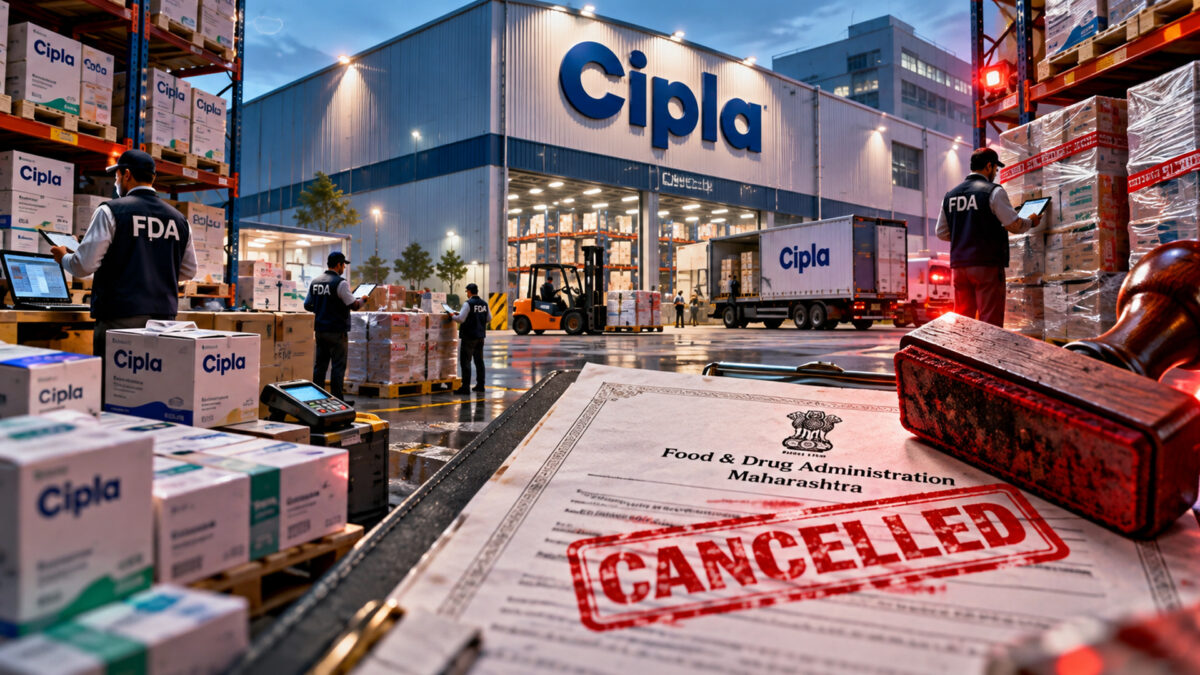
The Maharashtra Food and Drug Administration (FDA) has cancelled the drug sale and distribution licences of Cipla Pharma & Life Sciences Ltd’s carrying and forwarding warehouse at Wadki in Pune, citing alleged violations involving the prescription medicine Reactin Plus Tablets, along with deficiencies in storage, documentation and inventory management.
The fresh order was issued on October 1 after the regulator completed a revised legal process following directions from the Bombay High Court. The FDA had earlier taken action against the facility in August, but those proceedings were withdrawn and reconsidered after the court’s intervention.
The latest proceedings began with a revised show-cause notice issued to Cipla on September 4. The company submitted its written response on September 11 and was given a personal hearing on September 21. After considering the company’s response, inspection findings, records and applicable legal provisions, the licensing authority issued a fresh order cancelling the licences.
The FDA said the latest decision was an independent regulatory action following the completion of the process and was not simply a repetition of the earlier order.
At the centre of the case is Reactin Plus Tablets, classified as a Schedule H prescription medicine. During an inspection, the FDA raised objections to the product’s packaging, which described it as an analgesic and carried claims relating to relief from headache, muscular pain, backache, joint pain, sprain, body ache and toothache.
The regulator also objected to illustrations on the packaging, including a human figure and an image suggesting relief from muscular pain. According to the FDA, the wording, claims and illustrations did not comply with provisions of the Drugs and Cosmetics Act, 1940, and amounted to misbranding.
The issue goes beyond packaging. The FDA said its inspection of the Pune warehouse identified several shortcomings in the way medicines were stored and documented. Some drug stocks were allegedly kept directly on the floor because of inadequate pallets or racks, while dust accumulation and cleanliness issues were also noted.
The regulator also raised concerns about the handling of expired medicines. According to its findings, expired stocks were not maintained in a separately designated area marked “Expiry-Not for Sale”. The FDA also cited deficiencies in standard operating procedures and records relating to the disposal of expired medicines.
Record-keeping and inventory management were another area of concern. The FDA reported discrepancies between physical stock and computerised or SAP records, including in the case of antibiotics. It also pointed to deficiencies in purchase invoices and sale records.
The regulator maintained that maintaining digital inventory records does not remove the statutory responsibility of a licensed drug distributor to keep accurate physical stock, proper documentation and records required for inspection.
The FDA had earlier seized Reactin Plus stock valued at around ₹11.19 lakh and raised concerns about compliance with directions to withdraw the affected medicine from the market. The regulator said the packaging could potentially encourage consumers to use the medicine without medical advice, an issue it linked to the importance of stricter controls around Schedule H medicines.
FDA Commissioner Tukaram Mundhe said the department’s focus was not only on enforcement but also on ensuring medicine safety, quality and compliance across the drug supply chain. He said the latest proceedings followed the Bombay High Court’s directions and included an opportunity for Cipla to present its case.
Cipla, however, has disputed the action. In its latest response, the company described the FDA’s decision as disappointing and said it was reviewing the order and evaluating the options available to it.
The company maintained that its Wadki carrying and forwarding warehouse operates in compliance with applicable drug distribution, storage and digital record-keeping protocols. Cipla also reiterated its commitment to product quality, patient safety and ensuring uninterrupted access to medicines.
The latest order is part of a regulatory process that has already involved both the state drug authority and the courts. The Bombay High Court’s intervention led the FDA to withdraw its earlier proceedings and restart the process, giving Cipla a fresh opportunity to respond before the new decision was issued.
The action does not amount to a cancellation of Cipla’s manufacturing operations. It concerns the drug sale and distribution licences associated with the company’s carrying and forwarding warehouse in Wadki, Pune.
The case highlights the importance of pharmaceutical supply-chain compliance after medicines leave manufacturing facilities. Storage conditions, inventory accuracy, expiry management, product labelling and distribution records all form part of the regulatory framework governing medicines.
The scrutiny is particularly significant for prescription drugs because their packaging and promotional claims are subject to specific legal requirements. Regulators have repeatedly stressed that such medicines should be distributed and promoted in a manner consistent with the Drugs and Cosmetics Act and related rules.
The immediate impact of the FDA order will depend on the next steps taken by Cipla and the regulatory or legal authorities. The company is reviewing the decision, while the Maharashtra FDA has maintained that the fresh order followed due process.
The case therefore remains both a pharmaceutical compliance matter and a legal issue, with the focus now shifting to Cipla’s response and any further proceedings that may follow.