Categories
Technology

DarkSword spyware threatens millions of iPhone users

A newly discovered spyware called DarkSword has sparked fresh concerns about the safety of iPhone users, with experts warning that millions of devices could be vulnerable to data theft.

The threat mainly affects iPhones that are not updated to the latest version of Apple’s iOS. Since many users delay updates, a large number of devices may still be exposed to this risk.

What makes DarkSword particularly worrying is how easily it can infect a device. Users don’t need to download an app or file, simply clicking on a malicious link or visiting a compromised website can trigger the attack. This means even careful users could unknowingly fall victim.

Once inside, the spyware can access a wide range of personal information. This includes messages, contacts, photos, call history, and even location data. In some cases, it may also steal login details for apps, putting users at risk of financial fraud or identity theft.

Experts say the spyware is difficult to detect because it uses advanced techniques that leave little to no trace. It can run quietly in the background and may even disappear after a device is restarted, making it harder to identify.

Although such tools were earlier used mainly for targeted surveillance, researchers warn that threats like DarkSword are now becoming more widespread, increasing risks for everyday users.

The good news is that Apple has already released security updates to fix the issue. Users who have updated their iPhones to the latest iOS version are largely protected from this threat.

Also Read: Iran hits the world’s largest LNG hub in Qatar

Categories
Technology

Samsung ends Galaxy Z TriFold sales

Samsung Electronics has confirmed that it will stop selling its premium Galaxy Z TriFold smartphone, only three months after its debut. Launched in December 2025 in South Korea and arriving in the U.S. in January 2026, the TriFold was Samsung’s first attempt at a tri-folding smartphone, featuring a 10-inch flexible display that unfolded into a tablet-like device.

With a steep price of $2,899 (around ₹2.65 lakh), the phone targeted early adopters and tech enthusiasts rather than mainstream buyers. Samsung’s official website now lists the device as “sold out”, signaling that sales will end immediately in South Korea, while remaining U.S. stock will be sold until depleted.

Industry experts note that the TriFold was never intended to be a high-volume product. Its complex design and expensive manufacturing made it difficult to achieve profitability, especially with limited retail and carrier distribution. While the phone received attention for its futuristic design, these factors contributed to Samsung’s decision to discontinue sales.

Despite its short run, the Galaxy Z TriFold is likely to become a collector’s item, with remaining units occasionally available in select Samsung Experience Stores across the U.S. Samsung has not announced a successor, suggesting the lessons learned from this device may influence future foldable smartphones rather than result in a direct replacement.

Analysts say the move reflects Samsung’s focus on balancing innovation with market feasibility. The company continues to invest in foldable technology, as seen in its Galaxy Z Fold and Galaxy Z Flip series, while also promoting more mainstream devices like the Galaxy S26 Ultra.

The Galaxy Z TriFold’s brief market life underscores the challenges of producing cutting-edge, high-cost foldables. While it offered a glimpse of the future of mobile design, its discontinuation highlights the need for practicality and affordability in new form factors.

Also Read: Apple acquires Polish visual effects firm MotionVFX

Categories
Technology

Chrome update brings bookmarks bar to Android

Google has begun rolling out a new update to its Chrome browser on Android that introduces a bookmarks bar for tablets and foldable devices, making it easier for users to access their favourite websites.

The feature, commonly used on desktop browsers, appears just below the address bar and displays saved websites for quick access. With a single tap, users can open frequently visited pages without navigating through the bookmarks menu.

Until now, Android users had to open the bookmarks section separately to reach saved links. The new bookmarks bar reduces that extra step, allowing quicker browsing and easier navigation—especially on devices with larger displays.

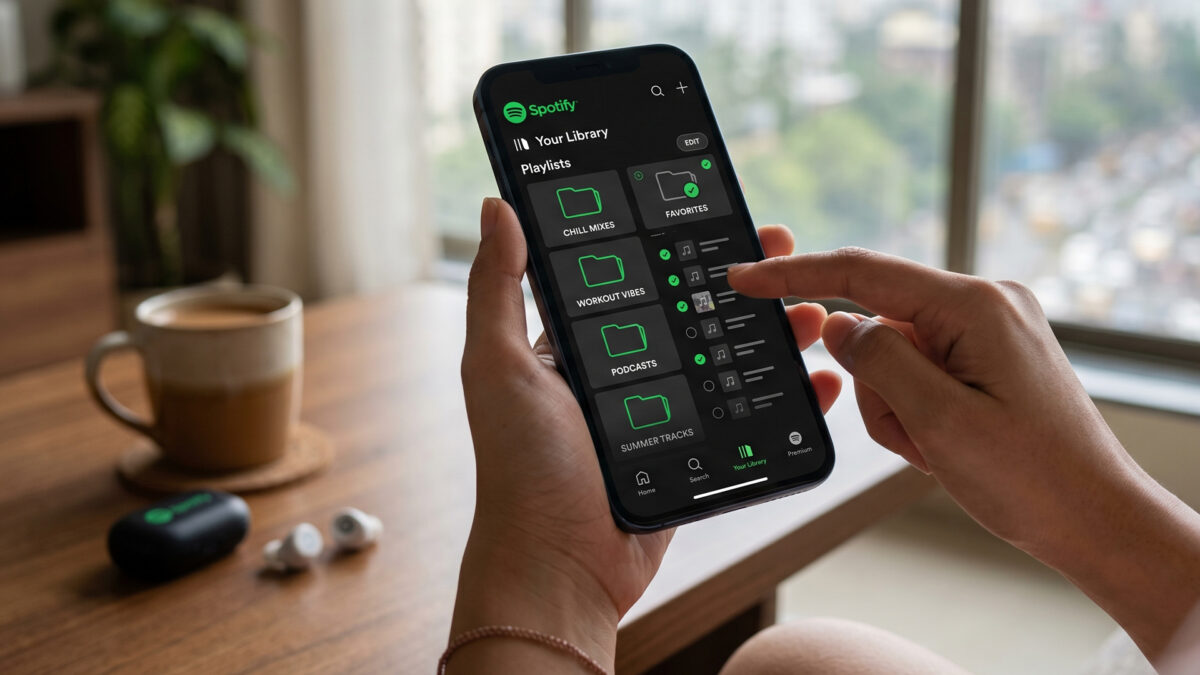
Users can also organise bookmarks into folders, helping them group websites based on categories such as work, news or entertainment. If the number of saved links exceeds the space available on the screen, an arrow icon appears at the end of the bar to show additional bookmarks.

The feature is available in the latest version of Chrome for Android and can be enabled in the browser’s settings. Users can turn it on by going to the “Appearance” section and selecting the option to show the bookmarks bar. However, the feature is mainly designed for tablets and foldable phones, meaning it may not appear on smaller smartphone screens.

As tablets and foldables become more common for productivity and multitasking, companies are increasingly adapting software to take advantage of bigger screens.

Also Read: upGrad to acquire Unacademy

Categories
Technology

Google, Accel pick five India-linked AI startups

Google and venture capital firm Accel have chosen five artificial intelligence startups connected to India after evaluating more than 4,000 applications for their joint accelerator program, emphasizing the growing importance of building original AI technology rather than simple integrations.

The startups were selected for the Atoms accelerator, a program launched by Google and Accel to support early-stage AI companies developing products tied to India’s technology ecosystem. After a rigorous selection process, the firms picked K-Dense, Dodge.ai, Persistence Labs, Zingroll, and Level Plane for the new cohort.

During the screening process, investors found that a large portion of submissions lacked substantial technological depth. Around 70% of the applications were categorized as “AI wrappers,” meaning the products mainly relied on existing large AI models without creating meaningful proprietary technology or infrastructure.

According to the organizers, the final five startups demonstrated stronger technical foundations and clearer long-term innovation potential. Each company focuses on a different application of AI across industries.

K-Dense is developing an AI “co-scientist” aimed at supporting researchers and accelerating discoveries in fields such as life sciences and chemistry. Dodge.ai is building autonomous AI agents designed to work within enterprise resource planning (ERP) systems. Persistence Labs is working on voice-based artificial intelligence tools for customer service and call-center operations.

Meanwhile, Zingroll is building a platform that enables AI-generated content for film and television production. Level Plane focuses on creating AI solutions to streamline enterprise workflows and improve operational efficiency.

Startups selected for the program may receive up to $2 million in investment from Accel and Google’s AI Futures Fund. In addition, they can access up to $350,000 worth of cloud and computing credits, including infrastructure from Google Cloud and advanced AI tools such as Gemini.

The initiative reflects a broader shift in the startup ecosystem, where investors are becoming more cautious about companies that simply layer existing AI models onto products without developing unique technology.

Through the accelerator, Google and Accel aim to support startups capable of building deeper AI systems with long-term global potential, while strengthening India’s growing role in the artificial intelligence landscape.

Also Read: IEA to release 400 mn barrels of oil

Categories
Technology

Google Maps rolls out ‘Ask Maps’ in India

Google has announced a major upgrade to Google Maps, adding artificial intelligence tools and enhanced navigation features to improve the overall user experience. The update introduces a conversational search feature called “Ask Maps,” powered by Google Gemini, which is now rolling out in India.

With “Ask Maps,” users can ask the app detailed questions rather than typing simple search terms. For example, travellers can ask for nearby attractions, restaurants along their travel route or recommendations for places to visit during a short trip. The AI processes the request and suggests relevant locations directly within the app.

The feature works by analysing data from millions of locations listed on Google Maps, including ratings, reviews and photos shared by users. This helps the system generate contextual suggestions and makes discovering new places easier.

Google has also introduced immersive navigation as part of the update. The feature offers a more detailed and realistic driving interface with 3D visualisations of roads, buildings and surroundings. This allows drivers to better understand routes and intersections before reaching them.

In addition, the navigation screen now highlights important road elements such as lanes, crosswalks and traffic lights, providing clearer guidance for drivers.

Google says the upgrade represents its largest improvement to Maps in more than ten years. By integrating Gemini AI, the company aims to turn the app into a more intelligent travel assistant capable of helping users plan journeys, discover places and navigate routes more efficiently.

Also Read: Microsoft executive VP Rajesh Jha to retire in July

Categories
Technology

Anthropic Claude gets visual tools in chat

Anthropic’s AI assistant Claude just got a major upgrade. Users can now ask Claude to create interactive charts, graphs, and diagrams directly in chat, rather than just getting plain text answers. This new feature is currently in beta and is available to all users, including those on the free plan.

Sometimes, a visual explains things better than words. Whether it’s tracking trends over time, showing step-by-step processes, or illustrating complex concepts, Claude can now decide when a chart or diagram might help and generate it instantly in the conversation. Users can also specifically request visuals, like asking Claude to “draw a diagram” or “show a chart,” and the AI will respond with dynamic, interactive elements.

These visuals aren’t static images, they update in real time as you continue the conversation. This means you can explore data or concepts interactively without leaving the chat interface. For example, students can see a graph adjust as they tweak numbers, while professionals can visualize business trends on the fly.

This feature builds on Anthropic’s earlier experimental tool, “Imagine with Claude,” which let users create visual interfaces on a virtual desktop. Now, those capabilities are directly embedded in chats, so text explanations and visuals can work together seamlessly.

Anthropic says the update aims to make information more accessible and intuitive, whether you’re learning a new topic, analyzing data, or collaborating with colleagues. The visuals can also integrate with tools like Figma, Canva, and Slack, giving users more ways to bring AI-powered insights into their workflow.

Also Read: NSE appoints 20 banks, 8 law Firms for mega IPO

Categories
Technology

Razorpay launches AI Agent Studio

Indian fintech company Razorpay has introduced Agent Studio, a new artificial intelligence (AI) platform designed to help businesses automate payment-related operations and financial workflows. The announcement was made at the company’s annual event, FTX 2026.


Categories
Technology

Perplexity launches PC AI that works 24/7 on Mac

Perplexity AI has introduced Personal Computer, a new system that transforms a Mac mini into an always-on AI assistant. Unlike conventional AI tools that respond only when prompted, this system works 24/7, handling tasks, accessing files, and running apps even while the user is away.

The AI combines local device resources with Perplexity’s cloud platform, allowing secure access to documents, emails, and apps. It can draft messages, generate reports, research topics, and break complex tasks into manageable steps, automating repetitive work to boost productivity.

The software includes approval prompts, activity audits, and a kill switch to stop unwanted operations. At launch, Personal Computer is available through a waitlist, initially targeting higher-tier subscribers, with the Mac mini as the primary supported device.

This launch highlights a trend toward AI that actively works in the background, suggesting a future where computers operate as always-on digital collaborators.

Also Read: Oil tops $100 after tanker attacks in Iraqi waters

Categories
Technology

Moltbook joins Meta, AI Agents take lead

Meta Platforms has acquired Moltbook, a social network built solely for AI agents to post, comment, and interact without human involvement. The founders, Matt Schlicht and Ben Parr, will join Meta’s Superintelligence Labs, the company’s unit focused on advanced AI research. The price of the deal has not been disclosed.

Unlike Facebook, Instagram, or X, Moltbook is designed exclusively for machines. Its AI agents behave like social participants, sharing content, engaging with each other, and even creating trending posts. The platform gained attention because of its seemingly intelligent behavior, though some early viral content was influenced by humans.

Meta says the acquisition will allow AI agents to help people and businesses in new ways. Existing users can continue using Moltbook, but the company has not explained long-term plans or potential feature integration with other Meta products.

Analysts see Moltbook as part of a broader movement toward autonomous AI systems that can act independently online. Companies like Meta and OpenAI are racing to build networks and tools that allow these AI agents to perform tasks without constant human oversight.

The platform also faced early security concerns, including vulnerabilities that let humans manipulate bot accounts. These issues illustrate the challenges of operating open AI ecosystems safely while maintaining creativity and engagement.

This acquisition strengthens Meta’s position in AI research and practical applications. By bringing in Moltbook’s technology and team, the company gains experience in managing large-scale AI agent networks and understanding social dynamics among autonomous systems.

Also Read: Qualcomm, NEURA Robotics team up for smart humanoid robots


Categories
Technology

AI enters the lab, transforming drug discovery

Artificial intelligence is beginning to transform the way scientists discover and develop new medicines. Researchers and pharmaceutical companies are now using AI tools to analyse large amounts of biological data and identify potential drug compounds much faster than traditional methods.

Developing a new drug has traditionally been a long and expensive process, often taking more than a decade and costing billions of dollars. Scientists must test thousands of chemical compounds before finding one that works safely in the human body. AI is helping shorten this early research stage by quickly analysing huge chemical databases and predicting which molecules could be effective against specific diseases.

New AI systems can study millions of chemical structures and protein targets in a short time, something that would take years using conventional laboratory screening. By identifying the most promising compounds early, researchers can focus their experiments on the best candidates and avoid unnecessary testing.

In some laboratories, AI is also being combined with robotics to create automated research environments. These “self-driving labs” can run experiments, study the results and plan the next set of tests without constant human intervention. This allows scientists to test more ideas quickly and explore complex chemical combinations that might otherwise be overlooked.

AI will not replace scientists but will act as a powerful tool to support their work. By handling massive datasets and complex calculations, AI allows researchers to focus more on designing experiments and understanding results.

Large pharmaceutical companies and biotechnology firms are investing heavily in AI technology to improve their research pipelines. The technology is being used not only to design new drug molecules but also to help identify disease targets and analyse clinical trial data.

Also Read: Jagsonpal Pharmaceuticals shares rise, board considers buyback