Categories
Leaders

Jeff D’Onofrio steps in as Washington Post Chief

The Washington Post is navigating one of the most difficult phases in its recent history, marked by deep job cuts and a sudden change at the top. Jeff D’Onofrio has been appointed acting publisher and chief executive after Will Lewis stepped down, just days after the newspaper announced mass layoffs that affected more than 300 employees.

Lewis, who took charge in early 2024 after being appointed by owner Jeff Bezos, was brought in to stabilise the Post’s finances at a time when advertising revenues were falling and digital subscriptions were under pressure. He argued that the restructuring was essential to ensure the paper’s long-term survival in a rapidly changing media landscape.

However, the layoffs,  estimated to impact nearly a third of the newsroom, sparked shock, anger, and fear among staff. Several well-known desks and teams were cut or sharply reduced, raising concerns about how the paper would maintain its journalistic depth and global coverage. Tensions escalated further when Lewis did not attend the internal meeting where the layoffs were announced, a move many employees viewed as distancing himself from the human cost of the decision.

In a message to staff announcing his departure, Lewis said it was the “right time to step aside” and defended the cuts as painful but necessary. His resignation was widely seen as a response to mounting internal backlash and public criticism over both the scale of the layoffs and how they were handled.

Stepping into the role on an interim basis, Jeff D’Onofrio, previously the Post’s chief financial officer, now faces the challenge of restoring confidence while keeping the organisation financially stable. D’Onofrio brings a strong business and digital background, with earlier roles at companies such as Google, Yahoo News, and Tumblr. In his first communication to staff, he acknowledged the distress caused by the layoffs and said rebuilding trust would be a priority.

Jeff Bezos thanked Lewis for his service and expressed confidence in D’Onofrio’s leadership. Yet, inside the newsroom, uncertainty remains high. Journalists and staff representatives are urging the management to protect editorial independence and invest in quality reporting, even as financial pressures persist.

The leadership transition showcases the broader struggle of legacy media organisations worldwide, as they try to balance economic survival with the core mission of journalism. For the Washington Post, the coming months under Jeff D’Onofrio’s interim leadership will be critical in shaping what the paper becomes next.

Also Read: India-US interim trade deal cheers stock markets

 

Categories
Leaders

Tablesh Pandey to lead NSE IPO committee plan

The National Stock Exchange of India (NSE) has taken a major step toward going public, as its board approved plans for an initial public offering (IPO) and formed a special IPO committee to oversee the process.

The IPO will be conducted via an offer-for-sale (OFS) route, in which existing shareholders sell their stake rather than the exchange issuing new shares. This approach helps determine NSE’s market valuation while retaining its overall ownership structure.

Former LIC Managing Director Tablesh Pandey has been appointed chairman of the IPO committee, bringing decades of experience in financial management, corporate governance, and regulatory compliance. Pandey is widely respected for his leadership at LIC, India’s largest insurance company, where he successfully steered growth, improved operational efficiency, and strengthened investor trust.

The IPO committee will include NSE’s Managing Director & CEO and public interest directors, ensuring strategic oversight of key steps such as finalizing the issue size, appointing merchant bankers, and preparing the Draft Red Herring Prospectus (DRHP).

A significant milestone for the exchange was the no-objection certificate (NOC) from SEBI, which clears a major regulatory hurdle for the listing. NSE aims to file the DRHP by end of March or early April, subject to audited financial statements and regulatory approvals.

The IPO is expected to unlock shareholder value and increase participation in India’s premier stock exchange. Analysts believe that with Pandey leading the committee, the process will benefit from strong governance, credibility, and smooth execution.

Pandey’s appointment is seen as a signal of the NSE’s commitment to transparency and regulatory compliance, given his proven track record in managing large public-sector financial institutions. Experts expect the IPO to be closely watched by both retail and institutional investors in India.

With the IPO committee now in place under Pandey’s guidance, NSE is on track to achieve a long-awaited listing, marking a major development in India’s capital markets.

Also Read: AI stethoscopes boost early health screening

Categories
Leaders

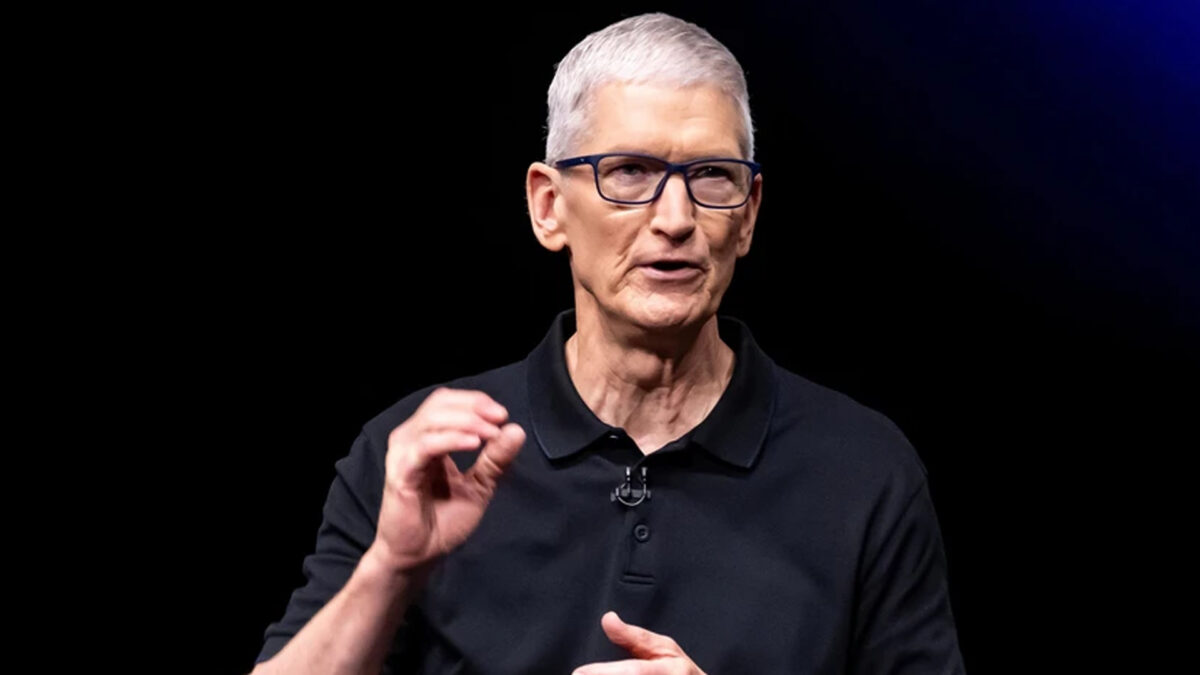
Tim Cook talks succession, denies retirement plans

Apple CEO Tim Cook has addressed speculation about his retirement and the company’s leadership future at a rare all-hands meeting, reassuring staff that succession planning is ongoing but he is not stepping down anytime soon.

Cook, who turned 65 in 2025, noted that planning for future leadership is a key responsibility for any large organization. While thinking about who will lead Apple in the coming years is important, he emphasized that his focus remains on current operations.

The meeting also highlighted recent departures of senior executives, including Lisa Jackson, Jeff Williams, and Katherine Adams. Cook described these as planned transitions, stressing that Apple’s leadership bench remains strong and capable.

Industry observers point to John Ternus, senior VP of hardware engineering, as a likely future CEO, noting his increased responsibilities and visibility within the company.

Cook’s comments come amid tech industry speculation about a near-term retirement, but he reinforced that Apple is focused on long-term strategy and stability, not abrupt leadership changes. The all-hands also touched on Apple’s upcoming 50th anniversary, signaling reflection on the company’s legacy alongside succession planning.

Also Read: India plans $80 bn Boeing aircraft purchase

Categories
Leaders

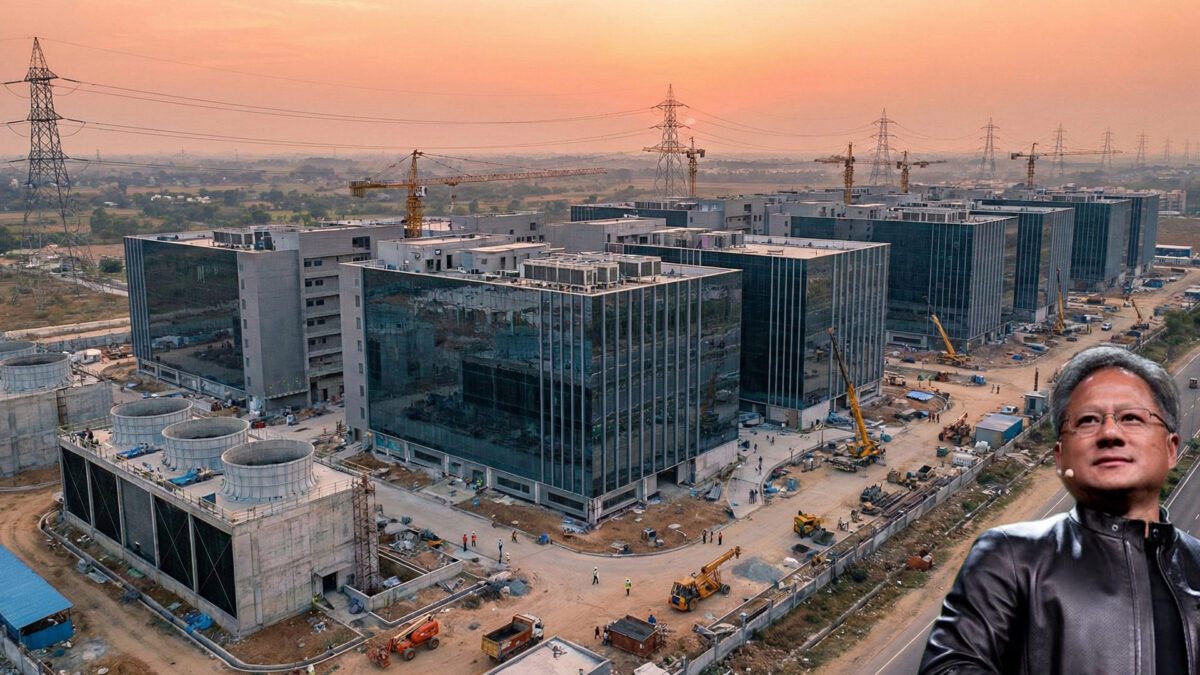
India’s data centres seen as job engine, says Nvidia CEO

India is emerging as a global hotspot for artificial intelligence (AI) and digital infrastructure, drawing recognition and investment from international leaders. United Nations Secretary-General António Guterres praised India for its leadership in AI, noting the country’s role in shaping global AI discussions and promoting inclusive governance.

Nvidia CEO Jensen Huang predicted that India’s AI and data-centre expansion could create a surge in employment, reminiscent of the internet boom. According to Huang, constructing data centres will generate jobs for electricians, plumbers, architects, and project managers. Beyond that, a wide range of indirect roles in operations, supply chains, and startups could also emerge.

The Indian government is supporting this growth with strategic incentives. The 2026 Budget extended tax holidays for foreign companies setting up data centres in India through 2047, aiming to attract massive investment in cloud computing and AI services. Experts in the industry estimate that this could bring in billions of dollars, further strengthening India’s position in the global tech ecosystem.

India is also hosting the India AI Impact Summit 2026 in New Delhi, bringing together global leaders, ministers, technology executives, and academics. The summit will focus on AI governance, capacity building, and international collaboration, including platforms like the Global Digital Compact.

Also Read: Bengaluru startup founder’s US visa rejected in Delhi

Categories
Leaders

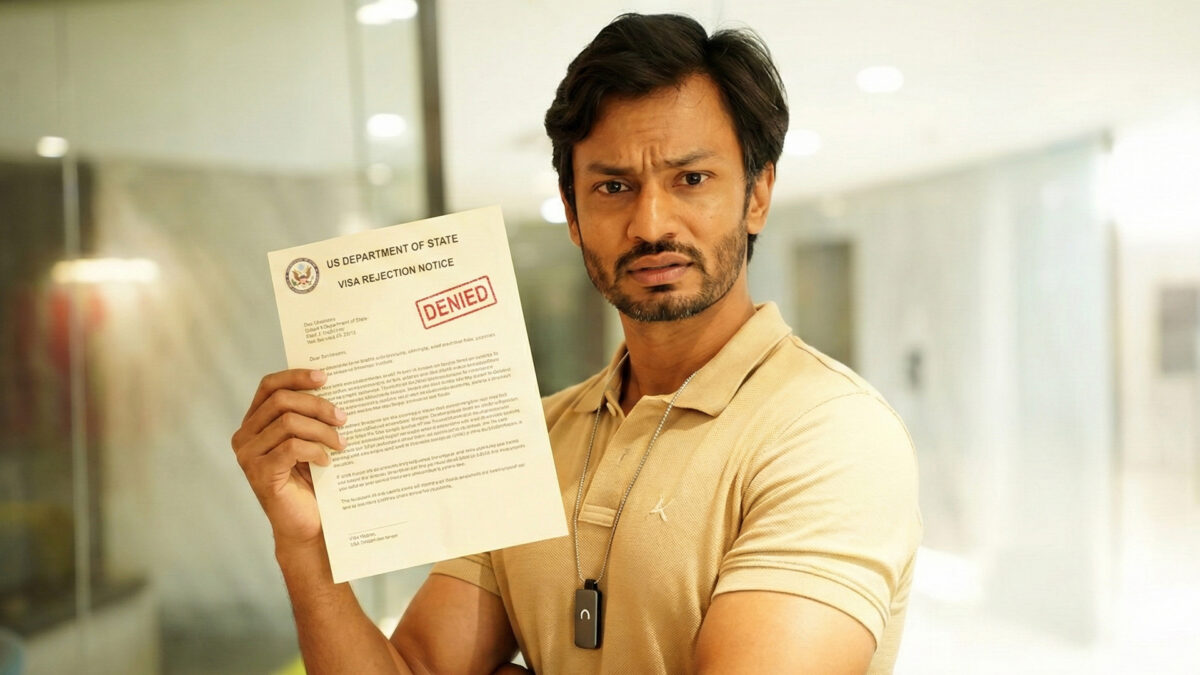
Bengaluru startup founder’s US visa rejected in Delhi

A Bengaluru-based startup founder has raised concerns about the US visa process after his application was unexpectedly rejected in Delhi, despite a clear business purpose and strong international ties.

Dhananjay Yadav, co-founder of NeoSapien, appeared for his visa interview at the US Embassy in Delhi on February 3, 2026. He planned to travel to the United States to meet investors and explore business partnerships, as part of his startup’s expansion strategy. Yadav had been invited by Hari Valiyath, a friend and investor, who co-founded the US-based company Pyxis, which has raised over $200 million in funding. The entire trip was to be funded by the company.

Yadav emphasized that he has previously studied in the United States and worked in Berlin, showing that he has strong international experience and a history of returning after foreign travel. However, during the visa interview, the consular officer focused on his personal salary rather than the purpose of the trip or his company’s financial backing. As is common for startup founders, Yadav draws only a minimal salary, since earnings are reinvested into the business. Shortly after, his visa was denied.

The incident has sparked discussions on social media, where many startup founders shared similar frustrations. Users pointed out that visa interviews can be unpredictable and subjective, with decisions sometimes depending more on the officer’s judgment than on documentation or travel purpose. Some noted that low personal income among early-stage startup founders can be misinterpreted as a risk, even when the trip is fully funded by the company and tied to strategic business goals.

Experts and social media users suggested that applicants in similar situations could strengthen their case by providing additional proof of financial stability, highlighting company backing, or considering other consulates. The incident has also led to broader debates about how US visa protocols assess business travelers, particularly founders whose personal earnings may not reflect their startup’s potential or value.

Also Read: Trent Q3 profit rises to ₹217 cr, revenue up 15%

Categories
Leaders

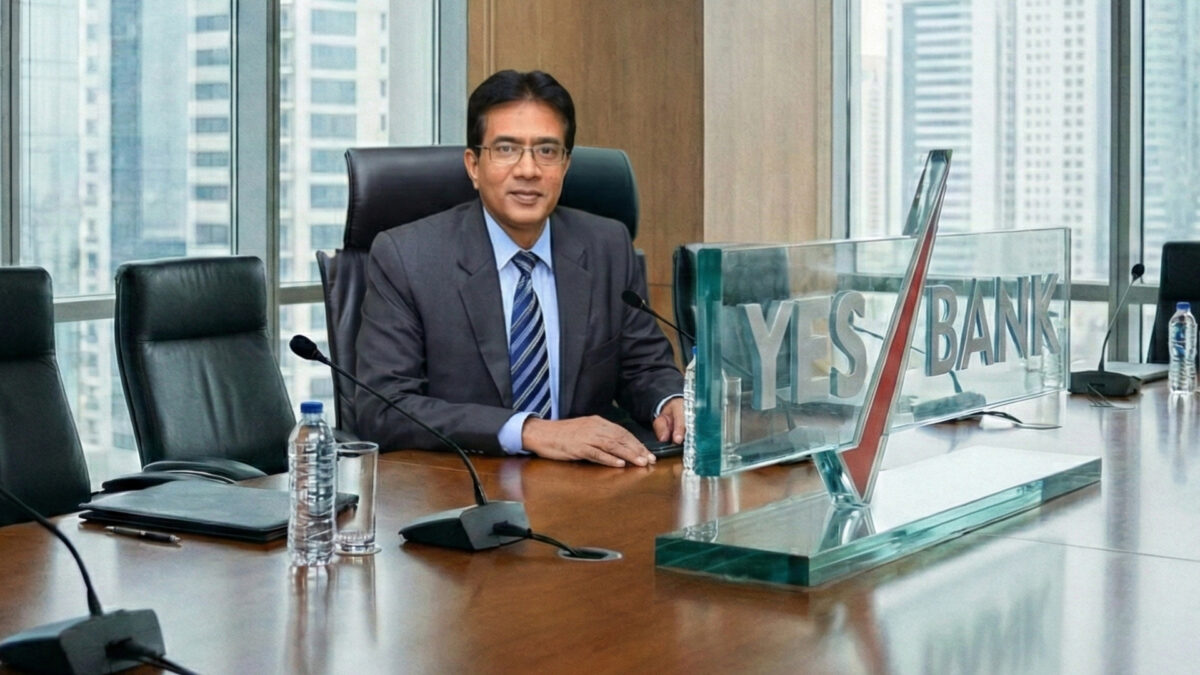
Vinay Tonse named Yes Bank MD & CEO

The Reserve Bank of India (RBI) has approved Vinay Muralidhar Tonse as the new Managing Director and CEO of Yes Bank for a three‑year term. He will succeed Prashant Kumar, whose extended tenure ends in April 2026.

Tonse, a former SBI Managing Director, brings extensive experience in retail banking and operations. His appointment is subject to shareholder approval and aligns with Yes Bank’s plans to strengthen governance, expand services, and boost customer outreach.

The market reacted positively to the news, with shares drawing investor attention following the announcement. Yes Bank confirmed that Tonse meets all regulatory requirements and is not barred by any authority from holding the position.

This leadership change comes as Yes Bank continues to implement strategic growth initiatives and leverage past restructuring efforts, including backing from global partners.

Also Read: Senior Peak XV partners exit to launch new VC firm

Categories
Leaders

Senior Peak XV partners exit to launch new VC firm

Three senior partners of Peak XV, a leading venture capital (VC) firm in India, have resigned to launch their own investment firm. The departing partners are Ashish Agrawal, Ishaan Mittal, and Tejeshwi Sharma. Agrawal and Mittal had been with Peak XV and its predecessor Sequoia Capital India for over a decade, while Sharma brought expertise in SaaS and fintech investments.

Peak XV confirmed the departures and said the decision was made after internal discussions. The firm cited differences over economics and executive payouts as the main reason for the exits. Peak XV’s leadership said these changes are normal and are in the long-term interest of the firm and its investors.

The move comes amid a period of senior-level changes at Peak XV since it split from Sequoia Capital India in 2023. The firm has been restructuring and focusing on new areas, including artificial intelligence. To fill the leadership gap, Peak XV promoted Abhishek Mohan to managing director and Saipriya Sarangan to chief operating officer.

The departing partners said they want to pursue their entrepreneurial ambitions and build a new investment firm with trusted colleagues. Industry experts see this as part of a growing trend where experienced VC investors in India are starting their own specialised funds.

Despite the exits, Peak XV remains committed to its investment plans and sees the leadership changes as an opportunity to strengthen its team and continue backing innovative startups.

Also Read: Alphabet expands Bengaluru offices, adds thousands of AI jobs

Categories
Leaders

Ex-RBI Director joins Bajaj Housing finance board

Bajaj Housing Finance Limited has appointed Ajay Kumar Choudhary as an Independent Director on its board, the company announced on February 2, 2026. His appointment will take effect from March 1, 2026, and will continue for five years, subject to approval by the company’s shareholders.

Choudhary brings over three decades of experience in central banking and financial regulation. He retired as an Executive Director of the Reserve Bank of India (RBI) and has played key roles in areas such as payments, regulatory operations, and financial policy. His expertise is expected to strengthen the company’s governance, risk management, and compliance framework.

The decision to nominate Choudhary was made following the recommendation of the company’s Nomination and Remuneration Committee, which evaluates candidates for their experience, independence, and ability to contribute to board-level decisions. Once approved by shareholders, Choudhary will serve a full term of five years and will not be subject to retirement by rotation.

This appointment is part of Bajaj Housing Finance’s broader effort to enhance its board quality and governance as the company expands in India’s housing finance sector. Since its IPO in 2024, the company has been actively growing its lending portfolio and strengthening its regulatory compliance practices.

By bringing in a seasoned central banker like Choudhary, Bajaj Housing Finance signals its focus on strong corporate governance and strategic oversight, especially in a market where regulatory expectations and operational complexities are increasing.

Also Read: India eyes higher 49% FDI in public banks

Categories
Leaders

Elon Musk’s SpaceX buys xAI in $1.25 trillion merger

Elon Musk has brought his two biggest futuristic bets closer together. His space exploration company SpaceX has acquired his artificial intelligence firm xAI in a deal that values the combined private entity at around $1.25 trillion, according to reports.

The merger brings xAI, the company behind the AI chatbot Grok, fully under SpaceX, creating a single organisation that blends space technology, satellite networks and advanced artificial intelligence. While SpaceX is estimated to be worth about $1 trillion, xAI’s valuation is pegged at roughly $250 billion.

Musk said the deal is aimed at solving one of the biggest challenges facing AI today: infrastructure. Modern AI systems rely on massive data centres that consume huge amounts of electricity and water for cooling. Musk has argued that this model is unsustainable in the long run.

His solution is ambitious, move AI data centres into space.

By placing large-scale computing infrastructure in orbit, Musk believes AI systems could run on near-constant solar energy, reduce strain on Earth’s power grids and avoid many land-based environmental constraints. Space-based data centres could also operate at scale without competing with cities and industries for electricity and water.

As part of this broader vision, SpaceX has reportedly applied to US regulators for permission to launch up to one million additional satellites in the coming years. These satellites could form a vast network capable of supporting AI processing, data transfer and global connectivity from space.

The merger also strengthens the link between xAI and Musk’s social media platform X, which already uses AI tools such as Grok for content analysis and real-time information. Integrating these systems with SpaceX’s satellite and launch capabilities could give Musk an edge in building a global AI-powered communications ecosystem.

The deal comes at a time when SpaceX is preparing for a potential initial public offering (IPO), expected later in 2026. Analysts say combining AI and space infrastructure under one roof could significantly boost investor interest, while also positioning the company as a competitor to major cloud and AI firms.

Also Read: Snowflake, OpenAI seal $200 million AI deal

Categories
Leaders

FedEx CEO warns of global trade shift

FedEx Chief Executive Officer Raj Subramaniam says the world is entering a new phase of global trade as rising tariffs and geopolitical tensions redraw long-established shipping routes. Rather than calling it the end of globalization, Subramaniam describes the shift as “re-globalization,” where trade flows are being reorganised across regions.

The comments come as FedEx faces growing pressure from higher US import tariffs, especially those imposed on Chinese goods. New levies announced by the US government have increased the overall tariff burden on imports, disrupting cross-border trade volumes and raising costs for global businesses. These developments have had a direct impact on logistics companies like FedEx, whose business depends heavily on smooth international trade.

Following the tariff announcements, FedEx shares fell sharply, reflecting investor concerns about slower global shipments and rising operational costs. The company has since warned that tariffs could reduce its operating profit by around $1 billion in the current financial year. However, FedEx has taken steps to cushion the impact by redesigning its network and shifting capacity to faster-growing trade lanes.

Subramaniam noted that traditional trade routes, particularly between China and the United States, are weakening. At the same time, China’s trade with other parts of Asia, Latin America, and emerging markets is expanding. This realignment, he said, is forcing logistics companies to become more flexible and region-focused rather than relying on one dominant global supply chain

“The world is changing, and trade is changing with it,” Subramaniam said, adding that companies must learn to operate in a less predictable but still deeply connected global economy.

FedEx is responding by cutting costs, streamlining operations, and investing in technology to better track and manage complex trade movements. The company is also adapting its air and ground networks to reflect changing demand patterns across regions.

Taking over from founder Fred Smith, Subramaniam acknowledged that volatility is now a permanent feature of global trade. While tariffs and policy changes may continue to create uncertainty, he said FedEx is focused on resilience and long-term adaptation rather than short-term disruption.