Categories
Corporate

E to E Transportation IPO opens with ₹164‑₹174 price band

E to E Transportation Infrastructure Ltd has launched its initial public offering (IPO) on December 26, 2025, aiming to raise around ₹84 crore through the NSE SME Emerge platform. The company, which specialises in engineering and system integration services for railway and transit infrastructure projects, has set its price band at ₹164‑₹174 per share.

The IPO includes a fresh issue of 48.4 lakh equity shares. Retail investors can apply for a minimum of 2 lots (1,600 shares), requiring an investment of approximately ₹2.78 lakh at the upper end of the price band. Non-institutional and high-net-worth applicants have slightly higher minimum subscription requirements. The subscription window will remain open until December 30, 2025.

Investor interest appears strong even before the IPO opens. The grey market premium (GMP) is around 75%, indicating positive sentiment and expectations of a strong listing. Informal trading suggests that the stock could debut near ₹300 per share, although grey market figures can fluctuate and do not guarantee actual listing prices.

Prior to the public offering, anchor investors were allotted 13.77 lakh shares on December 24, 2025, raising nearly ₹24 crore. Of these, 50% of shares are locked in for 30 days, while the remaining shares are under a 90-day lock-in period, helping stabilize the stock in the initial trading phase.

The company is promoted by Mukul Agrawal, who holds a 19.37% stake. The proceeds from the IPO will be primarily used to fund working capital requirements and general corporate purposes, supporting the company’s ongoing projects and operations.

The listing on the NSE SME platform is scheduled for January 2, 2026, and early investor activity suggests a potentially positive debut.
Also Read: Andhra Pradesh clears Vedanta’s 20 onshore wells

Categories
Corporate

Andhra Pradesh clears Vedanta’s 20 onshore wells

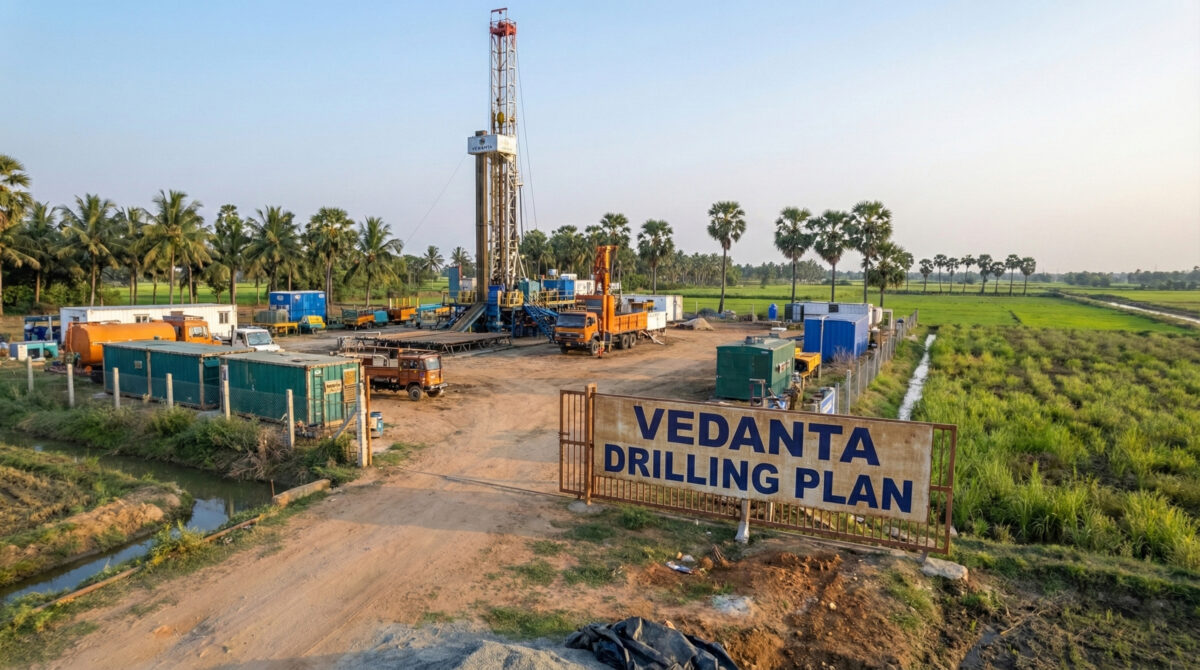
The Andhra Pradesh government has granted a conditional No Objection Certificate (NOC) to Vedanta Ltd for drilling 20 onshore oil and gas wells in Krishna district. The clearance has been issued to Cairn Oil & Gas, Vedanta’s oil and gas arm, under the Centre’s Discovered Small Field (DSF) Policy, which aims to boost domestic energy production.

Vedanta had originally proposed drilling at 35 locations in the region. However, after detailed scrutiny by the state’s irrigation and water resources departments, approval was limited to 20 sites. Officials said the decision was taken to ensure that oil and gas exploration does not affect the Krishna Delta’s extensive irrigation network, which supports thousands of farmers.

The NOC comes with strict safeguards. Vedanta has been clearly instructed not to draw water from canals, reservoirs, drainage systems, ponds or any other irrigation-linked water bodies for its drilling activities. Authorities have underlined that protecting water availability for agriculture remains a top priority, especially in canal-fed areas like Krishna district.

The state government also clarified that this NOC is only related to irrigation concerns. Vedanta must still obtain all other mandatory approvals, including environmental clearances, pollution control permissions and local administrative consents, before starting drilling operations. Any violation of the conditions could lead to withdrawal of the approval, officials warned.

The move reflects Andhra Pradesh’s effort to strike a balance between supporting energy exploration and safeguarding critical natural resources. Onshore oil and gas blocks developed under the DSF policy are seen as quicker and more economical to develop compared to offshore fields. They also align with India’s broader objective of reducing dependence on imported crude oil and gas.

Vedanta’s Cairn Oil & Gas is one of India’s largest private-sector oil producers and plays a significant role in domestic energy supply. With the conditional clearance now in place, the company can move forward with preparatory work, while closely adhering to the safeguards laid down by the state.

The government has said it will closely monitor the project to ensure compliance and protect the interests of farmers and local communities as exploration progresses.

Also Read: DGCA submits probe report on IndiGo disruptions

Categories
Corporate

Sensex drops 367 points, Nifty slips below 26,050

Markets closed lower on December 26, the BSE Sensex fell by 367 points, or about 0.4 per cent, to close at around 85,041. The NSE Nifty 50 also declined nearly 0.4 per cent, ending the day below the key 26,050 mark at around 26,042. Despite the fall, both indices managed to post small gains for the week.

Investors chose to book profits in the final trading week of the year. With holiday season keeping volumes thin and no major triggers to guide sentiment, benchmark indices slipped after a muted session.

Among the major losers on the Sensex and Nifty were Bajaj Finance, Asian Paints, Tech Mahindra and Sun Pharma, which fell around 1 per cent each. IT and financial stocks faced selling pressure, reflecting concerns over valuations and subdued near-term outlook.

On the positive side, some FMCG and metal stocks helped limit the overall fall. A few mid-cap and small-cap stocks also saw selective buying based on company-specific news, though broader market sentiment remained weak.

In other markets, the Indian rupee traded slightly lower against the US dollar, adding to the cautious mood. Meanwhile, global markets offered mixed cues, with Asian stocks trading higher in parts, while investors globally remained focused on interest rate outlooks and economic data.

Also Read: Sensex down 200 points, Nifty slips under 26,100

Categories
Corporate

Gujarat Kidney IPO subscribed 5×, allotment due

The Gujarat Kidney and Super Speciality Hospital IPO has moved into the allotment phase after closing with a healthy overall response from investors. The public issue, worth about ₹251 crore, was subscribed over five times, driven largely by strong participation from retail investors. Subscription from institutional investors was comparatively moderate, reflecting a more cautious approach from larger funds.

The IPO was priced in a band of ₹108–₹114 per share, with the final issue price fixed at the upper end of ₹114. Investors who applied for the issue are now waiting for the basis of allotment, which is expected to be finalised shortly. Once completed, applicants can check their allotment status on the registrar’s website or through the BSE portal using their PAN or application number.

Shares allotted to successful applicants are expected to be credited to demat accounts before listing, while refunds to unsuccessful bidders will be processed during the same period. The company’s shares are scheduled to list on the BSE and NSE, marking its entry into the public markets.

Ahead of listing, the grey market premium (GMP) for the stock has remained flat or marginal. This indicates that market participants are expecting a muted or near-issue-price listing, rather than sharp gains on debut. A flat GMP often reflects balanced expectations, where investors are focusing more on long-term fundamentals than short-term listing profits.

Gujarat Kidney and Super Speciality Hospital operates a network of multi-speciality hospitals with a strong focus on renal care, along with associated pharmacies. The company has reported improving revenues and profitability, supported by expanded capacity and better operational efficiency in recent years.

The proceeds from the IPO will be used for business expansion and strategic initiatives. These include acquiring existing hospitals, setting up new facilities, investing in advanced medical technology, increasing stakes in subsidiaries, and reducing certain borrowings. The company aims to strengthen its presence in Gujarat and improve specialised healthcare delivery.

Overall, while the IPO has attracted solid retail interest, the absence of a strong grey market premium suggests a steady listing with limited upside in the short term. Investors and analysts will closely watch the stock’s performance after listing to assess how the market values the company’s growth plans and healthcare focus.

Also Read: Japan approves $785 bn budget, pledges fiscal discipline

Categories
Corporate

Bharat Taxi promises higher driver earnings

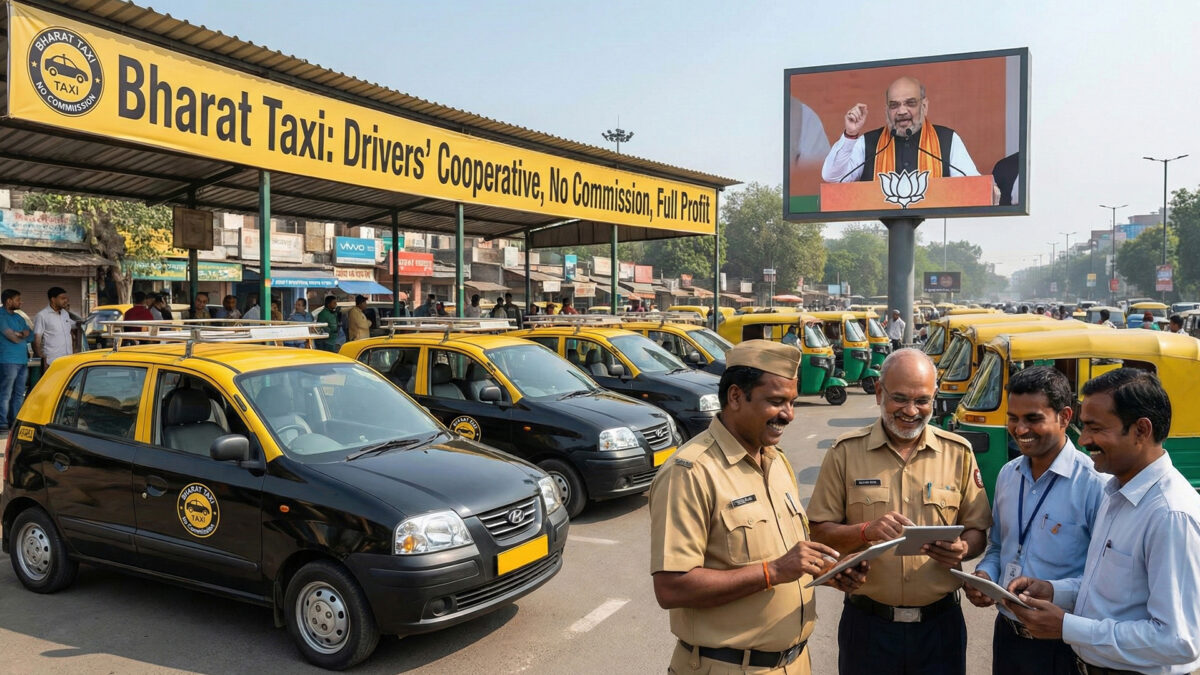
The  government is gearing up to launch a new ride-hailing service, Bharat Taxi, aimed at empowering taxi drivers and providing them a fairer share of ride earnings. Announcing the initiative, Union Home and Cooperation Minister Amit Shah said the platform will operate under a cooperative model, ensuring drivers retain most, if not all, of the profits from their trips.

Unlike existing private taxi apps such as Uber and Ola, where the platform takes a significant commission, Bharat Taxi is designed to reduce drivers’ dependence on corporate firms. “Every penny of profit will go to the drivers,” Shah emphasized during an event in Panchkula, Haryana. The platform is managed by the Sahakar Taxi Cooperative Ltd, a multi-state cooperative registered under the MSCS Act.

The service is expected to boost incomes for cab drivers, providing not only higher earnings but also benefits like insurance coverage. Officials highlighted that the cooperative structure allows drivers to be stakeholders in the platform, giving them more control over pricing, operations, and decision-making.

Bharat Taxi will operate across multiple vehicle segments, including cabs, motorcycles, and autorickshaws, expanding job opportunities while making affordable transport more accessible to the public. Pilot operations have already begun in select cities, and a full nationwide rollout is anticipated in the coming months.

Experts say this initiative could transform India’s ride-hailing ecosystem, offering an alternative to corporate apps while prioritizing driver welfare. With its cooperative framework, Bharat Taxi is expected to attract thousands of drivers seeking better financial stability and working conditions.

The government hopes this platform will become a model for future driver-owned services, promoting economic inclusion and sustainable livelihoods for taxi operators across the country.

Also Read: Infosys hikes fresher pay up to Rs 21 lakh

Categories
Corporate

Coforge shares fall on $1billion deal talk

Shares of Indian IT firm Coforge slipped in early trade on Friday as investors monitored reports of a potential $1 billion acquisition and an upcoming fundraising decision. The stock opened lower on the National Stock Exchange, trading around Rs 1,724.3, down 0.77 percent. Over the past five trading sessions, Coforge shares have fallen about 6.5 percent, underperforming some mid-tier IT peers amid investor caution regarding possible equity dilution from fresh capital raising.

Reports suggest Coforge is in advanced discussions to acquire US-based digital engineering company Encora, a firm backed by private equity investor Advent International. Though neither company has confirmed the deal, sources indicate the proposed transaction could be valued at over $1 billion. If completed, the acquisition is expected to strengthen Coforge’s presence in cloud, data, and product engineering, while expanding its footprint in key international markets, particularly in the US.

Alongside the potential acquisition, Coforge has scheduled a board meeting on December 26 to consider a fundraising proposal. While the company has not explicitly tied the capital raising to the Encora deal, analysts note that a fresh infusion of funds could provide financial flexibility for strategic acquisitions. Investors are drawing parallels to a similar move in 2023, when Coforge raised Rs 2,240 crore through a Qualified Institutional Placement (QIP) to fund its purchase of Cigniti Technologies.

Despite short-term market jitters, Coforge’s fundamentals remain robust. The company has been among the faster-growing mid-tier IT firms in India, with consistent revenue growth and a focus on expanding key verticals such as banking, insurance, and travel. Analysts suggest that the stock’s near-term performance will likely hinge on updates regarding the Encora deal and the board’s fundraising decision.

Market watchers are also keeping an eye on broader IT sector trends and investor sentiment, noting that while acquisitions often bring long-term growth potential, they can also lead to temporary volatility in share prices. For Coforge, the next few days could prove pivotal in shaping both investor confidence and stock performance.

Also Read: India tests long-range submarine K‑4 missile

Categories
Corporate

Infosys hikes fresher pay up to Rs 21 lakh

Infosys has significantly increased entry-level salaries for fresh graduates, offering packages of up to Rs 21 lakh per annum for specialised technology roles. The move is part of the company’s strategy to attract top talent in advanced digital and AI-related fields and positions it as a market leader in entry-level IT pay.

The company’s new salary structure is tiered to reward expertise in high-demand digital domains. Specialist Programmer L3 (Trainee) roles now offer Rs 21 lakh, L2 roles offer Rs 16 lakh, L1 roles Rs 11 lakh, and Digital Specialist Engineer positions start at Rs 7 lakh per annum. These packages are aimed at graduates from BE, BTech, ME, MTech, MCA, and integrated MSc programmes in computer science, IT, electronics, and related engineering streams.

Shaji Mathew, Infosys Group Chief Human Resources Officer, said the revised packages reflect the company’s commitment to building a workforce capable of delivering cutting-edge digital and AI solutions. “We are expanding our campus and off-campus hiring drives to bring in digitally skilled graduates under the specialist track, aligning talent acquisition with our AI-First strategy,” he added.

This revision marks a significant departure from the traditionally flat starting salaries in India’s IT sector, which often failed to keep pace with inflation or the rising demand for digital expertise. By offering differentiated pay for specialised roles, Infosys aims to attract graduates with the skills required to support its growing focus on artificial intelligence, cloud computing, and other emerging technologies.

The pay hike comes amid steady hiring momentum at Infosys, which onboarded around 12,000 freshers in the first half of fiscal 2025–26 and is targeting 20,000 graduates for the year. Other IT peers, including Tata Consultancy Services and HCLTech, have also introduced specialised pay tracks, but their top-tier offers remain below Infosys’s new benchmarks.

Also Read: North Korea reveals first nuclear submarine

Categories
Corporate

Adani bags ₹80,000 cr in deals since 2023

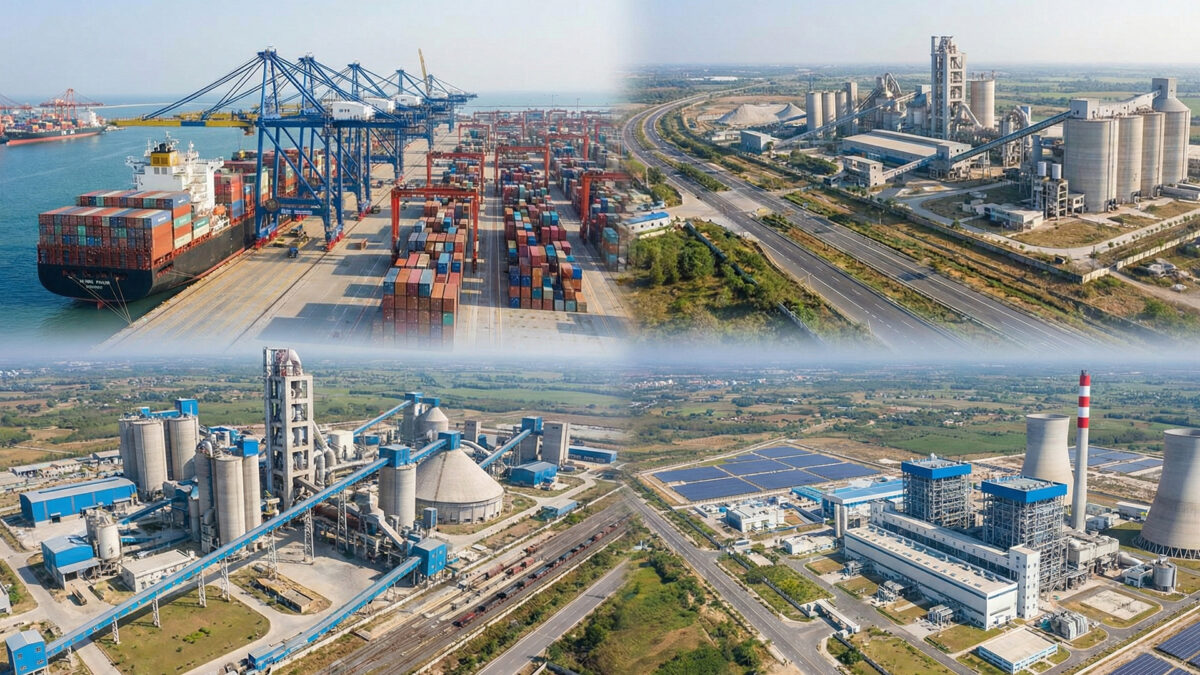
Since the start of 2023, the Adani Group has quietly orchestrated a series of strategic acquisitions, completing 33 deals worth nearly ₹80,000 crore ($9.6 billion) across ports, cement, power, transmission, and emerging sectors.

These moves mark a deliberate effort to rebuild investor confidence after the turmoil caused by US short-seller Hindenburg Research, which had raised allegations of accounting irregularities and stock manipulation earlier in the year. Adani has consistently denied these claims, and the latest transactions signal a steady return to business momentum.

Ports led the acquisition spree, accounting for about ₹28,145 crore in deals, followed closely by cement at ₹24,710 crore and power at ₹12,251 crore. Emerging businesses, including incubating ventures, contributed around ₹3,927 crore, while transmission and distribution added ₹2,544 crore. These figures do not yet include the planned ₹13,500 crore acquisition of the debt-laden Japyee Group, which is still under bankruptcy proceedings. Several other transactions are reportedly in the pipeline, reflecting the group’s ongoing expansion strategy.

Analysts attribute this resurgence to improved financial transparency, steady execution of projects, and sustained engagement with lenders, which have collectively helped stabilize funding and maintain operational momentum. The group’s comeback strategy emphasizes balance-sheet repair, selective expansion, and tighter capital allocation while continuing acquisitions in core sectors to protect cash flows and maintain scale advantages.

Notably, the largest single deal in recent times was the acquisition of Australia’s North Queensland Export Terminal, valued at ₹21,700 crore, highlighting Adani’s ambition to strengthen its global footprint.

Overall, these strategic moves reflect more than just deal-making—they signal a concerted effort to restore credibility, reduce leverage, and regain market confidence. By combining acquisitions with balance-sheet strengthening and operational discipline, the conglomerate appears to be gradually navigating past the Hindenburg crisis and setting the stage for sustained growth in both domestic and international markets.

Also Read: Zepto plans Rs 11,000 cr IPO, files confidential papers

Categories
Corporate

Zepto plans Rs 11,000 cr IPO, files confidential papers

Zepto, the quick-commerce startup is gearing up for its initial public offering (IPO), planning to raise up to Rs 11,000 crore through the public issue. The company has filed its draft IPO papers confidentially with the Securities and Exchange Board of India (Sebi), a process that allows it to receive regulator feedback before making the IPO public.

This marks a key step in Zepto’s plans to list on the stock exchange in 2026, potentially making it one of India’s youngest startups to go public.

Founded by Aadit Palicha and Kaivalya Vohra, Zepto has carved a niche in the rapid grocery delivery sector, promising essentials delivered in minutes. The company operates through a network of dark stores in major Indian cities and has expanded rapidly, attracting strong interest from investors. Over the years, Zepto has grown its revenues significantly, although it continues to report losses as it invests heavily in market expansion and customer acquisition.

The planned IPO will include fresh shares issued by the company, along with stake sales by existing investors. This combination allows Zepto to raise fresh capital for growth while providing liquidity for early backers. To streamline operations and improve profitability ahead of listing, Zepto has implemented cost-reduction measures, including optimizing workforce and tightening customer-acquisition spending.

A consortium of investment banks, including Morgan Stanley, Axis Capital, HSBC, Goldman Sachs, JM Financial, IIFL Securities, and Motilal Oswal, has been appointed to manage the IPO. Subject to market conditions and regulatory approvals, Zepto aims to debut on the stock market in the July–September 2026 quarter.

The IPO comes amid a surge in Indian startup listings, particularly in technology, e-commerce, and delivery sectors. Zepto’s public debut is expected to join the ranks of firms like Zomato and Swiggy, showcasing investor confidence in the quick-commerce sector, despite intense competition and high operational costs. Analysts say Zepto’s rapid growth, strong market presence, and focus on operational efficiency make it an attractive opportunity for investors, signaling a new phase for India’s fast-growing on-demand delivery market.

Also Read: IndiGo cancels 67 flights as fog disrupts operations

Categories
Corporate

Sensex down 200 points, Nifty slips under 26,100

Indian equity markets opened lower on Thursday, December 26, as benchmark indices faced selling pressure in thin year-end trade. At the opening bell, the BSE Sensex slipped more than 200 points, while the Nifty 50 fell below the 26,100 level, reflecting cautious investor sentiment after the Christmas holiday.

Early trade was marked by subdued volumes, with investors largely staying on the sidelines in the absence of fresh domestic or global triggers. Market participants appeared reluctant to take aggressive positions ahead of the upcoming corporate earnings season and the close of the calendar year.

On the losing side, financial and consumption-linked stocks weighed on the benchmarks. Bajaj Finance declined about 1 per cent in early deals, emerging as one of the top drags on the Sensex and Nifty. Eternal also slipped around 1 per cent, while select banking and FMCG stocks traded lower, adding to the weak opening.

In contrast, some stocks showed resilience despite the broader market weakness. Railway-related counters such as Rail Vikas Nigam Ltd (RVNL) and Indian Railway Finance Corporation (IRFC) opened higher, supported by expectations of continued government focus on infrastructure spending. Select midcap and smallcap stocks also edged up, indicating selective buying at lower levels.

Sector-wise, IT, pharma and financial stocks opened in the red, while consumer durables and infrastructure stocks showed relative strength in early trade. Analysts said the mixed sectoral trend highlights a stock-specific market rather than broad-based selling.

Market experts noted that the much-anticipated year-end rally has remained muted so far, with indices consolidating near record levels. They expect markets to stay range-bound in the near term, with direction likely to emerge only after clearer cues from earnings announcements and macroeconomic data in early 2026.

Also Read: Bharti, Warburg Pincus take 49% in Haier India