Categories
Corporate

Razorpay, NPCI, and OpenAI Pilot Agentic Payments on ChatGPT in India

Razorpay, the National Payments Corporation of India (NPCI), and OpenAI have initiated a pilot program introducing “Agentic Payments” on ChatGPT, enabling users to complete online purchases directly within the AI chatbot.

This collaboration integrates Razorpay’s payment infrastructure, NPCI’s Unified Payments Interface (UPI) network, and OpenAI’s conversational models, allowing users to discover products, compare prices, and make payments via UPI without leaving the ChatGPT interface.

Pilot Use Cases and Merchant Participation

The pilot is currently being tested for use cases such as ordering groceries and paying for digital services. For instance, a user can ask ChatGPT to order ingredients for a Thai-style vegetable curry from BigBasket.

The AI assistant fetches product options, confirms the selection, and initiates payment through Razorpay’s stack, with tracking and instant cancellation features.

BigBasket, a Tata Group-owned e-commerce platform, is among the first merchants to participate in this initiative.

The collaboration aims to test how conversational AI can streamline commerce and payments, with further expansion depending on the results of the ongoing pilot and regulatory clearances.

Banking Partners and Technological Integration

Axis Bank and Airtel Payments Bank are the banking partners for the pilot. The integration leverages UPI innovations such as UPI Circle and UPI Reserve Pay, enabling real-time, secure transactions.

This initiative aims to evaluate how UPI can be securely used by AI agents to autonomously process user-authorized transactions.

Regulatory Considerations and Future Prospects

The collaboration is focused on testing how conversational AI can streamline commerce and payments. Further expansion will depend on the results of the ongoing pilot and regulatory clearances.

OpenAI emphasized the potential of merging advanced AI with India’s highly reliable UPI system to create a seamless and secure shopping experience.

Contextual Background

This initiative follows OpenAI’s previous attempt to introduce UPI payments on ChatGPT, which faced challenges due to technical issues with Stripe’s payment processing in August 2025.

The failure forced OpenAI to suspend UPI as a payment option shortly after unveiling its India-specific offering.

The partnership between Razorpay, NPCI, and OpenAI represents a significant step towards integrating conversational AI with digital payment systems in India.

By leveraging UPI’s robust infrastructure, the collaboration aims to provide users with a seamless and secure platform for online transactions within the ChatGPT interface.

The outcome of the pilot program will determine the feasibility of expanding this model to other sectors and regions.

Also Read: Rolls-Royce Eyes India as Strategic Global Hub, CEO Confirms
Categories
Corporate

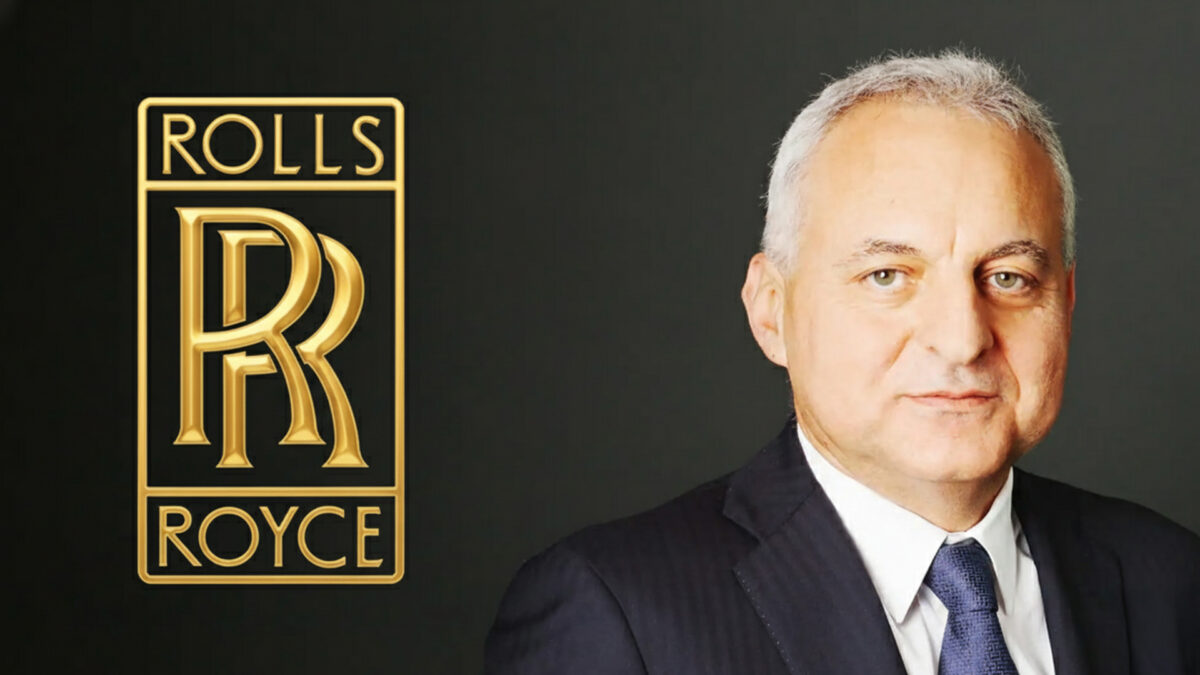
Rolls-Royce Eyes India as Strategic Global Hub, CEO Confirms

Rolls-Royce has articulated its ambition to establish India as a central hub for its global operations, a move that aligns with both the company’s strategic objectives and India’s aspirations for technological self-reliance.

CEO Tufan Erginbilgic emphasized this vision during his recent visit to India, accompanying UK Prime Minister Keir Starmer’s delegation.

Erginbilgic stated, “We have deep ambitions to develop India as a home for Rolls-Royce, building on our strong and successful partnership,” highlighting the company’s commitment to expanding its presence in the country.

This strategic direction is underpinned by Rolls-Royce’s advanced technologies across air, land, and sea domains.

The company aims to leverage these capabilities to foster in-country development and forge strategic partnerships that support India’s progress towards a ‘Viksit Bharat’ (Developed India).

A significant aspect of this initiative is the potential collaboration between Rolls-Royce and Indian entities in co-developing jet engines for India’s next-generation fighter aircraft.

This partnership would not only enhance India’s defense capabilities but also bolster the domestic aerospace sector. While discussions are ongoing, the alignment of interests suggests a promising avenue for cooperation.

In addition to defense, Rolls-Royce is focusing on expanding its supply chain in India.

The company has announced plans to double its sourcing from Indian suppliers by 2030, reflecting a deepening commitment to the Indian market. This move is expected to stimulate local industries and create employment opportunities, contributing to India’s economic growth.

The establishment of the Global Capability and Innovation Centre in Bengaluru further underscores Rolls-Royce’s dedication to India. This center serves as a hub for research and development, focusing on advanced technologies that are critical to the company’s global operations. The center’s activities are expected to enhance India’s position in the global aerospace and defense sectors.

Erginbilgic’s visit and the accompanying announcements signify a strategic alignment between Rolls-Royce’s global objectives and India’s vision for technological advancement and economic development.

By positioning India as a central component of its operations, Rolls-Royce aims to contribute to the nation’s growth while simultaneously benefiting from the opportunities presented by India’s dynamic market.

This partnership exemplifies the potential of international collaborations in advancing technological capabilities and fostering economic development.

As discussions progress, the outcomes of this initiative could set a precedent for future collaborations between global corporations and emerging economies.

Also Read: MakeMyTrip Partners with Google Cloud to Enhance AI Travel Assistant

Categories
Corporate

Starlink Prepares for India Launch, Emphasizes Rural Connectivity

Starlink, the satellite internet venture of Elon Musk’s SpaceX, is preparing to commence its satellite communication services in India, entering a market that already features competitors such as Eutelsat OneWeb and Jio Satellite.

The company has secured the necessary regulatory approvals, with the final step being the allocation of operational spectrum by the Department of Telecommunications (DoT) and the Telecom Regulatory Authority of India (TRAI).

A key focus of Starlink’s strategy in India is rural connectivity. Parnil Urdhwareshe, India Market Access Director at Starlink, highlighted that a significant portion of Starlink’s global user base resides in rural areas, where conventional broadband infrastructure is limited.

Serving these underserved regions is central to Starlink’s mission, as many users in these areas currently have restricted access to high-quality broadband services.

Starlink has been granted trial spectrum by the DoT to demonstrate compliance with security requirements. The department is finalizing pricing and other modalities for allocating spectrum to satellite communication firms.

The company is working to ensure it can deliver a compliant, secure, and reliable broadband experience for Indian users once the operational approvals are completed.

The Indian satellite communication market is becoming increasingly competitive. Eutelsat OneWeb, backed by Bharti Enterprises, has received authorizations from the Indian National Space Promotion and Authorization Center (IN-SPACe) to launch commercial satellite broadband services. Likewise, the Jio-SES joint venture has obtained the necessary regulatory clearances to operate in India, positioning multiple players to expand connectivity in both urban and rural regions.

Government regulations also set limits on subscriber numbers for each satellite communication system.

Starlink and other providers are subject to these restrictions to ensure fair pricing, service quality, and efficient spectrum usage.

The government has indicated that Starlink may have a maximum user base of 2 million in India due to spectrum capacity constraints.

Starlink’s move into India reflects both the growing demand for broadband services in rural areas and the need to optimize satellite capacity.

By targeting regions where conventional internet infrastructure is limited, the company aims to bridge connectivity gaps that have persisted for years, providing high-speed internet to schools, healthcare facilities, and households that previously relied on slower or inconsistent services.

Industry analysts note that while Starlink’s entry will expand broadband coverage, the competitive landscape and government-imposed subscriber limits will shape its growth trajectory.

The presence of established players like Eutelsat OneWeb and Jio Satellite means that differentiation through service quality, pricing, and customer support will be key to capturing market share.

As regulatory approvals near completion, Starlink is finalizing the infrastructure needed for a large-scale rollout. This includes deploying ground stations and ensuring that satellite capacity can support both urban and rural users efficiently.

The company’s emphasis on compliance with security norms and spectrum management demonstrates its approach to balancing rapid expansion with regulatory expectations.

With a combination of advanced satellite technology and a focus on underserved areas, Starlink aims to strengthen India’s digital ecosystem.

Its entry into the market is expected to enhance competition, increase broadband penetration, and provide new options for users who have historically faced limited internet access, particularly in rural and remote regions.

Also Read: Mukesh Ambani Retains Top Spot on Forbes India Rich List; Gautam Adani Second

Categories
Corporate

Rubicon Research launches ₹1,377.5 crore IPO

Pharmaceutical formulation company Rubicon Research Ltd opened its ₹1,377.5 crore initial public offering (IPO) on Wednesday, with shares priced in a range of ₹461–₹485 apiece. The three-day public issue will close on October 13.

The IPO consists of a fresh issue worth ₹500 crore and an Offer for Sale (OFS) of ₹877.5 crore by its promoter, General Atlantic Singapore RR Pte Ltd.

Following the share sale, General Atlantic’s holding in the Mumbai-based drug maker will fall to just over 35 per cent.

Allotment and structure

As per the offer structure, up to 75 per cent of the issue is reserved for Qualified Institutional Buyers (QIBs), while Non-Institutional Investors (NIIs) can bid for up to 15 per cent.

Retail investors have access to not more than 10 per cent of the offer. Applications can be made in lots of 30 shares each.

The IPO also includes a reservation of shares with a face value of ₹1 each, aggregating up to ₹1.75 crore, for eligible shareholders who will receive a discount of ₹46 per share on the issue price. JM Financial, Axis Capital, IIFL Capital, SBI Capital Markets, and MUFG Intime India Pvt. Ltd. are managing the issue.

Strong anchor book response

Ahead of the opening, Rubicon Research raised ₹619 crore from a clutch of marquee anchor investors. According to a circular filed with the BSE, 32 institutional investors subscribed to over 1.27 crore equity shares at the upper price band of ₹485.

The anchor list includes major domestic and global funds such as Goldman Sachs, HDFC Mutual Fund, Fidelity Funds, ICICI Prudential MF, Kotak Mahindra MF, Amansa Holdings, and Aranda Investments Pte.

Market observers said the robust participation underscored confidence in Rubicon’s growth trajectory and fundamentals.

In a pre-IPO round, Kotak MF and Motilal Oswal MF jointly invested approximately ₹169 crore in the company.

Use of proceeds and promoter stake moves

Rubicon plans to utilise ₹310 crore from the fresh issue proceeds to pare down existing debt. The remainder will be directed toward strategic acquisitions, business expansion, and general corporate purposes.

Meanwhile, General Atlantic, the private equity firm that has backed Rubicon since 2019, has been gradually paring its stake in the company over recent months.

In August, it sold 51.6 lakh shares (3.3 per cent) to Amansa Investments for ₹250 crore, followed by a September transaction transferring 28.89 lakh shares (1.86 per cent) to TIMF Holdings and 360 ONE for about ₹140 crore.

Most recently, General Atlantic offloaded 34.86 lakh shares (2.25 per cent) at ₹484.47 each, amounting to roughly ₹169 crore.

Also Read: Why Did OpenAI Ban China-Linked Accounts?

Categories
Corporate

Why Did OpenAI Ban China-Linked Accounts?

OpenAI has banned several ChatGPT accounts suspected of links to Chinese government entities after users sought proposals for social media surveillance tools, violating the company’s national security policy.

The move underscores growing concerns about the misuse of generative AI amid increasing U.S.-China technological rivalry.

In its latest public threat report, OpenAI revealed that some individuals had used ChatGPT to outline social media “listening” tools and other monitoring mechanisms.

Additionally, Chinese-language accounts were found to be assisting in phishing and malware campaigns and exploring further automation through China’s DeepSeek platform.

The company emphasized that its models did not provide new offensive capabilities to threat actors. The Chinese embassy in the U.S. has not commented on the situation.

OpenAI’s actions are part of a broader effort to prevent the misuse of its AI models by foreign adversaries.

The company has also banned accounts tied to suspected Russian-speaking criminal groups using ChatGPT to develop malware. Since initiating public threat reporting in February 2024, OpenAI has disrupted over 40 malicious networks.

The company emphasized that its models did not provide new offensive capabilities to threat actors.

The Chinese embassy in the U.S. has not commented on the situation. OpenAI, which now boasts over 800 million weekly ChatGPT users, recently reached a $500 billion valuation after a secondary share sale.

This development highlights the challenges tech companies face in balancing the advancement of AI technologies with national security concerns and the potential for misuse by state-linked actors.

Also Read: BioInvent Begins New Trial Testing Cancer Drug

Categories
Corporate

MakeMyTrip Partners with Google Cloud to Enhance AI Travel Assistant ‘Myra’

NASDAQ-listed MakeMyTrip announced a strategic partnership with Google Cloud to enhance its AI-powered travel planning assistant, Myra. This collaboration aims to make personalized travel planning and booking more intuitive and accessible to a broader range of travelers.

Myra, which stands for “MakeMyTrip’s AI-Driven Recommendation Assistant,” is designed to assist users throughout their travel journey—from destination discovery to booking and post-travel support.

The assistant leverages generative AI (GenAI) technology to provide real-time, personalized recommendations based on user preferences and requirements.

By integrating Google Cloud’s advanced AI capabilities, Myra can process and analyze large volumes of data, including reviews, maps, and other grounded sources of information, to create and refine personalized itineraries with greater accuracy and efficiency than current chatbot-based planners.

The partnership with Google Cloud enables Myra to support multimodal inputs, including voice, text, and eventually images and videos.

This functionality allows users to interact naturally in their preferred language, making the travel planning process more conversational and inclusive.

Currently, Myra supports both English and Hindi, with plans to expand to other Indian languages based on user feedback.

Rajesh Magow, Co-Founder and Group CEO of MakeMyTrip, emphasized that the collaboration with Google Cloud will enhance Myra’s capabilities, enabling it to deliver more accurate and personalized travel recommendations.

He noted that this advancement aligns with MakeMyTrip’s commitment to leveraging cutting-edge technology to improve the user experience and make travel planning more accessible to all travelers.

The integration of Google Cloud’s AI technology into Myra is expected to streamline the travel planning process, reducing the time and effort required for users to plan and book their trips.

By providing personalized and contextually relevant recommendations, Myra aims to enhance user satisfaction and engagement, ultimately driving growth for MakeMyTrip in the competitive online travel market.

This partnership reflects a broader trend in the travel industry, where companies are increasingly adopting AI and machine learning technologies to enhance customer experiences and operational efficiency. As AI continues to evolve, platforms like Myra are poised to play a significant role in shaping the future of travel planning and booking.

MakeMyTrip’s collaboration with Google Cloud represents a significant step forward in the integration of AI into the travel industry, offering travelers a more personalized and efficient way to plan and book their journeys.

As the partnership progresses, further enhancements to Myra’s capabilities are anticipated, promising an even more seamless and intuitive travel planning experience for users.

Also Read: Adani Defence Unit Under Probe for $9 Million Import Tax Evasion?

Categories
Corporate

SoftBank to Acquire ABB Robotics for $5.4 Billion

SoftBank Group has announced its agreement to acquire the robotics division of Swiss engineering firm ABB for approximately $5.4 billion.

This strategic move underscores SoftBank founder Masayoshi Son’s commitment to expanding the company’s footprint in artificial intelligence (AI) and automation technologies.

The acquisition will be executed through a newly established holding company, Robo Holdings, which will consolidate SoftBank’s existing robotics investments, including SoftBank Robotics Group, Berkshire Grey, and AutoStore.

The deal is subject to regulatory approvals in the European Union, the United States, and China, with an expected closing date between mid- and late-2026.

ABB’s robotics division, employing approximately 7,000 individuals, generated $2.3 billion in revenue in 2024, accounting for about 7% of ABB’s total revenue.

The division produces industrial robots utilized in sectors such as automotive and electronics manufacturing. ABB had previously considered spinning off this unit but decided to sell it to SoftBank to focus on its core businesses of electrification and automation.

Morten Wierod, CEO of ABB, stated that the merger would combine ABB’s leading technology and industry expertise with SoftBank’s advanced capabilities in AI and robotics, positioning both companies to shape the future of AI-based robotics.

For SoftBank, this acquisition aligns with its vision of “physical AI,” referring to AI-powered machines capable of perceiving, interpreting, and interacting with the physical world.

Masayoshi Son emphasized that the integration of ABB’s robotics division would unite world-class technology and talent under a shared vision to drive a groundbreaking evolution in AI and robotics.

The transaction also reflects a strategic shift for ABB, which plans to utilize the proceeds from the sale to invest in organic growth, pursue acquisitions, and return capital to shareholders through dividends and share buybacks.

This acquisition marks a significant step in SoftBank’s ongoing efforts to lead in the AI and robotics sectors, reinforcing its position as a major player in the global technology landscape.

Also Read: Why Did Tata Group Leaders Meet Amit Shah And Nirmala Sitharaman?

Categories
Corporate

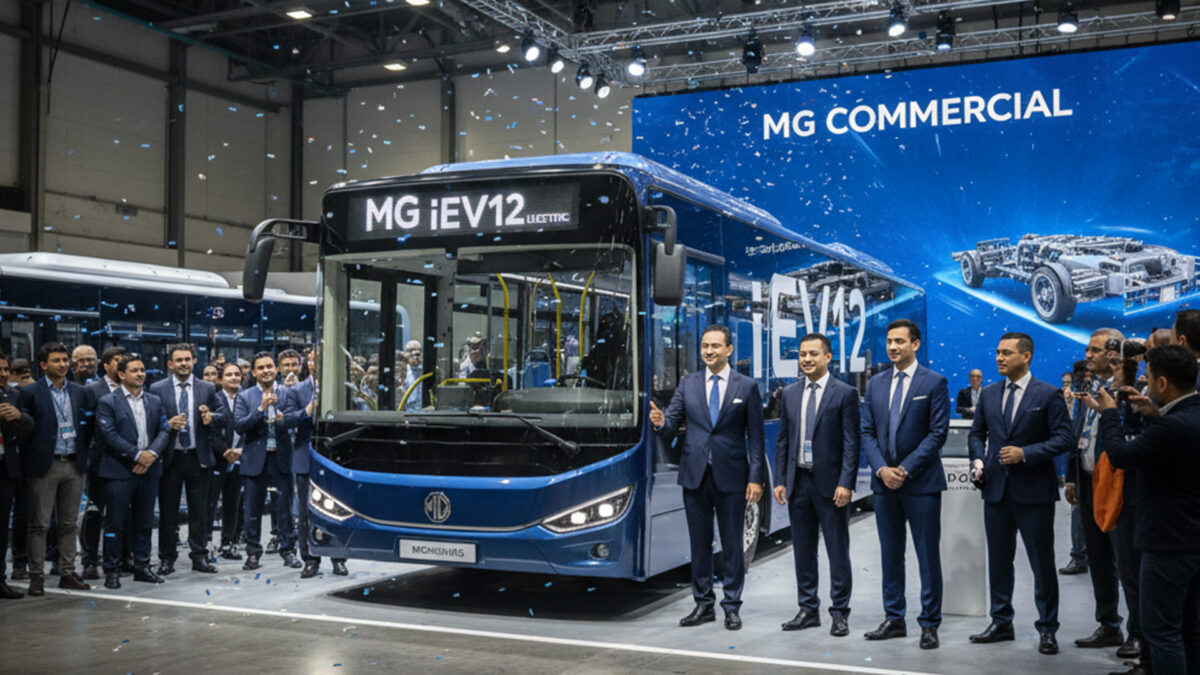
MG Commercial Unveils All-Electric iEV12 City Bus at Busworld 2025

MG, the renowned British automotive brand, has officially entered the commercial vehicle sector with the launch of MG Commercial. At the Busworld Brussels 2025 event, the company introduced its first all-electric city bus, the iEV12, alongside the B12E electric chassis, signaling a significant move into sustainable public transportation.

MG Commercial: A New Chapter

MG Commercial is a new division dedicated to developing medium- and large-sized electric buses. This strategic move aligns with MG’s commitment to sustainable mobility and innovation in the evolving commercial vehicle market.

Introducing the iEV12

The iEV12 is a 12-meter Class I all-electric city bus designed to meet the growing demand for eco-friendly urban transportation solutions. Developed in collaboration with the Shanghai Sunwin Bus Company, a subsidiary of the SAIC Motor Group, the iEV12 combines European design aesthetics with Chinese manufacturing expertise.

While specific technical details about the iEV12’s performance and features are yet to be disclosed, the unveiling marks a significant step in MG’s expansion into the electric commercial vehicle market.

The B12E Chassis

Accompanying the iEV12, MG also introduced the B12E electric chassis. This versatile platform is designed to support various body configurations, offering flexibility for different public transport needs. The B12E chassis is expected to play a crucial role in MG’s strategy to provide tailored electric mobility solutions for urban environments.

Future Outlook

Although the iEV12 and B12E are currently in the concept stage, MG’s entry into the electric bus market underscores its commitment to sustainable urban mobility. The company aims to integrate personal and public transportation into a seamless, green ecosystem, aligning with global trends towards electrification and environmental responsibility.

As MG Commercial continues to develop its electric vehicle offerings, the iEV12 and B12E represent the brand’s dedication to innovation and sustainability in the commercial transport sector. By focusing on eco-friendly solutions, MG hopes to contribute significantly to reducing urban pollution and promoting the adoption of zero-emission vehicles in cities worldwide.

The launch of MG Commercial and the iEV12 also reflects a broader trend in the automotive industry, where established car manufacturers are expanding into electric commercial vehicles. Urban authorities and transport operators are increasingly seeking sustainable alternatives to conventional diesel buses, creating opportunities for new players like MG Commercial to shape the future of city mobility.

With plans to further expand its electric bus lineup and invest in research and development, MG Commercial is positioning itself as a key contributor to the global shift toward clean and efficient public transportation. The company is expected to continue refining the iEV12 and the B12E chassis, incorporating feedback from pilot programs and industry stakeholders to ensure the vehicles meet the operational needs of modern urban environments.

By entering the electric commercial vehicle market, MG is not only broadening its product portfolio but also reinforcing its commitment to sustainable innovation. The iEV12 and B12E are poised to set new benchmarks for design, efficiency, and adaptability in electric city buses, providing a glimpse of the future of urban mobility.

Categories
Corporate

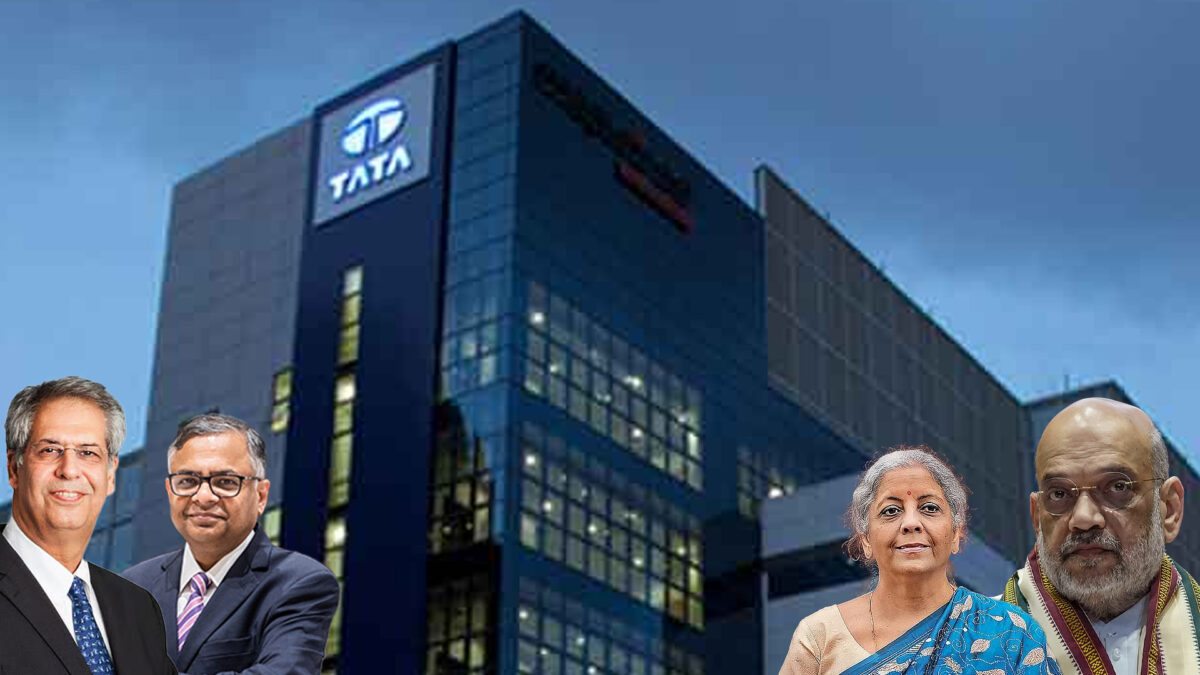
Why Did Tata Group Leaders Meet Amit Shah And Nirmala Sitharaman?

In a significant development, top executives of the Tata Group, including Tata Trusts Chairman Noel Tata and Tata Sons Chairman N. Chandrasekaran, met with Union Home Minister Amit Shah and Finance Minister Nirmala Sitharaman on Tuesday evening.

The meeting, held at Shah’s residence in New Delhi, comes amid growing concerns over internal governance issues within Tata Trusts, which holds a controlling stake in Tata Sons, the holding company of the $180 billion conglomerate.

Joining Noel Tata and Chandrasekaran at the meeting were Tata Trusts Vice-Chairman Venu Srinivasan and trustee Darius Khambata.

The discussions reportedly focused on the ongoing infighting among trustees over board appointments and governance policies, which have raised alarms about the potential impact on the broader Tata Group.

According to sources, the government emphasized the importance of restoring stability within Tata Trusts and ensuring that internal disputes do not affect the operations of Tata Sons. The ministers reportedly conveyed a firm message to the Tata leadership, urging them to take necessary actions to resolve the issues and maintain the integrity of the group.

The internal rift within Tata Trusts has reportedly been exacerbated by a faction of trustees acting as a “super board,” undermining Noel Tata’s authority.

This power struggle has led to tensions regarding board seats at Tata Sons, which oversees a vast portfolio of companies, including Tata Steel, Tata Motors, and TCS.

The government’s intervention underscores the strategic importance of the Tata Group to India’s economy and the need for effective governance to ensure its continued success. Observers note that the involvement of the Home and Finance Ministries signals the seriousness of the situation and the potential economic implications if the internal disputes are not resolved.

All eyes are now on the upcoming board meeting scheduled for October 10, which is expected to address key governance issues and determine the future course of action for Tata Trusts and Tata Sons.

The outcome of this meeting will be closely watched by investors, employees, and regulators, given the central role of Tata companies in India’s corporate and industrial landscape.

The Tata Group has yet to issue an official statement regarding the meeting or the ongoing governance issues. However, sources indicate that the discussions with the government were intended to provide clarity, reinforce leadership authority, and ensure that decision-making processes within Tata Trusts and Tata Sons remain stable and transparent.

The situation highlights the delicate balance required in managing large, diversified conglomerates in India, particularly those with significant influence over the economy.

With the government urging swift action, Tata Group leadership faces pressure to resolve internal differences while maintaining operational continuity across its global businesses.

The meeting represents a crucial step in reaffirming governance standards within one of India’s most influential corporate entities and signals the government’s interest in safeguarding the stability of the country’s major industrial groups.

Also Read: BioInvent Begins New Trial Testing Cancer Drug

Categories
Corporate

BioInvent Begins New Trial Testing Cancer Drug

BioInvent International AB has announced the initiation of a Phase 2a clinical trial evaluating its lead drug candidate BI-1206 in combination with Merck’s anti-PD-1 therapy KEYTRUDA® (pembrolizumab) for patients with advanced or metastatic non-small cell lung cancer (NSCLC) and uveal melanoma.

The Phase 2a study follows encouraging results from BioInvent’s Phase 1 trial, where BI-1206 was found to be safe, well-tolerated, and showed promising clinical activity in heavily pre-treated patients.

Out of 36 evaluable patients, one achieved a complete response, one had a long-lasting partial response, and 11 maintained stable disease, despite having progressed on prior anti-PD1/L1 therapies.

The subcutaneous formulation of BI-1206 was noted for slower systemic entry, prolonged time on target, and improved safety.

“We are very pleased to initiate Phase 2a studies, which marks a significant milestone in our mission to bring BI-1206 to patients,” said Martin Welschof, CEO of BioInvent.

“The early clinical signs of efficacy observed in Phase 1 provide a strong rationale for moving forward in the first-line setting for NSCLC and uveal melanoma. Since BI-1206 addresses a mechanism of resistance to anti-PD1, its potential extends to all indications where pembrolizumab is approved,” he added.

The trial, registered as NCT04219254, will enroll patients at sites across Georgia, Germany, Poland, Romania, Spain, Sweden, and the US, with initial data expected in the second half of 2026.

The study will be conducted in two parts: a signal-seeking phase including up to 30 NSCLC and 12 uveal melanoma patients receiving BI-1206 plus pembrolizumab every 21 days for up to two years, followed by a dose optimization phase. In this phase, patients will be randomized to higher or lower doses of BI-1206, with a third cohort receiving pembrolizumab alone.

NSCLC, the most common type of lung cancer, accounts for roughly 85 percent of all cases, but response rates to checkpoint inhibitors remain low, rarely exceeding 25 percent. Uveal melanoma, though rare, is the most frequent non-cutaneous melanoma in adults, with about 7,000 new cases globally each year.

BI-1206 is designed to counter resistance caused by FcγRIIB-mediated degradation of PD-1 antibodies, potentially enhancing responses to therapies like pembrolizumab.

BioInvent, a clinical-stage biotech company, focuses on discovering and developing first-in-class immune-modulatory antibodies for cancer immunotherapy.

Its proprietary F.I.R.S.T™ technology platform identifies new targets and antibodies, supporting both in-house development and licensing opportunities.

The Phase 2a trial represents a key step in assessing BI-1206’s potential to improve outcomes for patients with NSCLC and uveal melanoma while advancing BioInvent’s broader immuno-oncology pipeline.