Categories
Corporate

ED Questions Muthoot Group MD Over Investor Fraud Allegations

The Enforcement Directorate (ED) has questioned George Alexander Muthoot, Managing Director of the Muthoot Group, concerning allegations of investor fraud and money laundering. The probe follows the FIRs filed by Kerala Police accusing Muthoot Finance branch managers of misleading investors by promising high returns on fixed deposits and non-convertible debentures (NCDs) ranging from 8 to 12 percent per annum.

According to the complaints, funds raised from investors were allegedly diverted to Srei Equipment Finance Limited, a company that was falsely represented as a subsidiary of the Muthoot Group. This misrepresentation resulted in many investors not receiving their maturity payments, sparking allegations of fraud and misappropriation.

ED officials have registered a case under the Prevention of Money Laundering Act (PMLA) and summoned George Alexander Muthoot to record his statement at their Kochi office. The investigation is focusing on the flow of funds and the role of company executives in the transactions.

Authorities are expected to question other senior officials and scrutinize the financial records of the associated companies as part of an ongoing probe. The case highlights growing concerns about the safety of investments in non-banking financial companies promising high returns.

Investors have expressed unease amid the investigations, while the ED has urged them to stay informed and seek professional advice when dealing with high-risk investment products.

Also Read: Akasa Air Faces Leadership Turbulence as Co-founder Khatri Resigns

Categories
Corporate

Natco Pharma Secures Legal Victory to Launch Generic Risdiplam in India

Natco Pharma has achieved a significant legal triumph, enabling the launch of a generic version of Risdiplam, a critical treatment for spinal muscular atrophy (SMA), in India.

The Delhi High Court dismissed an appeal by Swiss pharmaceutical company Roche, clearing the final legal hurdle for Natco’s market entry.

The court’s decision upholds a March 2025 ruling by a single-judge bench, which had denied Roche’s request for an injunction against Natco’s sale of the drug.

The bench emphasized public interest, noting that SMA is a rare and severe genetic disorder with limited treatment options in India.

The ruling highlighted the need for affordable access to life-saving therapies, considering the high cost of Roche’s branded version, Evrysdi.

Following the court’s decision, Natco Pharma announced the immediate launch of its generic Risdiplam at a maximum retail price (MRP) of ₹15,900 per bottle, a significant reduction from the approximately ₹6.2 lakh charged for Roche’s branded product.

The company also plans to offer additional discounts to eligible patients through its patient access program.

This development has been welcomed by patient advocacy groups, who view it as a step toward improving access to essential medicines for rare diseases in India.

The Working Group on Access to Medicines and Treatment commended the court’s decision, emphasizing the importance of prioritizing public health over patent rights in cases involving life-saving treatments.

Natco Pharma’s stock experienced a notable increase following the court’s ruling, reflecting investor confidence in the company’s prospects.

The launch of the affordable generic Risdiplam is expected to have a positive impact on Natco’s market position and contribute to broader efforts to enhance access to healthcare in India.

Categories
Corporate

LG Electronics India IPO: Grey Market Premium Climbs to 35% Ahead of Allotment

The grey market premium (GMP) for LG Electronics India’s Initial Public Offering (IPO) rose sharply to around 33–35 percent on Friday, reflecting strong investor enthusiasm as the company prepares to finalise share allotments later tonight.

Market tracking portals indicated that the shares of LG Electronics India are changing hands in the unlisted market with a significant premium.

Data from Investorgain showed a GMP of about Rs 395 per share, implying potential listing gains of 34.65 percent over the upper price band of Rs 1,140. IPO Watch placed the premium slightly lower, at approximately 33 percent.

The surge in grey market activity follows the robust investor response to the IPO, which was subscribed 54.02 times during the three-day bidding window from October 7 to 9.

Institutional investors led the rally, with qualified institutional buyers (QIBs) accounting for a major portion of the demand. The Rs 11,607-crore public offer had a price band fixed between Rs 1,080 and Rs 1,140 per equity share.

Allotment of shares is expected to be completed by late evening on October 10, with refunds and credit of shares likely to begin shortly thereafter.

Applicants can check their allotment status on the website of the IPO registrar, KFin Technologies Limited, using their application number or PAN.

The information will also be available on the BSE and NSE portals once the process is finalised.

The listing of LG Electronics India’s shares on the stock exchanges is likely to take place next week. Based on current GMP trends, the company’s debut is anticipated to deliver healthy returns to investors, although analysts caution that grey market movements are speculative and unofficial indicators of sentiment.

LG Electronics India, one of the leading names in consumer electronics and home appliances, offers a wide portfolio of products catering to both retail and institutional markets.

Its product range includes washing machines, refrigerators, LED television panels, inverter air conditioners, and microwave ovens.

The company operates two major manufacturing facilities—one in Noida, Uttar Pradesh, and another in Pune, Maharashtra—and provides comprehensive after-sales services including installation, repairs, and maintenance.

Market observers noted that the strong response to the IPO reflects investor confidence in the company’s brand strength, consistent profitability, and leadership in India’s fast-growing consumer durables segment.

If the GMP holds steady until listing day, LG Electronics India could see one of the more successful market debuts of 2025.

Also Read: Natco Pharma Secures Legal Victory to Launch Generic Risdiplam in India

Categories
Corporate

Tata Motors Shares Dip Ahead of Demerger Record Date for Debenture Holders

Tata Motors’ stock experienced a decline on Friday, extending its losing streak to six consecutive sessions, as investors reacted to the upcoming record date for debenture holders in the company’s demerger process.

On October 10, 2025, Tata Motors fixed the record date for determining the eligibility of debenture holders for the transfer of ₹2,300 crore worth of non-convertible debentures (NCDs) to the newly formed entity, TML Commercial Vehicles Limited (TMLCV).

As a result, Tata Motors shares fell by 1.89% to ₹667.20 on the Bombay Stock Exchange (BSE) before recovering slightly to trade at ₹680.10, but still down 0.15% as of 13:46 IST.

The demerger, which became effective on October 1, 2025, involves the separation of Tata Motors’ commercial vehicle and passenger vehicle businesses into two independent companies.

Shareholders of Tata Motors are set to receive one fully paid-up share of TMLCV for every share held in Tata Motors as of the October 14 record date The Economic Times.

Despite the short-term volatility, market experts suggest that the demerger could unlock value in the long run by allowing both entities to focus on their respective segments.

However, investors are advised to assess their portfolios carefully and consider the potential risks and rewards associated with the structural changes.

As the record date approaches, stakeholders are closely monitoring the developments, with expectations of increased clarity on the impact of the demerger on Tata Motors’ financial performance and market positioning.

Also Read: TCS Headcount Falls Below 600,000 Amid Restructuring and Layoffs

Categories
Corporate

TCS Headcount Falls Below 600,000 Amid Restructuring and Layoffs

Tata Consultancy Services (TCS), India’s largest IT services firm, has reported a significant reduction in its workforce, bringing its headcount below 600,000 for the first time in several years.

As of the September 2025 quarter (Q2 FY26), TCS employed 593,314 individuals, marking a decline of 19,755 employees from the previous quarter.

This reduction is attributed to a combination of planned layoffs, performance-based exits, and policy changes affecting newly hired employees.

The company incurred a one-time severance cost of ₹1,135 crore during this period. Reflecting the financial impact of the workforce restructuring.

TCS’s Chief Human Resources Officer, Sudeep Kunnumal, clarified about 6,000 employees, or about 1% of the workforce, were released as part of the restructuring efforts.

He dismissed rumors suggesting that 50,000 to 80,000 employees were laid off, labeling such figures as “extremely exaggerated”.

Despite the workforce reduction, TCS reported a 1.4% year-on-year increase in net profit for Q2 FY26, amounting to ₹12,075 crore.

However, the company experienced a 5.4% quarter-on-quarter decline in net profit, primarily due to the severance payouts.

The layoffs have sparked criticism from labor unions, particularly the Nascent Information Technology Employees Senate (NITES), which has accused TCS of downplaying the scale of the job cuts.

NITES claims that the company’s official figures do not accurately reflect the extent of the layoffs, raising concerns about transparency in the reporting process.

Looking ahead, TCS has indicated that the workforce rationalization process will continue throughout the year, although no specific targets for further reductions have been set.

The company aims to align its workforce with the evolving demands of the IT industry, focusing on areas such as artificial intelligence and digital transformation.

This strategic shift underscores the broader trend within the IT sector towards adopting new technologies and optimizing organizational structures to remain competitive.

Also Read: Coal India, IRCON Ink MoU to Boost Coal Rail Connectivity

Categories
Corporate

Groww Prepares for ₹7,000 Crore IPO, Eyes $8 Billion Valuation

Bengaluru-based fintech firm Groww is set to launch its Initial Public Offering (IPO) in early November 2025, aiming to raise ₹7,000 crore (approximately $850 million) and achieve a valuation of up to $8 billion.

The offering includes a fresh issue of ₹1,060 crore and an offer for sale (OFS) of up to 574.2 million shares by existing investors and promoters.

Notable backers such as Microsoft CEO Satya Nadella, Peak XV Partners, Y Combinator, Ribbit Capital, and Tiger Global are among those reducing their stakes.

Company Overview

Founded in 2016, Groww has rapidly emerged as India’s largest retail brokerage platform by active clients, surpassing Zerodha. As of April 2025, the company boasts over 13 million active clients and holds a 26.27% market share among retail investors on the National Stock Exchange.

The firm offers a range of investment products, including stocks, mutual funds, ETFs, digital gold, and US equities, through its digital-only platform.

Financial Performance

In fiscal year 2025, Groww reported a significant financial performance, with a net profit of ₹1,819 crore, more than tripling from the previous year.

Revenue also saw a 31% increase, reaching ₹4,056 crore. These results underscore the company’s strong market position and growth trajectory in the wealth management sector.

Strategic Acquisition

Ahead of its IPO, Groww completed the acquisition of Bengaluru-based wealth management company Fisdom, following regulatory approval from the Securities and Exchange Board of India (SEBI).

This strategic move marks Groww’s official entry into the wealth management sector, expanding its footprint beyond its existing investment services.

The acquisition aligns with Groww’s broader objectives as it prepares for an IPO, signaling the company’s continued growth and diversification within the financial technology space.

Market Position and Outlook

The upcoming IPO is poised to be one of India’s largest fintech listings, positioning Groww as a key player in the country’s digital financial services industry. Market participants and investors will be closely watching the offering as it unfolds in the coming weeks.

Also Read: Coal India, IRCON Ink MoU to Boost Coal Rail Connectivity

Categories
Corporate

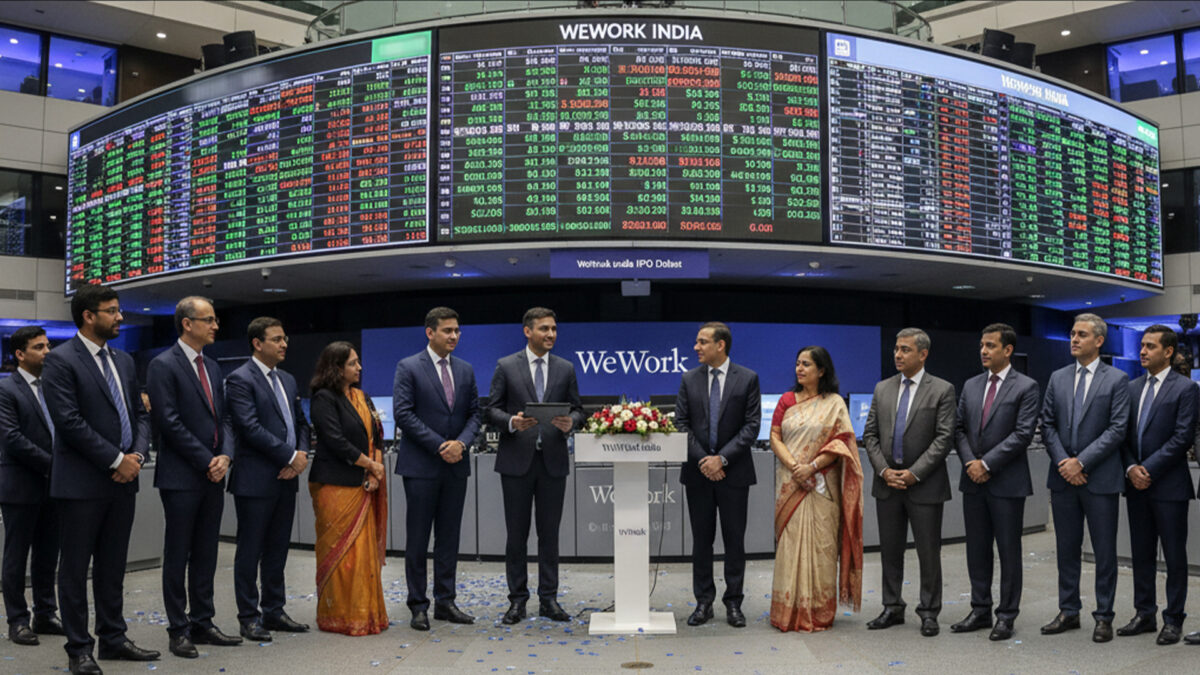
WeWork India Lists on Stock Exchanges with Muted Debut

WeWork India Management made its stock market debut on Thursday, marking the first public listing for the co-working space operator in India.

The shares opened largely flat, reflecting a cautious investor response despite strong institutional participation in the IPO.

The initial public offering, approved by SEBI in July 2025, was structured entirely as an offer-for-sale of existing shares. No fresh capital was raised for the company.

The shares sold largely belonged to the Embassy Group and a WeWork affiliate. The IPO price band was set between ₹615 and ₹648 per share, placing the company’s implied valuation at approximately ₹86,850 million.

The IPO opened for public subscription from October 3 to October 7. By the end of the subscription period, the issue was fully subscribed, with institutional investors contributing the most.

Qualified Institutional Buyers (QIBs) subscribed nearly twice their allocation, while non-institutional and retail investors showed subdued interest, with subscriptions below the allotted quota. Retail investors were allowed to bid in lots of 23 shares.

On listing day, the shares made a modest debut. On the National Stock Exchange, WeWork India shares opened at ₹650, a negligible premium over the upper end of the IPO price.

On the Bombay Stock Exchange, the shares were listed at ₹646.50, slightly below the issue price. Some reports suggested a brief discount of around 2.5 percent on the BSE, indicating tempered market enthusiasm.

Market analysts noted that while institutional demand was strong, retail and non-institutional investors remained cautious, reflecting concerns over the company’s business model and valuation.

Grey market activity ahead of the listing suggested limited upside potential, and the muted debut largely met those expectations.

WeWork India has established a significant presence in major urban centers, leveraging its brand and the backing of Embassy Group.

Analysts highlighted that the listing provides liquidity for existing shareholders and raises the company’s public profile. However, concerns remain over operational costs and consistent profitability.

Governance advisory firms and market watchers had flagged weak financial disclosures prior to the listing, and the Bombay High Court had reserved judgment on petitions challenging the adequacy of IPO disclosures.

The listing underscores investor interest in India’s co-working sector, which has seen rapid expansion in recent years. However, the tepid debut suggests that investors are weighing the growth potential against margin pressures and funding needs.

Despite the subdued start, market participants said that the company’s future stock performance will depend on its ability to scale operations, manage costs, and deliver consistent earnings.

The debut, while modest, positions WeWork India as a publicly traded player in the country’s evolving co-working landscape, setting the stage for closer scrutiny in the coming quarters.

Also Read: NTPC Green Energy Inks Landmark MoU With Gujarat

Categories
Corporate

NTPC Green Energy Inks Landmark MoU With Gujarat

NTPC Green Energy, the green arm of India’s largest power utility, has signed a significant Memorandum of Understanding (MoU) with the Government of Gujarat to collaborate on large-scale renewable energy development in the state.

The agreement was formalized on October 9, 2025, at the Vibrant Gujarat Regional Conference held in Mehsana, Gujarat.

Under the terms of the MoU, NTPC Renewable Energy Limited (NTPC REL) — a wholly owned subsidiary of NTPC Green Energy — will undertake the development of solar parks and projects totalling 10 GW of capacity in Gujarat, alongside 5 GW of wind projects, cumulatively amounting to 15 GW of clean energy infrastructure.

Simultaneously, NTPC (the parent company) has committed to exploring opportunities with the Gujarat government in both conventional and non-conventional energy sectors. This broader pact spans thermal, hydro, solar, wind, green hydrogen, energy storage (such as batteries and pumped storage), waste-to-energy, and other emerging technologies.

The MoUs were exchanged in the presence of a high-profile gathering including Gujarat Chief Minister Bhupendrabhai Patel, Union Minister of New & Renewable Energy Pralhad Joshi, Gujarat Minister for Finance, Energy and Petrochemicals Kanubhai Desai, and NTPC Chairman & Managing Director Gurdeep Singh.

The announcement triggered a ripple effect in the markets: shares of NTPC Green Energy saw gains of around 2.8 percent intraday, reflecting optimism about large project potential. Analysts widely viewed the MoU as strengthening NTPC’s positioning in Gujarat — a state that already leads in renewable energy capacity — while also accelerating its transition to clean energy assets.

From a strategic standpoint, the deal helps NTPC leverage Gujarat’s favorable policy environment, transmission infrastructure, and investor interest in renewables. For Gujarat, the partnership brings in a central public-sector developer’s technical and financial muscle, potentially speeding up project deployment and grid integration.

NTPC has set an ambitious goal of achieving 60 GW of renewable capacity by 2032, and the Gujarat MoU represents a key building block toward meeting that target. At present, NTPC’s overall installed capacity exceeds 83 GW, with another 30.90 GW under construction, including 13.3 GW of renewable assets.

While specifics on project timelines, capital investment, land allocation, and power purchase agreements (PPAs) remain to be worked out, the MoU establishes a framework for cooperation, site identification, feasibility studies, and joint working groups.

The MoU comes at a time when Gujarat is aggressively growing its renewable capacity. Between April and August 2025, the state added 6,632 MW of green power — nearly equal to its total addition in the previous fiscal year — underscoring accelerating momentum in clean energy deployment.

In sum, the NTPC-Gujarat agreement marks a decisive step in the energy transition dynamics of India, signaling stronger integration of central and state efforts in scaling up clean power infrastructure. The success of this partnership will depend on execution, regulatory clarity, financing, land and grid readiness, and timely approvals — but the scale and scope of the MoU suggest both parties are committed to pushing ahead at pace.

Also Read: Canara HSBC Life IPO Opens; Eyes Valuation of ₹10,000 Crore

Categories
Corporate

Canara HSBC Life IPO Opens; Eyes Valuation of ₹10,000 Crore

Canara HSBC Life’s much-anticipated initial public offering (IPO) opened for public subscription on October 10, 2025, and will close on October 14, 2025.

The offering is entirely an offer-for-sale (OFS) of 23.75 crore existing equity shares, meaning the proceeds will go to selling shareholders — primarily the promoters — rather than to the company itself.

The IPO size is ₹2,517.50 crore, and the company has set a price band of ₹100–₹106 per share, implying an upper-end market valuation of around ₹10,000 crore (approximately $1.14 billion).

Ahead of the public issue, the company completed an anchor round in which about 7.08 crore shares were allotted to 33 institutional investors at the upper price band of ₹106, raising roughly ₹750 crore.

Anchor participation is often considered a vote of confidence in the issue, as large institutional investors commit before the offer opens to the public. For retail investors, the lot size has been set at 140 shares per application.

Market sentiment in the unofficial grey market has indicated a modest premium, with a grey market premium (GMP) of around 9 percent reported soon after the IPO opened.

While a positive GMP suggests optimism regarding the stock’s listing performance, analysts caution that such indicators are informal, volatile, and not always reliable predictors of how the stock will actually perform once listed.

Analysts tracking the issue note that Canara HSBC Life’s strong distribution network, backed by its parent banks, remains one of its biggest strengths.

However, some experts have pointed out that the insurer’s Value of New Business (VNB) margin is lower than that of several listed peers due to higher operational costs.

Despite this, the IPO’s pricing is viewed as being at a discount relative to some competitors, which could offer long-term value for investors confident in the company’s ability to improve margins over time.

The insurer operates in a competitive life insurance market dominated by major players such as LIC, HDFC Life, and SBI Life.

Canara HSBC Life’s focus on bancassurance — leveraging the customer bases of its promoter banks — provides it with a stable source of premium income.

The company’s financial performance has shown steady growth, with improved persistency ratios and an expanding product portfolio in protection and annuity segments.

For investors considering subscribing to the IPO, experts recommend reviewing the company’s red herring prospectus for detailed financial and operational metrics, such as distribution reach, solvency ratios, and VNB growth trends.

Since this IPO is an OFS, it will not bring fresh funds into the business, so the listing valuation and growth outlook will largely depend on future profitability and market share gains rather than immediate capital infusion.

While institutional participation and a positive grey market sentiment have lent short-term support to the IPO, retail investors are advised to evaluate their own risk appetite and investment horizon before applying.

The issue’s appeal, analysts say, lies in its reasonable pricing, strong promoter backing, and the overall growth potential of the Indian life insurance sector, which continues to be underpenetrated compared to global markets.

Also Read: Coal India, IRCON Ink MoU to Boost Coal Rail Connectivity

Categories
Corporate

Coal India, IRCON Ink MoU to Boost Coal Rail Connectivity
State-owned miner Coal India Limited (CIL) has signed a non-binding memorandum of understanding (MoU) with IRCON International to jointly develop rail infrastructure for CIL and its subsidiaries.

The agreement, announced on October 8, 2025, marks another step in CIL’s strategy to strengthen coal transportation through railways and reduce evacuation bottlenecks.

This is the latest in a series of partnerships aimed at enhancing first-mile and long-distance connectivity.

Earlier, in August 2025, CIL signed a similar pact with Konkan Railway, while in June it tied up with the Indian Port Rail & Ropeway Corporation for developing rail corridors.

These collaborations are part of a larger national push to modernise coal evacuation systems and improve energy logistics.

Strengthening rail logistics

Coal continues to be the largest contributor to Indian Railways’ freight business, accounting for nearly 50% of freight earnings and around 48–50% of total freight tonnage in recent years.

For the railways, coal is a critical revenue driver, contributing over ₹82,000 crore in FY 2022–23—about one-third of total earnings.

For CIL, rail remains the most cost-effective and environment-friendly mode of transporting coal from pitheads to consumers. However, congestion on key routes and limited connectivity near mines have long hampered evacuation efficiency. The new MoU aims to design, build, and upgrade rail corridors, sidings, spur lines, and mechanised loading systems to ensure faster, cleaner movement of coal.

In recent years, CIL has accelerated its First Mile Connectivity (FMC) projects—automated systems that load coal directly into railway wagons.

In FY 25, the company transported 102.5 million tonnes of coal through 20 such projects, a 34% increase over the previous year. It plans to commission 19 more FMC projects in FY 26, adding nearly 150 million tonnes of capacity annually.

Across India, 51 FMC projects with a combined capacity of 522 million tonnes per year are under various stages of implementation, eight of which are already operational.

Policy urgency and key projects

The Ministry of Coal has identified 38 priority rail projects nationwide to speed up coal evacuation and reduce logistics costs. Among these are the Gevra–Pendra Road double line and Kharsia–Dharmajaigarh phase one in Chhattisgarh, where officials have urged faster coordination between IRCON, CIL, and South Eastern Coalfields.

The Centre’s focus aligns with the broader goal of ensuring uninterrupted coal supply to power plants and industries, especially amid growing electricity demand.

Strengthened coordination between the Coal and Railways ministries is seen as crucial to achieving this.

Balancing growth with sustainability

Experts caution that while expanding rail capacity for coal improves efficiency and revenue, it could also worsen congestion in high-traffic corridors and delay other freight or passenger services.

Moreover, as India transitions toward renewable energy, the long-term dominance of coal in freight movement may gradually decline.

Still, for now, the MoU between CIL and IRCON represents an important step toward a more integrated, efficient, and mechanised coal transport system, supporting both India’s energy security and the railways’ economic backbone.