Categories
Corporate

Infibeam Avenues Launches PayCentral: India’s First AI-Driven Payment Platform

Infibeam Avenues Ltd, through its AI subsidiary Phronetic AI, has introduced PayCentral, India’s first agentic payment platform.

This innovative system enables autonomous, AI-driven transactions between merchants and customers, eliminating the need for human intervention in payment processes.

Infibeam Avenues Ltd is an Indian multinational financial technology company that offers integrated and scalable digital platforms.

The company is a home-grown, listed fintech conglomerate with a comprehensive and profitable portfolio.

It provides digital payment solutions under the brand name CCAvenue and enterprise software solutions under the brand name BuildaBazaar.

Key Features of PayCentral

PayCentral operates on Google’s Agent Payment Protocol (AP2) and integrates seamlessly with multiple Merchant Control Panels (MCPs) of payment aggregators such as CCAvenue, Stripe, and PhonePe.

This integration allows AI agents to autonomously create dynamic payment links, process refunds, manage subscriptions, and reconcile accounts in real time.

The platform is designed for sectors with verified digital customer identities, including travel, over-the-top (OTT) streaming, insurance, and finance.

By leveraging these verified identities, PayCentral facilitates instant payment completions, leading to higher sales conversions and improved transaction success rates.

Implications for Indian Commerce

The launch of PayCentral marks a significant advancement in India’s digital payment landscape. By enabling AI agents to handle payment transactions autonomously, the platform addresses the need for faster and more efficient payment processes in various industries.

Real-time processing by AI agents is expected to boost transaction success rates, reduce delays, and improve the overall customer experience.

CCAvenue is set to use PayCentral to enable agent-to-agent payments for thousands of merchants, making seamless AI-to-AI transactions possible for the first time in Indian commerce.

The platform has the potential to enhance operational efficiency for businesses while providing consumers with a more streamlined and reliable payment experience.

With the launch of PayCentral, Infibeam Avenues aims to revolutionize the digital payment ecosystem in India.

The platform represents a major step toward intelligent, AI-driven automation in financial transactions, enabling businesses to handle payments with minimal customer intervention while increasing reliability and efficiency.

Also Read: MakeMyTrip Partners with Google Cloud to Enhance AI Travel Assistant ‘Myra’
Categories
Corporate

Tata Capital’s ₹15,512 Crore IPO Fully Subscribed on Final Day

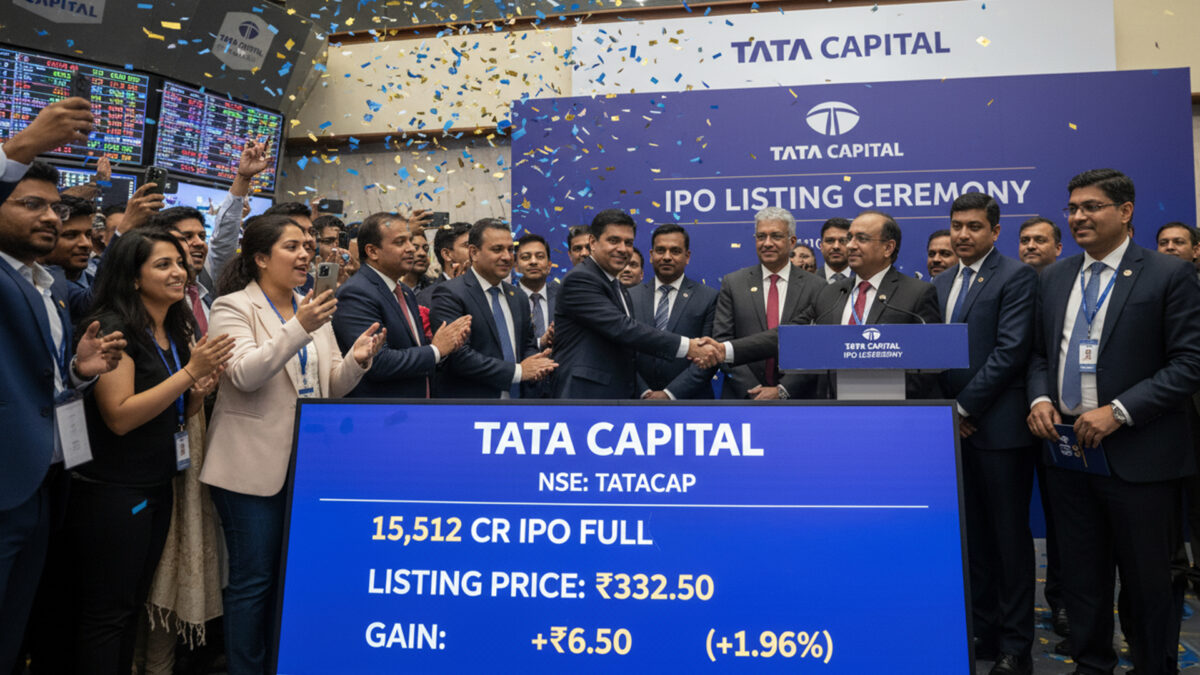
Tata Capital’s ₹15,512 crore initial public offering (IPO) was fully subscribed on its final day, October 8, 2025, reflecting strong investor interest despite some concerns about valuation and market volatility.

The IPO, priced between ₹310 and ₹326 per share, attracted bids for 33.48 crore shares, surpassing the 33.34 crore shares on offer. Qualified Institutional Buyers (QIBs) led the demand, with their portion subscribed 1.18 times, followed by Non-Institutional Investors (NIIs) at 1.10 times.

Retail investors subscribed 0.84 times their reserved portion, while employees oversubscribed their segment by over 2 times,

The IPO comprises a fresh issue of up to 210 million shares and an offer-for-sale by existing shareholders Tata Sons and the International Finance Corporation amounting to 265.8 million shares. Proceeds from the fresh issue will be used to augment Tata Capital’s capital base and for general corporate purposes

Despite the full subscription, the Grey Market Premium (GMP) remained subdued, indicating cautious investor sentiment. The GMP, a gauge of expected listing gains, was around ₹6 per share, suggesting a modest premium listing. Analysts attribute this muted response to factors such as concerns over asset quality following Tata Capital’s merger with Tata MotorFinance Ltd., which led to an increase in non-performing assets and a dip in return on equity.

Leading brokerages, including Anand Rathi and Canara Bank Securities, have maintained a ‘Subscribe for long-term’ rating on the IPO, citing Tata Capital’s diversified lending portfolio and strong risk management practices. However, some analysts have expressed caution due to the company’s recent financial performance and integration challenges post-merger.

The IPO is expected to list on the Bombay Stock Exchange and the National Stock Exchange on October 13, 2025. This marks a significant milestone for Tata Capital, a leading non-banking financial company in India, as it enters the public market.

Also Read: Adani Defence Unit Under Probe for $9 Million Import Tax Evasion?

Categories
Corporate

Adani Defence Unit Under Probe for $9 Million Import Tax Evasion?

Indian authorities are investigating Adani Enterprises’ defence arm for allegedly evading import duties on missile parts, according to an exclusive report by Reuters.

The probe marks the latest regulatory scrutiny of billionaire Gautam Adani’s business empire.

India’s Directorate of Revenue Intelligence (DRI) began investigating Adani Defence Systems and Technologies in March over suspicions that the company misclassified imported missile components to avoid paying tariffs, two government sources told Reuters. The alleged evasion amounts to 770 million rupees ($9 million).

Adani Defence, a relatively smaller unit of the group, manufactures drones, small arms and missile systems for Indian security forces.

The case centres on imports used to produce short-range surface-to-air missiles. Such parts normally attract a 10% import duty and an 18% local tax.

Investigators allege the company wrongly declared them as components for long-range missiles, which were exempt from tariffs under earlier rules.

One government source told Reuters that Adani executives admitted to the misclassification during the probe but gave no further details.

The company, however, has not responded to that claim. In a statement to Reuters, Adani Group said the DRI had only sought “clarifications” on the imports and that it had provided supporting documents.

“The issue stands closed from our end,” a spokesperson said, without confirming whether any payments were made to settle the matter.

The alleged evasion is notable, as $9 million represents more than 10% of Adani Defence’s 2024–25 revenue of $76 million and more than half its profit.

Under Indian rules, companies found guilty of misclassification can be asked to pay the unpaid duty along with a 100% penalty. If applied, this could raise Adani Defence’s liability to $18 million, Reuters reported.

The investigation, not previously disclosed, comes as Adani Group faces multiple regulatory challenges. India’s markets regulator recently cleared it in two stock manipulation cases but continues to examine over a dozen other alleged breaches of securities law.

The revenue department has also been investigating Adani since 2014 for alleged over-invoicing of coal imports, which the group denies.

Reuters also reported that the DRI has recently raised similar tariff misclassification issues with Samsung and Volkswagen, both of which are contesting the demands.

Customs data reviewed by Reuters show Adani Defence imported non-explosive missile parts worth $32 million from Russia since last year.

In total, the group has imported $70 million worth of defence components from Russia, Israel and Canada since January 2024.

Also Read: LTIMindtree Secures Mammoth $580 Million Deal

Categories
Corporate

LTIMindtree Secures Mammoth $580 Million Deal

Indian IT services company LTIMindtree has announced the acquisition of its largest-ever deal, valued at approximately $580 million, according to sources familiar with the matter.

The agreement is with a leading global media and entertainment company, although the client’s identity has not been disclosed.

This milestone surpasses the company’s previous record, a $450 million deal with U.S. agribusiness giant Archer-Daniels-Midland, secured earlier this year.

The new contract positions LTIMindtree as a significant player in the mid-cap IT services sector, especially in securing large, AI-driven, outcome-based deals.

Industry experts, such as Phil Fersht, CEO of HFS Research, note that mid-cap firms like LTIMindtree, Coforge, and Mphasis are gaining momentum in this area, outpacing larger, more legacy-focused competitors.

These companies are perceived as more agile and capable of shaping AI-led value propositions, whereas larger firms are still optimizing their legacy portfolios.

The deal comes at a time when India’s $283-billion IT sector faces macroeconomic uncertainties, including tariff-related risks and changes in U.S. immigration policy.

Despite these challenges, LTIMindtree’s shares rose 3% following the announcement, reflecting investor optimism. The company is set to assist the client in streamlining operations and modernizing delivery models through automation, process optimization, and vendor consolidation.

This development underscores the growing influence of mid-cap IT firms in the global market, particularly in the realm of AI and automation-driven services.

As LTIMindtree continues to secure significant contracts, it positions itself for sustained growth and increased competitiveness in the international IT services landscape.

Also Read: Tata Capital IPO Sees Muted Start; Day 2 Could Hold Key Signals

Categories
Corporate

U.S. Supreme Court Rules Against Google: Here’s What It Means

The U.S. Supreme Court has declined to block a lower court’s order mandating significant changes to Google’s Play Store, following a lawsuit filed by Epic Games, the developer of Fortnite.

This decision stems from a 2023 jury verdict that found Google had unlawfully maintained a monopoly over the distribution of Android apps and in-app payments.

The injunction issued by U.S. District Judge James Donato requires Google to allow users to download rival app stores within the Play Store and make its app catalog accessible to competitors.

Additionally, the injunction mandates that Google permit developers to include external links in their apps, enabling users to bypass Google’s billing system. The provision allowing external links is set to take effect on October 22, 2025, while the broader changes are scheduled for July 2026.

Despite Google’s concerns that the mandated changes could expose users to security risks and disrupt the Android ecosystem, the Ninth Circuit Court of Appeals upheld Judge Donato’s ruling in July 2025, affirming that Google’s practices violated antitrust laws. Following the appellate court’s decision, Google petitioned the Supreme Court to temporarily stay the injunction.

However, the justices declined to intervene, allowing the lower court’s order to stand. The Supreme Court’s refusal to block the injunction means that Google must comply with the mandated changes by the specified deadlines.

Epic Games welcomed the Supreme Court’s decision, viewing it as a victory for competition and consumer choice in the app marketplace.

The company plans to bring Fortnite and its Epic Games Store to the Google Play Store in the United States, offering users alternative avenues for app distribution and payment options.

This legal development marks a significant shift in the dynamics of the Android app ecosystem, potentially leading to increased competition among app stores and developers.

As the implementation deadlines approach, stakeholders across the tech industry are closely monitoring the situation to assess its impact on app distribution models and revenue structures.

Also Read: Why Is WeWork India’s ₹3,000 Crore IPO Facing Scrutiny

Categories
Corporate

Why Is WeWork India’s ₹3,000 Crore IPO Facing Scrutiny?

WeWork India Management Limited’s initial public offering (IPO), aiming to raise ₹3,000 crore, has garnered attention due to several concerns raised by governance advisory firms and market analysts.

The offering, which opened on October 3, 2025, and is set to close on October 7, is structured entirely as an Offer for Sale (OFS), meaning no new capital will be infused into the company. Instead, existing shareholders, primarily Embassy Buildcon LLP and 1 Ariel Way Tenant, a subsidiary of WeWork Global, are selling their stakes.

One of the primary concerns highlighted by InGovern Research Services is WeWork India’s financial health. Despite reporting a revenue of ₹2,024 crore and a net profit after tax of ₹128.19 crore for the fiscal year 2025, the company’s financials show signs of strain.

The company continues to report negative cash flows, with lease costs consuming over 43% of its revenues.

Additionally, the net profit was largely driven by a deferred tax credit, raising questions about the sustainability of its profitability

Another significant issue is the governance structure and promoter-related concerns. Over 53% of WeWork India’s pre-IPO shares held by Embassy Buildcon were previously pledged against approximately ₹2,065 crore of borrowings.

These pledges were temporarily released to facilitate the IPO, with an agreement that if the listing does not occur, the shares would need to be re-pledged within 45 days. This arrangement has raised concerns among potential investors about the stability and governance of the company.

The IPO’s subscription has been tepid, with the issue subscribed only 7% by the second day of bidding, up from 4% on the first day. The employee segment was the only category to show stronger interest, being oversubscribed at 1.2 times.

The muted response from institutional and retail investors may reflect the concerns raised by InGovern and other market participants.

WeWork India, a franchisee of the U.S.-based WeWork, operates 59 centers across major Indian cities, maintaining occupancy rates above 80%.

The company has reported steady revenue growth and profitability in recent years. However, the absence of new capital infusion through this IPO and the highlighted governance issues may impact investor confidence.

Also Read: AMD Shares Surge Following Major AI Chip Supply Deal with OpenAI

Categories
Corporate

AMD Shares Surge Following Major AI Chip Supply Deal with OpenAI

Advanced Micro Devices Inc. (AMD) experienced a significant surge in its stock price following the announcement of a multi-year agreement with OpenAI to supply artificial intelligence (AI) chips.

The deal, disclosed on October 6, 2025, led to a 34% increase in AMD’s share price, marking one of the company’s most substantial single-day gains in recent years. This partnership positions AMD as a key player in the rapidly expanding AI infrastructure sector.

Under the terms of the agreement, OpenAI will purchase AMD’s upcoming Instinct MI450 chips, with the initial deployment of one gigawatt of computing power scheduled for the second half of 2026.

The total commitment amounts to six gigawatts of computing capacity, equivalent to the energy consumption of approximately five million U.S. homes.

To facilitate this, OpenAI plans to construct a dedicated one-gigawatt facility utilizing AMD’s chips. The deal also includes a provision granting OpenAI the option to acquire up to 10% of AMD’s shares through warrants, contingent upon meeting specific performance milestones and stock price targets.

This partnership underscores OpenAI’s strategy to diversify its hardware suppliers beyond its existing relationships with Nvidia and Broadcom.

While Nvidia remains a dominant supplier of AI chips, the collaboration with AMD reflects the growing demand for computational power in AI development and the need for a more diversified supply chain.

Analysts view this move as indicative of the increasing competition in the AI hardware market.

From AMD’s perspective, the agreement represents a significant opportunity to expand its footprint in the AI sector. The company anticipates that this partnership could generate over $100 billion in new revenue over the next four years, driven by OpenAI and similar clients.

The deal also serves as a validation of AMD’s technological capabilities in high-performance computing.

The announcement has had a notable impact on the stock market. AMD’s share price closed at $203.71, up from $164.67 the previous day, adding approximately $80 billion to the company’s market capitalization.

In contrast, shares of Nvidia, which had previously announced a $100 billion deal with OpenAI, experienced a slight decline following the news. This shift highlights the dynamic nature of the AI hardware market and the competitive landscape among chipmakers.

OpenAI’s decision to enter into this agreement with AMD is part of its broader strategy to build a robust AI infrastructure capable of supporting advanced models and applications.

CEO Sam Altman emphasized the importance of this partnership in meeting the escalating demand for AI computing power. He noted that the collaboration with AMD complements OpenAI’s existing relationships with other hardware providers, ensuring a diversified and resilient infrastructure.

As the AI industry continues to evolve, partnerships like the one between AMD and OpenAI are likely to play a crucial role in shaping the future of AI development.

The increasing reliance on advanced computing resources underscores the importance of strategic collaborations in meeting the growing demands of AI technologies.

The AMD-OpenAI partnership marks a significant development in the AI hardware sector.

It not only enhances AMD’s position in the market but also reflects the broader trends of diversification and competition in AI infrastructure.

As both companies move forward with their plans, the success of this collaboration could have far-reaching implications for the future of AI development and deployment.

Also Read: Canara Robeco AMC IPO Targets ₹5,305 Crore Valuation

Categories
Corporate

IndusInd Bank Promoter Acquires Sterling Bank in the Bahamas

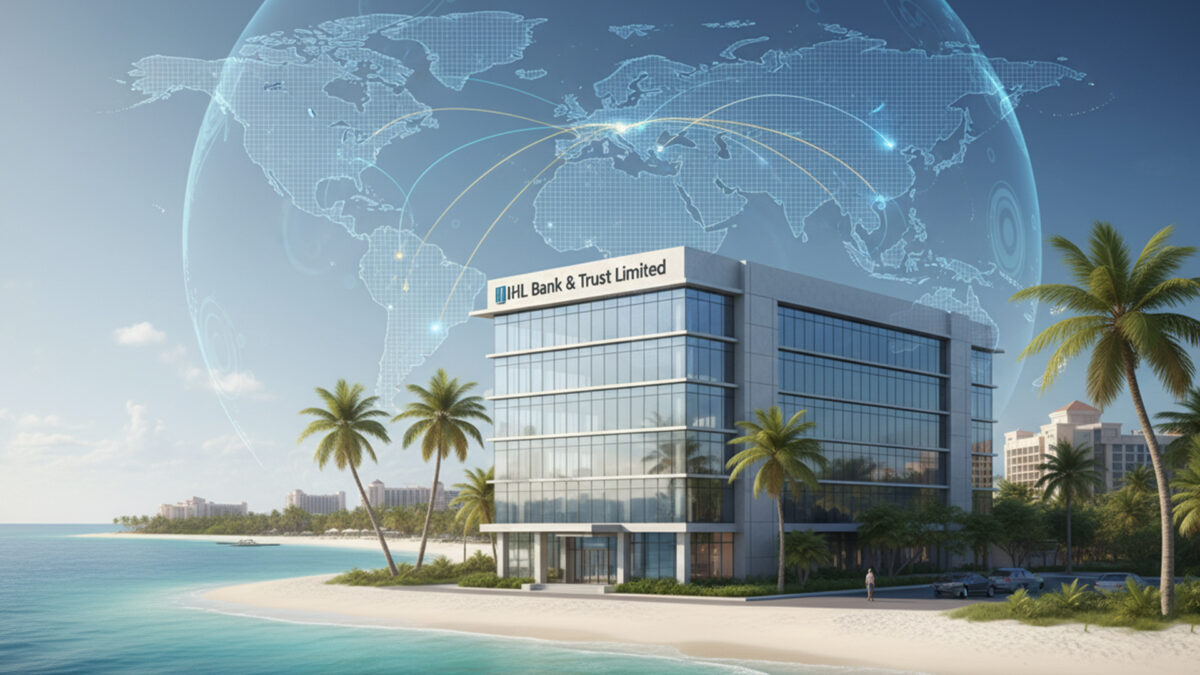
IndusInd International Holdings Ltd (IIHL), the promoter of IndusInd Bank, has finalized the acquisition of a 100% stake in Sterling Bank, a financial institution based in the Bahamas.

This move follows IIHL’s initial purchase of a 51% equity interest in Sterling Bank in September 2022 through its wholly owned subsidiary, IIHL (Capital), Mauritius. The remaining 49% was acquired in a subsequent transaction, culminating in full ownership.

In conjunction with the acquisition, Sterling Bank has been renamed IIHL Bank & Trust Limited. This rebranding aligns with IIHL’s strategic objective to establish a global financial presence, particularly in the Caribbean region.

The acquisition is expected to enhance IIHL’s footprint in international banking markets and diversify its portfolio within the Banking, Financial Services, Securities, and Insurance (BFSI) sectors.

As of August 31, 2025, IIHL reported a net worth of $1.26 billion. The entity serves over 42 million customers through a network exceeding 6,100 touchpoints, with a business size surpassing $86 billion.

The acquisition of Sterling Bank is part of IIHL’s broader strategy to expand its global operations and achieve a market capitalization target of $50 billion by 2030.

The transaction is anticipated to close by the end of October 2025, pending regulatory approvals.

This acquisition underscores IIHL’s commitment to leveraging international best practices and digital financial technologies to strengthen its position in the global financial services industry.

IndusInd Bank, headquartered in Mumbai, is India’s fifth-largest private sector lender, offering a range of banking services to a diverse customer base.

The completion of this acquisition marks a significant step in IIHL’s vision to build a global financial powerhouse, combining decades of experience with global best practices to deliver long-term value to shareholders and customers.

Also Read: Tata Capital IPO Sees Muted Start; Day 2 Could Hold Key Signals

Categories
Corporate

Tata Capital IPO Sees Muted Start; Day 2 Could Hold Key Signals

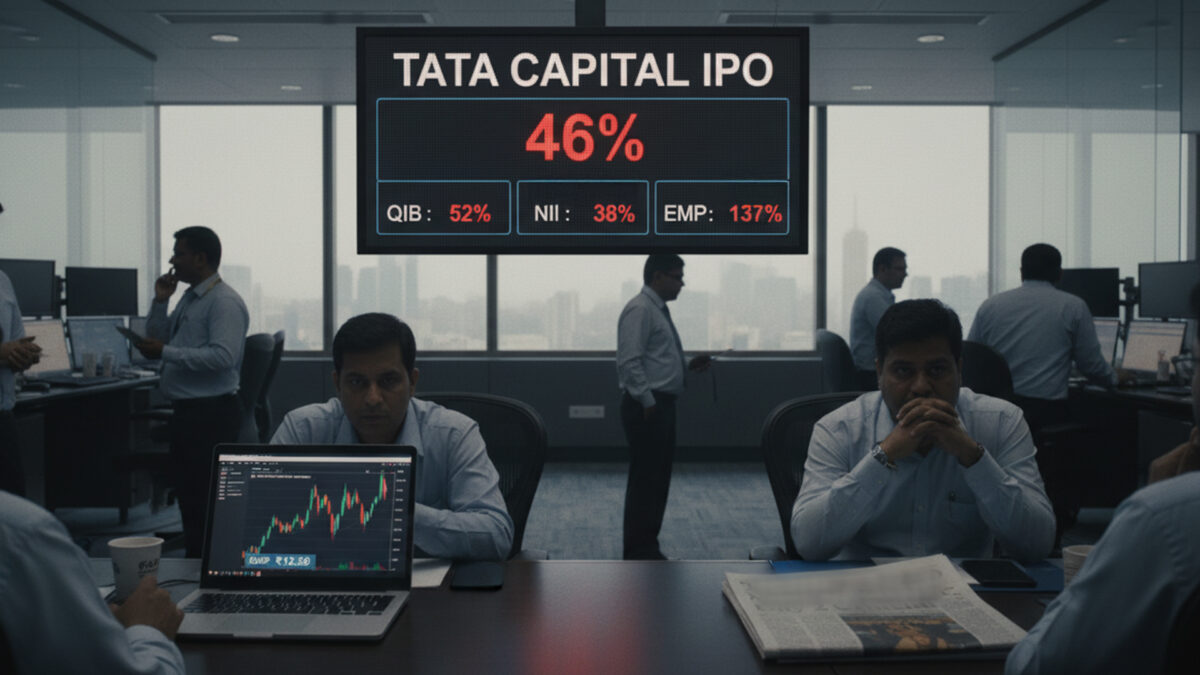
The initial public offering of Tata Capital Ltd opened on October 6 amid tempered investor response, and on the second day of bidding, subscription has reached roughly 46 percent so far.

The issue attracted bids for 15,27,94,428 shares against 33,34,36,996 shares on offer, according to data from the National Stock Exchange.

The Qualified Institutional Buyers (QIB) segment is 52 percent subscribed, the Retail Individual Investors (RII) category stands at 45 percent, non-institutional investors have covered 38 percent, and the employee quota is fully booked at 137 percent.

On Day 1, the IPO’s uptake was relatively muted. By market close, the overall subscription had reached around 39 percent, with QIBs showing strong interest (52 percent subscription), while retail and non-institutional categories lagged.

The employee portion had seen 1.10× oversubscription. Bids for 12,86,33,112 shares were received against the same issue base. The differential in subscription across categories suggested institutional faith, but cautious traction among retail investors.

A key indicator, the grey market premium (GMP), has remained subdued. As of October 7 morning, the GMP stood at around Rs 12.50, implying an expected listing price of about Rs 338.50, just 3.8 percent above the upper end of the issue price band of Rs 326.

The modest GMP reflects investor restraint on short-term gains, possibly because much of Tata Capital’s positive fundamentals and parentage are already priced in.

Analysts have pointed to a few contributing factors for the cautious start. The valuation at 4.2–4.3× post-issue book value may limit upside potential, leaving limited room for pop gains even if the business case is solid.

Some market participants noted that broader sentiment toward growth companies is wary, and that high valuation multiples may cap speculative interest.

As Day 2 unfolds, subscription trends in the retail and non-institutional segments will be closely watched. A stronger retail uptake could signal renewed confidence, while continued hesitancy might indicate that many participants are holding back pending clarity on listing prospects.

The movement of GMP will also be a key barometer: a pickup could reflect improving sentiment toward listing gains, whereas a flat or declining premium would underscore lingering caution.

Investors will also monitor sector and macro cues, including rate outlooks, liquidity conditions, and sentiment toward financials and NBFCs.

The smoking gun may well lie in how the IPO performs across investor segments today and whether that performance shifts GMP expectations ahead of the allotment and listing.

Also Read: Adani Energy Raises $250 Million Loan From International Lenders

Categories
Corporate

Adani Energy Raises $250 Million Loan From International Lenders

Adani Green Energy Ltd has signed an agreement to raise about $250 million from a group of international lenders, marking the renewable energy firm’s first foreign-currency loan since the United States Department of Justice unsealed an investigation that touched the wider Adani conglomerate.

The loan, arranged with four banks — DBS Bank Ltd, DZ Bank AG, Rabobank and Bank SinoPac Co— is intended to refinance existing debt and support working capital needs, according to market reports.

The facility is structured for roughly five years and carries an indicative interest rate near 8.2 percent, though final pricing and documentation remain subject to customary conditions precedent.

The lenders and Adani Green did not provide immediate public comment. Market observers said the deal is notable because several international banks had previously weighed pausing fresh credit to Adani businesses after the U.S. legal developments, and the agreement signals that some lenders remain prepared to provide offshore financing on commercially acceptable terms.

The loan follows a series of legal and reputational challenges for the broader Adani Group that began with allegations and a U.S. criminal indictment unsealed in November 2024 alleging bribery and related misconduct in connection with solar contracts.

U.S. prosecutors widened their review in 2024 to examine whether senior executives were involved in improper payments related to energy projects; the company has denied wrongdoing and said it would cooperate with legal processes.

The U.S. move drew criticism in some quarters for its potential diplomatic and economic consequences. Commentators in the American press argued the Department of Justice action risked undermining economic collaboration and trust at a sensitive geopolitical juncture.

Those views were reflected in opinion pieces and commentary, and at least one U.S. congressman publicly questioned the Justice Department’s approach, warning of possible harm to bilateral ties.

Analysts said the successful placement of the loan may indicate a selective reopening of offshore funding channels for parts of the Adani group where lenders can quantify and price legal and reputational risks.

When the U.S. charges were first announced, Adani Group companies experienced sharp share price falls and higher scrutiny from investors and counterparties, prompting several partners to reassess or pause arrangements pending clarity on the legal process.

The new facility therefore both responds to existing refinancing needs and tests market appetite for further international funding for the group.

Whether this transaction leads to a sustained return to offshore borrowing for Adani subsidiaries will depend on final documentation, evolving legal proceedings in the United States and the degree of commercial comfort among international banks.

Market participants said lenders would continue to monitor legal, regulatory and reputational developments closely before extending additional credit to borrowers associated with ongoing investigations.

Also Read: Canara Robeco AMC IPO Targets ₹5,305 Crore Valuation