Categories
Corporate

ChrysCapital picks minority stake in Nash Industries

Private equity firm ChrysCapital has acquired a minority stake in Nash Industries, a Bengaluru-based design and manufacturing solutions company, marking a significant investment in India’s fast-evolving manufacturing sector. While the financial details of the transaction were not officially disclosed, sources indicate the deal values Nash Industries at around ₹6,000 crore, with ChrysCapital picking up an estimated stake of about 30 per cent.

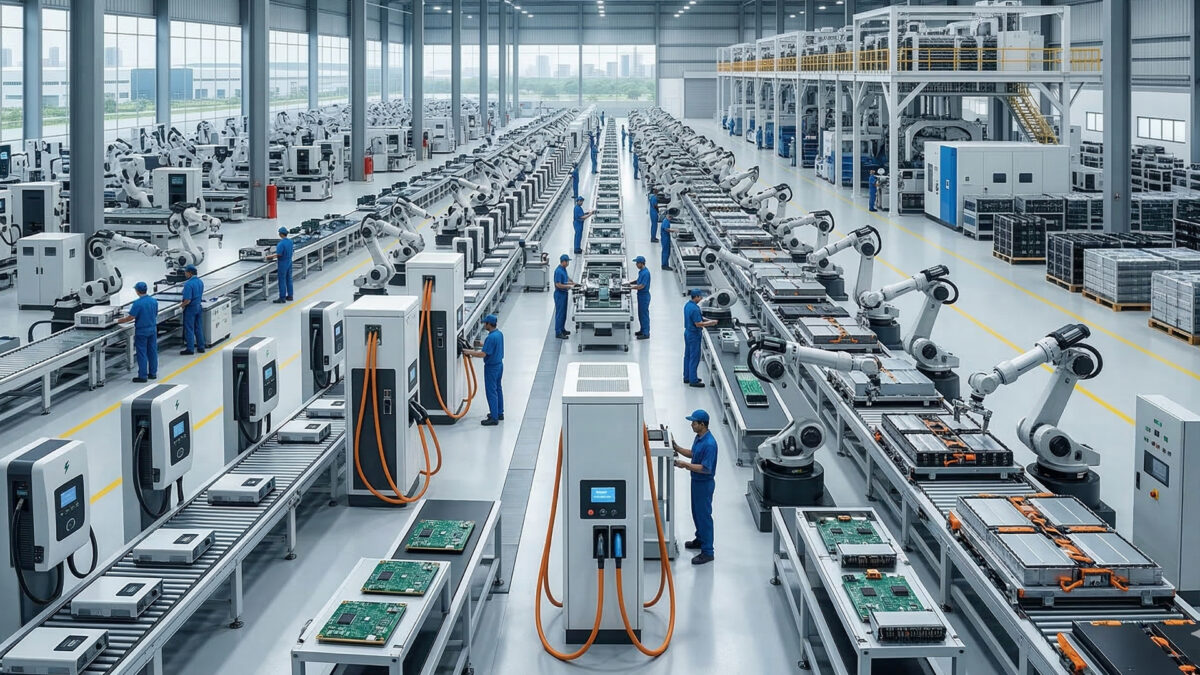
Founded more than five decades ago, Nash Industries has transformed from a sheet-metal components maker into a full-stack, design-led manufacturing platform. The company offers integrated mechanical, electrical, and electronics manufacturing services, including end-to-end “box-build” solutions. It caters to a wide range of industries such as data centres, banking hardware, clean energy, automotive, and industrial equipment.

Nash currently operates around 15 manufacturing facilities across South and West India and serves both domestic and international clients. Over the years, the company has focused on higher-value engineering and design capabilities, enabling it to move up the manufacturing value chain and become a preferred partner for global customers.

ChrysCapital’s investment comes at a time when Indian manufacturing is gaining momentum due to shifting global supply chains, increasing focus on China-plus-one strategies, and strong policy support through initiatives such as “Make in India.” The partnership is expected to help Nash accelerate capacity expansion, invest in advanced technologies, and strengthen its presence in export markets.

Commenting on the development, Nash Industries Chairman Sanjay Wadhwa said the investment validates the company’s long-term strategy and will support its next phase of growth. He added that the partnership would enhance Nash’s ability to deliver innovative, high-quality solutions to customers across sectors.

From ChrysCapital’s perspective, the firm sees Nash as well-positioned to benefit from growth in emerging areas such as data centres, artificial intelligence-led infrastructure, and energy transition-related manufacturing. The private equity firm has a strong track record of backing Indian companies in sectors with long-term structural tailwinds.

Also Read: Adani Defence and Leonardo join hands to build helicopters in India

Categories
Corporate

Adani Defence and Leonardo join hands to build helicopters in India

Adani Defence & Aerospace and Italian aerospace major Leonardo have come together in a strategic partnership that could reshape India’s helicopter manufacturing landscape. The collaboration, announced this week, signals a shared commitment to building advanced helicopters in India while developing a strong, self-reliant aerospace ecosystem.

At its core, the partnership blends Leonardo’s global experience in helicopter design and technology with Adani Defence’s growing manufacturing and systems integration capabilities. The aim is not just to assemble helicopters locally, but to gradually build end-to-end capability — from production and testing to training and long-term maintenance.

The tie-up comes at a time when India’s armed forces are preparing for significant fleet modernisation. Over the next decade, the military is expected to require a large number of helicopters across roles such as transport, surveillance, utility and maritime operations. By manufacturing helicopters in India, the partnership hopes to ensure quicker availability, reduced dependence on imports and better lifecycle support.

Equally important is the focus on people and skills. The proposed ecosystem includes training programmes for pilots and technicians, development of maintenance, repair and overhaul (MRO) facilities, and the creation of a local supplier network. This approach is expected to generate high-skill employment and open opportunities for Indian small and medium enterprises to enter the aerospace supply chain.

Executives from both companies have described the alliance as a long-term commitment rather than a transactional deal. For Adani Defence, it represents a step toward building sovereign defence capability and positioning India as a serious aerospace manufacturing hub. For Leonardo, it reflects confidence in India’s industrial potential and its role as a strategic partner in the global defence market.

Beyond military use, the partnership could also support civil and commercial helicopter demand in the future, including emergency medical services, offshore operations and regional connectivity. As capabilities mature, India could emerge as a base for exports and global support services.

Industry observers say the collaboration fits squarely within the government’s ‘Make in India’ and ‘Aatmanirbhar Bharat’ vision, where international partnerships help accelerate domestic capability.

Also Read: Asia IT shares slide as AI triggers global tech sell-off

Categories
Corporate

Asia IT shares slide as AI triggers global tech sell-off

Asian software and IT stocks fell sharply after a heavy sell-off in U.S. technology markets, as investors grew increasingly nervous about the disruptive impact of new artificial intelligence tools on traditional software and services businesses.

The market jitters were triggered by recent announcements from U.S.-based AI startup Anthropic, which unveiled advanced automation features for its AI model, Claude. The tools are designed to perform complex tasks across areas such as legal research, marketing, sales, coding and data analysis. While Anthropic has said the outputs are meant to assist professionals rather than replace them, investors fear that such technology could significantly reduce demand for conventional software products and subscription-based services.

These concerns sparked a sharp global reaction. In the U.S. and Europe, software, data and professional services companies suffered steep losses, wiping out nearly $300 billion in market value in a single session. Shares of major information and analytics firms, including legal and financial data providers, dropped by double digits, dragging down broader tech indices such as the Nasdaq and the S&P 500.

The negative sentiment quickly spilled over into Asian markets. Software and IT stocks across the region declined as investors reacted to the overnight rout in global tech shares. India’s IT sector was among the worst hit, with shares of leading exporters such as Infosys, Tata Consultancy Services (TCS), Wipro and HCLTech falling as much as 6–7%. The sector is particularly vulnerable because a large share of its revenue comes from U.S. and European clients, where spending sentiment is closely tied to technology trends.

China’s software services stocks also came under pressure, with sector indices falling around 3%. Technology shares in Hong Kong and parts of Japan weakened as well, reflecting broader concerns that rapid AI adoption could disrupt existing business models faster than companies can adapt.

However, the sell-off was not uniform across the tech space. Hardware and semiconductor stocks held up better in parts of Asia, supported by expectations that demand for AI-related chips and infrastructure will continue to grow. South Korea’s market, for instance, found support from chipmakers seen as direct beneficiaries of the AI boom.

Also Read: Gold up ₹1,53,940, Silver slips to ₹2,79,900

Categories
Corporate

Sensex swings in range, Nifty breaches 25,750 mark

Markets traded with high volatility on Wednesday, as the BSE Sensex swung between gains and losses through the session, while the Nifty 50 slipped below the crucial 25,750 mark, signalling cautious investor sentiment.

 Selling pressure intensified as the session progressed, led by sharp losses in IT stocks. The Nifty IT index fell nearly 6%, making it the worst-performing sector of the day. Major IT stocks such as Infosys, TCS, Wipro and HCL Tech were among the top losers, hurt by weakness in US technology stocks and concerns over near-term demand outlook.

Auto and metal stocks also witnessed selling pressure, adding to the weakness in benchmarks. Stocks like Tata Motors, JSW Steel and Hindalco traded lower as investors stayed cautious on global growth prospects. Broader markets mirrored the weak sentiment, with mid-cap and small-cap indices trading in the red amid heightened volatility.

On the positive side, select FMCG and banking stocks helped limit deeper losses. Hindustan Unilever, ITC and Nestlé India were among the key gainers, supported by defensive buying. In the banking space, heavyweight stocks such as HDFC Bank and ICICI Bank showed mild gains, providing some stability to the indices.

Global cues remained mixed, with Asian markets trading unevenly after overnight weakness in US tech stocks. While optimism over recent international trade developments had lifted markets earlier, investors chose to book profits in the absence of fresh triggers. Ongoing uncertainty around global interest rates and geopolitical tensions also weighed on sentiment.

Investors are closely watching developments related to the Union Budget, corporate earnings announcements and global macro signals for further cues. Market experts said near-term movement is likely to remain range-bound, with stock-specific action and sector rotation driving trade.

Also Read: Sensex rallies 2,073 points, Nifty tops 25,700

Categories
Corporate

Sensex rallies 2,073 points, Nifty tops 25,700

Markets rallied sharply on Tuesday as optimism over the newly announced India-US trade deal lifted investor sentiment where the BSE Sensex jumped 2,073 points to close above 91,000, while the Nifty50 crossed 25,700.

The trade agreement, which eases tariffs and strengthens bilateral trade, spurred buying across key sectors, particularly banking, IT, and autos. Heavyweights like Reliance Industries, HDFC Bank, and Infosys led the gains, while mid-cap and export-oriented stocks also saw strong momentum.

Welspun Living, LT Foods, Aarti Industries, Ather Energy, and Trident saw significant gains, along with IT and auto stocks such as Infosys, HCL Tech, and TCS.

Some counters lagged amid profit booking, including Aegis Vopak, PB Fintech, Global Health, NALCO, MRPL, and Campus. Heavyweights like ONGC and Coal India also closed lower despite the broader rally.

This surge reflects renewed investor confidence, fueled by expectations that the trade deal will boost exports and attract foreign investments.

Also Read: India eyes higher 49% FDI in public banks

Categories
Corporate

Palantir Q4 revenue $1.41bn, stock jumps 8%

Palantir Technologies Inc. reported a strong fourth-quarter performance, beating Wall Street expectations and pushing its shares higher in after-hours trading. The company posted Q4 revenue of $1.41 billion, up 70% year-on-year, with adjusted earnings per share of $0.25, above analyst estimates of $0.23.

CEO Alex Karp called the results exceptional, highlighting Palantir’s focus on scaling AI-driven operations to meet growing demand.

Following the earnings release, shares rose 8% in after-hours trading, reflecting investor confidence in Palantir’s growth trajectory. The US market was a key driver, with total revenue up 93% year-on-year to roughly $1.08 billion. US commercial sales climbed 137% to $507 million, while US government revenue increased 66% to $570 million.

The company closed 180 deals worth $1 million or more in the quarter, bringing total contract value to $4.26 billion, up 138% year-on-year. These figures highlight Palantir’s expanding presence across enterprise and government sectors.

Looking ahead, Palantir expects full-year 2026 revenue of $7.18–$7.20 billion, a 61% increase from 2025, surpassing analyst projections. For Q1 2026, revenue is projected at $1.53–$1.54 billion, also above expectations.

Also Read: Bitcoin faces sharp fall during market chaos

Categories
Corporate

Trump announces India–US trade deal

US President Donald Trump has said that the United States and India have agreed on a new trade deal that would change how goods move between the two countries. As per Trump’s statement, American products would be allowed into India without paying any tariffs, while Indian exports to the US would attract an 18% charge.

Trump said the move is aimed at making trade more balanced and fair for American businesses. He claimed that US companies have long faced higher duties in India and that the new arrangement would open up greater opportunities for American manufacturers, farmers, and technology firms.

Under the proposed deal, India would continue to export to the US, but at a fixed tariff rate of 18%. Trump described this as a reasonable level that still allows Indian goods access to the American market while offering better protection to US industries and jobs.

The announcement comes amid ongoing global trade uncertainty and renewed focus on protecting domestic industries. India and the US are among each other’s key trading partners, with strong links in sectors such as IT services, pharmaceuticals, energy, defence, and manufacturing.

However, no official confirmation or detailed response has yet come from the Indian government. Trade analysts say the impact of the deal, if finalised, could be uneven. While US exporters may gain from duty-free access to India, Indian exporters, especially in labour-intensive sectors, could see higher costs and tighter margins in the US market.

Also Read: India–US deal cheer lifts Sensex 2,250 points, Nifty above 25,750

Categories
Corporate

India–US deal cheer lifts Sensex 2,250 points, Nifty above 25,750

markets surged on Tuesday as investors welcomed the long-awaited India–US trade agreement, sparking strong buying across most sectors and lifting overall market sentiment.

The BSE Sensex jumped over 2,000 points, while the Nifty 50 climbed close to 3%, supported by broad-based participation. Early signals from Gift Nifty had indicated a positive opening, but the rally gathered pace as the session progressed, driven by heavyweight stocks and renewed foreign inflows.

Export-linked sectors emerged as the biggest winners. Stocks in metals, engineering, automobiles and information technology rallied sharply, benefiting from the announcement that the US will cut tariffs on Indian goods to 18% from earlier levels of around 50%. Banking stocks also saw strong buying, with large private lenders and PSU banks gaining as improved trade prospects lifted growth expectations.

Among index heavyweights, oil and gas majors and infrastructure stocks advanced on hopes of higher global demand and improved investment sentiment. The positive momentum was further supported by a stronger rupee, which appreciated more than 1% against the US dollar, signalling renewed confidence among overseas investors.

However, not all stocks joined the rally. FMCG and pharmaceutical stocks underperformed, with investors turning cautious on defensive sectors amid the risk-on mood. Select consumer staples and healthcare counters slipped or remained range-bound as traders rotated funds into cyclical and export-oriented names. A few mid-cap pharma exporters also faced pressure due to concerns over pricing and regulatory costs.

Market analysts said the trade deal helped remove a key uncertainty that had weighed on Indian equities in recent weeks, encouraging foreign institutional investors to return to the market. Improved clarity on tariffs and trade rules is expected to support corporate earnings, particularly for export-driven industries.

Also Read: Viksit Bharat banking panel proposed in Union Budget

Categories
Corporate

Sensex jumps 944 points, Nifty above 25,050

Indian stock markets staged a strong recovery on Monday as the BSE Sensex rose about 944 points to close near 81,666, while the Nifty 50 climbed over 260 points to settle above the 25,000 level.

The rebound came as investors digested the Union Budget proposals more calmly after an initial negative reaction on Sunday. Concerns over higher taxes on derivatives trading had triggered sharp selling earlier, but bargain buying and improved sentiment helped markets recover.

Infrastructure and energy stocks led the gains. Power Grid Corporation emerged as the top gainer, jumping over 7%. Other key stocks that supported the rally included Larsen & Toubro (L&T), Adani Ports, and Reliance Industries, all of which saw healthy buying. Pharma major Dr Reddy’s also ended the session higher.

On the losing side, Shriram Finance was the biggest drag on the index, falling more than 3%. Stocks such as Max Healthcare, Trent, Bajaj Auto, Cipla, Infosys, ITC, and Titan also closed lower as investors booked profits and rotated funds into sectors showing stronger recovery.

Sector-wise, infrastructure stocks outperformed, reflecting optimism around government spending and long-term projects. IT stocks lagged, slipping slightly due to weak global cues and cautious outlook for technology spending.

Global markets remained mixed, with some pressure seen in US and European indices. Despite this, Indian equities outperformed on the back of strong domestic buying and a mild rise in the rupee against the US dollar.

Also Read: Bitcoin faces sharp fall during market chaos

Categories
Corporate

India extends GIFT City tax holiday to 20 years

In the Union Budget 2026‑27, the Indian government announced a major extension of tax benefits for businesses operating in the Gujarat International Finance Tec‑City (GIFT City) International Financial Services Centre (IFSC). The tax holiday, which previously lasted 10 years, will now be extended to 20 years to make the financial hub more appealing to both domestic and international firms.

Under this new rule, new companies in the GIFT City IFSC will get a 100% tax exemption on their income for 20 years out of a 25-year period. After this period, these companies will pay a reduced tax rate of 15%, which is much lower than the normal corporate tax rates in India, which range from 25% to 38%.

This change is especially important for banks and financial firms whose initial 10-year tax breaks were about to end. Big banks, including the State Bank of India and Bank of Baroda, had asked for clarity on future tax rules. Extending the tax holiday gives companies long-term certainty, encouraging them to continue and expand operations in GIFT City.

Industry leaders welcomed the move, saying it will strengthen India’s position as a global financial hub. The extended tax break is expected to attract more banks, asset managers, reinsurers, and investment firms to set up offices or grow their business in the IFSC. GIFT City has already been growing steadily, with more companies registering in banking, investment, and fund management sectors.

The new tax incentives will apply starting April 1, 2026, covering the 2026‑27 financial year and beyond. This step is part of a wider effort in the budget to boost India’s financial markets, attract international investment, and make the country more competitive globally.

Also Read: Seven new high‑speed rails announced in budget