Categories
Corporate

Swiggy Plans ₹10,000 Crore Fundraise Via QIP

Swiggy, the Bengaluru-based food delivery and quick-commerce major, is preparing to raise up to ₹10,000 crore through a qualified institutional placement (QIP) as it seeks to strengthen its balance sheet and maintain a competitive edge in India’s rapidly expanding on-demand economy.

The company announced that its board of directors will meet on November 7 to discuss and approve the proposed fundraising plan.

The capital raise, one of the largest by an Indian internet company in recent months, is expected to give Swiggy fresh financial muscle to scale its food delivery and grocery delivery platform, Instamart.

According to reports, the funds will likely be deployed toward technology development, delivery network expansion, marketing, and improving profitability metrics across business segments.

Swiggy stated that the board will consider raising funds “through one or more qualified institutions placement or any other permitted modes under applicable laws, for equity shares or securities up to ₹10,000 crore, in one or more tranches.”

While the company did not specify the size or structure of the offering, industry observers believe that Swiggy is seeking to build a cash buffer ahead of its planned public listing next year.

The move comes as Swiggy faces mounting competition from Zomato in food delivery and from emerging quick-commerce players such as Zepto and Blinkit.

The quick-commerce space has become a major growth driver for Swiggy through Instamart, which has seen strong adoption across metro and tier-1 cities but continues to operate at thin margins.

Analysts say that in this environment of aggressive expansion, liquidity will be critical for maintaining delivery efficiency and customer retention.

Financially, Swiggy has shown strong revenue momentum but remains loss-making.

For the quarter ended September 2025, the company reported a consolidated revenue increase of 54 percent year-on-year to ₹5,561 crore, though its net loss widened to ₹1,092 crore from ₹626 crore in the same period last year.

Despite this, Swiggy’s leadership maintains that the company is on track toward sustainable profitability as it continues to optimize costs and leverage economies of scale.

The fundraising plan follows a period of portfolio reshaping, including the recent ₹2,400 crore divestment of Swiggy’s stake in bike-taxi startup Rapido.

That move was aimed at sharpening focus on the company’s core businesses while generating liquidity for expansion and operational needs.

If approved, the QIP will provide Swiggy additional financial flexibility to pursue growth and potentially reduce dependence on external venture capital funding.

The company’s decision also aligns with a broader trend of late-stage startups tapping equity markets for capital amid volatile private funding conditions.

Market analysts expect investor interest in Swiggy’s QIP to be robust, given the company’s strong brand presence, diversified offerings, and growing customer base.

However, they also caution that investor appetite will depend on Swiggy’s ability to demonstrate a credible pathway to profitability and operational discipline.

Also Read: Shriram Properties Eyes ₹700 Crore Revenue from New Pune Project

Categories
Corporate

Adani Power Lowest Bidder for 3.2 GW Coal Tender in Assam

Adani Power Ltd has emerged as the lowest bidder for a 3.2 gigawatt (GW) coal-based power supply tender floated by the northeastern state of Assam, marking another major milestone in the company’s rapid expansion in India’s thermal power sector.

The award has received provisional approval from the state electricity commission, and the final contract is expected to be signed soon, according to company officials.

The Assam government had invited bids to boost its baseload generation capacity in response to rising power demand and the growing intermittency of renewable energy.

The state’s tender is part of a larger national trend, with multiple states — including Rajasthan, Uttar Pradesh, and Gujarat — floating over 22 GW of coal-based tenders in recent months.

This underscores a renewed focus on conventional energy even as India continues to advance its green transition agenda.

Adani Power stated that following the regulatory nod, the next steps would involve formalising the power purchase agreement (PPA) and finalising the project execution plan.

While the company has not disclosed the winning tariff, industry experts said Adani’s pricing was highly competitive, making it the frontrunner for the Assam project.

The contract aligns with Adani Power’s broader ambition to expand its generation capacity from 18 GW currently to 42 GW by fiscal year 2032.

The company plans to add around 12 GW by 2030, backed by an investment commitment of about ₹2 trillion.

It has already placed pre-orders for key power plant equipment, including boilers, turbines, and generators, to accelerate implementation across its upcoming projects.

The Assam tender is viewed as a strategically significant win for Adani Power, given the region’s increasing industrialisation and infrastructure growth.

The project is expected to improve supply stability in the Northeast while complementing the region’s renewable energy initiatives.

Analysts note that coal-based projects like this remain crucial to balancing grid reliability as India transitions toward cleaner energy sources.

However, several challenges remain. Adani Power will need to secure coal linkages, complete environmental clearances, and manage construction logistics in a region with relatively complex terrain.

Additionally, the company faces broader macroeconomic headwinds such as rising input costs and evolving global policies on coal financing and emissions.

For the Assam government, the partnership represents a key step toward ensuring consistent and affordable power supply to both urban and industrial consumers.

It also signals the state’s openness to large-scale private investment in the power sector despite India’s longer-term push toward renewables.

Also Read: Shriram Properties Eyes ₹700 Crore Revenue from New Pune Project

Categories
Corporate

Air India Seeks ₹10,000 Crore Lifeline from Tata Sons, SIA

Air India has approached its parent company Tata Sons and its joint venture partner Singapore Airlines (SIA) for a financial infusion of around ₹10,000 crore as the carrier looks to stabilize operations and strengthen its engineering and safety infrastructure in the aftermath of a fatal crash earlier this year.

According to reports citing people familiar with the matter, the airline has sought the fresh capital support to accelerate ongoing modernization and safety upgrades, overhaul internal systems, and enhance maintenance capabilities.

The request follows the tragic June 2025 crash that killed over 240 people, the deadliest air disaster in India in more than a decade.

The incident has intensified scrutiny from regulators and prompted the carrier to re-evaluate its operating procedures and fleet management standards.

The proposed funding could come in the form of a mix of equity infusion and interest-free loans.

Tata Sons, which holds a 74.9 percent stake in Air India, and Singapore Airlines, which owns the remainder, are currently evaluating the request.

The funds are expected to be channeled toward critical areas such as safety infrastructure, crew training, fleet maintenance, and passenger service improvements.

The move comes amid Air India’s larger restructuring efforts under Tata Sons, which took control of the carrier from the Indian government in January 2022.

The company has since embarked on an ambitious five-year transformation plan called “Vihaan.AI,” aimed at restoring profitability, modernizing its fleet, and reclaiming market leadership on international and domestic routes.

As part of this strategy, Air India has placed record aircraft orders with Airbus and Boeing and initiated the merger of its full-service arm Vistara into its mainline operations.

The merger, expected to be completed in 2025, is designed to create a unified premium airline capable of competing with global peers.

However, the June 2025 crash and subsequent investigations have set back some of these plans. Regulators have directed the airline to implement several corrective measures, including enhanced maintenance checks, stricter pilot training, and independent audits of engineering systems.

The additional funding from Tata Sons and SIA is intended to accelerate compliance and rebuild confidence among passengers and regulators alike.

Industry observers say that despite the heavy investments already made by Tata Sons and SIA — estimated at more than ₹9,500 crore in the previous fiscal year — the latest request underscores the scale of challenges confronting the airline.

Analysts note that the crash has disrupted Air India’s financial trajectory, forcing a renewed focus on operational safety and reliability before the carrier can push ahead with its expansion agenda.

Neither Air India nor its parent companies have publicly commented on the fresh capital request.

Singapore Airlines, however, has confirmed that it continues to work closely with Tata Sons on Air India’s turnaround plan and remains committed to its long-term partnership in India.

The proposed lifeline could prove critical for Air India at a time when competition in the Indian aviation market is intensifying. Rivals such as IndiGo, Akasa Air, and the soon-to-launch Tata-owned low-cost subsidiary are rapidly expanding their fleets and route networks.

For Air India, the infusion would provide much-needed liquidity to strengthen its technical operations and reaffirm its commitment to safety, service quality, and modernization.

Also Read: Ford Defies Trump, Will Invest Rs 3,250 Crore in India

Categories
Corporate

Shriram Properties Eyes ₹700 Crore Revenue from New Pune Project

Real estate developer Shriram Properties Ltd (SPL) has announced plans for a major housing project in Pune’s Hinjewadi area, with a target Gross Development Value (GDV) of about ₹700 crore.

The project marks the company’s strategic expansion into western India and its second development in the city.

In a recent regulatory filing, the company said it has signed a Joint Development Agreement (JDA) with a landowner to develop a premium residential complex covering around 0.7 million square feet.

The project will comprise about 6.5 lakh square feet of saleable area and is designed to cater to the growing demand for mid-premium housing in one of Pune’s most dynamic micro-markets.

Akshay Murali, Vice-President of Business Development at Shriram Properties, said that the signing of the second project in Pune underscores the company’s confidence in the city’s long-term growth potential.

He added that Hinjewadi, with its thriving IT and industrial ecosystem, offers strong demand fundamentals and remains a preferred destination for both homebuyers and investors.

The developer plans to execute the project using an asset-light model, consistent with its broader strategy of capital efficiency and geographical diversification.

By leveraging partnerships, the company aims to scale its presence in new regions while maintaining steady margins and optimizing returns on investment.

Hinjewadi, one of Pune’s most sought-after residential and commercial hubs, benefits from excellent connectivity via the Mumbai-Pune Expressway and its proximity to the Hinjewadi IT Park.

The area also boasts strong social infrastructure, including reputed schools, hospitals, and retail centers, which has made it a magnet for working professionals and families.

This new project follows Shriram Properties’ first Pune development in Undri, launched earlier in 2025, which saw strong early sales traction.

The success of that project has encouraged the company to expand its footprint in the region, reinforcing its strategy of targeting high-growth micro-markets with rising demand for quality residential properties.

Industry analysts view this development as a reflection of Shriram Properties’ increasing confidence in the western Indian market.

The broader Indian residential real estate sector has been witnessing robust growth, driven by rising disposable incomes, stable interest rates, and improving buyer sentiment post-pandemic.

Developers focusing on mid- and premium-segment housing are particularly benefiting from steady demand among urban professionals.

For Shriram Properties, which has a strong presence in Bengaluru, Chennai, and Kolkata, Pune represents a crucial addition to its portfolio diversification strategy.

The ₹700 crore Hinjewadi project will not only enhance its visibility in a competitive market but also provide a platform for sustained revenue growth in the coming years.

The company has indicated that the project will be launched in phases, with construction expected to begin soon after receiving regulatory approvals.

The development is expected to feature modern amenities, efficient layouts, and sustainable design elements aimed at meeting the evolving expectations of urban homebuyers.

Also Read: Tata Motors, THINK Gas Partner to Build LNG Refueling Ecosystem

Categories
Corporate

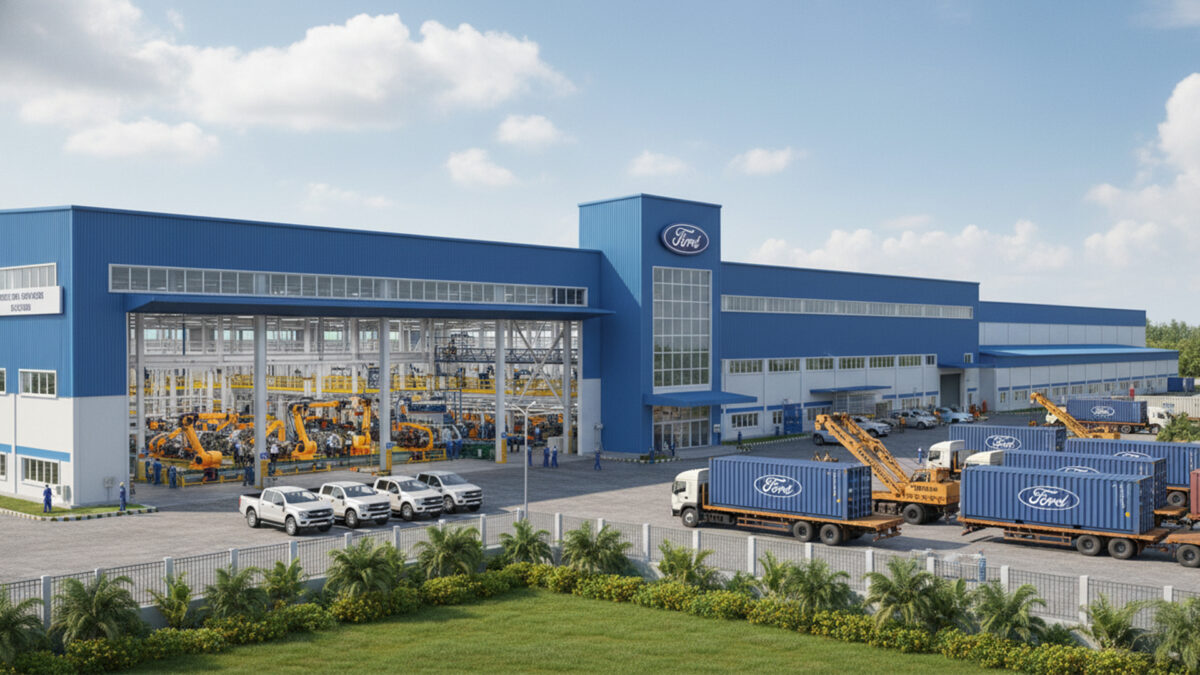
Ford Defies Trump, Will Invest Rs 3,250 Crore in India

Ford Motor Co. is preparing to invest approximately Rs 3,250 crore in India to revive production operations at its Maraimalai Nagar facility in Tamil Nadu, according to multiple credible news reports citing people familiar with the development.

The investment, estimated at around USD 370 million, will be directed toward producing advanced internal combustion engines intended for export to global markets.

The Maraimalai Nagar plant, which has been inactive since Ford halted vehicle manufacturing in India in 2021, will be refurbished and retooled to support the scale of engine production Ford is planning.

The annual capacity of the revived plant is expected to exceed 200,000 engines.

Sources said the engines produced in India will be exported to markets outside the United States, though Ford has not disclosed final destination markets for the exports.

The company’s decision indicates that India will serve as a key export hub rather than a base for domestic vehicle manufacturing in the near term.

This move comes at a time when the U.S. political establishment is advocating strongly for American companies to prioritize domestic output.

Recent policy direction from Washington, including renewed pressure from former President Donald Trump and a political focus on reshoring manufacturing, has centered around discouraging U.S. corporations from shifting investment overseas.

Ford’s decision to allocate new capital toward India rather than the United States is being seen by industry observers as a strategic statement that global manufacturing efficiency continues to outweigh political pressure.

Reports indicate that the Tamil Nadu state government has been keen to revive operations at the plant, which was among Ford’s earliest investments in India dating back to the 1990s.

The revival of the factory is expected to generate employment opportunities locally and re-energize the surrounding vendor ecosystem.

The region is already home to a strong automotive supply chain and is a preferred destination for export-oriented automobile manufacturing, with several multinational automakers maintaining operations there.

Ford’s retreat from the Indian passenger vehicle market in 2021 followed decades of financial strain, during which the automaker accumulated losses exceeding USD 2 billion in the country.

At that time, Ford concluded that the scale and profitability required for long-term sustainability in India’s competitive mass-market passenger segment were difficult to achieve.

Shifting to a component- and export-focused model allows the company to leverage India’s cost competitiveness without directly competing in the domestic automotive marketplace.

Industry analysts say the decision signals Ford’s renewed confidence in India as a manufacturing and export base at a time when multinational automakers are diversifying their production networks beyond China.

The move also reflects a broader trend in which India is emerging as a strategic alternative for global manufacturing, supported by an improving business environment and government incentives encouraging industrial investment and exports.

The company has not yet issued a formal public announcement detailing timelines or employment projections, but regulatory filings and government sources indicate the approval process for the investment is in the advanced stage.

The initiative is expected to be rolled out in phases, with production activity likely to begin once retooling of the plant is completed.

Also Read: Tata Motors, THINK Gas Partner to Build LNG Refueling Ecosystem

Categories
Corporate

Dabur India Launches ₹500 Crore Investment Platform ‘Dabur Ventures’

Indian consumer products major Dabur India Limited has unveiled a new investment initiative dubbed “Dabur Ventures”, allocating up to ₹500 crore to back digital-first consumer businesses aligned with its core categories.

The company said the fund will draw exclusively from its internal resources and is intended to acquire stakes in emerging companies that resonate with its journey and digital-first consumer segments.

CEO Mohit Malhotra emphasised the company will remain within its existing product categories—such as personal care, health care, wellness foods, beverages, and ayurveda—while exploring adjacent premium categories targeted at Gen Z and Gen Alpha consumers.

The move comes alongside Dabur’s September quarter results, which showed a net profit of ₹452.6 crore, up 6.4 percent year-on-year, and revenue of ₹3,191.3 crore, representing growth of 5.4 percent despite transitional headwinds associated with the GST reform.

For Dabur, the establishment of the venture arm signals a shift from purely organic growth to a more active external growth strategy, enabling the company to participate in the fast-growing startup and digital ecosystem without straying far from its core competencies.

Market observers note that Indian FMCG majors are increasingly looking at investment or acquisition of direct-to-consumer (D2C) and digitally native brands in order to modernize portfolios and capture younger, tech-savvy consumers.

In its filing, the company clarified that it will “restrict our existing categories and not go beyond them,” focusing on businesses that can scale and have a strong digital footprint.

The new platform, Dabur Ventures, will enable the company to invest in startups and growth-stage brands that bring innovation, niche capabilities, or digital distribution strength, which Dabur can enhance through its brand-building, distribution, and manufacturing infrastructure.

While the size of individual investments or specific targets were not disclosed, the total pool of ₹500 crore over time gives the company flexibility to pursue multiple deals.

Analysts say the move is well-timed. The consumer goods sector in India is undergoing transformation, and digital-first brands are gaining ground in premium and niche categories.

For a legacy firm like Dabur, the venture platform offers a way to tap into that growth without diluting its traditional footprint.

The allocation also indicates that the company sees value in early-stage participation, rather than waiting for established valuations.

For investors and stakeholders, the announcement offers two key takeaways: first, Dabur is positioning itself for future-oriented growth by combining its strengths with external innovation; second, it continues to safeguard its category focus and distribution engine, thus maintaining strategic coherence.

Also Read: Tata Motors, THINK Gas Partner to Build LNG Refueling Ecosystem

Categories
Corporate

Tata Motors, THINK Gas Partner to Build LNG Refueling Ecosystem

Tata Motors has entered into a strategic partnership with THINK Gas to develop a liquefied natural gas (LNG) refueling ecosystem for long-haul trucks across India.

The collaboration marks a significant step toward promoting sustainable mobility in the country’s commercial transportation sector, aligning with India’s broader energy transition goals.

Under the partnership, Tata Motors and THINK Gas will jointly develop the infrastructure required for LNG refueling and promote the adoption of LNG-powered trucks.

The initiative aims to provide fleet operators with cleaner and more cost-effective alternatives to conventional diesel-powered heavy-duty vehicles.

Tata Motors said the collaboration will cover multiple aspects, including the setting up of refueling stations, operational support, and awareness programs for fleet owners and logistics partners.

According to reports, Tata Motors will supply LNG-powered trucks from its portfolio, while THINK Gas will focus on developing the necessary fueling infrastructure.

The move is expected to help overcome one of the biggest barriers to LNG adoption in India’s trucking sector — the lack of a widespread refueling network.

Senior executives from both companies said the partnership would play a crucial role in decarbonizing India’s freight transportation.

Rajesh Kaul, Vice President of Sales and Marketing for Tata Motors’ Commercial Vehicles division, noted that the collaboration reflects Tata Motors’ commitment to driving the shift toward sustainable transportation.

He added that the initiative would help reduce India’s carbon footprint while enhancing operational efficiency for logistics operators.

THINK Gas, one of India’s leading city gas distribution companies, has been expanding its presence across multiple states, including Punjab, Himachal Pradesh, Bihar, and Madhya Pradesh.

The company plans to leverage its existing infrastructure and expertise in gas distribution to establish LNG refueling stations along major trucking routes.

Industry experts believe the initiative will accelerate the adoption of LNG as a transport fuel, especially in heavy-duty segments where battery-electric vehicles face challenges such as limited range and high downtime for charging.

LNG offers the dual advantage of lower emissions and reduced fuel costs compared to diesel, making it an attractive option for large fleet operators.

Also Read: Adani Airports, AIONOS Sign Deal For Agentic AI Solution

Categories
Corporate

Starlink Begins Hiring in India Ahead of Broadband Launch

SpaceX-owned Starlink has officially begun its first round of hiring in India, marking the start of its operational rollout as the company prepares to launch satellite-based broadband services in the country by late 2025 or early 2026.

The recruitment drive signals that Starlink is moving beyond regulatory groundwork and into the execution phase of its India entry.

According to the company’s careers portal, Starlink is currently seeking professionals for several finance and accounting roles, including accounting manager, payments manager, senior treasury analyst, and tax manager.

All these positions are based in Bengaluru, which will function as the company’s primary operational hub in India.

In its job postings, SpaceX said that as Starlink expands its global footprint to provide high-speed, low-latency satellite broadband, its Indian arm is looking for candidates who can help manage financial operations and compliance frameworks for the local market.

The accounting manager will be responsible for overseeing financial reporting and ensuring adherence to Indian regulatory requirements, while the payments manager will handle processing systems and risk operations for domestic transactions.

Starlink emphasized that all applicants must be based in India with valid work authorization.

The company also clarified that remote or hybrid work models are not available, signaling its intent to establish a strong on-ground presence.

The hiring drive comes as Starlink continues preparations for the commercial launch of its satellite internet service.

The company is setting up ground infrastructure, conducting government-mandated security trials, and coordinating with Indian authorities on compliance protocols.

Earlier this week, Starlink reportedly demonstrated its satellite broadband technology to law enforcement agencies in Mumbai, showcasing lawful interception and other security features — a key prerequisite for obtaining spectrum clearance from the Department of Telecommunications (DoT).

SpaceX has already established three ground stations in Mumbai, which will act as the central node for Starlink’s operations in India.

The company has applied for permission to set up three additional gateway stations in Mumbai, Chennai, and Noida, with plans to expand to nearly ten locations, including Kolkata, Chandigarh, and Lucknow, once services go live.

Also Read: SBI Card to Charge 1% on Wallet Top-Ups, App-Based Education Payments

Categories
Corporate

SBI Card to Charge 1% on Wallet Top-Ups, App-Based Education Payments

India’s leading credit-card issuer, SBI Card, has announced a revision to its fee structure effective November 1, 2025. Under the new rules, a 1 percent transaction fee will be levied on wallet top-ups exceeding ₹1,000 and on education-related payments made via third-party applications.

According to the company’s communication to customers, cardholders who use their SBI Card to load digital wallets offered by payment-aggregator apps will face this new charge once the top-up amount crosses the ₹1,000 threshold.

For example, a ₹2,000 wallet load using an SBI credit card would now attract an additional ₹20 fee.

On the education-payment front, the issuer clarified that the 1 percent fee will apply to transactions made to schools, colleges, or other educational institutions through third-party apps and payment aggregators.

However, payments made directly to the institution’s official website or through point-of-sale (POS) terminals located on campus will continue to remain exempt from the surcharge.

SBI Card described the revision as part of its effort to better align transaction costs with the evolving nature of digital payments and to reflect the operational complexity of processing wallet-top-ups and intermediary app transactions.

Industry observers said the move likely stems from the increased costs and risk factors associated with handling payments through external digital platforms.

While the 1 percent charge may appear small, analysts believe it marks an important shift in how credit-card companies are managing payment-channel economics.

For consumers, it could influence how they make digital payments — particularly for those who frequently top up wallets or use apps to pay educational fees.

Financial advisors note that paying fees directly through the institution’s official site or in smaller wallet increments could help users avoid the new charge.

SBI Card also confirmed that all other existing charges will remain unchanged.

This includes fees related to cash or cheque payments, dishonour of payments, cash advances, late payments, and card replacements.

The company stated that it continues to periodically review its fee structure to ensure transparency and compliance with prevailing regulatory guidelines.

The move comes amid a sharp rise in digital-payment activity across India, as consumers increasingly use cards and mobile applications for day-to-day transactions.

With credit-card usage expanding rapidly and wallet ecosystems growing in volume, issuers are reassessing cost frameworks to ensure sustainable operations.

Also Read: Netflix Explores Possible Bid for Warner Bros Discovery

Categories
Corporate

Netflix Explores Possible Bid for Warner Bros Discovery

Netflix is examining a potential acquisition of Warner Bros. Discovery’s studio and streaming operations, a move that could be one of the most significant consolidation attempts in the entertainment sector.

According to multiple news reports, Netflix has engaged investment bank Moelis & Co. to advise on a possible transaction and has been granted access to confidential financial data to evaluate the feasibility of a bid.

People familiar with the matter say Netflix is not interested in acquiring Warner Bros. Discovery’s legacy cable networks — such as its news and sports channels — and is instead focused solely on the studio and streaming assets.

These include Warner Bros., one of Hollywood’s most iconic film and television production houses, and the company’s streaming platform. By potentially taking control of the studio, Netflix would gain ownership of major franchises, including Harry Potter, DC Comics, and Game of Thrones.

The exploration marks a notable strategic shift for Netflix. Historically, Netflix has grown by producing content internally and licensing shows from other studios, rather than expanding through large-scale mergers and acquisitions.

Company executives have previously emphasized that Netflix prefers to “build, not buy,” though they also indicated that the company would pursue acquisitions when they clearly expand Netflix’s core strengths.

Industry analysts say this move signals that Netflix now sees scale and ownership of intellectual property as critical advantages in an increasingly crowded streaming market.

Warner Bros. Discovery is simultaneously undergoing its own strategic review. Reports indicate that the company is considering a range of restructuring options, including splitting the business or selling parts of it.

The firm has been under pressure to reduce debt following previous major mergers, and a sale of its studio and streaming assets could provide significant financial relief.

The strategic review began after Warner Bros. Discovery reportedly received unsolicited interest from several potential buyers.

If a transaction proceeds, it would reshape competitive dynamics across the entertainment industry.

Netflix would gain unmatched control over premium franchises and deepen its content library, reducing reliance on licensing deals. For Warner Bros. Discovery, a sale could streamline its business and strengthen its balance sheet.

However, analysts caution that several challenges could hinder the process.

Any acquisition of this scale would likely face regulatory scrutiny, particularly as global authorities examine the impact of consolidation on consumer choice and competition in the streaming market.

Analysts also point out that integrating a traditional studio into Netflix’s digital-first culture and operational structure could be complex and costly.

Other potential bidders are also said to be reviewing Warner Bros. Discovery’s assets, including media and technology companies that may see value in acquiring established studio operations and well-known intellectual property.

The competitive environment may influence whether Netflix ultimately decides to make a formal bid.

At this stage, Netflix’s interest remains exploratory, and no official offer has been submitted. Still, the very fact that Netflix is examining a deal of this magnitude signals a shift in the streaming wars.

The industry is transitioning from growth at all costs to a battle for scale, exclusive franchises, and control over production.

If Netflix advances with the bid — and if it clears regulatory hurdles — the acquisition would mark one of the largest and most transformative deals in entertainment history.

Also Read: Jupiter Money Raises ₹115 Crore From Existing Investors