Categories
Corporate

Adani Airports, AIONOS Sign Deal For Agentic AI Solution

Adani Airport Holdings Limited (AAHL), a subsidiary of Adani Enterprises Limited and India’s largest operator of Public Private Partnership airports, has announced a strategic collaboration with AIONOS, an InterGlobe Enterprises company and a global leader in enterprise AI, to deploy a multilingual, omni-channel agentic AI solution designed to enhance passenger experience across its network of airports.

The partnership will see AIONOS implement its proprietary IntelliMate™ platform, an AI-driven system offering real-time, personalized, and context-aware passenger engagement.

The solution will function as an intelligent 24×7 concierge, providing travelers with instant access to flight updates, gate information, baggage status, directions, and airport services in multiple languages, including English, Hindi, and regional dialects.

By integrating this technology across voice, chat, web, and mobile channels, the platform aims to deliver seamless and consistent engagement throughout the passenger journey.

The initiative aligns with AAHL’s larger digital transformation strategy to elevate convenience, personalization, and inclusivity while setting new global benchmarks for operational excellence in the aviation sector.

Arun Bansal, Chief Executive Officer of AAHL, said the collaboration reflects the company’s long-term vision of creating smart, sustainable airports. “At AAHL, our vision is to redefine the airport experience through intelligent, digital-first innovations that place passengers at the heart of everything we do. Our collaboration with AIONOS marks a significant step in delivering seamless and personalized journeys for travelers across our airports,” he said.

Bansal added that the initiative complements AAHL’s suite of in-house digital solutions such as aviio, Adani OneApp, and Airport-in-a-Box, which together are building a connected ecosystem of digital services.

CP Gurnani, Co-founder and Vice Chairman of AIONOS, described the deal as a step toward redefining enterprise AI applications in the travel sector. “Our collaboration is a testament to our shared vision of leveraging advanced technologies to offer exceptional customer experience. At AIONOS, we are committed to delivering innovative solutions that empower enterprises to navigate the complexities of the digital age and achieve their strategic objectives,” he said.

AAHL’s digital roadmap is built on three key pillars: business-to-business collaboration to unify the airport ecosystem, an enhanced passenger experience through data-driven personalization, and continued investment in best-in-class digital infrastructure to ensure future readiness.

The AI-powered solution with AIONOS will serve as a foundation for these efforts, enabling efficient operations while enhancing passenger satisfaction.

Among AAHL’s ongoing initiatives, aviio provides a collaborative platform for airport stakeholders—operators, airlines, and service providers—to streamline operations and improve data accessibility across the aviation ecosystem.

Adani OneApp, meanwhile, integrates all airport services into a single digital interface, offering passengers features like loyalty rewards, duty-free shopping, and queue-free lounge access.

Airport-in-a-Box supports the development of scalable airport infrastructure with digital twins and plug-and-play systems for future capacity expansion.

The AAHL–AIONOS partnership marks a significant milestone in India’s aviation sector as airports increasingly leverage artificial intelligence and digital solutions to transform passenger services.

With this collaboration, Adani Airports seeks to set a new standard for smart airport management, ensuring that travelers enjoy seamless, personalized, and inclusive experiences across its expanding portfolio of airports.

Also Read: Jupiter Money Raises ₹115 Crore From Existing Investors
 

Categories
Corporate

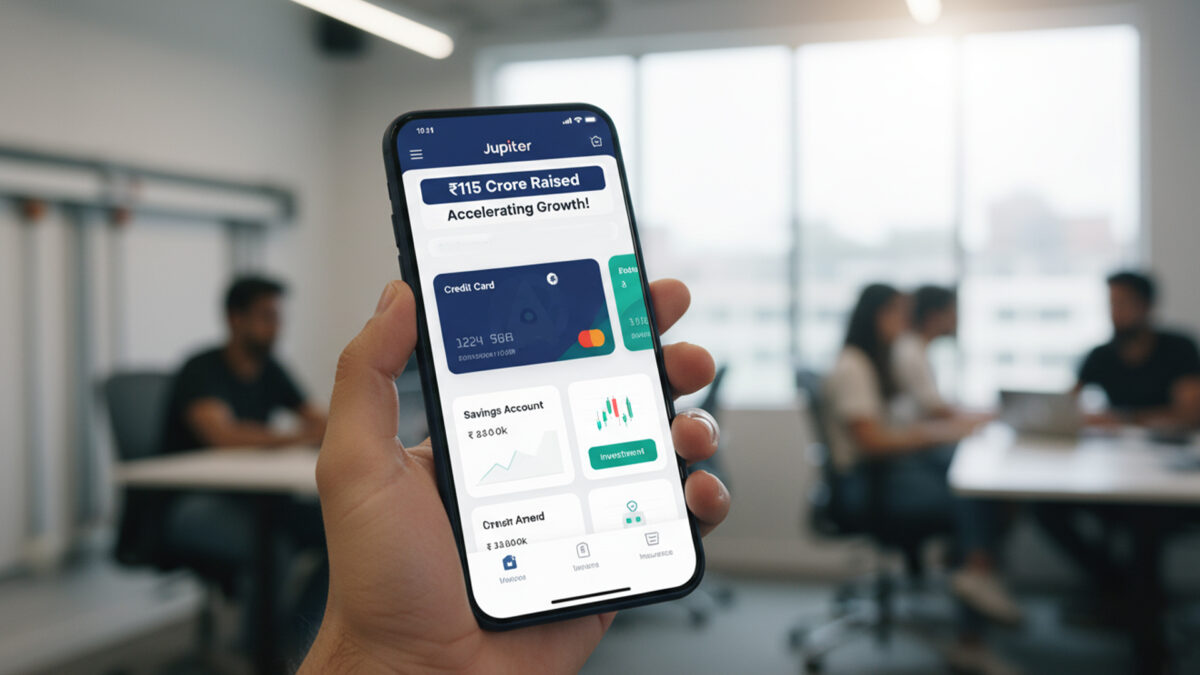
Jupiter Money Raises ₹115 Crore From Existing Investors

Bengaluru-based fintech platform Jupiter Money has raised ₹115 crore in a new funding round from its existing investors Mirae Asset Venture Investments, BEENEXT and 3one4 Capital, with additional participation from founder-CEO Jitendra Gupta.

The infusion comes as Jupiter looks to scale its suite of consumer financial products—including savings accounts, credit cards, loans, investments and insurance—offered through a single mobile app.

The startup said the new capital will be deployed to strengthen its technology infrastructure, broaden its omni-channel presence and accelerate product roll-outs, including deeper moves into lending and insurance distribution.

Jupiter reported that it now serves more than three million customers, with nearly 60 % of them actively engaging across multiple products on the platform.

The company also said its revenue grew more than 2.2 times in the last financial year and that over a quarter of active users now use two or more of its offerings—a metric it cited as evidence of rising ‘stickiness’.

Management outlined an aggressive but measured growth plan: the company is targeting operational breakeven within 24 months while setting a goal to double its user base over the next two to two-and-a-half years.

Jupiter said it plans to leverage artificial intelligence to improve cost-efficiency and deliver more personalised financial recommendations—moves designed to lift unit economics as scale increases.

Jupiter’s funding history and investor roster have attracted attention in recent years; the startup has raised over US$160 million to date from global and domestic backers and has built partnerships with licensed banks for regulated product distribution.

Its co-branded credit-card with CSB Bank and its account aggregator capabilities were singled out by the company as high engagement products, with the card business and account-aggregator flows cited as engines for transaction volume and data-driven cross-sell.

Analysts and market observers say the fresh round—largely anchored by existing investors—signals continued faith in Jupiter’s strategy to move beyond a single product and become a broader “money app” for younger, digitally-native customers.

The participation of established financial investors such as Mirae Asset also underscores the appeal of fintech platforms that combine deposit-related products with lending and insurance distribution under one roof.

As fintechs in India face heightened scrutiny around unit economics and regulatory compliance, Jupiter’s stated focus on both revenue growth and a clear timeline to profitability will be watched closely by investors and competitors alike.

The startup said the latest cash will give it room to invest in product development and customer acquisition while working to improve margins as the business scales.

Investor enthusiasm notwithstanding, Jupiter enters a competitive market in which sustained growth and operational discipline will be critical.

With the new capital backing its next phase, the platform appears well-positioned to execute, but much will depend on how effectively it converts product adoption into profitable lifetime value.

Also Read: Air India Faces ₹4,000 Crore Hit from Pakistan Airspace Closure: CEO

Categories
Corporate

Air India Faces ₹4,000 Crore Hit from Pakistan Airspace Closure: CEO

Air India (AI) is facing an estimated ₹4,000 crore hit as a result of the ongoing closure of Pakistan’s airspace to Indian carriers, CEO Campbell Wilson has disclosed.

The restriction, which has forced long-haul flights to reroute and incur elevated fuel and crew costs, is among a series of unprecedented shocks the airline is navigating in a challenging year.

Speaking at the Aviation India & South Asia 2025 conference in New Delhi on Wednesday, Wilson described the ₹4,000 crore impact as “a big sum in anyone’s book,” remarking that the development “literally came out of the blue.”

He noted that the airline had earlier quoted a higher figure of roughly ₹5,000 crore to the aviation ministry in May, but this was based on preliminary estimates.

Since then, mitigation efforts such as route adjustments have helped curb some of the losses.

The disruption stems from Pakistan closing its airspace to Indian airlines beginning in June 2025, following escalating military tensions between the two countries.

The restriction has forced Air India to reroute flights to Europe and North America through longer trajectories, leading to increased fuel consumption, extended flight times, and higher crew expenses.

Long-haul international routes account for a substantial portion of Air India’s operations — around 60 percent of its flights — making the impact particularly acute.

Wilson said that in addition to the airspace closure the airline has been dealing with a series of external headwinds, which he characterised as “almost Black Swan events.”

These include the catastrophic crash of a Boeing 787 aircraft in June from Ahmedabad, supply-chain pressures delaying aircraft deliveries, and other geopolitical shocks such as Middle East airspace closures and export constraints.

While Air India’s parent, Tata Sons Ltd., reported revenue growth of 15 percent to ₹78,636 crore for the year ended March 31 2025, losses widened to ₹10,859 crore as operational pressures mounted.

The airline’s five-year transformation plan, Vihaan.AI, is now facing sharper turbulence amid these external shocks.

In his remarks, Wilson acknowledged that the airline’s competitive environment is being reshaped by factors outside its core control.

He emphasized the need for realistic planning around bilateral flying rights and warned that overly liberalised access could undermine Indian carriers’ investments in wide-body aircraft and network expansion — a strategic priority for Air India.

Despite the sizable setback, Wilson expressed resolve to stay the course on Air India’s recovery and modernization agenda, stating that the airline remains committed to safety, customer experience and operational resilience.

However, he added that 2025 would be remembered as “a challenging year,” where global instability and geopolitical disruptions weighed on growth.

The estimated ₹4,000 crore loss highlights the vulnerability of aviation business models to external geopolitical events, especially for carriers heavily exposed to international long-haul markets.

As Air India grapples with diverted routes, cost escalation and disrupted margins, the airline’s future profitability and transformation path will remain under close investor and regulator scrutiny.

Also Read: Hero MotoCorp Enters France in Partnership With GD France

Categories
Corporate

NVIDIA Becomes First $5 Trillion Company Amid AI Surge

NVIDIA Corporation has made history, becoming the first publicly traded company ever to surpass a market capitalization of $5 trillion, a landmark achievement driven by the global surge in demand for artificial intelligence (AI) hardware and infrastructure.

The milestone was reached on Wednesday, October 29, 2025, when NVIDIA’s shares climbed to $207.86, pushing the valuation to approximately $5.05 trillion.

The achievement came just months after the company crossed the $4-trillion threshold, underscoring an accelerated ascent tied closely to the AI revolution.

At the center of NVIDIA’s meteoric rise are its AI-specific chips — including the H100 and Blackwell series — which power everything from large language models to autonomous systems and GPU-centric data centers.

CEO Jensen Huang has overseen a remarkable transformation of the company’s identity: from a niche graphics-processor designer into the backbone of the global AI industry.

NVIDIA recently disclosed more than $500 billion in outstanding AI-chip orders and announced plans to build seven supercomputers for the U.S. government.

The company’s valuation now exceeds the gross domestic product of major economies such as the United Kingdom, India, and Japan.

Analysts are calling the milestone a watershed moment in technology history, likening the rise of AI computing to the mobile-internet wave ushered in by the original iPhone. This shift represents a broader transformation in how technology is shaping global capital markets, with AI seen as the next major computing platform.

Despite its record-breaking valuation, NVIDIA’s rapid growth has drawn caution from regulators and market analysts.

Financial institutions have warned of potential overvaluation risks in the tech and AI sector, citing concerns over speculative enthusiasm and concentrated capital flows.

Geopolitical dynamics have also heightened attention on NVIDIA’s global role. The company’s dominance in AI infrastructure has positioned it at the center of the U.S.–China technology rivalry. U.S. export controls on NVIDIA’s advanced chips to China have highlighted the firm’s strategic importance, while also introducing uncertainties tied to trade and supply-chain policy.

President Donald Trump recently praised CEO Jensen Huang, suggesting potential policy revisions to ease restrictions on chip exports.

The remarks underscore how NVIDIA’s leadership in AI hardware is now entwined with national industrial and trade strategies.

NVIDIA’s rise to the $5 trillion mark marks more than just a financial benchmark — it signals the elevation of AI as the defining force in technology and the economy.

Whether the company can sustain this momentum, and whether the AI boom translates into long-term productivity gains beyond investor optimism, remains a key question for markets and policymakers alike.

Also Read: IOC Says ‘Absolutely Not’ to Halting Russian Oil Imports

Categories
Corporate

Adani Power Reports Strong Profitability in Q2 FY26, Adds 4.5 GW of New PPAs

Adani Power Limited (APL), a key player in India’s energy landscape and part of the Adani portfolio of companies, announced a robust set of results for the second quarter of FY26, marked by higher sales volumes, stable earnings, and continued capacity expansion. 

The company’s ability to deliver consistent performance despite volatile market conditions reinforces its leadership and operational strength in India’s power sector.

During Q2 FY26, Adani Power achieved a 7.4% year-on-year increase (YoY) in consolidated power sales to 23.7 billion units (BU), overcoming a challenging environment caused by early and prolonged monsoons that tempered power demand growth. 

Total revenue rose to ₹14,308 crore, up from ₹14,063 crore in Q2 FY25, supported by efficient operations and expanded capacity, despite lower merchant tariffs and subdued import coal prices. 

EBITDA remained stable at ₹6,001 crore, while the company delivered a strong Profit After Tax (PAT) of ₹2,906 crore, underscoring its financial resilience.

In a major growth milestone, Adani Power secured 4.5 GW of new long-term Power Purchase Agreements (PPAs) — 2,400 MW with Bihar DISCOM, 1,600 MW with Madhya Pradesh DISCOM and 570 MW with Karnataka DISCOM (by October 2025). 

Additionally, the acquisition of 600 MW Vidarbha Industries Power Limited through the Corporate Insolvency Resolution Process has taken APL’s total operational capacity to 18,150 MW, strengthening its national footprint.

For the first half of FY26, Adani Power’s total sales stood at 48.3 BU, up 4.4% year-on-year, with revenue at ₹28,882 crore and PAT at ₹6,212 crore, reaffirming the company’s steady trajectory.

Commenting on the results, S. B. Khyalia, CEO, Adani Power Limited, said, “Adani Power has once again demonstrated robust and stable financial performance this quarter, highlighting our operational efficiency and strategic discipline. With 4.5 GW of new PPAs and a clear roadmap to expand to 42 GW by FY32, we are accelerating towards our goal of powering India’s growth sustainably and reliably.”

Despite slower all-India demand growth of just 3.2% in Q2 FY26 due to weather anomalies, Adani Power’s consistent operational performance and disciplined expansion strategy continue to position it at the forefront of India’s energy transformation.

Also Read: Jindal Steel Names Gautam Malhotra CEO After Disappointing Q2

Categories
Corporate

IntrCity SmartBus Secures ₹250 Crore in Series D Funding

Tech-enabled intercity bus-network platform IntrCity SmartBus announced on October 30 that it has raised ₹250 crore (approximately US$28 million) in a Series D funding round led by venture-capital firm A91 Partners.

Founded in 2019 by Kapil Raizada and Manish Rathi, IntrCity SmartBus operates as the bus arm of ticketing and travel platform RailYatri and follows an asset-light model to provide standardized intercity travel with real-time tracking and IoT-enabled fleet monitoring.

The fresh capital injection will be directed toward improving customer experience, upgrading fleet-management technology, and expanding operations into Tier-2 and Tier-3 cities across India, the company said.

Raizada commented that the investment “enables us to further double down on our vision to transform the bus-travel landscape in India,” and added that the company is projected to maintain year-on-year growth of roughly 50 percent.

IntrCity currently operates more than 630 routes across 15 states and competes in a rapidly expanding intercity mobility market.

With the new funds, the company plans to double its fleet and target a turnover of approximately ₹1,000 crore by next year.

A91 Partners General Partner Gautam Mago said in a statement that the investment reflects the firm’s conviction in IntrCity’s ability to become “a category-defining leader in intercity mobility” owing to the brand’s pan-India reach, operational consistency, and focus on customer service.

Industry watchers note that India’s intercity bus travel market is estimated at over US$30 billion and is expected to grow at a compound annual rate of 10–13 percent over the next few years, driven by improved highways, rising commuter demand, and the expansion of tech-driven booking platforms.

While the new funding positions IntrCity SmartBus for aggressive expansion, the company also highlighted that infrastructure constraints—such as inadequate bus-terminal facilities—remain a challenge.

Raizada noted that despite better vehicle connectivity, poor passenger amenities and lack of dedicated bus ports hamper broader adoption. He called for public investment in “bus-ports” similar to airports to enhance the attractiveness of road travel.

The funding round brings IntrCity’s total capital raised to about US$80 million, according to industry estimates.

As the startup looks to scale, its focus will likely include deeper penetration into smaller cities, enhancing dynamic-routing capabilities, and strengthening partnerships with operator-partners to improve asset utilization and service reliability.

Also Read: Hero MotoCorp Enters France in Partnership With GD France

Categories
Corporate

Hero MotoCorp Enters France in Partnership With GD France

India’s largest two-wheeler manufacturer, Hero MotoCorp, on Wednesday announced its official launch in France, marking its 52nd international market.

The entry is being executed through a strategic distribution partnership with French firm GD France, and kicks off with the debut of the Euro 5+-compliant model, the Hunk 440.

The French debut took place at the U.T.A.C. Mortefontaine testing facility near Paris, with Hero showcasing the Hunk 440 alongside dealer and industry-representative sessions.

The Hunk 440, positioned in the A2 licence category common in Europe, boasts a 440-cc engine generating 27 bhp and 36 Nm of torque, dual-channel ABS, USD KYB front forks, a full-digital TFT display with navigation capability, and LED lighting.

It will be offered in two color variants — Twilight Blue and Phantom Black — at a starting price of €3,599 (including VAT).

According to Hero’s Executive Vice-President Sanjay Bhan, the French launch represents a “milestone in our journey of global expansion”, building on its presence across Italy, Spain and the UK.

GD France’s CEO Ghislain Guiot remarked that the partnership is designed to provide French riders a “unique combination of technology and value” underpinned by a robust after-sales network.

In France, the distribution arrangement between Hero and GD France includes the establishment of more than 30 sales and service outlets initially, with a plan to expand to over 50 dealerships by 2026 and full network deployment by 2028.

Hero is also offering an extended promotional warranty: a standard three-year warranty plus an additional two years under a launch offer, effectively giving up to five years of warranty coverage for customers in the French market.

The move into France is part of Hero’s broader strategy to strengthen its foothold in European markets.

Analysts note that by entering developed markets with Euro 5+-compliant machines and a clearly defined dealer-network strategy, the company is aiming to shift its narrative from value-focused commuter bikes into more performance-oriented segments.

While the French market entry focuses on one model initially, the expectation is that Hero will gradually expand its range and deepen its presence.

From Hero’s perspective, the expansion into France comes at a time when growth in its traditional domestic markets is being tempered by cost pressures and intense competition.

Penetrating Europe offers not only higher margin opportunities but also brand-elevation potential. For GD France, the alliance gives them access to a global two-wheeler leader looking to scale in developed markets.

Also Read: Coal India Q2 Net Profit Falls About 30% to ₹4,263 Crore

Categories
Corporate

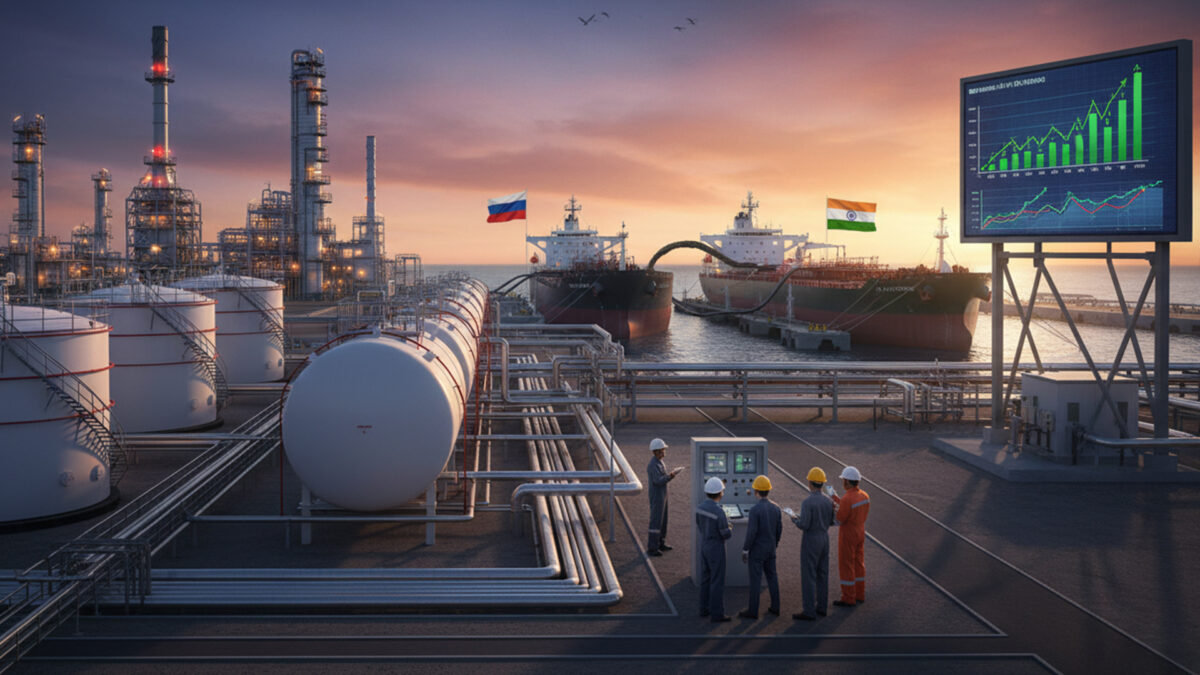
IOC Says ‘Absolutely Not’ to Halting Russian Oil Imports

India’s state-run refiner Indian Oil Corporation Ltd (IOC) has affirmed that it will “absolutely not” stop importing Russian crude oil provided it stays within the boundaries of international sanctions.

The comments come amid renewed U.S. and European Union measures against major Russian oil entities.

Anuj Jain, IOC’s Director (Finance), told analysts on October 28 that the company remains open to purchasing Russian-sourced crude “as long as we are complying with the sanctions. Russian crude is not sanctioned. It is the entities and the shipping lines which have got sanctions.”

He added, “If somebody comes to me with a non-sanctioned entity, and the price cap is being complied with and the shipping is okay, then I will continue to buy it,” according to news agency Reuters.

The firm emphasized that while it remains committed to abiding by all international sanctions, it continues to view Russian crude as a viable source.

IOC Chairman Arvinder Singh Sahney echoed that stance, noting that the company “will abide by all sanctions imposed by the international community.”

New U.S. sanctions, effective from October 22, targeted Russian oil giants Rosneft and Lukoil as part of the West’s effort to pressure Moscow over its invasion of Ukraine.

The European Union also imposed transaction bans on Rosneft, along with restrictions on other Russian oil entities, according to S&P Global Commodity Insights.

Indian refiners had anticipated that these sanctions could prompt some scaling back of Russian crude purchases.

However, because the sanctions are primarily targeted at certain entities and shipping channels—and not a blanket ban on Russian oil itself—IOC is leveraging that distinction to continue imports.

The company said Russian supplies currently account for about 19 to 20 percent of its overall crude oil import basket.

The decision reflects India’s broader strategy of balancing its energy security interests with the need to remain sanction-compliant. Officials say India has adequate supply alternatives but views discounted Russian barrels—often priced several dollars below global benchmarks—as economically attractive.

Analysts at S&P Global Commodity Insights observed that a complete halt by IOC appears unlikely in the short term unless the U.S. escalates measures to include broader trade penalties for oil-importing countries.

They point out that Indian compliance with U.S. sanctions has historically been high and that the Indian government may seek exemptions rather than risk secondary sanctions.

India’s Petroleum and Natural Gas Minister Hardeep Singh Puri has reiterated that the country is not concerned about crude-oil availability, noting that global supplies remain sufficient to meet domestic and export growth.

While some Indian refiners are reviewing their Russian crude exposure or temporarily pausing new orders as they assess compliance risks, IOC’s public position signals that Russian barrels will remain part of its sourcing mix—for now.

Whether this approach will withstand further international pressure—and how it will affect India’s relations with Western partners—remains a matter closely watched by industry and policy-makers alike.

Also Read: Eli Lilly, NVIDIA Partner to Build AI Supercomputer for Drug Discovery

Categories
Corporate

QatarEnergy Inks 17-Year LNG Supply Agreement With Gujarat’s GSPC

In a significant boost to India’s energy security, Qatar’s national energy company QatarEnergy has signed a 17-year sales and purchase agreement (SPA) with India’s Gujarat State Petroleum Corporation (GSPC) for the supply of up to 1 million tonnes per annum (MTPA) of liquefied natural gas (LNG). 

According to the terms of the deal, LNG supplies will begin in 2026 and will be delivered ex-ship to various import terminals in India. 

QatarEnergy’s President & CEO, Saad Sherida Al Kaabi, described the agreement as an extension of a longstanding partnership between the two entities.

He said in a statement that the long-term SPA “highlights our continued commitment to supporting India’s growing energy needs” and reinforces QatarEnergy’s role in delivering safe and reliable LNG supplies to India. 

The agreement builds on an earlier long-term deal between the two firms signed in 2019, reflecting growing collaboration between QatarEnergy and GSPC. 

From an Indian perspective, the deal comes at a pivotal time as India accelerates its efforts to expand LNG import capacity and diversify its energy mix in line with its net-zero ambition for 2070. 

Energy analysts say this arrangement helps India further strengthen its supply chain for natural gas — an increasingly important fuel as the country transitions away from coal and oil toward cleaner alternatives.

For QatarEnergy, the deal opens up a long-term dependable market in India, the world’s third-largest LNG importer, and underlines the Gulf state’s strategic role in global LNG trade.

The five-year gap between signing and commencement (i.e., from 2026) aligns with India’s infrastructure expansion timeline, including development of new LNG import terminals. 

Market commentators note that the 1 MTPA annual volume is modest compared to India’s overall LNG imports, but the duration and reliability of the contract carry strategic value. 

With global LNG supply more contested and long-term contracts less common than in past decades, this agreement signals both companies’ willingness to lock in long-term partnerships in a shifting energy landscape.

The ex-ship delivery mechanism means that QatarEnergy bears responsibility for shipping the cargoes to India’s terminals, reducing GSPC’s logistical burden. 

The timing of the deal is also notable given India’s push to raise natural gas’ share in its overall energy consumption. The country currently has eight operational LNG import terminals with a combined capacity of about 52.7 MTPA, and aims to add more capacity by 2030. 

For India’s state-owned GSPC, this supply contract provides a stable long-term feedstock for its growing downstream and trading ambitions, and strengthens its position in the domestic gas market.

Also Read: Eli Lilly, NVIDIA Partner to Build AI Supercomputer for Drug Discovery

Categories
Corporate

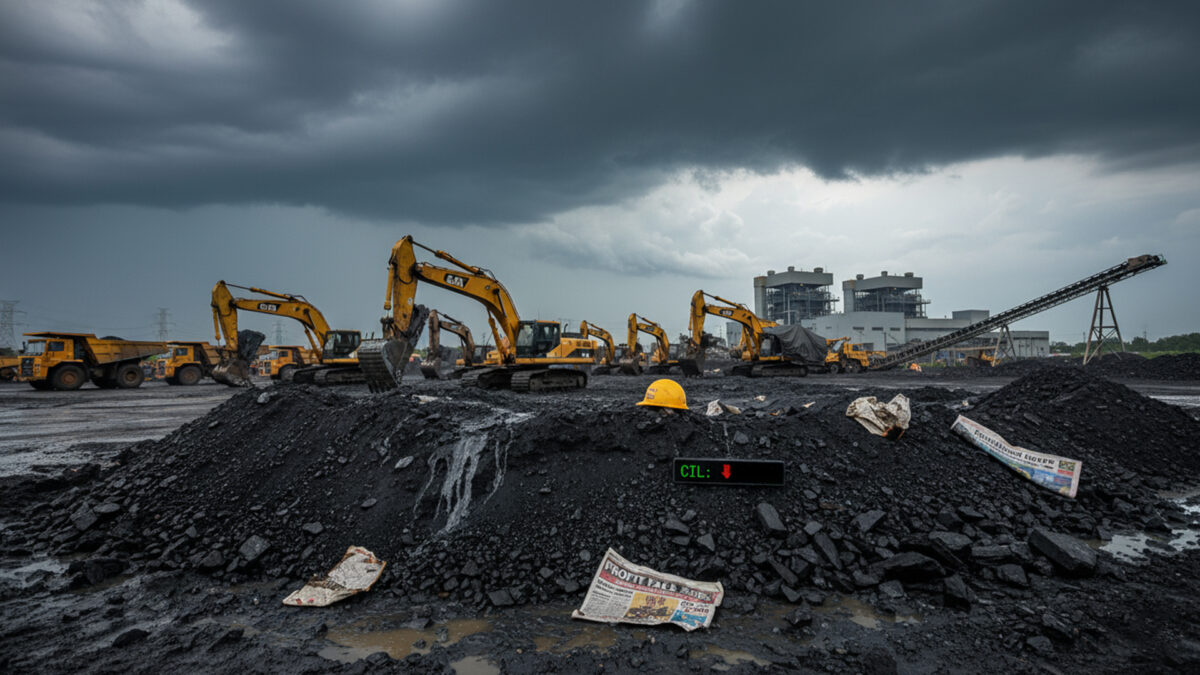
Coal India Q2 Net Profit Falls About 30% to ₹4,263 Crore

India’s largest coal producer, Coal India Limited (CIL), on Wednesday reported a substantial year-on-year decline in its consolidated net profit for the quarter ended September 30, 2025 (Q2 FY26).

The company posted a profit of ₹4,262.64 crore, down by roughly 32% from ₹6,274.80 crore in the same period a year ago. 

Revenue from operations also slipped, coming in at around ₹30,186.70 crore, representing a year-on-year drop of about 3.2%. 

The company’s total expenses rose by about 7% to ₹26,421.86 crore from ₹24,670.70 crore in Q2 FY25. 

CIL attributed the weaker performance to a combination of factors: subdued demand, heavier rainfall disrupting operations and lower realisations in its e-auction/business mix.

The company’s production in September declined by about 3.9% to 48.97 million tonnes from 50.94 million tonnes a year earlier, as monsoon-time rains hampered mining operations. 

The decline in revenue and rising input and operational costs squeezed margins, with the earnings-before-interest-tax-depreciation-and-amortisation (EBITDA) margin contracting to 22.25% from 27.63% the prior year. 

Despite the weaker earnings, the board approved a second interim dividend of ₹10.25 per equity share (face value ₹10) for FY26, with a record date set at November 4 and the payment scheduled by November 28. 

Analysts noted that CIL’s results point to heightened headwinds in the domestic coal sector.

With thermal power plants drawing down inventories and limiting new purchases, coal offtake slowed.

Additionally, the mining major’s realisation in certain channels fell and its cost structure faced pressure from elevated fuel, logistics and labour costs. 

Shares of Coal India reacted negatively to the results, falling over 2% in intraday trading following the announcement. 

Looking ahead, CIL has set an ambitious annual production target of 875 million tonnes and dispatch target of 900 million tonnes for FY26, even as it grapples with near-term softness in demand and margin pressures. 

Also Read: Eli Lilly, NVIDIA Partner to Build AI Supercomputer for Drug Discovery