Categories
Beyond

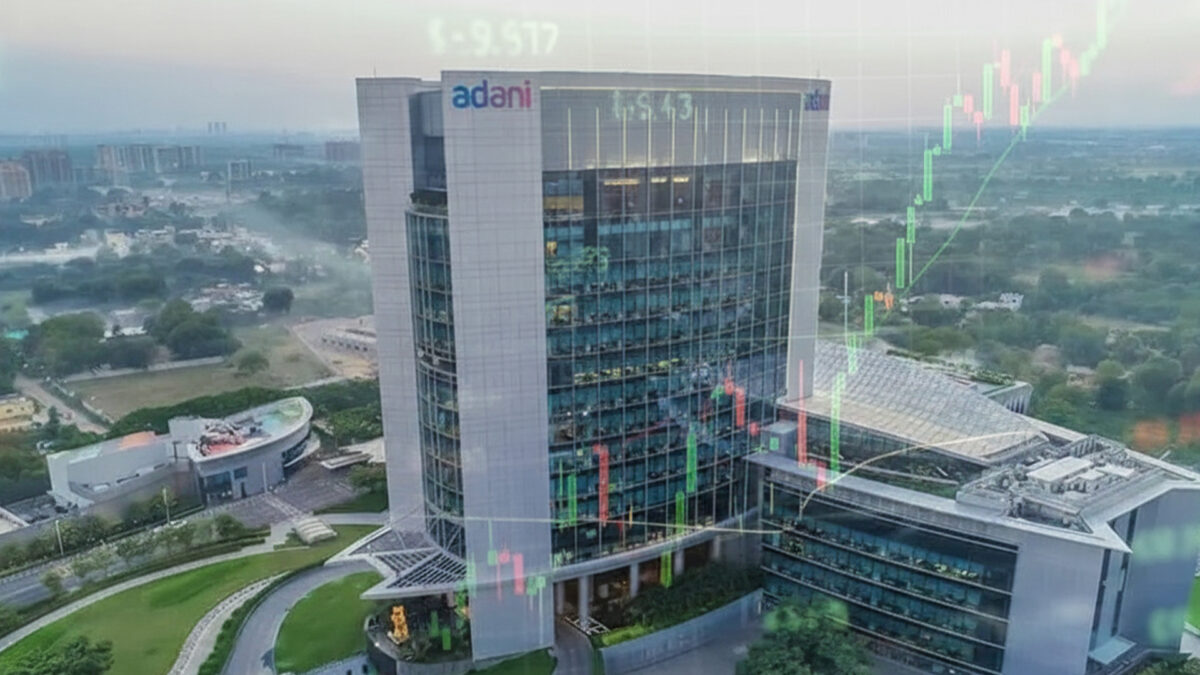
Adani Stocks Rises ₹66,000 Crore After SEBI Clears Charges

Shares of the Adani Group witnessed a strong rise on Friday, September 19, 2025, collectively adding around ₹66,000 crore to their market capitalization. This surge came in response to the Securities and Exchange Board of India (SEBI) dismissing significant allegations leveled by the U.S.-based short-seller Hindenburg Research against the conglomerate.

Leading the gains was Adani Power, which jumped 12.4% to close at its highest level since August 2024, buoyed further by the announcement of a forthcoming stock split. Other major group companies, including Adani Total Gas, Adani Enterprises, and Adani Green Energy, also saw notable increases, pushing the group’s total market value to roughly ₹13.96 lakh crore.

SEBI’s order cleared the group of key charges related to stock manipulation and questionable related-party transactions, restoring some investor confidence that had been shaken by the Hindenburg report. Analysts now believe the ruling may pave the way for a re-rating of Adani stocks, particularly encouraging foreign investors who had been cautious.

Gautam Adani welcomed the SEBI decision, urging an apology from those who propagated what he called “false narratives” based on Hindenburg’s “fraudulent and motivated” report. He reiterated the group’s commitment to transparency and integrity.

However, SEBI’s investigations are ongoing, with over a dozen other allegations still under review. These include potential violations of securities laws and shareholder misclassification, meaning further regulatory scrutiny remains possible.

Despite the positive momentum, some group firms are still recovering from the Hindenburg-triggered selloff. Adani Enterprises, for example, remains 28% below its pre-Hindenburg levels, while other companies continue to trade 20-80% lower. In contrast, Adani Power, Adani Ports, and Ambuja Cement have already surpassed previous losses, showing substantial rebounds.

The market’s favorable response to SEBI’s ruling signals a possible turning point for the Adani Group, as it seeks to rebuild investor trust and navigate ongoing regulatory challenges.

Also Read: SEBI Clears Adani of Hindenburg Allegations; Group Stocks Jump

Categories
Beyond

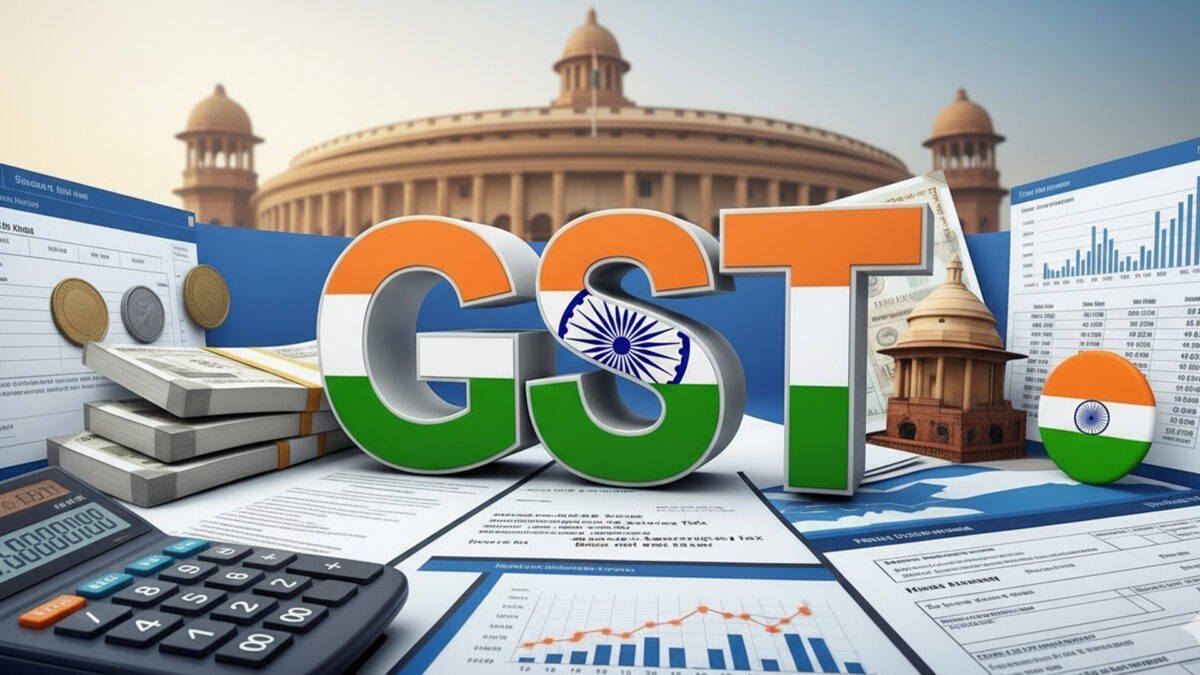
GST 2.0 Reforms to Put ₹2 Lakh Crore Back in People’s Hands: Sitharaman

Union Finance Minister Nirmala Sitharaman has said that the sweeping Goods and Services Tax reforms that come into effect from September 22, 2025 will leave about ₹2 lakh crore more in the hands of Indian households, boosting domestic consumption significantly. Speaking at the 80th anniversary of the Tamil Nadu Foodgrains Merchants Association in Madurai, she emphasized that the simplification from the earlier four tax slabs to two—5% and 18%—is meant to ensure that the poor, middle-class families, and MSMEs benefit most from the changes.

Sitharaman explained that the new “GST 2.0” structure will move almost all items taxed at 12% into the 5% category, and a large portion of those taxed at 28% into the 18% slab. Essential items such as everyday household goods, certain foods, and agricultural inputs will see sharp reductions in tax rates, while the higher slab will apply to standard goods. There will also be a 40% rate reserved for luxury and “sin” goods—such as tobacco, pan masala and aerated drinks—but the implementation of that higher rate for some of these items will be phased.

She said that because of the two-slab structure, many goods consumers buy regularly will become cheaper, encouraging greater spending. Industries are expected to respond by increasing production, thereby creating more jobs and expanding the tax base. Sitharaman pointed out that entrepreneur registrations under GST have risen sharply since 2017: from about 65 lakh to 1.51 crore, which she says reflects growing participation in the formal economy.

The government is also easing procedural burdens: registration and return filing processes will be simplified, refunds sped up, and compliance for MSMEs reduced. These reforms follow decisions taken at the 56th GST Council meeting, and official notifications have been issued to operationalize the changes.

Critics, however, have questioned why the rate-cuts have taken eight years to implement and whether the benefits will reach all categories of consumers equally. Some business analysts warn that while the tax burden will fall on many products, certain goods still in higher slabs or under the luxury/sin category may not see relief, and the timing of adjustments will matter for low income households.

Overall, the government’s claim is that GST 2.0 will stimulate demand, improve affordability, and ensure that taxation is simpler, fairer, and more inclusive, especially for those who were previously bearing heavier indirect tax burdens.

Also Read: Vodafone Idea Shares Surge 9% as Supreme Court Defers Hearing on Rs 9,450-Crore AGR Demand

Categories
Beyond

IndiaAI Mission Backs IIT Bombay-Led BharatGen and 7 Others with ₹988.6 Cr

India has taken a significant leap in its quest for AI self-reliance with the government approving ₹988.6 crore in funding for BharatGen, a consortium led by IIT Bombay, to develop a groundbreaking trillion-parameter multilingual AI model. This move, part of the flagship IndiaAI Mission, underscores the country’s commitment to building advanced, sovereign AI technologies that cater specifically to India’s diverse linguistic and cultural landscape, while positioning the nation as a global player in artificial intelligence innovation.

Announced by Union IT Minister Ashwini Vaishnaw at the AI Impact Summit 2026 in New Delhi, the funding marks the largest allocation under the IndiaAI Innovation Centre’s mandate to foster cutting-edge AI development across the country.

“With BharatGen, India is building its sovereign AI capabilities to serve our linguistic, cultural, and governance needs at a global scale,” said Vaishnaw.

BharatGen is among eight organisations chosen by the Ministry of Electronics and Information Technology (MeitY) to develop large language models (LLMs) and multimodal AI systems under the flagship initiatives of the IndiaAI Mission. The selected entities—IIT Bombay Consortium (BharatGen), Tech Mahindra, Fractal Analytics, Avataar AI, Zeinteiq Aitech Innovations, Genloop Intelligence, NeuroDX (Intellihealth), and Shodh AI—will be responsible for creating foundational AI models aimed at driving innovation across critical sectors such as governance, education, healthcare, agriculture, and more.

BharatGen aims to build one of the world’s largest AI models — with over one trillion parameters — alongside smaller, domain-specific and language-inclusive models tailored to India’s diverse linguistic and cultural landscape. These tools will also support speech-to-text, text-to-speech, and vision-language applications for low-resource Indian languages.

To support the development of such large-scale models, the government is also investing in public compute infrastructure, including GPU clusters and high-performance cloud access. Additionally, a responsible AI governance framework is being formulated jointly by MeitY and the Office of the Principal Scientific Adviser to ensure safe and ethical deployment of AI systems.

The announcement follows previous rounds of IndiaAI funding, which saw startups like Sarvam AI, SoketAI, Gnani.ai, and Gan AI selected to build models focused on specific domains and regional languages.

With BharatGen and the broader IndiaAI Mission, India is taking a strategic leap toward building a self-reliant AI ecosystem, blending open innovation, academic leadership, and private sector expertise.

Also Read: Hind Rectifiers Strengthens European Presence with BeLink Solutions Acquisition

Categories
Beyond

EPFO Launches ‘Passbook Lite’ and Single-Login Portal to Simplify Member Access

In a major digital upgrade, the Employees’ Provident Fund Organisation (EPFO) has launched a new facility called ‘Passbook Lite’, aimed at making it easier for members to access and track their provident fund (PF) details. This comes alongside the rollout of a single-login portal, streamlining access to various services for over 29 crore EPFO subscribers.

The newly launched ‘Passbook Lite’ offers a simplified, mobile-friendly summary of a member’s provident fund account, including current balance, contribution history, and withdrawal details. Unlike the existing detailed passbook system, this lighter version is accessible directly through the Member Sewa Portal, doing away with the need for separate logins to the older passbook portal.

EPFO officials say the move is part of their broader push to improve digital accessibility and reduce the time it takes for members to retrieve essential information.

In another key update, members can now directly download Annexure K, a critical document required when transferring PF accounts between employers. Previously available only through field offices or by request, the online availability of this document is expected to streamline the transfer process and reduce delays during job changes.

In a bid to cut red tape and reduce processing time, EPFO has also delegated more powers to local field offices, allowing them to approve certain PF operations that earlier required higher-level authorization. By decentralizing these processes, EPFO aims to significantly reduce turnaround time for claim settlements, fund transfers, and account verifications.

These digital upgrades come as part of EPFO’s ongoing effort to modernize its service ecosystem and bring member services in line with contemporary digital standards. With over 29 crore subscribers, the EPFO’s renewed focus on user-centric reforms is seen as a much-needed shift to cater to the growing demand for faster, transparent, and more accessible services.

Officials also hinted at more tech-based improvements in the pipeline, including enhanced mobile app functionality and integration of AI-driven help systems to further support users.

Also Read: Hind Rectifiers Strengthens European Presence with BeLink Solutions Acquisition

Categories
Beyond

Sensex, Nifty Slip in Early Trade, Profit-Taking Weighs on TCS, ICICI

India’s major equity benchmarks declined early Friday amid profit‐taking in blue-chip names following a three-day rally. As of 10:25 a.m. IST, the BSE Sensex was down to 82,641.38, and the NSE Nifty 50 stood at 25,323.70.

Among Sensex constituents, Tata Consultancy Services, Titan, ICICI Bank, Power Grid, Mahindra & Mahindra, and HCL Technologies were among the biggest drags, posting notable losses. On the upside, Adani Ports, Bharat Electronics, Larsen & Toubro and NTPC saw gains. All Adani group stocks were trading higher in the morning session.

Adani group’s surge came after SEBI cleared the group and its chairman Gautam Adani of significant stock manipulation allegations put forth by Hindenburg Research. Adani Total Gas jumped about 13.3%, Adani Power gained nearly 8.9%, Adani Green Energy rose roughly 5.5%, and Adani Enterprises increased about 5.2%.

In regional markets, Japan’s Nikkei 225 and Hong Kong’s Hang Seng reported modest gains, while South Korea’s Kospi and Shanghai’s SSE Composite were lower. U.S. markets, meanwhile, had closed higher the previous day.

Among commodities, Brent crude oil dipped slightly, trading near US $67.34 per barrel. Foreign institutional investors bought equities worth approximately ₹366.69 crore in the preceding session.

On Thursday, the Sensex had closed up 320.25 points, or 0.39%, at 83,013.96, and the Nifty had gained 93.35 points, or 0.37%, to settle at 25,423.60.

Also Read: Hyundai India Approves ₹31,000 Monthly Pay Hike for Employees

Categories
Beyond

U.S. Fed Rate Cut Sparks Global Market Rally, Raises Inflation Questions

Global financial markets responded strongly to the U.S. Federal Reserve’s decision to cut interest rates by 25 basis points, a move that had been widely anticipated. The benchmark federal funds rate now stands in the range of 4.75% to 5.00%, marking the first reduction since the central bank began its tightening cycle in 2022.

Wall Street closed higher following the announcement, with the S&P 500 rising 1.2%, the Dow Jones Industrial Average gaining 0.9%, and the Nasdaq Composite adding 1.6%. Investors welcomed the cut as a signal that the Fed is prioritizing growth amid signs of cooling inflation and a slowdown in the U.S. labor market.

Asian and European markets followed suit. Japan’s Nikkei 225 advanced 1.4%, Hong Kong’s Hang Seng climbed 1.7%, and South Korea’s Kospi gained 1.2%. In Europe, the FTSE 100 rose 0.8%, while Germany’s DAX index gained 1.1%. Emerging markets also saw an uptick in investor sentiment, with India’s Sensex and Brazil’s Bovespa posting notable gains.

Currency markets reflected the shift in U.S. monetary policy, with the dollar weakening against most major currencies. The euro appreciated to $1.11, while the yen strengthened to 143 per dollar. The softer dollar supported gains in commodity markets, particularly gold, which rose to $2,420 per ounce, and oil, with Brent crude climbing above $86 per barrel.

While the Fed’s move was widely anticipated, analysts have raised concerns about its potential inflationary effects. A rate cut reduces borrowing costs, spurs consumer spending, and can boost investment, but it also carries the risk of reigniting price pressures. U.S. inflation has eased from its peak above 9% in 2022 to 3.2% in August, but remains above the Fed’s 2% target.

Federal Reserve Chair Jerome Powell, in his press conference, emphasized that the cut was a “calibrated adjustment” rather than the beginning of a large easing cycle. He noted that while inflation is trending downward, risks remain, particularly from energy markets and supply chain disruptions. Powell added that the Fed would continue to monitor incoming data closely and adjust policy as necessary.

The decision also carries significant implications for global central banks. Some, like the European Central Bank and the Bank of England, are weighing their own rate paths amid mixed signals on inflation and growth. Emerging market central banks, many of which raised rates aggressively in recent years, may find additional space to cut as U.S. monetary tightening recedes.

In the bond market, yields on U.S. Treasuries fell sharply, with the 10-year yield dropping to 3.85% from 4.05% prior to the announcement. Lower yields reflect increased demand for government debt and signal expectations of looser financial conditions ahead.

Also Read: Gameskraft CFO in ₹270 Cr Fraud; 120 Jobs Cut

Categories
Beyond

Union Finance Ministry Notifies Revised GST Rates

The Union Finance Ministry has announced new Central Goods and Services Tax (CGST) rates for goods, effective Monday, September 22, 2025. States are expected to follow suit and notify the corresponding State GST (SGST) rates on goods and services to ensure uniform implementation across the country. Under the GST framework, revenues are shared equally between the Centre and the states.

Starting September 22, GST will adopt a two-tier structure, with most goods and services falling under 5% or 18% tax rates. Ultra-luxury items will attract 40%, while tobacco and related products will remain in the 28% slab along with the applicable compensation cess. Currently, GST applies in four slabs—5%, 12%, 18%, and 28%—with additional cesses on luxury and sin goods.

With the reduction in rates, businesses are expected to pass on the benefits to consumers and ensure timely compliance. According to Rajat Mohan, Senior Partner at AMRG & Associates, the government’s clear notification provides much-needed guidance on the applicable rates for a wide range of goods. He noted that businesses now have the responsibility to update their systems, revise pricing, and implement the new rates effectively across their supply chains. He added that the reform’s success will largely depend on how transparently and efficiently industry responds to the revised tax structure.

Similarly, Saurabh Agarwal, Tax Partner at EY, highlighted that companies must align their ERP systems, pricing strategies, and supply chain operations with the updated GST rates. This alignment, he said, is crucial not only for smooth implementation but also to ensure that consumers actually benefit from the rationalized rates.

The GST Council, comprising representatives from both the Centre and the states, approved the rate reduction to ease the burden on consumers during its meeting on September 3, 2025. With the revised rates coming into effect next week, businesses nationwide are gearing up for a seamless transition to ensure compliance and proper benefit transfer to end consumers.

Also Read: Devastating Rains in Uttarakhand: 10 Missing in Chamoli, 2,500 Stranded in Mussoorie

Categories
Beyond

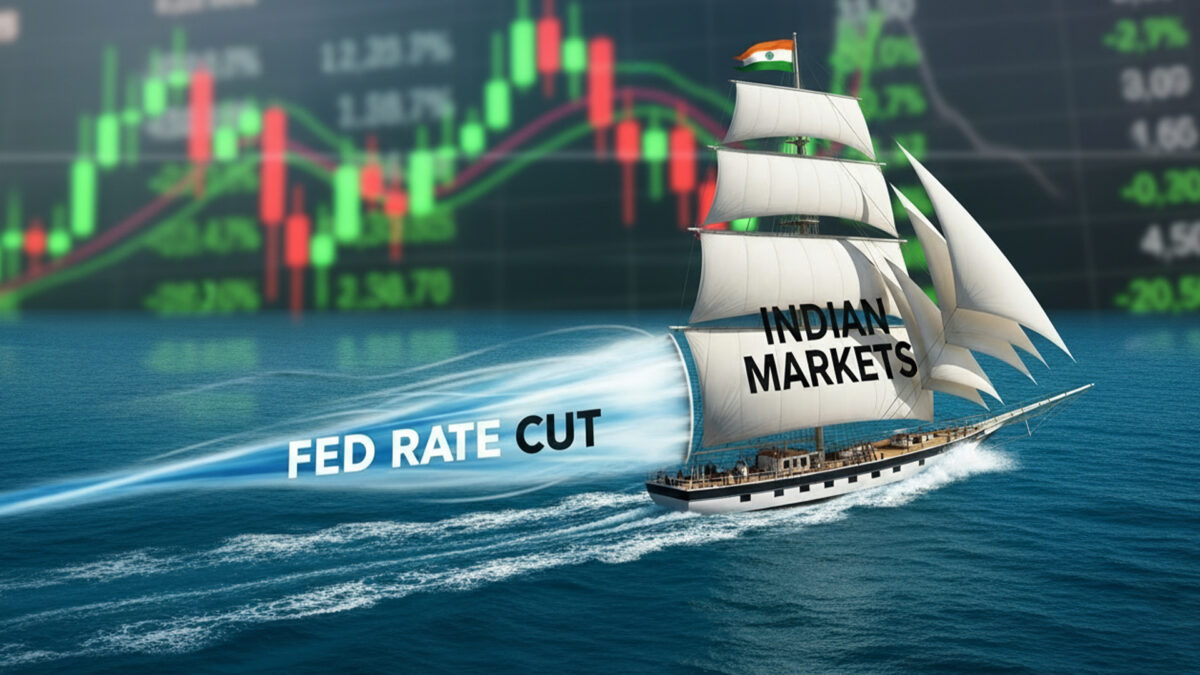
U.S. Fed Rate Cut Lifts Indian Markets as IT Stocks Lead the Rally

On September 17, 2025, the U.S. Federal Reserve lowered its benchmark interest rate by 25 basis points to a range of 4.00%–4.25 percent, marking its first cut of the year. The move, aimed at addressing signs of a slowing labour market and moderating economic growth, set off a positive reaction across global markets, with Indian equities among the biggest beneficiaries.

The rate cut was widely anticipated, but its confirmation still triggered a rally on Dalal Street. The Sensex gained over 300 points in early trade, while the Nifty 50 crossed the 25,400 mark. The Nifty IT index saw the sharpest gains, rising by nearly 1.7 percent, led by strong buying in Infosys, Wipro, LTIMindtree, and other technology heavyweights. Mid-cap and small-cap indices also firmed up, reflecting the broader bullish sentiment.

Market Implications for India

The Fed described the move as a “risk-management” measure, citing increased downside risks to employment alongside persistent inflationary pressures. It also hinted at the possibility of two more cuts before the year ends. For India, the immediate impact is likely to be in terms of improved foreign capital inflows. Lower yields in the United States make emerging markets like India relatively more attractive, particularly sectors such as IT and financial services that are closely tied to global capital cycles.

A softer dollar, which often follows a Fed rate cut, also eases pressure on the Indian rupee, curbs import-led inflation, and provides a boost to exporters. This dynamic not only strengthens investor confidence but also creates a more favourable environment for sectors that rely heavily on overseas markets. Banking and financial stocks are expected to benefit as well, since lower global borrowing costs improve liquidity and sentiment across the board.

However, analysts caution that the benefits could be temporary, as markets had largely priced in the 25 basis point cut ahead of the announcement. Structural challenges also remain. Indian IT companies, though buoyed by the prospect of greater U.S. spending, continue to grapple with subdued demand, delayed contracts, and rising cost pressures. Similarly, while the rupee stands to gain, volatility in global currencies cannot be ruled out if inflation surprises to the upside or if geopolitical risks intensify.

The Federal Reserve’s communication suggested a cautious path forward. While signalling its readiness for further easing, it maintained that inflation risks have not fully abated. This leaves investors with the possibility of future rate adjustments being more measured than aggressive. For Indian markets, the extent of gains will depend not only on global liquidity flows but also on domestic factors such as corporate earnings, inflation management, and fiscal policy moves in the run-up to the year’s end.

Looking ahead, the trajectory of U.S. monetary policy will remain a central driver for Indian equities. Should the Fed deliver additional cuts as indicated, it could reinforce positive momentum in emerging markets and spur further foreign inflows. At the same time, the Reserve Bank of India is unlikely to mirror the Fed immediately, given its own inflation management priorities. This divergence could influence currency movements and bond yields in the months ahead.

For now, the Fed’s decision has provided a clear tailwind for Indian investors, energising key sectors and lifting benchmark indices to fresh highs.

Yet the rally is tempered with caution.

Traders and policymakers alike recognize that while global liquidity is turning favourable, sustaining the momentum will require steady domestic growth, stronger consumption trends, and supportive reforms. In this delicate balance between global monetary policy and local fundamentals, India’s markets find themselves both buoyed by opportunity and tested by lingering risks.

Categories
Beyond

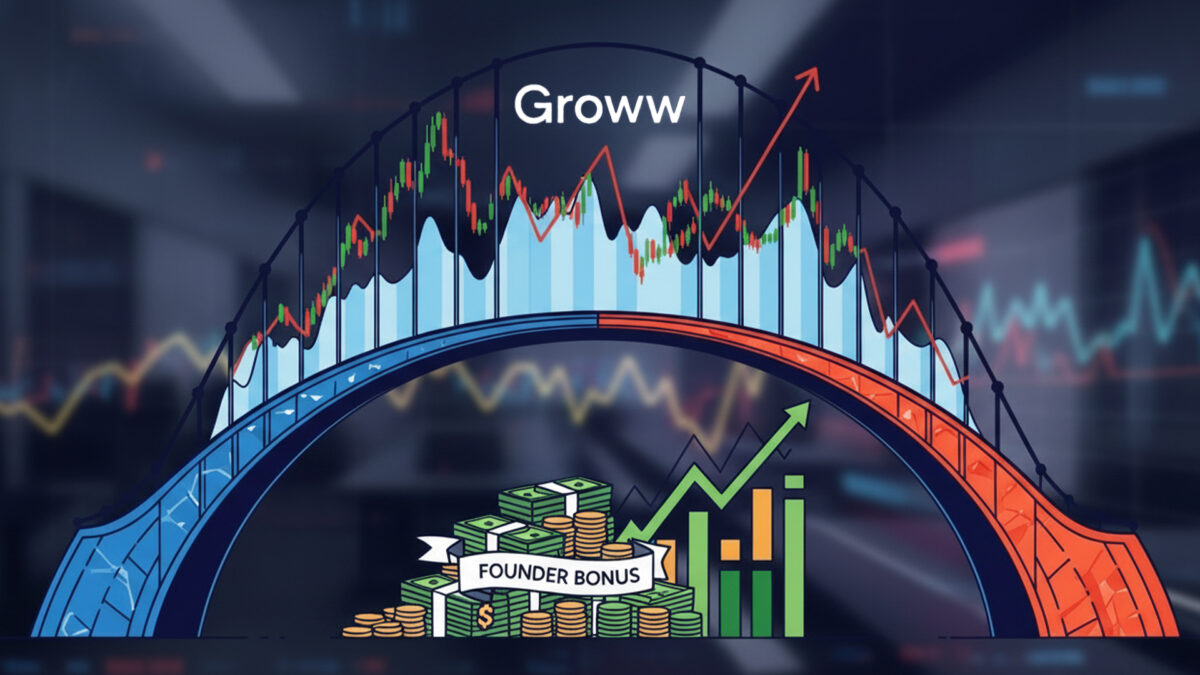
Groww Becomes First to List in India After U.S. Exit; ₹614 Cr in Bonuses

Bengaluru-based investment platform Groww is set to become the first Indian startup to go public in India after relocating its domicile from the U.S. The IPO follows a strong financial turnaround and a notable ₹614 crore in performance-linked payouts to its founding team.

According to its draft red herring prospectus (DRHP), Groww plans to raise ₹1,060 crore through a fresh issue of shares. Existing investors will sell about 574 million shares via an Offer for Sale (OFS), marking a significant exit. The four co-founders- CEO Lalit Keshre, COO Harsh Jain, CFO Ishan Bansal, and CTO Neeraj Singh- will collectively sell only about 4 million shares, less than 1% of the total, indicating their long-term commitment.

Founded in 2016 and backed by investors including Microsoft CEO Satya Nadella, Peak XV Partners, Tiger Global, and Y Combinator, Groww shifted its headquarters from Delaware to India in 2024 — a rare move among Indian startups.

Groww posted a profit of ₹1,824 crore in FY25, reversing a ₹805 crore loss in FY24. Revenue rose 45% year-on-year to ₹4,060 crore. The prior loss was mainly due to one-time costs related to the U.S.-to-India shift. The company also reported a net profit of ₹378 crore in Q1 FY26.

However, the pre-IPO period has attracted controversy due to founders receiving ₹614 crore in incentives in FY25, a sum exceeding the company’s Q1 profit. Details on performance criteria for these bonuses have not been disclosed, raising governance concerns. Groww has not responded to media queries on the matter.

Groww is among India’s largest online investment platforms, with 37.4 million demat accounts (19% market share), 12.6 million active NSE clients (26% share), 17 million active SIPs, and over 9 million mutual fund investors. It is the only Indian investment app with more than 100 million downloads.

The IPO is being led by JPMorgan Chase, Kotak Mahindra, Citigroup, Axis Bank, and Motilal Oswal. Groww’s successful listing could encourage other startups to follow suit, but the high founder payouts may invite scrutiny from investors and regulators.

Also Read: Urban Company Makes a Strong Stock Market Debut

Categories
Beyond

Rupee Strengthens to 87.81 Against Dollar Amid Fed Rate Cut Hopes

The Indian rupee opened higher on Wednesday, September 17, 2025, appreciating 28 paise to 87.81 against the U.S. dollar in early trade. The rise came as the dollar softened globally, driven by expectations of a 25-basis-point rate cut by the U.S. Federal Reserve. Investors are closely watching the Fed’s policy meeting and upcoming commentary from the Fed Chair for further guidance on interest rate direction.

At the interbank foreign exchange market, the rupee opened at 87.84 before strengthening to 87.81, building on a 7-paise gain recorded on Tuesday when it closed at 88.09 against the dollar. Analysts noted that the USD/INR pair is likely to remain volatile amid the softer dollar and the Reserve Bank of India’s monetary stance. However, they cautioned that medium-term downward pressures on the rupee may persist due to external factors and policy uncertainties.

The dollar index, which tracks the U.S. currency’s strength against a basket of major currencies, was trading slightly higher at 96.73, while Brent crude oil futures dipped 0.20% to $68.33 per barrel. Market experts highlighted that the weaker dollar environment, coupled with optimism from ongoing U.S.-India trade talks, provided additional support to the rupee. Analysts suggested that if the rupee decisively breaks below the 87.90 level, it could move toward 87.50, and potentially even 87.20 if the momentum continues. Resistance for the currency was seen around 88.20 in the near term.

On the domestic equity front, Indian benchmark indices continued their upward trajectory in early trade. The Sensex rose 262.74 points to 82,643.43, while the Nifty 50 climbed 85.25 points to 25,324.35. Foreign institutional investors were net buyers on Tuesday, purchasing equities worth ₹308.32 crore, reflecting continued overseas investor confidence.

The positive market sentiment was further bolstered by developments in U.S.-India trade relations. Talks between U.S. trade negotiator Brendan Lynch and Indian counterpart Rajesh Agrawal were described as constructive, with both sides making progress on a proposed bilateral trade framework. This comes after a period of tension in the bilateral relationship following U.S. President Donald Trump’s decision to impose higher tariffs on Indian goods, including a 50% duty on select items and an additional 25% tariff related to India’s purchase of Russian crude oil.

Also Read:Ola, Uber, and Rapido Receive Provisional Licences for Bike Taxi Services in Mumbai