Categories
Beyond

India’s Foreign Exchange Reserves Decline to $700.2 Billion

India’s foreign exchange reserves fell by $2.334 billion to $700.236 billion for the week ending September 26, 2025, according to data released by the Reserve Bank of India (RBI) on October 3.

This follows a previous week’s decline of $396 million, bringing the total reserves down from $702.57 billion.

The decrease was primarily due to a significant drop in foreign currency assets, which decreased by $4.393 billion to $581.757 billion.

These assets, expressed in dollar terms, include the effect of appreciation or depreciation of non-U.S. currencies such as the euro, pound, and yen held in the foreign exchange reserves.

The decline in foreign currency assets is attributed to the depreciation of these currencies against the U.S. dollar, impacting the overall value of India’s reserves.

In contrast, India’s gold reserves increased by $2.238 billion to $95.017 billion during the same period. This rise in gold holdings reflects a strategic move by the RBI to diversify its reserve assets amid global economic uncertainties.

Gold is considered a safe-haven asset, and its inclusion in the reserves provides a hedge against currency fluctuations and geopolitical risks.

Additionally, Special Drawing Rights (SDRs) declined by $90 million to $18.789 billion, and India’s reserve position with the International Monetary Fund (IMF) decreased by $89 million to $4.673 billion.

These reductions are part of the overall decline in the reserve components, indicating a tightening of liquidity in the international financial system.

Despite the recent declines, India’s foreign exchange reserves remain substantial.

As of September 26, the reserves are sufficient to cover approximately 11 months of merchandise imports and can cover about 95.4% of India’s outstanding external debt as of the end of March 2025. This indicates strong external sector resilience and a healthy buffer against global financial uncertainties.

The recent depreciation of the Indian rupee, trading near its all-time low, has been influenced by regional weakness across Asian currencies and ongoing trade tensions with the United States.

The rupee opened at around 88.74-88.78 per dollar on September 30, close to last week’s record low. These pressures have led to significant equity outflows, with foreign investors pulling out $1.8 billion last week, over $300 million of which occurred on Monday alone.

The RBI has been actively intervening in the currency markets to curb the rupee’s decline and maintain market stability.

Also Read: RBI Proposes Easier Rules for External Commercial Borrowings

Categories
Beyond

India Launches Anti-Dumping Probe into Steel Imports

India has initiated an anti-dumping investigation into imports of cold-rolled flat stainless steel products from China, Indonesia, and Vietnam.

The Directorate General of Trade Remedies (DGTR), operating under the Ministry of Commerce and Industry, commenced the probe following a complaint filed by the Indian Stainless Steel Development Association (ISSDA) on behalf of domestic producers.

The ISSDA alleges that these imports are being sold at unfairly low prices, a practice known as dumping, which has caused material injury to the domestic industry.

The investigation focuses on cold-rolled flat products of the 300 and 400 series, including coils, sheets, plates, strips, rounds, and other forms in all grades, finishes, and thicknesses.

The period under investigation is from April 2024 to March 2025, with the injury assessment covering the fiscal year 2022–23. The DGTR has found prima facie evidence suggesting that these imports have adversely affected Indian manufacturers by undercutting domestic prices and causing financial harm.

If the investigation confirms the allegations, the DGTR may recommend the imposition of anti-dumping duties to protect the domestic industry from unfair trade practices. The final decision on the imposition of such duties will rest with the Ministry of Finance.

This move is part of India’s broader strategy to safeguard its domestic industries from unfair competition and to ensure a level playing field in international trade.

The outcome of this investigation could have significant implications for trade relations between India and the affected countries, as well as for the global steel market.

Also Read: RBI Proposes Easier Rules for External Commercial Borrowings

Categories
Beyond

Business Groups Urge Donald Trump to Reconsider $100,000 H-1B Fee

A coalition of industry associations has delivered a rare public rebuke to President Donald Trump’s recent decision to impose a $100,000 fee on new H-1B visa applications, news agency Bloomberg has reported

In the letter, sent two weeks after Trump announced the change, groups representing semiconductor manufacturers, software companies and retailers warned that the fee threatens to “crimp a crucial talent pipeline of foreign skilled workers” and leave key positions across sectors unfilled. 

The document implored the administration to pursue reform of the H-1B system in collaboration with industry, rather than layering on what it described as burdensome costs.

Signatories included prominent organizations such as the Business Software Alliance, SEMI (the semiconductor industry association), the National Retail Federation, the Entertainment Software Association and the Information Technology Industry Council. 

The letter was careful to acknowledge Trump’s broader goals of encouraging U.S. investment, even as it cautioned against unintended consequences of the visa overhaul.

The industry objection comes in response to a White House proclamation unveiled on September 19, which mandates that any new petition for an H-1B visa filed after September 21 must be accompanied by a $100,000 fee. The administration has defended the policy as a tool to curb abuse of the system and protect American workers. 

Immigration attorneys and policy analysts have already flagged significant uncertainty in how the policy will be applied, and whether it may deter companies from sponsoring foreign talent. 

Some legal opinions suggest the fee could have a chilling effect, particularly on small- and mid-size firms that rely on the H-1B program to fill specialized roles. The proclamations and agency memos also appear to exempt existing H-1B holders and pending petitions filed before the deadline, but ambiguity remains over whether extensions or travel by current visa holders might trigger the new fee.

Beyond U.S. trade and technology firms, the change has echoed internationally. India’s IT industry association, NASSCOM, warned that the fee could disrupt operations of Indian firms that send talent to U.S. branches and unsettle the global talent market. Meanwhile, banking and financial firms are evaluating whether they may shift more work offshore, an outcome predicted by Bloomberg in coverage of potential moves by Wall Street firms.

The U.S. Chamber of Commerce has also joined the chorus of concern, urging the administration to rescind the proclamation. In a letter to Cabinet officials, it argued the fee “will impede economic growth,” harm startups and reduce the capacity of U.S.-educated foreign nationals to contribute to the domestic economy. 

Legal challenges to the fee began almost immediately. A federal lawsuit filed in San Francisco by a coalition of unions, educators and healthcare staffing firms argues that Trump overstepped his authority by imposing such a fee without Congressional backing and violated procedural norms. Plaintiffs are seeking a court injunction to block the policy’s implementation. (Reuters)

As the dust settles, the letter from business groups underscores mounting pressure from U.S. corporate America to temper immigration changes.

If the administration continues to defend the $100,000 fee unchanged, it risks alienating key industries that rely on global talent to drive innovation, growth and competitiveness.

Also Read: Eyewear Retail Major Lenskart Secures SEBI Approval For IPO

Categories
Beyond

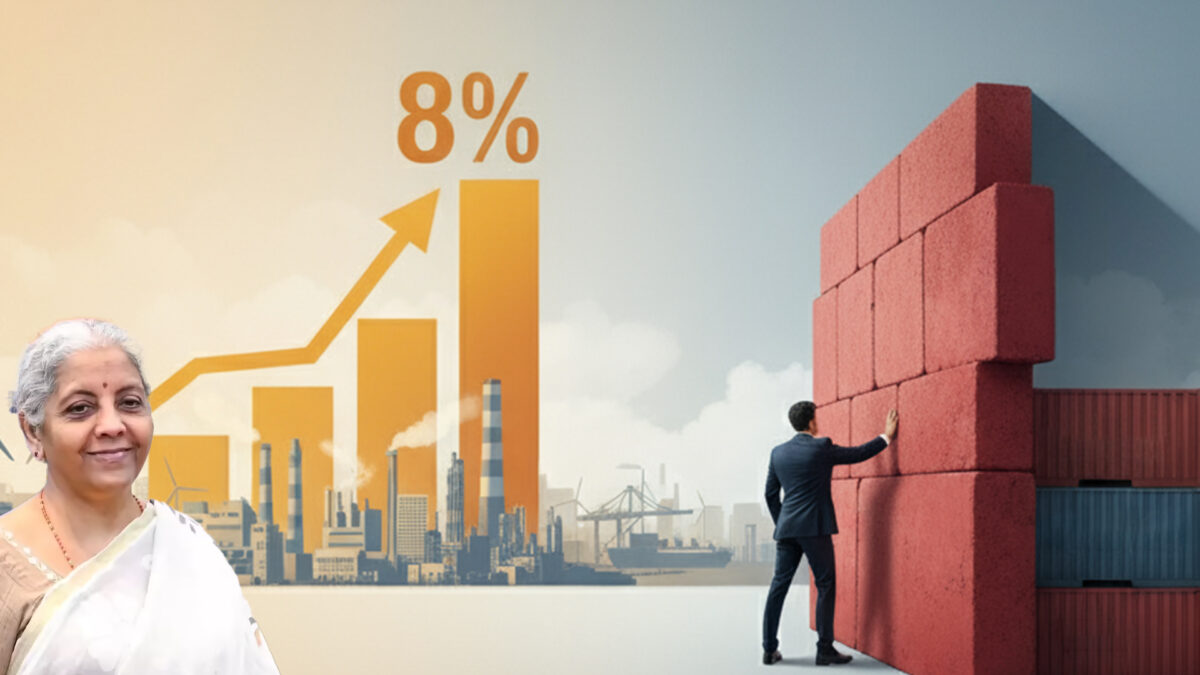
India Eyes 8% Growth Amid Global Tariff Pressures, Says Finance Minister

Union Finance Minister Nirmala Sitharaman on Friday highlighted India’s determination to achieve 8% GDP growth despite mounting global economic challenges, emphasizing that tariffs and geopolitical tensions are reshaping the international economic landscape.

Speaking at the Kautilya Economic Conclave 2025, Sitharaman noted that while global trade disruptions are significant, India’s growth remains anchored in strong domestic fundamentals.

The Finance Minister pointed out that rising tariffs, sanctions, and decoupling strategies are altering global supply chains, creating uncertainties for international trade. She acknowledged the impact of recent measures, including the U.S. doubling tariffs on Indian imports to 50%, which has affected export competitiveness.

Yet, she stressed that India is well-positioned to absorb external shocks due to its resilient economic structure and diversified domestic demand.

Sitharaman reiterated that achieving 8% growth is crucial for India’s vision of becoming a developed nation by 2047. She clarified that this target does not imply economic isolation but rather emphasizes self-reliance while maintaining active participation in the global economy. According to the Finance Minister, India’s growth strategy balances strengthening internal markets with engaging international trade and investment opportunities, ensuring long-term sustainability.

To mitigate the impact of global economic disruptions, the government has committed to a record infrastructure spending program for the fiscal year ending March 2026. This initiative, amounting to over ₹11 trillion, is intended to stimulate domestic demand, support job creation, and enhance connectivity across regions. The Reserve Bank of India has also maintained its policy rate at 5.5%, signaling potential monetary easing in the near future to sustain investment and consumption.

Sitharaman underscored the importance of reforms and strategic planning to navigate external pressures. She highlighted India’s capacity to adapt to shifting global dynamics, including realignment of supply chains and diversification of trade partners. While acknowledging that global uncertainties may affect growth projections in the short term, she remained confident that India’s focus on infrastructure development, investment in human capital, and policy stability will help sustain long-term economic expansion.

The Finance Minister’s remarks come amid broader global economic volatility, where tariffs and trade restrictions are increasingly influencing the flow of goods and capital. Analysts note that while external pressures may temper growth, India’s domestic consumption, technological adoption, and policy support remain strong drivers of economic momentum.

Sitharaman concluded by reaffirming the government’s commitment to creating a conducive environment for investment, innovation, and enterprise, stressing that India is prepared to meet its growth ambitions despite the evolving global trade landscape.

She emphasized that maintaining policy stability, boosting infrastructure, and supporting key sectors are central to ensuring that India not only weathers external shocks but continues on its path toward sustainable, high-quality growth.

With India targeting an ambitious 8% GDP growth, the government’s proactive measures and focus on domestic resilience aim to shield the economy from global turbulence while positioning it for long-term development.

Also Read: Blackstone Nears $12.9 Billion Target for Asia Buyout Fund

Categories
Beyond

Gold and Silver Soar as US Shutdown Sparks Safe-Haven Demand

Gold futures in India surged to record levels on Wednesday, driven by a combination of global market trends and heightened investor demand for safe-haven assets following the U.S. government shutdown.

Domestic December gold contracts on the Multi Commodity Exchange (MCX) rose ₹535, or 0.45%, to reach an unprecedented ₹1,17,800 per 10 grams.

February futures extended gains for a fifth consecutive session, climbing ₹617, or 0.52%, to a lifetime high of ₹1,19,055 per 10 grams.

Silver futures also posted notable gains. The December contract jumped ₹2,699, or 1.89%, to a fresh peak of ₹1,44,844 per kilogram, while the March 2026 contract surged ₹3,980, or 2.77%, touching a record ₹1,47,784 per kilogram.

Analysts pointed to the shutdown in Washington, coupled with weak U.S. labour data, as the primary triggers for the sharp rally in precious metals.

According to experts in the Indian commodities market, the government closure has intensified concerns over delays in key economic indicators, including the upcoming nonfarm payrolls report.

This uncertainty has strengthened expectations that the U.S. Federal Reserve may cut interest rates in its forthcoming policy meetings, further supporting bullion prices.

Global markets mirrored the domestic trend, with Comex December gold futures crossing the $3,900 per ounce mark for the first time, reaching $3,903.45. Silver prices also climbed, hitting a peak of $47.81 per ounce for December contracts.

Market observers noted that the dollar index, which measures the strength of the greenback against a basket of six major currencies, remained subdued at 97.62, down 0.16%. A weaker dollar makes gold and silver relatively cheaper for investors using other currencies, reinforcing demand.

Traders and analysts emphasized that the duration of the U.S. government shutdown will be a key factor influencing the bullion market in the near term.

They also highlighted that market participants are increasingly pricing in the likelihood of a Fed rate reduction, with some projecting additional cuts later this year.

The latest gains in precious metals reflect a combination of geopolitical uncertainty, expectations of monetary easing in the United States, and robust demand for hedging instruments amid global economic volatility.

With both domestic and international markets reacting sharply to U.S. developments, gold and silver have emerged as preferred investment options for risk-averse investors seeking stability.

Also Read: Apple, Google, and Meta Face Legal Challenges Over Gambling Apps

Categories
Beyond

India-EFTA Trade Pact Takes Effect, Promises $100 Billion Investment

The agreement aims to promote long-term capital for productive capacity building, explicitly excluding foreign portfolio investment.

The India-European Free Trade Association (EFTA) Trade and Economic Partnership Agreement (TEPA) officially came into effect on October 1, 2025.

Signed on March 10, 2024, this agreement marks India’s first free trade agreement with four developed European nations: Switzerland, Norway, Iceland, and Liechtenstein.

TEPA is a comprehensive 14-chapter agreement covering various aspects of trade and economic cooperation. It includes provisions on market access for goods, rules of origin, trade facilitation, trade remedies, sanitary and phytosanitary measures, technical barriers to trade, investment promotion, market access for services, intellectual property rights, and trade and sustainable development.

Notably, it incorporates binding commitments for investment and job creation, a first in any free trade agreement signed by India.

Under TEPA, EFTA countries have committed to increasing foreign direct investment (FDI) in India by $100 billion over the next 15 years.

This investment is expected to generate 1 million direct jobs in India, focusing on sectors such as manufacturing, renewable energy, life sciences, and digital transformation.

The agreement aims to promote long-term capital for productive capacity building, explicitly excluding foreign portfolio investment.

In terms of market access, EFTA has offered India access to 92.2% of its tariff lines, covering 99.6% of India’s exports. This includes 100% of non-agricultural products and tariff concessions on processed agricultural products.

India’s offer to EFTA covers 82.7% of its tariff lines, accounting for 95.3% of EFTA’s exports. Sensitive sectors such as pharmaceuticals, medical devices, processed food, dairy, soy, coal, and certain agricultural products have been protected under the agreement.

TEPA also provides enhanced opportunities for India’s services sector. India has offered commitments in 105 sub-sectors, while EFTA countries have made commitments in 128 sub-sectors (Switzerland), 114 (Norway), 107 (Liechtenstein), and 110 (Iceland).

The agreement facilitates mutual recognition agreements (MRAs) in professional services such as nursing, chartered accountancy, and architecture, enabling Indian professionals to access EFTA markets more easily.

It also improves access through digital delivery of services, commercial presence, and greater certainty for entry and temporary stay of key personnel.

Intellectual property rights (IPR) are another significant aspect of TEPA. The agreement ensures IPR commitments at the World Trade Organization’s Trade-Related Aspects of Intellectual Property Rights (TRIPS) level.

The IPR chapter with Switzerland sets high standards, addressing India’s interests in generic medicines and concerns related to patent evergreening.

TEPA emphasizes sustainable and inclusive development, aiming to foster transparency, efficiency, simplification, harmonization, and consistency in trade procedures.

It also focuses on employment, skills, and technology collaboration, accelerating the creation of direct jobs for India’s young workforce and facilitating access to world-leading technologies in precision engineering, health sciences, renewable energy, innovation, and research and development.

The agreement is expected to unlock opportunities across a wide range of industries.

With EFTA’s offer covering 92% of tariff lines, Indian exporters in sectors like machinery, organic chemicals, textiles, and processed foods will enjoy significantly improved access to EFTA markets. This will enhance competitiveness, reduce compliance costs, and accelerate access to EFTA markets.

In the agriculture and allied goods sector, India’s exports to EFTA are concentrated, with guar gum accounting for over 70% of the export basket in 2024-25.

Other exports include processed vegetables, basmati rice, pulses, fresh fruits, cereal preparations, and grapes. Norway and Switzerland together account for over 99% of India’s agri-exports to EFTA. The agreement is expected to reduce tariff barriers and expand India’s share in key commodities.

In the services sector, TEPA is expected to boost India’s services exports in areas of core strength such as IT and business services, cultural and recreational services, education, and audio-visual services.

EFTA’s services offers better access through digital delivery of services, commercial presence, and improved commitments and certainty for entry and temporary stay of key personnel.

The agreement also includes provisions for mutual recognition agreements (MRAs) in professional services such as nursing, chartered accountancy, and architecture, creating new avenues for Indian professionals in EFTA markets.

The India-EFTA Trade and Economic Partnership Agreement (TEPA) is a significant milestone in India’s trade relations with Europe.

It enhances market access for goods and services, strengthens intellectual property rights, and fosters sustainable, inclusive development, while supporting initiatives like “Make in India” and “Atmanirbhar Bharat.”

The agreement is expected to have a positive impact on India’s economy by attracting investment, creating jobs, and expanding trade opportunities.

Also Read: Apple, Google, and Meta Face Legal Challenges Over Gambling Apps

Categories
Beyond

Indian Stock Market Rebounds as RBI Maintains Repo Rate

The Indian rupee strengthened by 5 paise to 88.75 against the U.S. dollar in early trade, adding further momentum to domestic equities

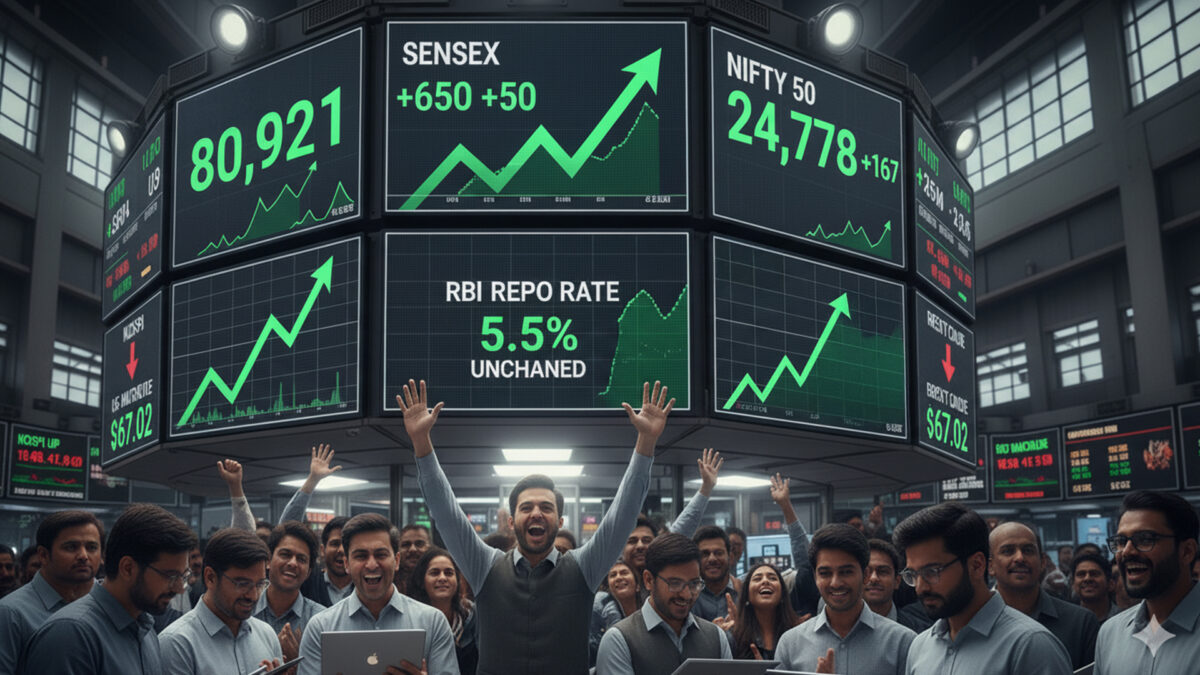
Indian equity indices experienced a significant rebound on Wednesday, ending an eight-day losing streak. The BSE Sensex surged over 650 points to trade at 80,921 as of 11:57 AM, while the Nifty 50 gained 167 to trade at 24,778 as of the same time.

This uptick was primarily driven by strong buying interest in banking and financial stocks following the Reserve Bank of India’s (RBI) decision to keep the policy repo rate unchanged at 5.5% for the second consecutive meeting.

The RBI’s Monetary Policy Committee (MPC), led by Governor Sanjay Malhotra, opted for a neutral stance, indicating a cautious approach amid ongoing global uncertainties, including trade tensions and inflationary pressures. The central bank’s decision to maintain the current rate was seen as a move to assess the cumulative impact of previous rate cuts and fiscal measures.

Investor sentiment was further bolstered by the RBI’s proposals to enhance capital market lending by banks, provide greater operational flexibility for borrower accounts, and remove the regulatory ceiling on lending against listed securities. These measures are expected to improve liquidity and credit flow in the financial system, particularly benefiting sectors reliant on capital markets.

Global cues also contributed to the market’s positive performance. Asian markets, including South Korea’s Kospi, traded higher, and U.S. markets closed in the green on Tuesday, providing a favorable backdrop for Indian equities. Additionally, Brent crude oil prices declined by 1.4% to $67.02 per barrel, easing inflation concerns and supporting investor confidence.

The Indian rupee strengthened by 5 paise to 88.75 against the U.S. dollar in early trade, adding further momentum to domestic equities. The India VIX, a gauge of market volatility, fell by 3.68% to 10.66, indicating reduced investor apprehension and encouraging risk-taking behavior.

Looking ahead, market analysts maintain a cautiously optimistic outlook. Technical indicators suggest potential upside targets for the Nifty 50 at 24,970 and 25,050, with immediate resistance levels at 24,720 and 24,800. Key support levels are identified at 24,500 and 24,336. The market’s direction will depend on the RBI’s future policy actions, global economic developments, and domestic economic indicators.

Also Read: LG Electronics India to Launch ₹11,607 Crore IPO on October 7

Categories
Beyond

RBI Maintains Repo Rate at 5.5%, Revises Growth Forecast

In a major development, the Reserve Bank of India (RBI) decided to keep its key policy interest rate, the repo rate, unchanged at 5.5%. This decision was unanimously supported by the six-member Monetary Policy Committee (MPC) and aligns with market expectations. The RBI also maintained its neutral monetary policy stance, indicating a balanced approach to managing inflation and supporting economic growth.

Governor Sanjay Malhotra emphasized that the committee opted for a “wait and watch” approach to allow recent policy decisions, including earlier rate cuts and Goods and Services Tax (GST) reforms, to take effect. He noted that the effects of earlier front-loaded cuts are still playing out, and the committee chose to pause further action for now.

In its updated projections, the RBI revised India’s GDP growth forecast for the fiscal year 2025–26 to 6.8%, up from the previous estimate of 6.5%. This adjustment reflects stronger-than-expected economic performance, with a 7.8% expansion in the April–June quarter. The RBI now projects quarterly growth rates of 7.0% for Q2, 6.4% for Q3, and 6.2% for Q4. For the first quarter of FY27, growth is projected at 6.4%.

Concurrently, the RBI lowered its average headline inflation projection for FY26 to 2.6%, down from the earlier forecast of 3.1%. This revision is attributed to the dampening impact of GST rationalization and a sharper-than-expected decline in food prices. Governor Malhotra stated that the overall inflation trajectory has turned more benign, though external uncertainties continue to cloud the economic outlook.

Despite these positive domestic indicators, the RBI expressed caution regarding external risks, particularly the potential impact of U.S. tariffs on Indian exports. Governor Malhotra acknowledged that higher U.S. tariffs of up to 50% on Indian goods could slow external demand. He noted that while domestic economic momentum remains resilient, global headwinds and tariff-related uncertainty warrant caution.

The RBI also highlighted that the decline in headline inflation is largely due to easing food inflation. Retail inflation has remained below the 4% target since February, falling to a six-year low of 2.07% in August, supported by softer food prices and a favorable base effect.

Regarding the Indian rupee, Governor Malhotra stated that the RBI is closely monitoring currency movements. He noted that monetary policy transmission is broadly taking place across sectors and added that the remaining reduction in the cash reserve ratio (CRR) is expected to further strengthen transmission. System-level indicators for banks and non-banking financial companies (NBFCs) continue to reflect strong health.

Looking ahead, the RBI reiterated that its primary mandate is to keep Consumer Price Index (CPI)-based retail inflation at 4%, with a tolerance band of ±2%. The committee’s decision to maintain the repo rate at 5.5% reflects a cautious yet optimistic outlook, balancing domestic economic resilience with external uncertainties. The RBI’s next policy review is scheduled for December 2025, where further adjustments will be considered based on evolving economic conditions.

Categories
Beyond

Sensex, Nifty Extend Losing Streak Ahead of RBI Policy Decision

Domestic equity benchmarks closed lower on Tuesday after a choppy trading session, with investor sentiment weighed down by persistent foreign fund outflows and caution ahead of the Reserve Bank of India’s (RBI) monetary policy announcement. The decline marked the eighth straight session of losses for both indices.

The 30-share BSE Sensex slipped 97.32 points, or 0.12 per cent, to end the day at 80,267.62. It had opened higher but gave up gains, moving between an intraday high of 80,677.82 and a low of 80,201.15. In the past eight sessions, the Sensex has lost 2,746.34 points, translating to a 3.30 per cent fall.

The broader NSE Nifty also finished in the red, down 23.80 points, or 0.10 per cent, to close at 24,611.10. Market breadth was mixed, with metal and banking counters advancing while realty and consumer durables stocks saw profit-booking.

Among the Sensex constituents, ITC, Bharti Airtel, Trent, Bajaj Finserv, Titan and Reliance Industries dragged the index lower. On the other hand, UltraTech Cement, Adani Ports, Tata Motors, Bharat Electronics, Bajaj Finance and Hindustan Unilever provided support with gains.

Analysts noted that investors were largely cautious ahead of the RBI’s Monetary Policy Committee decision, due on Wednesday, with expectations that the central bank could maintain a hawkish stance in view of persistent inflationary pressures.

The policy panel began its three-day deliberations on Monday, and markets are closely watching whether the RBI will adjust the policy rate or continue with its current stance.

Data from the exchanges showed that Foreign Institutional Investors (FIIs) remained net sellers, offloading equities worth ₹2,831.59 crore on Monday. Domestic Institutional Investors (DIIs), however, cushioned the fall by purchasing stocks worth ₹3,845.87 crore.

On the global front, Asian markets were mixed: Shanghai’s SSE Composite index and Hong Kong’s Hang Seng ended higher, while South Korea’s Kospi and Japan’s Nikkei 225 settled lower. European markets were trading without a clear direction in early deals, whereas U.S. stocks had closed higher in the previous session.

Meanwhile, international crude prices eased, with benchmark Brent crude falling 1 per cent to $67.29 a barrel, offering some relief to oil-importing countries like India.

Investor attention is now firmly on the RBI’s announcement, with economists expecting the central bank to maintain the repo rate at its current level but possibly signal a cautious approach toward inflation and growth outlook for the coming months. Analysts say that any surprise change in the rate could trigger sharp market movements, making today’s subdued session a reflection of investor caution ahead of the policy decision.

The RBI’s statement is expected to provide guidance on monetary policy direction, liquidity management, and potential interventions to stabilize financial markets, all of which will be closely monitored by both domestic and foreign investors.

The market’s performance over the next few sessions will likely hinge on the RBI’s tone and the broader response of FIIs and DIIs to any changes announced tomorrow.

Also Read: Nifty 50 Index Undergoes Reshuffle; IndiGo, Max Healthcare Included

Categories
Beyond

Banks Can Extend Working Capital Loans to Gold-Using Manufacturers: RBI

In a crucial development, the Reserve Bank of India (RBI) has broadened its lending guidelines to allow banks to provide need-based working capital loans to manufacturers that use gold as a raw material, a facility previously limited to jewellers.

Traditionally, banks are barred from financing the purchase of gold or silver in any form, or from lending against primary gold or silver.

However, scheduled commercial banks (SCBs) have been permitted to grant working capital loans to jewellers under a specific carve-out. The new amendment now extends this provision to borrowers engaged in manufacturing or industrial processing where gold or silver is used as an input.

According to the Reserve Bank of India (Lending Against Gold and Silver Collateral) (1st Amendment) Directions, 2025, issued on Monday, September 29, scheduled commercial banks and select urban cooperative banks (Tier 3 and 4) can provide need-based working capital financing to such borrowers, taking gold or silver as collateral.

The directions emphasize that these loans cannot be used to acquire or hold gold or silver for speculative or investment purposes.

In a related move, the RBI also issued the Reserve Bank of India (Interest Rate on Advances) (Amendment) Directions, 2025, aimed at offering borrowers more flexibility while allowing lenders greater discretion.

Under current norms, banks must link all floating-rate retail loans—including housing, auto, and MSME loans—to an external benchmark. While the spread over the benchmark is at the bank’s discretion, components other than the credit risk premium can only be revised once every three years.

The amended guidelines now allow banks to reduce other spread components earlier if it benefits the borrower and give them discretion to offer an option to switch to a fixed rate at the time of reset, beyond the mandatory option for EMI-based personal loans.

Additionally, the RBI revised the eligible limits for perpetual debt instruments (PDIs) denominated in foreign currency or rupee-denominated bonds overseas, enabling banks to raise more Tier 1 capital through international markets.

All the revised directions will come into effect from October 1, 2025, providing greater flexibility to banks while supporting manufacturing entities that rely on gold as a key input.

Also Read: Electronic Arts Acquired in $55 Billion Buyout