Categories
Beyond

Sensex, Nifty Trade Flat Amid Market Uncertainties

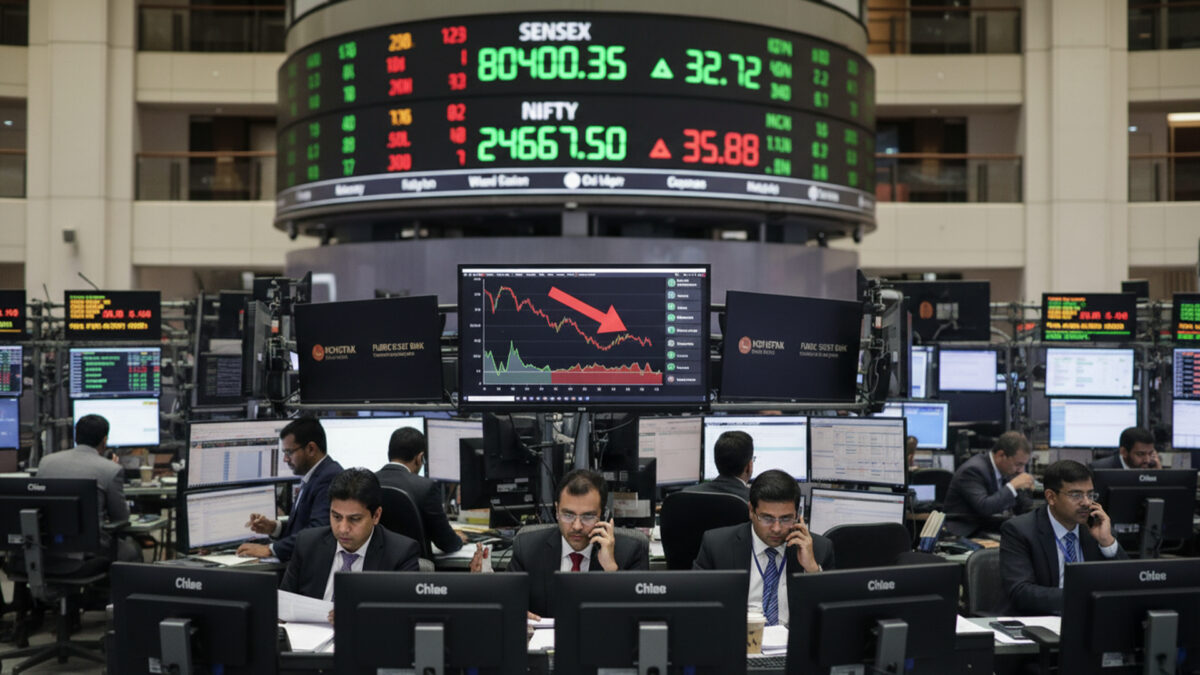
Indian equity benchmarks Sensex and Nifty experienced a sharp reversal in the early hours of September 30, 2025. The Sensex fell 450 points from its day’s high, while the Nifty declined by 131 points.

As of 11: 54 AM IST, the Sensex was at 80,344, down 20 points after hitting a low of 80,201 in early morning trade. The Nifty was well below 24,700, trading at 24,633 after hitting a low of 24,593 earlier today.

Analysts attribute the market’s uncertainty to three primary factors.

First, caution prevailed ahead of the Reserve Bank of India’s (RBI) Monetary Policy Committee (MPC) meeting scheduled for October 1.

While a majority of economists anticipate the RBI to maintain the current interest rate, some expect a dovish stance to support economic growth. Experts believe the present growth-inflation dynamics do not warrant a rate cut, suggesting the RBI may hold rates while sending a dovish message to support growth momentum.

Second, sustained foreign institutional investor (FII) selling has contributed to bearish sentiment. Despite a positive institutional inflow of over ₹1,000 crore, the market closed negatively, indicating that foreign selling continues to weigh on market performance.

The near-term market structure appears weak, experts believe, with sustained FII selling and absence of positive triggers preventing any strong recovery.

Despite these challenges, sectors such as metals and pharmaceuticals showed resilience, with the Nifty Metal index gaining 0.8% and the Nifty Pharma index advancing 0.5%. Public sector banks also saw positive movement, with the Nifty PSU Bank index rising 1.8% following the RBI’s easing of lending norms and tightening of oversight measures.

Investors remain cautious as they await the RBI’s policy decision, which could provide direction for the markets in the near term.

Also Read: Air India Raises $215 Million for Debt Refinance

Categories
Beyond

Gold Hits Record High Amid U.S. Shutdown Fears, Rate Cut Bets

Gold prices surged to a record high on Tuesday, surpassing $3,800 per ounce globally, driven by escalating concerns over a potential U.S. government shutdown and expectations of further interest rate cuts by the Federal Reserve.

Spot gold reached a peak of $3,833.37 per ounce, while December futures climbed to $3,894.90, marking a 12.1% increase for the month of September—the strongest monthly performance since August 2011.

In India, domestic gold prices mirrored the global trend, jumping to an all-time high on the Multi Commodity Exchange (MCX). Gold December futures surged to a new peak of ₹1,17,351 per 10 grams, reflecting strong safe-haven buying amid heightened investor concerns over the potential U.S. shutdown and associated market volatility.

Investor demand for safe-haven assets intensified as the deadline for a government funding agreement approached.

Without a deal, a federal shutdown could commence as early as Wednesday, disrupting economic data releases and potentially delaying key reports such as the September employment figures.

Analysts noted that the uncertainty surrounding the shutdown contributed to a weakening U.S. dollar, further boosting gold’s appeal.

The rally in gold was also supported by expectations of additional rate cuts by the Federal Reserve.

Traders are pricing in a high probability of a 25 basis point reduction in the upcoming Federal Open Market Committee meeting.

The prospect of lower interest rates diminishes the opportunity cost of holding non-yielding assets like gold, making it more attractive to investors.

Central banks and institutional investors have been increasing their gold holdings in response to these developments.

The SPDR Gold Trust, the world’s largest gold-backed exchange-traded fund, reported a 0.60% rise in holdings to 1,011.73 metric tons, the highest level since July 2022.

While gold has reached new heights, experts caution that the market may be approaching overbought territory. Some analysts suggest that the current rally is driven by a combination of geopolitical tensions, economic uncertainties, and speculative investments, which could lead to increased volatility in the short term.

Despite these concerns, the outlook for gold remains positive, with many investors viewing it as a hedge against economic instability and currency fluctuations.

As the situation in Washington continues to unfold, gold’s status as a safe-haven asset is likely to remain a focal point for investors seeking to mitigate risk in an uncertain global economic environment.

Also Read: UST, Kaynes to set up ₹3,330 crore semiconductor facility in Gujarat

Categories
Beyond

ADB Lowers India’s FY26 Growth Forecast to 6.5%

The Asian Development Bank (ADB) has revised down India’s economic growth forecast for the fiscal year 2025-26, citing rising tariffs and a more uncertain global trade environment as major headwinds.

In its September 2025 Asian Development Outlook (ADO) report, the Manila-based lender projected India’s GDP growth at 6.5 percent for FY26, lower than the 6.7 percent it had forecast in April.

The bank also trimmed its outlook for FY27 to 6.5 percent from 6.8 percent, noting that tariffs and tighter global conditions are likely to weigh more heavily in the medium term.

The downgrade comes despite a strong start to the fiscal year, with India recording a 7.8 percent GDP growth in Q1FY26, the fastest pace in five quarters.

ADB pointed out that domestic consumption and recent rationalisation of the goods and services tax (GST) are likely to support growth in the near term. However, it warned that additional U.S. tariffs on Indian exports could dampen growth, particularly in the second half of FY26 and in FY27.

“India faces the steepest tariff hikes among developing Asian economies, prompting a downgrade in its growth outlook. For FY2025, growth is now projected at 6.5 percent, down from 6.7 percent in April,” the ADB report stated.

The report highlighted that these tariff measures, implemented by the U.S. starting in August, are expected to reduce export growth, impacting industries heavily reliant on overseas demand.

While growth prospects have been tempered, the report contained positive news on inflation. ADB revised its FY26 forecast for consumer price inflation to 3.1 percent, sharply lower than the 4.2 percent projected earlier, largely reflecting lower food prices. For FY27, the bank raised the inflation estimate to 4.2 percent, anticipating normalisation of food costs.

Consumption is expected to remain a key driver of India’s economy, supported by robust rural demand and higher household spending following GST cuts.

However, the ADB cautioned that investment activity is likely to remain muted due to fiscal constraints and policy uncertainties. Tax revenue growth may be lower than initially projected because the GST reductions were not incorporated in the original budget, while public spending is assumed to continue at current levels, which could push up the fiscal deficit.

Nonetheless, the deficit is still expected to remain below the 4.7 percent of GDP recorded in FY25.

The report stressed that while domestic demand is providing near-term support, the combination of external shocks, higher tariffs, and global uncertainty could weigh on India’s medium-term growth trajectory. The bank highlighted that India’s economic resilience will depend on continued macroeconomic prudence, effective fiscal management, and policies that support investment and competitiveness.

On a regional level, the ADB also revised down its growth forecasts for developing Asia, including Southeast Asia and the Pacific. Developing Asia is now expected to grow by 4.5 percent in 2026, down from the 4.7 percent projected in April, with the subregion of Southeast Asia facing the steepest downgrades due to weaker external demand and elevated trade uncertainty. Growth in the subregion is projected at 4.3 percent for 2025 and 2026, down 0.4 percentage points from April forecasts.

China’s growth forecasts remained largely unchanged, with the People’s Republic of China expected to expand by 4.7 percent this year and 4.3 percent next year. The report noted that policy support is expected to cushion the impact of higher tariffs and the continued weakness in the property market. I

n contrast, growth forecasts for the Caucasus and Central Asia were slightly upgraded to 5.5 percent this year but trimmed for next year to 4.9 percent, reflecting lower oil and gas production in some countries. Economies in the Pacific are projected to grow 4.1 percent this year amid stronger mining output, but the outlook for next year was lowered to 3.4 percent due to weaker resource output and reduced commodity exports.

The ADB report also highlighted the main risks to the region’s growth, including ongoing uncertainty over U.S. trade policies, potential sectoral tariffs on semiconductors and pharmaceuticals, unresolved U.S.-China trade negotiations, geopolitical tensions, a possible further slowdown in China’s property sector, and potential financial market volatility.

ADB Chief Economist Albert Park noted that while developing Asia has remained resilient due to strong exports and robust domestic demand, the worsening external environment is affecting growth prospects. “US tariffs have settled at historically high rates, and global trade uncertainty remains at elevated levels,” Park said. “Amid the new global trade environment, it is crucial for governments to continue promoting sound macroeconomic management, openness, and further regional integration.”

The Asian Development Bank, established in 1966 and owned by 69 members, including 50 from the region, supports inclusive, resilient, and sustainable growth across Asia and the Pacific.

Working with its members and partners, ADB uses innovative financial tools and strategic partnerships to address complex challenges, build infrastructure, and promote sustainable development across the region.

In conclusion, while India’s domestic demand remains strong, the ADB report underscores that elevated global tariffs, particularly from the U.S., and broader international uncertainties are weighing on the country’s growth outlook.

Policy measures to sustain investment, maintain fiscal prudence, and mitigate external risks will be key to ensuring stable economic expansion in the medium term.

Also Read: Air India Raises $215 Million for Debt Refinance

Categories
Beyond

72,000 EV Charging Stations to Spring Up under PM E-DRIVE Scheme

India is rapidly embracing clean mobility as part of its evolving automobile landscape. In a significant step forward, the central government has issued detailed guidelines for setting up over 72,000 electric vehicle (EV) charging stations under the PM E-DRIVE scheme. The initiative aims to close infrastructure gaps, accelerate EV adoption, and establish a nationwide charging network across cities, highways, and major transport hubs.

Backed by ₹2,000 crore, the charging infrastructure rollout is a key component of the ₹10,900 crore PM E-DRIVE programme, focused on promoting sustainable transport solutions.

The guidelines introduce a location-based subsidy model to incentivize both public and private sector participation:

  • 100% subsidy for government premises (offices, hospitals, educational institutions), provided public access is free.
  • 80% subsidy on infrastructure and 70% on charging equipment for transport hubs and government-controlled sites like railway stations, airports, bus depots, and fuel outlets.
  • 80% infrastructure subsidy for commercial areas, highways, and city streets.
  • Battery swapping and charging stations also qualify for 80% infrastructure support. 

The scheme will be implemented by the Ministry of Heavy Industries (MHI), with Bharat Heavy Electricals Limited (BHEL) serving as the Project Implementation Agency (PIA). States and UTs will nominate nodal agencies to identify high-priority locations and submit proposals through a centralized online portal.

Charging stations will be strategically placed in urban centres, smart cities, metro-connected towns, and along high-density transport corridors. Subsidies will be released in two tranches, tied to performance and compliance.

This initiative aims to create a strong, inclusive EV ecosystem and make clean mobility more accessible across India.

Also Read: FADA President: Hatchbacks Here to Stay Despite Rising SUV Dominance

Categories
Beyond

Rupee Ends at Record Low Ahead of RBI Policy Meet

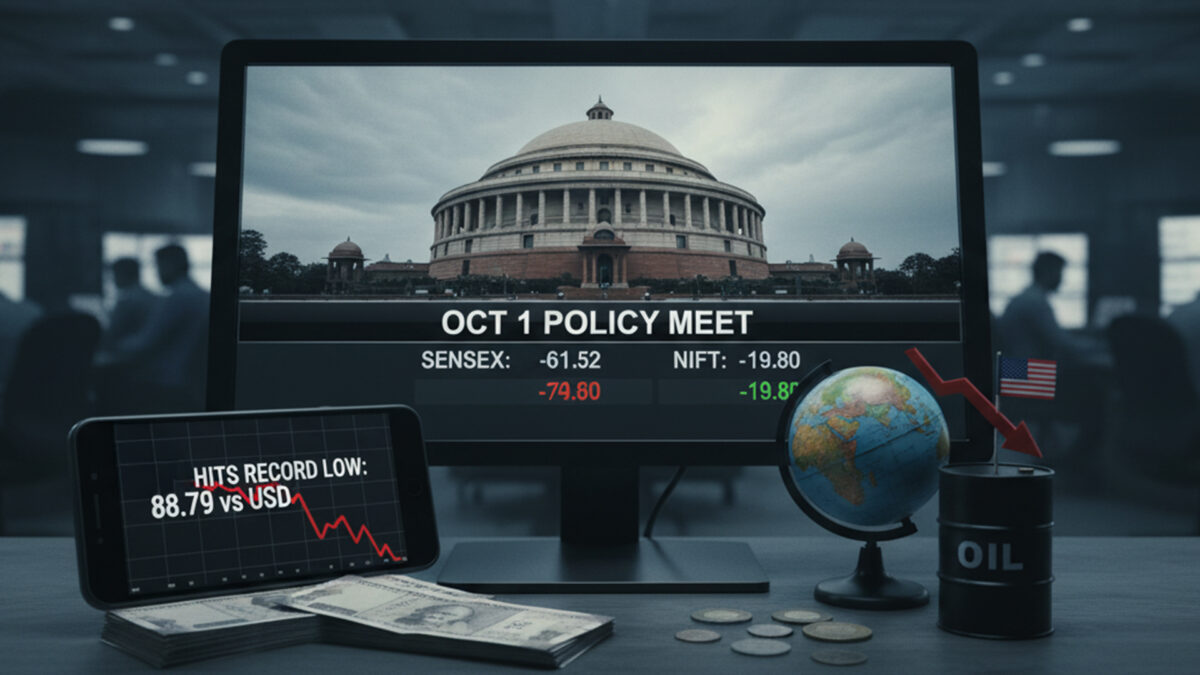
The rupee traded in a tight band and slipped 7 paise to close at a record low of 88.79 (provisional) against the U.S. dollar on Monday, weighed down by foreign capital outflows and risk-off sentiment.

Traders said the local currency remains under pressure amid concerns over global trade, the U.S. visa fee hike impacting Indian IT exports, and rising crude prices. The RBI’s upcoming policy decision on October 1 is also seen as a key driver for both rupee and bond markets.

At the interbank forex market, the rupee opened at 88.69 and finally settled at 88.79, its lowest-ever close. On Friday, it had ended 4 paise higher at 88.72 after rebounding from a record low of 88.76 hit last Thursday.

“We expect the rupee to stay weak amid sluggish domestic markets and importer dollar demand. However, softness in the U.S. dollar and possible RBI intervention may cushion losses,” said Anuj Choudhary, Research Analyst, Mirae Asset Sharekhan. He added that investors will track U.S. home sales data, Donald Trump’s speech, and the RBI’s MPC outcome this week.

The six-member MPC, led by RBI Governor Sanjay Malhotra, began its three-day meet Monday. While most expect rates to remain unchanged, some analysts anticipate a 25 bps cut. The policy review comes amid global trade frictions, with the U.S. recently imposing 50% tariffs on Indian exports.

Meanwhile, the dollar index eased 0.19% to 97.96, and Brent crude futures dropped 1.37% to $69.17 per barrel. On equities, the Sensex slipped 61.52 points to 80,364.94, while Nifty shed 19.80 points to 24,634.90.

Foreign investors sold ₹5,687.58 crore worth of equities on Friday, exchange data showed. Separately, India’s forex reserves declined $396 million to $702.57 billion in the week ended September 19.

Adding to concerns, the U.S. announced a 100% tariff on branded and patented drugs from October 1, with exemptions only for firms building plants on American soil.

Also Read: UST, Kaynes to set up ₹3,330 crore semiconductor facility in Gujarat

Categories
Beyond

Consumers Can Soon Switch LPG Suppliers Like Mobile Numbers

In a significant consumer-centric reform, the Petroleum and Natural Gas Regulatory Board (PNGRB) has unveiled a proposal for an LPG Interoperability Framework, enabling households to switch between cooking gas suppliers—such as Indane, Bharat Gas, and HP Gas—without changing their existing connections.

This move mirrors the mobile number portability system in the telecom sector, aiming to enhance consumer choice and service reliability.

India has achieved near-universal LPG coverage, with over 32 crore active connections as of FY25. However, persistent consumer grievances—exceeding 17 lakh annually—highlight issues like delayed deliveries and supply disruptions.

These challenges are particularly acute in areas where local distributors face operational constraints, leaving consumers with limited alternatives.

PNGRB emphasizes that consumers should have the freedom to choose their LPG supplier, especially when cylinder prices are standardized across companies.

Historically, a pilot LPG portability scheme was introduced in 2013, allowing consumers to switch dealers within the same oil marketing company. This system was expanded nationwide in 2014.

However, it did not permit inter-company portability, meaning a consumer could not switch from Indane to Bharat Gas or HP Gas. The proposed framework seeks to eliminate this restriction, enabling consumers to receive refills from the nearest available distributor, irrespective of the company, particularly during service disruptions or peak demand periods.

PNGRB has invited public comments on the proposed framework, with a rollout expected after finalizing the rules. The initiative aims to address service failures and ensure uninterrupted access to LPG, thereby safeguarding consumer trust.

This development marks a significant step toward enhancing consumer autonomy and service quality in India’s LPG sector.

Also Read: HAL’s Order Book Soars to ₹2.7 Lakh Crore Following Tejas Deal

Categories
Beyond

India Negotiates U.S. Corn Purchase for Ethanol Amid Trade Talks

India is in negotiations with the United States to purchase corn for ethanol production, according to an Economic Times Report, aiming to bolster its biofuel sector and strengthen bilateral trade relations.

This move is part of broader discussions to finalize a comprehensive trade agreement by autumn 2025.

The U.S. has imposed a 25% punitive tariff on Indian imports, citing India’s continued purchase of Russian oil, which Washington argues indirectly funds the war in Ukraine.

In response, India is seeking the removal of these tariffs and offering to increase energy imports from the U.S., including the purchase of American corn for ethanol production.

Ethanol blending is a key component of India’s strategy to reduce crude oil dependence and lower emissions.

However, India faces challenges in accepting U.S. corn imports due to concerns over genetically modified (GM) crops.

The Indian government is cautious about opening its markets to GM products, which could impact domestic agriculture and public acceptance.

To address these concerns, India is considering a self-certification mechanism, where U.S. exporters would provide documentation confirming that their corn is GM-free.

Agriculture remains a sensitive issue in trade negotiations, with India emphasizing the protection of its farmers and food security.

While India has agreed to import certain U.S. agricultural products for animal feed, it remains cautious about broader market access for GM crops.

The U.S. is seeking greater market access for American agricultural products, including corn, soybeans, and ethanol, as part of the trade discussions.

The negotiations are ongoing, with both countries aiming to reach a mutually beneficial agreement that addresses economic and geopolitical interests.

The outcome of these discussions will have significant implications for U.S.-India trade relations and the global agricultural market.

Also Read: IndusInd Bank: Ex-CFO Alleges ₹2,000 Crore Accounting Fraud

Categories
Beyond

India’s Forex Reserves Slip to $702.57 Billion Amid Currency Volatility

India’s foreign exchange reserves fell by $396 million to $702.57 billion for the week ending September 19, 2025, according to the Reserve Bank of India (RBI).

The decline comes after a previous week’s rise of $4.7 billion, highlighting ongoing fluctuations in global financial markets that continue to influence the country’s external assets.

The drop was primarily driven by a decrease in foreign currency assets, the largest component of India’s reserves, which fell by $864 million to $586.15 billion.

Analysts attribute this decline to the depreciation of major non-US currencies, including the euro, pound, and yen, against the US dollar.

Such currency movements reduce the dollar value of India’s holdings denominated in these currencies, contributing to overall reserve fluctuations.

In contrast, India’s gold reserves strengthened during the week, rising by $360 million to $92.779 billion. Gold continues to serve as a hedge against global economic uncertainties, reflecting the RBI’s strategy of maintaining a diversified portfolio of reserve assets.

Special Drawing Rights (SDRs), issued by the International Monetary Fund, increased modestly by $105 million to $18.879 billion, while India’s reserve position with the IMF rose by just $2 million to $4.762 billion.

Despite the marginal decline, India’s forex reserves remain among the highest in the world, providing a significant buffer against external shocks and supporting the stability of the Indian rupee.

Analysts note that the RBI’s management of reserves — including strategic allocation between foreign currency assets, gold, and SDRs — continues to be a key tool in mitigating the impact of global volatility on the domestic economy.

The fall in reserves also reflects broader trends in international markets, including fluctuations in commodity prices, changes in interest rate expectations, and periodic movements in major currencies.

These factors can cause short-term swings in reserve levels, but experts emphasise that the overall strength of India’s external position remains intact.

With ongoing uncertainties in global financial markets, the RBI is expected to continue monitoring and adjusting its reserve holdings to safeguard economic stability.

India’s robust reserve position not only helps maintain confidence in the rupee but also reinforces the country’s ability to manage trade imbalances, fund imports, and meet external obligations without undue strain.

While weekly movements in reserves often attract attention, economists stress that they are part of the normal ebb and flow of international finance.

The current dip is relatively minor and does not signal any immediate economic concern. Instead, it underscores the importance of prudent reserve management in maintaining financial resilience amid an increasingly interconnected and volatile global economy.

Also Read: Amit Shah Urges Indian Banks to Scale Up and Prioritize MSME Funding

Categories
Beyond

Sensex, Nifty Extend Losses as Pharma, IT and PSU Banks Drag Markets

Indian equity benchmarks continued to face selling pressure for a sixth consecutive session on Friday, with heavy losses in IT, pharma, and PSU bank stocks weighing on sentiment.

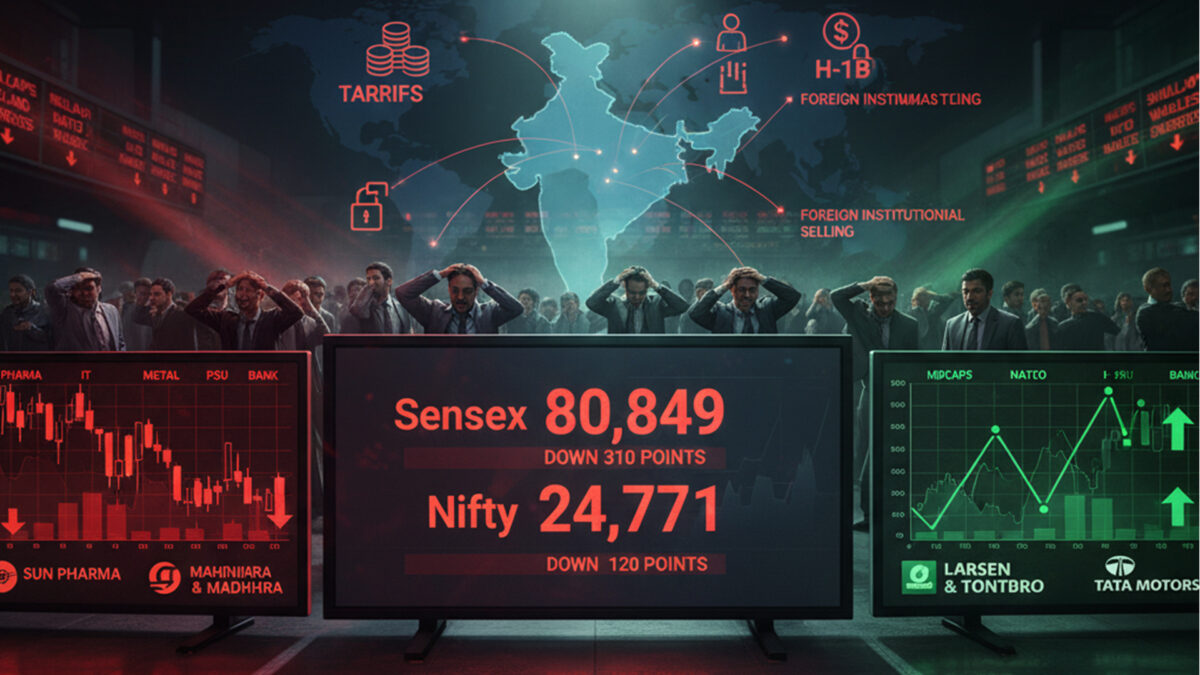
By early afternoon, the Sensex was trading 310 points, or 0.38 percent lower, at 80,849, while the Nifty slipped 120 points, or 0.48 percent, to 24,771. Market breadth was negative, with 2,695 stocks declining compared with 918 advancing and 122 remaining unchanged.

Among the laggards, Sun Pharmaceutical Industries, Mahindra & Mahindra, and IndusInd Bank fell as much as 3 percent, while Larsen & Toubro and Tata Motors bucked the trend, gaining up to 4 percent. Over the past six sessions, the Sensex has dropped 2.73 percent and the Nifty 2.52 percent, positioning the indices for their steepest weekly fall since early April.

Sectorally, pharma, IT, metal, and PSU bank indices were the worst performers. Major IT stocks declined following a cautious outlook from Accenture, which analysts said dampened sentiment across the sector. Additional concerns about rising costs also impacted the industry, as the U.S. introduced a new fee of approximately ₹88 lakh on certain H-1B visas.

Pharmaceutical shares were particularly hard hit after U.S. President Donald Trump announced plans to impose a 100 percent tariff on branded and patented drug imports starting October 1, unless firms establish local manufacturing facilities.

Trump posted on Truth Social: “Starting October 1, 2025, we will be imposing a 100 percent tariff on any branded or patented pharmaceutical product, unless a company is building their pharmaceutical manufacturing plant in America.” He added that companies already under construction would be exempt.

Foreign Institutional Investors (FIIs) also continued their selling streak, offloading equities worth ₹4,995 crore on Thursday. The sustained FII selling may keep the market under pressure,” said V K Vijayakumar, experts believe. 

In the broader market, the Nifty Smallcap100 and Midcap100 indices extended their declines for the fifth consecutive session. The midcap index lost 3.2 percent over this period, while the smallcap gauge declined around 4 percent.

Pharma stocks led losses in the smallcap space, with Neuland Laboratories and Natco Pharma falling up to 4 percent. Only 13 of the 100 constituents in the Nifty Smallcap index managed gains. Among midcaps, Waaree Energies dropped as much as 6 percent after U.S. customs authorities announced an investigation into possible tariff evasion.

Also Read: Amazon to Pay $2.5 Billion to Settle FTC Accusations

Categories
Beyond

India Rises to Third in Global Tech Startup Funding in 2025

India claimed the spot as the world’s third-highest funded market for technology startups in 2025, despite a marked downturn in investment volumes compared with the prior year. 

According to data compiled by market intelligence firm Tracxn, Indian tech startups raised $4.8 billion in the first half of 2025, down 25 percent from $6.4 billion raised in the same period in 2024. 

This figure also fell short of $5.9 billion recorded in the second half of 2024. India leapfrogged nations such as Germany and Israel to climb from the fourth to the third position globally.

The Tracxn report notes that the dip in funding was broad-based across stages. Seed funding plunged 44 percent to $452 million, early-stage rounds declined by 16 percent to $1.6 billion, and late-stage investments contracted by 27 percent to $2.7 billion. 

Despite the slowdown, five startups secured funding rounds exceeding $100 million, led by electric mobility firm Erisha E Mobility’s $1 billion raise, followed by GreenLine’s $275 million and Infra.Market’s $222 million. 

Other recipients included Spinny and Darwinbox.

Sectoral trends reveal that some domains bucked the overall decline. Transportation and logistics technology stood out, with investment rising by 104 percent from the previous half to nearly $1.6 billion, making it one of the fastest growing areas of investor interest. Meanwhile, the retail tech segment drew $1.2 billion even as its year-on-year performance weakened, and enterprise applications secured $1.1 billion.

The funding climate also reflected greater exit activity. The first half of 2025 saw 73 acquisitions, compared with 54 in the same period in 2024. Among the most significant deals were the $516 million acquisition of Magma General Insurance by the DS Group and Patanjali, and Hindustan Unilever’s purchase of skincare brand Minimalist for $350 million. These exit moves are being viewed as evidence of maturation in India’s startup ecosystem.

Geographically, Bengaluru led the funding tally, accounting for 26 percent of total capital, followed closely by Delhi at 25 percent. In terms of investor participation, Accel, AngelList, and SoftBank Vision Fund emerged as among the most active across funding stages. At the seed level, Venture Catalysts, 100X.VC, and Antler were prominent, while early-stage rounds were led by Peak XV Partners, Accel, and Lightspeed. Late-stage investment saw strong participation from Sofina and Premji Invest.

Some observers see the drop in funding levels as a signal of tighter investor sentiment globally, but note that India’s ascension in rankings underscores resilience in the domestic tech ecosystem. Tracxn cofounder Neha Singh commented that while volumes have declined, meaningful exits and growing unicorn creation reflect greater stability and growth potential.

Beyond the numbers, the rise to third place is notable for its symbolic value. India’s tech founders, venture capital networks, and government policies supporting startups have been working to build a more mature, investable ecosystem. The classification brings heightened global attention, even as challenges such as capital access, profitability pressures, and infrastructure constraints remain.


Also Read: At $57.6 Billion, Maruti Overtakes Ford, GM, Volkswagen in Valuation