Categories
Beyond

AP leads India with 25% of proposed investments

Andhra Pradesh has emerged as India’s leading investment destination in FY26, securing 25.3% of the country’s total proposed investments during the first nine months (April–December 2025), according to a Bank of Baroda report. This positions the state ahead of other top contenders like Odisha (13.1%) and Maharashtra (12.8%).

The report shows that total proposed investment announcements across India reached approximately ₹26.6 lakh crore in this period, marking an 11.5% increase compared with the same period last year. Most of the investment proposals are driven by the private sector, which accounts for nearly 90% of the total, while government-led investments make up the remaining 10%.

A significant surge in announcements came in the October–December 2025 quarter, with proposals worth nearly ₹10 lakh crore, reflecting growing investor confidence. Key sectors attracting investment in Andhra Pradesh include infrastructure, electricity, renewable energy, chemicals, metals, IT, and transport services, which together constitute the bulk of proposed capital expenditure.

State authorities attribute this remarkable performance to investor-friendly policies, fast-track approvals, and ease-of-doing-business measures. Focused development in IT, electronics, manufacturing, logistics, energy, and digital infrastructure has drawn attention from both domestic and international investors.

Together with Odisha and Maharashtra, Andhra Pradesh now accounts for more than half of India’s proposed investments, highlighting a trend toward the eastern and southern regions as emerging investment hubs. Officials note that converting proposals into actual projects will be crucial for generating jobs and boosting economic growth.

Experts believe Andhra Pradesh’s ability to maintain policy stability, encourage private participation, and offer a predictable business environment will be key to sustaining this momentum throughout FY26 and beyond.

Also Read: Cupid shares fall 20% after long rally ends

Categories
Beyond

Fresh electronics projects to bring ₹41,800 cr investment, jobs

India’s ambition to become a global electronics manufacturing hub received a fresh boost as the Centre approved 22 new electronics component manufacturing projects under the Electronics Components Manufacturing Scheme (ECMS). The decision is expected to strengthen domestic supply chains, create jobs, and reduce the country’s dependence on imported components.

Together, these newly cleared projects are likely to bring in investments of about ₹41,863 crore and generate electronics production worth nearly ₹2.6 lakh crore in the coming years. More importantly, the initiative is expected to create close to 34,000 direct jobs, offering fresh opportunities for skilled and semi-skilled workers across the country.

This round marks the third set of approvals under the ECMS. With this, the total number of projects sanctioned so far has risen to 46, pushing overall committed investments beyond ₹54,500 crore. The government sees component manufacturing as the missing link in India’s electronics growth story, which has so far been driven largely by assembly operations.

The approved projects cover 11 critical component categories that form the backbone of modern electronics. These include printed circuit boards, display and camera sub-assemblies, connectors, enclosures, capacitors, lithium-ion battery cells and materials used in advanced batteries. Such components are essential for products ranging from smartphones and consumer electronics to electric vehicles, telecom equipment and IT hardware.

Several leading Indian and global companies will be setting up or expanding facilities under the scheme. Manufacturing units are planned across states such as Tamil Nadu, Karnataka, Maharashtra, Uttar Pradesh, Andhra Pradesh, Haryana, Rajasthan and Madhya Pradesh, helping spread industrial growth beyond a few established hubs.

Union Electronics and IT Minister Ashwini Vaishnaw said the focus on components is crucial for building a resilient and competitive electronics ecosystem. He underlined that deeper manufacturing and design capabilities would allow India to move up the value chain and compete globally.

The latest approvals signal the government’s continued push to make electronics manufacturing a long-term growth engine—one that delivers jobs, attracts investment and positions India as a trusted global supply base.

Also Read: Indian Bank shares jump as Q3 FY26 business grows 13.4%

Categories
Beyond

India’s GST up 6%, Andhra Pradesh records highest

India’s Goods and Services Tax (GST) collections showed moderate growth in December 2025, reflecting steady economic activity despite recent tax rate cuts. Gross GST collections reached around ₹1.74–1.75 lakh crore, a 6.1 per cent increase compared with December 2024. The rise highlights strong compliance and sustained revenue generation across sectors amid structural reforms.

Net GST revenue, after accounting for refunds, rose 2.2 per cent to about ₹1.45 lakh crore. Collections from domestic transactions grew modestly by 1.2 per cent to roughly ₹1.22 lakh crore. GST on imports remained a key driver, surging nearly 20 per cent to around ₹52,000 crore. In contrast, the GST compensation cess, used to support states’ revenues, dropped by over 60 per cent following the removal of several cess items under the GST 2.0 structure.

The September 2025 GST reforms rationalised rates on many goods and services, making essentials more affordable but slightly slowing revenue growth in some categories. Nevertheless, overall collections reflect resilience, aided by sustained economic demand and compliance.

At the state level, Andhra Pradesh recorded its highest-ever December SGST collection of about ₹2,652 crore, up 5.78 per cent from last year. Gross collections reached ₹3,137 crore, positioning the state second among southern states in December and demonstrating robust local economic activity.

The combination of steady national growth and record state collections indicates that India’s indirect tax system continues to perform well, even as the economy adapts to post-reform changes.

Also Read: KFC operators Sapphire Foods, Devyani to merge

Categories
Beyond

China’s DeepSeek reveals efficient AI training

Chinese AI startup DeepSeek has introduced a new way to train large AI models more efficiently. The approach, called Manifold‑Constrained Hyper‑Connections (mHC), helps models learn faster while using less computing power and energy. This is especially important as China faces limits on buying the latest AI chips from abroad due to US export restrictions.

The research paper, co‑authored by founder Liang Wenfeng and 18 other researchers, tested mHC on AI systems ranging from 3 to 27 billion parameters. The method stabilises training and avoids excessive computing costs, making it easier to build very large AI models without huge energy bills.

DeepSeek has a history of surprising the AI industry. Its 2025 R1 reasoning model was developed at a much lower cost than similar models from US companies. Experts now expect the next model, R2, to launch around China’s Spring Festival in February. The new mHC training method is expected to power this model, making it faster and more efficient.

China’s AI firms continue to face challenges due to limited access to advanced semiconductors. This has pushed companies like DeepSeek to create innovative, resource‑saving techniques to stay competitive globally.

Analysts suggest that R2 could make a significant impact internationally, even as companies like Google and OpenAI release high‑performance models. China’s lower-cost, efficient AI models are already gaining recognition in global rankings, showing the country’s growing technical capabilities.

DeepSeek has shared its research on open platforms like arXiv and Hugging Face, reflecting a trend of more openness and collaboration among Chinese AI developers.

The new method could set a benchmark for energy-efficient, large-scale AI training, helping China expand its AI capabilities despite hardware limitations.

Also Read: Aurobindo Pharma buys Khandelwal labs’ drugs for ₹325 cr

Categories
Beyond

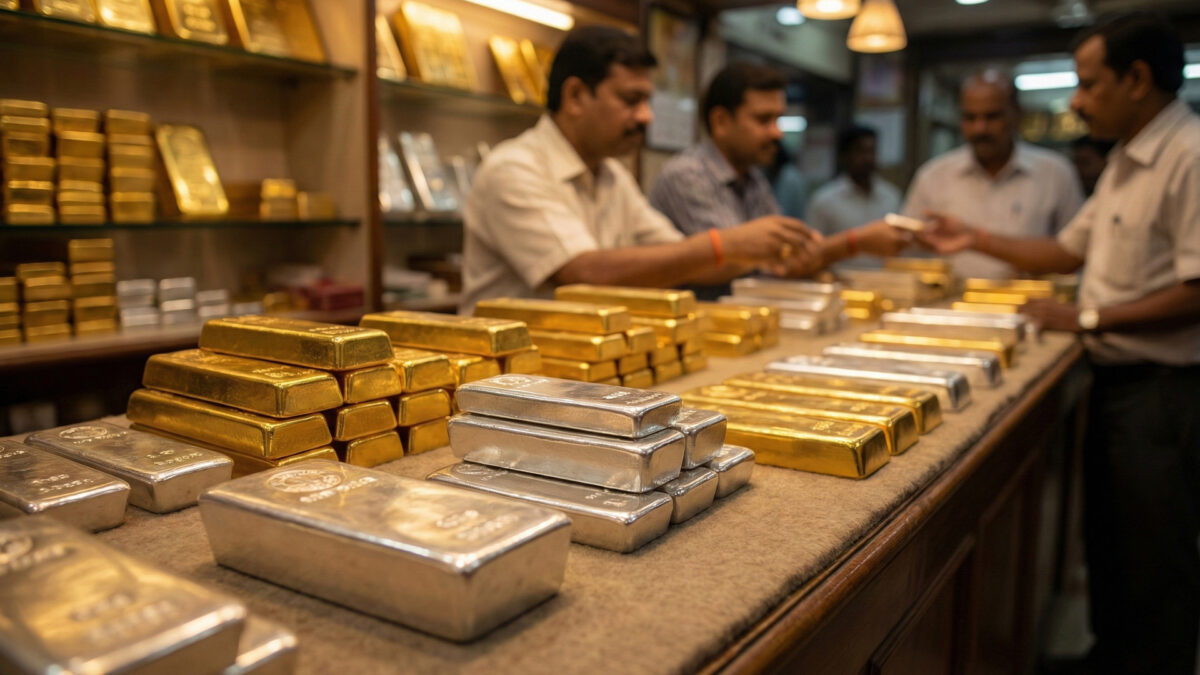
Gold rises to ₹1,35,070, Silver dips to ₹2,37,900

Gold prices edged up slightly in early trade, while silver prices witnessed a small decline, reflecting mixed trends in the precious metals market at the start of the New Year. According to market data, the price of 10 grams of 24-carat gold rose by ₹10 to ₹1,35,070, indicating steady demand despite cautious investor sentiment. At the same time, silver prices slipped by ₹100 to ₹2,37,900 per kilogram, suggesting mild profit-taking after recent gains.

The price of 22-carat gold, commonly used for jewellery, also moved up by ₹10 and was trading at ₹1,23,810 per 10 grams. Gold prices varied slightly across major Indian cities. In Mumbai and Kolkata, 24-carat gold was quoted at around ₹1,35,070 per 10 grams, while Delhi saw prices close to ₹1,35,220. Chennai continued to report higher rates, with gold trading at approximately ₹1,36,130 per 10 grams.

Market experts said the modest rise in gold prices points to stability after recent declines, as investors continue to view the metal as a safe-haven asset amid global economic uncertainty. Gold had recently touched a two-week low before recovering marginally, supported by steady demand and cautious positioning in international markets.

Silver, on the other hand, saw a slight dip as traders booked profits following strong performance in the previous year. The metal had surged sharply in 2025 and touched record highs, leading to periodic corrections in prices.

Overall, precious metal prices opened the year on a measured note, with gold showing resilience and silver undergoing minor adjustments. Analysts expect prices to remain sensitive to global cues, including currency movements, inflation trends, and interest rate signals, which are likely to guide investor sentiment in the days ahead.

Also Read: Auto rally lifts Sensex 350 pts, Nifty crosses 26,250

Categories
Beyond

India to hike tobacco taxes from February 1

Government has announced that February 1, 2026, will mark the end of the GST compensation cess on tobacco products and the start of a new, higher tax regime covering cigarettes, pan masala, and other tobacco items. The move aims to boost revenue and discourage tobacco consumption.

Under the revised framework, the GST compensation cess will be withdrawn. In its place, most tobacco products will continue to face 40% GST, while traditional bidis will attract 18% GST. Additionally, cigarettes will see higher excise duties, and pan masala will incur a Health and National Security Cess. Excise duty on cigarettes will vary by type and length, ranging roughly from Rs 2,050 to Rs 8,500 per 1,000 sticks.

Officials said the changes are designed to maintain high taxation on products linked to health risks and to ensure stable government revenue now that the compensation cess is ending. Public health considerations were cited as a key reason for the higher levies.

The announcement immediately affected financial markets. Shares of leading tobacco companies, including ITC Ltd and Godfrey Phillips India, fell sharply as investors anticipated lower sales and higher pricing pressures. ITC hit multi-month lows, while Godfrey Phillips saw even steeper declines, impacting benchmark indices.

Analysts expect the new duties may prompt companies to raise retail prices, adjust production strategies, and rethink marketing plans. Despite potential industry challenges, the government emphasizes that the changes are part of its broader effort to curb tobacco use while safeguarding revenue.

The new regime marks a major shift in India’s tobacco taxation policy, replacing a long-standing compensation mechanism and signaling stronger government focus on health and fiscal sustainability.

Also Read: IGL slashes domestic PNG prices in Delhi‑NCR

Categories
Beyond

Rupee opens 2026 at 89.99 per dollar, down 11 paise

The Indian rupee began the first trading day of 2026 on a subdued note, slipping 11 paise to trade at 89.99 against the US dollar. Early trading indicated cautious sentiment, as the currency came under pressure from continued foreign fund outflows and lingering uncertainties in global markets. Analysts said that subdued trading volumes due to New Year holidays further limited market activity, while routine corporate demand for dollars added to the downward pressure.

At the interbank foreign exchange market, the rupee opened at 89.94 per dollar before weakening to 89.99. Traders observed that early-session volatility reflected a cautious start for both domestic and international investors, who remained wary of global trade uncertainties and geopolitical developments.

The rupee’s weak opening is in line with its performance over 2025, a year in which it recorded its steepest annual decline in three years. By December, the currency had fallen nearly 5 percent against the US dollar, driven by sustained selling by foreign institutional investors (FIIs) and the absence of major positive economic triggers, such as significant trade deals or fresh foreign investment inflows.

Experts said that continued selling in Indian equities by FIIs contributed to currency volatility, while the Reserve Bank of India (RBI) intervened at intervals to moderate extreme movements. Analysts highlighted the psychological significance of the 90-per-dollar level, warning that a breach above it could prompt increased demand for dollars and further pressure on the rupee.

Despite the soft start, a weaker currency could help Indian exporters by making goods more competitively priced in international markets. However, any meaningful strengthening of the rupee will likely depend on higher foreign capital inflows and stabilization in global financial markets.

For now, the rupee’s opening trend underscores the cautious sentiment prevailing in currency markets. Traders expect the first few weeks of 2026 to remain sensitive to global developments, foreign fund movements, and domestic corporate demand, keeping the rupee under close watch.

Also Read: Gold slips to ₹1,34,880; Silver falls to ₹2,38,900

Categories
Beyond

Gold slips to ₹1,34,880; Silver falls to ₹2,38,900

Gold and silver prices edged lower in Indian markets on Thursday, marking a cautious start to trading in the New Year. According to market data, the price of 24-carat gold slipped marginally by ₹10, with ten grams selling at ₹1,34,880 in major cities such as Mumbai and Kolkata. In Delhi, gold was priced slightly higher at ₹1,35,030 per ten grams, while Chennai continued to quote the highest rate at around ₹1,36,140.

The decline was also reflected in 22-carat gold prices, which eased by ₹10 to ₹1,23,640 per ten grams in cities including Mumbai, Kolkata, Bengaluru and Hyderabad. In Chennai, 22-carat gold was trading at about ₹1,24,790 per ten grams. Market participants said the minor correction follows a sharp rally seen towards the end of 2025, when gold prices hovered near record highs due to strong global demand and safe-haven buying.

Silver prices also weakened slightly. The metal fell by ₹100 per kilogram to trade at ₹2,38,900 in Delhi, Mumbai and Kolkata. Chennai once again reported higher prices, with silver quoted at around ₹2,56,900 per kilogram. Traders noted that silver, which saw significant gains last year driven by industrial demand and investor interest, is currently witnessing some profit-taking.

On the global front, precious metals traded lower in overseas markets as investors adjusted positions at the start of the year. International spot gold prices slipped marginally, while silver also moved off recent highs. Analysts said the dip is largely due to reduced trading volumes and cautious sentiment rather than any major shift in fundamentals.

For retail buyers, the current dip may offer limited relief, though prices continue to remain elevated compared to historical levels. Jewellers said demand is expected to pick up gradually as the wedding season approaches, which could provide support to prices in the coming weeks.

Experts believe the overall outlook for gold and silver remains positive in the medium to long term, supported by expectations of global economic uncertainty, central bank buying and steady investment demand. However, short-term price movements are likely to remain volatile as markets respond to global cues, currency movements and interest rate expectations.

Also Read: Sensex up 100+ points, Nifty above 26,150

Categories
Beyond

India slaps 3 year safeguard duty on steel imports

India has imposed a safeguard duty on select steel products for a period of three years to curb the inflow of low-priced imports that have been affecting domestic manufacturers. The move follows a detailed investigation that found a sharp rise in steel imports, particularly from China, causing stress to India’s steel industry.

Under the new notification, imports of certain non-alloy and alloy steel products will attract a duty of 12% in the first year. This will be gradually reduced to 11.5% in the second year and 11% in the third year. The graded structure is intended to give domestic producers time to stabilise operations while ensuring fair competition in the market.

The safeguard duty was recommended by the Directorate General of Trade Remedies (DGTR), which concluded that the surge in imports was sudden and significant, posing a risk of serious injury to Indian steelmakers. Industry bodies had flagged concerns that cheap steel shipments were undercutting local prices, impacting profitability and capacity utilisation across the sector.

While the measure is largely targeted at imports from China, it will also apply to steel inflows from countries such as Vietnam and Nepal. However, imports from certain developing nations have been exempted in line with global trade rules. High-end and specialty steel products, including stainless steel, are not covered under the duty.

The decision comes after a temporary 200-day safeguard duty imposed earlier this year expired in November. With India being the world’s second-largest steel producer, the government has emphasised the need to protect domestic manufacturing, jobs and long-term investment in the sector, while maintaining stable supply for downstream industries.

Also Read: India moves up to 4th spot in global economy rankings

Categories
Beyond

India moves up to 4th spot in global economy rankings

India has climbed to fourth place among the world’s largest economies, overtaking Japan in terms of nominal Gross Domestic Product (GDP), according to the government’s latest assessment. With its economy now valued at around USD 4.18 trillion, India stands behind only the United States, China, and Germany, marking a key moment in the country’s growth story.

The government attributed this rise to strong and steady economic expansion despite global challenges such as slowing trade, high inflation in advanced economies, and geopolitical uncertainties. India continues to be the fastest-growing major economy, supported mainly by robust domestic demand, higher consumer spending, and sustained public investment.

Recent economic data shows a sharp improvement in growth during the second quarter of the current financial year. Strong performance in manufacturing, services, and infrastructure activity has helped accelerate overall output. Policy reforms, digital transformation, and efforts to improve the ease of doing business have also played an important role in strengthening economic activity.

International agencies have responded positively to India’s progress. Institutions such as the International Monetary Fund and the World Bank have projected that India’s economy will grow at over 6 per cent annually in the coming years, well ahead of most large economies. These forecasts underline India’s growing role as a major contributor to global growth.

Looking ahead, the government said India is expected to surpass Germany and move into third place within the next two to three years if current growth trends continue. By the end of the decade, India’s economy is projected to expand significantly, driven by a young population, a rising middle class, and increased investment in manufacturing, technology, and infrastructure.

Economists, however, note that challenges remain. While the economy’s overall size has increased rapidly, per capita income levels remain relatively low, pointing to the need for inclusive growth, job creation, and stronger outcomes in health, education, and skills.

Still, India’s rise in the global economic rankings highlights its growing influence and long-term potential on the world stage.

Also Read: Gold at ₹1,36,190 per 10g, Silver slips to ₹2,39,900/kg