Categories
Beyond

Rupee hits record low, students and travellers feel pinch

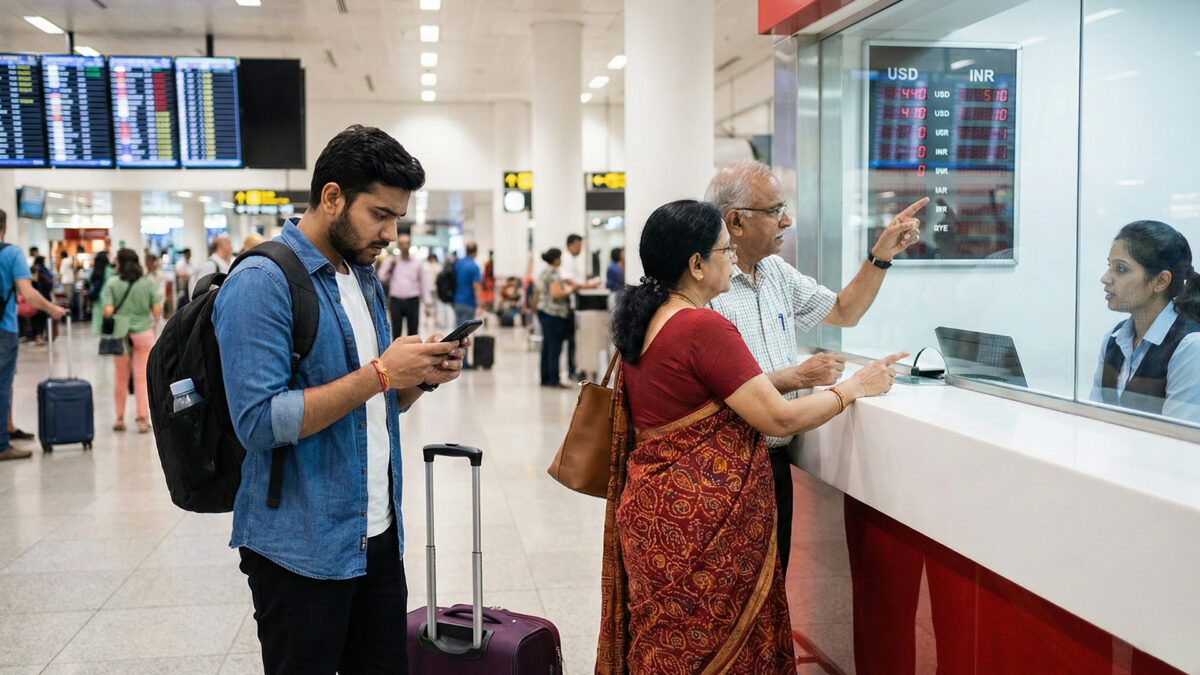
The Indian rupee touched a new all-time low against the US dollar this week, trading at around ₹89.85, raising concerns for students planning to study abroad and families planning international travel.

Despite India’s strong economic growth, with GDP expanding at 8.2% in the September quarter, the rupee has been under pressure. Analysts attribute the depreciation to weak foreign investment inflows, increased demand for dollars from importers, and uncertainty surrounding a potential US-India trade deal. The currency had earlier breached ₹89.49, and the slide shows no signs of immediate reversal.

For Indian students heading abroad, this depreciation has immediate financial implications. Tuition fees, accommodation, and daily expenses paid in foreign currencies now cost significantly more in rupees. Even modest fluctuations in exchange rates can add several lakhs to a student’s annual budget. Families planning holidays abroad are also likely to feel the pinch, as flight tickets, hotel bookings, and other travel expenses become costlier.

Economists note that this decline is partly a reflection of global market conditions, where the US dollar remains strong and capital inflows into emerging markets like India have slowed. Importers seeking dollars for essential commodities and trade also contribute to the rupee’s weakness. While some experts describe the depreciation as a “calibrated adjustment,” it nonetheless increases the financial burden on middle-class households managing overseas expenses.

The Reserve Bank of India (RBI) has traditionally intervened in currency markets to stabilize the rupee, but market participants suggest that the current pressure reflects broader structural trends that may persist in the near term. Investors and travellers are being advised to monitor currency movements closely and plan foreign expenditures accordingly.

For students and travellers, hedging options such as prepaid forex cards, forward contracts, or early currency conversion can help mitigate some of the costs associated with the falling rupee. Families may need to reconsider budgets for study programs, vacations, and other dollar-denominated expenses to adjust for the higher rupee cost.

The rupee’s fall is set to impact households across India, particularly students and families with plans abroad. Rising costs for education, travel, and imports are a direct consequence of the weaker currency, showing how global market movements can quickly affect everyday finances.

Also Read: Rupee slips to all-time low of 89.76 against dollar
Categories
Beyond

Gold rises ₹10 as silver gains ₹100 today

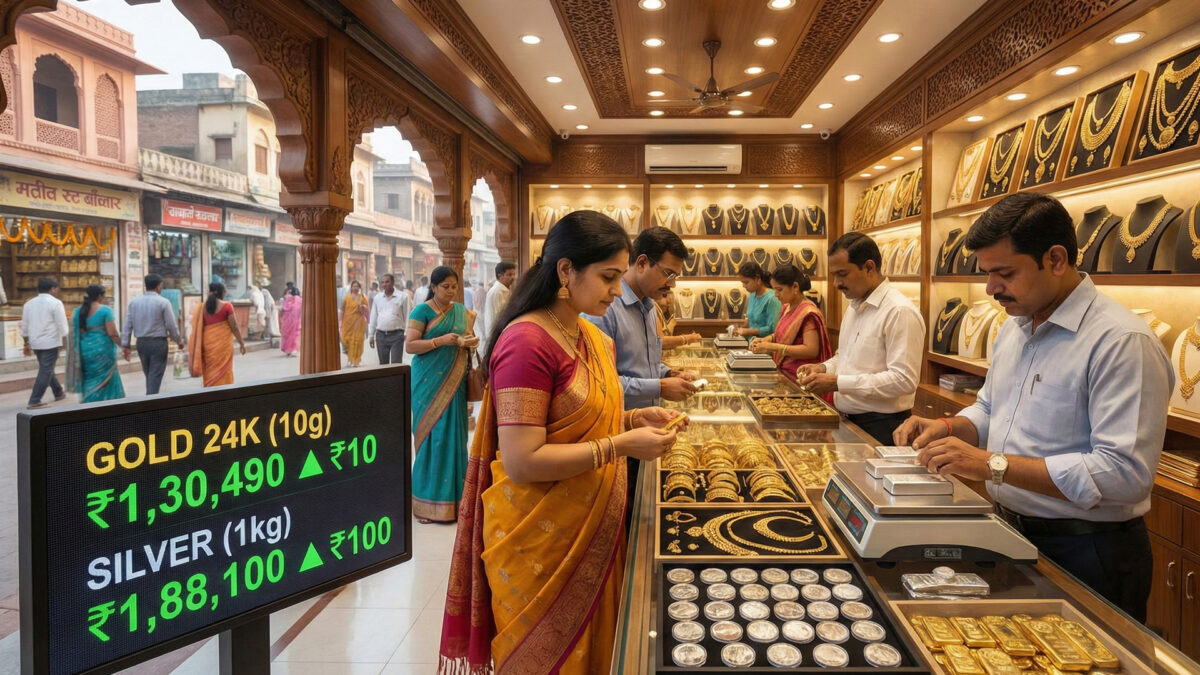
Gold and silver prices in India moved up slightly on December 2, offering a steady start to the month for bullion buyers. While gold saw only a marginal rise, silver recorded a comparatively stronger jump.

The price of 24-carat gold increased by ₹10, bringing the rate for 10 grams to ₹1,30,490 across major markets. The movement was similar in 22-carat gold, which also rose by ₹10 to ₹1,19,610 for 10 grams. In Chennai, gold remained costlier than other metros, with 24-carat gold priced at ₹1,31,680 and 22-carat gold at ₹1,20,710.

Silver outperformed gold on the day. One kilogram of silver was priced at ₹1,88,100 in Delhi, Mumbai and Kolkata, a rise of ₹100 from the previous session. The metal has been gaining steady traction as both industrial demand and investor interest remain firm.

Across metros, gold prices stayed largely aligned: Bengaluru, Hyderabad, Mumbai and Kolkata recorded the same 22K rate of ₹1,19,610, while 24K held at ₹1,30,490. Slight variations in Delhi and Chennai reflected local demand and logistics.

The mild uptick in gold and the stronger movement in silver come at a time when global markets are cautious, and investors are gradually shifting towards safer assets. With the wedding season still active and year-end buying picking up, traders expect bullion demand to remain stable.

As gold holds near the ₹1.30-lakh mark and silver continues its upward swing, market watchers will look to global cues and domestic buying trends to gauge the next direction in precious metal prices.

Also Read: Sensex falls 316 points, Nifty slips 88

Categories
Beyond

Rupee slips to all-time low of 89.76 against dollar

The Indian rupee dropped to a new all-time low of 89.76 per US dollar on December 1, even as the country posted an impressive 8.2% GDP growth for the July–September quarter.

The strong economic data lifted stocks to record highs and nudged the 10-year government bond yield up to 6.553%, near a one-week high. However, the growth did little to support the currency.

Since November 3, the currency has fallen nearly one full rupee against the dollar and is now one of the worst-performing major currencies of 2025, ahead of only the Turkish lira and Argentine peso.

Foreign investor sentiment remains weak. Overseas investors sold about $400 million worth of Indian equities on Friday, taking total outflows this year to more than $16 billion. Traders also said that the maturity of large positions in the non-deliverable forwards market added pressure on the rupee.

Meanwhile, data released on Friday showed the RBI’s forward book rising above $63 billion in October, indicating continued efforts to manage volatility, with state-run banks seen offering dollars intermittently. The maturity of large positions in the non-deliverable forwards (NDF) market also weighed on the currency, according to traders.

The rupee remains weighed down by the lack of progress on a US–India trade deal, higher importer demand for dollars and a balance-of-payments position that has turned less supportive.

Hopes for tariff relief faded after no concrete agreement emerged on reducing the steep 50% tariffs imposed on Indian exports.

India’s external sector continues to face pressure, with the merchandise trade deficit hitting an all-time high in October, further dampening sentiment and adding to downward pressure on the rupee.

Also Read: Ahmedabad’s GIFT City expands as $100 billion financial hub

Categories
Beyond

FPIs withdrew ₹3,765 cr from Indian markets in Nov.

Foreign Portfolio Investors (FPIs) resumed selling in November, pulling back a net ₹3,765 crore from Indian equity markets. This marked a sharp reversal after October, when FPIs had invested a net ₹14,610 crore, breaking a long spell of outflows from the domestic market.

The renewed selling was driven by a mix of global and domestic factors. On the international front, investors remained cautious due to uncertainty around the US Federal Reserve’s interest rate decisions, a strong US dollar, and volatility in global technology stocks. Geopolitical tensions and fluctuating crude oil prices also added to market jitters, prompting FPIs to reduce their exposure.

Within India, some sectors were considered overvalued after strong gains earlier in the year, while weak industrial data further dampened sentiment. Analysts observed that the selling was broad-based, affecting major sectors such as IT services, consumer services, and healthcare.

Despite the outflow, experts stressed that the trend may not indicate a sustained withdrawal of foreign funds. FPIs have shown mixed behaviour in recent weeks, buying and selling on different days, suggesting that market flows could change quickly if global and domestic conditions improve.

Looking ahead, foreign investment trends in December will likely depend on key developments, including signals from the US on interest-rate cuts and progress in India-US trade talks. Market watchers said that while FPIs are temporarily cautious, India’s relatively stable macroeconomic fundamentals and strong corporate earnings could attract fresh inflows if uncertainties ease.

Also Read: Oil prices climb as OPEC+ keeps production steady

Categories
Beyond

Oil prices climb as OPEC+ keeps production steady

Oil prices jumped on Monday after OPEC+ announced it would maintain current production levels through early 2026. This cautious approach comes as the world watches supply and demand closely.

Brent crude rose to $63.32 per barrel, while West Texas Intermediate (WTI) edged up to $59.45 per barrel, both gaining around 1.5%. The move signals that OPEC+ is prioritizing market stability over boosting output.

Analysts say the decision reflects growing concerns about potential supply shortages and global uncertainties, including pipeline disruptions and geopolitical tensions affecting oil routes. Traders reacted quickly, pushing prices higher as the market adjusted to the news.

In simple terms, OPEC+ has hit the pause button on pumping more oil, and the market responded with a noticeable uptick in prices, showing just how sensitive oil markets are to production decisions.

Also Read: Meesho IPO opens ₹105–111 on December 3

Categories
Beyond

Gold gains ₹879, Silver soars to ₹1.78 lakh per kilogram

Domestic bullion prices surged sharply on Monday, with silver touching a fresh all-time high and gold extending gains in early trading.

Silver futures for March delivery jumped ₹3,639 to reach a record ₹1,78,620 per kilogram on the MCX. The rally followed strong global cues, where international silver prices climbed to around $57.59 per ounce, supported by a weaker U.S. dollar.

Gold futures also moved higher. The February contract rose ₹879 or 0.68%, trading at ₹1,30,383 per 10 grams. Though global gold prices showed a mild dip in early Asian trade, overall sentiment remained positive amid expectations of a US Federal Reserve rate cut.

Analysts said the sharp rise in bullion was driven by three key factors, a softening dollar, anticipation of monetary easing by the Fed, and the decline of the Indian rupee, which makes imported precious metals more expensive.

Market experts expect silver to remain highly volatile in the near term, while gold may continue to find support from global economic uncertainty and currency fluctuations.

Also Read: Sensex jumps 300 pts, Nifty crosses 26,300

Categories
Beyond

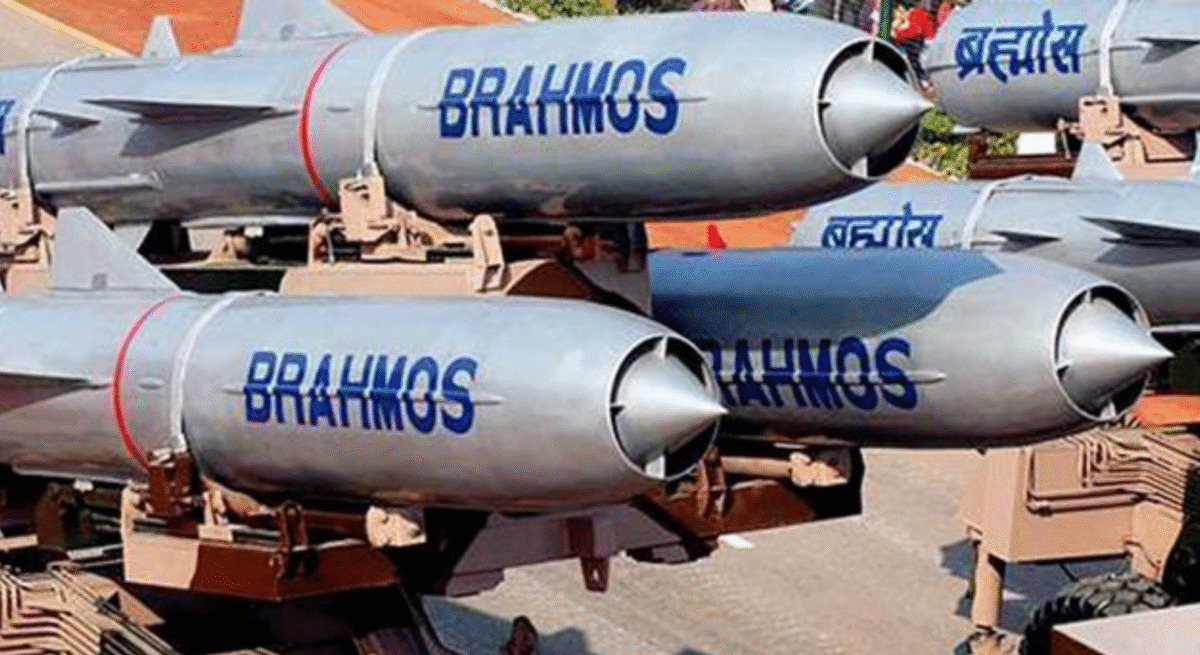
India, Indonesia near $450 mn BrahMos deal

India and Indonesia are moving a step closer to finalising a major defence deal involving the BrahMos supersonic cruise missile, following high-level talks in New Delhi on November 27. Defence Minister Rajnath Singh met Indonesia’s Defence Minister Sjafrie Sjamsoeddin, who was on an official visit to India, to review bilateral defence ties and discuss ongoing cooperation in the Indo-Pacific region.

According to officials, both sides have reached a “broad understanding” on the pricing of the proposed BrahMos sale, which is expected to be worth around $450 million. Singh also showed a model of the missile to the visiting minister as part of the discussions. If the deal is signed, Indonesia will become the second foreign customer of the BrahMos missile system after the Philippines, which secured a contract in 2022.

The talks reflect New Delhi’s growing emphasis on strengthening defence partnerships in the Indo-Pacific, especially with countries that share similar strategic concerns. India and Indonesia, both maritime nations with long coastlines and key sea lanes passing through their region, have been deepening military cooperation over the years.

During the meeting, the ministers reaffirmed their commitment to maintaining a free, open, stable and peaceful Indo-Pacific. They agreed to expand collaboration in several areas, including maritime security, cybersecurity, defence industry partnerships, and supply-chain resilience. Discussions also covered support for submarine maintenance, military healthcare collaboration, capability development, and logistics cooperation, areas seen as essential for long-term strategic alignment.

The BrahMos missile, jointly developed by India and Russia, is known for its precision, speed, and versatility. For Indonesia, acquiring BrahMos would significantly boost coastal defence and deterrence, particularly amid rising regional tensions.

The meeting marks an important step toward finalising the sale, though negotiations on technical and contractual details are expected to continue. Both governments view the potential deal as a symbol of growing trust and a shared vision for regional security.

Also Read: RBI tightens rules for safer digital banking

Categories
Beyond

India rises to ‘major power’ in Asia, 3rd globally

India has officially been recognised as a major power in the 2025 Asia Power Index released by the Lowy Institute, an Australia-based think tank that studies regional influence. This year, India achieved a score of 40, crossing the benchmark required to be classified as a major power for the first time. This is a significant milestone because India has hovered just below this threshold for several years.

In the overall rankings, India now stands at third place among 27 countries, behind only the United States and China. This places India firmly among the top regional players in terms of economic strength, military capability, diplomatic influence, and future potential. It also marks India’s strongest performance since the Index began.

One of the key reasons for India’s rise is its improving economy. The Index notes that India has become more attractive to foreign investors, benefitting from global shifts in supply chains. For the first time since 2018, India’s score for “economic relationships”, which measures trade and investment ties, showed a clear improvement. This growth helped strengthen India’s position across several economic categories.

India’s military capability also saw a notable boost this year. Analysts attribute part of this improvement to Operation Sindoor, a major operation conducted in 2025 that demonstrated India’s readiness and operational strength. The operation enhanced India’s defence credibility and contributed positively to its military score in the Index. Together with India’s growing defence technologies and modernisation efforts, this helped elevate its standing as a strategic power.

However, the report also highlights areas where India still lags behind. The biggest weakness is in defence networks, which measure a country’s alliances, partnerships, and military cooperation with other nations. In this category, India fell to 11th place, dropping two positions from the previous edition. This indicates that while India has strong capabilities, it has fewer formal defence partnerships compared to many other Asian countries.

The Index also points to India’s widening “power gap”, the difference between its potential capabilities and its actual influence on the world stage. Although India has improved across several indicators, its influence still does not fully reflect its economic and military strength. The gap with China remains especially large, showing that India has more work to do in translating its resources into global influence.

Also Read: India inks ₹8,000 cr US deal for MH-60R helicopters

Categories
Beyond

India inks ₹8,000 cr US deal for MH-60R helicopters

India has signed a major agreement with the United States to keep its fleet of MH-60R Seahawk naval helicopters in top shape. The deal, worth nearly ₹8,000 crore, will provide maintenance support, spare parts, training, and establish repair facilities in India over the next five years.

The arrangement comes under the US Foreign Military Sales programme and covers all technical and logistical support needed to keep the helicopters operational. By setting up domestic maintenance infrastructure, India will reduce reliance on overseas support and create opportunities for local businesses, including small and medium enterprises.

The MH-60R Seahawk is a highly capable, all-weather naval helicopter, designed for anti-submarine warfare and other critical missions. Defence experts say this pact will significantly enhance the readiness and efficiency of India’s naval aviation fleet.

This step reflects India’s focus on building self-reliance in defence while ensuring its military assets remain mission-ready, strengthening the Navy’s ability to respond swiftly in times of need.

Also Read: Andhra Pradesh clears LPS‑II, ₹7,500 cr for Amaravati

Categories
Beyond

RBI tightens rules for safer digital banking

The RBI has rolled out its final set of rules to make digital banking simpler, safer and more transparent for customers. One of the biggest changes is that banks can no longer sign up people for digital banking without asking them first.

This means no more automatic enrolment, no hidden clicks, and no pressure to join an app or platform just to get another service. From now on, banks must take clear, informed consent before onboarding a customer to any digital channel.

The RBI says this step will help customers feel more in control of their banking choices and reduce complaints about forced digital enrolment. The guidelines also aim to make digital banking more secure by ensuring customers know exactly what they’re opting into.

Overall, the new rules put the customer at the centre,  giving them the right to choose how they want to bank, without fear of being pushed into digital services they don’t want.

Also Read: Trump orders green card check for 19 countries