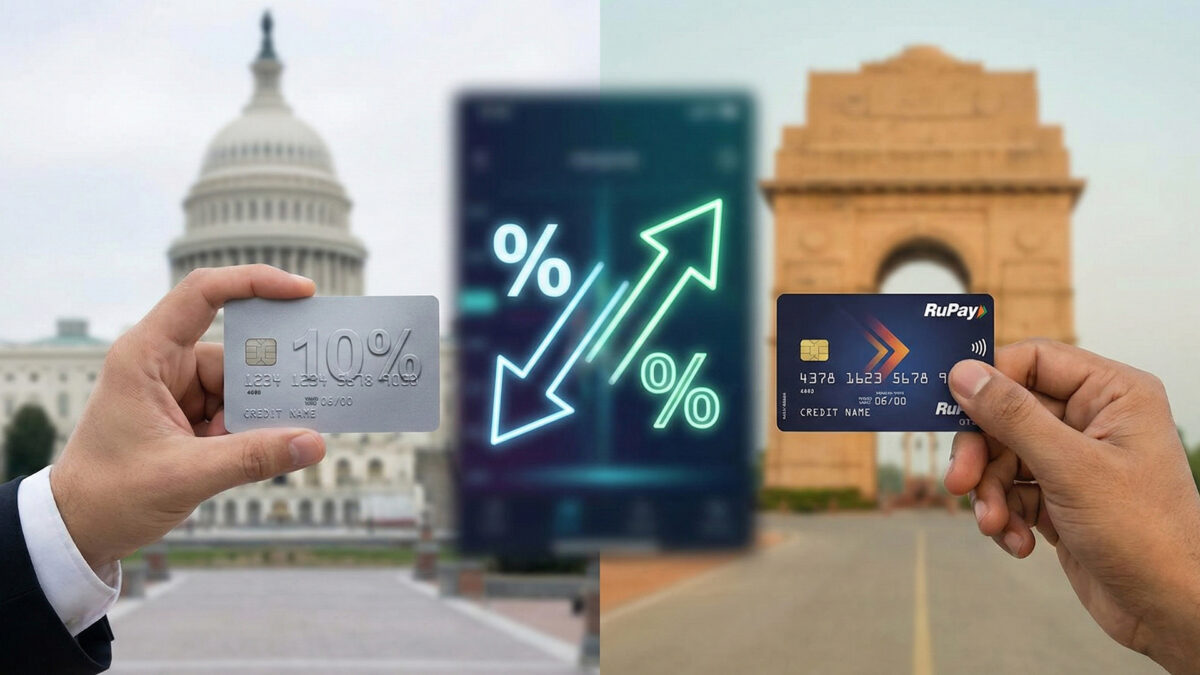
US President Donald Trump has suggested a plan to cap credit card interest rates at 10 per cent for one year, starting January 20, 2026. He says this is aimed at protecting consumers from high borrowing costs, as many credit cards charge 20–30 per cent or more in interest. Trump believes the cap would help Americans struggling to repay debt.
The proposal has sparked discussion in other countries, including India, where credit card interest rates are even higher. In India, cardholders can face rates of 36–48 per cent per year on unpaid balances. Some borrowers feel a lower interest cap, like Trump’s 10 per cent idea, could make repaying debt easier.
However, experts warn that strict limits on interest rates can also create problems. Banks and credit card companies might reduce lending to people with higher credit risks. They could also cut card benefits, like rewards or cashback, to make up for lost income. Some borrowers may turn to other options such as payday loans or buy-now-pay-later services, which can be costly.
The plan would need approval from the US Congress to become law. Similar attempts in the past have faced opposition from banks and financial groups. While the idea is intended to help consumers, economists say it could affect how easy it is to get credit.
In India, there is currently no official cap on credit card interest rates. A Supreme Court decision in 2024 allowed banks to charge more than 30 per cent per year, overturning an earlier limit. Experts say that while Trump’s plan may not directly affect India, it highlights a worldwide concern about the burden of high-interest debt on consumers.