Categories
Corporate

Air India Raises $215 Million for Debt Refinance

Air India has secured approximately $215 million from Standard Chartered and Bank of India in a six-year loan facility arranged through GIFT City (Gujarat International Finance-Tec City), according to a Bloomberg report.

The financing carries a margin of around 168 basis points over the secured overnight financing rate. The proceeds will help refinance shorter-tenure debt that the airline had taken on to acquire six Boeing 777-300ER aircraft.

This is the first time Bank of India has served as a mandated lead manager in a GIFT City loan transaction. Neither the airline nor the lenders has publicly confirmed the arrangement.

The new $215 million facility underscores the airline’s ongoing strategy to replace shorter-term, higher-cost borrowing with longer-maturity debt, strengthening its financial position as it expands its fleet and network under the Tata Group ownership.

Also Read: UST, Kaynes to set up ₹3,330 crore semiconductor facility in Gujarat

Categories
Beyond

ADB Lowers India’s FY26 Growth Forecast to 6.5%

The Asian Development Bank (ADB) has revised down India’s economic growth forecast for the fiscal year 2025-26, citing rising tariffs and a more uncertain global trade environment as major headwinds.

In its September 2025 Asian Development Outlook (ADO) report, the Manila-based lender projected India’s GDP growth at 6.5 percent for FY26, lower than the 6.7 percent it had forecast in April.

The bank also trimmed its outlook for FY27 to 6.5 percent from 6.8 percent, noting that tariffs and tighter global conditions are likely to weigh more heavily in the medium term.

The downgrade comes despite a strong start to the fiscal year, with India recording a 7.8 percent GDP growth in Q1FY26, the fastest pace in five quarters.

ADB pointed out that domestic consumption and recent rationalisation of the goods and services tax (GST) are likely to support growth in the near term. However, it warned that additional U.S. tariffs on Indian exports could dampen growth, particularly in the second half of FY26 and in FY27.

“India faces the steepest tariff hikes among developing Asian economies, prompting a downgrade in its growth outlook. For FY2025, growth is now projected at 6.5 percent, down from 6.7 percent in April,” the ADB report stated.

The report highlighted that these tariff measures, implemented by the U.S. starting in August, are expected to reduce export growth, impacting industries heavily reliant on overseas demand.

While growth prospects have been tempered, the report contained positive news on inflation. ADB revised its FY26 forecast for consumer price inflation to 3.1 percent, sharply lower than the 4.2 percent projected earlier, largely reflecting lower food prices. For FY27, the bank raised the inflation estimate to 4.2 percent, anticipating normalisation of food costs.

Consumption is expected to remain a key driver of India’s economy, supported by robust rural demand and higher household spending following GST cuts.

However, the ADB cautioned that investment activity is likely to remain muted due to fiscal constraints and policy uncertainties. Tax revenue growth may be lower than initially projected because the GST reductions were not incorporated in the original budget, while public spending is assumed to continue at current levels, which could push up the fiscal deficit.

Nonetheless, the deficit is still expected to remain below the 4.7 percent of GDP recorded in FY25.

The report stressed that while domestic demand is providing near-term support, the combination of external shocks, higher tariffs, and global uncertainty could weigh on India’s medium-term growth trajectory. The bank highlighted that India’s economic resilience will depend on continued macroeconomic prudence, effective fiscal management, and policies that support investment and competitiveness.

On a regional level, the ADB also revised down its growth forecasts for developing Asia, including Southeast Asia and the Pacific. Developing Asia is now expected to grow by 4.5 percent in 2026, down from the 4.7 percent projected in April, with the subregion of Southeast Asia facing the steepest downgrades due to weaker external demand and elevated trade uncertainty. Growth in the subregion is projected at 4.3 percent for 2025 and 2026, down 0.4 percentage points from April forecasts.

China’s growth forecasts remained largely unchanged, with the People’s Republic of China expected to expand by 4.7 percent this year and 4.3 percent next year. The report noted that policy support is expected to cushion the impact of higher tariffs and the continued weakness in the property market. I

n contrast, growth forecasts for the Caucasus and Central Asia were slightly upgraded to 5.5 percent this year but trimmed for next year to 4.9 percent, reflecting lower oil and gas production in some countries. Economies in the Pacific are projected to grow 4.1 percent this year amid stronger mining output, but the outlook for next year was lowered to 3.4 percent due to weaker resource output and reduced commodity exports.

The ADB report also highlighted the main risks to the region’s growth, including ongoing uncertainty over U.S. trade policies, potential sectoral tariffs on semiconductors and pharmaceuticals, unresolved U.S.-China trade negotiations, geopolitical tensions, a possible further slowdown in China’s property sector, and potential financial market volatility.

ADB Chief Economist Albert Park noted that while developing Asia has remained resilient due to strong exports and robust domestic demand, the worsening external environment is affecting growth prospects. “US tariffs have settled at historically high rates, and global trade uncertainty remains at elevated levels,” Park said. “Amid the new global trade environment, it is crucial for governments to continue promoting sound macroeconomic management, openness, and further regional integration.”

The Asian Development Bank, established in 1966 and owned by 69 members, including 50 from the region, supports inclusive, resilient, and sustainable growth across Asia and the Pacific.

Working with its members and partners, ADB uses innovative financial tools and strategic partnerships to address complex challenges, build infrastructure, and promote sustainable development across the region.

In conclusion, while India’s domestic demand remains strong, the ADB report underscores that elevated global tariffs, particularly from the U.S., and broader international uncertainties are weighing on the country’s growth outlook.

Policy measures to sustain investment, maintain fiscal prudence, and mitigate external risks will be key to ensuring stable economic expansion in the medium term.

Also Read: Air India Raises $215 Million for Debt Refinance

Categories
Beyond

Rupee Ends at Record Low Ahead of RBI Policy Meet

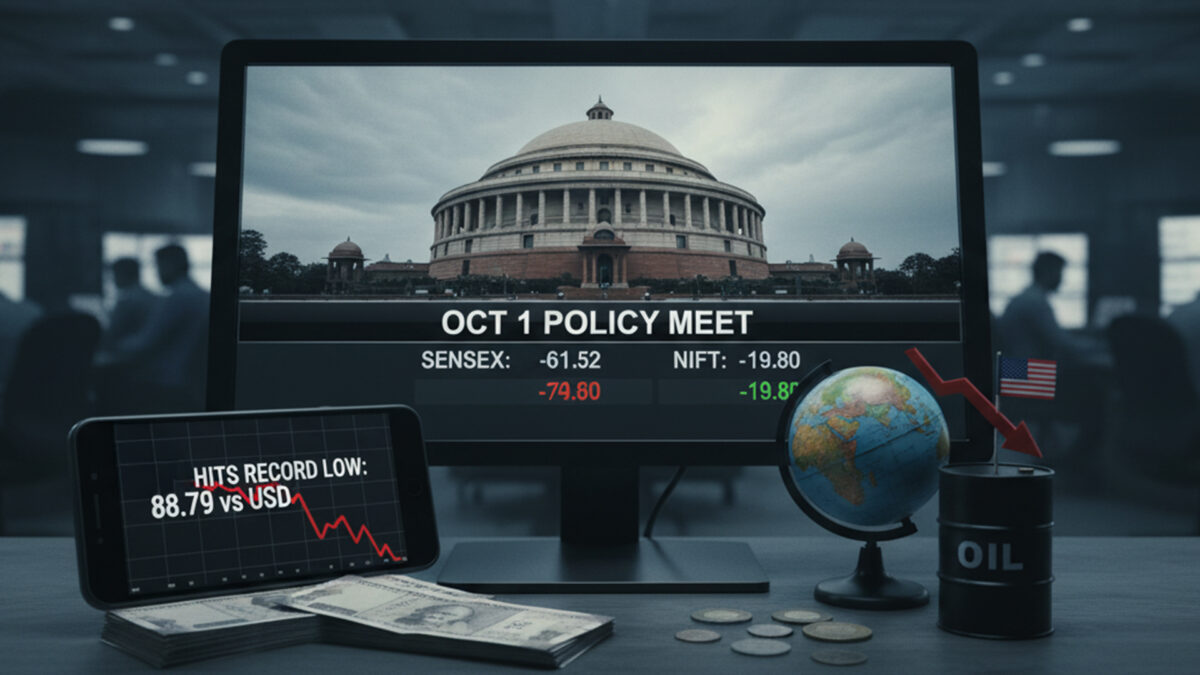
The rupee traded in a tight band and slipped 7 paise to close at a record low of 88.79 (provisional) against the U.S. dollar on Monday, weighed down by foreign capital outflows and risk-off sentiment.

Traders said the local currency remains under pressure amid concerns over global trade, the U.S. visa fee hike impacting Indian IT exports, and rising crude prices. The RBI’s upcoming policy decision on October 1 is also seen as a key driver for both rupee and bond markets.

At the interbank forex market, the rupee opened at 88.69 and finally settled at 88.79, its lowest-ever close. On Friday, it had ended 4 paise higher at 88.72 after rebounding from a record low of 88.76 hit last Thursday.

“We expect the rupee to stay weak amid sluggish domestic markets and importer dollar demand. However, softness in the U.S. dollar and possible RBI intervention may cushion losses,” said Anuj Choudhary, Research Analyst, Mirae Asset Sharekhan. He added that investors will track U.S. home sales data, Donald Trump’s speech, and the RBI’s MPC outcome this week.

The six-member MPC, led by RBI Governor Sanjay Malhotra, began its three-day meet Monday. While most expect rates to remain unchanged, some analysts anticipate a 25 bps cut. The policy review comes amid global trade frictions, with the U.S. recently imposing 50% tariffs on Indian exports.

Meanwhile, the dollar index eased 0.19% to 97.96, and Brent crude futures dropped 1.37% to $69.17 per barrel. On equities, the Sensex slipped 61.52 points to 80,364.94, while Nifty shed 19.80 points to 24,634.90.

Foreign investors sold ₹5,687.58 crore worth of equities on Friday, exchange data showed. Separately, India’s forex reserves declined $396 million to $702.57 billion in the week ended September 19.

Adding to concerns, the U.S. announced a 100% tariff on branded and patented drugs from October 1, with exemptions only for firms building plants on American soil.

Also Read: UST, Kaynes to set up ₹3,330 crore semiconductor facility in Gujarat

Categories
Corporate

UST, Kaynes to set up ₹3,330 crore semiconductor facility in Gujarat

UST, a global AI and technology transformation solutions company, has announced a strategic investment in Kaynes Semicon to establish a ₹3,330 crore semiconductor manufacturing facility in Sanand, Gujarat.

The new plant will focus on Outsourced Semiconductor Assembly and Test (OSAT) solutions, aiming to strengthen India’s semiconductor ecosystem and enhance its global competitiveness.

“This ambitious partnership between UST and Kaynes Semicon will help shape the future of semiconductor manufacturing in India. Together, our two great companies will harness the strengths of the Indian market and build a formidable foundation for the country to become a key player in the global semiconductor industry,” said Krishna Sudheendra, Chief Executive Officer of UST.

Raghu Panicker, Chief Executive Officer of Kaynes Semicon, highlighted the synergy between the two firms. “Our partnership with UST brings together world-class manufacturing and digital engineering expertise. This enables Kaynes Semicon to deliver advanced OSAT solutions while strengthening India’s self-reliant semiconductor ecosystem,” he said.

The collaboration aims to leverage both companies’ strengths in manufacturing and technology. UST’s global presence and established semiconductor client base are expected to open new opportunities for Kaynes Semicon, helping Indian assembly and testing services reach a wider international audience. By integrating digital engineering, AI-driven process optimization, and real-time data analysis, the partnership is designed to ensure scalability, reliability, and cost efficiency in semiconductor production.

The facility will also target key sectors such as electric vehicles, consumer electronics, and renewable energy technologies, aligning with India’s broader push for self-reliance in strategic industries. Both companies stressed that the investment represents not only a manufacturing expansion but also a platform for long-term collaboration, innovation, and industry growth.

Semiconductor manufacturing is a complex process that involves multiple stages, including wafer fabrication, photolithography, etching, doping, packaging, and rigorous testing. OSAT facilities, such as the one planned in Sanand, focus on the assembly, packaging, and testing phases, which are critical for ensuring chip reliability and performance. By localizing these processes in India, the partnership is expected to reduce dependence on imports and support domestic demand for advanced electronic components.

The investment also reflects growing interest from global technology firms in India’s semiconductor sector. With increasing demand for chips in electronics, electric vehicles, and renewable energy systems, local manufacturing and testing capabilities are becoming essential to meeting both domestic and international market requirements.

UST and Kaynes Semicon have stated that the facility will incorporate advanced digital solutions and AI-driven monitoring systems to streamline operations and maintain high-quality standards. The collaboration aims to create a resilient supply chain while supporting India’s ambitions to emerge as a global hub for semiconductor production.

The Sanand facility is expected to play a key role in shaping India’s semiconductor landscape, providing both technological expertise and manufacturing capacity that can meet the growing needs of domestic and international clients.

Also Read: Govt Weighs Overhaul of HAL to Improve Efficiency, Expedite Defence Deliveries

Categories
Corporate

Govt Weighs Overhaul of HAL to Improve Efficiency, Expedite Defence Deliveries

The Indian government is exploring a comprehensive restructuring of Hindustan Aeronautics Limited (HAL) to boost its operational efficiency and accelerate its ability to meet defence procurement timelines.

An external consulting firm has been engaged to design a strategic roadmap that could transform HAL’s current structure, the Economic Times has reported. One of the leading ideas under discussion is to split HAL into multiple independent entities, each focused on a particular domain such as fixed-wing aircraft manufacturing, helicopters, and maintenance, repair and overhaul (MRO).

The overhaul is being considered in view of HAL’s expanding order backlog and performance challenges. The defence PSU is said to be managing a record order book exceeding ₹2.7 lakh crore, covering fighter jets, helicopters, engines and other aeronautical platforms. As delays in deliveries have become a growing concern, the proposed restructuring aims to ensure that HAL can respond more nimbly to the needs of the armed forces.

According to reports, the plans are still in nascent stages and under deliberation. The roadmap may create discrete units dedicated to design, manufacturing, MRO services, and supply chain operations. Previously, similar restructuring ideas were considered but shelved when HAL’s order volumes were smaller.

The government’s interest in reforming HAL coincides with recent large defence contracts awarded to the company. In a recent procurement, the Ministry of Defence signed a deal worth over ₹62,370 crore with HAL for 97 Light Combat Aircraft (LCA) Mk-1A jets, which underscores the scale and importance of HAL’s upcoming commitments.

HAL has also begun to diversify its operations. Its Nashik MRO facility has expanded into civilian aircraft overhauls—recently servicing Airbus A320s and Embraer jets under a collaboration with Airbus. This move into civil aviation maintenance is seen as a push to leverage HAL’s technical infrastructure beyond defence production.

The restructuring, if approved, would mark a significant shift for HAL, which already holds Maharatna status, granting it enhanced financial and operational autonomy. Observers suggest that a leaner, domain-focused structure could reduce bottlenecks, improve accountability, and generate more specialization within HAL’s divisions.

However, there are challenges ahead. Deciding how to divide assets, allocate liabilities, preserve institutional knowledge, retrain employees, and manage transition costs will demand detailed planning. Moreover, the move will likely require approvals from multiple arms of government and the defence establishment.

As of now, no formal announcement has been made. The government continues to deliberate on the proposal, weighing the benefits against the complexity of reengineering a legacy defence enterprise.


Also Read: FADA President: Hatchbacks Here to Stay Despite Rising SUV Dominance

Categories
Uncategorized

NTPC to Appoint Consultant for Overseas Uranium Mine Identification

State-owned NTPC Ltd is set to appoint a consultant to identify uranium mines abroad, following a formal agreement with Uranium Corporation of India Ltd (UCIL). This strategic move aims to secure a reliable fuel supply for NTPC’s future nuclear power projects, which are planned to be developed independently across various locations in India.

As part of its diversification into clean energy, NTPC is exploring the acquisition of uranium assets overseas. The company has already approved a draft memorandum of understanding (MoU) with UCIL to conduct joint techno-commercial due diligence of potential uranium assets. The appointed consultant will assess factors such as reserve quantity, logistics, transportation costs, and commercial viability to determine the feasibility of acquiring these assets.

NTPC’s expansion into nuclear energy is aligned with India’s ambitious goal of achieving 100 gigawatts (GW) of nuclear power capacity by 2047. The company is actively pursuing nuclear projects through joint ventures and independent initiatives. Notably, NTPC is collaborating with the Nuclear Power Corporation of India Ltd (NPCIL) on the Mahi Banswara Nuclear Power Project in Rajasthan, which has a planned capacity of 2,800 megawatts (MW).

To support its nuclear energy ambitions, NTPC is also seeking government approval for the bulk procurement of nuclear reactors. This initiative is part of a national plan to expand India’s atomic energy capacity and reduce reliance on fossil fuels. NTPC aims to install a significant portion of the country’s nuclear capacity, contributing to the broader goal of achieving 100 GW of nuclear power by 2047.

The appointment of a consultant to identify overseas uranium mines is a critical step in NTPC’s strategy to ensure a steady and cost-effective supply of fuel for its nuclear power projects. The outcome of this due diligence process will inform decisions regarding the acquisition of uranium assets abroad, supporting NTPC’s commitment to expanding India’s nuclear energy capacity.

Also Read:HUL Warns of Flat-to-Low Sales Growth Amid GST Impact

Categories
Corporate

TKIL Industries, SoHHytec to Establish Green Hydrogen Plant in India

TKIL Industries, formerly known as Thyssenkrupp Industries India, has partnered with Swiss company SoHHytec to establish a green hydrogen production facility in India.

The plant, expected to commence operations within the next 12 months, will utilize SoHHytec’s proprietary artificial photosynthesis (photo-electrolysis) technology to produce green hydrogen from renewable energy sources such as solar and wind.

This collaboration aims to support India’s National Hydrogen Mission, which targets the production of 5 million tonnes of green hydrogen annually by 2030.

The partnership designates TKIL Industries as SoHHytec’s exclusive partner in India. TKIL will be responsible for manufacturing and supplying specific equipment and machinery, as well as installing green hydrogen projects across the country.

The green hydrogen produced is intended for use in various industrial applications, including steel manufacturing, oil refining, and chemical production.

Vivek Bhatia, Managing Director and CEO of TKIL Industries, expressed optimism about the project, stating that the company is in discussions with potential clients in sectors such as steel and oil marketing companies to set up green hydrogen plants. He emphasized that TKIL’s role as an engineering, procurement, and construction (EPC) player positions the company to build and hand over these plants to clients upon completion.

SoHHytec’s artificial photosynthesis technology is recognized for its cost efficiency in producing green hydrogen. The process involves using renewable energy to split water molecules into hydrogen and oxygen, a method that is both scalable and adaptable to various industrial needs. This technology aligns with India’s objectives to reduce dependence on fossil fuels and enhance renewable energy capacity.

The establishment of this green hydrogen plant is seen as a significant step in India’s efforts to transition towards cleaner energy sources and achieve its climate targets. The collaboration between TKIL Industries and SoHHytec underscores the growing emphasis on sustainable energy solutions and the role of international partnerships in advancing green technologies.

As the project progresses, further details regarding the location of the plant, investment figures, and specific timelines for each phase of development are expected to be announced. The success of this initiative could serve as a model for future green hydrogen projects in India and contribute to the country’s leadership in the global clean energy transition.

Categories
Corporate

HUL Warns of Flat-to-Low Sales Growth Amid GST Impact

Hindustan Unilever Ltd (HUL) has projected nearly flat to low single-digit consolidated business growth for the quarter ending September 30, 2025, attributing the subdued performance to the recent Goods and Services Tax (GST) rate revisions.

The company noted that approximately 40% of its product portfolio, including items such as toilet soap, toothpaste, shampoo, and hair oil, now benefit from a reduced GST rate of 5%, down from the previous rates of 12% or 18%.

The GST adjustments, effective from September 22, 2025, have led to temporary disruptions in the sales and distribution channels. HUL reported that distributors and retailers have delayed new orders to clear existing inventory priced under the previous tax regime, resulting in postponed consumer purchases.

This transition has caused a short-term impact on sales, with the company expecting the effects to persist into October. HUL anticipates a recovery starting in November as prices stabilize and consumer demand normalizes.

In response to the GST changes, HUL has passed on the tax benefits to consumers through competitive pricing across a wide range of products. The company remains committed to supporting the government’s efforts to stimulate consumption and expects the reforms to increase disposable income and drive long-term demand across key categories.

Despite the short-term challenges, HUL views the GST reforms as a positive step for the consumer goods sector. The company expects that the transitional impact will be temporary and anticipates a rebound in growth as the market adjusts to the new pricing structure.

Analysts have expressed cautious optimism regarding HUL’s outlook. Jefferies maintained a ‘Buy’ rating on the stock with a target price of ₹3,000, citing the long-term benefits of the GST cuts despite the short-term sales slowdown. Similarly, BofA Securities retained a ‘Neutral’ rating with an unchanged target price of ₹2,840, highlighting the temporary nature of the disruptions. However, Morgan Stanley reiterated an ‘Equal-Weight’ rating, noting that the company’s recent update fell below market expectations.

On September 29, 2025, HUL’s shares experienced a decline, falling by up to 2.5% in early trading. The stock’s performance reflects investor concerns over the immediate impact of the GST reforms on the company’s sales growth. However, the broader market sentiment remains positive, with expectations of a recovery in the coming months as the effects of the tax changes dissipate.

In conclusion, while HUL faces short-term challenges due to the GST rate adjustments, the company remains optimistic about the long-term prospects. The anticipated recovery in consumer demand, coupled with the benefits of the tax reforms, positions HUL for sustained growth in the future.

Also Read: Sensex rises 200 pts, Nifty above 24,700 after 6-day slide

Categories
Beyond

Consumers Can Soon Switch LPG Suppliers Like Mobile Numbers

In a significant consumer-centric reform, the Petroleum and Natural Gas Regulatory Board (PNGRB) has unveiled a proposal for an LPG Interoperability Framework, enabling households to switch between cooking gas suppliers—such as Indane, Bharat Gas, and HP Gas—without changing their existing connections.

This move mirrors the mobile number portability system in the telecom sector, aiming to enhance consumer choice and service reliability.

India has achieved near-universal LPG coverage, with over 32 crore active connections as of FY25. However, persistent consumer grievances—exceeding 17 lakh annually—highlight issues like delayed deliveries and supply disruptions.

These challenges are particularly acute in areas where local distributors face operational constraints, leaving consumers with limited alternatives.

PNGRB emphasizes that consumers should have the freedom to choose their LPG supplier, especially when cylinder prices are standardized across companies.

Historically, a pilot LPG portability scheme was introduced in 2013, allowing consumers to switch dealers within the same oil marketing company. This system was expanded nationwide in 2014.

However, it did not permit inter-company portability, meaning a consumer could not switch from Indane to Bharat Gas or HP Gas. The proposed framework seeks to eliminate this restriction, enabling consumers to receive refills from the nearest available distributor, irrespective of the company, particularly during service disruptions or peak demand periods.

PNGRB has invited public comments on the proposed framework, with a rollout expected after finalizing the rules. The initiative aims to address service failures and ensure uninterrupted access to LPG, thereby safeguarding consumer trust.

This development marks a significant step toward enhancing consumer autonomy and service quality in India’s LPG sector.

Also Read: HAL’s Order Book Soars to ₹2.7 Lakh Crore Following Tejas Deal

Categories
Corporate

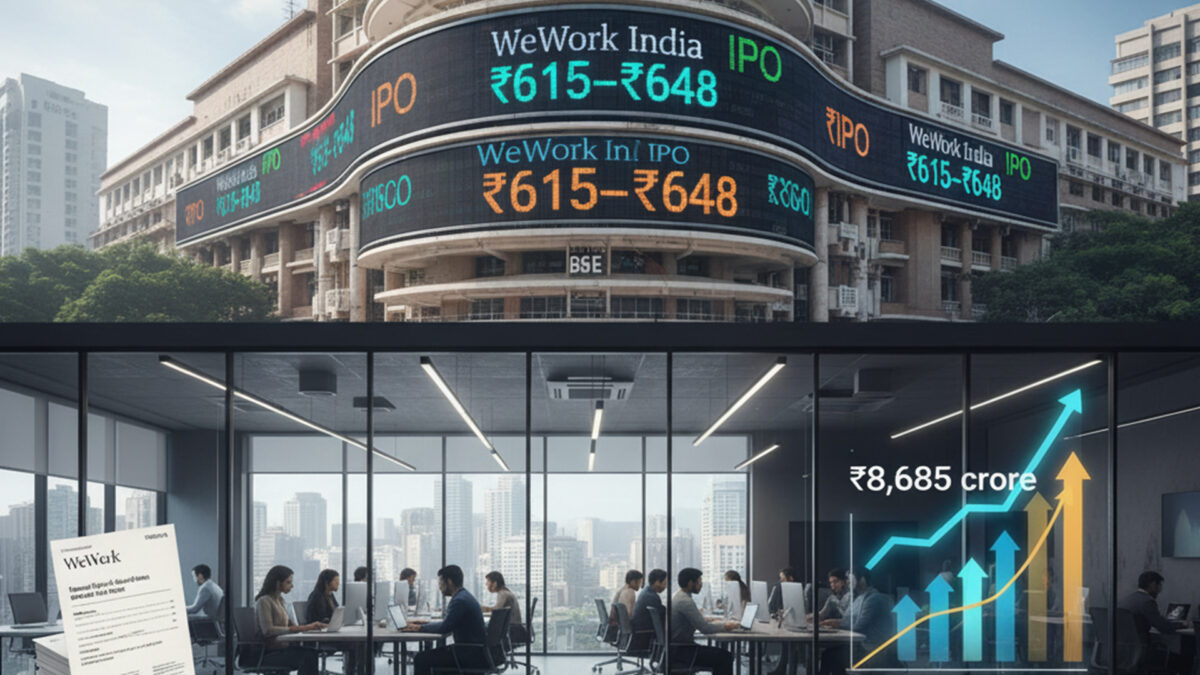
WeWork India Fixes ₹615–₹648 Price Band for ₹3,000 Crore IPO

WeWork India Management has announced a price band of ₹615 to ₹648 per equity share (face value ₹10) for its upcoming initial public offering (IPO), targeting a total issue size of up to ₹3,000 crore.

The IPO will open for bidding on October 3, 2025, and close on October 7, 2025, while bids from anchor investors will be accepted on October 1, 2025. The shares are expected to list on stock exchanges on October 10, 2025.

The entire IPO is structured as an Offer for Sale (OFS), meaning that WeWork India will not receive any proceeds directly from the issue; instead, the selling shareholders will get the funds. The OFS comprises up to 4.63 crore equity shares being offloaded by promoter and investor entities.

Promoter group entity Embassy Buildcon LLP plans to sell around 3.5 crore shares and raise ₹2,294 crore, while Ariel Way Tenant Ltd (a WeWork Global affiliate) will divest about 1 crore shares for ₹706 crore.

The existing shareholding structure has Embassy Group holding approximately 76.21%, and WeWork Global about 23.45% in WeWork India.

As of now, WeWork India operates under an exclusive licensing model in India, promoted by Bengaluru-based real estate firm Embassy Group.

The company’s portfolio spans major Tier-1 cities including Bengaluru, Mumbai, Pune, Hyderabad, Gurugram, Noida, Delhi, and Chennai. It manages around 77 lakh sq ft of space, of which approximately 70 lakh sq ft is operational, with a desk capacity of 1.03 lakh, and employs over 500 staff.

At the upper end of the IPO price band, the company is being valued at about ₹8,685 crore.

The IPO’s allocation mix earmarks 75% for Qualified Institutional Buyers (QIBs), 15% for non-institutional investors, and 10% for retail investors. Bids can be placed in lots of 23 shares, and in multiples thereof.

The allotment date is tentatively set for October 8, with crediting of shares expected on October 9, followed by listing on October 10.

The book-running lead managers for the issue include JM Financial Ltd., ICICI Securities Ltd., Jefferies India, Kotak Mahindra Capital, and 360 ONE WAM Ltd.

Once listed, WeWork India will compete with other coworking and real estate service firms such as Awfis Space Solutions, IndiQube Spaces, and Smartworks Coworking Spaces.

Investor attention will focus on demand dynamics, subscription levels, and post-listing trading, with the performance of this IPO likely to serve as a benchmark for other flexible workspace firms.

Also Read: Adobe Integrates Google’s Nano Banana AI into Photoshop