Categories
Corporate

Cochin Shipyard Introduces 3 Vessels, Showcasing India’s Maritime Prowess

India’s shipbuilding story has entered a new era of ambition and innovation. At Cochin Shipyard, three remarkable vessels have taken to the water, each one a striking symbol of the nation’s evolving maritime strength and technological maturity.

From safeguarding coastlines to harnessing green energy and deepening ports, these ships embody how India is reshaping its future at sea with homegrown expertise and vision.

Leading the trio is a formidable anti-submarine warfare craft for the Indian Navy. Fast, manoeuvrable, and outfitted with advanced sonar, torpedoes, and rockets, it fortifies India’s coastal defence capabilities with cutting-edge precision.

The second vessel is a hybrid-electric support ship built for offshore wind farms, a milestone in India’s clean energy drive. Featuring methanol-compatible engines and high-capacity battery packs, it merges sustainability with comfort, providing a quiet, efficient base for marine technicians.

Completing the lineup is the nation’s largest dredger, engineered to keep trade flowing through deepened ports and clear waterways. With enormous hopper capacity and powerful dredging systems, it strengthens India’s maritime infrastructure and economic resilience.

Together, these launches signal more than new additions to India’s fleet as they represent a confident nation steering its own maritime destiny, powered by innovation, sustainability, and strategic purpose.

Also Read: Adani’s Godda Plant Gets Grid Nod; Shares Surge 7%

Categories
Corporate

Meta Closes $30 Billion Financing Deal for Its Hyperion Data Center

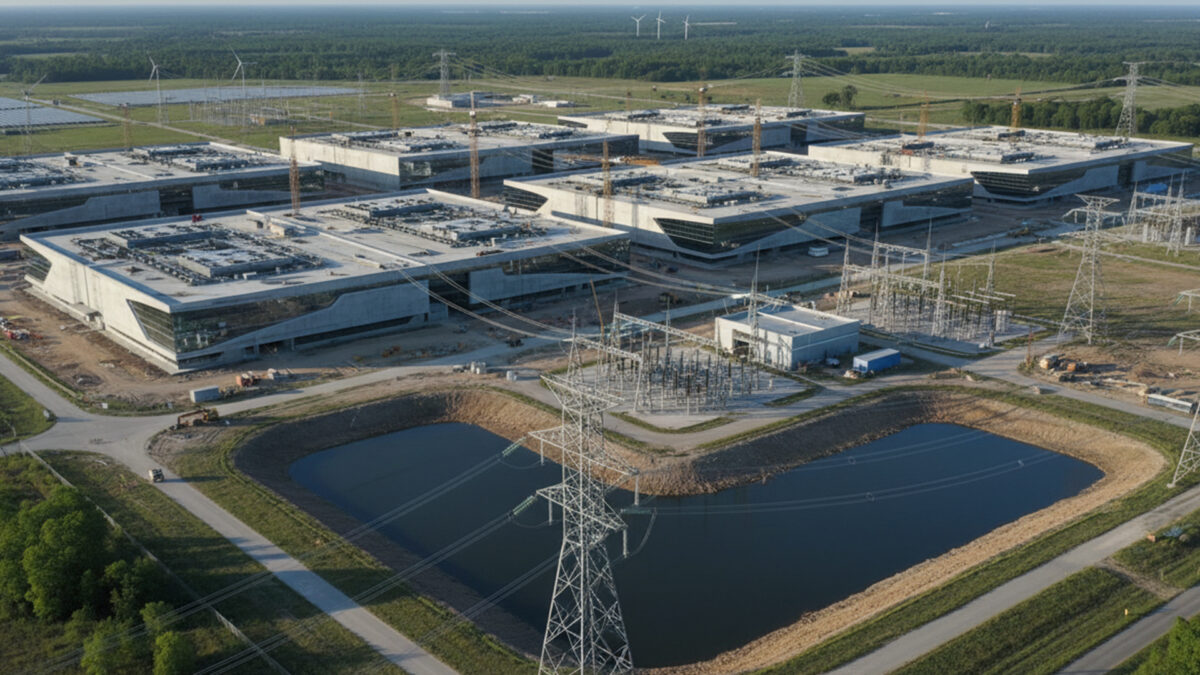
Meta Platforms has finalised a landmark financing package of approximately $30 billion to fund its Hyperion data center in Richland Parish, Louisiana—a move that could reshape how tech firms build AI infrastructure.

The transaction, reported on October 16 and 17 by multiple news outlets, marks the largest private capital deal ever structured in the technology and infrastructure sector.

Under the agreement, Meta and investment manager Blue Owl Capital will co-own the Hyperion site, with Meta retaining just a 20 percent stake and Blue Owl taking the majority share.

The deal is structured via a special purpose vehicle (SPV): Meta will not borrow the funds itself, but will act as the developer, operator and tenant of the data center. The SPV will carry more than $27 billion in debt and about $2.5 billion in equity, arranged by Morgan Stanley.

Pacific Investment Management Company (PIMCO) is anchoring much of the debt through 144A bond issuance. The bonds are being priced at roughly 225 basis points over U.S. Treasuries and carry an investment-grade A+ rating by S&P. (Morgan Stanley is the sole bookrunner.)

The Hyperion facility is expected to span nearly 4 million square feet and eventually draw as much as 5 gigawatts of power—enough to supply around four million U.S. homes—when fully operational by 2029.

The transaction structure allows Meta to deepen its AI compute capacity without burdening its balance sheet with direct debt. Analysts say this deal offers a model for hyperscalers seeking to scale infrastructure without weakening credit metrics.

Meta has been aggressively expanding its AI infrastructure this year. In August, the company tapped PIMCO and Blue Owl for a $29 billion financing plan to build out multiple compute hubs, including Hyperion and Prometheus.

The earlier arrangement would have combined $26 billion in debt and $3 billion in equity to drive Meta’s compute ambitions.

That earlier alignment underscores how long Meta has been negotiating with private credit markets to underwrite its infrastructure expansion.

The Hyperion deal comes at a time when hyperscalers are racing to scale AI systems across the U.S. and globally.

By structuring the financing off balance sheet, Meta is transferring much of the funding risk to institutional investors while retaining operational control.

Blue Owl and PIMCO, in turn, gain long-dated exposure to a physical asset serving as the engine for AI services.

Beyond the Louisiana project, Meta is pushing ahead on other data centers. The company recently announced a $1.5 billion investment in a new data center in El Paso, Texas, capable of scaling to 1 gigawatt.

That facility is expected to be operational by 2028. El Paso represents Meta’s 29th data center globally and its third in Texas. The new location was selected in part due to its strong electrical grid and workforce capabilities. Meta intends to match the energy used with 100 percent renewable sources and adopt water-efficient cooling systems to meet sustainability goals.

Meta’s CEO, Mark Zuckerberg, has publicly described a “supercluster” strategy: Prometheus is slated to go live in 2026 with over a gigawatt of compute, while Hyperion is designed to grow into a multi-gigawatt complex supporting Meta’s ambitions in large AI models, content inference, vision systems, and future applications.

He has also signaled intent to spend “hundreds of billions” in capital over time to underpin what Meta calls its superintelligence ambitions.

The sheer size of the Hyperion financing transaction underscores how capital markets are aligning behind AI infrastructure. The use of SPVs, long-dated bonds, and equity partnerships enables large-scale infrastructure development while giving investors access to stable, asset-backed returns.

However, the model carries risks: timely construction, technology execution, utility interconnection, real estate permitting, and macroeconomic interest rates could all pose challenges.

The closing of this deal not only cements Meta’s footprint in AI compute but also sets a precedent for how future exits in tech infrastructure may be funded.

As Cloud and AI competition intensifies among Meta, Microsoft, Google, and others, securing scalable capital for compute will likely become a strategic battleground.

Also Read: Jio Financial’s Q2 Profit Nears ₹700 Crore as Operating Income Surges

Categories
Corporate

₹255 Crore Irregularity Already Investigated, Not Part of New Probe: IndusInd Bank

IndusInd Bank has issued a clarification stating that the reported accounting discrepancy of ₹255 crore is not connected to any new investigation.

The bank said the irregularities were already identified in an earlier probe by an independent external agency, which submitted its report in April 2025.

In an exchange filing, the lender said, “We would like to clarify that the accounting irregularity of ₹255 crore as mentioned in the news report is not part of any new investigation being conducted by the Bank and that these findings were part of the investigation report submitted by the independent external agency to the Bank in April 2025.”

The bank added that it had disclosed all relevant details and incorporated the financial impact of the discrepancies in its audited statements for FY 2024–25, released on May 21, 2025.

According to reports citing people familiar with the matter, the Mumbai Police’s Economic Offences Wing (EOW) continues to examine alleged accounting lapses linked to entries worth about ₹255 crore.

Preliminary findings suggest that these entries date back to around 2016, shortly after IndusInd’s treasury derivatives desk was established. Investigators are scrutinising whether these were “unsubstantiated” internal entries lacking sufficient documentation or used to inflate reported income during weaker quarters.

So far, the EOW has not found any evidence of funds being siphoned off to personal or shell accounts. Officials said the discrepancies appear to be notional, rather than representing an actual diversion of money.

Around six to eight individuals have been questioned, including former Managing Director and CEO Sumant Kathpalia, ex-Chief Financial Officer Govind Jain and former Deputy CEO Arun Khurana.

Siddharth Banerjee, head of global markets and financial institutions at the bank, is also expected to be called for questioning. Police officials said the investigation is about halfway complete and that a clearer picture of any criminality should emerge by the end of October.

The controversy follows a wider probe launched earlier this year into accounting issues at IndusInd’s derivatives and treasury operations.

In March 2025, the bank disclosed financial misstatements and potential irregularities amounting to nearly ₹1,979 crore, related to derivatives transactions and other unsubstantiated balances. In response, IndusInd appointed an independent forensic auditor to review its books. The findings led the bank to revise certain financial statements and reclassify income and asset entries.

Following these revelations, Deputy CEO Arun Khurana resigned in April 2025, and the Reserve Bank of India reportedly pressed for leadership and governance reforms at the lender.

The external audit report submitted in April included the ₹255 crore entries now under discussion, which the bank says were already accounted for in its published results.

Separately, the Securities and Exchange Board of India (SEBI) is conducting an inquiry into possible insider trading by former IndusInd executives.

Regulators are investigating whether certain individuals traded in the bank’s shares ahead of public disclosure of the accounting lapses, potentially using unpublished price-sensitive information.

In May 2025, SEBI imposed interim trading restrictions on several former officials, including ex-CEO Sumant Kathpalia, pending the outcome of the investigation.

The renewed focus on the ₹255 crore irregularity has revived questions about the completeness of the bank’s earlier disclosures and the overall robustness of its internal controls.

While IndusInd maintains that the issue was thoroughly investigated and fully disclosed, law enforcement and regulatory agencies continue to examine whether the irregularities point to deeper governance lapses or systemic weaknesses in oversight.

The outcome of the EOW and SEBI investigations will likely determine whether IndusInd faces any further regulatory action or reputational fallout, as the lender seeks to reassure investors and rebuild confidence following months of scrutiny.

Also Read: Ola Electric expands into home energy storage with ‘Ola Shakti’

Categories
Corporate

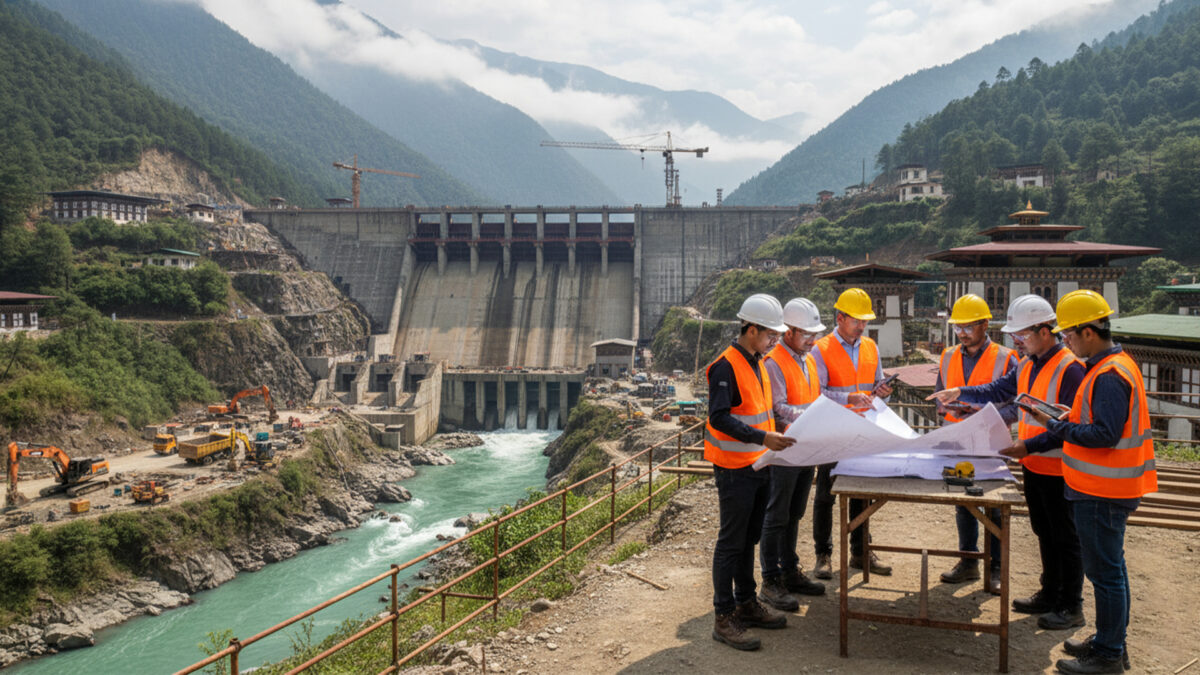
Adani Power Incorporates Joint Venture to Develop Hydro Project in Bhutan

Adani Power Limited has incorporated a new joint venture company in Bhutan to develop the 570 megawatt Wangchhu hydroelectric project.

The newly formed entity, named Wangchhu Hydroelectric Power Limited, will be a public company incorporated in Bhutan with a 49:51 shareholding structure between Adani Power and Bhutan’s state-owned Druk Green Power Corporation (DGPC), according to the parties’ announcements.

Under the terms of the agreement, Adani Power will hold a 49 percent stake while DGPC will hold 51 percent, with the joint venture authorised to develop, construct and operate the Wangchhu scheme.

The project is the first to be taken forward under a broader memorandum of understanding signed earlier in 2025 between the Adani Group and DGPC to jointly develop up to 5,000 MW of hydropower in Bhutan.

The companies said the Wangchhu project, located within Bhutan, is planned to have an installed capacity of approximately 570 MW and will be developed through the incorporated Bhutanese public company.

The partners signed project and shareholder documents as part of formalising the arrangement, industry reports show.

Adani Power has presented the joint venture as part of a wider strategy to expand its renewable and hydroelectric footprint across the region.

The partnership with DGPC follows a May 2025 memorandum of understanding between the Adani Group and Bhutan’s government-owned power developer, which envisaged multiple hydropower projects totalling several gigawatts.

Market reaction to the announcement was evident in Indian trading floors, where Adani Power shares rose on news of the Bhutan tie-up and related corporate developments, according to financial reports. Analysts noted the move as part of the company’s broader capacity expansion plans.

Officials from both sides characterised the joint venture as a cross-border collaboration intended to leverage Bhutan’s hydropower potential and foster long-term energy cooperation between the two countries.

The partners have indicated they will proceed with detailed project planning, regulatory clearances and financing arrangements in line with Bhutanese law and applicable bilateral frameworks.

The Wangchhu incorporation marks the first operational project under the Adani–DGPC partnership and is expected to be followed by additional projects subject to feasibility studies and approvals, company statements and industry coverage said.

Timelines for construction, commissioning and power off-take arrangements were not disclosed in the incorporation announcements and will be subject to subsequent shareholder and regulatory filings.

Also Read: Ola Electric expands into home energy storage with ‘Ola Shakti’

Categories
Beyond

U.S. Chamber of Commerce Sues Trump Administration Over $100,000 H-1B Visa Fee

The U.S. Chamber of Commerce has filed a lawsuit against the Trump administration, challenging its decision to impose a $100,000 annual fee on new H-1B visa petitions.

The powerful business group argues that the measure exceeds the president’s legal authority, violates the Immigration and Nationality Act, and threatens the ability of U.S. companies to attract and retain high-skilled foreign workers essential to their operations.

The lawsuit, filed in the U.S. District Court for the District of Columbia, names several federal agencies and officials, including the Department of Homeland Security and the Department of State, as defendants.

The Chamber is seeking an injunction to block enforcement of the policy and a ruling declaring the fee unlawful.

The petition contends that under U.S. immigration law, visa fees must reflect the actual administrative costs of processing applications — something the new $100,000 charge far exceeds.

The controversial fee, announced in September, applies to new H-1B visa petitions filed between September 21, 2025, and September 21, 2026. Existing visa holders and renewals are exempt.

The administration defended the move as a measure to protect American workers, claiming that the high fee would discourage what it described as “overuse” of the H-1B system by large technology and outsourcing firms. Employers could, however, apply for a national interest waiver under certain conditions.

The Chamber of Commerce, which represents millions of businesses across industries, countered that the policy would have devastating effects on the U.S. economy, particularly in sectors that depend heavily on foreign talent, such as information technology, healthcare, and engineering.

The group said the surcharge is so excessive that it effectively acts as a barrier to hiring, forcing companies to either reduce recruitment or shift operations overseas.

Industry leaders and economists have echoed these concerns, warning that such a drastic increase in fees could damage America’s competitiveness in the global talent market.

The H-1B program, which allows U.S. companies to hire foreign professionals in specialized fields, has long been viewed as critical to innovation and growth in areas such as artificial intelligence, biotechnology, and semiconductor research.

The legal challenge marks one of the first major confrontations between the Chamber of Commerce and the Trump administration during its second term.

The group has traditionally supported pro-business policies but has clashed with the White House over trade and immigration matters in the past.

Analysts say this lawsuit underscores growing tensions between corporate America’s labor needs and the administration’s protectionist approach to immigration.

Legal experts believe the case could set an important precedent. Courts will likely examine whether the executive branch has the authority to impose such a steep fee without explicit approval from Congress.

If the Chamber’s arguments prevail, the ruling could limit presidential power to unilaterally reshape key aspects of immigration policy.

For now, the business community is closely watching the case, with many companies delaying hiring plans that depend on H-1B visas until the issue is resolved.

The outcome will not only determine the future of the $100,000 fee but may also influence the broader balance between executive discretion and legislative oversight in U.S. immigration law.

Also Read: Zepto Set to Lock $500M Round, Eyes Valuation Above US$7B and IPO

Categories
Uncategorized

Nestlé to Cut 16,000 Jobs in Bold Restructuring to Reignite Growth

Swiss food giant Nestlé has announced plans to eliminate 16,000 positions globally over the next two years as part of a sweeping restructuring effort aimed at reigniting growth and improving operational agility.

The move comes under the leadership of new CEO Philipp Navratil, who has embarked on an aggressive turnaround plan following several years of sluggish performance and leadership instability.

The job cuts represent roughly 5.8 percent of Nestlé’s global workforce of around 277,000 employees.

Of these, approximately 12,000 are expected to come from white-collar roles in administration and corporate functions, while about 4,000 positions will be reduced in manufacturing and supply chain operations.

The restructuring aims to streamline the company’s vast global footprint and redeploy resources toward innovation, brand development, and faster-growing categories.

Nestlé also raised its cost-savings target to 3 billion Swiss francs by 2027, up from the previous goal of 2.5 billion.

According to company statements, these savings will be reinvested in growth areas such as coffee, confectionery, nutrition, and pet care — segments that have shown resilience despite recent macroeconomic headwinds.

The announcement comes during a period of major executive transition. Philipp Navratil took charge earlier this year following the abrupt departure of Laurent Freixe, who was dismissed after an internal investigation into a personal matter.

In addition, longtime chairman Paul Bulcke stepped down, paving the way for Pablo Isla, the former Inditex executive known for his operational discipline at Zara’s parent company, to assume the chairmanship.

The leadership shake-up and the restructuring plan reflect a sense of urgency within Nestlé to restore investor confidence. Over the first nine months of 2025, the company’s reported sales fell by 1.9 percent, largely due to currency headwinds, but organic growth improved to 3.3 percent.

In the latest quarter, Nestlé delivered better-than-expected performance, with organic sales up 4.3 percent and real internal growth of 1.5 percent.

Strong demand for coffee brands like Nescafé and Nespresso, as well as confectionery and pet food, helped offset softness in other divisions.

Navratil described the restructuring as a “hard but necessary” decision to make Nestlé leaner, faster, and more performance-driven. He emphasized that the company could no longer afford inefficiencies or complacency in an increasingly competitive consumer market.

Analysts believe the job cuts are part of a broader reset that could include divesting underperforming assets or reorganizing regional operations to better align with profitability goals.

Financial markets reacted positively to the announcement. Nestlé’s shares surged more than 8 percent — their biggest one-day gain in years — as investors welcomed the decisive measures.

Market analysts described the cuts as a signal that the company’s new management is serious about driving long-term shareholder value through efficiency and disciplined capital allocation.

However, challenges remain. Rising input costs for key commodities such as coffee and cocoa, volatile exchange rates, and weak consumer demand in parts of Asia could limit short-term gains.

The company has not provided details about how specific countries or business units will be affected by the job reductions but has reaffirmed its commitment to maintaining strong global operations while refocusing on high-return segments.

Nestlé’s decision to cut 16,000 jobs marks one of the most significant restructurings in its history. It underscores the intense pressure facing global consumer goods companies to adapt swiftly to changing consumer preferences, technological shifts, and investor demands.

Whether this bold strategy translates into sustainable growth and improved profitability will become clearer in the quarters ahead — a true test of the company’s resilience and leadership resolve.

Also Read: Jio Financial’s Q2 Profit Nears ₹700 Crore as Operating Income Surges

Categories
Corporate

Jio Financial’s Q2 Profit Nears ₹700 Crore as Operating Income Surges
Jio Financial Services reported a consolidated net profit of ₹695 crore for the quarter ended September 30, 2025, keeping the company firmly in focus among investors and analysts.

The financial arm of Reliance Industries saw strong growth across its lending, asset management, and payment businesses, which collectively pushed its operational performance to new highs.

While the year-on-year rise in consolidated profit was modest — up less than 1% from ₹689 crore in the same period last year — the company recorded a sharp surge in total income.

Jio Financial’s total revenue climbed to around ₹1,002 crore in Q2 FY26, representing a rise of nearly 44% compared to the previous year.

The strong increase in top-line numbers suggests that the company’s diversification strategy across multiple financial verticals is beginning to yield results, even as certain costs and provisions have tempered net profit growth.

According to company disclosures and financial filings, growth was led by the expansion of Jio Financial’s lending business, which saw robust traction in both personal and merchant loans.

Its asset management arm, Jio BlackRock AMC, also contributed meaningfully to income through successful early fund launches and growing investor participation.

Meanwhile, Jio Payments Bank continued to expand its network of business correspondents and customer base, supporting a rise in deposits and transaction volumes.

Jio Financial also achieved a multifold rise in income from its business operations during the quarter.

The company’s asset management business saw a rapid build-up in assets under management (AUM), while fee-based revenue streams gained strength.

Analysts pointed out that this diversification across lending, asset management, and payments is helping to establish a stable income base less reliant on any single vertical.

Market observers also noted that while operating income growth was robust, rising costs and provisioning slightly constrained the profit growth.

Still, the composition of earnings appears to be improving, with recurring fee income from the AMC business and interest income from the lending unit growing in tandem.

Following the results, Jio Financial’s stock was actively tracked on the exchanges, with traders reacting to the contrast between rapid operational expansion and a relatively flat profit line.

The stock experienced some intraday volatility as investors weighed the sustainability of the income surge and the potential for margin expansion in upcoming quarters.

Looking ahead, the company appears to be entering a scale-up phase, with management focused on strengthening distribution, launching new financial products, and deepening digital partnerships.

Analysts believe that continued growth in lending volumes, asset management inflows, and payment-bank monetisation will be key to converting strong income gains into higher profitability.

Jio Financial’s Q2 results signal that the company’s growth engines are firmly in motion. The coming quarters will determine whether this operational momentum translates into a consistent, high-margin financial story for one of India’s newest yet most closely watched financial institutions.

Also Read: Nestlé India Reports Q2 FY26: Revenue Growth Amid Profit Decline

Categories
Corporate

Zepto Set to Lock $500M Round, Eyes Valuation Above US$7B and IPO Relaunch

Mumbai‑based quick commerce firm Zepto is poised to close a fresh funding round by the third week of October, according to Business Today. The round is expected to be worth about US$500 million, and would drive Zepto’s valuation beyond US$7 billion —nearly double its last known valuation.

This fundraising is unfolding at a pivotal moment for the company. Zepto shifted its base back to India earlier this year via a reverse flip, and had initially aimed to file its Draft Red Herring Prospectus (DRHP) in early 2025.

However, the startup deferred its IPO plans to focus on achieving sustainable profitability first.

With this new capital infusion, insiders suggest Zepto may revisit its IPO ambitions shortly after the round closes.

Earlier this year, Motilal Oswal Financial Services committed about US$48 million to Zepto.

In 2024, the company raised US$665 million, which valued it at US$3.6 billion, followed by a further US$340 million round that elevated its valuation to US$5 billion.

The broader quick commerce sector continues to attract investor attention, driven by rising consumer demand and seasonal shopping surges.

Independent estimates suggest the category could generate around US$1.6 billion in sales during the upcoming festive season—about 12 percent of total online commerce. The net order value (NOV) is projected to expand by 25–30 percent quarter‑on‑quarter during the period, pointing to robust demand momentum.

Zepto, founded in 2021 by Aadit Palicha and Kaivalya Vohra, has emerged as one of India’s fast‑rising players in the hypercompetitive quick commerce space, facing rivals such as Blinkit and Swiggy Instamart.

With its new capital, the company plans to scale its dark store network, improve logistics efficiencies, and place renewed emphasis on profitability metrics—efforts intended to strengthen its case ahead of an eventual listing.

While Zepto has not formally responded to media queries concerning the planned fundraise, public filings and reports suggest that investors remain confident in the company’s trajectory.

If the round concludes as expected, Zepto will enter the next phase of its growth journey with enhanced financial flexibility and renewed momentum toward its long‑term goals.

Also Read: Microsoft, AWS, and Google to Shift Production Out of China?

Categories
Corporate

Microsoft, AWS, and Google to Shift Production Out of China?

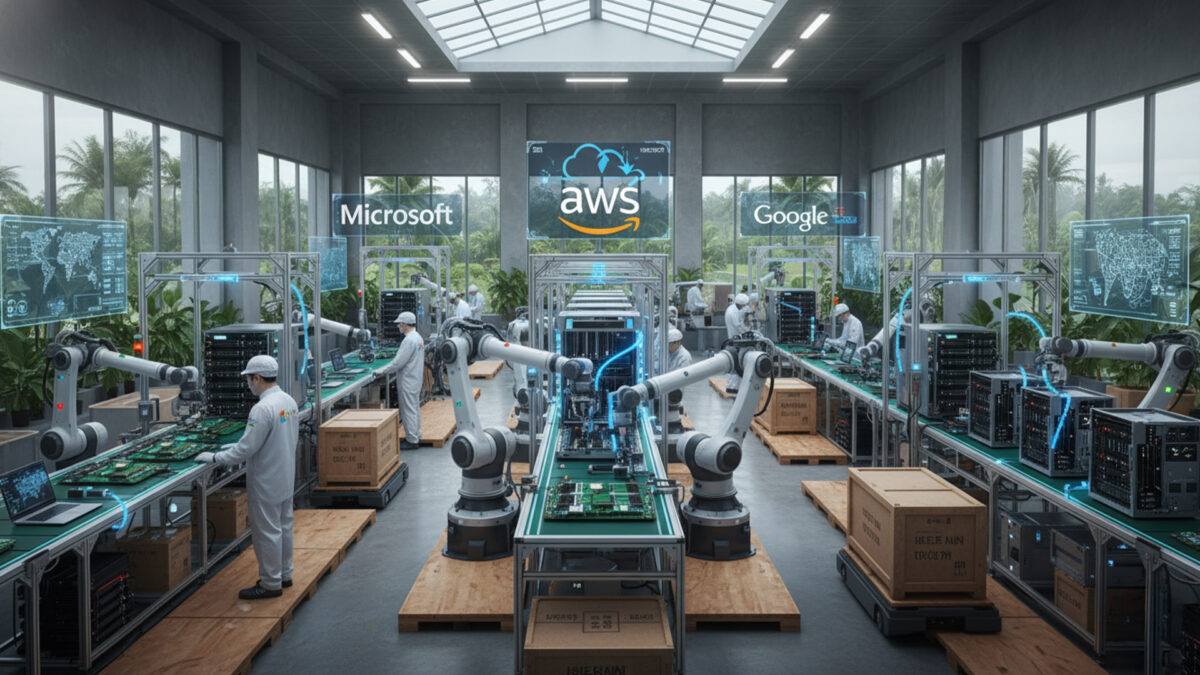
Major U.S. technology companies — Microsoft, Amazon Web Services (AWS), and Google — are planning to relocate significant parts of their production and component manufacturing out of China by 2026, as they look to reduce reliance on Chinese supply chains amid escalating U.S.-China trade and geopolitical tensions, according to a report by Nikkei Asia.

Microsoft has reportedly asked several suppliers to explore moving production of new products, including Surface laptops and data-center servers, outside China beginning in 2026.

The company is also targeting a shift in sourcing, with as much as 80 percent of materials for certain server components expected to come from non-Chinese suppliers.

AWS, the cloud computing arm of Amazon, is also accelerating efforts to diversify its supply base away from China.

The company is said to be focusing particularly on relocating production of components used in artificial intelligence (AI) servers, a key growth area that has been affected by export controls and supply-chain pressures.

Industry executives familiar with the matter have acknowledged that this shift poses challenges, given China’s long-established expertise in the manufacture of printed circuit boards and other critical parts.

Google, meanwhile, has begun expanding its server production capacity in Thailand. The company has reportedly instructed suppliers to carry out full-scale manufacturing — from component sourcing to assembly — in the Southeast Asian nation, in order to build greater resilience into its global hardware operations.

The move by these three U.S. tech giants comes amid rising strategic competition between Washington and Beijing, which has led to export restrictions, technology bans, and heightened scrutiny of supply-chain dependencies.

For multinational corporations, particularly those in the technology sector, the effort to “de-risk” and diversify supply chains has become a central strategy in response to these geopolitical uncertainties.

Analysts note that while shifting final assembly out of China can be done relatively quickly, relocating production of core components is far more complex.

Many of these parts rely on specialized supply networks, deep technical know-how, and cost structures that have developed in China over decades. Nonetheless, Microsoft, AWS, and Google appear committed to a gradual but significant reconfiguration of their manufacturing footprints.

If fully implemented, the moves could signal one of the most extensive supply-chain realignments by major U.S. technology firms in recent years.

Industry experts expect this to spur new investment across Southeast Asia, particularly in Thailand, Vietnam, and Malaysia, as companies seek alternatives to China while maintaining access to skilled labor and manufacturing infrastructure.

The transition marks a strategic turning point for the global tech industry, as firms balance cost efficiency with geopolitical risk management in an increasingly fragmented world economy.

Also Read: Air India in Fresh Talks to Acquire up to 300 Aircraft Amid Global Expansion Drive

Categories
Corporate

Air India in Fresh Talks to Acquire up to 300 Aircraft Amid Global Expansion Drive

Air India is in renewed negotiations with Airbus and Boeing to acquire up to 300 aircraft as part of its ongoing expansion and fleet modernisation under Tata Group ownership, according to sources cited by Reuters.

The discussions reportedly include as many as 80 to 100 wide-body aircraft, in addition to about 200 narrow-body jets and 25–30 other wide-body planes that were already under consideration.

The exact composition of the order—covering the mix between narrow-body and wide-body aircraft and the ratio of firm orders to purchase options—has not yet been finalised, Reuters reported.

These talks build on Air India’s earlier efforts to expand its fleet. In June 2025, Reuters reported that the airline was exploring a deal for approximately 200 additional single-aisle jets from Airbus and Boeing. Earlier in the year, discussions were also underway to acquire 30 to 40 wide-body aircraft to increase long-haul capacity.

If the new plan materialises, it would add significantly to Air India’s record 2023 order of 470 aircraft from both manufacturers.

The proposed deal underscores the airline’s ambition to rapidly strengthen its fleet, improve reliability, and expand its international route network.

The renewed negotiations come as Air India faces heightened scrutiny following the June 2025 crash of a Boeing 787 aircraft in Ahmedabad that killed 260 people.

The incident has intensified the airline’s efforts to modernise its fleet and enhance operational safety standards.

Air India’s expansion push coincides with a sharp rebound in global air travel. With international passenger volumes recovering strongly, the carrier is positioning itself to compete more aggressively with established global airlines on long-haul routes connecting India with North America, Europe, and Asia-Pacific.

According to Reuters, details regarding the financial structure, delivery timelines, and division of firm orders versus options remain under discussion.

However, industry sources noted that the magnitude of the order reflects Air India’s intent to accelerate its global transformation and re-establish its position as a leading full-service international carrier.

If concluded, the agreement could rank among the largest aircraft acquisitions by an Indian airline and would reinforce the Tata Group’s multi-year strategy to revitalise Air India.

The plan aligns with the carrier’s goal of integrating its subsidiaries, including Air India Express and Vistara, into a unified full-service and low-cost operation serving both domestic and international markets.

Also Read: Standard Chartered, BoI Seal $215 Million Loan for Air India’s Fleet Expansion