Categories
Corporate

Walmart Pauses H-1B Hiring Amid Impact of $100,000 U.S. Visa Fee

Walmart Inc. has paused making job offers to candidates requiring H-1B visa sponsorship, following sweeping changes introduced by the U.S. government that dramatically raise visa application costs, according to a Bloomberg report.

The decision comes in response to a new $100,000 fee for H-1B visa applications imposed by the Trump administration in September.

The measure, part of a broader overhaul aimed at tightening the program, is designed to discourage what the administration describes as overuse of foreign skilled workers.

The change has reverberated across technology, retail, and consulting industries that depend heavily on such visas.

Walmart is among the largest users of H-1B visas in the U.S. retail sector, employing around 2,390 H-1B holders out of its total workforce of about 1.6 million.

While that represents a small portion of its overall headcount, it underscores the company’s reliance on global talent in specialized corporate and technology roles.

A Walmart spokeswoman said the retailer remains “committed to hiring and investing in the best talent to serve our customers, while remaining thoughtful about our H-1B hiring approach.”

The new visa fee policy has drawn sharp criticism from industry groups and legal experts. The U.S. Chamber of Commerce recently filed a lawsuit challenging the legality of the $100,000 fee, calling it a “cost-prohibitive barrier” for employers, particularly start-ups and mid-sized businesses.

The Chamber argued that the rule undermines the purpose of the H-1B program, which was created by Congress in 1990 to allow American firms to access skilled foreign professionals when domestic shortages exist.

According to guidance from the U.S. Citizenship and Immigration Services (USCIS), the fee applies to new H-1B applications filed after September 21, 2025, but exempts current visa holders changing employers or status within the U.S.

Despite these clarifications, companies across sectors continue to express uncertainty about implementation timelines and compliance requirements.

Economists and education experts have cautioned that the new fee could significantly reduce the number of skilled foreign workers entering the U.S., particularly in STEM fields.

Universities and hospitals, which also rely on H-1B visas to recruit researchers and lecturers, have warned that the cost increase could strain their hiring pipelines.

Walmart’s decision adds to growing signs that the policy shift is reshaping corporate hiring practices across industries.

As reported by Bloomberg, the company’s pause illustrates how even major employers are reassessing recruitment strategies amid escalating visa costs and regulatory unpredictability.

Also Read: WeWork India Issues Detailed Response to InGovern Critique

Categories
Corporate

WeWork India Issues Detailed Response to InGovern Critique

WeWork India Management Ltd has responded comprehensively to a governance-watch report released by proxy advisory firm InGovern Research Services, issuing extensive clarifications on concerns raised ahead of its ₹3,000 crore initial public offering.

The company reaffirmed that it has complied with all regulatory disclosure norms and emphasised strong operational performance, countering InGovern’s earlier warnings over profitability path, promoter pledges, and the structure of the IPO.

InGovern had flagged several issues in its original note, pointing to a sole offer-for-sale structure for the IPO, meaning no fresh capital infusion into the company, and a negative net worth of around ₹437 crore as of 31 March 2024.

The advisory firm also cited heavy lease obligations consuming over 43 per cent of revenue and significant promoter share pledging, which it said posed risks to minority investors and raised governance concerns.

In its rebuttal, WeWork India said that its operations have generated positive cash flows since FY23, citing net cash from operations of ₹942 crore in FY23, ₹1,162 crore in FY24, and ₹1,290 crore in FY25.

It reported an adjusted EBITDA margin of 21.61 per cent in FY25 — among the highest in the industry — with occupancy for the quarter ended June 2025 at 81.23 per cent.

The company asserted that the absence of fresh capital in the IPO structure was deliberate, given its strong cash-generative position.

Addressing governance queries, WeWork India stated that all legal proceedings involving its promoters had been disclosed in the “Outstanding Litigation and Other Material Developments” section of its draft red-herring prospectus in line with Securities and Exchange Board of India norms.

The company added that the promoter share-pledge issue had been substantially addressed: the shares were unpledged prior to listing, and the remaining pledge stands at a nominal 15 per cent, significantly reducing any control-related risk.

On its brand-licensing arrangement with the U.S. parent firm WeWork Inc., WeWork India reassured the market that the long-term, exclusive agreement with real-estate group Embassy Group for the Indian market is stable and aligned with industry practice.

The company maintained that risks flagged by InGovern around brand continuity and licensing exposure are mitigated by contractual safeguards.

In an addendum to its earlier note, InGovern acknowledged that WeWork India executives had provided detailed clarifications and noted that the IPO listing on 10 October, and the associated disclosures, marked a positive step toward transparency and enhanced oversight.

The advisory firm, however, maintained that the company’s governance structure, promoter pledges, and debt exposure warrant close post-listing monitoring.

Also Read: Warner Bros. Discovery Opens Strategic Review After Multiple Buyout Approaches

Categories
Corporate

LTIMindtree President Nachiket Deshpande Steps Down

India’s sixth-largest IT services firm LTIMindtree Limited announced on Tuesday that Nachiket Deshpande will resign from his role as Whole-time Director and President, with his last working day set as 31 October 2025.

He will leave the company to “explore new opportunities beyond LTIMindtree,” the company said in a regulatory filing.

Deshpande had been a key member of the leadership team at LTIMindtree, first joining the entity in November 2022 following the merger of Larsen & Toubro Infotech (LTI) and Mindtree, and transitioning from his earlier role as Chief Operating Officer to become President.

In March 2025, Deshpande was reassigned to lead the newly formed global AI services business, strategic deals and partnerships at the firm.

In its formal communication to the stock exchanges, LTIMindtree said that it placed “on record its appreciation for the contributions made by Mr Deshpande during his association with the Company.”

The company’s Chairman, S N Subrahmanyan, remarked that Deshpande’s leadership and steadfast commitment had been “pivotal in shaping the foundation for the next phase of growth for LTIMindtree.”

Deshpande’s departure comes against a backdrop of senior-level exits and a broader leadership transition at LTIMindtree. In January 2025, the company’s President of Global Markets, Sudhir Chaturvedi, resigned ahead of being considered for the CEO role.

Meanwhile, the Chief Executive Officer and Managing Director, Debashis Chatterjee, opted for early retirement in May 2025 and was succeeded by Venu Lambu.

Deshpande, in his resignation letter, described LTIMindtree as “a remarkable organisation” and said he was proud of the transformative initiatives he had been able to lead.

He noted his decision after “seven remarkable years” with the company would allow him to pursue new personal growth and career opportunities.

The company did not announce any immediate successor for the President role.

Analysts said that the exit adds to the governance and leadership change narrative at LTIMindtree, even as the firm works to execute its growth strategy and consolidate its position among global IT service providers.

Also Read: Warner Bros. Discovery Opens Strategic Review After Multiple Buyout Approaches

Categories
1 Minute-Read

JSW Steel Shines in Q2, Profit at ₹1,623 Crore

Steelmaker JSW Steel reported a nearly fourfold jump in consolidated net profit to ₹1,623 crore for the quarter ended September 30, compared with ₹439 crore a year earlier.

The sudden rise was driven by higher sales volumes that offset weaker steel prices. Revenue rose 13.8% year-on-year to ₹45,152 crore, while adjusted EBITDA climbed 39% to ₹7,849 crore on lower input costs.

Crude steel output hit a record 7.9 million tonnes, up 17% year-on-year. The company reduced its net debt to ₹79,153 crore and maintained a full-year capex plan of ₹20,000 crore.

Categories
Corporate

Samvat 2082 Opens on a High with Muhurat Trading

As Diwali ushers in Samvat 2082, Indian equity markets are looking forward to a brighter year after a period of consolidation. Samvat is the traditional Hindu calendar year, with Samvat 2082 corresponding roughly to 2025–26 in the Gregorian calendar.

Indian equity markets kicked off Samvat 2082 on a positive note with a vibrant Muhurat trading session on Diwali, reflecting investor optimism for the new financial year. The one-hour session, held between 1:45 PM and 2:45 PM IST, saw the BSE Sensex touch a high of 84,600 points, while the Nifty50 reached 25,850, closing in positive territory despite intraday fluctuations. Broader indices, including the Nifty Midcap 100 and Smallcap 100, also ended with gains, signaling a resilient market start.

During the session, DCB Bank emerged as the top gainer, surging 9.4% following a strong quarterly profit report. Tata Investment Corporation and Bajaj Finserv recorded notable gains, with Bajaj Finserv hitting a 52-week high of ₹2,155.30. Bajaj Finance and Bharti Airtel also touched 52-week highs, reflecting robust market sentiment. Other significant gainers included Styrenix Performance Materials, Supreme Petrochem, Bajaj Hindusthan Sugar, and Dish TV India.

On the other hand, several stocks underperformed, with Ujjivan Small Finance Bank, JM Financial, Shoppers Stop, HealthCare Global Enterprises, MTAR Technologies, and JK Paper recording losses.

Analysts remain cautiously optimistic for Samvat 2082, highlighting Banking, Financial Services & Insurance (BFSI), automobiles, and infrastructure as key growth sectors. Rising credit, supportive government policies, and strong consumer demand are expected to fuel momentum.

Promising stocks with strong fundamentals include Royal Orchid Hotels, Adani Green Energy, Paytm, Ambuja Cement, and V-Mart Retail. The auto sector is expected to benefit from GST reductions and rising consumer spending, while infrastructure firms with healthy order books may gain from government projects. BFSI players could see improved profitability through steady credit growth. Analysts forecast that the Nifty50 could reach 26,500–28,000 and Bank Nifty touch 62,500 by next Diwali, though they caution investors to monitor global market swings, inflation, and interest rate trends.

The Muhurat trading session, though brief, seamlessly combined festive tradition with market strategy, signaling a positive start to Samvat 2082 for investors.

Also Read: South Indian Bank Gains 19% on Q2 Profit

Categories
Corporate

Midwest IPO Fully Subscribed, Listing Set for October 24

Natural stone exporter Midwest Ltd has finalised share allotments for its ₹451-crore IPO, ahead of its October 24 listing. Grey market trends indicate a premium of about 9% over the issue price, suggesting a firm debut on Dalal Street.

The offer included a fresh issue of ₹250 crore and an Offer for Sale (OFS) of ₹201 crore, priced between ₹1,014 and ₹1,065 per share. Retail investors could bid for a minimum of 14 shares, requiring an investment of roughly ₹14,910.

According to lead manager DAM Capital Advisors, the IPO was fully subscribed within hours, with strong participation from institutional, non-institutional, and retail investors.

Midwest, known for its premium granite brands like Black Galaxy and Absolute Black, reported FY25 revenue of ₹626.18 crore, with natural stone contributing 96% of earnings. Funds raised will be used to expand its quartz plant, purchase electric dump trucks, integrate solar power, and repay borrowings.

Analysts, while optimistic about the company’s growth prospects, flag regulatory dependencies and an old CBI notice (2015) involving a promoter as potential risks.

Allottees can check their status on the KFin Technologies portal or BSE/NSE websites. Refunds for non-allottees will follow soon.

Midwest’s listing is being closely watched as a litmus test for mid-cap IPO sentiment amid buoyant market conditions this festive season.

Also Read: Reliance Jumps 4% on Strong Q2 Results

Categories
Corporate

Avaada Electro Seeks ₹10,000 Crore in Confidential IPO Filing

Avaada Electro Private Ltd, the solar manufacturing arm of the Brookfield-backed Avaada Group, has confidentially submitted a Draft Red Herring Prospectus (DRHP) to the Securities and Exchange Board of India (SEBI), aiming to raise between ₹9,000 crore and ₹10,000 crore through an initial public offering (IPO).

This step marks a significant move for Avaada Electro as it looks to raise capital from public markets to expand operations and strengthen its presence in India’s renewable energy sector.

The IPO is expected to include both a fresh issue of shares and an offer-for-sale component from existing shareholders.

Proceeds from the fresh issue are planned for capacity expansion in solar cell and module manufacturing, including the development of a 5.1 GW integrated facility in Uttar Pradesh and a capacity scale-up at the Butibori plant in Maharashtra.

Avaada Electro is among the largest solar photovoltaic (PV) module manufacturers in India by operational capacity as of September 30, 2025.

It is part of the Avaada Group, a diversified clean-energy conglomerate with operations spanning solar PV manufacturing, renewable power generation, green hydrogen and derivatives, pumped hydro storage, battery storage, and green data centres.

The group, backed by Brookfield Renewable Partners and Thailand’s Global Power Synergy Public Co, raised over $1.3 billion in 2023 to fund expansion across solar, hydrogen, battery storage, and green ammonia verticals.

The company currently operates 8.5 GW of solar module capacity across its Uttar Pradesh and Maharashtra facilities and plans to scale up to 13.6 GW of module capacity and 12 GW of cell capacity over the next two fiscal years.

Its operational capacity has grown rapidly from 1.5 GW in September 2024 to 8.5 GW by September 2025, following the commissioning of its Nagpur plant and the start of commercial production at the Dadri facility.

Avaada Electro is also developing a fully integrated solar manufacturing hub at Nagpur, with plans to achieve 6 GW of TOPCon solar-cell capacity by FY26 and 12 GW by FY27.

The company intends to add 3 GW of ingot and wafer capacity by FY27, completing the value chain from raw materials to finished modules.

Industry projections suggest that annual solar PV demand in India could more than double between FY26 and FY30, surpassing 40 GW per year, while domestic capacity for high-efficiency TOPCon cells remains relatively limited.

Analysts view Avaada Electro’s IPO as a strategic move to capture the country’s expanding renewable energy market and meet growing domestic and international demand for solar modules.

The IPO filing highlights increased foreign and institutional investment interest in India’s clean energy sector, reflecting confidence in the country’s renewable energy growth potential.

If successfully executed, the IPO will provide Avaada Electro with the resources to scale operations, enhance manufacturing efficiency, and solidify its position as a leading player in India’s solar energy landscape.

Also Read: Embraer Opens India Office, Partners with Mahindra on C-390 Aircraft

Categories
Corporate

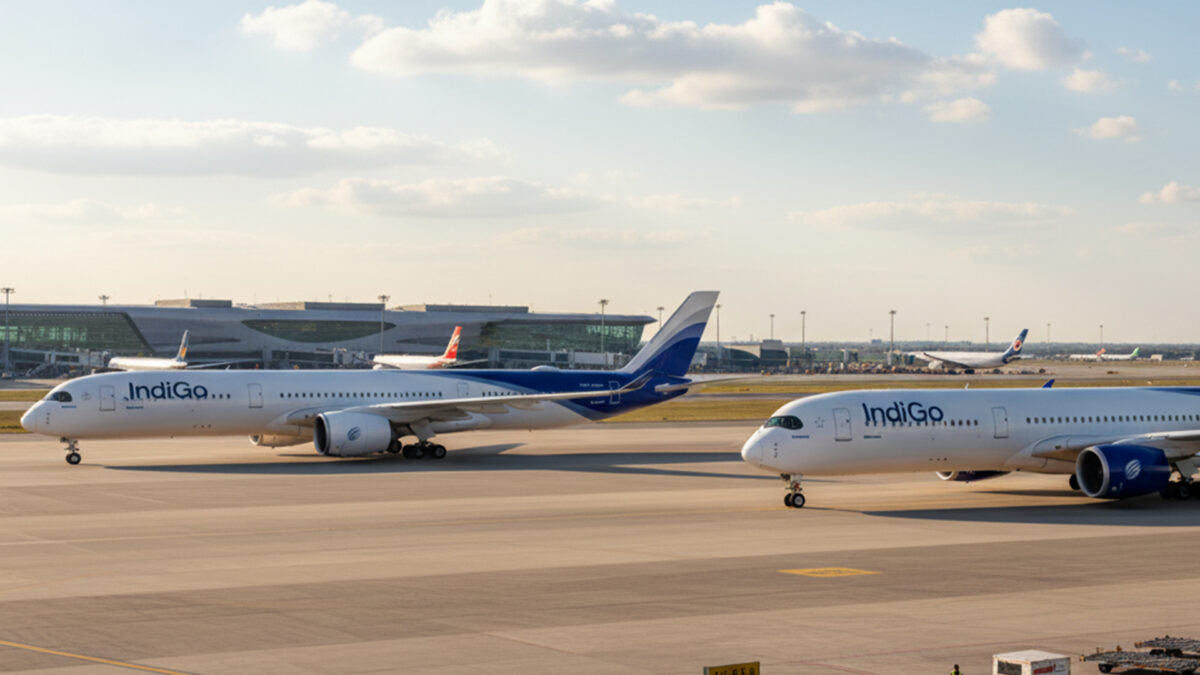
IndiGo Doubles Airbus A350-900 Order to 60 Jets

India’s largest airline, IndiGo (InterGlobe Aviation), has confirmed a firm order for 30 additional Airbus A350-900 wide-body aircraft, doubling its total confirmed commitment for the type to 60 jets.

The carrier had previously placed a firm order for 30 A350-900s in April 2024, with purchase rights for an additional 70 aircraft.

The 30 additional firm aircraft confirm the conversion of part of its existing option book into firm orders, increasing its wide-body aircraft order book from 30 to 60 A350-900s.

IndiGo’s original wide-body order in 2024 represented a historic milestone for the airline, which until then had operated exclusively narrow-body aircraft.

The A350-900 fleet will be powered by Rolls-Royce Trent XWB engines, under a long-term technical partnership designed to support the airline’s future long-haul operations. IndiGo expects to begin taking delivery of the A350-900 aircraft from 2027 onwards.

According to industry sources, the decision underlines IndiGo’s intent to expand beyond its strong domestic and regional footprint to long-haul destinations in Europe, East Asia, and potentially North America.

The airline views the A350-900 platform as the ideal vehicle for this expansion, offering the range, efficiency, and passenger comfort required for non-stop intercontinental operations.

IndiGo’s business model has historically centred around the Airbus A320 family, which has enabled it to dominate the domestic market with high-frequency, low-cost operations.

With the A350 order expansion, IndiGo is signalling its transition from a primarily regional low-cost carrier into a global airline with a strong presence in international markets.

The move is also consistent with India’s evolving aviation landscape, where international travel demand has risen sharply amid growing disposable incomes and the country’s emergence as one of the world’s fastest-growing aviation markets.

Analysts have noted that IndiGo’s investment in wide-body aircraft positions it to capture a larger share of outbound and inbound traffic, competing more directly with Gulf and Southeast Asian carriers that currently dominate long-haul routes to and from India.

While delivery of the A350-900s will begin in 2027, IndiGo’s expansion will require parallel investments in crew training, long-haul operations infrastructure, and international partnerships.

Industry observers say the carrier’s evolving fleet composition suggests it is preparing for a hybrid operational model that balances its low-cost core with a new premium long-haul offering.

The confirmation of 30 additional A350-900s also leaves IndiGo with the option to further expand its wide-body fleet in the future, as the airline retains purchase rights on additional aircraft under its existing agreement with Airbus.

The move reinforces IndiGo’s ambition to become a truly global airline by the end of the decade.

With a total of 60 A350-900s now on order, the carrier is positioning itself to lead India’s next phase of international aviation growth and redefine its role on long-haul routes connecting major global markets.

Also Read: Embraer Opens India Office, Partners with Mahindra on C-390 Aircraft

Categories
Corporate

Emirates NBD’s Takeover of RBL Bank Marks Largest FDI in Indian Banking

In a landmark move for India’s financial sector, Emirates NBD Bank (ENBD) and RBL Bank announced simultaneous board approvals on October 18, agreeing to definitive documentation under which ENBD will acquire a controlling stake of up to 60 percent in RBL Bank via a preferential share infusion of about USD 3 billion (about INR 26,850 crore).

The deal will also trigger a mandatory open offer for up to 26 percent of public shareholdings under the norms of the Securities and Exchange Board of India (SEBI) takeover regime.

The agreement is described in the joint announcement as the largest-ever foreign direct investment (FDI) in India’s financial services sector, the largest equity raise in the Indian banking realm, and—via preferential issuance by a listed company—the largest such capital raise of its kind.

It also marks the first time a foreign bank has committed to acquiring a majority interest in a profitable Indian private sector bank.

Against this backdrop, the transaction underscores ENBD’s long-term strategic commitment to the Indian market and signals a new era of cross-border banking partnerships in South Asia.

For ENBD, a major Middle East banking group with assets of approximately USD 296 billion as of June 30, 2025, the deal aligns with its international expansion agenda.

The bank already operates in India through three branches in Mumbai, Gurugram, and Chennai, and had secured an in-principle approval from the Reserve Bank of India (RBI) earlier in the year to convert to a wholly owned subsidiary in India.

RBL Bank brings to the table pan-India retail, wholesale, and digital capabilities with roughly 15 million customers served through 564 branches and 1,347 business-correspondent locations as of September 30, 2025, and has seen steady growth in advances, deposits, and its balance sheet over recent years.

From RBL Bank’s perspective, the infusion will significantly bolster its capital base, provide long-term growth funds, and enable it to scale its retail deposit franchise, expand its branch network, and deepen product offerings.

The plan also calls for the amalgamation of ENBD’s Indian branch operations into RBL Bank following the preferential issuance, in line with RBI guidelines under Section 44A of the Banking Regulation Act.

Regulatory mechanics remain critical. The structure envisages a preferential allotment of new shares to ENBD at ₹280 each, thereby constituting the 60 percent stake in the enlarged equity.

A mandatory open offer will follow; should the combined stake exceed the prescribed limits under foreign investment norms.

India allows up to 74 percent foreign ownership in private banks, with any single foreign entity typically subject to a 15 percent cap unless exempted.

Strategically, this transaction marks a pivot for the Indian banking landscape.

Market analysts suggest that the ENBD-RBL deal could open the floodgates for further foreign capital inflows and strategic partnerships in the mid-sized and growing Indian banking sector.

For ENBD, the investment reinforces its role in the India–Middle East–Europe Economic Corridor (IMEC) and amplifies its capabilities in trade finance, treasury, payments, and cross-border flows, leveraging RBL’s domestic presence.

For RBL Bank, the combined franchise offers access to global banking expertise, digital capabilities, and higher-rated corporate flows.

For investors and analysts, key takeaways include the enhanced capitalisation of RBL, with its net worth expected to rise toward INR 42,000 crore per brokerage estimates, and improved growth opportunities across retail, SME, corporate, and wealth segments.

However, execution will depend on obtaining regulatory approvals from the RBI, SEBI, the Department for Promotion of Industry and Internal Trade (DPIIT), and the Competition Commission of India (CCI), among others, with deal completion expected within five to eight months.

In sum, this landmark investment by Emirates NBD into RBL Bank is more than a capital infusion—it signals India’s growing openness to large foreign-bank participation and sets the stage for a new phase of consolidation and global banking alliances in India’s financial services sector.

Also Read: Embraer Opens India Office, Partners with Mahindra on C-390 Aircraft

Categories
Corporate

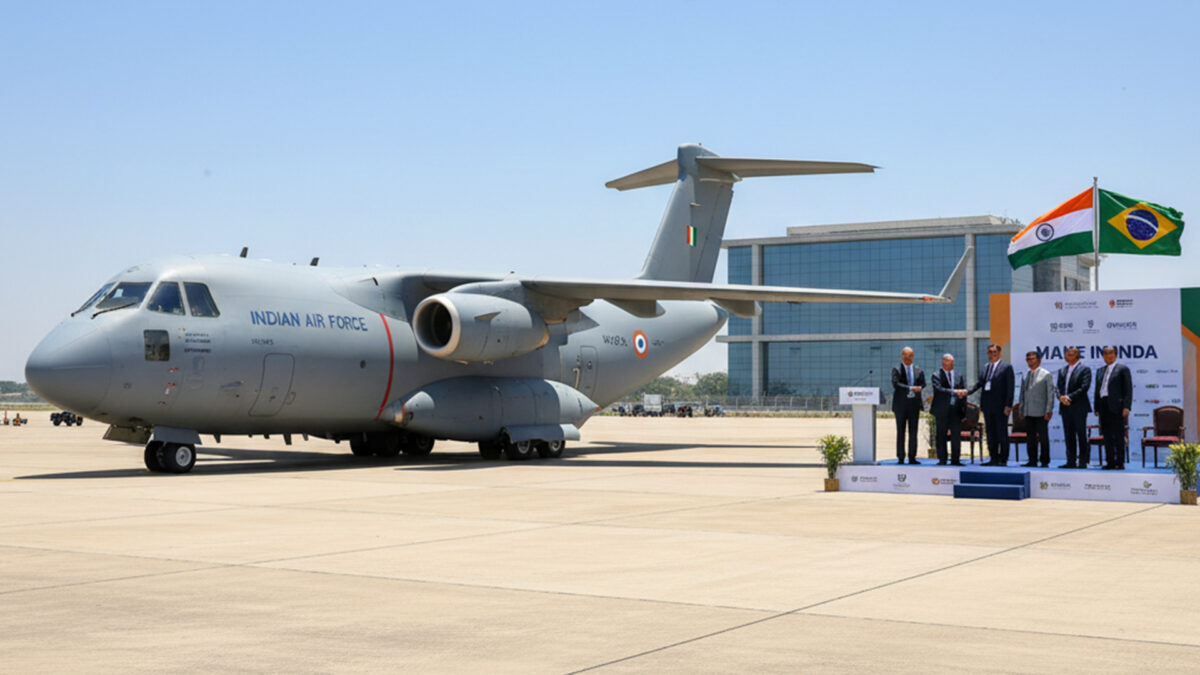
Embraer Opens India Office, Partners with Mahindra on C-390 Aircraft

Brazilian aerospace company Embraer has officially opened its new office in New Delhi, marking a significant step in its commitment to the Indian market. Embraer also signed a strategic cooperation agreement with India’s Mahindra Group to jointly develop and promote the C-390 Millennium military transport aircraft for the Indian Air Force’s Medium Transport Aircraft program.

Building on their previous partnership, the two companies aim to make India a regional hub for the C-390, focusing on local manufacturing, assembly, and maintenance. This move aligns closely with India’s ‘Make in India’ initiative and efforts to strengthen domestic defense production capabilities.

The C-390 Millennium is a versatile aircraft designed for a range of missions, including cargo transport, troop movement, medical evacuation, and firefighting. Known for its robust performance and ability to operate on short or unpaved runways, the C-390 is well-suited to meet India’s diverse defense needs.

This collaboration highlights growing international cooperation in defense and aerospace sectors, with Embraer emphasizing India’s central role in its global strategy.

Also Read: Cochin Shipyard Introduces 3 Vessels, Showcasing India’s Maritime Prowess