Categories
Leaders

Colliers India and ME CMD Sankey Prasad Quits

After a distinguished tenure, Sankey Prasad has stepped down from his role as Chairman and Managing Director of both Colliers India and Colliers Project Leaders, marking the end of a significant chapter in his leadership career.

His resignation comes as the global property services firm prepares to usher in new leadership across its India and Middle East operations.

Prasad’s departure was announced in a statement issued on October 28, 2025, in which he expressed his intention to shift his focus toward entrepreneurial ventures and to provide strategic board-level advisory support to clients across the real estate, infrastructure and capital-projects domains.

The statement noted that while he is relinquishing his executive leadership roles, he will continue to hold a stake in the Middle East business of Colliers Project Leaders.

Prasad’s tenure at Colliers included leading the company’s project-management and design-build consultancy business in India and expanding his remit to the Middle East.

He built a track record of overseeing large-scale assignments and driving growth in new geographies, having earlier founded one of India’s largest project-management firms and integrating it into Colliers after an acquisition.

Under his stewardship, Colliers India diversified its service offering, scaled operations across real-estate asset classes and strengthened its regional footprint.

The firm will now look to maintain momentum under new executives who will step in to carry forward the growth agenda set during Prasad’s era.

While details of his successor have not yet been publicly announced, the company has signalled that its India business and Middle East project-management operations will continue to support large-scale developer and investor mandates across emerging markets.

Prasad’s next phase, as he described it, will center on selective entrepreneurial opportunities and providing high-level advisory input to developers, infrastructure firms and investors working across India, the Middle East and North Africa.

By repositioning himself as a strategic adviser and entrepreneur, he aims to harness his decades of industry experience and his deep understanding of large capital-project delivery to new ventures and board roles.

Industry observers view Prasad’s exit from day-to-day operations as natural in a leader’s career arc, but one whose timing is telling given the current inflection point in real-estate and capital-projects markets in India and the Gulf region.

His shift away from full-time executive responsibilities suggests a move toward ecosystem leadership—supporting transformation, advising on governance and guiding growth rather than managing operational execution.

For Colliers, the departure of a leader with both local market depth and a global mindset means it now must balance continuity with change.

Ensuring the transition is smooth and that client relationships remain anchored will be critical, especially as the firm competes for large-scale contracts and seeks to capture the next wave of project-management growth in emerging markets.

As Prasad begins the next chapter of his professional journey, his decision to pivot into entrepreneurship and strategic advisory underscores the evolving role senior executives play in real estate and infrastructure: moving from operators to orchestrators, from build-outs to boardrooms.

Also Read: Tata Sierra to Relaunch on November 25

Categories
Corporate

Tata Sierra to Relaunch on November 25

Tata Motors has confirmed the much-anticipated relaunch of its iconic SUV nameplate, Tata Sierra, set for November 25, 2025.

The revival aims to blend the nostalgic styling of the original Sierra, which debuted in India in the early 1990s, with contemporary design and technology that align with the automaker’s current ambitions.

The new Sierra will be introduced initially in internal-combustion engine (ICE) versions, while an electric vehicle (EV) variant is expected to follow shortly thereafter.

Tata Motors has positioned the model as a key addition to its SUV portfolio, slotting it above the current Curvv model and targeting a premium segment below the Harrier.

Design previews and spy photos suggest the 2025 Sierra retains hallmark cues of its predecessor — such as the upright bonnet, tall profile and expansive rear glass (often dubbed the “Alpine” window) — while integrating modern elements like flush door handles, full-width LED light bars, shark-fin antenna and a robust off-road stance.

Interior reports show a steep step-up for the cabin: Tata is expected to offer a triple-screen digital layout (driver display, center touchscreen and front-passenger screen), ambient lighting, ventilated seats, panoramic sunroof and a full Level 2 ADAS suite.

On the powertrain front, the new Sierra is tipped to carry petrol and diesel options in its ICE range, with a 1.5-liter turbo petrol and a 2.0-liter Kryotec diesel being likely candidates.

Later, the EV version is expected to ride on Tata’s Acti.EV architecture featuring dual-motor all-wheel-drive capability and a claimed range in excess of 500 km.

Pricing speculation places the starting ex-showroom price somewhere in the ₹13.5 lakh to ₹24 lakh range, though industry watchers expect the final numbers to be announced at the launch event.

Analysts note that the Sierra’s return aligns with a broader strategy by automakers to tap into nostalgia while offering modern relevance.

As one report observed, the 90s-era Sierra holds cult status, and Tata Motors is leveraging that emotional recall by blending its 1990s charm with modern design, advanced technology and both EV and ICE options.

For Tata Motors, the timing is critical: the SUV segment in India remains fiercely competitive, and the manufacturer’s ability to deliver both volume and margin from a legacy nameplate will be closely watched.

The company’s decision to launch ICE versions first, followed by an EV, reflects market realities: while EV adoption is rising, ICE models still dominate many buyer segments in India.

The ICE-first approach enables the Sierra to begin volumes earlier, with the EV variant likely helping future portfolio transition.

Market observers will be closely watching how the Sierra fares against established rivals such as the Hyundai Creta, Maruti Grand Vitara and Kia Seltos, especially given its legacy appeal and positioning.

As Tata Motors gears up for the November 25 unveiling, consumer interest appears high. The revival of the “Sierra” badge — once one of India’s earliest lifestyle SUVs — could mark one of the most talked-about launches in the Indian automotive calendar this year.

Whether the new model will live up to its heritage and deliver the promised blend of legacy, technology and performance remains to be seen.

Also Read: TVS Motor Posts 37% Jump in YoY Net Profit

Categories
Corporate

HDFC Bank Puts Bankers on Leave Amid Credit Suisse Bond Probe

India’s largest private-sector lender, HDFC Bank Ltd., has placed two senior executives on leave in connection with an internal investigation into the sale of high-risk bonds issued by Credit Suisse Group AG.

According to reports, the move follows complaints that some clients were not adequately informed of the risk profile of the so-called Additional Tier 1 (AT1) instruments.

The two executives were reportedly involved in trades of the AT1 securities which were among the broader global fallout after Credit Suisse’s emergency takeover by UBS Group AG in 2023.

The takeover triggered the complete write-off of the bonds, saddling investors worldwide with substantial losses.

HDFC Bank, in its response to Bloomberg, said it has “not come across any instances of mis-selling till now” and emphasised that it “takes any matter pertaining to its reputation with utmost seriousness and is committed to addressing any concerns raised by stakeholders.”

The probe reportedly spans several months and is focused on identifying who within the bank authorised the sale of the AT1 securities, whether internal approvals were properly obtained and whether client suitability was adequately assessed.

The investigation gained impetus after a regulator in Dubai flagged deficiencies in HDFC Bank’s processes.

The bank disclosed in a regulatory filing that the Dubai Financial Services Authority (DFSA) had restricted its Dubai branch from onboarding new customers due to lapses in the provision of financial services to clients not formally onboarded at the Dubai International Financial Centre (DIFC).

Though the filing did not directly link the restriction to the AT1 bond trades, people familiar with the matter said it was a factor in the bank’s decision to impose the leave on the executives.

AT1 bonds are a class of hybrid debt instruments introduced after the global financial crisis to absorb losses in stressed banks before taxpayer funds are used.

They offer higher yields but rank lowest in the repayment hierarchy, meaning an investor can lose their principal in a recapitalisation event.

Notably, in India, regulators prohibit the sale of AT1 bonds to retail investors; only “professional investors” with more than US $1 million in investable assets are eligible.

Some HDFC Bank customers have alleged that they were not clearly informed about the high-risk nature of these bonds, although the bank maintains it adhered to all applicable laws.

HDFC Bank’s decision to place the executives on leave appears to be a precautionary move while the investigation continues.

The bank has not yet reached any definitive conclusion of wrongdoing, and no public statement has been made regarding specific outcomes or potential remediation for affected clients.

Also Read: TVS Motor Posts 37% Jump in YoY Net Profit

Categories
Corporate

TVS Motor Posts 37% Jump in YoY Net Profit

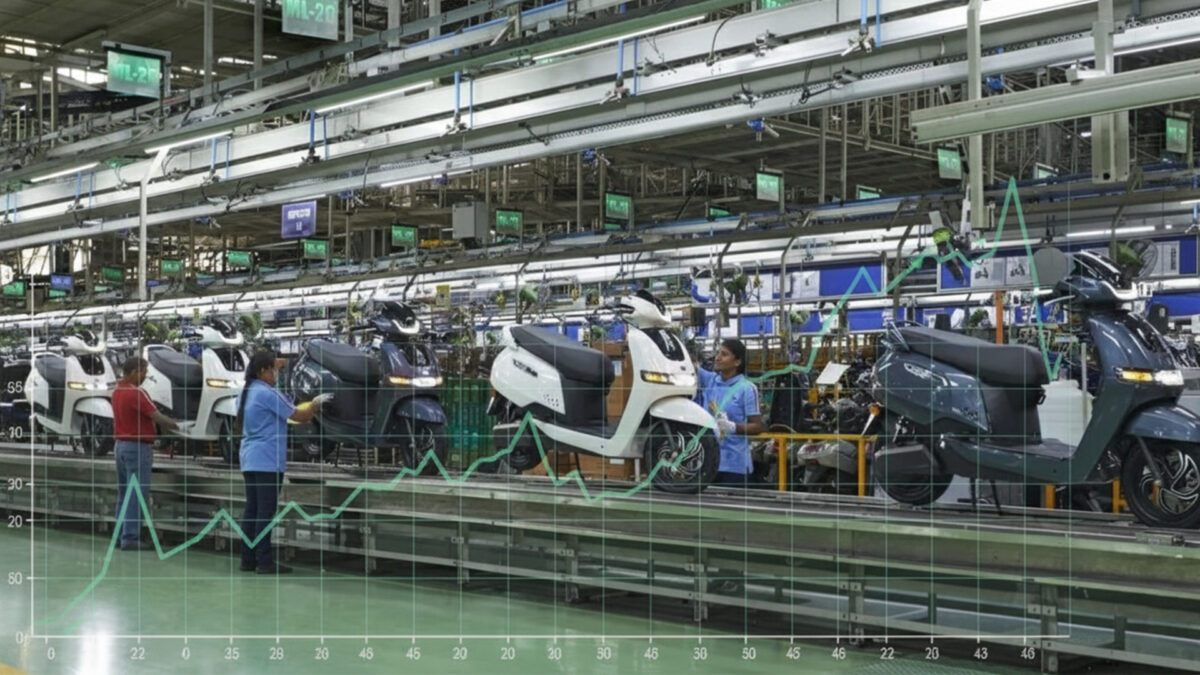
TVS Motor Company reported a robust set of results for the second quarter ended September 30, 2025, with standalone net profit rising 37 percent year-on-year to ₹906 crore and operating revenue climbing 29 percent to a record ₹11,905 crore, the company said on Tuesday.

The earnings beat was driven by healthy volume growth across the company’s product portfolio and an improvement in operating leverage. 

Total vehicle sales grew about 23 percent year-on-year in the quarter, led by a 20 percent rise in motorcycle volumes, a 30 percent jump in scooters and a 41 percent increase in three-wheelers, the company said. 

These volume gains translated into stronger operating EBITDA of ₹1,509 crore, up roughly 40 percent year-on-year, and pushed the EBITDA margin to 12.7 percent from 11.7 percent a year earlier.

TVS’s profit before tax rose in tandem to ₹1,226 crore, reflecting both top-line expansion and better cost absorption across factories and distribution channels.

Management highlighted that a favorable product mix, improved realizations and disciplined cost control helped underpin the margin recovery in the quarter. 

Analysts noted that the company’s emphasis on higher-margin models and exports contributed to the outsized profit growth relative to revenue. 

The company reported strong traction in overseas markets, with international two-wheeler volumes up 31 percent, reinforcing TVS’s strategy of balancing domestic demand with export opportunities. 

The board also pointed to expanding orderbooks in key markets and incremental gains from new model launches during the year.

Electric vehicle performance remained an area of focus. EV volumes grew by a single-digit percentage in the quarter despite constraints around magnet availability that limited production ramp-up, the company said. 

Management reiterated ongoing investments in EV technology and said it remained committed to scaling its electric portfolio as supply-chain bottlenecks ease. 

Analysts expect EVs to become a progressively larger part of TVS’s revenue mix over the next several years, although margins in the segment will depend on component cost normalization. 

Looking ahead, the company cautioned that macroeconomic risks such as commodity price swings and currency volatility could affect near-term profitability, even as it pursues market share gains and product upgrades. 

Management said it would continue to focus on converting order momentum into sustainable earnings through product differentiation, cost discipline and geographic diversification.

Investors and industry watchers will now be watching the company’s three-to-five quarter trajectory for evidence that the mix shift toward higher-value models and the EV transition are translating into durable margin improvement and return-on-capital gains.

Also Read: Adani Green Energy Reports 39% YoY Surge in Energy Sales


Categories
Corporate

Oil India’s $300 Million Dividend Stuck in Russian Banks

Oil India Ltd. has been unable to transfer a $300 million dividend arising from its stakes in two Russian oilfields after recent United States sanctions, with the funds currently held in Russian banks, Chairman Ranjit Rath said on Tuesday.

The dividend is linked to the company’s holdings in projects operated by Rosneft, and the payout cannot be repatriated because of restrictions imposed on the sanctioned entities and related payment channels.

Rath told reporters that Oil India, which holds its interests through Singapore-based special purpose vehicles alongside partners Indian Oil Corp. (IOC) and Bharat PetroResources (BPRL), is seeking legal advice on how to proceed with the frozen funds.

The company’s combined shareholdings amount to a minority stake in the two fields — JSC Vankorneft (Vankor) and Taas-Yuryakh — where dividends have been declared but cannot be moved across international banking corridors affected by the sanctions. 

The development underscores a wider problem afflicting several Indian public sector oil firms whose dividend income from Russian upstream projects has been increasingly difficult to access since the onset of Western sanctions related to the Russia-Ukraine conflict.

Independent estimates and prior reporting indicate that stranded dividends for Indian oil PSUs could total in the hundreds of millions of dollars, complicating cash management and repatriation plans for state-backed energy companies.

U.S. sanctions announced in recent weeks specifically targeted major Russian oil companies, restricting dealings with those firms and raising the risk of secondary sanctions for banks and intermediaries that facilitate transactions.

Market participants and analysts say those measures have tightened access to global payment systems for entities linked to Rosneft and others, leaving foreign minority investors with limited options to retrieve cash held in Russian financial institutions. 

Oil India’s predicament follows a pattern in which dividends declared by Russian joint ventures are parked in local accounts earning low returns while companies explore legal, diplomatic and commercial avenues to unlock value.

Options under consideration include seeking exemptions, arranging direct offset arrangements for supplies and services, or using local ruble-based channels — all of which carry legal and operational complications given the sanctions’ scope and the involvement of multiple jurisdictions. 

For New Delhi, the issue poses a policy conundrum: Indian energy security strategy has leaned on Russian supplies and upstream ties to secure crude and downstream feedstock, yet geopolitical shifts and sanctions regimes can swiftly impair the liquidity and utility of such investments.

Officials and company executives have previously signaled coordinated outreach to partner governments and international banks to find practical solutions while remaining compliant with applicable laws. 

As Oil India and its partners weigh legal counsel and diplomatic options, the trapped $300 million highlights the broader vulnerability of cross-border energy investments amid geopolitical tensions and demonstrates how sanctions can reverberate through corporate cash flows beyond the immediate targets of the measures. 

Also Read: Adani Green Energy Reports 39% YoY Surge in Energy Sales

Categories
Corporate

Dream11 Launches in 11 Countries

Dream11, the Indian fantasy-sports major, has begun a rapid international expansion, launching its platform in 11 countries — including the United States, United Kingdom, Australia, and the United Arab Emirates — even as regulatory changes at home force a major reworking of its business model.

The company’s move, first reported by Moneycontrol, also extends to New Zealand, Canada, Malaysia, Nepal, Bangladesh, South Africa, and Sri Lanka.

The overseas roll-out will not include real-money contests, according to the report.

The expansion comes after a significant shift in India’s regulatory landscape.

In August 2025, Parliament approved legislation that effectively prohibited real-money online gaming and restricted advertising and sponsorship tied to such services. The new law prompted Dream11 and other platforms to suspend paid contests in India almost immediately.

Company communications and industry coverage indicate that Dream11 is now relying on a freemium model monetized through advertisers and brand partnerships rather than user entry fees.

The company has been onboarding advertisers and sponsors to the platform, with an emphasis on ad formats, sponsored contests, and features that boost user engagement without involving monetary wagers.

Industry analysts say the dual strategy — international expansion coupled with a free-to-play pivot — is designed to blunt the revenue shock from India’s regulatory overhaul while preserving the massive user base and engagement metrics that have made Dream11 one of the most valuable fantasy-sports brands globally.

The platform’s fantasy formats and new features, such as customizable leagues, remain highly engaging and the app continues to attract millions of daily active users, say experts.

The overseas rollout, however, presents its own challenges. Market conditions, competitive landscapes, and local gaming and gambling laws vary significantly across the 11 jurisdictions.

Dream11’s decision not to offer real-money contests abroad at launch reflects a cautious regulatory approach, even as the company aims to broaden its advertising inventory and partner with regional sports and media organizations.

Analysts have pointed out that long-term success will depend on user acquisition costs, local partnerships, and the company’s ability to adapt to different sports ecosystems and fan cultures.

Also Read: Renault Confirms Comeback of Duster in India

Categories
Corporate

HAL Signs MoU to Produce SJ-100 Aircraft in Russia

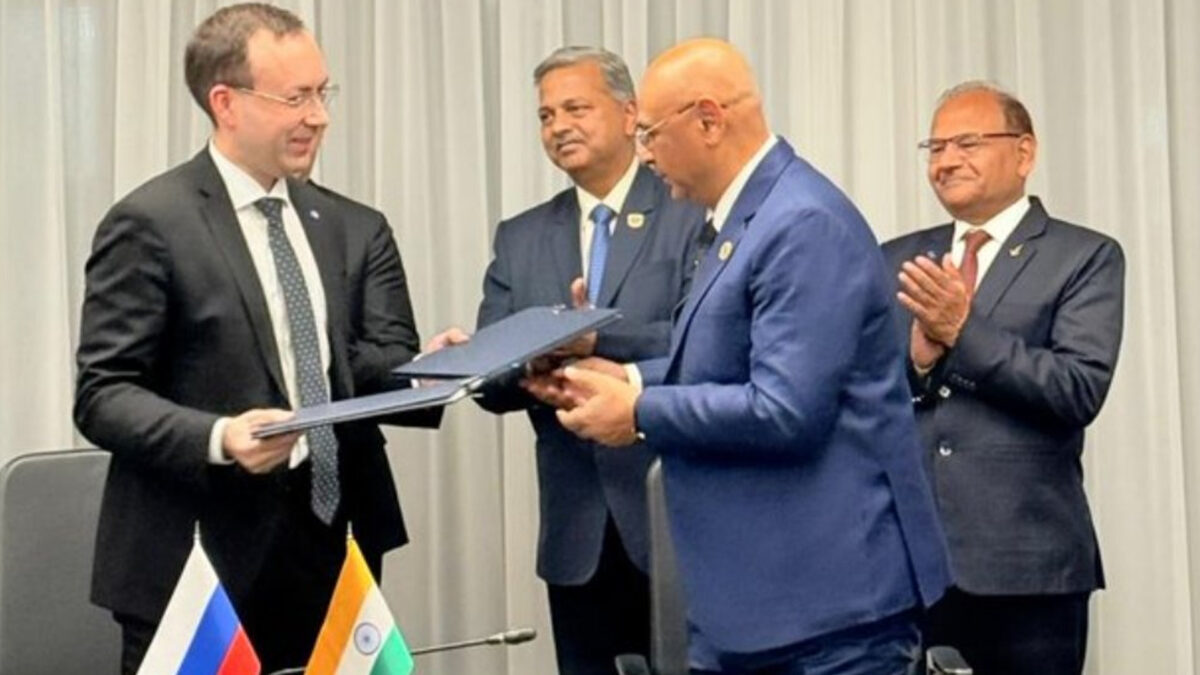
Hindustan Aeronautics Limited (HAL) announced on Tuesday that it has signed a memorandum of understanding (MoU) with Russia’s United Aircraft Corporation (UAC) to collaborate on the production of the SJ-100 regional commuter aircraft in Russia.

The agreement was formalized in Moscow and marks a significant advance in India-Russia civil aerospace cooperation.

Under the agreement, HAL and UAC will explore manufacturing, co-production, and potential support activities for the SJ-100 (also known as the Yakovlev SJ-100), which will be assembled or produced in Russia, leveraging both partners’ strengths in regional aircraft manufacturing.

Russia has already indicated that serial production of the SJ-100 is scheduled to begin in 2026.

The HAL–UAC pact comes as India’s aerospace sector seeks to deepen international linkages for civil aviation manufacturing and capability building.

For HAL, the deal opens a pathway into regional jets, expanding beyond its traditional focus on military aircraft production.

For UAC, partnering with HAL offers opportunities for international collaboration and potential access to India’s manufacturing and design ecosystem.

In remarks following the signing, HAL stated that the partnership aligns with its strategic goal of diversifying into civil aviation and regional transport aircraft programs.

Russian aviation industry officials noted that the SJ-100 is designed to replace aging regional fleets across remote and underserved regions in Russia and the Commonwealth of Independent States (CIS).

The SJ-100 aircraft, developed under UAC’s Yakovlev division, is a short-haul regional jet intended to serve domestic and international markets.

Reports from earlier this year indicated that about 20 SJ-100 airframes are already in production in Russia, with full-scale serial production expected to start next year.

While the MoU does not specify production volumes, delivery schedules, or financial terms, industry analysts view the agreement as a sign of HAL’s broader ambition to enter global civil aerospace value chains.

The collaboration also reflects India’s intent to build manufacturing linkages and gain technological expertise in commercial aircraft production.

The partnership could enable the SJ-100 project to expand beyond Russia, potentially reaching new markets by leveraging the combined manufacturing and service capabilities of the two companies.

For Russia, increasing production and potential export of the SJ-100 supports its national goal of strengthening domestic aircraft manufacturing and reducing reliance on Western suppliers.

For India, the collaboration offers an opportunity to enhance regional-aircraft capabilities and develop a foundation for domestic civil aviation manufacturing.

However, the success of the partnership will depend on achieving timely certification, maintaining cost efficiency, developing robust supply chains, and ensuring market acceptance of the SJ-100 platform.

India’s civil aviation ecosystem currently focuses primarily on smaller aircraft and turboprops, while regional jets face stiff competition from established global players.

HAL will need to adapt to civil-aviation manufacturing standards, regulatory frameworks, and commercial operations that differ from its defense-focused experience.

If successfully implemented, it could bolster regional-jet manufacturing, generate employment in both countries, and expand HAL’s footprint into commercial aviation.

Also Read: Tata Chemicals Wins ₹783 Crore Land-Rates Case in Kenya

Categories
Corporate

Tata Chemicals Wins ₹783 Crore Land-Rates Case in Kenya

Tata Chemicals Ltd. has secured a major legal victory after the Court of Appeal in Nairobi ruled that the Kajiado County Government’s demand for land rates amounting to ₹783 crore (KSh 11.84 billion) was arbitrary and illegal, clearing the way for the company’s Magadi unit to avoid a large contingent liability that had weighed on its books.

The appellate court issued its order on October 24, 2025, according to company statements and market reports, overturning the county government’s assessment and finding that the charge lacked the open and accountable framework required for levying the disputed land rates.

Tata Chemicals said the matter had been disclosed as a contingent liability in its financial statements and that management would review the treatment of the item in light of the judgment.

The ruling closes a chapter in a long-running dispute between Tata Chemicals and Kajiado County, which stretches back several years and has included court battles, temporary shutdowns of the Magadi plant, and competing claims over which land is rateable.

In earlier litigation, the High Court had issued conservatory orders and directed the parties to negotiate a settlement; the matter was later appealed to the Court of Appeal.

Legal records and previous judgments show the dispute at times involved demands for much larger sums and allegations of irregular enforcement actions, including attempted closures of the company’s premises.

Market reaction was immediate: shares of Tata Chemicals rose following the appellate decision, reflecting investor relief that the company might no longer face the sizeable Kajiado demand as a probable outflow.

Analysts noted the verdict reduces the near-term legal overhang on the company’s East African operations while management considers whether and how to reclassify the contingent liability in the company’s accounts.

Local media and business reporting have traced the dispute to a 2018 assessment by Kajiado County, which TCML repeatedly disputed, arguing the lease terms and the extractive nature of its operations exempted large portions of its holdings from the county’s rate regime.

The County Government has periodically sought to collect arrears and, at times, moved to enforce the assessments—actions that prompted filings in Kenyan courts and political scrutiny at the county level.

Tata Chemicals has maintained that it has paid dues where applicable and that it has sought resolution through Kenya’s courts and administrative channels.

In its most recent public filings, the company described the Kajiado demand as contested and disclosed the amount in question as part of contingent liabilities.

Following the Court of Appeal order, Tata will determine next steps, including the accounting treatment and whether to pursue further remedies or settlements.

The ruling is likely to reshape the local fiscal dispute landscape and could affect how Kenyan counties frame and implement land-rate policies for extractive and freehold properties.

Kajiado County officials had previously defended their levy as lawful revenue-raising; the appellate finding, however, highlights procedural gaps and the importance of public participation and transparent frameworks when imposing sizable charges on private landholders.

Also Read: Indian Oil Swings to Strong Q2 Profit on Refining Margin Boost

Categories
Corporate

Shriram Properties Signs ₹600 Crore Deal in Bengaluru

Bengaluru-based real estate developer Shriram Properties Ltd (SPL) has entered into a joint development agreement (JDA) for an approximately seven-acre plot in North Bengaluru, signalling its ambition to launch a premium row-housing project valued at around ₹600 crore in gross development value (GDV).

The deal concerns part of a larger 15-acre land parcel located in the growing Yelahanka corridor, one of Bengaluru’s increasingly sought-after residential zones.

The company said the project is expected to be rolled out in the next financial year (FY27).

SPL has described the development as “premium row houses designed to combine modern architecture with sustainable design principles.”

It called Yelahanka’s strong infrastructure growth and proximity to the upcoming Madappanahalli Biodiversity Park (sometimes referred to as ‘Mini Lalbagh’) as defining advantages for this venture.

In its filing, SPL emphasised that the project aligns with its strategic focus on design-led, sustainable homes: “We believe great homes should offer both comfort and connection with people, place and nature,” said Akshay Murali, Vice President of Business Development at SPL.

He added that Yelahanka’s evolving landscape will “redefine the residential landscape in North Bengaluru.”

The new agreement comes at a time when SPL is actively building its pipeline across key metros.

According to a recent regulatory disclosure, the company has delivered 48 projects covering a saleable area of 28.3 million sq ft, and as of September 30, 2025, holds a development pipeline of 39 projects representing an aggregate area of 36 million sq ft, including 19 million sq ft under implementation.

Analysts view the deal as indicative of SPL’s asset-light growth strategy: by entering into partnerships via JDAs rather than outright land acquisitions, the company is seeking to deploy capital more efficiently while tapping into high-growth micro-markets.

Nonetheless, the success of the project will depend on execution and sustained demand.

While North Bengaluru has seen infrastructure impetus and expanding residential supply, challenges remain in maintaining pricing, managing construction timelines and differentiating product quality in a competitive market.

The location next to the biodiversity park offers a unique positioning, but SPL will need to deliver the premium experience it promises to fully capitalize on the GDV potential.

Shriram Properties’ ₹600 crore JDA in Yelahanka marks a significant step in its residential expansion strategy.

It emphasizes its focus on premium housing, sustainable design and select growth corridors, and reflects broader confidence in Bengaluru’s northern periphery as a growth engine for real estate.

The coming months will test the company’s ability to translate this agreement into a flagship project and to deliver meaningful returns from the idealized vision.

Also Read: Indian Oil Swings to Strong Q2 Profit on Refining Margin Boost

Categories
Corporate

Indian Oil Swings to Strong Q2 Profit on Refining Margin Boost

India’s flagship energy firm, Indian Oil Corporation Ltd (IOC), has turned around its performance in the second quarter of fiscal year 2026 (ended 30 September 2025), posting a robust net profit and signaling improved operational strength.

According to official filings, IOC reported a standalone net profit of approximately ₹7,610 crore, a dramatic rise from just ₹180 crore in the corresponding quarter of the previous year.

At the consolidated level, the company marked a profit of around ₹7,818 crore, compared to a loss of roughly ₹170 crore a year ago.

Revenue from operations increased by approximately 4 % year-on-year to about ₹2.03 lakh crore.

The turnaround has been largely attributed to a rebound in refining margins and lower input costs.

IOC’s gross refining margin (GRM) rose sharply, with estimates showing the April-to-September period averaging US $6.32 per barrel (versus US $4.08 per barrel a year earlier) and a current-price GRM of US $7.89 per barrel after inventory and other adjustments.

One report noted that the immediate quarter saw GRMs hitting around US $10.6 per barrel.

Meanwhile, input costs declined thanks to weaker crude prices and cost efficiencies, contributing to a margin improvement.

Refining operations—which handle a substantial portion of India’s oil-processing capacity—have benefited from higher crude throughput, stronger fuel spreads (especially in diesel), and increased export volumes.

At the same time, the marketing business remains closely watched: while fuel volumes showed recovery in July through September, lower margins in volumes-business and a weaker rupee remained headwinds for non-refining segments.

Analysts say the Q2 outcome underscores a much-improved business environment for Indian refiners after a period of margin pressure.

The low base from the prior year has amplified the YoY gains, but industry participants highlight that the sustainability of high margins will depend on external factors such as global crude-oil trends, export demand and the domestic fuel policy environment.

Despite the strong showing, IOC’s performance in non-refining segments warrants attention.

While refining margins rebounded, marketing margins may remain under pressure from regulated fuel prices in India and currency weakness, which can affect imports and exports of petroleum products.

With a sharp profit recovery, modest revenue growth, and favourable refining dynamics, the company appears to be in a stronger earnings phase.

Market observers will now track whether IOC can maintain its margin momentum and translate it into sustained value for shareholders amid evolving global and domestic energy conditions.

Also Read: Amazon Crosses US$20 Billion in Exports From India