Categories
Technology

Google Parent Alphabet Posts First $100 Billion Quarter as AI Fuels Growth

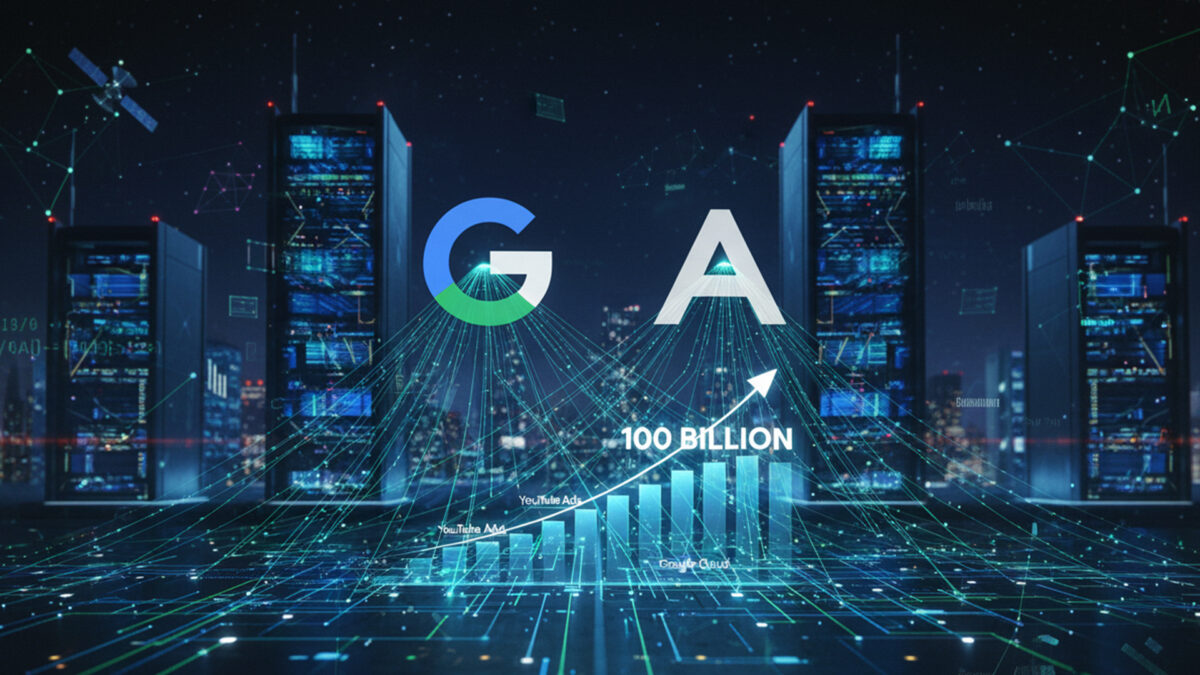
Alphabet Inc., the parent company of Google and YouTube, reported a record third quarter that pushed quarterly revenue past the $100 billion mark for the first time in the company’s history, underscoring how its AI investments are broadening revenue streams beyond traditional search advertising.

The company posted total revenue of roughly $102.3 billion for the July–September period, a 16 percent year-over-year increase that beat Wall Street estimates.

The milestone was driven by double-digit growth across Alphabet’s major businesses. Google’s core advertising business remained the largest single contributor, with ad revenue holding strong amid a mixed macroeconomic backdrop.

YouTube ad sales and search-related income together accounted for the bulk of the top line.

At the same time, Google Cloud — increasingly positioned as Alphabet’s chief growth engine for enterprise AI services — recorded sales of about $15.16 billion, up more than 30 percent year-over-year as companies accelerated spending on AI infrastructure and tools such as Vertex AI.

Profitability also improved materially. Net income rose sharply, with the company reporting nearly $35 billion in profit for the quarter and adjusted earnings per share that exceeded consensus forecasts.

Investors rewarded the results with a noticeable after-hours gain in Alphabet’s share price, reflecting renewed optimism in the company’s AI-driven growth strategy.

Management emphasized that the record quarter validates Alphabet’s “full-stack” AI strategy — integrating large language models and AI-driven features across search, ads, cloud, and consumer products to deepen engagement and monetization.

CEO Sundar Pichai noted that AI enhancements are lifting product utility and creating new commercial opportunities, a theme reflected in robust enterprise demand for cloud compute, storage, and managed AI services.

The company signaled an acceleration in capital investment to support that AI roadmap.

Alphabet raised its 2025 capital expenditure guidance substantially, now targeting a range of approximately $91 billion to $93 billion as it expands data-center capacity, custom AI chips, and network infrastructure to meet growing demand.

Analysts view the stepped-up capex as both a near-term drag on free cash flow and a long-term commitment to securing scale and differentiation in AI infrastructure.

While the results illustrate Alphabet’s commercial strength, they also arrive amid heightened regulatory and competitive scrutiny.

The company faces ongoing antitrust litigation and new rivals advancing alternative search and AI experiences, factors that will shape how Google balances product innovation, partner relationships, and regulatory compliance.

Still, this quarter’s performance makes clear that, for now, Alphabet’s investments in AI are translating into meaningful revenue and profit expansion.

For corporate and institutional audiences, the takeaway is straightforward: Alphabet’s first $100 billion quarter is not merely a headline metric — it reflects a strategic pivot in which AI is transitioning from a research priority into a scale business that is materially reshaping revenue composition and investment priorities.

Also Read: Air India Faces ₹4,000 Crore Hit from Pakistan Airspace Closure: CEO
Categories
Corporate

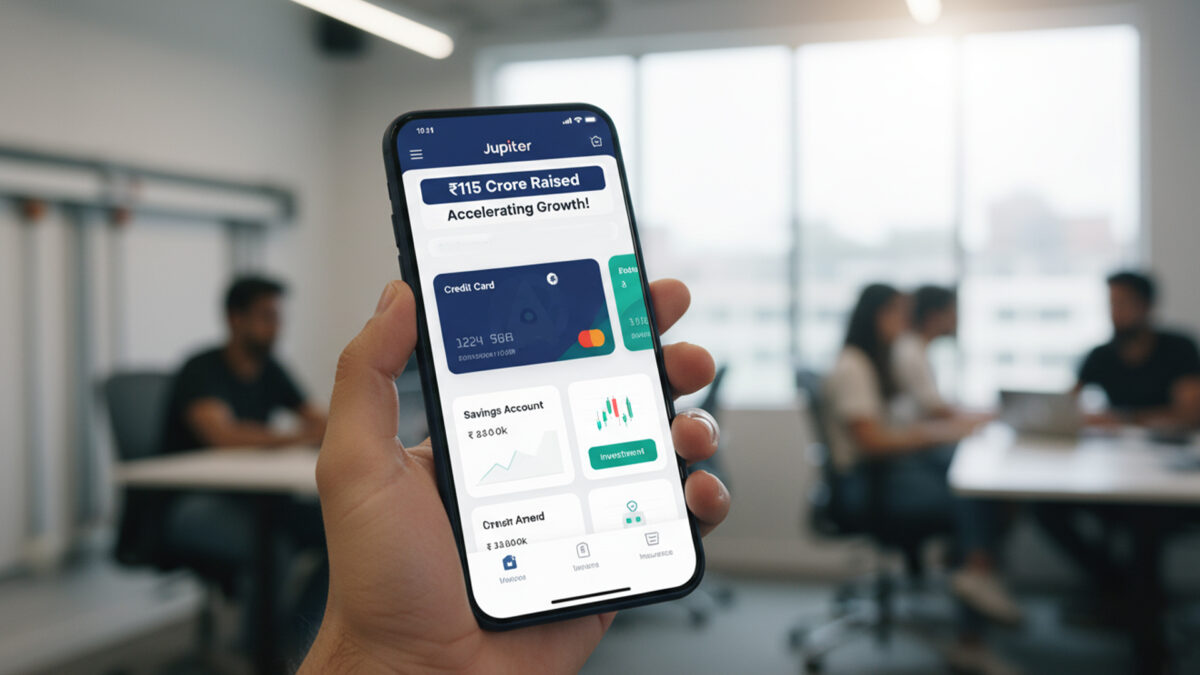
Jupiter Money Raises ₹115 Crore From Existing Investors

Bengaluru-based fintech platform Jupiter Money has raised ₹115 crore in a new funding round from its existing investors Mirae Asset Venture Investments, BEENEXT and 3one4 Capital, with additional participation from founder-CEO Jitendra Gupta.

The infusion comes as Jupiter looks to scale its suite of consumer financial products—including savings accounts, credit cards, loans, investments and insurance—offered through a single mobile app.

The startup said the new capital will be deployed to strengthen its technology infrastructure, broaden its omni-channel presence and accelerate product roll-outs, including deeper moves into lending and insurance distribution.

Jupiter reported that it now serves more than three million customers, with nearly 60 % of them actively engaging across multiple products on the platform.

The company also said its revenue grew more than 2.2 times in the last financial year and that over a quarter of active users now use two or more of its offerings—a metric it cited as evidence of rising ‘stickiness’.

Management outlined an aggressive but measured growth plan: the company is targeting operational breakeven within 24 months while setting a goal to double its user base over the next two to two-and-a-half years.

Jupiter said it plans to leverage artificial intelligence to improve cost-efficiency and deliver more personalised financial recommendations—moves designed to lift unit economics as scale increases.

Jupiter’s funding history and investor roster have attracted attention in recent years; the startup has raised over US$160 million to date from global and domestic backers and has built partnerships with licensed banks for regulated product distribution.

Its co-branded credit-card with CSB Bank and its account aggregator capabilities were singled out by the company as high engagement products, with the card business and account-aggregator flows cited as engines for transaction volume and data-driven cross-sell.

Analysts and market observers say the fresh round—largely anchored by existing investors—signals continued faith in Jupiter’s strategy to move beyond a single product and become a broader “money app” for younger, digitally-native customers.

The participation of established financial investors such as Mirae Asset also underscores the appeal of fintech platforms that combine deposit-related products with lending and insurance distribution under one roof.

As fintechs in India face heightened scrutiny around unit economics and regulatory compliance, Jupiter’s stated focus on both revenue growth and a clear timeline to profitability will be watched closely by investors and competitors alike.

The startup said the latest cash will give it room to invest in product development and customer acquisition while working to improve margins as the business scales.

Investor enthusiasm notwithstanding, Jupiter enters a competitive market in which sustained growth and operational discipline will be critical.

With the new capital backing its next phase, the platform appears well-positioned to execute, but much will depend on how effectively it converts product adoption into profitable lifetime value.

Also Read: Air India Faces ₹4,000 Crore Hit from Pakistan Airspace Closure: CEO

Categories
Corporate

Air India Faces ₹4,000 Crore Hit from Pakistan Airspace Closure: CEO

Air India (AI) is facing an estimated ₹4,000 crore hit as a result of the ongoing closure of Pakistan’s airspace to Indian carriers, CEO Campbell Wilson has disclosed.

The restriction, which has forced long-haul flights to reroute and incur elevated fuel and crew costs, is among a series of unprecedented shocks the airline is navigating in a challenging year.

Speaking at the Aviation India & South Asia 2025 conference in New Delhi on Wednesday, Wilson described the ₹4,000 crore impact as “a big sum in anyone’s book,” remarking that the development “literally came out of the blue.”

He noted that the airline had earlier quoted a higher figure of roughly ₹5,000 crore to the aviation ministry in May, but this was based on preliminary estimates.

Since then, mitigation efforts such as route adjustments have helped curb some of the losses.

The disruption stems from Pakistan closing its airspace to Indian airlines beginning in June 2025, following escalating military tensions between the two countries.

The restriction has forced Air India to reroute flights to Europe and North America through longer trajectories, leading to increased fuel consumption, extended flight times, and higher crew expenses.

Long-haul international routes account for a substantial portion of Air India’s operations — around 60 percent of its flights — making the impact particularly acute.

Wilson said that in addition to the airspace closure the airline has been dealing with a series of external headwinds, which he characterised as “almost Black Swan events.”

These include the catastrophic crash of a Boeing 787 aircraft in June from Ahmedabad, supply-chain pressures delaying aircraft deliveries, and other geopolitical shocks such as Middle East airspace closures and export constraints.

While Air India’s parent, Tata Sons Ltd., reported revenue growth of 15 percent to ₹78,636 crore for the year ended March 31 2025, losses widened to ₹10,859 crore as operational pressures mounted.

The airline’s five-year transformation plan, Vihaan.AI, is now facing sharper turbulence amid these external shocks.

In his remarks, Wilson acknowledged that the airline’s competitive environment is being reshaped by factors outside its core control.

He emphasized the need for realistic planning around bilateral flying rights and warned that overly liberalised access could undermine Indian carriers’ investments in wide-body aircraft and network expansion — a strategic priority for Air India.

Despite the sizable setback, Wilson expressed resolve to stay the course on Air India’s recovery and modernization agenda, stating that the airline remains committed to safety, customer experience and operational resilience.

However, he added that 2025 would be remembered as “a challenging year,” where global instability and geopolitical disruptions weighed on growth.

The estimated ₹4,000 crore loss highlights the vulnerability of aviation business models to external geopolitical events, especially for carriers heavily exposed to international long-haul markets.

As Air India grapples with diverted routes, cost escalation and disrupted margins, the airline’s future profitability and transformation path will remain under close investor and regulator scrutiny.

Also Read: Hero MotoCorp Enters France in Partnership With GD France

Categories
Corporate

NVIDIA Becomes First $5 Trillion Company Amid AI Surge

NVIDIA Corporation has made history, becoming the first publicly traded company ever to surpass a market capitalization of $5 trillion, a landmark achievement driven by the global surge in demand for artificial intelligence (AI) hardware and infrastructure.

The milestone was reached on Wednesday, October 29, 2025, when NVIDIA’s shares climbed to $207.86, pushing the valuation to approximately $5.05 trillion.

The achievement came just months after the company crossed the $4-trillion threshold, underscoring an accelerated ascent tied closely to the AI revolution.

At the center of NVIDIA’s meteoric rise are its AI-specific chips — including the H100 and Blackwell series — which power everything from large language models to autonomous systems and GPU-centric data centers.

CEO Jensen Huang has overseen a remarkable transformation of the company’s identity: from a niche graphics-processor designer into the backbone of the global AI industry.

NVIDIA recently disclosed more than $500 billion in outstanding AI-chip orders and announced plans to build seven supercomputers for the U.S. government.

The company’s valuation now exceeds the gross domestic product of major economies such as the United Kingdom, India, and Japan.

Analysts are calling the milestone a watershed moment in technology history, likening the rise of AI computing to the mobile-internet wave ushered in by the original iPhone. This shift represents a broader transformation in how technology is shaping global capital markets, with AI seen as the next major computing platform.

Despite its record-breaking valuation, NVIDIA’s rapid growth has drawn caution from regulators and market analysts.

Financial institutions have warned of potential overvaluation risks in the tech and AI sector, citing concerns over speculative enthusiasm and concentrated capital flows.

Geopolitical dynamics have also heightened attention on NVIDIA’s global role. The company’s dominance in AI infrastructure has positioned it at the center of the U.S.–China technology rivalry. U.S. export controls on NVIDIA’s advanced chips to China have highlighted the firm’s strategic importance, while also introducing uncertainties tied to trade and supply-chain policy.

President Donald Trump recently praised CEO Jensen Huang, suggesting potential policy revisions to ease restrictions on chip exports.

The remarks underscore how NVIDIA’s leadership in AI hardware is now entwined with national industrial and trade strategies.

NVIDIA’s rise to the $5 trillion mark marks more than just a financial benchmark — it signals the elevation of AI as the defining force in technology and the economy.

Whether the company can sustain this momentum, and whether the AI boom translates into long-term productivity gains beyond investor optimism, remains a key question for markets and policymakers alike.

Also Read: IOC Says ‘Absolutely Not’ to Halting Russian Oil Imports

Categories
Corporate

IntrCity SmartBus Secures ₹250 Crore in Series D Funding

Tech-enabled intercity bus-network platform IntrCity SmartBus announced on October 30 that it has raised ₹250 crore (approximately US$28 million) in a Series D funding round led by venture-capital firm A91 Partners.

Founded in 2019 by Kapil Raizada and Manish Rathi, IntrCity SmartBus operates as the bus arm of ticketing and travel platform RailYatri and follows an asset-light model to provide standardized intercity travel with real-time tracking and IoT-enabled fleet monitoring.

The fresh capital injection will be directed toward improving customer experience, upgrading fleet-management technology, and expanding operations into Tier-2 and Tier-3 cities across India, the company said.

Raizada commented that the investment “enables us to further double down on our vision to transform the bus-travel landscape in India,” and added that the company is projected to maintain year-on-year growth of roughly 50 percent.

IntrCity currently operates more than 630 routes across 15 states and competes in a rapidly expanding intercity mobility market.

With the new funds, the company plans to double its fleet and target a turnover of approximately ₹1,000 crore by next year.

A91 Partners General Partner Gautam Mago said in a statement that the investment reflects the firm’s conviction in IntrCity’s ability to become “a category-defining leader in intercity mobility” owing to the brand’s pan-India reach, operational consistency, and focus on customer service.

Industry watchers note that India’s intercity bus travel market is estimated at over US$30 billion and is expected to grow at a compound annual rate of 10–13 percent over the next few years, driven by improved highways, rising commuter demand, and the expansion of tech-driven booking platforms.

While the new funding positions IntrCity SmartBus for aggressive expansion, the company also highlighted that infrastructure constraints—such as inadequate bus-terminal facilities—remain a challenge.

Raizada noted that despite better vehicle connectivity, poor passenger amenities and lack of dedicated bus ports hamper broader adoption. He called for public investment in “bus-ports” similar to airports to enhance the attractiveness of road travel.

The funding round brings IntrCity’s total capital raised to about US$80 million, according to industry estimates.

As the startup looks to scale, its focus will likely include deeper penetration into smaller cities, enhancing dynamic-routing capabilities, and strengthening partnerships with operator-partners to improve asset utilization and service reliability.

Also Read: Hero MotoCorp Enters France in Partnership With GD France

Categories
Corporate

Hero MotoCorp Enters France in Partnership With GD France

India’s largest two-wheeler manufacturer, Hero MotoCorp, on Wednesday announced its official launch in France, marking its 52nd international market.

The entry is being executed through a strategic distribution partnership with French firm GD France, and kicks off with the debut of the Euro 5+-compliant model, the Hunk 440.

The French debut took place at the U.T.A.C. Mortefontaine testing facility near Paris, with Hero showcasing the Hunk 440 alongside dealer and industry-representative sessions.

The Hunk 440, positioned in the A2 licence category common in Europe, boasts a 440-cc engine generating 27 bhp and 36 Nm of torque, dual-channel ABS, USD KYB front forks, a full-digital TFT display with navigation capability, and LED lighting.

It will be offered in two color variants — Twilight Blue and Phantom Black — at a starting price of €3,599 (including VAT).

According to Hero’s Executive Vice-President Sanjay Bhan, the French launch represents a “milestone in our journey of global expansion”, building on its presence across Italy, Spain and the UK.

GD France’s CEO Ghislain Guiot remarked that the partnership is designed to provide French riders a “unique combination of technology and value” underpinned by a robust after-sales network.

In France, the distribution arrangement between Hero and GD France includes the establishment of more than 30 sales and service outlets initially, with a plan to expand to over 50 dealerships by 2026 and full network deployment by 2028.

Hero is also offering an extended promotional warranty: a standard three-year warranty plus an additional two years under a launch offer, effectively giving up to five years of warranty coverage for customers in the French market.

The move into France is part of Hero’s broader strategy to strengthen its foothold in European markets.

Analysts note that by entering developed markets with Euro 5+-compliant machines and a clearly defined dealer-network strategy, the company is aiming to shift its narrative from value-focused commuter bikes into more performance-oriented segments.

While the French market entry focuses on one model initially, the expectation is that Hero will gradually expand its range and deepen its presence.

From Hero’s perspective, the expansion into France comes at a time when growth in its traditional domestic markets is being tempered by cost pressures and intense competition.

Penetrating Europe offers not only higher margin opportunities but also brand-elevation potential. For GD France, the alliance gives them access to a global two-wheeler leader looking to scale in developed markets.

Also Read: Coal India Q2 Net Profit Falls About 30% to ₹4,263 Crore

Categories
Corporate

IOC Says ‘Absolutely Not’ to Halting Russian Oil Imports

India’s state-run refiner Indian Oil Corporation Ltd (IOC) has affirmed that it will “absolutely not” stop importing Russian crude oil provided it stays within the boundaries of international sanctions.

The comments come amid renewed U.S. and European Union measures against major Russian oil entities.

Anuj Jain, IOC’s Director (Finance), told analysts on October 28 that the company remains open to purchasing Russian-sourced crude “as long as we are complying with the sanctions. Russian crude is not sanctioned. It is the entities and the shipping lines which have got sanctions.”

He added, “If somebody comes to me with a non-sanctioned entity, and the price cap is being complied with and the shipping is okay, then I will continue to buy it,” according to news agency Reuters.

The firm emphasized that while it remains committed to abiding by all international sanctions, it continues to view Russian crude as a viable source.

IOC Chairman Arvinder Singh Sahney echoed that stance, noting that the company “will abide by all sanctions imposed by the international community.”

New U.S. sanctions, effective from October 22, targeted Russian oil giants Rosneft and Lukoil as part of the West’s effort to pressure Moscow over its invasion of Ukraine.

The European Union also imposed transaction bans on Rosneft, along with restrictions on other Russian oil entities, according to S&P Global Commodity Insights.

Indian refiners had anticipated that these sanctions could prompt some scaling back of Russian crude purchases.

However, because the sanctions are primarily targeted at certain entities and shipping channels—and not a blanket ban on Russian oil itself—IOC is leveraging that distinction to continue imports.

The company said Russian supplies currently account for about 19 to 20 percent of its overall crude oil import basket.

The decision reflects India’s broader strategy of balancing its energy security interests with the need to remain sanction-compliant. Officials say India has adequate supply alternatives but views discounted Russian barrels—often priced several dollars below global benchmarks—as economically attractive.

Analysts at S&P Global Commodity Insights observed that a complete halt by IOC appears unlikely in the short term unless the U.S. escalates measures to include broader trade penalties for oil-importing countries.

They point out that Indian compliance with U.S. sanctions has historically been high and that the Indian government may seek exemptions rather than risk secondary sanctions.

India’s Petroleum and Natural Gas Minister Hardeep Singh Puri has reiterated that the country is not concerned about crude-oil availability, noting that global supplies remain sufficient to meet domestic and export growth.

While some Indian refiners are reviewing their Russian crude exposure or temporarily pausing new orders as they assess compliance risks, IOC’s public position signals that Russian barrels will remain part of its sourcing mix—for now.

Whether this approach will withstand further international pressure—and how it will affect India’s relations with Western partners—remains a matter closely watched by industry and policy-makers alike.

Also Read: Eli Lilly, NVIDIA Partner to Build AI Supercomputer for Drug Discovery

Categories
Corporate

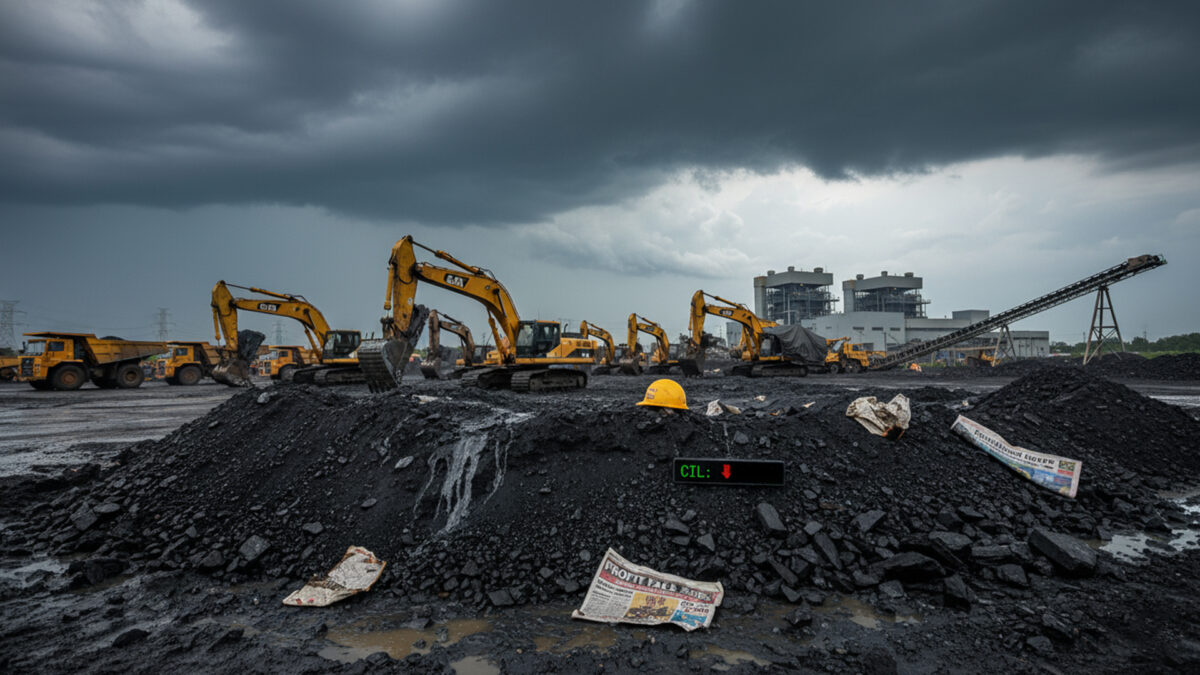
Coal India Q2 Net Profit Falls About 30% to ₹4,263 Crore

India’s largest coal producer, Coal India Limited (CIL), on Wednesday reported a substantial year-on-year decline in its consolidated net profit for the quarter ended September 30, 2025 (Q2 FY26).

The company posted a profit of ₹4,262.64 crore, down by roughly 32% from ₹6,274.80 crore in the same period a year ago. 

Revenue from operations also slipped, coming in at around ₹30,186.70 crore, representing a year-on-year drop of about 3.2%. 

The company’s total expenses rose by about 7% to ₹26,421.86 crore from ₹24,670.70 crore in Q2 FY25. 

CIL attributed the weaker performance to a combination of factors: subdued demand, heavier rainfall disrupting operations and lower realisations in its e-auction/business mix.

The company’s production in September declined by about 3.9% to 48.97 million tonnes from 50.94 million tonnes a year earlier, as monsoon-time rains hampered mining operations. 

The decline in revenue and rising input and operational costs squeezed margins, with the earnings-before-interest-tax-depreciation-and-amortisation (EBITDA) margin contracting to 22.25% from 27.63% the prior year. 

Despite the weaker earnings, the board approved a second interim dividend of ₹10.25 per equity share (face value ₹10) for FY26, with a record date set at November 4 and the payment scheduled by November 28. 

Analysts noted that CIL’s results point to heightened headwinds in the domestic coal sector.

With thermal power plants drawing down inventories and limiting new purchases, coal offtake slowed.

Additionally, the mining major’s realisation in certain channels fell and its cost structure faced pressure from elevated fuel, logistics and labour costs. 

Shares of Coal India reacted negatively to the results, falling over 2% in intraday trading following the announcement. 

Looking ahead, CIL has set an ambitious annual production target of 875 million tonnes and dispatch target of 900 million tonnes for FY26, even as it grapples with near-term softness in demand and margin pressures. 

Also Read: Eli Lilly, NVIDIA Partner to Build AI Supercomputer for Drug Discovery

Categories
Corporate

SBI’s Alternative Funds Invest ₹100 Crore in Lenskart Ahead of IPO

In a strategic move ahead of its public listing, SBI Mutual Fund, via its alternative investment vehicles, has committed ₹100 crore to acquire shares in India’s leading eyewear retailer, Lenskart Solutions Limited.

This investment was made through two of its funds – the SBI Optimal Equity Fund (AIF) and the SBI Emergent Fund (AIF) – in a pre-IPO transaction in which roughly 24.87 lakh equity shares were purchased at a price of ₹402 per share. 

The shares were acquired from one of Lenskart’s promoters, Neha Bansal.

Prior to the deal, she held a 7.61 per cent stake in the company’s fully diluted share capital; following the transaction she continues to hold approximately 7.46 per cent. 

Lenskart’s forthcoming initial public offering (IPO) is scheduled to open on October 31, 2025, and the investment by SBI’s funds underlines institutional confidence in the eyewear retailer’s growth story and market positioning. 

According to reports, the transaction effectively values Lenskart at around $7.7 billion (approximately ₹64,000 crore at prevailing conversion rates).

This marks a considerable premium over earlier valuations of the company. 

Lenskart, founded in 2008 and having launched its online eyewear business circa 2010, has since expanded into a strong omni-channel presence with both e-commerce operations and physical retail stores across India, and increasingly in international markets. 

The funding will support its expansion plans, including scaling of company-owned physical stores, upgrading digital infrastructure, pursuing potential acquisitions and bolstering brand marketing. 

This pre-IPO deal comes on the heels of another significant transaction: billionaire investor Radhakishan Damani (via his investment vehicle) had invested around ₹90 crore in Lenskart through a separate pre-IPO share purchase. 

Analysts see the move by SBI’s funds as reflective of not only the strength of Lenskart’s business model in the consumer-retail space but also the broader appetite for high-growth consumer brands in India’s capital markets.

By entering ahead of the IPO, the funds lock in exposure at a defined entry price, while positioning for potential upside once the company lists.

The investment also signals a vote of confidence in Lenskart’s ability to convert its scale and brand reach into sustained profitability and growth.

For SBI Mutual Fund, this represents a diversification into private market opportunities ahead of public listing, leveraging its AIF structures to participate in a pre-IPO equity transaction.

Also Read: Jindal Steel Names Gautam Malhotra CEO After Disappointing Q2

Categories
Corporate

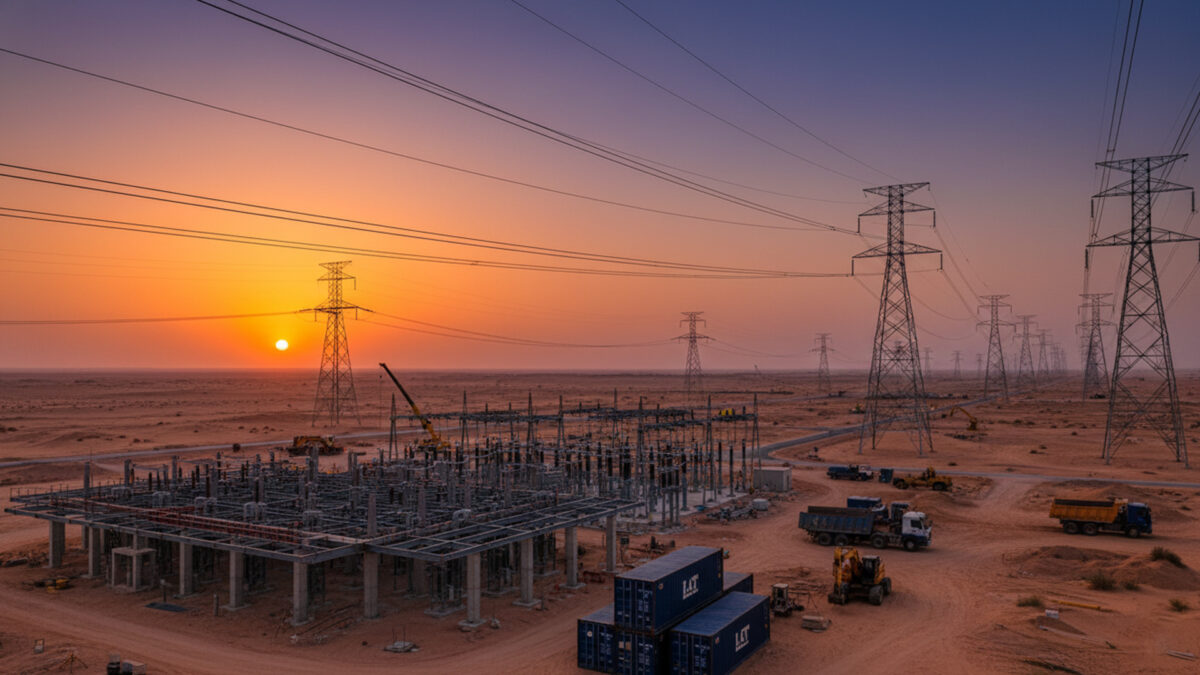
L&T Strengthens Saudi Footprint With Multiple Contracts

Larsen & Toubro (L&T) has expanded its footprint in Saudi Arabia with a series of major new awards spanning heavy engineering, energy, and luxury-resort infrastructure, reinforcing the Indian conglomerate’s growing role in the kingdom’s ambitious industrial and tourism development drive.

In its heavy engineering vertical, L&T has secured a significant order linked to a refinery and integrated petrochemical complex in Saudi Arabia.

Industry reports describe the contract as part of a revamp involving a high-oil-flow catalytic cracking component, including reactor and regenerator works.

The project underscores L&T’s strong credentials in complex downstream assignments and its expanding role in Saudi Arabia’s refinery modernization and petrochemical expansion programs.

The company’s heavy engineering division has also received orders connected to the Jafurah gas project — Saudi Arabia’s flagship unconventional gas initiative led by Saudi Aramco.

The Jafurah project is one of the world’s largest shale gas developments, representing an estimated investment exceeding $100 billion.

L&T’s involvement in the project reinforces its position as a preferred contractor for specialized fabrication and process equipment as the kingdom moves from early-stage gas production to the development of supporting infrastructure.

Analysts believe that contractors like L&T will continue to benefit from the project’s phased expansion, which includes midstream and downstream monetization of gas and associated liquids.

Meanwhile, L&T’s construction arm has been awarded a major engineering, procurement, and construction (EPC) contract for Amaala, the ultra-luxury tourism destination located along Saudi Arabia’s northwestern Red Sea coast.

The contract covers the development of renewable generation systems, power utilities, and water management infrastructure for the destination, aligning with Saudi Arabia’s broader vision to integrate sustainability and low-carbon systems into its tourism sector.

Amaala is part of the kingdom’s Vision 2030 plan to diversify its economy by investing in non-oil industries, including luxury tourism, hospitality, and renewable energy.

These recent awards mark a continuation of L&T’s international growth momentum.

Over the past few years, the company has steadily strengthened its presence in the Gulf Cooperation Council (GCC) region, particularly in Saudi Arabia, the UAE, and Qatar.

With the kingdom pursuing a dual strategy of expanding its non-oil economy and developing massive energy infrastructure, Indian engineering and construction companies such as L&T are increasingly emerging as vital partners in execution.

Industry observers say the latest Saudi contracts validate L&T’s technical and project management capabilities, especially in high-value sectors such as process plants, offshore fabrication, and sustainable utilities.

They also demonstrate the company’s ability to align with global trends emphasizing local partnerships, renewable integration, and advanced engineering solutions.

The company is expected to share more details regarding order size and execution timelines in its upcoming financial disclosures.

For now, the Saudi contracts further cement L&T’s reputation as one of India’s most globally integrated engineering giants and position it favorably to capitalize on the kingdom’s multibillion-dollar transformation agenda under Vision 2030.

Also Read: Uber, NVIDIA to Launch Global Robotaxi Delivery Fleets