Categories
Corporate

Amazon to cut up to 30,000 corporate jobs in largest layoff ever

Amazon.com Inc. is preparing to eliminate up to 30,000 corporate positions, marking what would be the largest job‐cut round in the company’s history.

Sources familiar with the plan told news agency Reuters that the reduction could begin as early as Tuesday and may affect nearly 10 percent of the company’s approximately 350,000 corporate employees.

The giant online retailer’s planned cuts span multiple departments, including human resources (also referred to internally as the People Experience and Technology division), operations, and its devices and services unit.

The company’s highly profitable cloud‐computing arm, Amazon Web Services (AWS), is also reportedly included in the review.

Executives say the reduction follows what they describe as over-hiring during the pandemic surge and a need to streamline the corporate structure amid mounting pressure to invest aggressively in artificial intelligence and automation.

CEO Andy Jassy has emphasised efforts to remove redundant layers of management and align the workforce more closely with long-term strategic priorities.

Internal communications indicate that managers of the impacted teams were briefed and received training on how to notify affected employees.

A draft email, seen by media outlets, indicates that laid‐off employees may be offered up to 90 days of full pay and benefits as part of the severance package.

Despite the heavy corporate cuts, Amazon plans to hire around 250,000 seasonal workers for its upcoming holiday delivery surge, signalling that the layoff initiative is focused specifically on headquarters, technology and corporate functions rather than fulfillment or warehouse roles.

This move surpasses the previous large-scale cutbacks at the company, where roughly 27,000 jobs were eliminated between late 2022 and early 2023.

Analysts note that the tech sector overall has seen widespread workforce reductions this year as companies seek to recalibrate after pandemic-era growth.

Amazon’s decision is seen as part of this broader shift — but its scale, in the context of one of the world’s largest employers, raises questions about the future of corporate employment in the tech industry.

Amazon declined to comment publicly when approached by reporters ahead of the internal notifications.

Investors responded with a modest uptick in share price, reflecting market expectations that the cuts will improve cost discipline and support long‐term profitability.

As Amazon moves ahead with the restructuring, the impact on its corporate culture, employee morale and ability to attract talent will be watched closely.

The company’s message to the market: fewer, more focused employees aligned with AI and automation initiatives — even as it readies its frontline workforce for one of its busiest seasons.

Also Read: Amazon Crosses US$20 Billion in Exports From India

Categories
Corporate

Zerodha to Launch U.S. Stock Investing by Next Quarter

India’s largest stockbroker by revenue, Zerodha, is preparing to introduce U.S. market investing for Indian customers by the next quarter, according to founder and CEO Nithin Kamath.

Speaking in a recent Ask Me Anything session, Kamath confirmed that the brokerage is actively working on the product and anticipates it will be available in the near term.

He said the company now has the necessary regulatory clarity, citing the role of GIFT City, and that the team is focused on delivering a seamless experience for users.

Though Zerodha had indicated plans to offer U.S. stocks as early as 2020, the launch was delayed largely due to regulatory hurdles, including the complexities of foreign remittances under India’s Liberalised Remittance Scheme and the absence of a clear domestic route for such investments.

With recent changes under GIFT City’s International Financial Services Centre regime, brokerages can now facilitate investment into U.S. securities via depository receipts or dematerialised instruments, which may be the model Zerodha adopts.

The planned rollout comes at a challenging time for Zerodha. The firm reported a roughly 15 percent drop in revenue for FY25, with net profit falling to about ₹4,200 crore from ₹5,500 crore in the previous fiscal.

In the first quarter of FY26, the company saw an even sharper decline, with brokerage revenue down nearly 40 percent year-on-year.

The fall was driven by reduced client activity and a series of regulatory changes that affected its core futures and options business.

Kamath has acknowledged that these shifts have reshaped the firm’s risk profile.

He pointed to increased securities transaction tax on options, the removal of exchange transaction charge rebates, curbs on weekly options expiries, and changes to Basic Services Demat Account thresholds as factors weighing on the traditional brokerage model.

The combined impact has forced Zerodha to consider a broader strategic pivot, including the possibility of charging fees for equity delivery trades, which have long been free of brokerage.

By introducing access to U.S. stocks, Zerodha aims to broaden its product offerings at a time when domestic trading volumes are under pressure.

If successful, the initiative could help the firm tap into growing investor interest in global equities, particularly large U.S. technology companies, while reducing dependence on domestic derivatives trading.

Industry observers suggest the move could also help retain existing clients and attract new users seeking international diversification.

For investors, key questions remain around how Zerodha will structure the new offering — whether it will allow direct ownership of U.S. shares, fractional holdings, or depository receipts through GIFT City.

Other considerations include pricing, tax treatment under India’s remittance rules, and how the user experience compares with existing global investment platforms. As Zerodha readies its launch next quarter, the rollout will mark both a product milestone and a potential inflection point in its business strategy.

Also Read: Tata Trusts Governance Row Deepens Amid Rising Internal Strife

Categories
Beyond

Gold and Silver Prices Cool After Record Highs

Gold and silver markets in India have entered a phase of correction after hitting record highs earlier this month, presenting what some analysts describe as a timely window of opportunity—especially with the wedding season looming.

Domestic 24-karat gold prices recently eased from their October peaks of around ₹1,32,294 per 10 grams, while silver touched highs near ₹1,70,415 per kilogram before beginning their drop.

In most Indian cities, 24K gold is being sold at around Rs 1.25 lakh. This is a sharp decline from the October 18 levels when 24-karat gold was being sold for over Rs 1.4 lakh.

The pull-back in precious metal prices is being attributed to a confluence of factors including profit-taking by investors, a firmer U.S. dollar, and softening physical demand in key markets such as India and China.

For example, on the Multi Commodity Exchange (MCX), December gold futures fell about 2.8 %, while December silver futures dropped roughly 5.8 % in the most recent week.

Despite the recent correction, the broader outlook remains robust. Analysts continue to cite persistent inflation risks, central-bank diversification away from the dollar, and geopolitical uncertainties as tailwinds for bullion.

At the same time, India’s domestic demand remains anchored by cultural routines—jewellery and bullion purchases around Diwali and the wedding season continue to support demand anchors.

Jewellers and market watchers in India note that although this wedding season usually triggers brisk buying of gold and bridal jewellery, the recent heights of metal prices have prompted some buyers to delay or scale down purchases. One report states that while demand remains, the “softened physical demand” is a clear signal of buyers waiting for a dip.

For buyers with upcoming weddings in mind, the recent dip is being seen as a potential buying opportunity—however the timing may matter.

Market analysts caution that while the correction offers a breather, the window may not stay open for long given the seasonal uptick in demand and possible global triggers.

According to a forecast, gold prices may trade with a “sideways to lower” bias in the short term, but this does not discount a rebound if external factors such as central-bank decisions or geopolitical flare-ups come into play.

Silver’s outlook, meanwhile, is similarly mixed in the short term but favorable for the foreseeable future.

While its recent correction has been sharper—reflecting speculative unwinding and weaker industrial demand—the fundamental drivers remain in place, such as its role in solar, electronics and EV manufacturing. Analysts expect silver to recover once the market stabilises.

In summary, the precious-metal market in India is in a consolidation mode after a sharp rally. The correction is giving potential buyers—especially those preparing for weddings—a more favorable entry point.

Still, with seasonal demand ahead and global cues in flux, the key will be watching for when the consolidation ends and fresh upward momentum resumes.

Also Read: Novartis To Acquire Avidity Biosciences In US$12 Billion Deal

Categories
Corporate

Tata Trusts Governance Row Deepens Amid Rising Internal Strife

India’s renowned philanthropic arm, Tata Trusts, which holds a commanding majority stake of about 66 % in the conglomerate Tata Sons, is embroiled in a deep-seated governance dispute that threatens one of the country’s most respected business houses.

The conflict came to a head in September when the trustees of Tata Trusts voted against reappointing 77-year-old former defence secretary and Trustee Vice-Chairman Vijay Singh to the Tata Sons board, marking what insiders described as an “unprecedented” decision.

According to reports, four trustees — including Mehli Mistry, Darius Khambata, Pramit Jhaveri and Jehangir HC Jehangir — opposed Singh’s continuation, citing broader governance and strategic-direction concerns at Tata.

At the core of the dispute are divergent views over board nominations, the strategic future of Tata Sons and how to handle the planned exit of minority shareholder Shapoorji Pallonji Group (SP Group).

One faction of trustees, aligned with Mehli Mistry, is said to favour stronger voice and representation of the charitable trusts on Tata Sons’ board. Another faction, led by Chairman Noel Tata and long-time industrialist Venu Srinivasan, prefers continuity of existing directors and a consensus-based approach.

The boardroom rift has drawn attention from the Indian government, which intervened in an unusually public manner.

In early October, Home Minister Amit Shah and Finance Minister Nirmala Sitharaman held talks with Noel Tata and Tata Sons chairman Natarajan Chandrasekaran, urging a resolution to the internal dispute to safeguard the stability of the sprawling group.

The government’s involvement underscores the significance of the Tata group to India’s economy and the sensitivity of potential governance lapses.

Minutes of trustee meetings reveal that the September 11 session of Tata Trusts became a flashpoint.

According to the record, Mistry formally sought the reappointment discussion of Singh, but Singh did not attend.

Meanwhile, Noel Tata and Srinivasan countered that Singh’s long service and loyalty, including during the previous Cyrus Mistry era, warranted continuity.

Another emerging condition: Mehli Mistry has indicated that his own renewal as a trustee would depend on unanimous approval of fellow trustees for future reappointments — a move setting a new precedent in the Trusts’ governance.

Reports suggest that the divisions became public not because of major asset disputes but over institutional-level questions such as board representation, trust nominee rights and disclosure of documents and governance structures.

Some trustees have expressed concern about a two-tier system emerging between nominee-directors and non-nominee trustees and cite transparency gaps in decision-making.

For its part, Tata Trusts presented a façade of normalcy: a board meeting in early October was described by participants as “cordial” and focused on routine matters.

However, the underlying issues remain unresolved and could threaten group cohesion if allowed to fester.

Analysts say the dispute comes at a sensitive juncture for the Tata group, which is navigating global expansion, regulatory pressures, and an evolving leadership structure following the passing of long-time patriarch Ratan Tata in October 2024.

The current discord raises risks not simply for corporate governance but for the broader philanthropic ethos that has long been a distinguishing feature of the Tata empire.

How the parties resolve the impasse will not only determine the fate of individual trustees but may reshape the boardroom dynamics and legacy of the Tata-led group for years to come.

Also Read: Novartis To Acquire Avidity Biosciences In US$12 Billion Deal

Categories
Corporate

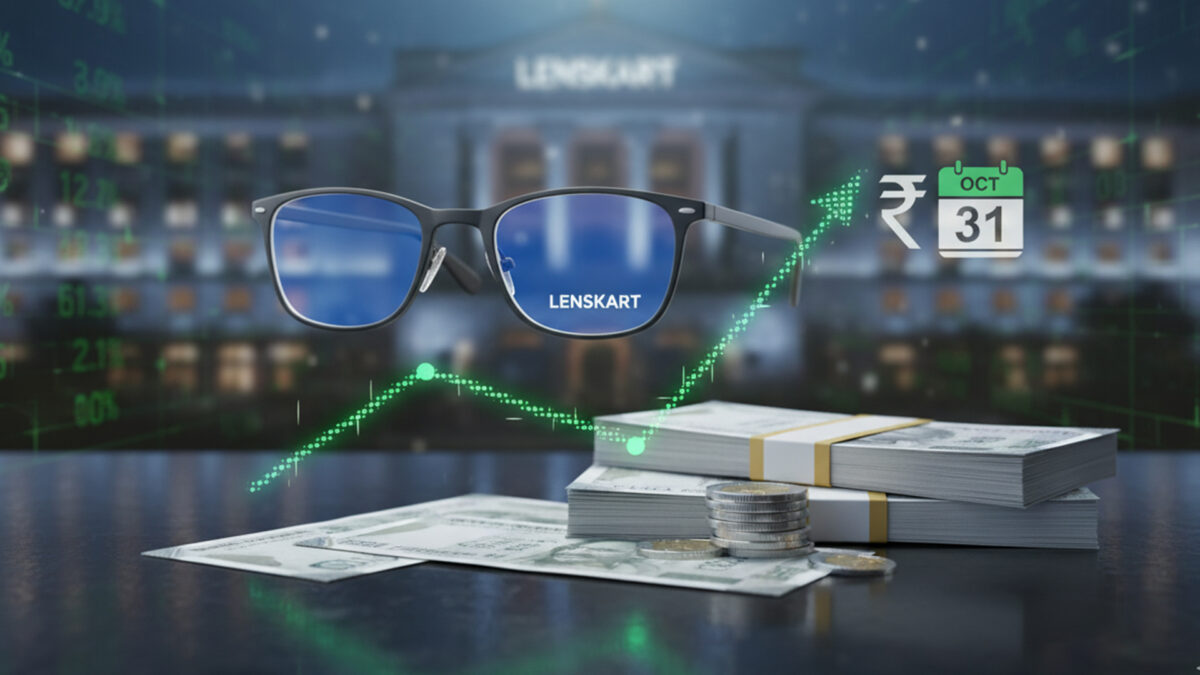
Lenskart to Launch IPO on October 31

Indian eyewear retailer Lenskart Solutions Ltd. is gearing up for its initial public offering (IPO), slated to open on October 31 and close on November 4, 2025.

The offering aims to raise about ₹7,278 crore through a combination of fresh equity issuance and an offer for sale (OFS).

The IPO is structured with a fresh issue amounting to ₹2,150 crore, while the remaining portion involves the sale of over 12.75 crore equity shares by promoters and early investors via the OFS.

The board has fixed the price band at ₹382-402 per share, and the minimum lot size for subscription is 37 shares.

Backed by heavyweight investors including SoftBank Vision Fund II, Temasek Holdings, Kedaara Capital and Abu Dhabi Investment Authority (ADIA), Lenskart’s IPO is seen as one of the marquee listings of 2025.

A compelling element is the company’s recent turnaround: Lenskart reported a net profit of ₹62 crore in Q1 FY26, up from a loss in the prior year’s comparable period.

According to media reports, the IPO values Lenskart at roughly ₹69,000-72,000 crore (approximately USD 8 billion), at the upper end of the price band.

Proceeds from the fresh issue will be utilised by Lenskart for the expansion of company-owned stores, enhancement of technology infrastructure, brand marketing, and general corporate purposes.

This IPO ticks several positive boxes for the company: it offers an exit route for early investors, is backed by strong institutional participation, shows improved profitability, and taps into the growing organised eyewear market in India.

With the IPO opening at a time when investor sentiment is buoyant, Lenskart’s listing is likely to command significant market attention as it enters the public markets.

Also Read: Reliance, Meta Form $100 Million AI Joint Venture

Categories
Corporate

Reliance, Meta Form $100 Million AI Joint Venture

Reliance Industries Ltd. and Meta Platforms on Friday announced the formation of a joint venture aimed at building and scaling enterprise artificial-intelligence tools for businesses in India and select international markets, with an initial capital commitment of about ₹855 crore (roughly $100 million).

Under the agreement, Reliance will hold the majority stake while Meta will be a strategic minority partner; the companies said the new unit will leverage Meta’s open-source Llama models and Reliance’s distribution channels and enterprise relationships to offer sovereign, enterprise-ready AI platforms.

Company statements and reporting indicate the venture will be capitalized in a 70:30 ratio in favor of Reliance, reflecting Reliance’s controlling interest and operational lead in delivering products and services to Indian businesses, small and large.

Meta said the partnership is intended to accelerate adoption of its Llama family of models in enterprise contexts by tailoring them to local regulatory and data-sovereignty requirements, while Reliance framed the deal as part of a broader push to build an “AI backbone” for India that combines cloud infrastructure, data centers and applied AI use cases across energy, retail, telecom and financial services.

The announcement follows a period of conversations between major global AI developers and Reliance about deeper collaboration in India’s fast-growing AI market.

Meta’s blog post describing the strategic partnership said the JV will develop Llama-based enterprise AI solutions and bring those tools to Indian companies, while Reliance executives have highlighted plans to host and operate technology locally to meet customer and regulatory needs.

Market analysts and coverage from Reuters and other outlets characterized the move as part of Reliance’s push to diversify its digital portfolio and to position Jio Platforms and related businesses as distribution partners for third-party AI models and services.

Regulatory approvals and international clearances have been reported as part of the path to operationalize the venture.

Several Indian and international media outlets noted that the arrangement has begun to clear required scrutiny, enabling the companies to start onboarding customers and building enterprise products.

Observers said the partnership signals a broader trend in which global AI developers seek local allies in prominent emerging markets to deliver tailored, compliant AI services while tapping into established sales and infrastructure networks.

Reliance’s concurrent partnerships with other technology companies to develop cloud and data-center capacity also position the group to host and scale models and services produced through the new JV.

The joint venture is likely to intensify competition in India’s nascent enterprise-AI landscape, where international cloud providers, local startups and conglomerates are racing to offer industry-specific models and managed AI services.

Both Reliance and Meta said in their announcements that the JV will focus on delivering “enterprise-ready” solutions while respecting local data rules, but the companies did not disclose detailed product roadmaps or customer names at the time of the announcement.

Analysts will be watching closely for follow-on disclosures about governance, model-safety measures, and the timeline for commercial rollouts.

Also Read: RIL Faces Margin Pressure Amid Fresh Russian Oil Sanctions

Categories
Corporate

RIL Faces Margin Pressure Amid Fresh Russian Oil Sanctions

Reliance Industries Ltd. (RIL) is carefully assessing the implications of recent sanctions imposed by the United States Department of the Treasury, the European Union and the United Kingdom on major Russian oil producers, as the company moves to align with compliance obligations while managing potential impacts on its refining business.

The new U.S. sanctions announced on October 22 specifically target Rosneft Oil Company and Lukoil Oil Company, two of Russia’s largest crude-oil exporters.

Under the restrictions, non-U.S. entities must wind down business with those firms by November 21, or risk secondary sanctions.

Reliance, which has a long-term deal to import approximately 500,000 barrels per day from Rosneft, is one of the most exposed refiners in India due to its historically large purchases of discounted Russian crude.

In its official statement, Reliance affirmed that it has “noted the recent restrictions announced by the European Union, United Kingdom and United States on crude-oil imports from Russia and export of refined products to Europe. Reliance is currently assessing the implications, including the new compliance requirements.”

The firm emphasized commitment to full compliance with applicable regulations and indicated it will adapt its refinery operations accordingly.

Analysts estimate that the margin impact could be meaningful. The discounted Russian barrels had provided Reliance a cost advantage in its feedstock basket.

With the discount narrowing and the need to shift to alternative crude sources—potentially from West Asia or Africa—the cost base could increase, squeezing refining margins by an estimated US$3 to 5 per barrel in some scenarios.

One analyst noted that despite the discount falling to about US$2-3 a barrel versus over US$10 previously, losing access entirely or transitioning to more expensive barrels would “hit export competitiveness directly.”

A company spokesperson reiterated confidence in the company’s “time-tested, diversified crude-sourcing strategy” and said the firm expects to maintain stability and reliability in its refining operations, including exports to Europe.

However, industry sources point out that switching supply lines at scale presents challenges.

One senior executive noted that other refiners will also target the same non-Russian barrels, which could drive up the premium on alternative crude and further eat into margins.

In addition to feedstock cost risks, the sanctions may complicate trade-flows for refined products. The EU’s recent sanction package prohibits imports of refined products made from Russian crude if the crude was processed within 60 days through third-country refineries.

This could affect Reliance’s exports and logistics strategy.

Despite the uncertain outcome, Reliance has indicated it will remain aligned with Indian government guidelines on the matter.

While the company holds some inventory buffer and believes immediate margin impact may be limited, the long-term adjustment remains delicate. Reliance’s refining business contributes nearly 60 percent of its consolidated revenue, so even a moderate margin squeeze could affect profitability at scale.

Categories
Technology

Quantum Error-Correction Algorithm Can Run on Conventional AMD Chips: IBM

In a major advance for the quantum computing industry, IBM has announced that it successfully ran a key quantum error-correction algorithm on conventional chips produced by Advanced Micro Devices (AMD), news agency Reuters reported.

The breakthrough demonstrates that quantum-supporting algorithms can operate efficiently on widely available, non-specialized hardware, a step that could accelerate the path toward scalable and affordable quantum computing.

IBM is racing to develop quantum computing against Microsoft and Alphabet’s Google, which announced a breakthrough algorithm this week.

Quantum computers use qubits, which differ from classical bits by existing in multiple states simultaneously. This capability allows them to perform calculations that are beyond the reach of traditional systems.

However, qubits are extremely fragile and prone to errors caused by environmental noise, decoherence, and hardware imperfections.

Error correction—detecting and fixing mistakes without destroying quantum information—has long been regarded as the most significant challenge standing between today’s prototype quantum devices and fully fault-tolerant quantum computers.

IBM first revealed earlier this year that it had designed a real-time algorithm capable of correcting quantum errors as they occur.

The company has now confirmed that the same algorithm can run effectively on AMD’s field-programmable gate array (FPGA) chips, which are inexpensive and widely used in classical computing applications.

Running this algorithm on off-the-shelf AMD hardware rather than custom-built quantum control units marks a milestone for the company’s hybrid computing vision.

Jay Gambetta, Director of IBM Research, described the finding as “a big deal,” emphasizing that the team’s implementation performed roughly ten times faster than the minimum speed required for effective real-time correction.

By proving that quantum error correction can be executed on existing AMD hardware, IBM has not only advanced the science of quantum computing but also opened the door to a more accessible and economically viable future for the technology.

Also Read: Google Claims World’s First Verifiable Quantum Advantage With ‘Willow’ Chip

Categories
Corporate

IMF Backs India’s Growth Story With 6.6% Forecast

The International Monetary Fund (IMF) has raised its growth projection for India’s economy to 6.6% for FY2025, a slight uptick from its earlier estimate of 6.5%, underscoring the country’s resilience amid a volatile global environment.

According to the IMF, India’s strong 7.8% growth in the first quarter, supported by buoyant domestic demand, robust government capital expenditure, and improving private investment sentiment, has contributed to the upward revision.

With this forecast, India is expected to maintain its position as the world’s fastest-growing major economy, significantly outpacing China’s 4.8% growth projection for the same period.

At the global level, the IMF expects overall growth to remain steady at 3.2% in 2025, easing slightly to 3.1% in 2026, amid continued trade frictions, geopolitical tensions, and structural labour-market pressures.

The Fund, however, anticipates a marginal slowdown to 6.2% in FY2026, reflecting potential moderation as global financial conditions tighten and export demand softens.

In its latest assessment, the IMF urged economies to maintain fiscal prudence, uphold central bank independence, and pursue structural reforms to strengthen long-term growth prospects.

Also Read: Blackstone Backs Federal Bank With Nearly ₹6,200 Crore Investment

Categories
Corporate

GX Group to Establish Photonic Module and Chip Subsidiary in India

Broadband equipment manufacturer GX Group announced plans to invest ₹500 crore to establish a photonic module and chip subsidiary in India.

The new venture aims to bolster GX Group’s presence in the rapidly growing Indian telecommunications and data center markets.

The subsidiary will be headquartered in Manesar, Gurgaon, and is expected to generate over 300 direct jobs.

GX Group CEO Paritosh Prajapati emphasized that the Phase 1 investment will be allocated towards setting up a manufacturing facility in Bhiwadi, Rajasthan, and expanding the company’s existing research and development (R&D) center in Chennai.

Operations at both the manufacturing facility and the R&D center are slated to commence by the first quarter of fiscal year 2027.

Following the operational launch, GX Group plans to begin rolling out chips, with availability in the local market anticipated by October 2026.

The move is part of GX Group’s strategy to tap into India’s burgeoning quantum photonics market, which is projected to be worth about USD 50 billion.

The company’s existing customer base includes major telecom operators and data center companies such as Airtel, ACT, and Tata Play, all of which have expressed interest in the forthcoming products.

This investment underscores GX Group’s commitment to strengthening its foothold in India and contributing to the country’s technological advancement in the field of photonics.

Also Read: L&T Secures Major Orders from Hindalco and Tata Steel