Categories
Beyond

India’s October trade deficit hits $41.68 billion

India’s trade deficit surged to a record USD 41.68 billion in October 2025, up from USD 32.15 billion in September. The widening gap comes as exports fell sharply while imports rose, especially for precious metals like gold and silver.

Exports in October dropped 11.8% to USD 34.38 billion. Shipments to key markets such as the United States fell to USD 6.31 billion from USD 6.91 billion a year ago, affected partly by U.S. tariffs on Indian textiles, gems, and jewellery. Weak global demand also contributed to the decline in exports.

Imports, meanwhile, increased 16.6% to USD 76.06 billion. Gold imports alone jumped to USD 14.72 billion, nearly three times higher than in October 2024, driven by strong domestic demand and the festive season. Silver imports also rose sharply, by over 500%, reaching around USD 2.71 billion. Other imports, including crude oil, electronics, and machinery, also added to the higher import bill.

The combination of falling exports and rising imports has put pressure on India’s balance of payments. The growing trade deficit can affect the stability of the rupee and foreign-exchange reserves. Policymakers may need to take steps to manage non-essential imports while supporting export growth.

Despite the high merchandise trade deficit, India continues to see a surplus in services trade, which helps cushion the overall impact. Experts suggest closely monitoring trade data in November and December, as the festive season and year-end shipments could further influence numbers.

The October figures highlight challenges for India’s external sector and underscore the need for careful policy measures. Controlling non-productive imports, providing support to exporters, and promoting competitive shipments abroad will be key to managing the trade gap and maintaining economic stability.

Also Read: Government imposes import rules on certain platinum jewellery
Categories
Corporate

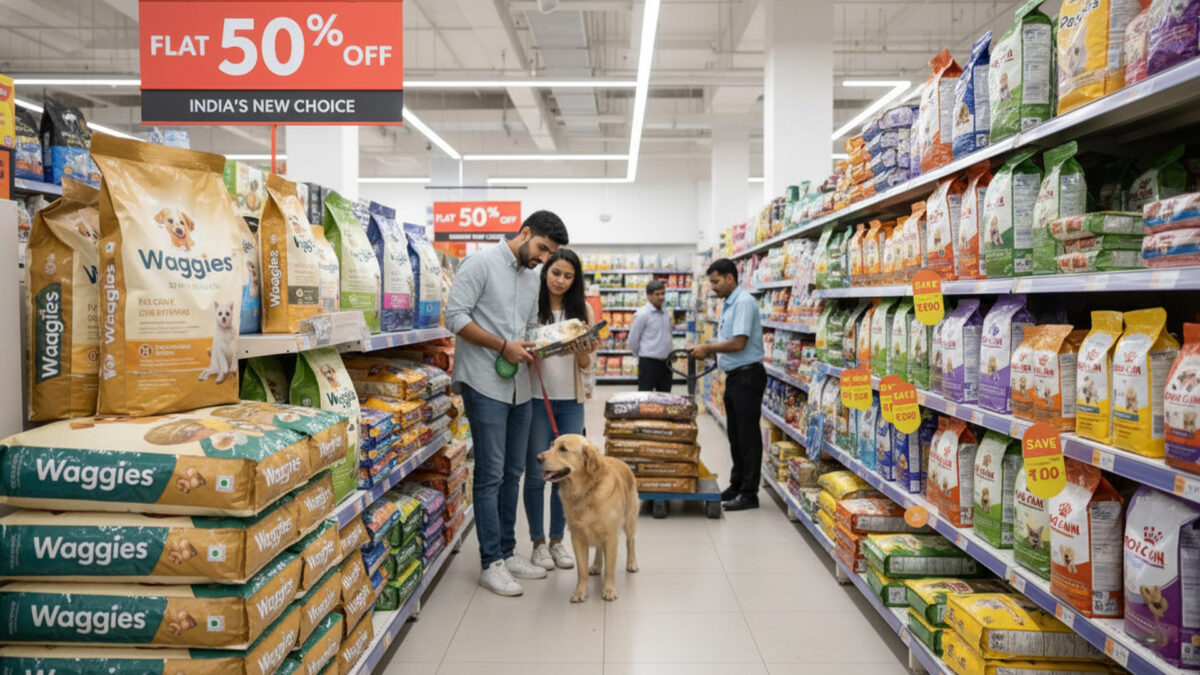
Reliance enters pet food market with cheaper ‘Waggies’

Reliance Consumer Products is entering India’s growing pet food market with a new brand called Waggies.

The company plans to sell Waggies at prices 20–50% lower than big names like Nestlé, Mars, Godrej, and Emami. This strategy could start a price war in the industry.

Waggies will be available in neighborhood stores, especially in smaller cities and towns. Reliance aims to reach a large number of consumers, offering good trade margins to store owners to encourage sales.

The Indian pet care market is expanding quickly. Experts expect it to double to $7 billion by 2028, up from $3.5 billion now. Rising pet ownership is driving this growth — the number of pets in Indian homes has increased to 32 million in 2024 from 26 million in 2019.

Existing big brands like Pedigree, Purina, and Royal Canin may need to rethink their pricing as Reliance brings in this low-cost option.

Reliance has successfully used aggressive pricing in other markets before, and now it plans to do the same in the pet food sector.

Also Read: Bengaluru’s Sarla Aviation invests ₹1,300 cr in Andhra’s aerospace facility

Categories
Corporate

Danish pharmaceutical company, Novo Nordisk, cuts obesity drug price

Novo Nordisk, the Danish pharmaceutical giant, has announced a significant price reduction for its popular obesity drug, Wegovy, as it prepares to launch a pill version of the treatment. The move comes amid growing competition in the weight-loss market and aims to expand access for patients in the United States.

Starting immediately, cash-paying patients can buy Wegovy at $349 per month, down from the previous $499. For new users under select insurance plans, including Medicare and Medicaid, the company is offering the injection at $149 per month for a limited time. The price cuts are part of a broader effort to make weight-loss medications more affordable and widely available.

The company’s CEO, Mike Doustdar, emphasized that the new strategy reflects how weight-loss treatments are increasingly being used by consumers rather than traditional patients. “Patients behave like consumers,” he said, “and we need to ensure treatments are accessible, convenient, and affordable.”

Novo Nordisk is also preparing to introduce an oral version of Wegovy, currently under review by U.S. regulators and expected to be approved by the end of the year. Unlike the injectable version, the pill form could appeal to people who prefer taking tablets over weekly injections. The company says it has sufficient supply to support a full launch.

The price reduction is linked to a new agreement with the U.S. government, under which Medicare could start covering obesity drugs like Wegovy in 2026. While the company expects this deal to slightly reduce its global sales growth, it sees it as essential to expanding patient access.

Competition in the weight-loss market is intensifying, particularly from Eli Lilly, which has also introduced semaglutide-based drugs. By reducing prices and offering an oral alternative, Novo Nordisk aims to maintain its leadership position in the sector.

Also Read: India, Russia nearing key deals before Putin’s visit

Categories
Beyond

Centre clears 17 electronics component projects worth ₹7,200 cr

The Union government has approved 17 new manufacturing projects under the Electronics Component Manufacturing Scheme (ECMS), aiming to boost India’s ability to produce high-value electronic parts locally. These projects represent a total investment of ₹7,172 crore and are expected to significantly strengthen the country’s electronics supply chain.

According to the Ministry of Electronics and Information Technology (MeitY), the approved proposals together are projected to generate ₹65,111 crore worth of output over the coming years. They are also expected to create over 11,800 direct jobs, along with additional indirect employment opportunities as manufacturing capacity grows.

The 17 units will manufacture a wide range of critical components, including camera modules, connectors, multi-layer printed circuit boards (PCBs), quartz crystal oscillators, optical transceivers, and high-strength enclosures used in various consumer and industrial devices. Among the approved projects are several firsts for India — including the country’s first optical transceiver plant, a 40-layer PCB manufacturing facility, and a dedicated quartz crystal production unit, which will reduce dependence on imports of precision components.

The projects have been distributed across nine states and union territories, ensuring wider regional participation in the electronics value chain. These include Karnataka, Tamil Nadu, Maharashtra, Uttar Pradesh, Gujarat, Andhra Pradesh, Goa, Madhya Pradesh, and Jammu & Kashmir.

Major companies receiving approval include Jabil Circuit India, Uno Minda, Aequs Consumer Products, TE Connectivity, Zetwerk’s subsidiary Zetfab India, Syrma Mobility, and Meena Electrotech. Many of these firms are expanding beyond assembly into deeper component-level manufacturing, which the government sees as crucial for building a resilient and competitive electronics ecosystem.

Electronics and IT Minister Ashwini Vaishnaw urged companies to build strong in-house design capabilities, target world-class quality standards, and work closely with domestic raw material suppliers. He also announced that the government is preparing a comprehensive skilling framework to ensure the sector has a trained workforce capable of supporting high-precision component production.

Also Read: 16th Finance Commission’s submits 2026-31 fiscal transfers report

Categories
Beyond

India, Russia nearing key deals before Putin’s visit

India and Russia are getting ready to complete several important agreements before Russian President Vladimir Putin visits New Delhi in early December. External Affairs Minister S. Jaishankar, who met Russian Foreign Minister Sergey Lavrov in Moscow, said both sides are working on multiple new pacts and updates to existing cooperation.

These agreements are likely to cover defence, energy, trade, science, mobility, and long-term development projects. Officials from both countries have been meeting regularly to finish the details so they can be signed during the upcoming annual India-Russia summit.

Jaishankar said the relationship between the two countries has stayed strong despite global tensions and shifting geopolitical situations. He added that India values its long-standing partnership with Russia and wants to expand it in practical areas that directly benefit both nations.

During the meeting, the two ministers also spoke about major world issues, including the conflict in Ukraine, the situation in West Asia, and security challenges in Afghanistan. India repeated its stand that dialogue and diplomacy are the only way to resolve conflicts.

Lavrov said Russia sees India as a reliable partner and is committed to strengthening cooperation. He also mentioned that both countries are exploring ways to protect their economic relationship from global disruptions.

President Putin’s visit in December is expected to mark an important moment in the partnership, with a clear focus on new agreements and future cooperation.

Also Read: Trump eyes F-35 jets sale to Saudi Arabia

Categories
Beyond

Gold ₹1,21,521, Silver ₹1,52,600 slip on strong dollar

Gold and silver prices in India fell on Tuesday. December gold futures dropped 1.14% to ₹1,21,521 per 10 g, while silver futures slipped 1.75% to ₹1,52,600 per kg.

The decline comes as the US dollar strengthened, making gold costlier for investors using other currencies. Expectations of a Federal Reserve interest rate cut in December have also diminished, reducing demand for safe-haven assets.

Analysts say gold has support around ₹1,21,780–1,22,350 per 10 g and resistance near ₹1,23,750–1,24,500 per 10 g. Silver support is at ₹1,52,100–1,53,850 per kg with resistance around ₹1,56,540–1,57,280 per kg.

Despite the dip, domestic demand remains steady, especially ahead of the wedding season, according to Aksha Kamboj, VP of the India Bullion & Jewellers Association. She suggests buyers could consider gradually entering the market during this price correction.

Investors are advised to monitor global developments closely, as gold and silver prices may continue to fluctuate in the short term.

Also Read: Sensex slides over 200 pts, Nifty below 25,950

Categories
Corporate

Sensex slides over 200 pts, Nifty below 25,950

On Tuesday, Indian equity markets paused their six-day winning streak. The BSE Sensex slipped 227 points to 84,758.64, while the Nifty 50 fell 65 points to 25,951.55.

Investors remained cautious ahead of key U.S. economic data that may influence the Federal Reserve’s next move on interest rates, while weak global cues, including losses in Asian markets and a soft Wall Street close, added to the downward pressure.

Among stocks, Tata Consumer Products, Max Healthcare, and Eicher Motors were top gainers, rising between 0.9–1.8 %, while Tata Steel, Hindalco, and Tech Mahindra dragged the indices lower, falling 0.6–1.05 %. All 16 major sectors opened in the red, with mid-cap and small-cap indices also showing broad-based weakness.

The market pullback is a temporary pause rather than a reversal. Investors are focusing on quality stocks and domestic triggers like corporate earnings and policy updates amid fading rate-cut expectations.

Also Read: Sensex closes 388 points up, Nifty tops 26,000

Categories
Corporate

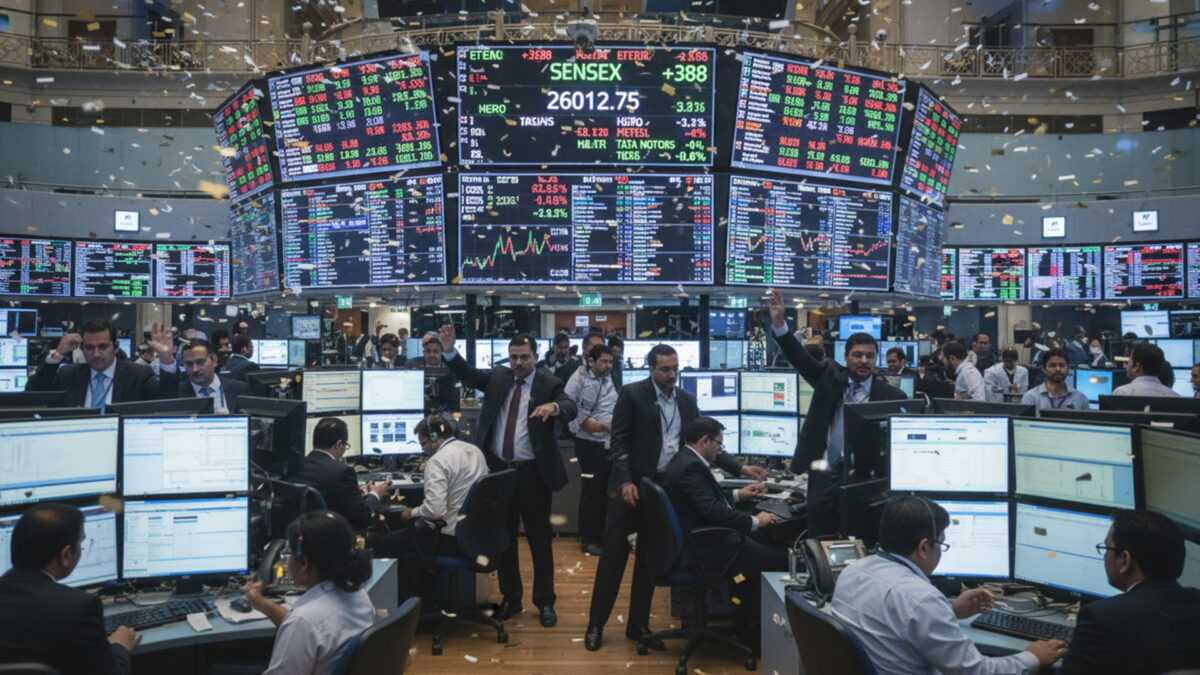
Sensex closes 388 points up, Nifty tops 26,000

The stock markets ended Monday with solid gains, led by mid‑cap stocks and strong corporate earnings. The Sensex rose 388 points, while the Nifty 50 crossed the 26,000 mark. Investors cheered healthy Q2 results, signaling a recovery in corporate performance.

Among individual stocks, Eternal and Tata Consumer Products gained around 2% each, Hero MotoCorp jumped 3.3%, and Mahindra & Mahindra rose 1.1%. On the other hand, Tata Motors fell 4% after lowering FY26 margin guidance, Tata Steel slipped 0.6%, and Infosys saw a minor decline amid profit booking.

Banking, financials, and auto sectors drove the rally, while IT and metals stocks lagged. Global cues, including U.S. economic data, added some caution, but domestic earnings optimism kept the markets higher.

Also Read: Sensex climbs 200 pts, Nifty tops 25,950

Categories
1 Minute-Read

Oil India Q2 PAT falls 43% to ₹1,044 crore

Oil India reported a 43% drop in standalone net profit to ₹1,044 crore for Q2 FY26, down from ₹1,834 crore a year ago.

Revenue rose 4% to ₹5,457 crore, with crude oil revenue falling 12% while natural gas and pipeline income grew. Operating and net profit margins narrowed sharply.

Production remained steady at 1.652 MMTOE. Numaligarh Refinery increased throughput to 753 TMT, and India’s first 2G bioethanol plant became operational.

The board approved an interim dividend of ₹3.50 per share, payable by 14 December, with 21 November as the record date. Shares rose 0.73% to ₹172.30.

Categories
Corporate

Bitcoin falls 26% to $94,000, erases 2025 gains

Bitcoin has dropped sharply over the past few days, completely erasing the gains it had made since January. The world’s largest cryptocurrency fell below $94,000, slipping under last year’s closing price and signalling a clear shift toward a bear market.

In early October, Bitcoin had touched a record high of $126,000, driven by strong investor excitement and heavy buying through crypto exchange-traded funds (ETFs). But the mood changed suddenly after political uncertainties in the US triggered fear across global financial markets. As investors became cautious, Bitcoin was one of the first assets to react, sliding faster than many stocks or commodities.

Analysts say one major reason for the fall is that big institutional investors,  who had supported Bitcoin through much of the year, have stepped back for now. Several Bitcoin ETFs, which had attracted billions earlier, have seen large withdrawals recently. Nearly $870 million left these funds in just a few days, removing an important source of steady demand.

Market liquidity has also weakened. Traders report that the number of active buyers and sellers in the market has dropped, which means even medium-sized trades can now push the price up or down very quickly. This makes the market more sensitive and increases volatility.

The decline has also affected companies that hold large amounts of Bitcoin. One major US-based firm, well known for building its business strategy around Bitcoin, has seen its own market value fall close to the value of the Bitcoin it owns. This suggests investors are becoming doubtful about companies heavily tied to crypto price movements.

For retail investors, the sudden drop has come as a shock. Many who joined the rally earlier this year are now worried about whether the slide will continue. Experts say Bitcoin’s price could remain unstable in the near future unless confidence returns and new buyers step in.

Also Read: Tata Motors PV shares fall 7% despite profit surge