Categories
Corporate

Priya Nair Takes the Helm as HUL Overhauls Leadership

Hindustan Unilever (HUL) has initiated a significant internal restructuring in tandem with the elevation of Priya Nair as its new Managing Director and Chief Executive Officer, in a move aimed at revitalising performance in its domestic market. The changes, effective August 1, reposition HUL’s governance to grant Nair exclusive oversight of local operations and streamline decision-making.

Nair succeeds Rohit Jawa, who steps down after a tenure of just over two years. Her appointment marks the first time a woman will lead HUL in its history. In announcing the change, HUL underscored that the reorganisation is intended to give more autonomy to the Indian arm, enabling faster response to local market conditions and sharper execution on strategy.

Nair’s career spans three decades at Unilever and HUL. She joined HUL in 1995 and has held multiple leadership roles across home care, personal care, beauty & wellbeing, and marketing functions. Prior to her new role, she was President of Unilever’s global Beauty & Wellbeing business. Unilever’s global CEO, Fernando Fernandez, described her as bringing a “view of the world” that combines domestic understanding with international experience, and positioned her appointment as part of a decisive leadership shift to energise growth in India.

The leadership reshuffle coincides with efforts by HUL’s parent company to bolster India as a central growth market. India is Unilever’s second-largest revenue base, and the company has flagged that its future global growth trajectory will include India as a key pillar. As part of the structural changes, HUL has also tapped leaders from external organisations, including hiring senior executives from leading homegrown companies to lead food and financial functions.

The leadership change comes at a time when HUL is navigating a mix of headwinds and opportunities. In its latest quarterly results, HUL’s India unit reported an increase in profit driven by rural demand recovery and success from its refreshed brand portfolio. Revenue growth was moderate, and margin pressures persisted due to costs of raw materials, but the results were broadly viewed as showing resilience. The board has expressed confidence that under Nair’s leadership, the company can sharpen strategic focus and drive renewed performance.

Outgoing CEO Jawa, marking a 37-year career with Unilever, praised Nair’s capabilities and described her as “perfect casting” for the role. He noted that she melds deep India market experience with global leadership exposure, positioning her well to lead HUL through evolving consumer and competitive dynamics. The abrupt transition also reflects acknowledgement within the company of slowing momentum in value growth in recent quarters, and the need for sharper strategic direction in key segments such as beauty, wellness, and direct-to-consumer offerings.

With the new structure, Priya Nair will report directly to global leadership and exercise full control over the India operations rather than a shared accountability model.

The board and Unilever expect this configuration to accelerate decision cycles, align resource allocation more tightly with market priorities, and enable HUL to respond more nimbly to shifts in consumer behaviour. The industry will watch closely whether this leadership and structural reorientation leads to measurable improvements in growth, efficiency, and market positioning in India.

Also Read: At $57.6 Billion, Maruti Overtakes Ford, GM, Volkswagen in Valuation

Categories
Beyond

India Rises to Third in Global Tech Startup Funding in 2025

India claimed the spot as the world’s third-highest funded market for technology startups in 2025, despite a marked downturn in investment volumes compared with the prior year. 

According to data compiled by market intelligence firm Tracxn, Indian tech startups raised $4.8 billion in the first half of 2025, down 25 percent from $6.4 billion raised in the same period in 2024. 

This figure also fell short of $5.9 billion recorded in the second half of 2024. India leapfrogged nations such as Germany and Israel to climb from the fourth to the third position globally.

The Tracxn report notes that the dip in funding was broad-based across stages. Seed funding plunged 44 percent to $452 million, early-stage rounds declined by 16 percent to $1.6 billion, and late-stage investments contracted by 27 percent to $2.7 billion. 

Despite the slowdown, five startups secured funding rounds exceeding $100 million, led by electric mobility firm Erisha E Mobility’s $1 billion raise, followed by GreenLine’s $275 million and Infra.Market’s $222 million. 

Other recipients included Spinny and Darwinbox.

Sectoral trends reveal that some domains bucked the overall decline. Transportation and logistics technology stood out, with investment rising by 104 percent from the previous half to nearly $1.6 billion, making it one of the fastest growing areas of investor interest. Meanwhile, the retail tech segment drew $1.2 billion even as its year-on-year performance weakened, and enterprise applications secured $1.1 billion.

The funding climate also reflected greater exit activity. The first half of 2025 saw 73 acquisitions, compared with 54 in the same period in 2024. Among the most significant deals were the $516 million acquisition of Magma General Insurance by the DS Group and Patanjali, and Hindustan Unilever’s purchase of skincare brand Minimalist for $350 million. These exit moves are being viewed as evidence of maturation in India’s startup ecosystem.

Geographically, Bengaluru led the funding tally, accounting for 26 percent of total capital, followed closely by Delhi at 25 percent. In terms of investor participation, Accel, AngelList, and SoftBank Vision Fund emerged as among the most active across funding stages. At the seed level, Venture Catalysts, 100X.VC, and Antler were prominent, while early-stage rounds were led by Peak XV Partners, Accel, and Lightspeed. Late-stage investment saw strong participation from Sofina and Premji Invest.

Some observers see the drop in funding levels as a signal of tighter investor sentiment globally, but note that India’s ascension in rankings underscores resilience in the domestic tech ecosystem. Tracxn cofounder Neha Singh commented that while volumes have declined, meaningful exits and growing unicorn creation reflect greater stability and growth potential.

Beyond the numbers, the rise to third place is notable for its symbolic value. India’s tech founders, venture capital networks, and government policies supporting startups have been working to build a more mature, investable ecosystem. The classification brings heightened global attention, even as challenges such as capital access, profitability pressures, and infrastructure constraints remain.


Also Read: At $57.6 Billion, Maruti Overtakes Ford, GM, Volkswagen in Valuation

Categories
Corporate

At $57.6 Billion, Maruti Overtakes Ford, GM, Volkswagen in Valuation
Maruti Suzuki India has surged ahead in global automaker rankings after attaining a market capitalization of $57.6 billion, moving it into the eighth position worldwide and surpassing longstanding giants including Ford, General Motors, and Volkswagen. The new valuation places Maruti ahead of Ford (valued at about $46.3 billion), GM (around $57.1 billion), and Volkswagen (approximately $55.7 billion).

The firm’s meteoric rise is tied to a sharp increase in investor optimism. Since August, Maruti’s share price has climbed about 25.5 %, outpacing the broader Nifty Auto index, which has posted gains of around 11 % in the same period. Market observers attribute this rally in part to recent revisions in India’s tax regime, including GST reforms that came into effect starting September 22, which have eased cascading levies on automobiles and improved affordability.

Inside India, Maruti retains a dominant position in the compact and small-car segments, accounting for more than 60 % of its volume in those categories. The company has also reported strong booking activity since the tax realignment, with estimates of up to 15,000 bookings per day and a milestone of around 30,000 vehicle deliveries in a single day during the Navratri festival period.

The valuation benchmark data was compiled by the Economic Times Intelligence Group. The calculation reflects prevailing stock prices and does not necessarily imply parity in revenues, profits, scale, or global footprint with the larger automakers Maruti has eclipsed in market cap terms.

While Maruti has now overtaken its Japanese parent in market value, its current valuation still trails far behind global leaders like Tesla (with a market cap in the hundreds of billions) and Toyota (over $300 billion). Analysts caution that comparisons based purely on market capitalization can mask differences in scale, international exposure, product mix, and the challenges associated with the shift toward electric mobility.

Maruti’s strong showing in 2025 adds an Indian automaker to the global top ten by value — a rare achievement in the automotive industry. Yet, Maruti also faces headwinds: the global transition to electric vehicles, supply chain constraints, commodity cost pressures, and increased competition both domestically and abroad. The company’s ability to maintain momentum while addressing those challenges will be observed closely by the markets and industry watchers.

Categories
Beyond

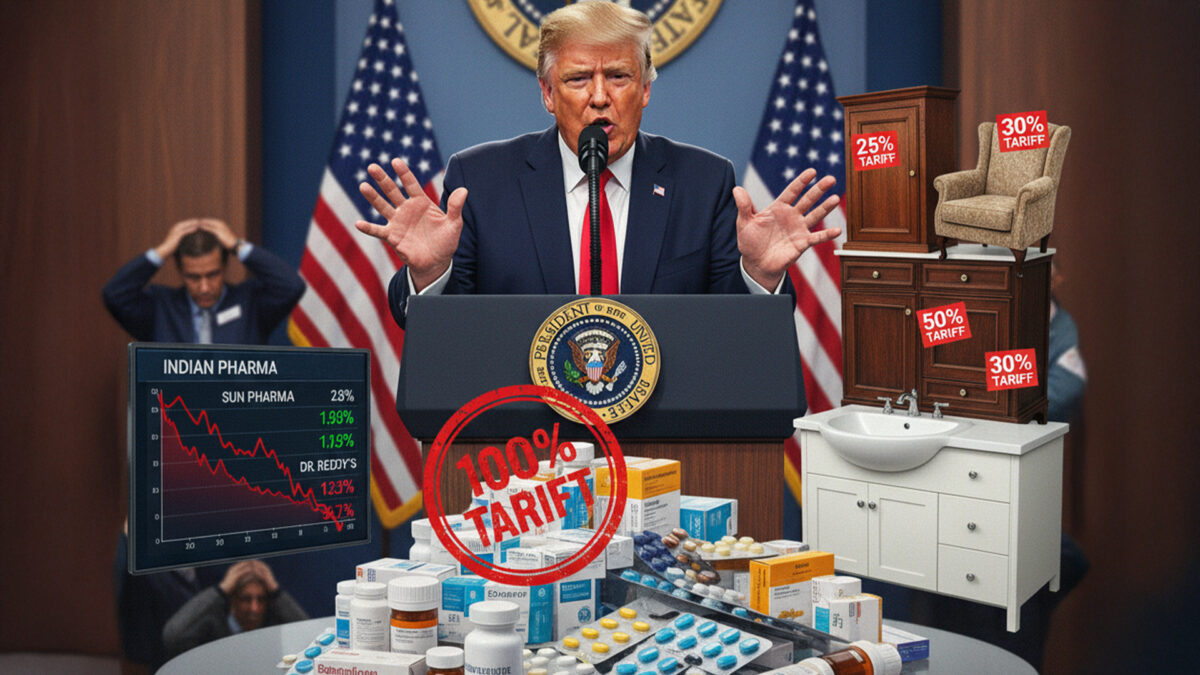
No End to US Tariffs: Trump Imposes 100% Tariff on Branded Drug Imports

United States President Donald Trump announced on Thursday that beginning October 1, the United States will levy a 100 % tariff on imports of branded or patented pharmaceutical products, unless the manufacturer is actively building a U.S.-based production facility. 

He also unveiled fresh tariffs of 50 % on kitchen cabinets and bathroom vanities, 25 % on heavy-duty trucks, and 30 % on upholstered furniture as part of a broader push to shield domestic industries from foreign competition.

In social media posts on Truth Social, Trump defined the exemption for drugmakers as applying to those that have “broken ground” or already are “under construction” in the United States. He framed the moves as efforts to support U.S. manufacturing and cited national security, though he did not provide detailed legal or economic justification in his announcements.

The decision marks a dramatic escalation in Trump’s tariff strategy, which has already included sweeping duties on steel, aluminum, autos, copper, and other goods during his second presidency. Observers note that the pharmaceutical tariffs could disrupt global supply chains, raise the cost of medicines in the U.S., and provoke retaliation from trading partners.

In response to the announcement, Indian pharmaceutical stocks tumbled. The U.S. is a major market for Indian drug exports, although much of India’s trade is in generics rather than branded pharmaceuticals — which the tariff targets do not explicitly address. Several Indian companies, including Sun Pharma, saw share price declines of over 3 %.

Trump’s truck and cabinetry tariffs also went beyond pharmaceuticals. The 25 % tariff on imported heavy trucks is intended to protect U.S. manufacturers such as Peterbilt, Kenworth, Freightliner, and Mack from “outside competition,” Trump said. The 50 % tariff on kitchen cabinets and bathroom vanities and 30 % on upholstered furniture reflect his administration’s claims that foreign imports are “flooding” the U.S. market.

Trump’s announcement comes amid ongoing national security investigations under Section 232 of the Trade Expansion Act. Earlier in 2025, the Commerce Department launched probes into trucks, pharmaceuticals, and other imports to assess whether they threaten U.S. security. Some analysts suggest the tariff declarations may be a signal that these investigations are nearing completion.

Markets reacted swiftly. Pharmaceutical and furniture stocks in Asia declined, while U.S. sectors sensitive to construction and automotive supply chains also showed volatility. Critics warn that imposing such steep levies could exacerbate inflation, strain federal healthcare programs like Medicare and Medicaid, and destabilize bilateral trade relations. Proponents, however, argue the tariffs will incentivize reshoring of production and reduce reliance on foreign supply.

Trump’s sweeping tariff announcement is likely to dominate trade discourse in the coming weeks. The administration faces imminent pressure to define enforcement rules, determine which countries or products may receive exemptions, and respond to legal challenges as trading partners evaluate retaliation or concession strategies.

Also Read: Adani Energy Solutions Achieves Zero-Waste-to-Landfill Status Across All Sites


Categories
Uncategorized

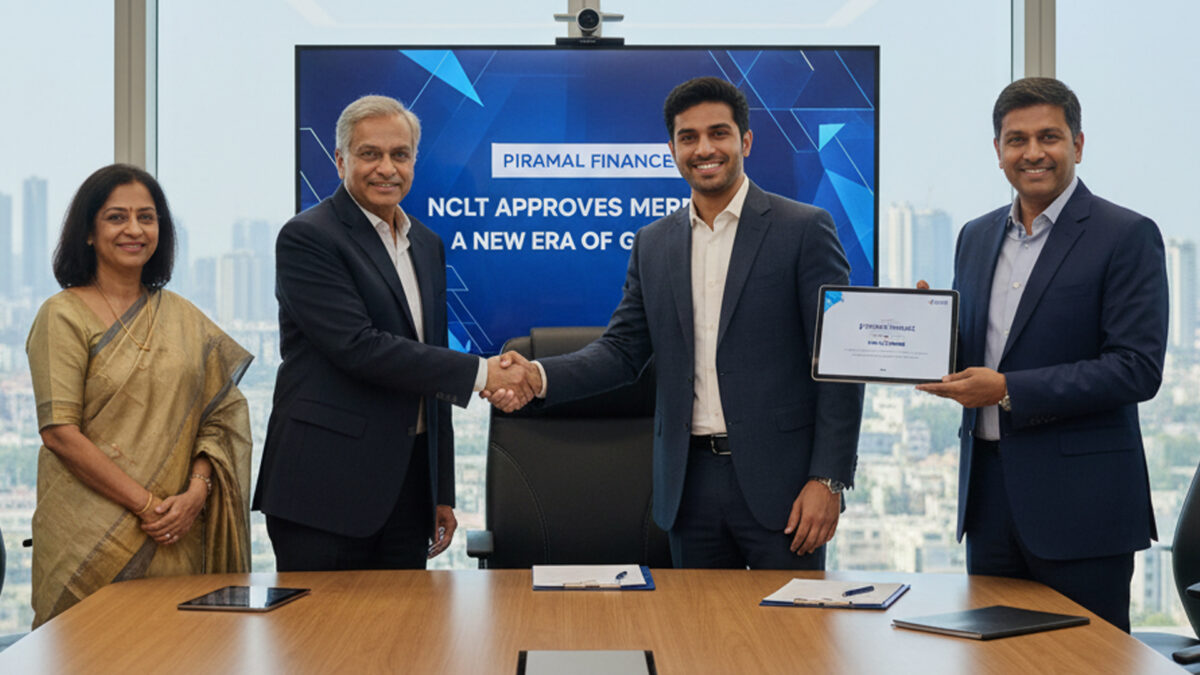
NCLT Greenlights Piramal Enterprises–Piramal Finance Merger

In a major corporate restructuring move, the National Company Law Tribunal (NCLT) has approved the merger of Piramal Enterprises Ltd (PEL) with its wholly-owned subsidiary, Piramal Finance Ltd (PFL), effective September 10.

As part of the deal, Anand Piramal, son of Piramal Group chairman Ajay Piramal, has been appointed chairman of the merged entity, Piramal Finance.

The scheme of amalgamation envisages a one-to-one share swap, with shareholders of Piramal Enterprises getting equity shares in Piramal Finance in the same ratio.

A record date of September 23 has been set, from which trading in PEL shares will be suspended. Shareholders of PEL registered by that date will be allotted shares in the newly merged Piramal Finance.

Anand Piramal has been leading the financial services vertical of the group since joining in 2019, overseeing a shift from wholesale real-estate lending toward a broader technology-led non-banking finance business.

Among his key achievements is the ₹34,250 crore acquisition of the erstwhile DHFL (Dewan Housing Finance Ltd), a significant transaction under India’s Insolvency and Bankruptcy Code. Under his guidance, the legacy structured real-estate book has also been substantially reduced.

Jairam Sridharan will continue in his current role as managing director and chief executive officer of the merged Piramal Finance. Sridharan, formerly MD of the subsidiary, has been credited with scaling the retail business dramatically, growing branches and workforce, and expanding the assets under management.

Ajay Piramal, meanwhile, will retain the leadership role of Chairman of the broader Piramal Group, which encompasses Piramal Finance, Piramal Pharma, Piramal Realty, and the Piramal Foundation.

Swati Piramal will continue as Vice-Chairperson of the group. The merger thus consolidates the group’s financial services under a single entity, aimed at improving capital efficiency and operational simplicity.

Analysts see multiple strategic advantages to the merger. By folding Piramal Enterprises into Piramal Finance, the group expects gains in regulatory efficiency, reduced duplication, and a unified balance sheet for its financial services business.

The move also appears designed to sharpen focus on retail and MSME lending, geographic expansion, and leveraging technology platforms.

As of end-June 2025, Piramal Finance (formerly the non-banking finance arm, inclusive of its DHFL acquisition) had achieved a broad scale, with a rapidly growing retail and MSME portfolio, and a significantly reduced exposure to legacy real-estate stress. Capital adequacy remains healthy, and precision in risk-management has been a stated priority.

The merger marks one of the more notable transitions in India’s NBFC sector in recent years, combining legacy strength, regulatory change, and generational leadership handover in one package.

With Anand Piramal now steering the merged entity, the group signals a deeper shift toward unified financial services operations, underpinned by the leadership and vision that have driven recent growth.

Also Read: Infosys Expands Partnership with Sunrise to Accelerate AI-Driven IT


Categories
Beyond

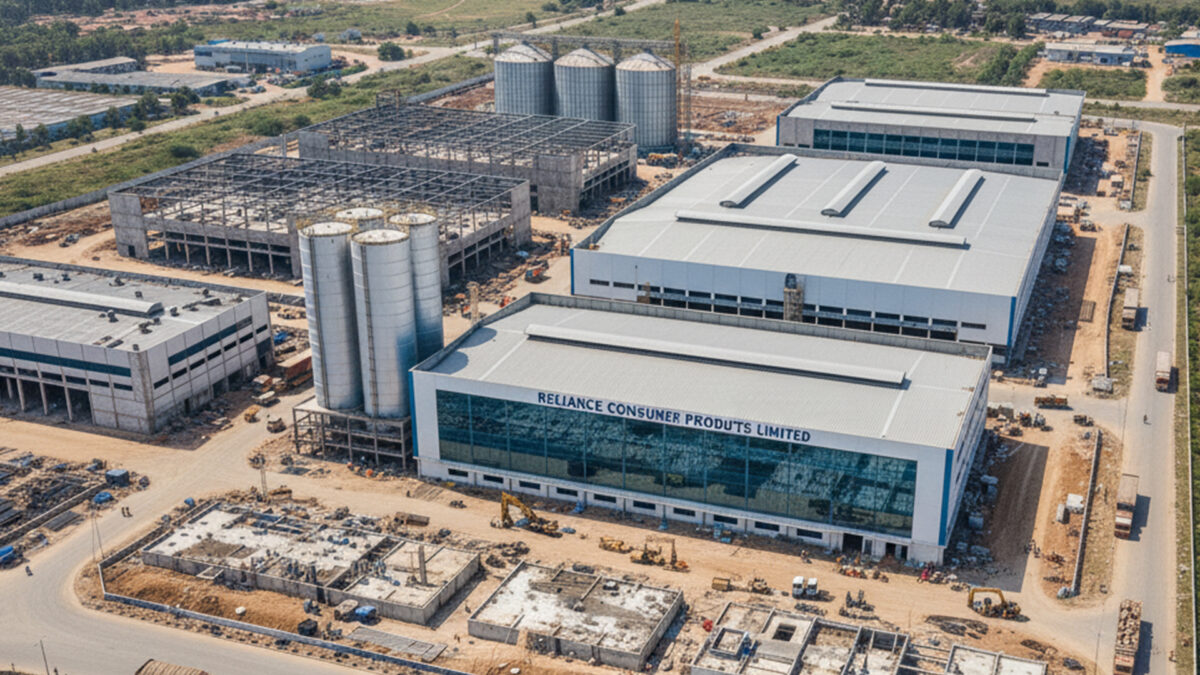
Reliance Consumer Products to Invest ₹1,156 Crore in Tamil Nadu Manufacturing Facility

Reliance Consumer Products Limited (RCPL), the fast-moving consumer goods (FMCG) arm of Reliance Retail, has announced a significant investment of ₹1,156 crore to establish an integrated manufacturing facility in Tamil Nadu. The facility will be located at the State Industries Promotion Corporation of Tamil Nadu (SIPCOT) Allikulam Industrial Park in Thoothukudi district. Spanning 60 acres, the plant is set to produce a diverse range of products, including regional snacks, biscuits, spices, wheat flour, and edible oils. This strategic move underscores RCPL’s commitment to expanding its footprint in the southern market and catering to the growing demand for FMCG products in the region.

The project is expected to generate approximately 2,000 local jobs over the next five years, contributing to the state’s employment landscape. State Industries Minister TRB Rajaa highlighted that this development positions Tamil Nadu as a preferred destination for national FMCG players, attributing the state’s industrial growth to the “Dravidian Model” of governance championed by Chief Minister M.K. Stalin. He emphasized that the state continues to attract marquee national FMCG players, leaving no major sector untapped.

RCPL’s decision to set up its first manufacturing unit in Tamil Nadu aligns with the state’s ongoing efforts to bolster its industrial infrastructure and attract significant investments. The establishment of this facility is anticipated to enhance the state’s position in the FMCG sector, fostering economic growth and development in the region.

This investment marks a significant milestone for RCPL as it expands its manufacturing capabilities and strengthens its presence in the competitive FMCG market. The company’s strategic focus on diversifying its product offerings and enhancing production capacity is expected to yield positive outcomes, both in terms of market share and consumer reach.

In summary, RCPL’s ₹1,156 crore investment in Tamil Nadu signifies a pivotal step in the company’s growth trajectory, contributing to regional economic development and reinforcing its position in the FMCG industry.


Also Read: PhonePe Files For IPO via Confidential Route, Aims to Raise ₹12,000 Crore

Categories
Technology

Google Launches Mixboard: AI-Powered Visual Idea Board to Compete with Pinterest

Google has unveiled Mixboard, an AI-powered mood board application designed to help users brainstorm, design, and visualize ideas through generative artificial intelligence. Currently available in public beta in the U.S. via Google Labs, Mixboard is positioned as a direct competitor to platforms like Pinterest, offering a dynamic and interactive approach to creative ideation.

Mixboard allows users to create visual project boards using pre-made templates or by issuing simple text prompts. For example, users can type instructions such as “show me Memphis-style cups and plates” or “set up an autumn-themed party in my living room” to generate relevant images. Additionally, users may upload their own photos, mixing them with AI-generated visuals to shape unique boards.

The application is powered by Google’s Gemini 2.5 Flash AI model, enabling users to build boards starting from ready-made templates or by issuing simple text prompts. This integration allows for seamless generation of visuals based on user descriptions, enhancing the creative process.

One of the standout features of Mixboard is its use of Google’s new image editing model, Nano Banana. This model allows users to make edits and other small changes to images, or even combine images, with ease. Users can ask the AI to make adjustments such as “make this image brighter” or “combine these two pictures,” streamlining the editing process and eliminating the need for complex design software.

Mixboard also offers features like natural language editing, quick regeneration of images, and board templates. Users can start with text prompts or choose from ready-made templates offering various styles, themes, and projects. This flexibility caters to a wide range of creative needs, from home decor and event planning to DIY projects and more.

As an experimental tool under Google’s Labs initiative, Mixboard is currently available in public beta in the U.S. Users can access the platform and join a dedicated Discord community to share feedback and ideas. Google has indicated that the platform may evolve based on user input, suggesting a commitment to continuous improvement and user-centric development.

In summary, Mixboard represents Google’s foray into the realm of AI-driven creative tools, offering users a platform to visualize and refine their ideas through an intuitive and interactive interface. By combining the inspiration-driven style of Pinterest with the creative power of generative AI, Mixboard aims to provide a comprehensive solution for users seeking to bring their ideas to life.

Also Read: PhonePe Files For IPO via Confidential Route, Aims to Raise ₹12,000 Crore


Categories
Corporate

Waaree Energies Invests ₹300 Crore in Subsidiary to Establish Lithium-Ion Cell Manufacturing Plant

Waaree Energies Limited has announced a strategic investment of ₹300 crore in its wholly owned subsidiary, Waaree Energy Storage Solutions Private Limited (WESSPL), to establish a 3.5 GWh lithium-ion advanced chemistry storage cell manufacturing plant. This move underscores Waaree’s commitment to expanding its footprint in the renewable energy sector, particularly in energy storage solutions.

The investment was executed through a rights issue, involving the allotment of 60 crore partly paid-up equity shares with a face value of ₹10 each. Of this, ₹5 per share was paid on application, with the remaining ₹5 payable on call. This capital infusion aims to bolster WESSPL’s capabilities in manufacturing advanced battery storage solutions, aligning with India’s increasing demand for energy storage as the country transitions towards renewable energy sources.

WESSPL, incorporated in February 2020, has reported nil turnover over the past three financial years, including FY25. Despite this, the fresh capital infusion positions the subsidiary to capitalize on the growing energy storage market. The establishment of the 3.5 GWh manufacturing facility is expected to play a pivotal role in enhancing grid stability and supporting the integration of renewable energy into India’s power infrastructure.

Following the investment, WESSPL will continue to operate as a wholly owned subsidiary of Waaree Energies, with no change in the shareholding structure. The company has confirmed that the transaction was executed for cash consideration and did not require any regulatory approvals.

This development is part of Waaree Energies’ broader strategy to diversify its portfolio and strengthen its presence in the renewable energy sector. The company’s recent acquisition of a 76% stake in Racemosa Energy India, a smart electric meters company, for ₹53 crore further reflects its commitment to integrating smart energy solutions into India’s energy infrastructure.

Market analysts anticipate that this strategic investment will enhance Waaree Energies’ position in the renewable energy sector, potentially leading to increased investor interest and positive movement in the company’s stock performance.

Also Read: Indian Hotels Company Signs 310-Room Taj Hotel in Visakhapatnam

Categories
Corporate

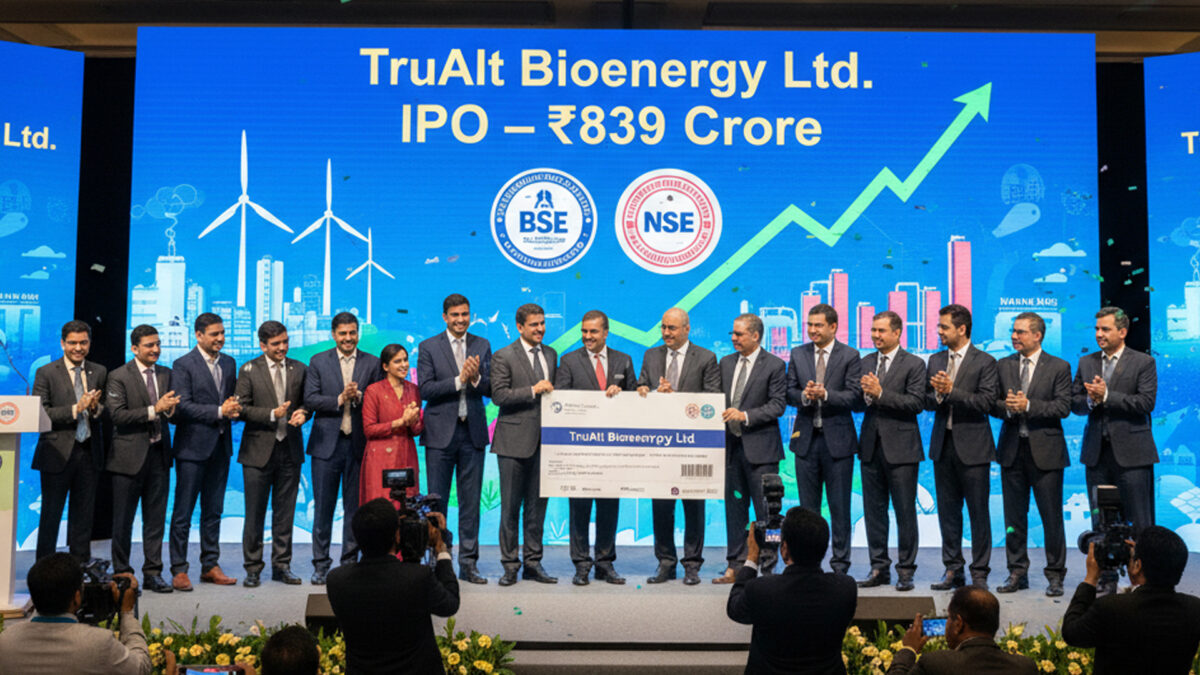
TruAlt Bioenergy Launches ₹839 Crore IPO Amid Growing Biofuel Demand

TruAlt Bioenergy Ltd, a prominent Bengaluru-based biofuels producer, has commenced its Initial Public Offering (IPO) on September 25, 2025, aiming to raise ₹839.38 crore. The IPO comprises a fresh issue of 1.51 crore equity shares aggregating to ₹750 crore and an offer for sale of 0.18 crore shares valued at ₹89.28 crore at the upper price band.

The price band for the IPO is set between ₹472 and ₹496 per share, with a face value of ₹10 each. Investors can bid for a minimum of 30 shares, translating to a minimum investment of ₹14,880 at the upper price band. The subscription period will remain open until September 29, 2025, with the allotment process expected to be finalized by September 30. Shares are scheduled to be listed on the Bombay Stock Exchange (BSE) and the National Stock Exchange (NSE) on October 3, 2025.

Ahead of the public offering, TruAlt Bioenergy secured ₹252 crore from anchor investors, including Tata Mutual Fund, HDFC Mutual Fund, Bandhan Mutual Fund, SBI General Insurance Company, Societe Generale, and Citigroup Global Markets Mauritius. These investors were allotted 50.76 lakh equity shares at ₹496 per share.

The proceeds from the IPO will be utilized for expanding the company’s ethanol production capacity, establishing multi-feedstock operations, and reducing existing debt. TruAlt Bioenergy is among India’s leading ethanol producers, with an installed capacity of 2,000 kiloliters per day (KLPD), accounting for approximately 3.6% of the national capacity in Fiscal 2025.

In the grey market, the shares of TruAlt Bioenergy are trading at a premium of around ₹80 over the issue price, indicating positive sentiment among investors ahead of the listing.

Analysts view the IPO favorably, citing the company’s strong position in the biofuels sector and the government’s supportive policies promoting renewable energy. However, they also caution about the risks associated with the volatility of raw material prices and regulatory changes in the biofuels industry.

Investors interested in participating in the IPO can apply through various online platforms and stockbrokers. Given the promising outlook for the biofuels sector and the company’s strategic initiatives, TruAlt Bioenergy’s IPO presents an opportunity for investors seeking exposure to the growing renewable energy market in India.

Also Read: PhonePe Files For IPO via Confidential Route, Aims to Raise ₹12,000 Crore

Categories
Corporate

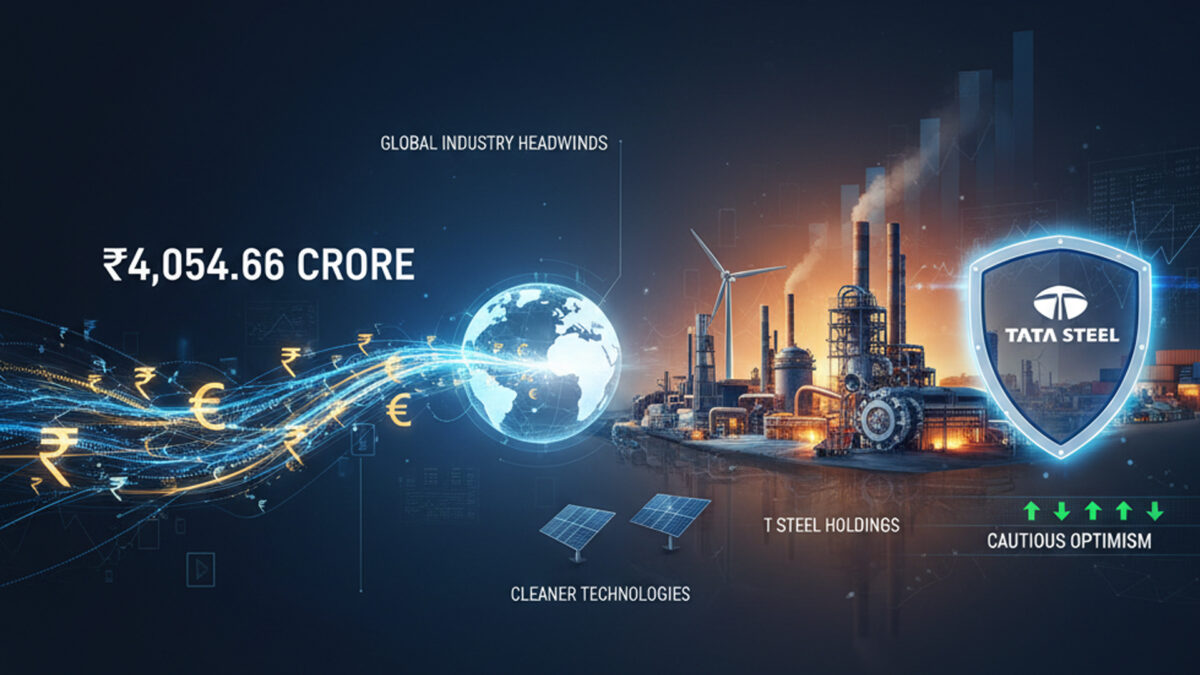
Tata Steel Pumps ₹4,054.66 Crore into Overseas Arm T Steel Holdings

Tata Steel has injected ₹4,054.66 crore into its overseas subsidiary, T Steel Holdings, in a move that underlines the group’s strategic investment in its international operations. The capital infusion, approved by Tata Steel’s board, marks one of the latest steps in the company’s attempts to strengthen its global presence and address working capital or financial requirements of its foreign entity.

The funds are being routed into T Steel Holdings, which oversees Tata Steel’s overseas assets and operations. While Tata Steel has not provided detailed public disclosures about the precise use of these funds, sources familiar with the matter indicate that the infusion will support both operational needs and ongoing expansion or modernization programmes abroad. The move is expected to help offset currency risks, fund capital expenditure in line with market conditions, and shore up balance sheet health for overseas operations.

Tata Steel’s annual reports and filings periodically show performance pressures in foreign units, including those in Europe and Southeast Asia, where raw material costs, energy prices, import/export duties, and logistic expenses have had notable impacts. By transferring capital via the parent company, Tata Steel appears to be ensuring that its subsidiaries have sufficient liquidity to navigate volatile global steel market conditions.

Financial analysts suggest that the ₹4,054.66 crore infusion may also be aimed at facilitating compliance with regulatory norms in overseas jurisdictions, enabling investments in cleaner technologies or facility upgrades, and safeguarding against disruptions in supply chains. Tata Steel has in recent years made several commitments toward decarbonisation and environmental sustainability; overseas units often require upgraded infrastructure to meet increasingly stringent environmental standards.

The timing of the infusion is significant: it comes amid a global steel industry facing challenges such as overcapacity, fluctuating demand, freight rate volatility, and raw material price inflation. Such external pressures have compressed margins for many firms, especially for overseas units operating in Europe where energy and carbon costs can erode profitability rapidly. For Tata Steel, maintaining operational resilience abroad is critical not only for revenue diversification, but also for exposure to advanced steel-making markets and technology.

Investors have reacted to the news with cautious optimism. On one hand, the investment signals Tata Steel’s continued commitment to its overseas subsidiaries and suggests confidence in their long-term potential. On the other, some market watchers indicate that sustained capital infusions might raise concerns about returns if those overseas operations continue to underperform or if the parent company faces cash flow constraints domestically.

Regulatory filings pertaining to this transaction are expected to shed more light on the subsidiary’s business plans, including where precisely the capital will be deployed — whether in debt reduction, scaling production, or upgrading technology. Tata Steel’s management, while not yet disclosing granular details, has reaffirmed its focus on disciplined capital expenditure and cost management across its businesses.

The ₹4,054.66 crore investment in T Steel Holdings underscores Tata Steel’s strategy of buttressing its overseas operations amid global industry headwinds. It reflects a balance between ensuring short-term stability for those units and positioning them for longer-term competitiveness in a shifting international steel landscape.

Also Read: Infosys Expands Partnership with Sunrise to Accelerate AI-Driven IT