Categories
Beyond

SEBI Clears IPOs of Pine Labs, Hero Motors, and Four Others

The Securities and Exchange Board of India (SEBI) has approved the initial public offerings (IPOs) of six companies, including fintech major Pine Labs, auto parts maker Hero Motors, and mutual fund house Canara Robeco Asset Management. Together, these firms are expected to raise around ₹9,000 crore from the public markets.

Pine Labs plans to raise approximately ₹2,600 crore through a mix of fresh issue and offer for sale (OFS). The funds will be used for debt repayment, strengthening its tech infrastructure, and expanding its digital checkout platform. This marks a significant move for the fintech firm as it aims to broaden its merchant network and enhance customer engagement.

Hero Motors is targeting a ₹1,200 crore IPO, comprising ₹800 crore as a fresh issue and ₹400 crore through OFS. The company will use the proceeds to reduce debt, modernize operations, and expand production capacity, especially at its Gautam Buddha Nagar facility.

Canara Robeco AMC, a joint venture between Canara Bank and ORIX Corporation Europe, will launch a pure OFS of 4.98 crore shares. The company itself will not receive fresh funds, as existing promoters are offloading part of their stake.

In the renewable energy sector, Emmvee Photovoltaic Power is set to raise about ₹3,000 crore. The solar panel manufacturer plans to use the proceeds for capacity expansion, working capital needs, and debt reduction.

Manipal Technologies’ Payment & Identity Solutions unit also received approval, with its IPO expected to raise around ₹1,200 crore. The company provides secure digital identity and payment solutions to banks and government institutions.

Finally, Orkla India, parent of packaged food brands MTR and Eastern, will launch a pure OFS, allowing promoters to partially exit without issuing new shares.

This wave of IPO approvals reflects growing market confidence and a diversified pipeline of companies looking to list. Market experts expect these offerings to hit the bourses around Diwali or early 2026, depending on market conditions and investor sentiment.

Also Read: AHPI Urges Star Health to Restore Cashless Services at Hospitals Nationwide

Categories
Corporate

SMPK and JSW Infra Sign ₹740 Cr Port Deal

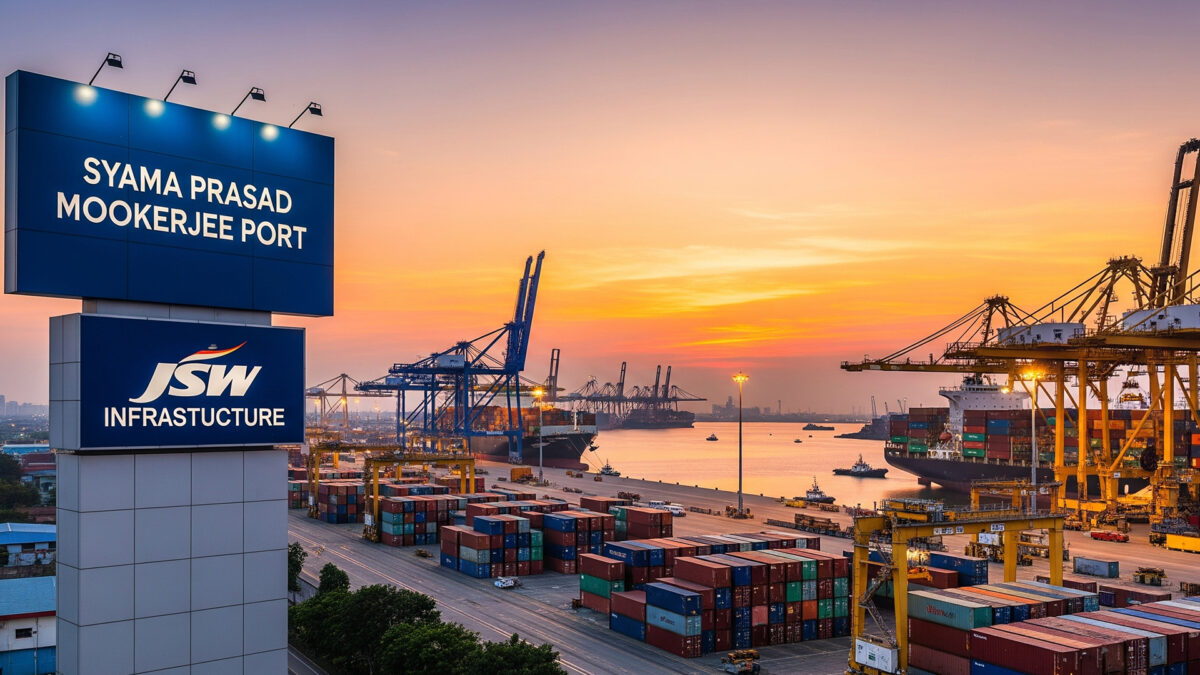
Syama Prasad Mookerjee Port, Kolkata (SMPK), has entered into a 30-year concession agreement with JSW Infrastructure Ltd for a ₹740 crore container terminal development project under the Public-Private Partnership (PPP) model. This agreement aims to significantly enhance cargo handling capabilities at the port’s Kolkata Dock System (KDS).

Under the project, JSW Infrastructure will reconstruct Berth No. 8 and deploy advanced rail-mounted quay cranes (RMQCs) at Berths 7 and 8 of the Netaji Subhas Dock. Additionally, a 25-acre backup yard will be developed to support terminal operations. Once operational, the upgraded terminal will boast a container handling capacity of 500,000 TEUs (twenty-foot equivalent units) annually.

The agreement was signed in the presence of SMPK Chairman Rathendra Raman, Deputy Chairman Samrat Rahi, and senior officials from both SMPK and JSW Infrastructure. Devki Nandan, Director at JSW Infrastructure, led the company’s delegation.

Speaking at the event, Chairman Rathendra Raman emphasized the project’s strategic importance in aligning with the Government of India’s Maritime India Vision. “This is a major step towards transforming Kolkata Port into a globally competitive facility with state-of-the-art infrastructure. The project will significantly boost trade efficiency and regional economic growth,” he said.

JSW Infrastructure, India’s second-largest commercial port operator, is expected to complete the terminal development within the stipulated timeline. The project will not only modernize container handling operations but also improve turnaround time and reduce logistics costs for businesses using the port.

This agreement marks another milestone in SMPK’s ongoing efforts to upgrade its facilities through private sector participation and technology integration.

Also Read: Government Reopens PLI Scheme for White Goods to Boost Local Manufacturing


Categories
Beyond

India and U.S. Resume Trade Talks in New Delhi Amid Tariff Tensions

India and the United States have resumed in-person trade negotiations in New Delhi today, marking a significant step toward resolving recent trade tensions. The discussions come after a hiatus following the imposition of steep tariffs by the U.S. on Indian goods.

The U.S. delegation, led by Assistant U.S. Trade Representative for South and Central Asia, Brendan Lynch, arrived in New Delhi late Monday evening. The one-day talks are scheduled to address the proposed Bilateral Trade Agreement (BTA) between the two nations. This marks the first in-person meeting since the U.S. imposed a 50% tariff on Indian exports, including a 25% penalty for India’s continued purchase of Russian oil. These tariffs were introduced in August and have been a point of contention between the two countries.

India has strongly criticized the U.S. tariffs, labeling them as “unfair, unjustified, and unreasonable.” In response, India has called for a reassessment of its commitments under the World Trade Organization’s Information Technology Agreement (ITA), suggesting a potential withdrawal or renegotiation to better protect its domestic IT hardware manufacturing sector.

The resumption of talks is seen as a positive development, with both sides expressing optimism about finding common ground. Prime Minister Narendra Modi and U.S. President Donald Trump have both indicated a willingness to move forward with trade negotiations. Commerce Secretary Sunil Barthwal described the two sides as being in a “positive frame of mind” regarding trade matters.

The outcome of today’s discussions could pave the way for a comprehensive trade agreement, aiming to enhance bilateral trade and address existing trade barriers. Both nations are keen on strengthening their economic ties, with the BTA serving as a potential framework for future cooperation.

As the talks progress, stakeholders from various sectors will be closely monitoring the developments, hopeful that a mutually beneficial agreement will emerge from the renewed dialogue.

Also Read: Adani Enterprises Secures ₹4,081 Crore Kedarnath Ropeway Project

Categories
Corporate

Adani Enterprises Secures ₹4,081 Crore Kedarnath Ropeway Project

Adani Enterprises Ltd. (AEL), the flagship company of the Adani Group, has been awarded a ₹4,081 crore contract to construct a 12.9 km ropeway connecting Sonprayag to Kedarnath in Uttarakhand. This project, approved under the National Ropeways Development Programme – Parvatmala Pariyojana, aims to significantly enhance accessibility to the Kedarnath temple, a major pilgrimage site in India.

Currently, pilgrims face an arduous 8–9 hour trek to reach the temple. Once operational, the ropeway will reduce this journey to just 36 minutes, offering a safer and more efficient alternative. With a capacity to transport 1,800 passengers per hour in each direction, the ropeway is expected to serve the approximately 20 lakh devotees who visit Kedarnath annually.

The project will be executed by AEL’s Roads, Metro, Rail, and Water (RMRW) division and is scheduled for completion within six years. It will be developed under a Public-Private Partnership (PPP) model, with revenue sharing between AEL and the National Highways Logistics Management Ltd (NHLML).

This initiative is expected to boost tourism in the region, create employment opportunities, and contribute to the economic development of Uttarakhand. The project aligns with the government’s efforts to improve infrastructure and promote sustainable tourism in the Himalayan region.

Shares of Adani Enterprises saw a positive movement following the announcement, reflecting investor confidence in the project’s potential impact.

In summary, the Sonprayag-Kedarnath ropeway project represents a significant advancement in India’s infrastructure development, promising to transform the pilgrimage experience and contribute to the region’s economic growth.

Also Read: Tata International Partners with Mercuria, Mitsubishi to Expand Global Trading, Distribution Reach

Categories
Uncategorized

Jio Financial Services and Allianz Launch Reinsurance Joint Venture in India

In a strategic move to tap into India’s burgeoning insurance market, Jio Financial Services Ltd (JFSL) and Germany’s Allianz SE have established a 50:50 reinsurance joint venture named Allianz Jio Reinsurance Ltd (AJRL).

The venture, formalized on September 8, 2025, aims to bolster the country’s reinsurance sector by combining JFSL’s local market expertise with Allianz’s global underwriting capabilities.

Strategic Partnership and Market Impact

This collaboration marks a significant step for both companies. For Allianz, it represents a return to the Indian market after its exit from a long-standing partnership with Bajaj Finserv earlier in 2025.

The new venture allows Allianz to leverage its extensive reinsurance experience, particularly through its Allianz Re division, which has been active in India for over 25 years.

JFSL, a subsidiary of Mukesh Ambani’s Reliance Group, brings to the table its robust digital infrastructure and deep understanding of the Indian financial landscape.

The joint venture is poised to offer innovative reinsurance solutions, enhancing the capacity and resilience of India’s insurance ecosystem.

The formation of AJRL aligns with India’s vision of “Insurance for All by 2047,” aiming to expand insurance penetration across the nation. The venture is expected to provide insurers with access to strong underwriting capabilities and competitive capacity, thereby strengthening the overall insurance framework in India.

As the reinsurance market in India continues to grow, the establishment of AJRL positions both JFSL and Allianz to play a pivotal role in shaping the future of insurance in the country.

By pooling resources and expertise, the partnership aims to support insurers in managing risk, improving financial stability, and expanding coverage to underserved segments, contributing to the broader goals of economic development and financial inclusion.

The joint venture is likely to set a benchmark for similar collaborations in emerging markets, reflecting the growing importance of strategic partnerships in navigating complex and evolving financial landscapes.

Also Read: Reliance Consumer to Invest ₹1,500 Crore in Nagpur Food Processing Plant by 2026

Categories
Corporate

Instant Messaging App Hike Shuts Down Amid India’s Ban on Real-Money Gaming

Hike, the instant messaging app that later pivoted to a gaming platform, has become the latest casualty of India’s stringent crackdown on the real-money gaming (RMG) sector. Announcing the closure on September 13, 2025, founder Kavin Bharti Mittal, son of telecom mogul Sunil Bharti Mittal, confirmed that the company will cease all operations.

“We could raise capital, but the real question is: is it worth it? Is this a climb worth pivoting for? For the first time in 13 years, my answer is no—not for me, not for my team, and not for our investors,” Mittal wrote in a blog post. “This is both a disappointment and a hard outcome. But I choose to look on the bright side: the learnings are invaluable, and my conviction for what’s next is even stronger.”

Hike was originally launched in 2012 as a challenger to WhatsApp, aiming to attract younger users with a feature-rich messaging app. It amassed over 40 million monthly active users and, at its peak, was ranked the 35th most loved consumer brand in India. With backing from prominent investors like Tiger Global, SoftBank, and Tencent, the company achieved unicorn status in 2016 with a valuation of $1.4 billion. However, rising competition from global players and shifting user behavior forced Hike to sunset its messaging service in 2021.

In 2022, Hike re-entered the market with Rush, a gaming platform where users played casual games such as carrom and ludo for cash prizes. The venture was designed to test traction and unit economics in the Indian market while keeping the long-term vision broader. Over four years, Rush attracted over 10 million users and generated more than $500 million in gross revenue.

However, the introduction of the Promotion and Regulation of Online Gaming Act, 2025, spelled doom for Hike’s business model. The new legislation imposed a blanket ban on all forms of online money games—whether skill-based or chance-based—citing addiction, social fallout, and national security concerns. It carved out esports and subscription-based social games, but these areas weren’t aligned with Hike’s revenue streams. Several other players, including Dream11, Winzo, and Zupee, also exited the RMG space or diversified into areas like micro-dramas and financial services.

While Hike’s expansion into the U.S. market showed promise, Mittal acknowledged that scaling globally would require substantial reinvestment and restructuring—a move he deemed neither capital-efficient nor strategically worthwhile. “Scaling globally would require a full recap, a reset that is not the best use of capital or time,” he remarked.

Reflecting on the journey, Mittal encouraged entrepreneurs to steer clear of winner-take-all markets, build for emerging tech cycles, and seek regulatory clarity early on. “The world will eventually move toward a Nation-type model in gaming and Web3—Company 2.0. But crypto regulation is still developing globally, and we don’t want to repeat India, where we hoped for clarity that never came.”

Looking ahead, Mittal pointed to artificial intelligence and energy innovation as promising avenues for future ventures, signaling that the lessons learned from Hike’s rise and fall will inform the next phase of entrepreneurial exploration. Despite the setback, he remains optimistic about building new ventures in a more stable regulatory environment.

Also Read: Reliance Consumer to Invest ₹1,500 Crore in Nagpur Food Processing Plant by 2026

Categories
Corporate

Shares of KRBL Plunge Over 9% Following Governance Issues

Shares of KRBL, one of India’s leading basmati rice producers, fell sharply by over 9% on September 15, 2025, after the company disclosed that an independent director resigned citing serious governance issues. The sharp decline reflects growing investor unease over the board’s functioning and transparency.

Anil Kumar Chaudhary resigned from KRBL’s board with immediate effect on September 8, 2025. The company informed stock exchanges the next day, but it was only on September 14 that the resignation letter was shared in full. In the letter, Chaudhary expressed concern that “certain issues” had persisted despite efforts to resolve them, posing “professional and ethical dilemmas” and making it difficult for him to contribute meaningfully to the board’s governance as expected of an independent director.

Chaudhary pointed to several specific governance lapses, including “inconsistencies” in recording board and committee meeting minutes and instances where information was withheld, affecting informed decision-making. He also raised red flags about financial irregularities, such as “unjust write-offs” of export receivables without proper deliberation and questionable use of CSR funds. Furthermore, he noted “arbitrary distribution” of variable pay and increments, significant changes to the company’s object clause without comprehensive discussion, and undue interference by invitees during meetings.

One of the most serious concerns raised was that dissent on the board was “suppressed or sidelined,” which, according to Chaudhary, compromises both professional ethics and obligations under Indian corporate governance standards. He added, “Effective governance and truly independent oversight are essential ingredients for safeguarding stakeholder interests, and I find the prevailing dynamics of the Board to be inconsistent with these principles.”

The resignation and the issues highlighted have unsettled investors, contributing to the steep selloff in KRBL’s stock. Despite this setback, the company’s shares have gained more than 32% so far this year, buoyed by strong performance metrics. In the June quarter, KRBL’s export revenue surged 98% year-on-year to ₹489 crore, while total revenue rose to ₹1,584 crore. The company reported an EBITDA of ₹225 crore and a net profit of ₹151 crore, reflecting robust growth driven by export demand.

As of now, KRBL has not responded to the allegations made by the outgoing director. With governance concerns now in focus, investor confidence in the stock is likely to remain fragile until further clarity emerges.

Also Read: FSIB Recommends Ravi Ranjan as Managing Director of State Bank of India

Categories
Corporate

Engineers India Secures ₹618 Crore Contract for Fertilizer Plant in Africa

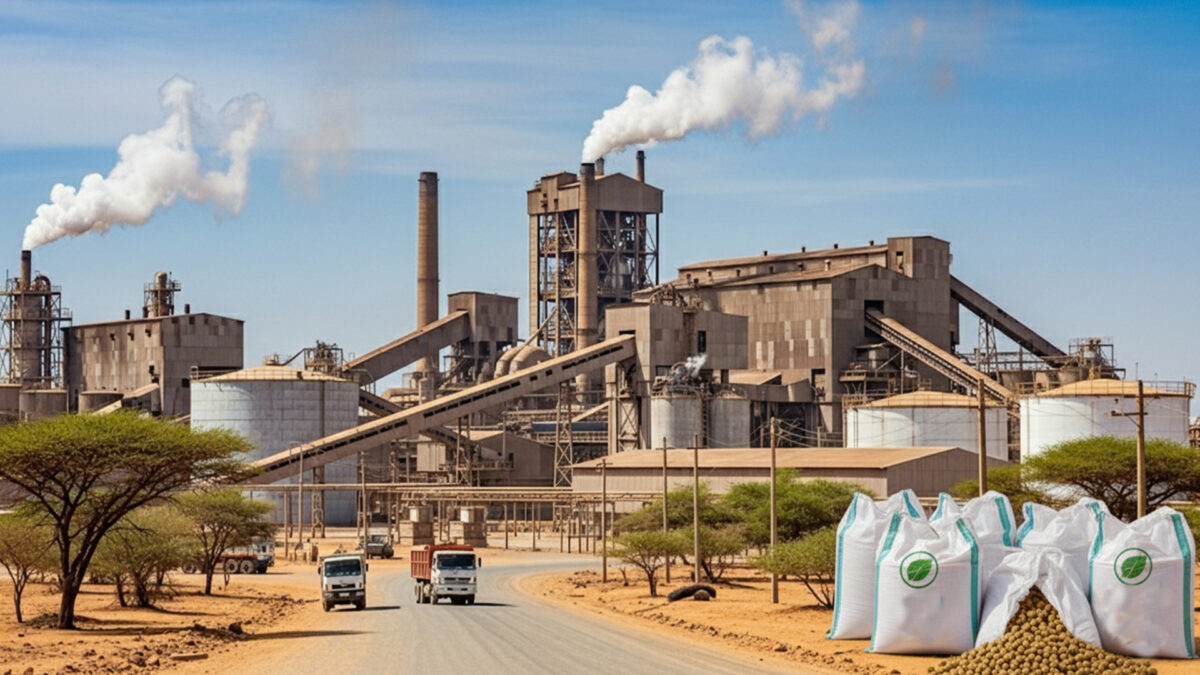
Engineers India Limited (EIL), a public sector enterprise under India’s Ministry of Petroleum and Natural Gas, has been awarded a major international contract valued at ₹618 crore. The contract involves providing Project Management Consultancy (PMC) and Engineering, Procurement, and Construction Management (EPCM) services for the construction of a new fertilizer plant in Africa. The project is expected to be completed within a 24-month timeframe.

Although the specific location of the project and details about the client remain undisclosed due to confidentiality agreements, this contract marks a significant expansion of EIL’s global presence, particularly in the African market. The company’s expertise in offering comprehensive engineering solutions positions it as a strong contender for such large-scale infrastructure projects in emerging economies.

The announcement of this contract has had an immediate positive effect on the company’s stock performance. Shares of Engineers India Limited rose by approximately 2.75%, reaching ₹214.55 on the Bombay Stock Exchange. The increase reflects investor confidence in the company’s ability to secure and successfully execute high-value international projects.

This development reinforces EIL’s growing reputation in the global engineering and construction sector. With its proven track record in delivering complex projects, the company is seen as a reliable partner for industrial development initiatives. Successfully executing this fertilizer plant project could open doors for more opportunities in similar regions, further strengthening EIL’s portfolio and contributing to its long-term growth.

The project is also aligned with the broader goals of supporting industrial expansion and sustainable development in developing markets. By providing engineering and project management services, Engineers India will contribute to enhancing local infrastructure and improving agricultural productivity, crucial for economic growth in Africa. The project not only highlights the company’s technical capabilities but also positions it strategically for future collaborations in global markets, ultimately aiding in its sustained growth and industry leadership.

Also Read: FSIB Recommends Ravi Ranjan as Managing Director of State Bank of India

Categories
Beyond

Sensex and Nifty Trade Flat Amid Profit-Taking Ahead of Fed Meet

The benchmark equity indices Sensex and Nifty opened Monday, September 15, 2025, with modest gains but soon turned volatile and flat as investors engaged in profit-taking following last week’s rally. The markets are now waiting for cues from the U.S. Federal Reserve’s policy meeting later this week, which is expected to influence global sentiment.

At 10:25 AM IST, the 30-share BSE Sensex was trading at 81,904.31, down 10.06 points from the previous close, while the 50-share NSE Nifty stood at 25,099.90, slipping 12.65 points. In early trade, the Sensex had climbed 20.81 points to 81,925.51 and the Nifty had gained 4.9 points to 25,118.90. Among Sensex constituents, Bajaj Finance, Eternal, Tata Motors, Adani Ports, Power Grid and State Bank of India were trading higher, whereas Infosys, Sun Pharma, Tata Consultancy Services and Tech Mahindra were under pressure.

Global cues added to the cautious market mood. In Asia, South Korea’s Kospi, Shanghai’s SSE Composite Index and Hong Kong’s Hang Seng moved higher. U.S. markets ended mixed on Friday, contributing to the subdued risk appetite. Brent crude oil prices rose by 0.60% to $67.39 a barrel, while foreign institutional investors were net buyers of Indian equities, purchasing stocks worth ₹129.58 crore on Friday.

Awaiting Fed, Inflation Data and Domestic Signals

Last week, Indian indices extended their uptrend, with the Sensex climbing 1,193.94 points or 1.47% and the Nifty gaining 373 points or 1.50%. Over eight sessions, the Nifty surged 534.4 points or 2.17%. Investors had welcomed the rally on expectations that the Reserve Bank of India’s recent inflation data—which showed retail inflation rising to 2.07% in August but still within its comfort zone—would pave the way for future rate cuts to support economic growth.

However, with global uncertainties and domestic challenges persisting, markets are treading carefully. The Fed’s policy decision could have significant repercussions, particularly if it signals a shift in monetary tightening. Meanwhile, sectors like IT and pharmaceuticals are facing profit-booking, while financials and infrastructure-related stocks are showing resilience. With these developments, markets appear to be balancing optimism from last week’s gains with caution over near-term risks.

Also Read: Fitch Upgrades India’s FY26 Growth Forecast to 6.9%, Citing Strong Demand Amid Global Risks

Categories
Counterpoint

Trump’s India Strategy Could Backfire on US Giants: Here’s how

After bruising tariffs, Washington may turn legal heat on Adani—while keeping Ambani close—to force India’s hand, risking blowback for Boeing, Apple, Google and other US giants.
By Brandon Nash

The optics have shifted, but the incentives have not. After a summer in which Washington doubled tariffs on Indian goods to a punitive 50 percent, President Donald Trump has belatedly praised Narendra Modi and the “special” India–US bond. That rhetorical climb-down, however, came only after India refused to blink on energy security and after a domestic backlash in India to weeks of hectoring from MAGA-world surrogates.

To assume that the White House has abandoned coercion would be naïve. The more likely next move—especially if the President feels he has lost face vis-à-vis Modi—is to turn the screws where he believes he has leverage: through legal and regulatory pressure centred on Adani, already entangled in US proceedings, while studiously avoiding any public antagonism towards Reliance and Mukesh Ambani, with whom there is demonstrable personal warmth. The aim would be simple: force policy concessions from New Delhi on tariffs, data, and energy without conceding that August’s tariff barrage was an overreach.

Consider the ground Trump world has already prepared. The administration’s additional 25-point tariff layer, taking duties to as high as 50 percent from 27 August, was justified as punishment for India’s continued purchase of discounted Russian crude. India pushed back, publicly and unambiguously, prioritising energy affordability in a slowing global economy.

That defiance triggered a second line of attack: televised rants from Peter Navarro, who branded India the “Maharajah of tariffs” and warned it “will not end well” unless New Delhi “comes around.” The intent was performative pressure at home and reputational sandpapering abroad.

It did not work. Indian public opinion hardened; policy did not change. Even sympathetic American commentators, like Walter Russell Mead in the Wall Street Journal, called out the asymmetry of penalising “friendly India” while giving Beijing a pass, arguing that if a strategic reset is to endure, it must shift from tariff theatrics to serious cooperation in technology and security. The political damage, though, has been done—and the White House still needs a lever.

That lever exists in the legal realm. US prosecutors in the Eastern District of New York unsealed an indictment last November naming Gautam Adani and others, alleging schemes involving bribery and securities fraud tied to Indian energy contracts; the Securities and Exchange Commission filed a related civil action and has been trying to serve defendants in India.

Bloomberg has since reported that attempts to resolve the matter have stalled as ties have soured, and, separately, that the Department of Justice has been probing allegations around Iranian LPG imports into India in potential sanctions-violation lanes. Whatever one’s view of the merits, these proceedings create an obvious pressure point that political strategists in Washington will be tempted to exploit: escalate subpoenas, tighten timelines, choreograph public filings and then privately offer de-escalation as part of a wider trade-and-energy accommodation. It is hardball, but it is familiar hardball.

By contrast, Reliance and Ambani are unlikely to be put in the crosshairs. The reasons are not ideological; they are personal and optical. In January, Mukesh and Nita Ambani attended the President’s pre-inauguration dinner in Washington; Reliance itself publicised the photo-op, and mainstream outlets carried the images and framing.

Reports this month of a fresh Ambani–Trump meeting were promptly denied by Reliance, but the denial is itself telling: the company understood that any whiff of special pleading could be weaponised in Delhi. Regardless, the record of public courtesies is real and recent—and precisely the kind of symbolism this White House reads as respect. A businessman who has “cosied up” endearingly will not be the chosen piñata. That role, unfairly or otherwise, will be reserved for the industrialist already encumbered by US cases.

If that is indeed the next act, the costs will not be borne by one conglomerate alone. Washington’s advisors would be wise to map the collateral. Boeing’s franchise in Indian civil aviation rests on marquee orders—Air India alone has firmed up 220 Boeing jets and Akasa has an order book of 150 737 MAX aircraft. Defence co-production and sales (from P-8I maritime patrol aircraft to future rotorcraft collaborations) depend on a political climate that rewards long-cycle partnerships, not tactical humiliation.

Apple’s India-to-US iPhone pipeline has become material to its de-risking from China. Reuters’ customs data analysis shows Foxconn shipped roughly $3.2 billion of iPhones from India to the US in March–May, with the US taking 97 percent of those exports in that window. Google has announced a $6-billion data-centre and power-infrastructure build in Andhra Pradesh. Meta counts India as its largest market by users. X’s compliance tussles in India are real, but the platform’s growth, creator economy and advertising upside are still tied to predictable policy.

If New Delhi hardens in response to legal coercion dressed up as “rule of law,” these American enterprises will discover just how quickly a partner can become a regulator.

Nor will this play out in a vacuum. Beijing has already seized the moral megaphone, denouncing the 50 percent tariffs as “unfair and unreasonable,” and inviting Indian firms to deepen ties with China. New Delhi will not be seduced, but it will use the moment to widen optionality—Europe on trade, Southeast Asia on supply chains and the Middle East on energy and capital.

In other words, the more Washington is seen to personalise pressure—especially via selective lawfare against industrialist Gautam Adani, widely accepted as India’s most nationalist business leader—the faster India will diversify its hedges. The irony is that this is the eventuality the White House says it wants to avoid.

There is a better course and, in the WSJ, Mead sketches it—move the relationship onto a more sustainable footing that does not rely on the 1990s playbook of export-led development to Western markets.

That means anchoring the partnership in the technosphere—trusted chips, cloud, AI compute and cybersecurity—while building real defence industrial cooperation and quietly de-risking Russian energy without performative ultimatums.

The immediate first step would be to reverse the August tariff escalation in stages, in parallel with a narrowly tailored stabilisation package (supply-chain carve-outs, defence co-production continuity, data-transfer protocols that recognise India’s privacy law), then lock progress into “side letters” with dated milestones.

Sequencing matters because this White House and its current resident values scoreboard optics.

If the scoreboard shows wins, the temperature drops. If the scoreboard shows defiance, the temptation to squeeze a high-profile corporate target will return.

Ultimately, it is about the domestic politics of dignity. Indians have long memories. Navarro’s “won’t end well” taunts, hedge-fund threats of secondary sanctions and casual demands that India “say sorry” have landed very badly. Former Foreign Secretary Nirupama Rao is correct to call the latest Trump–Modi soundbites a de-escalation rather than a reset.

If Washington now adds a very public tightening of the DoJ–SEC vice on Adani to this season of tariff maximalism, it will confirm the worst suspicions in Delhi—that America’s talk of “trusted partners” masks a willingness to humiliate.

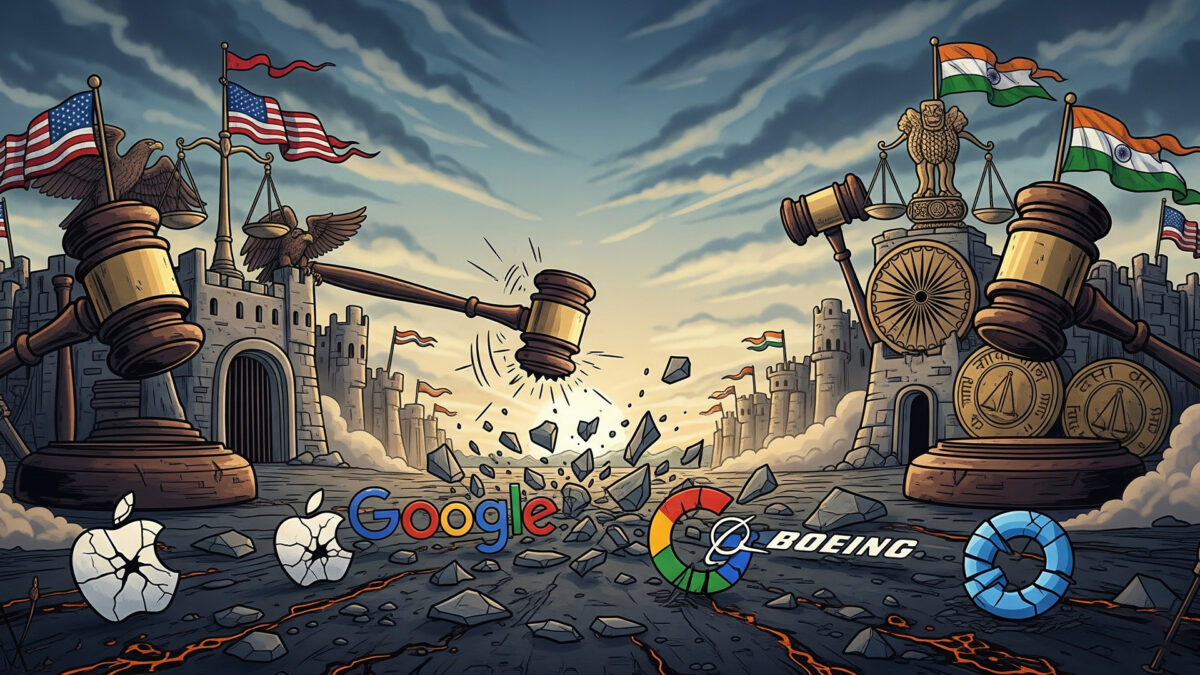
No Indian government can negotiate new disciplines on tariffs, data or energy under that lighting. A serious, future-proof partnership means walking back the tariff ambush, parking the megaphone and letting the lawyers do their jobs unmolested by politics. Anything else will merely push India to play hardball—and it is Boeing, Apple, Google, IBM, Intel, X and Meta that will discover the immediate costs.

Also Read: Reliance Consumer to Invest ₹1,500 Crore in Nagpur Food Processing Plant by 2026