Categories
Technology

Nvidia’s $5 Billion Bet on Intel: A Surprise Alliance That Shakes Up the Chip World

Nvidia stunned markets and the semiconductor industry on September 18, 2025, when it announced a strategic partnership with Intel that includes a $5 billion purchase of Intel common stock and a multi-year collaboration to co-develop chips for data centers and personal computers.

Nvidia said it will buy Intel shares at $23.28 apiece — a purchase that would give it roughly a 4 percent stake in the long-troubled chipmaker — and that the two companies will work on “multiple generations” of custom x86 data-center CPUs and new Intel x86 System-on-Chips (SoCs) that integrate Nvidia RTX graphics.

The deal represents an extraordinary rapprochement between the world’s most valuable chip designer and one of the industry’s oldest names.

Nvidia’s chief executive described the move as a strategic step to deepen its data-center and PC ecosystem, while Intel framed the agreement as a validation of its turnaround efforts and a way to accelerate its roadmap for advanced manufacturing and product co-development.

The companies said specifics of jointly developed products would be revealed in stages, but they emphasised that designs will span both server CPUs used in AI infrastructure and client chips for laptops and desktops that pair Intel compute with Nvidia RTX graphics.

Markets reacted immediately. Intel shares surged more than 25 percent as investors cheered the cash infusion and the signal of renewed commercial relevance; reports placed intraday gains in the range of roughly 24–33 percent depending on the exchange and time of trading. Nvidia’s stock also rose, though far more modestly, climbing roughly 3–4 percent as the market weighed the strategic merits of the tie-up.

Rival chipmakers such as AMD saw share weakness amid concerns that a closer Intel-Nvidia axis could reconfigure competitive dynamics in data-center and PC segments.

Why this matters beyond the immediate market rally is twofold. First, Nvidia gains a significant, long-term alignment with a major x86 CPU vendor at a time when its AI products increasingly rely on tight integration with processors and interconnects.

Second, Intel — which has struggled in recent years with manufacturing delays and competitive pressure — secures both a large capital boost and a marquee partner that could help drive customer interest in Intel-based platforms.

Analysts note, however, that the deal stops short of guaranteeing a major manufacturing contract for Intel; Nvidia continues to rely on external foundries like TSMC for much of its highest-end silicon production, and details about where and how the new chips will be manufactured were left deliberately vague.

Industry watchers flagged potential geopolitical and strategic implications.

The partnership could reshape supply-chain relationships, put pressure on Taiwan Semiconductor Manufacturing Company (TSMC) as a supplier to both rivals and partners, and prompt closer scrutiny from regulators given the centrality of chips to national economic and security strategies.

At the same time, some analysts cautioned that bringing two large engineering organisations into a long, complex co-development process carries execution risk: aligning roadmaps, achieving performance targets, and choosing manufacturing partners are all hard problems that could blunt the deal’s near-term commercial impact.

For customers and the broader tech ecosystem, the announcement promises new product architectures in which Intel CPUs and Nvidia GPUs are designed to work more tightly together, potentially simplifying procurement and performance tuning for AI workloads.

Whether the partnership delivers tangible advantages over existing combinations of Nvidia accelerators with ARM or AMD CPUs will depend on execution and on how the companies allocate production and engineering resources across competing priorities.

In short, Nvidia’s $5 billion investment is both a financial vote of confidence in Intel and a strategic opening of a new chapter in the chip industry.

The market’s euphoric response reflects that promise, but the long road from announcement to product — and from product to profitable market share — contains many technical, commercial and regulatory hurdles that both companies will now have to clear.
Also Read: Gameskraft CFO in ₹270 Cr Fraud; 120 Jobs Cut

Categories
Beyond

Union Finance Ministry Notifies Revised GST Rates

The Union Finance Ministry has announced new Central Goods and Services Tax (CGST) rates for goods, effective Monday, September 22, 2025. States are expected to follow suit and notify the corresponding State GST (SGST) rates on goods and services to ensure uniform implementation across the country. Under the GST framework, revenues are shared equally between the Centre and the states.

Starting September 22, GST will adopt a two-tier structure, with most goods and services falling under 5% or 18% tax rates. Ultra-luxury items will attract 40%, while tobacco and related products will remain in the 28% slab along with the applicable compensation cess. Currently, GST applies in four slabs—5%, 12%, 18%, and 28%—with additional cesses on luxury and sin goods.

With the reduction in rates, businesses are expected to pass on the benefits to consumers and ensure timely compliance. According to Rajat Mohan, Senior Partner at AMRG & Associates, the government’s clear notification provides much-needed guidance on the applicable rates for a wide range of goods. He noted that businesses now have the responsibility to update their systems, revise pricing, and implement the new rates effectively across their supply chains. He added that the reform’s success will largely depend on how transparently and efficiently industry responds to the revised tax structure.

Similarly, Saurabh Agarwal, Tax Partner at EY, highlighted that companies must align their ERP systems, pricing strategies, and supply chain operations with the updated GST rates. This alignment, he said, is crucial not only for smooth implementation but also to ensure that consumers actually benefit from the rationalized rates.

The GST Council, comprising representatives from both the Centre and the states, approved the rate reduction to ease the burden on consumers during its meeting on September 3, 2025. With the revised rates coming into effect next week, businesses nationwide are gearing up for a seamless transition to ensure compliance and proper benefit transfer to end consumers.

Also Read: Devastating Rains in Uttarakhand: 10 Missing in Chamoli, 2,500 Stranded in Mussoorie

Categories
Technology

Meta Launches Ray-Ban Smart Glasses with AI-Powered Display, Neural Wristband

Meta has launched its latest wearable innovation, the Ray-Ban Display smart glasses, aiming to redefine the future of personal computing. Unveiled at the company’s annual Connect 2025 event, the glasses feature an integrated augmented reality (AR) display and advanced artificial intelligence (AI) capabilities, paired with a new neural wristband controller. Priced at $799, the smart glasses are set to be released on September 30, 2025.

Integrated Display and Neural Wristband for Hands-Free Control

The Meta Ray-Ban Display glasses include a built-in AR display on the right lens, enabling users to access notifications, navigation directions, real-time translations, and other digital content seamlessly. The display is designed to minimize light leakage, ensuring privacy while viewing information. Powered by the Qualcomm Snapdragon AR1 Gen 1 processor, the glasses integrate smoothly with Meta’s suite of applications, allowing video calls, photo sharing, and AI-generated content directly on the device.

Accompanying the glasses is the Meta Neural Band, an electromyography (EMG) wristband that translates subtle muscle movements into commands. Users can control the glasses with simple gestures such as pinches, swipes, or wrist turns, without touching the device or using voice commands. The wristband boasts an 18-hour battery life, water resistance, and an intuitive hands-free interface, positioning the device as both practical and innovative.

The glasses also feature a 12-megapixel camera, five microphones, and dual off-ear speakers to support high-quality video and audio capture, live streaming, and immersive media consumption. A collapsible charging case extends battery life by up to 30 hours, ensuring usability throughout the day.

Strategic Vision and Market Potential

Meta’s launch of the Ray-Ban Display glasses marks a strategic push into the wearable AI market, combining fashion-forward design with cutting-edge technology. The company envisions the glasses as a new computing platform, potentially replacing some smartphone functionalities while offering a more immersive, AI-driven experience. Analysts note that success will depend not only on hardware innovation but also on the development of software and ecosystem integration that can fully leverage the AI capabilities.

This release is part of Meta’s broader vision to embed AI into everyday devices. The company is also developing its “Orion” smart glasses prototype, which promises even more advanced augmented reality experiences in the future. With the Ray-Ban Display glasses and the neural wristband, Meta aims to bring AI closer to everyday users, offering a glimpse into the next generation of personal technology and wearable computing.

By merging style with technology, Meta hopes to attract consumers seeking seamless digital integration in daily life. The glasses represent a significant step toward transforming how people interact with technology, emphasizing gesture-based control, real-time information access, and AI-driven functionality.

Categories
Corporate

Hyundai India Approves ₹31,000 Monthly Pay Hike for Employees

Chennai: In a deal being hailed as one of the most generous in India’s automobile sector, Hyundai Motor India Limited (HMIL) has inked a three‑year wage settlement with its workers’ union that includes a salary increase of ₹31,000 per month. The Long Term Settlement (LTS) covers the period from April 1, 2024, through March 31, 2027, and applies to nearly 1,981 employees in the technician and workmen cadre—which represents about 90 per cent of that category at the company’s Sriperumbudur plant.

Under the agreement with the United Union of Hyundai Employees (UUHE), the pay hike will be phased in over the three years in a ratio of 55 per cent in the first year, 25 per cent in the second, and 20 per cent in the final year. In addition to the salary boost, Hyundai has committed to enhanced welfare measures—comprehensive health coverage and wellness programmes—to improve employee well‑being.

Market Response and Implications

Investors welcomed the announcement. The company’s shares hit record highs following the wage pact, rising by around 2‑3 per cent as markets factored in strong labour relations and improved employee satisfaction. Analysts see this move as strengthening HMIL’s position in the Indian auto industry, underlining its reputation for maintaining a stable workforce and avoiding protracted labour disputes.

At a time when global supply chains and automotive firms are under pressure from rising input costs and shifting labour expectations, Hyundai India’s settlement could become a benchmark for peer companies. For employees, the deal brings relief and recognition; for the company, it may mean higher wage bills, but also potentially better productivity, morale, and lower attrition.

Hyundai’s move also aligns with increasing expectations among Indian industrial workers for more substantial compensation, especially given inflationary pressures and rising costs of living. If management elsewhere in the sector responds with similar wage revisions, India could see a new normal in labour costs. However, cost pressures for OEMs (original equipment manufacturers) and suppliers will likely increase, which may affect pricing, margins, and negotiations in the supply chain in the months ahead.

Categories
Corporate

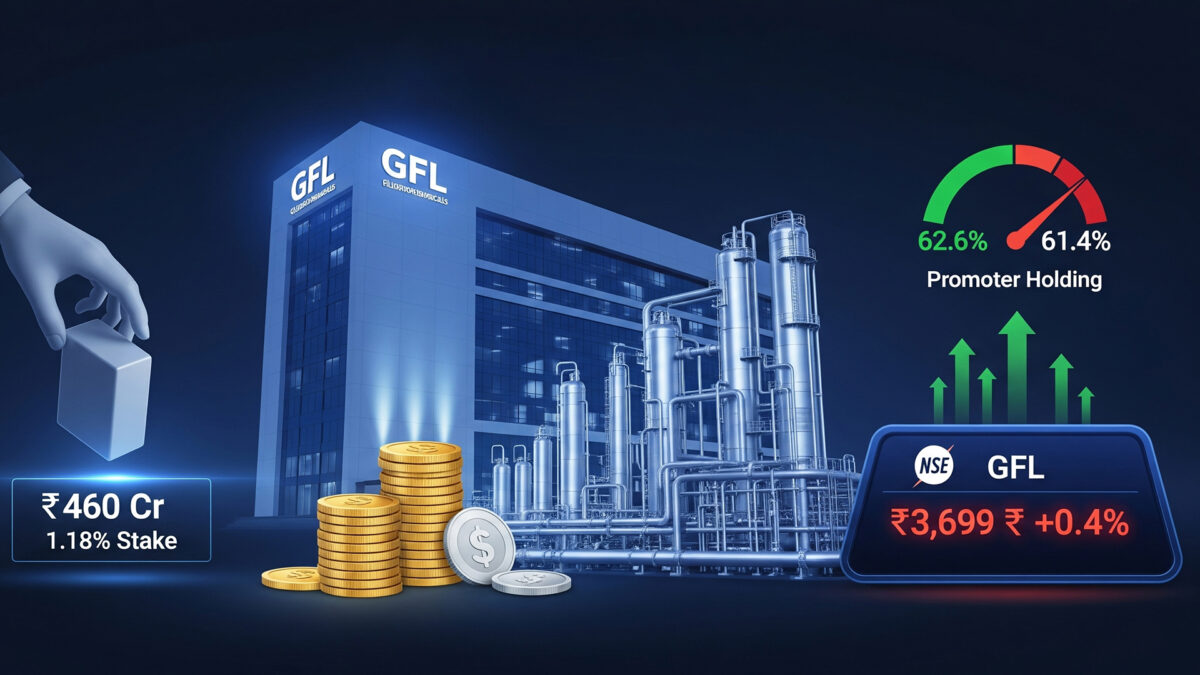
Gujarat Fluorochemicals Promoter Offloads ₹460 Crore Stake, Trims Holding to 61.4%

New Delhi: Devansh Trademart LLP, one of the promoters of Gujarat Fluorochemicals (GFL), has sold a 1.18% stake in the company through an open market transaction valued at approximately ₹460.11 crore. The divestment, executed on September 17, 2025, involved the sale of 13 lakh equity shares at ₹3,539.30 per share on the National Stock Exchange.

Prior to the sale, Devansh Trademart held about 4.84% of the equity. The transaction reduces its shareholding to approximately 3.66%, while the combined promoter group’s stake in GFL drops from around 62.58% to about 61.40%. The buyers of the shares have not been identified in the public filings.

On the trading front, Gujarat Fluorochemicals’ stock saw a modest rise. Shares closed at roughly ₹3,699 per share on the NSE following the announcement.

What the Stake Sale Means

The sale marks a notable shift in promoter shareholding, a move that often attracts investor attention in companies with strong promoter-led control. While Devansh Trademart’s stake is still meaningful, the reduction underscores a possibility that promoter exits—or at least partial divestments—are becoming more frequent.

For investors, these kinds of large promoter sales can trigger mixed reactions. On one hand, there could be concern about why the promoter is selling—whether it’s for capital raising, debt repayment, or diversification of assets. On the other hand, if the company’s fundamentals remain intact, such sales might simply reflect financial strategy or compliance pressures.

GFL operates in speciality chemicals, refrigerants, fluoropolymers and industrial chemicals, and has been expanding into fluoropolymer capacities. Its product lines serve both domestic and international markets. For companies in such sectors, promoter holding changes are often scrutinised for signs of confidence in future prospects.

Market Outlook

Regulatory norms under the Securities and Exchange Board of India (SEBI) require disclosures of substantial ownership changes, and the reduction in stake by Devansh Trademart has been duly disclosed in exchange data.

In terms of risk, market participants will be watching for any further promoter sales, since attrition of promoter shareholding over time can impact perceptions of control and governance. Additionally, if the market interprets the sale as a signal of concern, the stock may come under pressure. But in this case, the share price moved only marginally—which suggests that investors may view the sale as a one-off rather than a signal of trouble.

Devansh Trademart’s sale of a 1.18% stake for about ₹460 crore in Gujarat Fluorochemicals is a significant promoter-divestment transaction. While it reduces both its own holding and the promoter group’s overall control, it doesn’t fundamentally alter the ownership structure. For shareholders, the key question will be whether this move was driven by strategy rather than necessity, and how GFL performs going forward in its chemicals and fluoropolymer businesses.

Also Read: Former Lodha Developers Director Arrested in ₹85 Crore Land-Fraud

Categories
Beyond

U.S. Fed Rate Cut Lifts Indian Markets as IT Stocks Lead the Rally

On September 17, 2025, the U.S. Federal Reserve lowered its benchmark interest rate by 25 basis points to a range of 4.00%–4.25 percent, marking its first cut of the year. The move, aimed at addressing signs of a slowing labour market and moderating economic growth, set off a positive reaction across global markets, with Indian equities among the biggest beneficiaries.

The rate cut was widely anticipated, but its confirmation still triggered a rally on Dalal Street. The Sensex gained over 300 points in early trade, while the Nifty 50 crossed the 25,400 mark. The Nifty IT index saw the sharpest gains, rising by nearly 1.7 percent, led by strong buying in Infosys, Wipro, LTIMindtree, and other technology heavyweights. Mid-cap and small-cap indices also firmed up, reflecting the broader bullish sentiment.

Market Implications for India

The Fed described the move as a “risk-management” measure, citing increased downside risks to employment alongside persistent inflationary pressures. It also hinted at the possibility of two more cuts before the year ends. For India, the immediate impact is likely to be in terms of improved foreign capital inflows. Lower yields in the United States make emerging markets like India relatively more attractive, particularly sectors such as IT and financial services that are closely tied to global capital cycles.

A softer dollar, which often follows a Fed rate cut, also eases pressure on the Indian rupee, curbs import-led inflation, and provides a boost to exporters. This dynamic not only strengthens investor confidence but also creates a more favourable environment for sectors that rely heavily on overseas markets. Banking and financial stocks are expected to benefit as well, since lower global borrowing costs improve liquidity and sentiment across the board.

However, analysts caution that the benefits could be temporary, as markets had largely priced in the 25 basis point cut ahead of the announcement. Structural challenges also remain. Indian IT companies, though buoyed by the prospect of greater U.S. spending, continue to grapple with subdued demand, delayed contracts, and rising cost pressures. Similarly, while the rupee stands to gain, volatility in global currencies cannot be ruled out if inflation surprises to the upside or if geopolitical risks intensify.

The Federal Reserve’s communication suggested a cautious path forward. While signalling its readiness for further easing, it maintained that inflation risks have not fully abated. This leaves investors with the possibility of future rate adjustments being more measured than aggressive. For Indian markets, the extent of gains will depend not only on global liquidity flows but also on domestic factors such as corporate earnings, inflation management, and fiscal policy moves in the run-up to the year’s end.

Looking ahead, the trajectory of U.S. monetary policy will remain a central driver for Indian equities. Should the Fed deliver additional cuts as indicated, it could reinforce positive momentum in emerging markets and spur further foreign inflows. At the same time, the Reserve Bank of India is unlikely to mirror the Fed immediately, given its own inflation management priorities. This divergence could influence currency movements and bond yields in the months ahead.

For now, the Fed’s decision has provided a clear tailwind for Indian investors, energising key sectors and lifting benchmark indices to fresh highs.

Yet the rally is tempered with caution.

Traders and policymakers alike recognize that while global liquidity is turning favourable, sustaining the momentum will require steady domestic growth, stronger consumption trends, and supportive reforms. In this delicate balance between global monetary policy and local fundamentals, India’s markets find themselves both buoyed by opportunity and tested by lingering risks.

Categories
Corporate

Former Lodha Developers Director Arrested in ₹85 Crore Land-Fraud

Mumbai Police’s Crime Branch has arrested Rajendra Narpatmal Lodha, a former director of Lodha Developers Ltd, in connection with an alleged fraud of about ₹85 crore involving land irregularities and misuse of his authority within the company.

Key details of the case outline a complex web of undervalued land deals, questionable transfer of development rights (TDR) transactions and alleged misappropriation.

Lodha, who was associated with the firm since the early 1990s and formally became a director in 2015, resigned from the company effective 17 August 2025 after an internal ethics committee took up a review of his conduct.

The allegations against Lodha are extensive. He is accused of selling company-owned land parcels at deeply discounted rates, which incurred substantial losses to Lodha Developers.

In one case, a plot in Ambernath worth around ₹10 crore was allegedly sold for just ₹88 lakh. Another transaction under scrutiny involves a plot in Panvel that was sold through a firm linked to his son for ₹2.75 crore, though its real value was estimated at over ₹9 crore.

Investigators also point to a series of 35 transactions involving Transfer of Development Rights in the Kalyan-Dombivli area. These were reportedly executed at prices far below prevailing market value, leading to alleged losses of tens of crores.

Officials note that while Lodha had been given authority to acquire land on behalf of the company, he did not have approval to sell. Despite this, he is alleged to have gone ahead with unauthorized sales.

Further accusations include the use of forged MoUs and agreements, benami transactions routed through associates, and suspiciously inflated or circular transfers of cash and bank funds. These activities, according to investigators, were part of a deliberate scheme to benefit Lodha and his family at the expense of the company.

Following the registration of a First Information Report by Lodha Developers at the N.M. Joshi Marg police station, Rajendra Lodha was arrested from his Worli residence. He was presented before the court and remanded to police custody until 23 September.

The FIR also names his son Sahil Lodha and multiple associates, widening the scope of the investigation.

Lodha Developers, responding to the developments, stressed that it has a zero-tolerance policy toward misconduct regardless of seniority.

The company added that it has begun implementing recommendations from an external review to strengthen its internal oversight mechanisms.

Categories
Corporate

Kesar Enterprises, Zydus Wellness Trade Ex-Split to Boost Liquidity

Shares of Kesar Enterprises and Zydus Wellness began trading on an ex-split basis on Thursday, September 18, 2025, following their recent stock split announcements. These corporate actions are intended to reduce the face value per share, making the stocks more affordable to retail investors while enhancing liquidity in the market.

For Kesar Enterprises, the stock split has been carried out in the ratio of 1:10. This means each existing share with a face value of ₹10 has been subdivided into 10 shares with a face value of ₹1 each. Zydus Wellness, on the other hand, has implemented a 1:5 stock split. Accordingly, each share with a face value of ₹10 has been split into five shares with a face value of ₹2 each.

The record date for both companies was September 18, 2025. Investors needed to own the shares by this date, or ensure that their trades were settled under India’s T+1 cycle, to be eligible for the split-adjusted shares. This means shares purchased on September 17 were eligible for the corporate action, while trades executed on the record date itself would generally not qualify.

Stock splits do not alter the overall value of a shareholder’s investment. Instead, they increase the number of shares while reducing the price per share proportionally. For example, an investor holding 100 shares of Zydus Wellness before the split now holds 500 shares post-split, with the total value remaining unchanged. The same principle applies to Kesar Enterprises, where shareholders will see their holdings multiplied tenfold while the stock price adjusts downward.

Market experts believe that reducing the per-share price improves accessibility for retail investors, encourages wider participation, and increases trading activity in the stock. For companies with relatively high-priced shares or lower liquidity, splits can play a role in broadening ownership and improving daily turnover.

In conclusion, Kesar Enterprises with its 1:10 split and Zydus Wellness with its 1:5 split have both made moves to attract a wider investor base. The splits are expected to make their shares more affordable, stimulate interest among retail investors, and enhance liquidity in the secondary market, ultimately benefiting both the companies and their shareholders.


Categories
Corporate

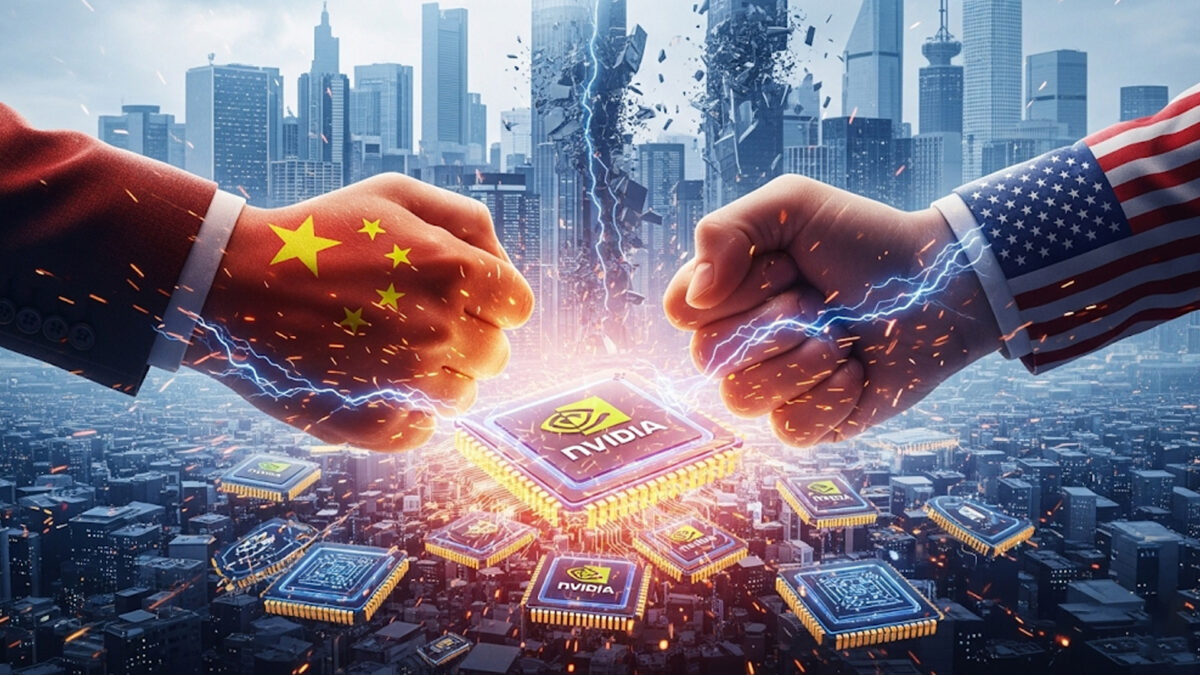
China Bans Nvidia AI Chips, Deepening Tech Rift with U.S.

China has officially barred domestic technology firms from purchasing Nvidia’s artificial intelligence chips, marking a sharp escalation in the ongoing tech standoff between Beijing and Washington.

The Cyberspace Administration of China has instructed companies including ByteDance and Alibaba to stop testing and procuring Nvidia’s RTX Pro 6000D server, a chip the U.S. firm had specifically designed for the Chinese market. The move, first reported by the Financial Times, follows earlier measures by Beijing to encourage the use of homegrown alternatives.

The ban is seen as a significant setback for China’s AI ecosystem. Despite efforts by local players such as Huawei and Alibaba to develop their own chips, Nvidia dominates the global GPU market, and its hardware remains central to AI research and deployment worldwide. Losing access to its technology could slow China’s advancements in the sector.

Nvidia CEO Jensen Huang, speaking in London, voiced disappointment at the development but took a conciliatory stance. “We can only be in service of a market if a country wants us to be,” he said. “I’m disappointed with what I see, but they have larger agendas to work out between China and the United States. And I’m patient about it.”

The U.S. had already tightened export restrictions earlier this year, requiring licences for sales of advanced AI chips to China. With Beijing’s latest ban, Nvidia finds itself under pressure from both governments. Huang acknowledged the uncertainty, saying the company has advised analysts not to factor China into financial forecasts, describing its China business as “a bit of a roller coaster.”

Nevertheless, Huang stressed that China remains a vital market, calling it “large” and “vibrant,” and highlighting Nvidia’s three-decade presence in the country. For now, though, the AI contest in China appears set to be driven more by domestic innovation than by U.S. technology.

Categories
Corporate

SBI Nets ₹8,889 Crore as It Offloads Major Yes Bank Stake to Japan’s SMBC

In a major financial move, State Bank of India (SBI) has finalised the sale of its 13.18% stake in Yes Bank to Japan’s Sumitomo Mitsui Banking Corporation (SMBC) for ₹8,888.97 crore. The transaction involved the transfer of 413.44 crore equity shares at ₹21.50 per share.

Though SBI has divested this portion, it will continue to hold a 10.8% stake in Yes Bank. SMBC had earlier in the year reached an agreement to acquire a 20% stake in Yes Bank from a consortium of existing shareholders—including SBI and several private banks—for ₹13,483 crore, also valuing Yes Bank shares at ₹21.50 each. The consortium comprised banks including Axis Bank, Bandhan Bank, Federal Bank, HDFC Bank, ICICI Bank, IDFC First Bank and Kotak Mahindra Bank, which together are selling the remaining 6.81% stake in the larger deal for about ₹4,594 crore.

Regulatory approvals have been secured: SMBC received consent from the Reserve Bank of India (RBI) on August 22, 2025, and from the Competition Commission of India (CCI) on September 2, 2025. The SBI board’s Executive Committee of the Central Board had approved the divestment earlier—on 9 May 2025.

Market reaction has been positive. SBI shares rose by around 3% after the announcement, while Yes Bank shares showed marginal movement.

The deal is being viewed as a milestone in India’s banking sector, representing the largest cross-border investment in this space. SBI’s chairman, Challa Sreenivasulu Setty, lauded the transaction, referencing Yes Bank’s restructuring in 2020 under the RBI and the government, saying the partnership with SMBC will bring global expertise to fuel Yes Bank’s growth.

In summary, SBI has realised more than 3.6 times return on part of its original investment in Yes Bank made during the 2020 reconstruction scheme. The transaction underscores increasing foreign investor interest in India’s private banking sector and a trend of strategic restructuring among existing large shareholders.