Categories
Leaders

Apple names Amar Subramanya as new VP of AI

Apple has appointed Amar Subramanya as its new Vice President of Artificial Intelligence, marking a strategic step in the company’s efforts to strengthen its AI capabilities. John Giannandrea, Apple’s outgoing AI chief, will remain with the company as an advisor until his retirement in spring 2026.

Subramanya will report to Craig Federighi, Apple’s software-engineering head, and oversee key functions including Foundation Models, machine-learning research, and AI safety evaluation. Industry analysts say his appointment signals Apple’s intent to accelerate innovation in AI-powered products and services.

From Bengaluru to Silicon Valley

Amar Subramanya completed his Bachelor of Engineering in Electrical, Electronics, and Communications from Bangalore University before earning a PhD in Computer Science from the University of Washington. His research focused on machine learning, natural language processing, and large-scale AI systems.

Subramanya worked at IBM briefly before spending 16 years at Google, leading engineering for the company’s AI assistant, Gemini. Earlier this year, he joined Microsoft as Corporate Vice President of AI, developing foundation models for enterprise solutions such as Copilot. His shift to Apple underscores the company’s renewed focus on building cutting-edge AI technologies.

Apple’s AI ambitions

Apple has historically been cautious in rolling out AI features compared with peers like Google and Microsoft. Subramanya’s expertise in speech recognition, NLP, and multimodal AI is expected to accelerate Apple’s development of intelligent assistants and AI-driven applications.

CEO Tim Cook welcomed Subramanya, emphasizing that AI remains central to Apple’s future strategy. “Amar’s extraordinary AI expertise will help propel Apple forward,” Cook said.

With Subramanya at the helm, Apple aims to compete aggressively in the global AI race, enhancing Siri, machine learning across devices, and user experiences for millions worldwide.

Also Read: Bajaj Housing Finance shares drop 9% on promoter stake sale

Categories
1 Minute-Read

SEBI to release LODR review paper soon

The Securities and Exchange Board of India (SEBI) plans to issue a comprehensive consultation paper reviewing its Listing Obligations and Disclosure Requirements (LODR) within the next four to six months.

The initiative seeks to simplify complex regulations, remove redundant provisions, and ease compliance, particularly for new-age firms and small to medium enterprises.

Key proposals under consideration include streamlined disclosure processes, unified filing systems, and customized norms for different types of companies.

The review reflects SEBI’s focus on improving transparency, enhancing efficiency, and fostering a more business-friendly regulatory environment while maintaining investor protection.

Categories
Corporate

Bajaj Housing Finance shares drop 9% on promoter stake sale
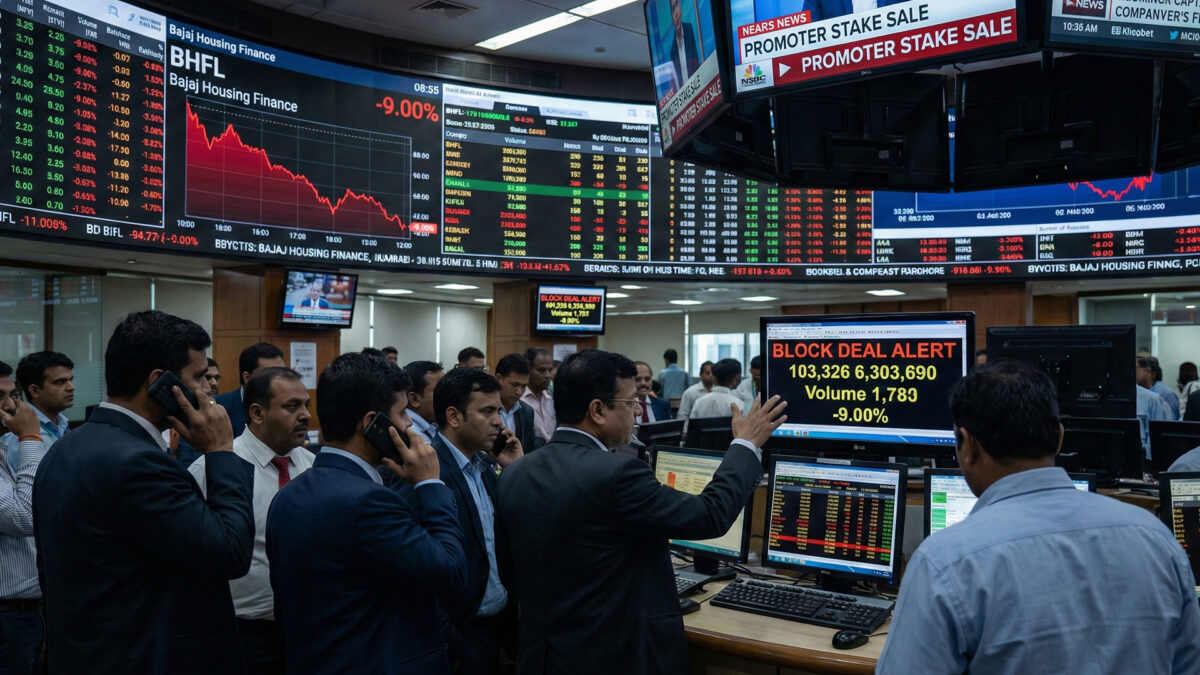
Shares of Bajaj Housing Finance plunged around 9% on Tuesday, sliding to a 52‑week low of ₹94.90 following news of a large block deal by its promoter, Bajaj Finance. The announcement sparked investor concerns about dilution and the sudden sale weighed heavily on the stock.

Bajaj Finance intends to offload up to 2% of BHFL’s equity, roughly 16.66 crore shares, in one or more tranches. Market estimates suggest the deal could involve up to 2.35% stake, about 19.5 crore shares, at a price near ₹97 per share. The move is reportedly aimed at helping BHFL comply with minimum public shareholding norms, as Bajaj Finance currently holds 88.70% of BHFL’s total paid-up capital.

The divestment process may take place between December 2, 2025, and February 28, 2026, depending on market conditions and regulatory approvals.

Despite the stock reaction, BHFL has shown solid financial performance. For the quarter ended September 2025, it posted a net profit of ₹643 crore, up 18% from a year ago, and revenue of ₹2,755 crore, a 14% increase.

Since its listing in September 2024, the stock has declined about 23% and currently trades below both its 50‑day and 200‑day moving averages. Technical indicators suggest oversold conditions, but the large promoter sale has unsettled investors.

Analysts note that market confidence will likely hinge on how smoothly the stake sale is executed and whether the share price stabilizes post-transaction. For now, BHFL remains under close watch as the block deal progresses.

Also Read: Rupee hits record low, students and travellers feel pinch

Categories
Beyond

Rupee hits record low, students and travellers feel pinch

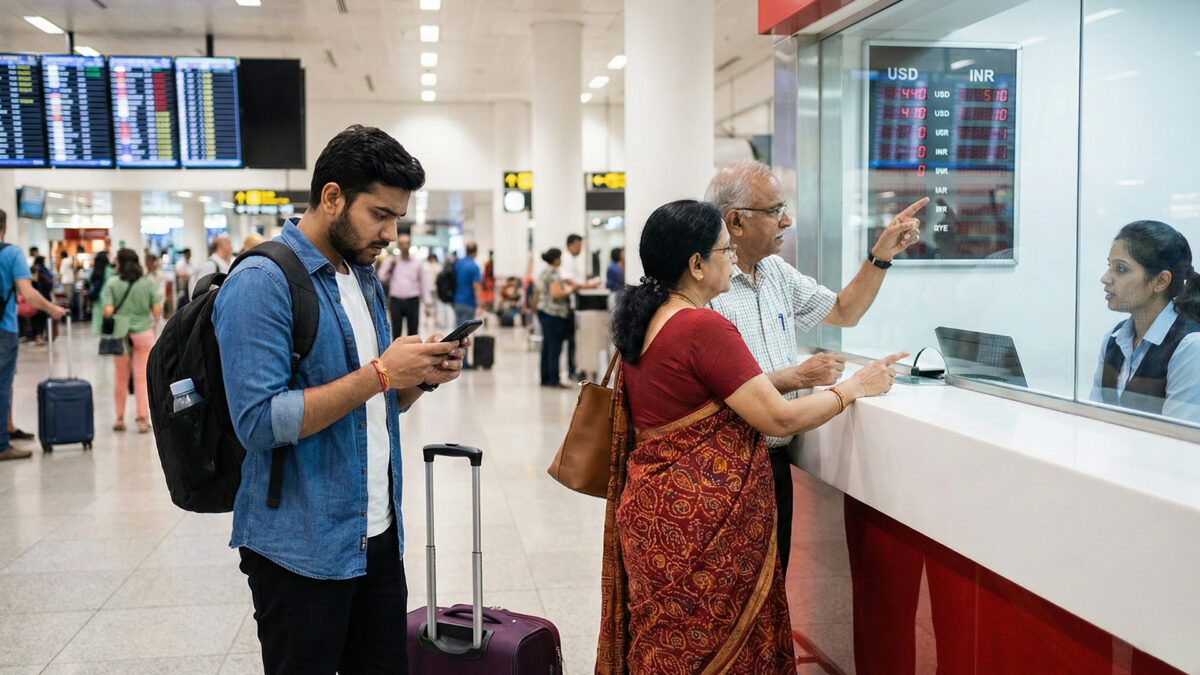
The Indian rupee touched a new all-time low against the US dollar this week, trading at around ₹89.85, raising concerns for students planning to study abroad and families planning international travel.

Despite India’s strong economic growth, with GDP expanding at 8.2% in the September quarter, the rupee has been under pressure. Analysts attribute the depreciation to weak foreign investment inflows, increased demand for dollars from importers, and uncertainty surrounding a potential US-India trade deal. The currency had earlier breached ₹89.49, and the slide shows no signs of immediate reversal.

For Indian students heading abroad, this depreciation has immediate financial implications. Tuition fees, accommodation, and daily expenses paid in foreign currencies now cost significantly more in rupees. Even modest fluctuations in exchange rates can add several lakhs to a student’s annual budget. Families planning holidays abroad are also likely to feel the pinch, as flight tickets, hotel bookings, and other travel expenses become costlier.

Economists note that this decline is partly a reflection of global market conditions, where the US dollar remains strong and capital inflows into emerging markets like India have slowed. Importers seeking dollars for essential commodities and trade also contribute to the rupee’s weakness. While some experts describe the depreciation as a “calibrated adjustment,” it nonetheless increases the financial burden on middle-class households managing overseas expenses.

The Reserve Bank of India (RBI) has traditionally intervened in currency markets to stabilize the rupee, but market participants suggest that the current pressure reflects broader structural trends that may persist in the near term. Investors and travellers are being advised to monitor currency movements closely and plan foreign expenditures accordingly.

For students and travellers, hedging options such as prepaid forex cards, forward contracts, or early currency conversion can help mitigate some of the costs associated with the falling rupee. Families may need to reconsider budgets for study programs, vacations, and other dollar-denominated expenses to adjust for the higher rupee cost.

The rupee’s fall is set to impact households across India, particularly students and families with plans abroad. Rising costs for education, travel, and imports are a direct consequence of the weaker currency, showing how global market movements can quickly affect everyday finances.

Also Read: Rupee slips to all-time low of 89.76 against dollar

Categories
Technology

WhatsApp Web to log out every 6 hours in India

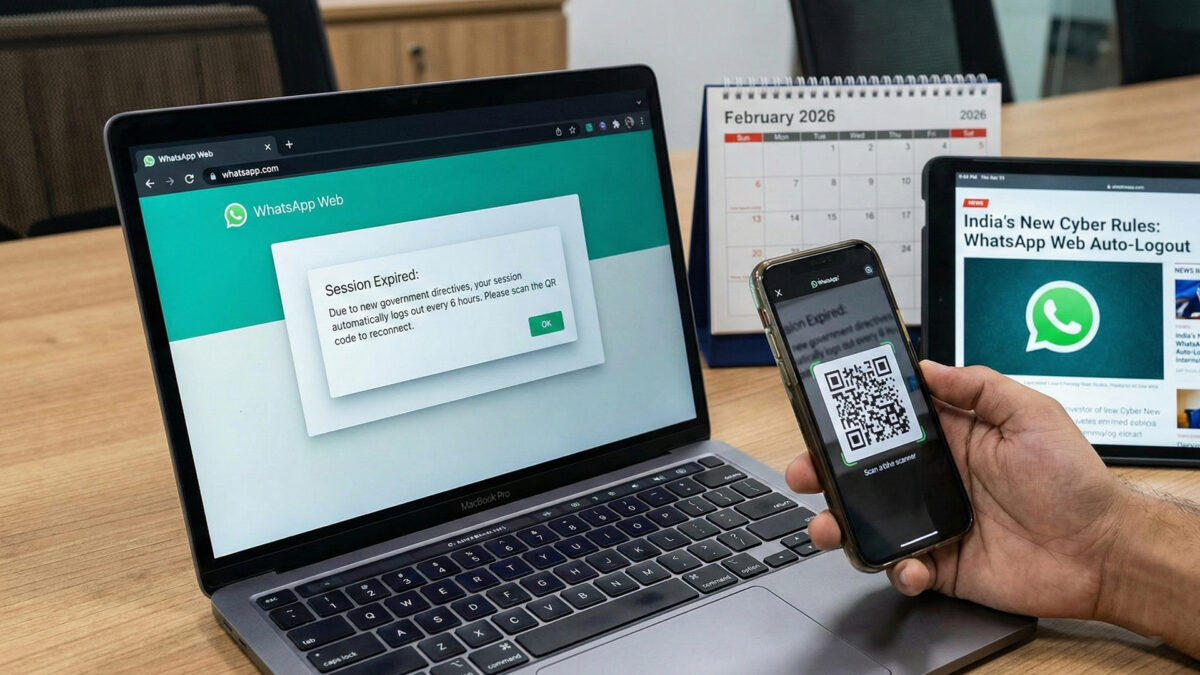
WhatsApp Web users in India will soon face automatic logouts every six hours, following new regulations from the Department of Telecommunications (DoT). The rule, part of the Telecommunication Cybersecurity Amendment Rules, 2025, requires all messaging accounts to be tied to the SIM card used during registration. This means web and desktop sessions can no longer remain active all day, and users will need to log in again, typically by scanning the QR code.

Other popular messaging apps, including Telegram and Signal, are also expected to comply. Platforms have been given 90 days to implement the changes, after which the six-hour logout policy will be enforced.

The step is aimed at improving cybersecurity and reducing digital fraud. Regulators have highlighted that some scammers exploit messaging apps without active SIM links, sometimes operating from outside India. By enforcing SIM binding, authorities hope to make it easier to trace accounts back to the actual subscriber and prevent misuse.

For users, this change will have practical implications. People who rely on WhatsApp Web for work or personal use will face frequent session interruptions. Those using secondary devices, tablets, or phones without the registered SIM may lose access altogether. Travelers or users who frequently switch SIMs could also experience login difficulties, making continuous access more challenging.

Tech experts say the rule is a step toward safer digital communication, but it may require adaptation from millions of users accustomed to persistent web sessions. Messaging platforms are expected to update their systems soon to meet the government’s security requirements, ensuring compliance within the mandated 90-day period.

As the six-hour auto-logout becomes standard, users will need to remain aware of session limits and plan accordingly to avoid interruptions in both personal and professional communications.

Also Read: Ahmedabad’s GIFT City expands as $100 billion financial hub

Categories
Corporate

Aequs IPO set for launch with 35% GMP lift

Aequs Ltd is set to launch its Initial Public Offering (IPO) on December 3, with the three-day issue aiming to raise ₹922 crore through a mix of fresh equity and an offer for sale. The company has priced the issue at ₹118–124 per share, with a minimum bid size of 120 shares.

The offering has attracted early attention in the unlisted market. The grey-market premium (GMP) is hovering around 35%, indicating expectations of a robust listing. Market analysts say the pre-listing demand reflects confidence in Aequs’ position as one of India’s few fully integrated aerospace manufacturers.

Aequs supplies precision-engineered components to major global aircraft makers, including Airbus, Boeing, Safran, and Collins Aerospace. Its flagship aerospace operations contribute nearly 90% of its revenue, supported by a large industrial campus that brings machining, forging, and assembly under one ecosystem.

The company plans to deploy the IPO proceeds towards debt reduction, capital expenditure, and strategic growth initiatives, including potential acquisitions. Strengthening its balance sheet remains a key priority, given the capital-intensive nature of aerospace manufacturing.

While the business enjoys long-term contracts and strong client relationships, analysts point to notable risks. Aequs reported significant losses in FY25 and continues to rely heavily on a small set of global clients. Any slowdown in international aerospace demand or shift in customer sourcing could impact earnings.

Despite these challenges, the company’s global footprint and specialised manufacturing capabilities are seen as positives. With investor sentiment running high, the Aequs IPO is likely to be closely watched as one of the prominent listings in the aerospace-manufacturing space this year.

Also Read: Atomberg plans $200 million Mumbai IPO

Categories
Corporate

Sensex lower by 65 points, Nifty nears 26200

The stock market cooled off on Monday after touching fresh record highs earlier in the day. The Sensex ended 65 points lower at 85,642, while the Nifty slipped 27 points to close at 26,176. Gains driven by upbeat GDP data and hopes of a rate cut faded through the session as investors booked profits and reacted to weak GST collections and a softer rupee.

Most sectors stayed mixed. Auto, IT, PSU banks and metal stocks held firm, while realty, consumer durables and pharma lost momentum. In the broader market, midcaps were flat and smallcaps saw a mild uptick.

Among the top performers were Adani Ports, Kotak Mahindra Bank, Tata Motors, Eicher Motors and Maruti Suzuki. On the losing side, InterGlobe Aviation, Bajaj Finance, Sun Pharma, Max Healthcare and Trent dragged the indices lower.

Overall, the market paused after its sharp rally, with traders watching global cues and domestic macro data for next direction.

Also Read: Sensex jumps 300 pts, Nifty crosses 26,300

Categories
Leaders

Elon Musk imagines a future where work is a choice

Elon Musk has once again pushed the conversation on the future of work into bold new territory. Speaking openly on Nikhil Kamath’s podcast, the Tesla and SpaceX chief painted a picture of a world where people wake up each day and choose to work, not because they must, but because they want to.

Musk believes rapid advances in artificial intelligence and robotics will soon be powerful enough to take over most routine and even skilled tasks. His timeline is striking: within just 10 to 20 years, he expects machines to generate the goods and services people need, making full-time jobs optional for many.

In Musk’s view, this shift could also transform the idea of money itself. If AI systems can produce almost everything at near-zero cost, traditional economic rules may no longer apply. “Work may become more like a hobby,” he suggested, something people would pursue for meaning, passion, or creativity instead of financial survival.

While his prediction sounds liberating, Musk acknowledged the transformations won’t be simple. Societies will need to rethink purpose, income models and the role of human contribution. But he remained optimistic that freeing people from compulsory labour could unlock a more creative, fulfilled world.

Also Read: Godrej Properties wins Hyderabad land for ₹4,150 cr project

Categories
Corporate

Ahmedabad’s GIFT City expands as $100 billion financial hub

Ahmedabad’s GIFT City, the Gujarat International Finance Tec-City, is fast emerging as a major financial and urban hub, with total assets under management crossing $100 billion. The development surge has been further accelerated by Ahmedabad’s bid to host the 2030 Commonwealth Games, putting the city in the national and global spotlight.

The International Financial Services Centre Authority (IFSCA) now oversees over 1,034 registered entities, including 38 banks, across banking, insurance, fund management, fintech, and other sectors. The robust growth signals GIFT City’s transformation from a business district into a comprehensive financial ecosystem.

Infrastructure development is keeping pace with its financial growth. Around 930 residential units are already completed, with 7,000 more under construction. The city’s masterplan allows for up to 62 million sq ft of built-up space, of which nearly 30 million sq ft has been allotted. Experts anticipate close to 50% of the total development to be ready within the next 2–3 years.

GIFT City is designed as a fully integrated smart city. Its underground utility tunnels carry power, water, telecom, and waste systems, ensuring a “dig-free” surface as the city expands. Social and recreational amenities, including a 27-acre central park, riverfront development, jogging and cycling tracks, sports courts, plazas, and food and retail zones, aim to attract residents as well as office-goers.

The CWG 2030 bid has added urgency and visibility to the city’s growth, with improved connectivity on the horizon via metro expansion, a direct airport link, and high-speed rail plans. Analysts note that these developments position GIFT City not just as a financial hub, but as a modern, self-contained smart township, potentially serving as a blueprint for future integrated urban zones in India.

Also Read: Godrej Properties wins Hyderabad land for ₹4,150 cr project

Categories
1 Minute-Read

Delhi, Mumbai air travellers may pay higher airport fees

Air travellers flying from Delhi and Mumbai may soon have to pay significantly higher airport fees.

A tribunal found that Indira Gandhi International and Chhatrapati Shivaji Maharaj airports under‑charged passengers between 2009 and 2014 by excluding assets like duty‑free shops, lounges, and parking.

To recover over ₹50,000 crore, User Development Fees (UDF) could rise sharply, domestic fees at Delhi may jump from ₹129 to ₹1,261, and international fees to ₹6,356.

The hike is under Supreme Court review, but if approved, flights will become noticeably costlier.