Categories
Technology

Apple launches film celebrating students with disabilities

Apple has unveiled a new short film, I’m Not Remarkable. It highlights how built-in accessibility features help students with disabilities take part fully in campus life. The film does not portray students as extraordinary or inspirational just because of their disabilities. Instead, it focuses on their everyday experiences. Students attend lectures, join group activities, socialize with friends, and enjoy college events. The film shows how technology can remove barriers and support independence.

The film is directed by Kim Gehrig, acclaimed for her Emmy-winning 2022 accessibility short, The Greatest. Gehrig transforms ordinary campus moments into a vibrant musical, featuring Deaf and disabled students performing a celebratory number, composed by Tim Minchin. This approach reframes accessibility not as a special accommodation, but as an integral part of inclusive design.

Apple highlights its range of accessibility tools, including VoiceOver, Magnifier, Braille Access, AssistiveTouch for iPad and Apple Watch, Live Captions, Sound & Name Recognition, and the Accessibility Reader. Each feature is designed to empower students with varying abilities, enabling them to learn, connect, and participate independently in daily campus life.

Through I’m Not Remarkable, Apple reinforces the importance of accessibility in technology and education. The company’s message is that inclusive design is not optional or auxiliary but it is essential for creating equal opportunities. By presenting students with disabilities as everyday college-goers rather than subjects of pity or inspiration, Apple demonstrates the real-world impact of accessible technology, emphasizing empowerment, independence, and confidence.

The film also reflects Apple’s ongoing commitment to diversity and inclusion, showcasing how accessibility features can enhance experiences not only for students with disabilities but for broader society as well. I’m Not Remarkable is available across Apple’s platforms, offering an inspiring perspective on how thoughtful design and technology can make education and social life fully accessible to all.

Also Read: NTT to spend ₹2,400 crore in Bengaluru data‑centre campus

Categories
Beyond

IndiGo cancels 100+ flights, DGCA probes

IndiGo, India’s largest airline, has faced a major operational disruption over the past two days, cancelling more than 100 flights across key airports including Delhi, Bengaluru, Mumbai, and Hyderabad. Passengers were left frustrated as delays stretched for hours, with some forced to stay overnight at airports. The sudden cancellations have triggered widespread inconvenience, particularly affecting families, elderly travellers, and those with connecting flights.

The airline has pointed to multiple reasons behind the disruption. While minor technical issues, busy airports, and winter schedule adjustments played a role, the primary cause has been the implementation of updated crew-rest rules under the second phase of the Flight Duty Time Limitations (FDTL), introduced on November 1. These rules mandate longer rest periods for pilots and cabin crew between flights, limiting night schedules and requiring extended breaks. While designed to ensure safety, the rules have created an acute shortage of available crew, forcing IndiGo to cancel and reschedule flights on short notice.

The Directorate General of Civil Aviation (DGCA) has stepped in, summoning IndiGo officials to explain the widespread cancellations and demanding a detailed mitigation plan. According to DGCA data, IndiGo cancelled over 1,200 flights in November alone, with the majority attributed to crew shortages and FDTL compliance. Other reasons included airspace restrictions, ATC delays, and technical issues. The regulator has emphasised that passenger safety and minimal disruption must remain a priority.

IndiGo has assured passengers that it is working round the clock to stabilise operations. The airline is implementing “calibrated schedule adjustments” over the next 48 hours to bring flights back on track. Passengers are urged to check the latest flight status before leaving for airports and to use official channels for rebooking, refunds, or support.

The recent disruptions highlight the delicate balance airlines must maintain between operational efficiency and safety regulations. While the new crew-rest norms are intended to protect both passengers and staff, adapting to these changes has proven challenging, leaving travellers caught in the crossfire of scheduling adjustments and regulatory compliance.

Also Read: Rupee hits ₹90, consumer goods may get costlier

Categories
Corporate

Rupee hits ₹90, consumer goods may get costlier

The Indian rupee has breached the ₹90 mark against the US dollar, trading at around ₹90.40 per dollar in early December, marking a record low for the domestic currency. Analysts point to multiple factors behind the slide, including increased demand for dollars due to heavy imports, foreign institutional investors withdrawing funds from Indian markets, and the persistent trade deficit.

The fall in the rupee is expected to directly impact companies that rely on imported raw materials, components, or finished goods. This includes sectors such as electronics, automobiles, beauty and personal care, and other consumer goods. For example, smartphone makers, appliance companies, and car manufacturers are likely to face higher input costs, forcing them to either absorb the expenses or pass them on to consumers. Several firms have already indicated price hikes of 3%–10% in the coming weeks.

For consumers, this could mean higher prices for products they regularly buy. Goods that had become slightly cheaper recently due to GST or other tax reductions may now see cost increases, reversing earlier benefits. Electronics and cars are expected to be hit hardest, followed by imported cosmetics, luxury items, and certain packaged foods that rely on imported ingredients.

Economists warn that the currency depreciation may also contribute to overall inflationary pressures, as import-dependent sectors adjust their pricing. In addition, companies with overseas borrowings may face higher debt servicing costs, potentially affecting profits and investment plans.

Some analysts believe that the rupee may continue to face pressure in the near term, especially if crude oil prices remain high or foreign fund outflows persist. While exporters may benefit from a weaker rupee, the broader impact on consumer prices and corporate margins is expected to be negative.

The government and the Reserve Bank of India (RBI) are monitoring the situation, but immediate intervention may be limited as the rupee reflects underlying global and domestic economic trends. Consumers may need to prepare for higher costs on imported and semi-imported goods, while companies weigh how much of the cost they can absorb without hurting demand.

Also Read: Gold ₹13,000 per gram, Silver ₹1.91 lakh per kilogram

Categories
Beyond

Gold ₹13,000 per gram, Silver ₹1.91 lakh per kilogram

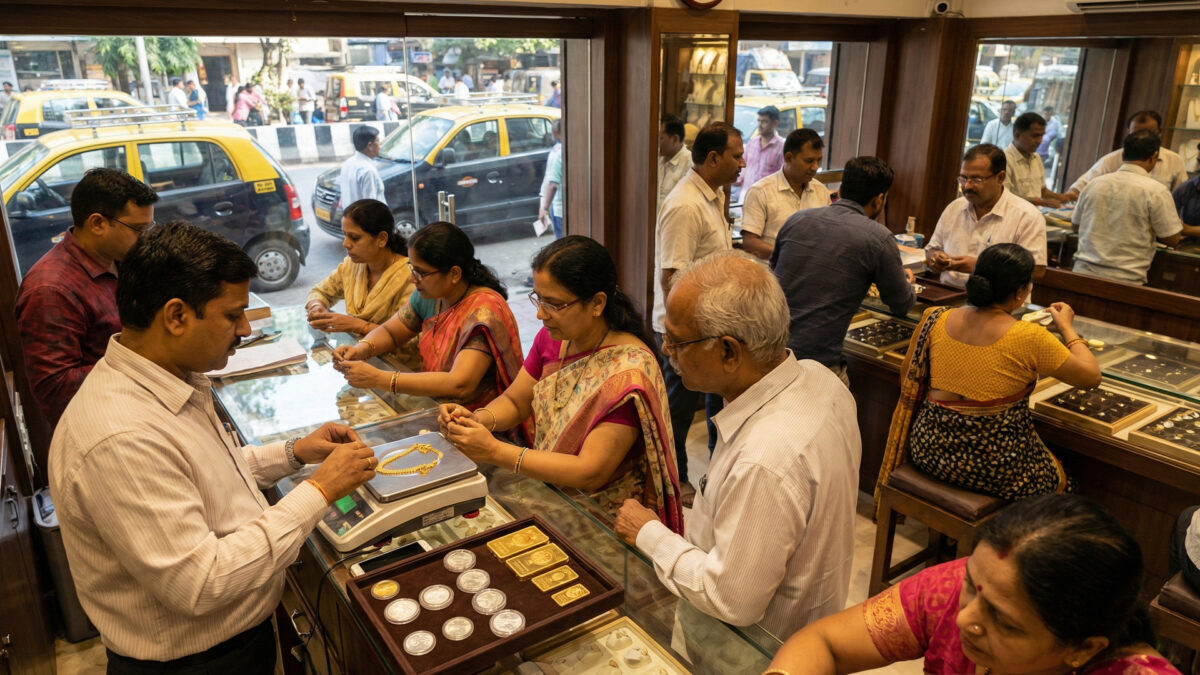
On December 4, 2025, gold and silver prices rose across India amid a weaker rupee and strong global demand. Silver climbed to around ₹191.10 per gram ( ₹1,91,100 per kilogram), reaching record highs.

Gold remained steady at elevated levels, with 24-carat gold trading at about ₹13,059 per gram and 22-carat gold near ₹11,971 per gram.

City-wise, in Chennai, 24K gold was around ₹13,158 per gram, and 22K gold at ₹12,061 per gram. Other major cities such as Delhi, Mumbai, Kolkata, Bengaluru, and Hyderabad saw similar rates, with 24K at ₹13,059/g and 22K at ₹11,971/g.

Silver also showed minor city variations: in most metros, it was priced at ₹1,91,000 per kg, while in Chennai and Hyderabad it was slightly higher, around ₹2,01,100 per kg, due to local market dynamics.

The main reason for rising prices is the depreciation of the Indian rupee against the US dollar, which makes imported precious metals costlier. Additionally, global demand for silver, both for investment and industrial use, including electronics and renewable energy, remains strong, pushing up rates.

With silver near ₹1.91 lakh per kg and gold holding above ₹13,000 per gram, it is important to check city-specific rates before making purchases. Prices can vary slightly between cities and fluctuate during the day, so timing and local rates are key considerations for jewellery purchases or investments.

Also Read: Sensex gains 100 points, Nifty steady above 26000 after early dip

Categories
Corporate

Sensex 85,102 down 32 points, Nifty 25,986 slips 46 points

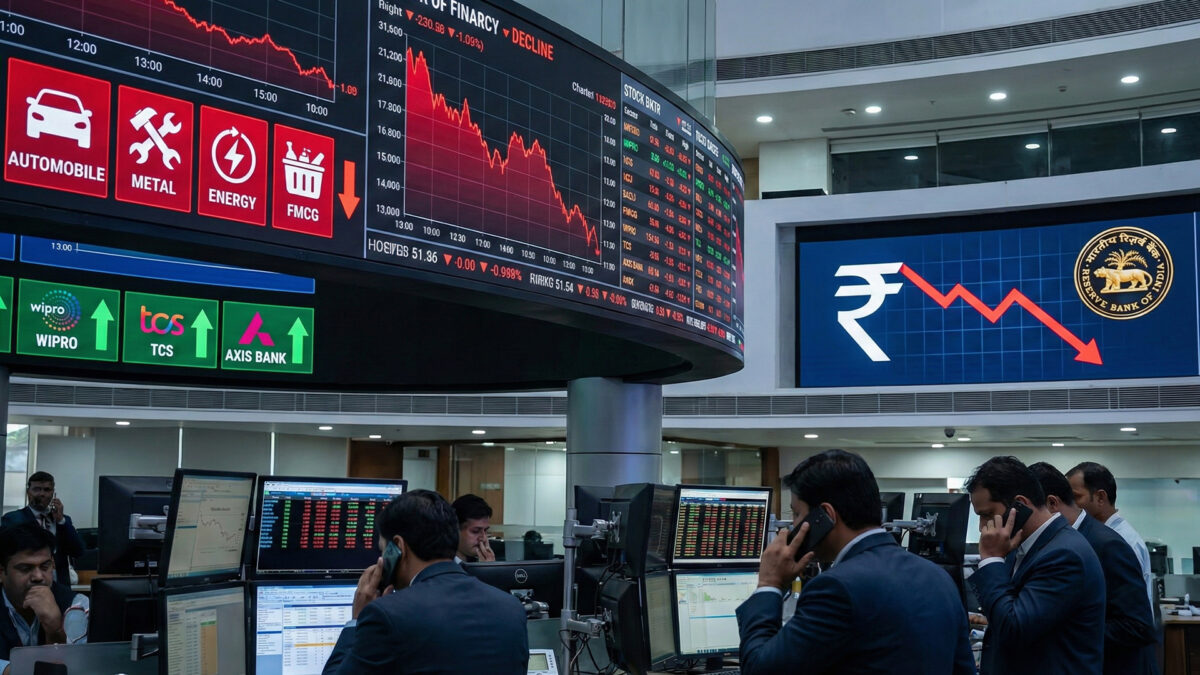
Indian equity markets ended slightly lower on December 3, weighed down by the rupee hitting a fresh record low and continued foreign fund outflows. The BSE Sensex closed at 85,102, down 31.5 points, while the Nifty 50 ended at 25,986, down 46.2 points, snapping short-term gains from the previous session. Market volatility remained elevated, with early selling pressure offset partially by late buying in select sectors.

Broader markets continued to underperform, with the midcap and small-cap indices declining between 0.7% and 0.9%. Sectorally, the market saw widespread weakness. Auto, energy, FMCG, metals, oil & gas and consumer durables were among the top laggards, registering losses in the range of 0.5% to 1.5%. Analysts attributed the decline to concerns over rising import costs triggered by the sliding rupee, as well as cautious positioning ahead of the Reserve Bank of India’s monetary policy decision later this week.

Under the loom of weakness, a few pockets provided some relief. IT stocks such as Wipro and TCS, along with private banking names like Axis Bank, closed in the green, supported by stable earnings outlooks and defensive buying. These gains helped soften what could have been a sharper fall for the benchmarks.

Overall, the market mood stayed cautious. Traders expect near-term movement to remain range-bound, with global cues, rupee stability and the RBI’s commentary likely to dictate direction. Investors are advised to stay selective, particularly in IT and defensives, while maintaining caution in rate-sensitive and high-valuation segments.

Also Read: Sensex falls 250 Points, Nifty slips 80 as markets turn cautious

Categories
Corporate

Aequs IPO sees 7–11× retail demand on opening day

Aequs Limited IPO opened for subscription on December 3 and received an extremely strong response from investors. The issue, worth ₹921.8 crore, was fully subscribed within just a few hours of opening. Most of the demand came from retail investors, who oversubscribed their portion by several times.

Aequs is an aerospace-parts manufacturer that supplies precision components to major global companies, including Airbus and Boeing. The company is known for operating a large, fully integrated aerospace manufacturing facility in Karnataka.

The price band for Aequs IPO is ₹118 to ₹124 per share. At this price, the company’s market value works out to about ₹8,316 crore. The issue includes a fresh issue of ₹670 crore and an offer-for-sale of ₹251.8 crore.

Market watchers say that the IPO has been attracting a strong grey-market premium (GMP), with some reports indicating a possible listing gain if market sentiment remains positive. Analysts say interest is high because India is becoming an important location for aerospace manufacturing, and Aequs is one of the few companies offering end-to-end production capabilities in this sector.

However, they also point out that the company has seen a dip in overall revenue recently, mainly due to weakness in its consumer products division. Even so, many believe the long-term outlook for Aequs’s core aerospace business remains strong.

The funds raised from the fresh issue will be used to repay debt, expand capacity, and support future growth plans.

The IPO will remain open for subscription until December 5.

Also Read: Meesho IPO fully subscribed on Day 1

Categories
Corporate

Meesho IPO fully subscribed on Day 1, GMP ₹49

Meesho, the social commerce platform, saw its initial public offering (IPO) fully subscribed on the first day of trading on 3 December 2025. The IPO drew strong interest, especially from retail investors, who accounted for the largest share of demand.

The IPO was priced between ₹105 and ₹111 per share, with each lot comprising 135 shares. By the end of Day 1, the retail portion was subscribed 3.1 times, while non-institutional investors (NIIs) applied for 1.23 times their allocation. Qualified institutional buyers (QIBs) showed limited interest, subscribing only 0.16 times.

In the grey market, Meesho shares traded at a premium of ₹49, indicating a potential listing price of around ₹160 per share. This points to a possible 44% gain for early investors if the stock opens at the grey market price.

Meesho has established itself as a low-cost, high-volume e-commerce platform targeting value-conscious customers, particularly in smaller cities and towns. The company has achieved cash-flow positivity in FY25, although it is not yet profitable overall. Analysts say Meesho’s large user base and high transaction volume give it strong growth potential, but consistent profitability will be key for long-term success.

Brokerages and market experts generally recommend subscribing for the IPO, citing Meesho’s scale and market position. At the same time, they advise caution, as the company’s ability to convert growth into profits remains uncertain.

Meesho’s IPO has generated strong investor interest, driven mainly by retail demand and buoyed by a high grey market premium. The debut highlights the popularity of e-commerce platforms in India and reflects investor confidence in companies with rapid growth and a wide market reach.

Also Read: AI leader Anthropic prepares for possible IPO in 2026

Categories
Technology

OpenAI goes ‘Code Red’ as Gemini gains edge

OpenAI CEO Sam Altman has declared a “code red,” redirecting the company’s focus entirely to strengthening ChatGPT. The decision comes as Google’s Gemini 3 gains rapid traction, outperforming ChatGPT in speed, reliability, and user engagement.

To respond, OpenAI is putting several projects on hold, including ad-driven features, AI shopping assistants, and its personal assistant “Pulse.” All resources are now being focused on improving ChatGPT’s performance, personalization, and overall user experience. The decision highlights the high-stakes competition in the AI space, where even leading companies must act fast to maintain their edge.

This is a role reversal from late 2022, when ChatGPT’s launch had triggered a “code red” at Google. At that time, Google scrambled to adjust its AI strategy in response to OpenAI’s breakthrough. Now, OpenAI faces similar pressure as a competitor pulls ahead.

Industry experts say such “code red” moves reflect the intensity of the generative AI race, where rapid innovation can quickly shift user preference and market position. Altman’s strategy shows OpenAI’s commitment to staying at the forefront of AI, ensuring ChatGPT continues to lead in performance and adoption.

With Gemini 3 raising the bar, OpenAI’s urgent pivot underlines the company’s focus on innovation, speed, and user satisfaction. By prioritizing ChatGPT over other initiatives, OpenAI aims to secure its place as a global leader in AI development while responding decisively to emerging competition.

Also Read: YouTube launches ‘2025 Recap’ featuring top trends

Categories
Beyond

Rupee falls past ₹90 on trade and outflow pressure

The Indian rupee weakened further on Wednesday, slipping past the crucial ₹90-per-dollar mark for the first time. The currency opened lower and extended losses as persistent foreign fund outflows, strong demand for the US dollar, and uncertainty around India’s pending trade discussions pressured market sentiment.

Traders reported steady dollar buying from importers, especially in sectors like gold and electronics, which has added to the strain on the rupee. With India’s import bill rising, the demand for dollars continues to stay elevated even as global currency markets remain volatile.

Foreign investors have been pulling money out of Indian equities and bonds over the past few weeks, adding to the downward pressure. Many are staying cautious due to geopolitical tensions and concerns over global interest rate trends. This steady outflow has reduced dollar supply in domestic markets at a time when demand is already high.

Market participants also pointed to the lack of progress on the ongoing India–US trade discussions as another factor weighing on sentiment. With no clarity on when the deal might move forward, traders expect the rupee to remain under pressure in the near term.

Despite India’s strong macroeconomic backdrop, analysts say the rupee could weaken further if foreign inflows do not stabilise soon. Some expect the currency to hover near or slightly above the current levels unless global conditions improve or trade negotiations break the deadlock.

For now, the Reserve Bank of India is expected to step in when required to prevent excessive volatility, but traders believe the central bank will avoid aggressive intervention unless the rupee shows sharper swings. Overall, the mood in currency markets remains cautious as investors wait for clearer signals on trade and global risk trends.

Also Read: Gold hits ₹1.30 lakh mark, Silver climbs to ₹1.84 lakh

Categories
Beyond

Gold hits ₹1.30 lakh mark, Silver climbs to ₹1.84 lakh

Gold and silver prices continued their steady climb on Wednesday, offering yet another sign that investors are leaning heavily toward safe-haven assets amid global uncertainty. On the Multi Commodity Exchange (MCX), gold moved past ₹1.30 lakh per 10 grams, while silver surged to nearly ₹1.84 lakh per kilogram, marking a strong mid-week performance for the bullion market.

Gold opened with positive momentum and inched higher through the session. Traders say the metal is benefiting from growing expectations of an interest rate cut by the US Federal Reserve, an event that usually boosts gold’s appeal. At the same time, the Indian rupee’s weakness has added an extra push, making imports more expensive and naturally lifting local prices.

Silver’s rise has been even more striking. The white metal, supported by both investment demand and industrial use, rose around 1.5% during Wednesday’s session. Analysts note that global supply pressures and strong demand from sectors like electronics and renewable energy are helping silver maintain its sharp upward trajectory.

Market watchers say gold now finds support around ₹1.28 lakh, while immediate resistance lies close to ₹1.31 lakh. If prices hold above current levels, the metal could test new highs later this week. Silver, too, is expected to stay firm as long as it trades above the ₹1.84 lakh zone, with potential to move towards ₹1.86–₹1.88 lakh.

For everyday buyers, the latest jump may come as a mixed signal—good news for investors holding gold or silver, but slightly discouraging for those planning jewellery purchases. Still, the broader market mood suggests that bullion will remain attractive as long as global uncertainties linger and the rupee stays under pressure.

As the week progresses, traders will be watching key global data and central bank cues closely. For now, both gold and silver continue to shine brighter in the mid-week market.

Also Read: Sensex falls 250 Points, Nifty slips 80 as markets turn cautious