Categories
Beyond

16th Finance Commission’s submits 2026-31 fiscal transfers report

The 16th Finance Commission (XVI FC), chaired by economist Arvind Panagariya, on Monday submitted report on fiscal transfers for the 2026–31 period to President Droupadi Murmu.

The report has been prepared after nearly two years of analysis and nationwide consultations and will shape tax devolution, grants-in-aid and other transfers over the next five years.

It was also presented to Prime Minister Narendra Modi and Finance Minister Nirmala Sitharaman and will be made public once tabled in Parliament.

The Commission undertook a comprehensive review of Union and state finances, holding discussions with central ministries, state governments, local bodies, former Finance Commission members, academic institutions, multilateral agencies and other experts. Its findings are presented in two volumes: Volume I containing recommendations aligned with the terms of reference (ToR), and Volume II featuring detailed annexures.

Mandated to determine the distribution of the Centre’s net tax proceeds from April 1, 2026, the XVI FC also reviewed disaster-management financing and grant requirements. To better understand state-level fiscal realities, the panel visited all 28 states, examining their fiscal capacities, development priorities and resource gaps. The ToR for the current Commission were narrower than those of its predecessor, reflecting states’ demands for a more focused assessment.

During consultations, several states pressed for raising their aggregate share of the divisible tax pool from 41% to 50%, citing poverty burdens, demographic trends and the need to sustain growth-oriented spending. Many also urged a reduction in the 45% weight assigned to income distance in the horizontal devolution formula.

Tamil Nadu proposed lowering it to 35%, while Maharashtra suggested 37.5%.

Tamil Nadu, Karnataka and Gujarat further pushed for assigning a 15% weight to states’ contributions to national GDP. The Commission is expected to weigh these competing demands as it finalises the devolution framework for FY27–31.

Also Read: Tata Power commissions 300 MW solar plant for NHPC

Categories
Leaders

Groww CEO Lalit Keshre enters billionaire ranks

Lalit Keshre, cofounder and chief executive of investment platform Groww, has joined India’s growing list of tech billionaires following the company’s exceptional stock market debut.

Keshre, 44, holds 55.91 crore shares in the company with a 9.06% stake. With Groww’s stock touching a record ₹169 on Wednesday, his holding is now valued at about ₹9,448 crore, placing him near the $1-billion milestone.

Groww’s shares have surged over 70% in just four trading sessions since being listed on November 12 at ₹100 apiece. The rapid climb has pushed the company’s market capitalisation beyond ₹1 lakh crore.

Four former Flipkart executives Keshre, Harsh Jain, Ishan Bansal and Neeraj Singh, Founded Groww in 2016.

Keshre, who grew up in a farming family in Lepa village in Madhya Pradesh, cleared the Joint Entrance Exam and went on to earn dual degrees in technology from IIT Bombay. He later joined Flipkart as an early product manager, where he helped build the company’s marketplace business before leaving to launch Groww with his colleagues.

The soaring stock price has also significantly lifted the fortunes of the other founders. Harsh Jain’s 41.16 crore shares are currently worth about ₹6,956 crore, Ishan Bansal’s 27.78 crore shares are valued at roughly ₹4,695 crore, and Neeraj Singh’s 38.32 crore shares amount to around ₹6,476 crore.

Also Read: External Affairs minister meets Qatar leaders

Categories
Beyond

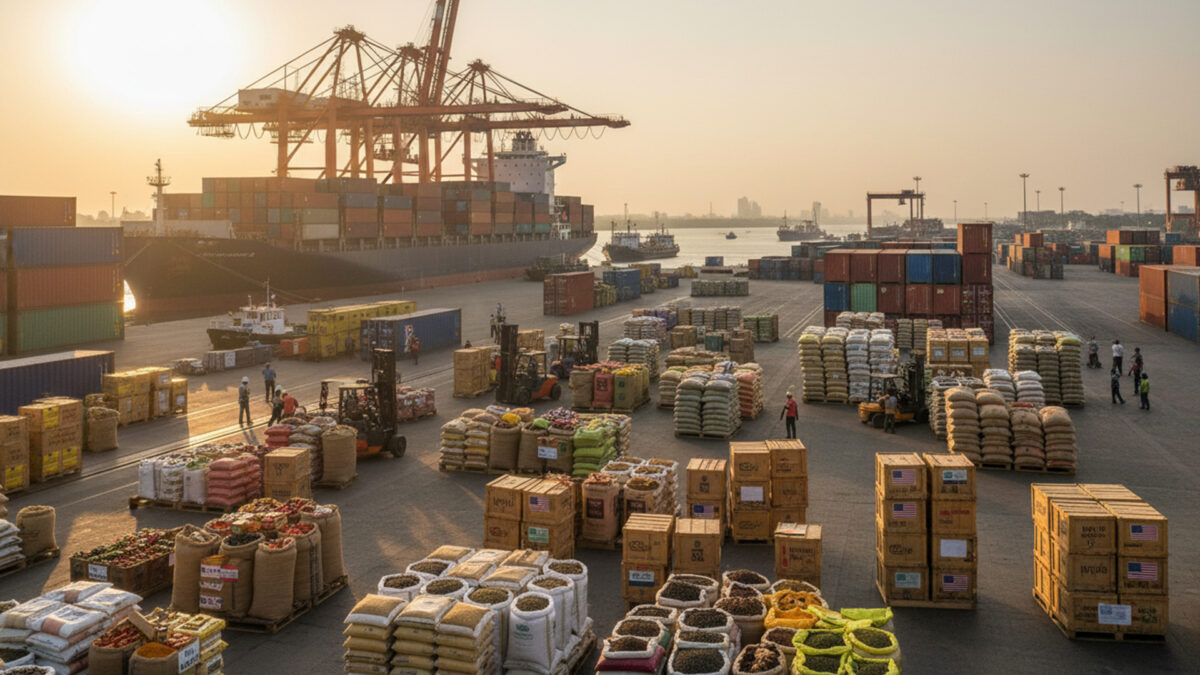
Trump’s tariff move boosts Indian tea, spices

US President Donald Trump announced a reduction in import duties on nearly 200 agricultural and food products, including Indian spices, tea, and processed foods.

Indian exporters of tea, coffee, spices and cashew nuts faced steeper losses after the Trump administration raised duties on several Indian products to as much as 50%, alongside a separate 25% penalty that took effect in late August on India’s purchases of Russian oil.

While, India’s European and Vietnamese competitors faced tariffs in the 15–20% range.

The updated tariff list covers several products in which India is a major global supplier, including black pepper, cloves, cumin, cardamom, turmeric, ginger, premium teas, mango-based products and selected nuts such as cashew.

In 2024, India sent over half a billion dollars’ worth of spices to the US, while coffee exports to the American market approached $83 million.

However, some of India’s farm-related exports such as shrimp and basmati rice, have not been granted relief. High duties also remain in place on Indian jewellery, garments and gems while broader trade disagreements continue.

Officials involved in trade and agricultural policy described the tariff cuts as a constructive signal for ongoing US–India negotiations. They also hope the move will help offset the pressure faced by exporters since this year’s tariff hikes, which contributed to a nearly 12% year-on-year drop in India’s September shipments to the US, down to $5.43 billion.

Farm goods that are valued at about $5.7 billion out of India’s $87 billion in total exports to the US in 2024 were among the most affected.

Also Read: India signs first LPG deal with US

Categories
Technology

PhonePe brings ChatGPT into UPI payments

PhonePe has joined hands with OpenAI to bring ChatGPT directly into its app to offer AI-powered assistance into routine digital payments.

Users will be able to get help with tasks like travel planning, product searches, and comparing options without leaving the app. Rather than offering a full ChatGPT interface, PhonePe will weave specific AI tools that guide users during specific actions like for travel planning, shopping and general informative discovery.

With this, PhonePe became one of the first major UPI platforms in India to embed a conversational AI assistant within its consumer-facing services. The company plans to introduce these tools across both its consumer and merchant apps.

According to OpenAI, the collaboration aligns with its broader goal of expanding AI access throughout India. Oliver Jay, OpenAI’s Head of International, has highlighted that India is seeing rapid adoption of AI tools, and PhonePe’s extensive user base makes it a strategic partner for bringing these technologies to the mainstream.

The integration is especially focused on payment-related decisions. OpenAI will be available through the Indus Appstore. Users can ask for budget travel ideas, merchant details, or service comparisons before completing a UPI transaction, and the AI will offer relevant suggestions.

This partnership comes amid a string of OpenAI initiatives in India. The company recently opened its first local office in Mumbai and announced plans for a large-scale, 1GW data centre backed by an investment commitment of around Rs 20,000 crore. It has also worked with Razorpay and the National Payments Corporation of India (NPCI) on pilots that test AI-assisted UPI payments, enabling conversational interactions for completing transactions.

To encourage broader adoption, OpenAI is offering Indian users complimentary access to ChatGPT Go for 12 months. The company expects that early exposure to its AI tools will lead more users to explore advanced features and potentially transition to paid plans.

Also Read: Trump adds 50,000 federal workers

Categories
Leaders

ED arrests Jaypee Infratech MD in ₹12,000 cr fraud case

The Enforcement Directorate (ED) has arrested Manoj Gaur, Managing Director of Jaypee Infratech Ltd, in connection with an alleged ₹12,000-crore money laundering and cheating case involving homebuyers.

Probe was initiated against Gaur after allegations emerged that funds collected from homebuyers were diverted to Jaypee projects, causing significant financial losses to thousands of investors awaiting possession of their flats.

The ED had conducted searches in May 2025 at 15 locations linked to Jaypee Infratech Ltd, Jaiprakash Associates Ltd (JAL), and related entities. During the raids, officials seized ₹1.7 crore in cash, along with financial documents, digital records and property papers belonging to the promoters and their family members.

The searches were carried out in Delhi, Noida, Ghaziabad, and Mumbai under the Prevention of Money Laundering Act.

According to the FIRs, Jaypee Wish Town and Jaypee Greens failed to deliver apartments and plots sold around 2010–11. Protests by homebuyers in 2017 led to multiple FIRs being registered.

JAL, the flagship firm of the crisis-hit Jaypee Group, has interests in construction, cement, power, real estate, and hospitality sectors.

Also Read: SpiceJet adds 5 planes, daily flights rise to 176

Categories
Corporate

Adani Ports becomes first Indian transport firm to join TNFD

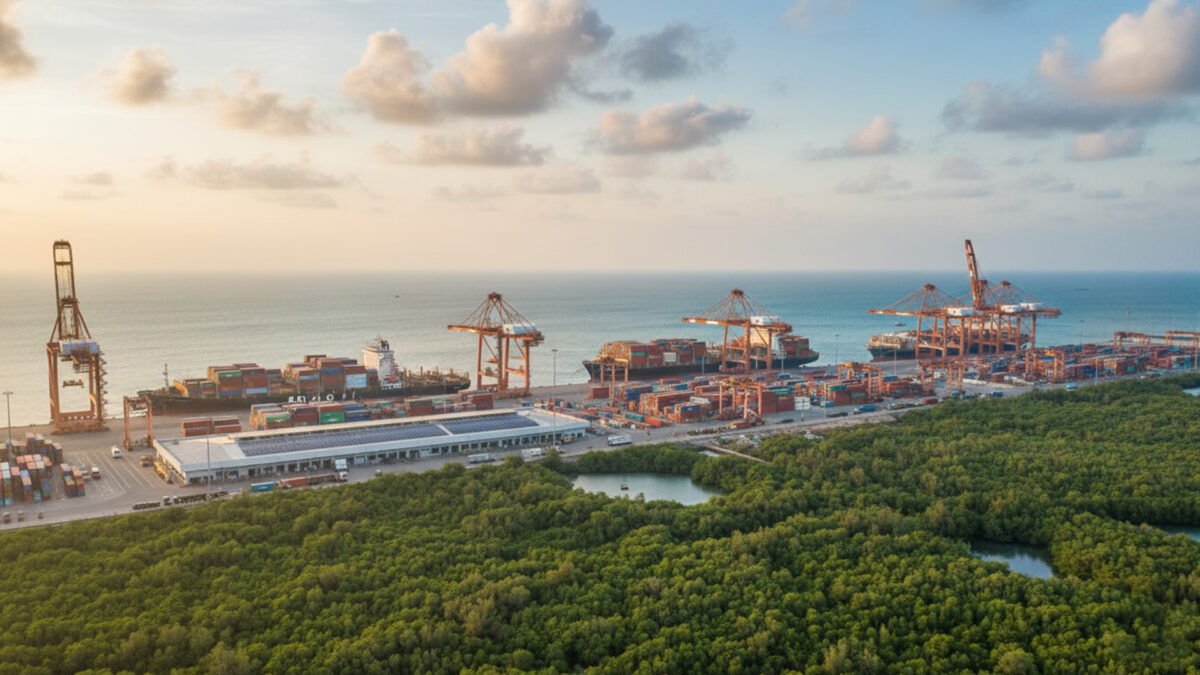
Adani Ports and Special Economic Zone Ltd (APSEZ) has joined the Taskforce on Nature-related Financial Disclosures (TNFD) as an adopter, committing to begin nature-related risk and impact disclosures from FY26.

With this move, APSEZ, which is India’s largest integrated transport utility, has become the first Indian integrated transport utility to embrace the TNFD framework.

TNFD is an initiative backed by the United Nations Environment Programme Finance Initiative (UNEP FI), UNDP, WWF and Global Canopy. It is aimed at helping companies identify, manage and disclose nature-related dependencies, risks and opportunities.

The company said it will align its future corporate reporting with TNFD recommendations as part of its broader ESG strategy. The initiative builds on APSEZ’s existing environmental practices, including climate-risk assessments and large-scale mangrove restoration. The firm has afforested over 4,200 hectares and is conserving an additional 3,000 hectares, making it India’s largest private-sector contributor to mangrove ecosystem restoration.

“As we advance towards COP30, we firmly believe that responsible business practices drive long-term success. Our adoption of the TNFD framework reflects our commitment to integrate nature into corporate decision-making and to enhance our contribution to biodiversity conservation,” said Ashwani Gupta, Whole-Time Director & CEO of APSEZ.

APSEZ joins a small global league of port operators prioritising biodiversity and marine ecosystem protection. The company said adopting the TNFD framework would strengthen its position as a sustainability leader in maritime logistics.

APSEZ, part of the Adani Group, operates 15 ports and terminals across India, handling about 28% of the country’s total port volumes. It plans to expand its cargo handling capacity from the current 633 million tonnes per annum to 1 billion tonnes by 2030.

According to TNFD’s official announcement, APSEZ is among the latest adopters committing to science-based, transparent nature-related reporting.

Also Read: India supports Bhutan’s Gelephu City, provides ₹4,000 cr for hydropower

Categories
Corporate

Indian equities rise as Trump hints at shutdown end

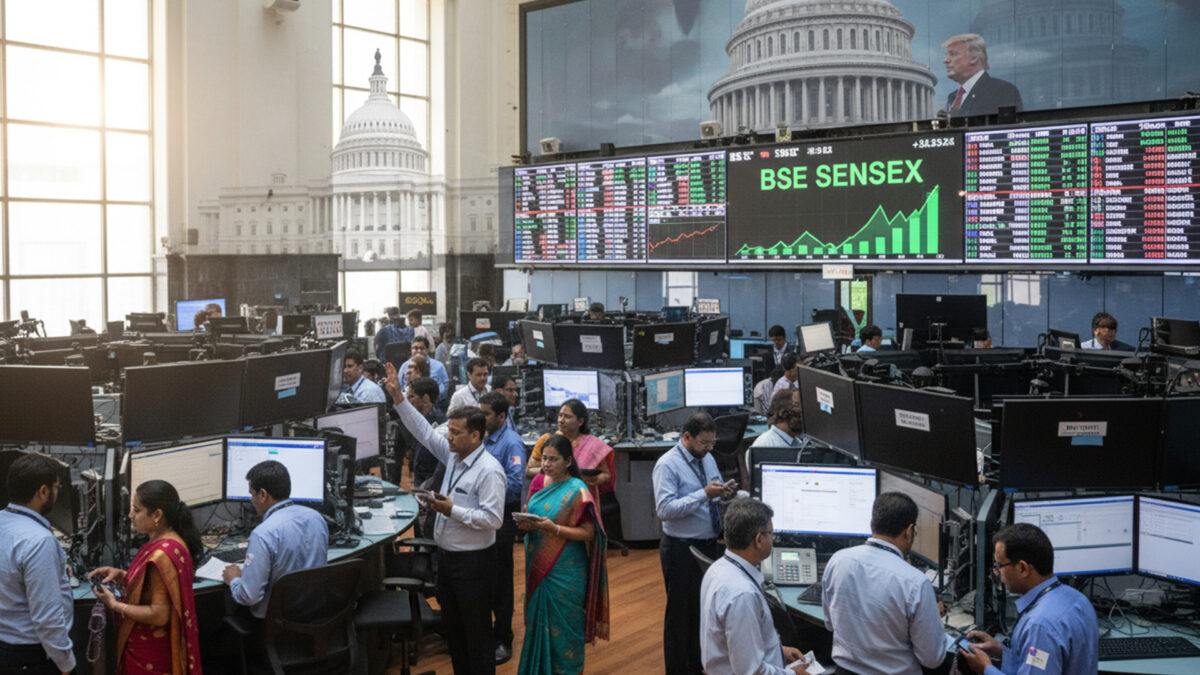
Indian equities rose in early trade on Monday, tracking gains across Asian markets, as optimism grew that the historic US government shutdown may soon end. Positive corporate earnings also lifted market sentiment.

The Nifty 50 was up 0.32% at 25,573.95, while the BSE Sensex gained 0.31% to 83,472.41. Broader Asian markets climbed around 1% after the US Senate advanced a government funding bill to end the 40-day shutdown, moving it closer to final approval.

Analysts said a resolution to the political stalemate in the US could spark a short-term rally in global markets. Improving quarterly results have also prompted analysts to raise corporate profit estimates for the coming quarters, strengthening overall risk appetite.

On the day, 14 of the 16 major sectoral indices advanced. The broader midcap and small-cap indices gained about 0.5% each.

Among key movers, Hindustan Aeronautics Ltd (HAL) advanced 2.3% after the state-run defence manufacturer inked a deal with General Electric (GE) to purchase 113 engines for the next-generation version of its indigenous Tejas fighter jets.

Lupin climbed 2.2%, building on gains from the previous session, after the pharmaceutical firm posted a 73% surge in quarterly profit, supported by strong sales of respiratory medicines.

Nykaa rose 4.2% as the beauty retailer’s profit for the quarter more than tripled, driven by robust demand for skincare and cosmetics and new partnerships with global brands.

On the weaker side, Ola Electric dropped 2.2% after Moody’s Investors Service downgraded its rating, warning of potential repayment risks due to declining cash reserves.

Lenskart Solutions made a subdued market debut, listing 1.7% below its issue price of ₹402 amid investor caution over its steep valuation.

Also Read: Sensex up 250 points, Nifty above 25,550 as markets rebound

Categories
Corporate

Adani Enterprises likely a top bidder for Jaiprakash Associates

Adani Enterprises Ltd is likely to be selected as the highest bidder to acquire the debt-laden Jaiprakash Associates Ltd (JAL) as lenders are said to be in favour of its faster repayment plan over Vedanta Group’s longer five-year schedule.

Adani’s plan to complete payments within two years reportedly scored higher in the evaluation conducted by JAL’s Committee of Creditors (CoC). In September, Vedanta had initially emerged as the top bidder with an offer of ₹12,505 crore. However, after lenders sought better value, fresh bids were invited from Adani Enterprises, Vedanta, Dalmia Cement (Bharat), Jindal Power and PNC Infratech.

The revised proposals were submitted in on October 14. Adani Enterprises offered ranked highest followed by Dalmia Cement and Vedanta.

The CoC is expected to put the resolution plan to vote within the next two weeks. Dalmia’s offer, however, is understood to be contingent upon a pending Supreme Court verdict involving JAL and the Yamuna Expressway Industrial Development Authority.

Meanwhile, the former promoters of JAL had also submitted a settlement offer under Section 12A, though they reportedly failed to identify clear funding sources.

JAL, which operates in real estate, cement, power, hospitality, and infrastructure, was admitted into the Corporate Insolvency Resolution Process by the National Company Law Tribunal, Allahabad, on June 3, 2024, after defaulting on loans. Financial creditors’ claims amount to around ₹60,000 crore, led by the National Asset Reconstruction Company Ltd, which acquired JAL’s stressed loans from a consortium led by State Bank of India.

In April, 25 companies had expressed interest in acquiring JAL, though only five eventually submitted bids. Vedanta initially emerged as the top bidder in the September challenge process before the latest round of revisions.

JAL’s assets include major real estate projects such as Jaypee Greens in Greater Noida, Wishtown in Noida, and Jaypee International Sports City near Jewar Airport, along with hotel properties in Delhi-NCR, Mussoorie, and Agra.

The group also owns non-operational cement plants in Madhya Pradesh and Uttar Pradesh, besides investments in subsidiaries such as Jaiprakash Power Ventures Ltd and Yamuna Expressway Tolling Ltd.

Also Read: Think Investments invests ₹136 crore in PhysicsWallah ahead of IPO

Categories
Corporate

JSW Cement posts ₹75 Cr Q2 profit

JSW Cement turns profitable in Q2 with Rs 75 crore net; sales, volumes rise sharply

 JSW Cement Ltd has swung back to profitability in the September quarter of FY26, posting a net profit of Rs 75.36 crore compared with a loss of Rs 75.82 crore in the same quarter last year. The turnaround was driven by robust sales volumes and improved operational efficiencies, the company said in a regulatory filing on Friday.

Revenue from operations increased 17% from the year-ago period to Rs 1,436.43 crore, aided by higher demand and better price realisations. Total income, including other income, stood at Rs 1,460.06 crore, while total expenses rose to Rs 1,348.72 crore during the quarter.

Cement sales volumes grew to 3.11 million tonnes (MT) in Q2 FY26, up from 2.71 MT a year earlier. For the first half of the fiscal, the company’s consolidated income was Rs 3,041.93 crore.

JSW Cement also reported a significant reduction in net debt, which came down to Rs 3,231 crore as of September 30, 2025, from Rs 4,566 crore three months earlier. The decline was attributed mainly to the inflow of IPO proceeds.

This was JSW Cement’s second quarterly result since its stock market debut on August 14, 2025. The company said it spent Rs 509 crore in capital expenditure during the September quarter, taking total capex for the first half to Rs 964 crore, including maintenance projects.

In a separate filing, the board approved a Power Purchase Agreement with JSW Green Energy Fifteen Ltd, a subsidiary of JSW Energy, to buy solar power from a captive plant. As part of the deal, JSW Cement will acquire a 26% equity stake in the energy arm for Rs 21.78 crore.

JSW Cement currently operates with a grinding capacity of 21.6 million tonnes per annum (MTPA) and plans to nearly double it to 41.85 MTPA along with 13.04 MTPA of clinker capacity, expanding its manufacturing footprint across India.

Also Read: Canada updates temporary visa rules

Categories
Beyond

Canada updates temporary visa rules

Canada’s Immigration, Refugees and Citizenship Canada (IRCC) has introduced new rules detailing when visitor visas, study permits, work permits, and electronic travel authorizations (eTAs) can be cancelled.

The update to the Immigration and Refugee Protection Regulations (IRPR), announced on November 4, 2025, gives officers authority to revoke documents if holders become ineligible, inadmissible or fail to comply with visa terms.

Under the new provisions, visitor visas and eTAs can be cancelled for reasons such as administrative errors, criminal inadmissibility, loss of passport, or failure to depart Canada on time. Study and work permits may also be revoked if issued by mistake or if the holder no longer meets eligibility conditions.

All temporary resident documents are automatically void if the holder becomes a permanent resident or dies. The move is aimed at tightening compliance and closing gaps in existing immigration procedures.

Also Read: India’s Forex reserves drop $5.6 billion to $689.73 billion