
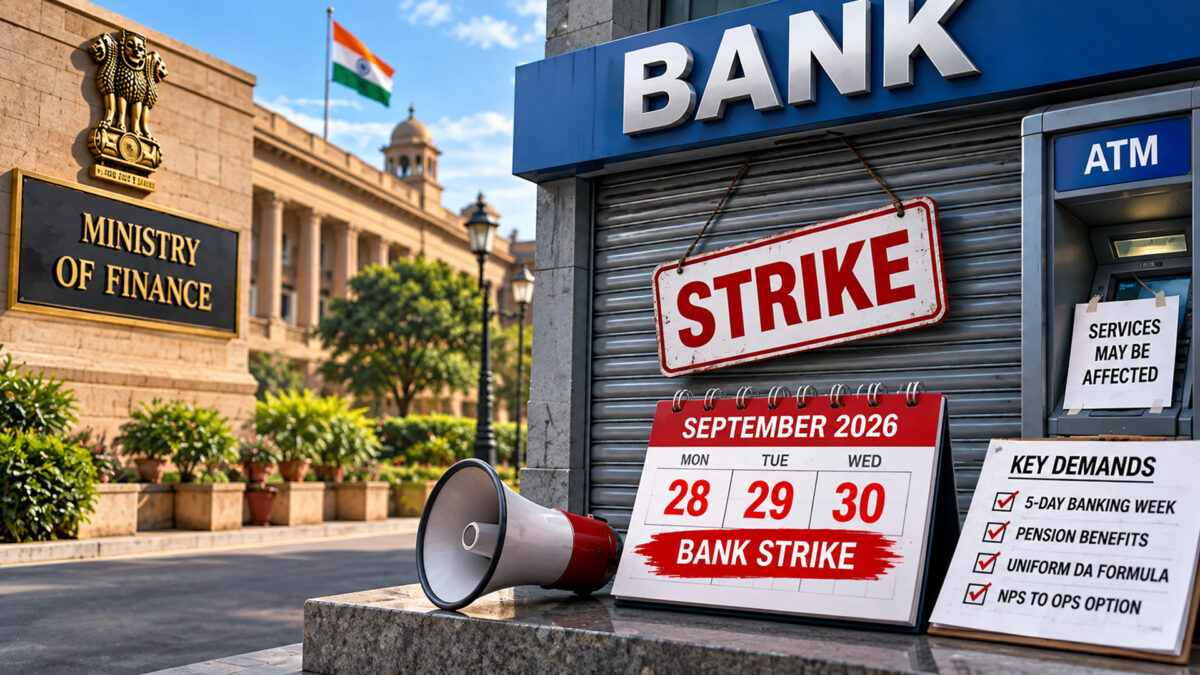
Bank customers may need to finish important branch-related work early next week as bank employee unions have called a three-day nationwide strike from September 28 to 30.
The strike comes immediately after the September 26-27 weekend, raising the possibility of disruption to regular branch services for five consecutive days. However, this does not necessarily mean that every bank branch will remain closed throughout the five-day period. Digital banking, ATMs and other essential services are expected to remain available.
The United Forum of Bank Unions (UFBU), an umbrella body representing seven bank employee and officer unions, has called the strike. The unions have been pressing for the introduction of a five-day banking week, along with several other demands related to employees and pensioners.
The five-day workweek remains the main issue behind the latest strike call. The demand has been pending since the 2024 wage settlement, and unions have been seeking its early implementation. They have also raised concerns over performance-linked incentives and other service-related matters.
Other demands include pension updation, a uniform dearness allowance formula for pensioners and an option for employees covered under the National Pension System (NPS) to move to the Old Pension Scheme. The unions have also raised several pending wage and service-related issues.
The latest strike follows a nationwide one-day bank strike on September 11, which affected over-the-counter banking services, cash transactions and cheque clearances in several parts of the country. The impact was uneven, with some cities seeing relatively normal operations while disruptions were reported in states and smaller cities.
With another strike approaching, the government has started preparing for possible disruption. The Department of Financial Services under the Finance Ministry is scheduled to meet the chiefs of public sector banks, regional rural banks, the Indian Banks’ Association and NABARD to review contingency arrangements.
The meeting is expected to focus on maintaining essential banking services and reducing inconvenience to customers during the strike. The timing is particularly important because the strike coincides with the end of the half-year, a period when banks handle additional accounting and reporting work.
Major banks have already begun alerting customers.
State Bank of India (SBI) has advised customers to complete important branch-related transactions before the strike dates. The bank has also said it is making arrangements to keep essential services running during the disruption.
Union Bank of India has similarly issued an advisory asking customers to plan important banking work in advance. Customers are encouraged to use digital channels wherever possible during the strike period.
Customers should therefore consider completing work that requires a physical branch visit before September 28. This could include certain cash transactions, cheque-related work, document submission and other services that cannot be completed digitally.
The situation is different for online banking users. Internet banking, mobile banking, UPI and ATMs are expected to continue operating, although customers could still experience delays in some services depending on the bank and the nature of the transaction.
The five-day period does not mean that the entire banking system will stop functioning. Branch operations are the area most likely to face disruption because of the strike. Customers can continue to use digital payment systems and other automated channels for routine transactions.
The unions had issued their strike notice earlier and held discussions with the government and the Indian Banks’ Association. Conciliation efforts have taken place, but the issue of a five-day banking week has remained unresolved. The UFBU has indicated that it will continue with the strike unless there is concrete progress on its demands.
The banking unions represent a large section of bank employees and officers, meaning the strike could have a noticeable impact on public sector bank operations. The effect, however, may differ from one location to another depending on participation and the availability of alternative banking channels.
The current strike programme also extends beyond September. The unions have announced further industrial action, including a continuous strike from October 26, as part of their broader campaign over their demands.
The immediate priority is to avoid leaving urgent branch work until the last moment. Routine payments and money transfers can largely be handled through UPI, mobile banking, internet banking and ATMs, but services requiring staff assistance may face delays.
The September 28-30 strike is therefore expected to create the most visible disruption at bank branches, while digital banking services should continue to provide an alternative for everyday transactions. Government officials, banks and unions will continue discussions as the strike approaches, leaving open the possibility of developments before the scheduled action.