
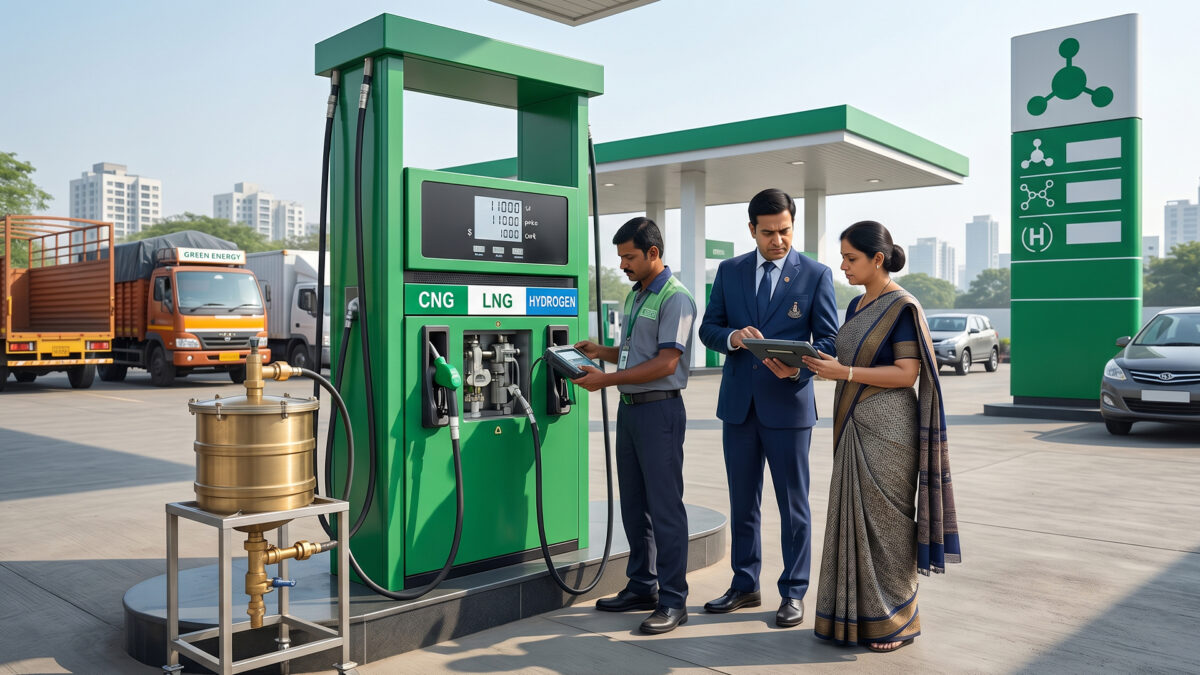
The Centre has expanded the scope of verification rules for fuel dispensing systems to include CNG, LNG and hydrogen dispensers, widening regulatory oversight as India increases its focus on cleaner energy sources.
The move is aimed at ensuring that consumers receive the correct quantity of fuel while also maintaining accuracy and standardisation in emerging fuel technologies. Along with expanding the coverage, the government has also introduced a fee structure for testing and verification of these dispensing systems.
Until now, verification mechanisms mainly covered conventional fuel dispensing systems used for petrol and diesel. With the growing adoption of alternative fuels such as compressed natural gas (CNG), liquefied natural gas (LNG) and hydrogen, authorities said there was a need to bring these systems under a more comprehensive regulatory framework.
The decision comes at a time when India is rapidly expanding infrastructure linked to cleaner fuels. CNG has already become a widely used fuel option for public transport and private vehicles in many cities, while LNG and hydrogen are increasingly being considered important for future transportation and industrial requirements.
Officials said the expanded verification process is intended to improve transparency and build confidence among consumers and businesses. Accurate fuel dispensing systems are considered important because even small measurement differences can affect consumers as well as fuel providers over time.
Also Read: Sterlite Technologies shares jump on $1.1 bn AI deal